
Joined August 2009
- Tweets 3,212
- Following 334
- Followers 189
- Likes 13,924
560 Photos and videos








Pinned Tweet

9 Jun 2025
Most health advice is wrong—and some of it’s quietly harming you.
I’ve written a FREE ebook that debunks 7 popular health “facts”—and shows you what to do instead.
👇 Download it now — it’s free:
#HealthMyths #Longevity #Debunked @Gumroad achievewellness.gumroad.com/…
1
7
213
Jun 15
A photograph.
A Bach prelude.
A conversation with my 91-year-old mother.
All three led me to the same question:
What if some of the most important advantages of aging are the ones nobody measures?
medium.com/dr-michael-hunter…
3
Jun 14
I wonder if cognitive aging begins long before memory problems.
Maybe it begins when curiosity starts to disappear.
michaelhunterwellness.kit.co…
#Longevity
2
Jun 13
Almost nobody talks about it.
It's the person who starts sleeping longer...
...but wakes up feeling less restored.
At first, that sounds backwards.
More sleep should mean more recovery.
Yet I've noticed the same pattern again and again.
Weekend sleep expands.
Recovery days appear.
People need more downtime to feel normal.
Nothing dramatic happens.
That's why it's easy to miss.
Most people blame age.
They may be missing the bigger signal.
michaelhunterwellness.kit.co…
#Sleep #Longevity
5
Jun 12
A patient told me:
"Everything gets done. But everything feels harder."
Work still gets done.
Life still functions.
But ordinary days require more effort than they used to.
I suspect many people notice this long before they would ever call it burnout.
FREE FRIEND LINK HERE: medium.com/dr-michael-hunter…
#Burnout #Resilience
4
Jun 11
A patient recently told me that dinner with friends now required a day of recovery.
Nothing had gone wrong.
The conversation was good.
The company was enjoyable.
Yet something had changed.
What interested me wasn't the fatigue.
It was the cost.
Over the last few years, I've become fascinated by the subtle signs that capacity is changing before performance drops.
Recovery takes longer.
Noise becomes harder to ignore.
Small frustrations linger.
Conversations become harder to sustain.
Most people notice these changes individually.
Few recognize them as part of the same pattern.
To thank the first 1,000 subscribers to my newsletter, I created a free guide:
6 Signs Your Capacity Is Quietly Declining
Inside, I explore six subtle clues that often appear before more obvious changes in physical, cognitive, emotional, and social capacity.
Download it here:
medium.com/dr-michael-hunter…
1
7
Jun 10
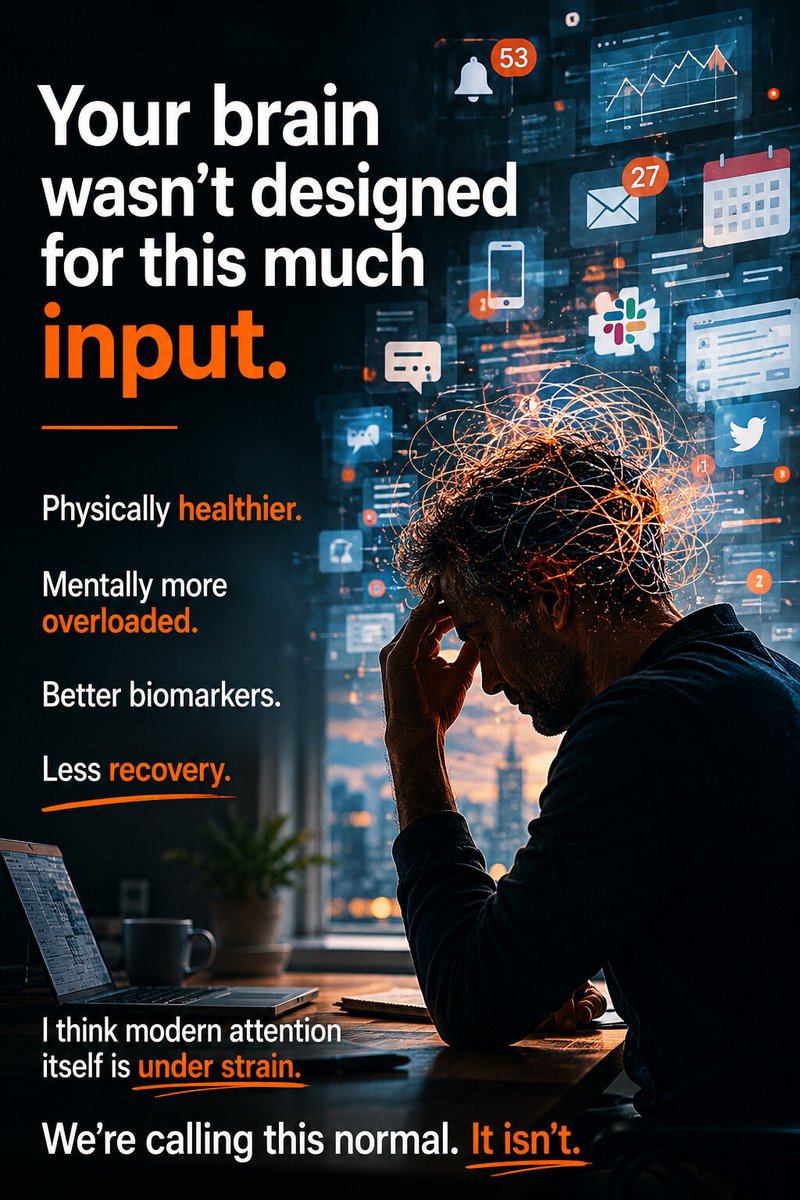
Modern life is frying people’s brains in a very quiet way.
Not with catastrophe.
With nonstop cognitive overload.
Too much:
• information
• optimization
• stimulation
• tracking
• input
People look “healthy.”
But mentally?
Many are exhausted.
And I think we’re dramatically underestimating what chronic attention fragmentation is doing to the nervous system.
1
15
Jun 10
Most people think they’re tired.
I think many are cognitively overloaded.
I wrote more about that here:
medium.com/dr-michael-hunter…
19
Jun 10
Modern life is mentally frying people.
Quietly.
Too much:
• information
• stimulation
• optimization
• screen time
• mental noise
People look functional.
But many are cognitively exhausted.
And the scary part?
Most now think this feels normal.
1
2
15
Jun 10
Most people think they’re tired.
I think many are cognitively overloaded.
I wrote more about that here:
medium.com/dr-michael-hunter…
2
17
Jun 9
A lot of people think cognitive decline starts with memory loss.
I’m no longer convinced.
In the clinic, I often notice something subtler first:
People start losing the thread of conversation more easily.
A noisy restaurant suddenly feels exhausting.
Group discussions become harder to follow.
Interruptions feel strangely disruptive.
The brain still works.
But holding thoughts together across time starts requiring more effort than it used to.
I think modern life is making this worse.
We train attention toward fragmentation all day long:
• notifications
• scrolling
• divided focus
• constant interruption
Then we wonder why sustained conversation suddenly feels mentally expensive.
New essay:
medium.com/dr-michael-hunter…
5
Jun 8
One of the strangest things about intelligent people is that they can spot bad information instantly in subjects they know well, then trust the next confident expert anyway.
A patient recently said something I haven't stopped thinking about: "I don't know who to trust anymore." That may be one of the defining sentences of modern life.
Every day we're flooded with health advice, AI predictions, financial forecasts, productivity systems, and people who sound absolutely certain about all of it. The problem isn't a lack of information. It's that the human brain was never designed to evaluate this much of it.
When we're overloaded, confidence starts to feel like competence. Michael Crichton described part of this phenomenon years ago with something called the Gell-Mann amnesia effect.
Once I learned the term, I started noticing it everywhere.
Essay below.
1
7
Jun 8
We often talk about misinformation as if the problem is ignorance.
Increasingly, I think the bigger problem is overload.
When the brain becomes exhausted by competing claims, certainty starts to feel more valuable than accuracy.
Full essay:
medium.com/dr-michael-hunter…
10
Jun 7
Most people are not exhausted because they work too hard.
They are exhausted because they spent years building lives that look successful but no longer feel fully real.
Michelangelo understood this long before we did.
Not young Michelangelo.
The old one.
The exhausted one.
By his seventies:
his body hurt constantly
he slept poorly
friends died around him
his sculptures started looking unfinished
And honestly?
He sounds more psychologically modern than most people online.
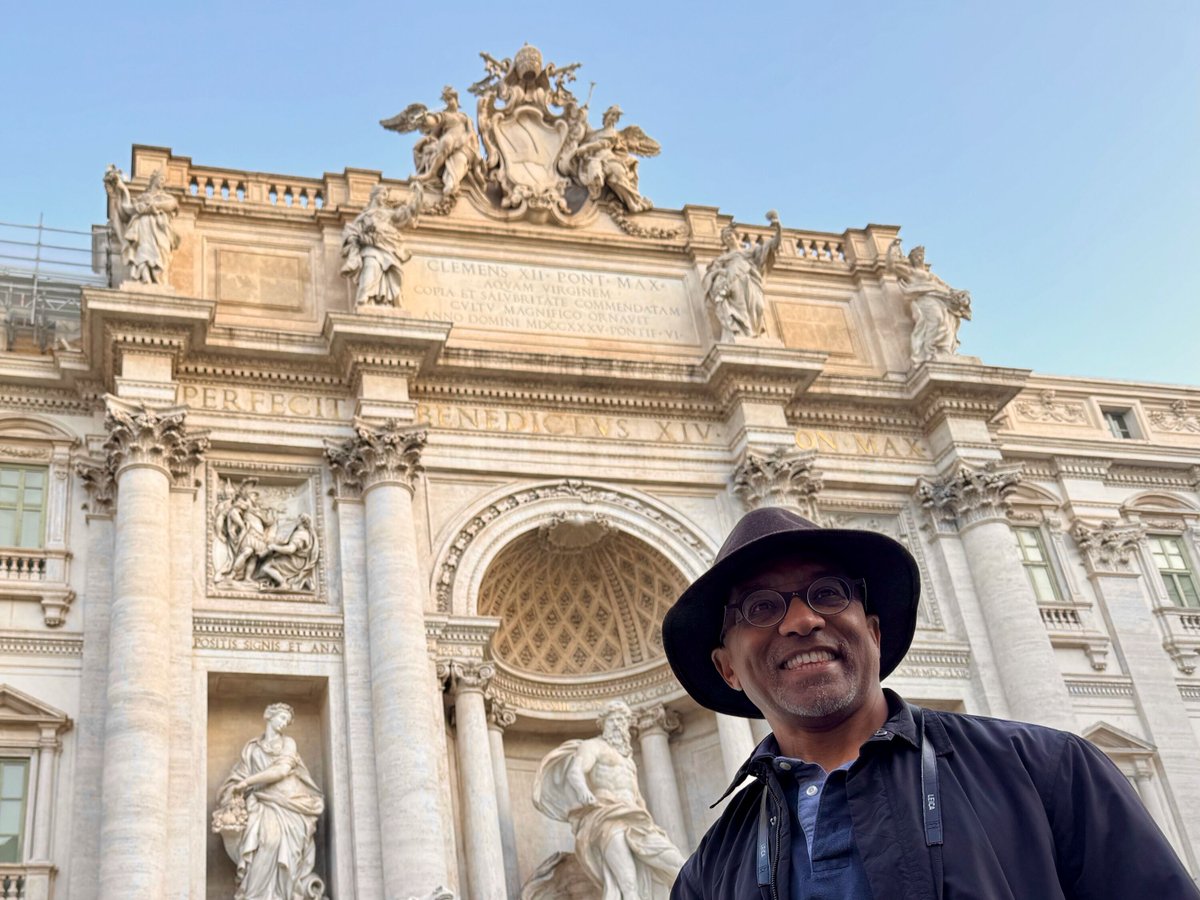
I walked through Rome before sunrise a couple of years ago and suddenly noticed something strange:
The city did not feel eternal.
It felt maintained.
Even the statues looked tired.
That was the moment the essay finally clicked for me.
The older Michelangelo became, the less interested he seemed in perfection.
And the more interested he became in truth.
I wrote about it here:
michaelhunterwellness.kit.co…
12
Jun 7
One thing I keep noticing in older adults with remarkable cognitive resilience:
They stay engaged with life.
They walk.
They learn new things.
They stay curious.
They continue paying attention to the world instead of retreating from it.
The people who seem to age best mentally often keep expanding instead of narrowing.
I think the brain responds to the life we repeatedly give it.
michaelhunterwellness.kit.co…?
2
12
Jun 6
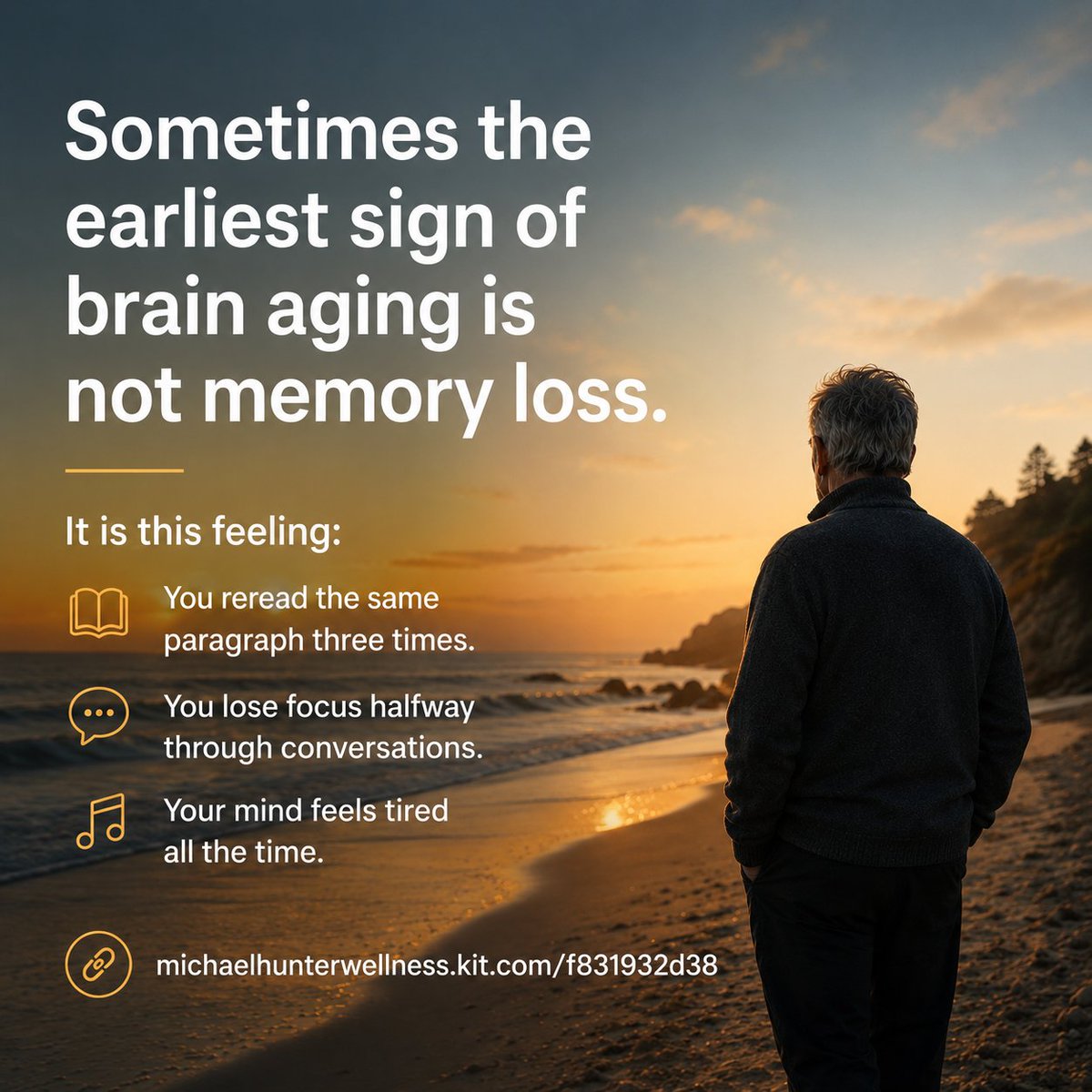
Sometimes the earliest sign of brain aging is not memory loss.
It is this feeling:
You reread the same paragraph three times.
You stop finishing books.
Your attention feels thinner than it used to.
Music sounds flatter.
Your mind feels tired all the time.
In the clinic, I’m seeing more people describe a quieter kind of cognitive decline long before dementia ever appears.
I think modern life may be overwhelming the brain in ways we still underestimate.
michaelhunterwellness.kit.co…?
#MentalHealth #Aging
1
9
Jun 5
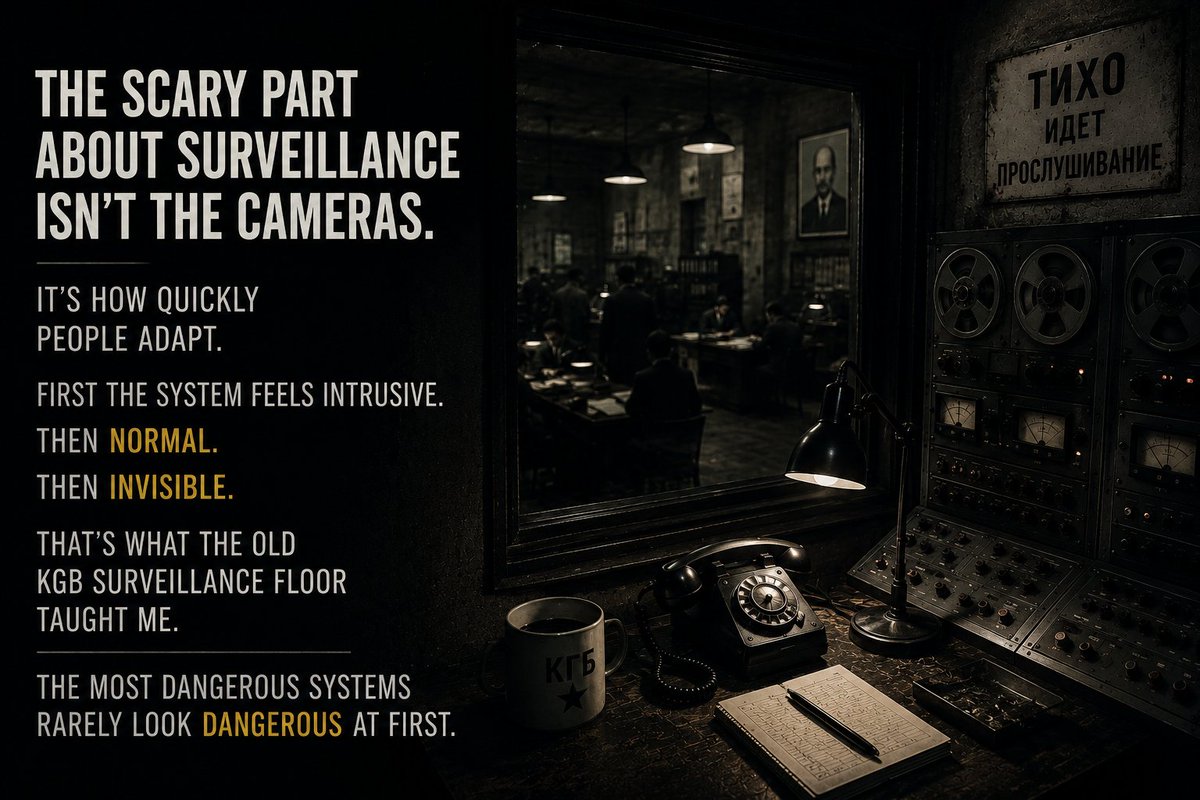
The scary part about surveillance isn’t the cameras.
It’s how quickly people adapt.
First the system feels intrusive.
Then normal.
Then invisible.
That’s what the old KGB surveillance floor taught me.
The most dangerous systems rarely look dangerous at first.
Link below.
1
8
Jun 5
People adapt frighteningly fast to systems that quietly remove privacy one small piece at a time.
Full story:
medium.com/dr-michael-hunter…
12
Jun 5
The scary part about the old KGB surveillance floor wasn’t the technology.
It was how normal everything looked.
Coffee cups.
Paperwork.
Routine.
People adapt frighteningly fast to systems that quietly remove privacy one small piece at a time.
That’s why this story feels modern.
Link below.
1
7
Jun 5
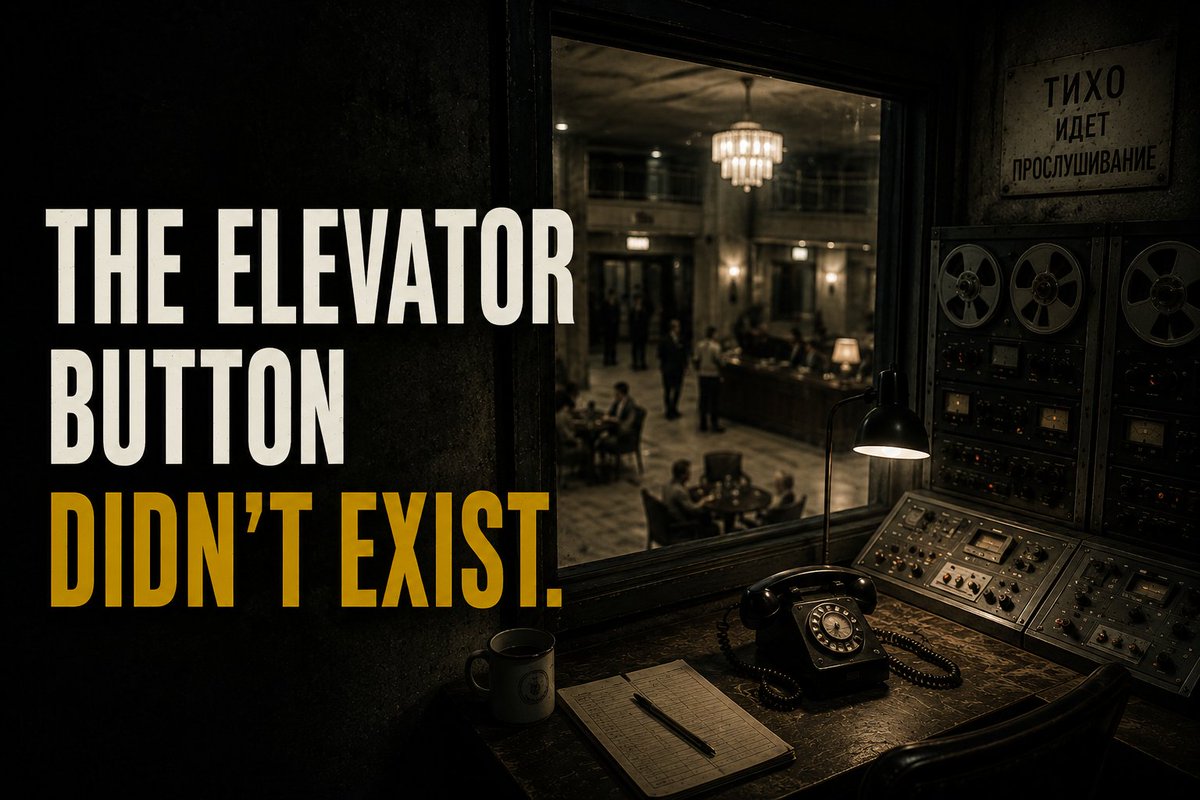
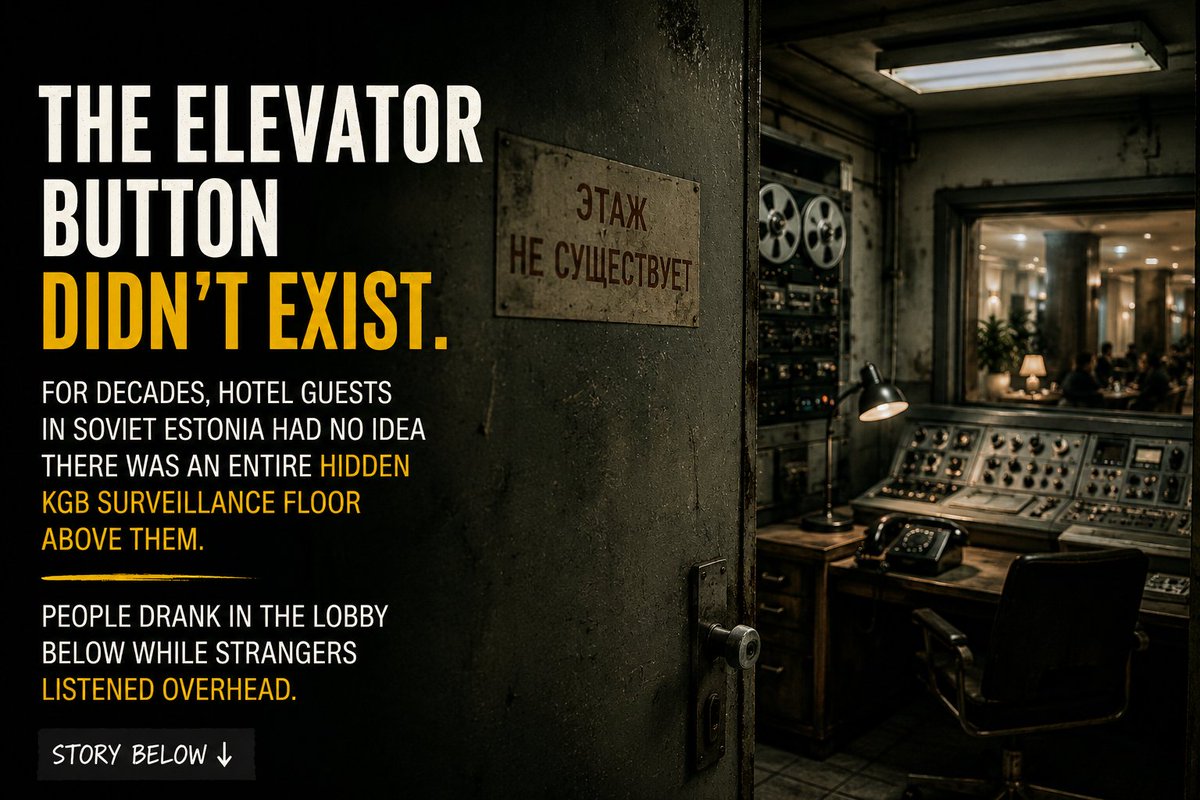
The elevator button didn’t exist.
For decades, hotel guests in Soviet Estonia had no idea there was an entire hidden KGB surveillance floor above them.
People drank in the lobby below while strangers listened overhead.
That feels less historical than it should.
Link below.
1
18