
Joined May 2023
- Tweets 13,998
- Following 3,496
- Followers 2,988
- Likes 22,474
1,863 Photos and videos









Pinned Tweet

28 Mar 2025
2
3
24
1,007
Storm Shadow Fella 🇨🇦 🇺🇦📎 retweeted
The U.S. funded bio labs in Ukraine were for the disposal of Soviet-era biological weapons but the MAGAs are far too stupid to understand that.
152
603
3,925
47,777

Either people are jumping ship off X, or Elon is trying to boost his trillionaire status. Don't do it my muchachos and muchachas. #smokefleet #NAFO

10
Storm Shadow Fella 🇨🇦 🇺🇦📎 retweeted

To all the triggered Americans about the booing of the American flag at the World Cup - it wasn’t just Canadians in the stands. There were people from across the globe in the stands. I was there. And here’s the thing, you voted a president who shits on all his allies - TWICE. You reap what you sow. Cope.
276
569
4,802
76,202
Storm Shadow Fella 🇨🇦 🇺🇦📎 retweeted

Nice tiddies, elmo.
@EatADickElon

Omg 🤣 there’s now a giant inflatable topples Elon in Times Square protesting Grok wired.com/video/watch/giant-…
1
3
24
Storm Shadow Fella 🇨🇦 🇺🇦📎 retweeted

12h
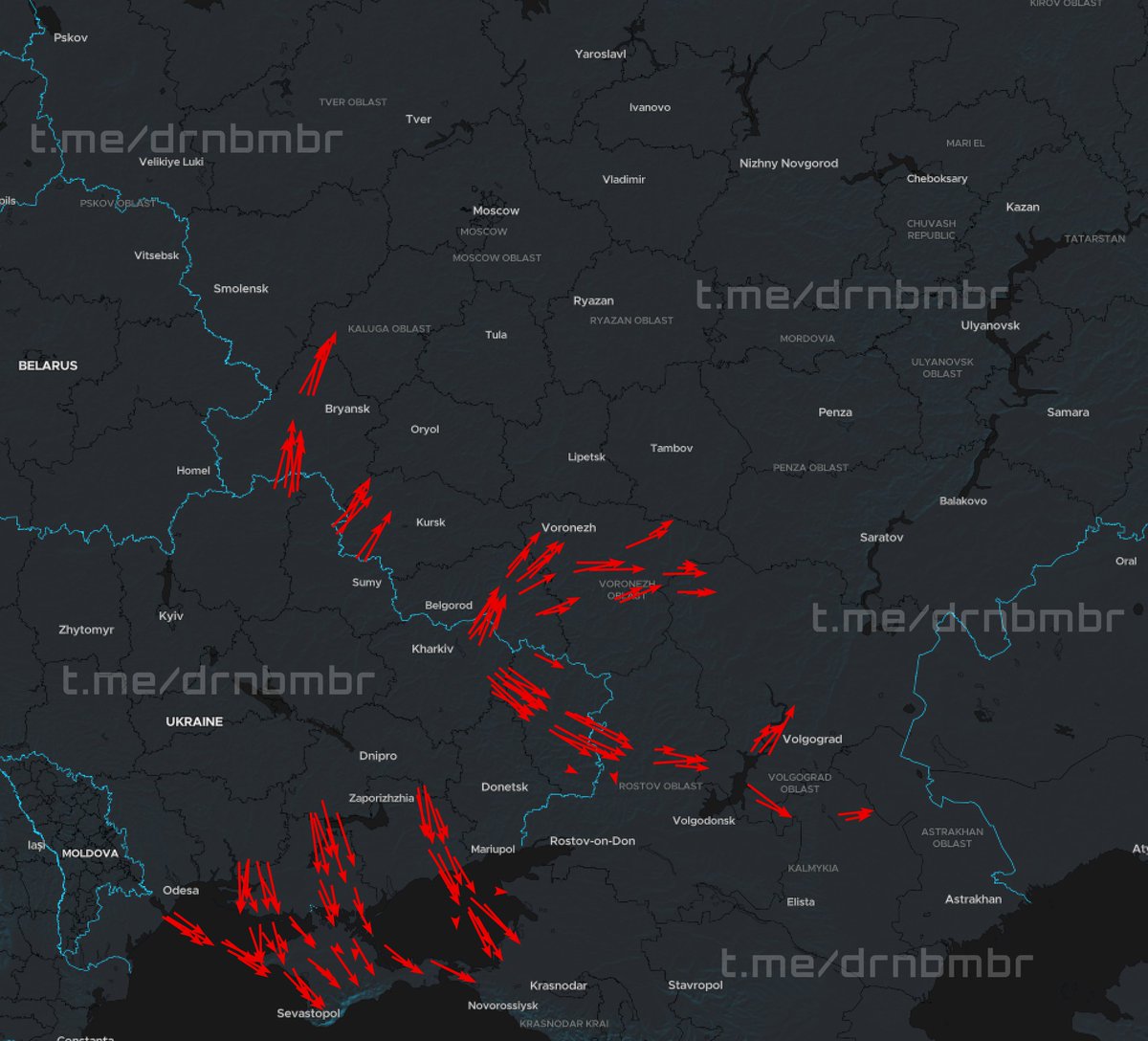
🇺🇦23:30 | 13/06
Approximate flight routes of our UAVs:
🔴 Red arrows — directions of strike UAV movement;
According to Russian sources, around 300 drones were reported, though these estimates and the displayed routes remain highly approximate.
14
199
716
37,083
Storm Shadow Fella 🇨🇦 🇺🇦📎 retweeted
Morning my #SmokeFleet Muchachos and #NAFOFella friends!
Remember our causes are all interconnected. A win for one is a win for all.
#UnitedWeStand
#NAFOExpansionIsNonNegotiable
#SmokeRises
#EatADickElon
#CanadianBakin

4
25
45
410
Storm Shadow Fella 🇨🇦 🇺🇦📎 retweeted

Jun 12
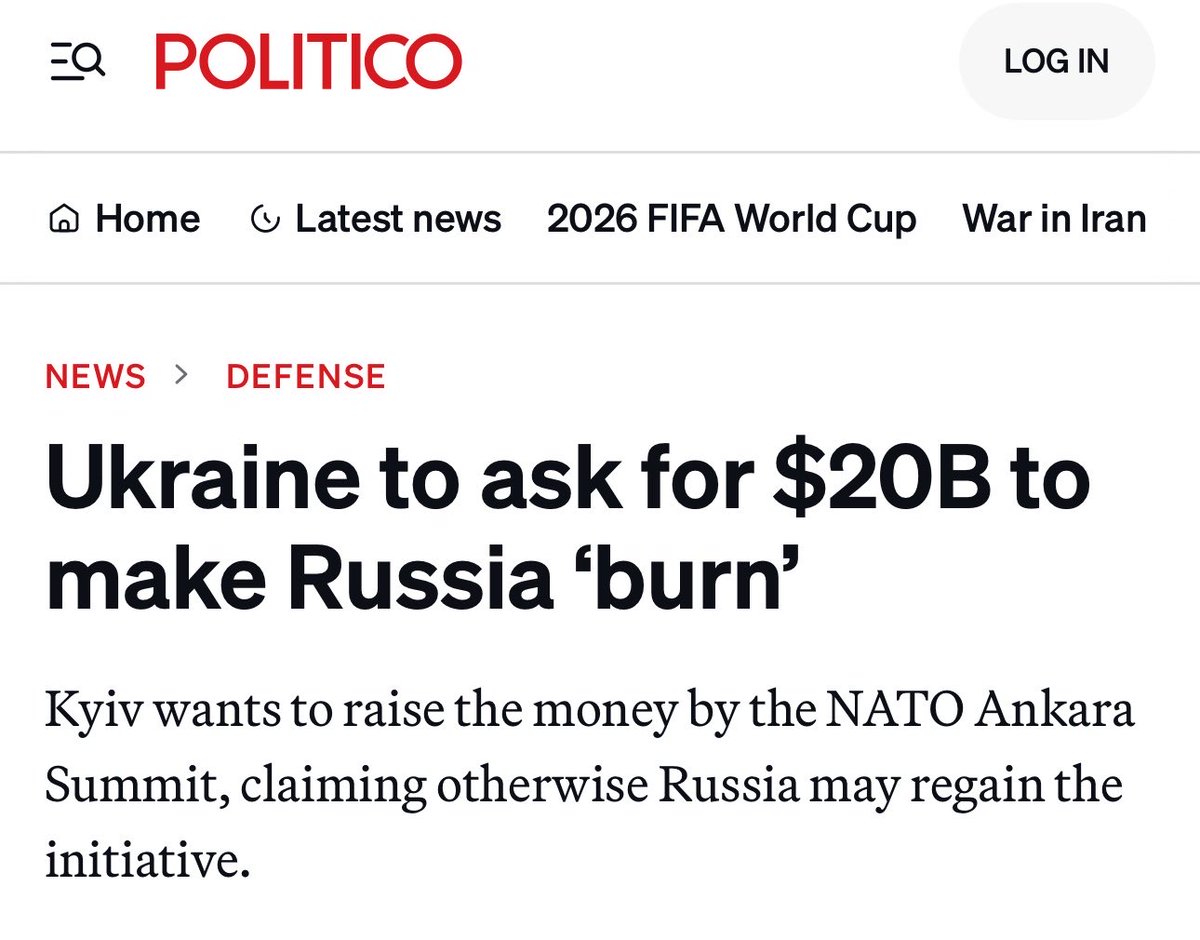
I’ve heard enough.
Give them $40B
Fuck it, send a blank cheque.
Incredible value for money.
Huge return on investment.
52
195
1,013
6,930
Must be Friday. All the little birds are headed to cottage country. Have a real banger of a weekend, folks!
@DrnBmbr
Jun 12

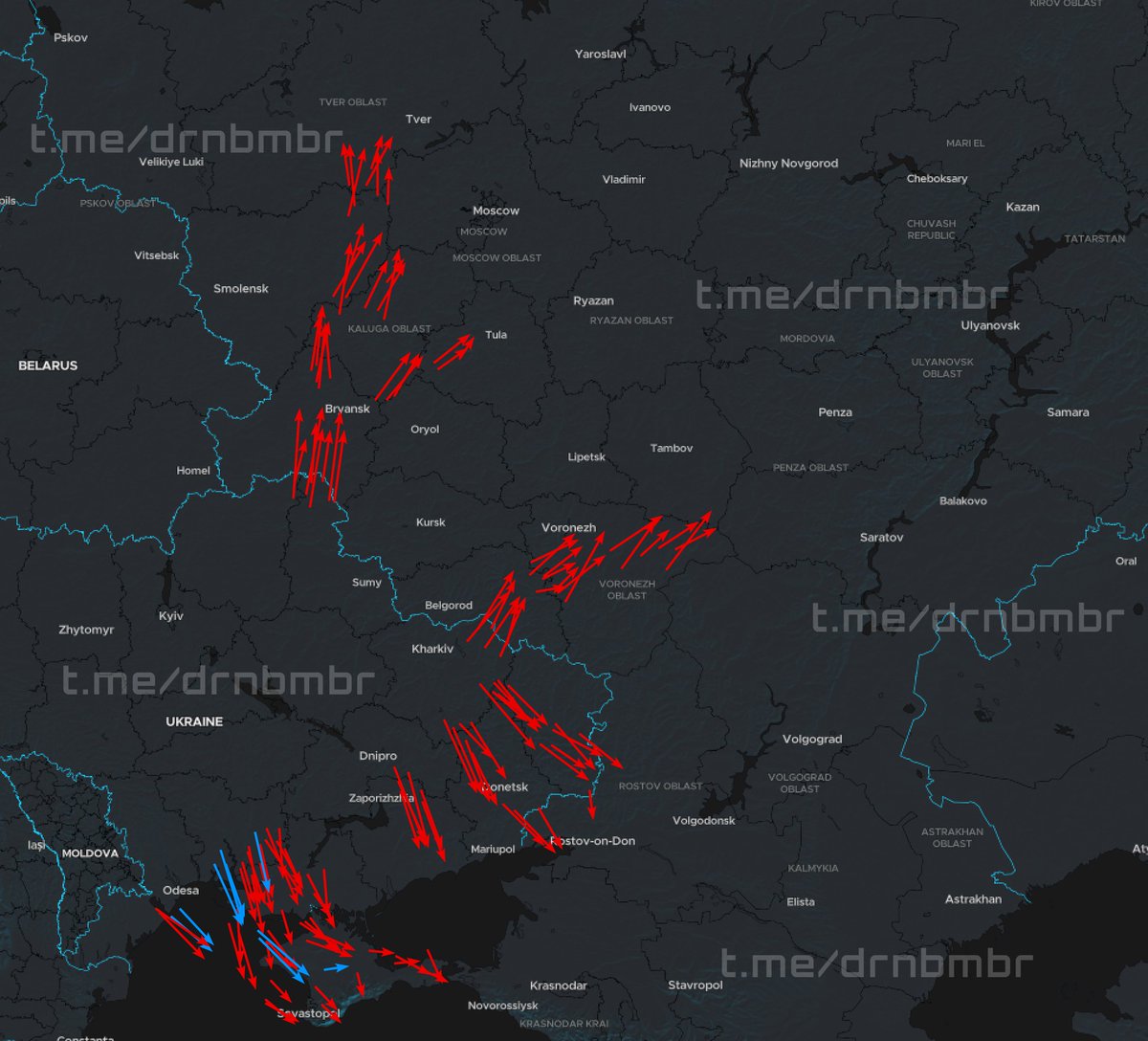
🇺🇦23:00 | 12/06
Approximate flight routes of our UAVs:
🔴 Red arrows — directions of strike UAV movement;
🔵 Blue arrows — directions of jet-powered UAV movement;
According to Russian sources, around 280 drones were reported, though these estimates and the displayed routes remain highly approximate.
1
11
Storm Shadow Fella 🇨🇦 🇺🇦📎 retweeted
#EatADickElon
#EatADickElon
#EatADickElon
#EatADickElon
#EatADickElon
#EatADickElon
#EatADickElon
#EatADickElon
#EatADickElon
#EatADickElon
#EatADickElon
#EatADickElon
#EatADickElon
#EatADickElon
#EatADickElon
#EatADickElon
#EatADickElon
No, seriously...
#SmokeFleet



3
16
21
293
Storm Shadow Fella 🇨🇦 🇺🇦📎 retweeted

Jun 11
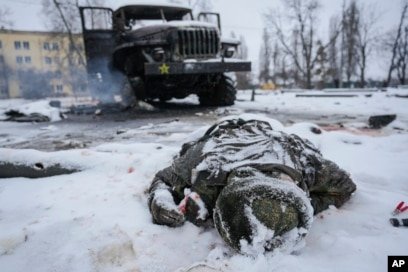
It's almost impossible to fully take in, but as of today, Russia's full-scale invasion of Ukraine has entered its 1,568th day - one day longer than the entire First World War lasted. Let that sit for a moment!
The human cost has long since passed the threshold of the comprehensible. Conservative estimates put Russian military deaths at between 300,000 and 500,000; Ukrainian losses at over 100,000. These are soldiers only - the count excludes civilians killed, the hundreds of thousands wounded, and those lost to suicide and indirect causes. Taken together, these numbers already exceed the total military dead from all the wars in the former Yugoslavia, and surpass every armed conflict on European soil since the Napoleonic Wars - with only the two world wars and possibly the Russian Civil War as exceptions. This is not a regional skirmish or a frozen conflict. It is the bloodiest war Europe has seen in living memory, and it is still going!
What makes this especially difficult to process is not just the scale, but the proximity - geographical, historical, cultural. This is not a war being fought at a comfortable distance. It is unfolding on the same continent where Europeans built institutions, signed treaties, and told themselves, repeatedly, that industrial-scale slaughter between states was a thing of the past. That assumption has been shattered. And yet, more than four years in, there remains a strange collective numbness - a failure of imagination, or perhaps a failure of will - that prevents us from fully reckoning with what is happening.
Whatever name we give it - the Russo-Ukrainian War, the war in Ukraine, Russia's war of aggression - the reality is the same: a deliberate, sustained attempt to destroy a sovereign nation through overwhelming force. Over 1,500 days in, that attempt has failed to achieve its objectives. But the cost of resistance has been catastrophic, and the end remains nowhere in sight.
9
46
188
10,999
Storm Shadow Fella 🇨🇦 🇺🇦📎 retweeted
9
57
182
3,428
Storm Shadow Fella 🇨🇦 🇺🇦📎 retweeted

Jun 10
Defence Minister David McGuinty on Russia calling Canada a "warmonger": It's not unexpected ... We would expect to see the Russians to be critical because they don't appreciate the fact that NATO is coming together to assist a country that's in need.
50
301
1,757
43,135
Storm Shadow Fella 🇨🇦 🇺🇦📎 retweeted

Jun 10
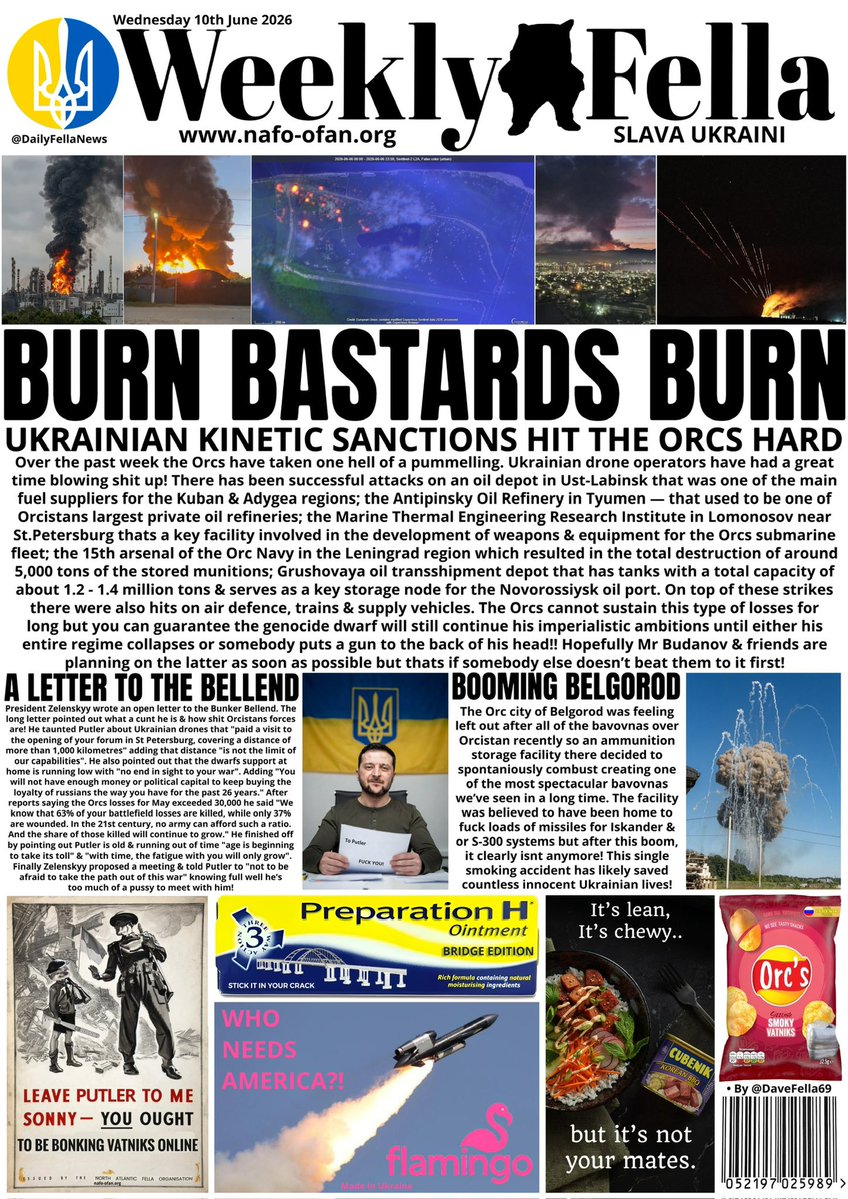
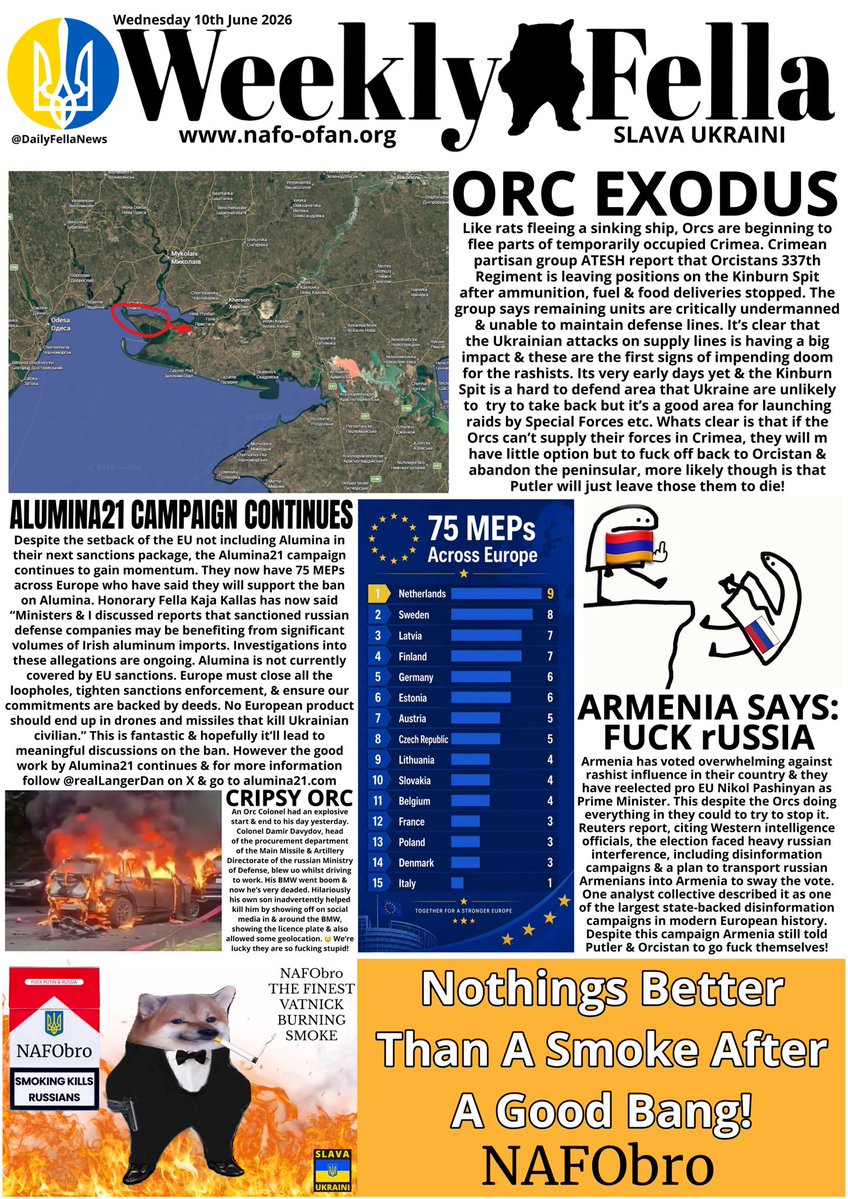
It’s Weekly Fella time. Read about russia burning, Zelenskyy trolling Putin, Armenia says f-you & the Alumina21 campaign gains momentum.
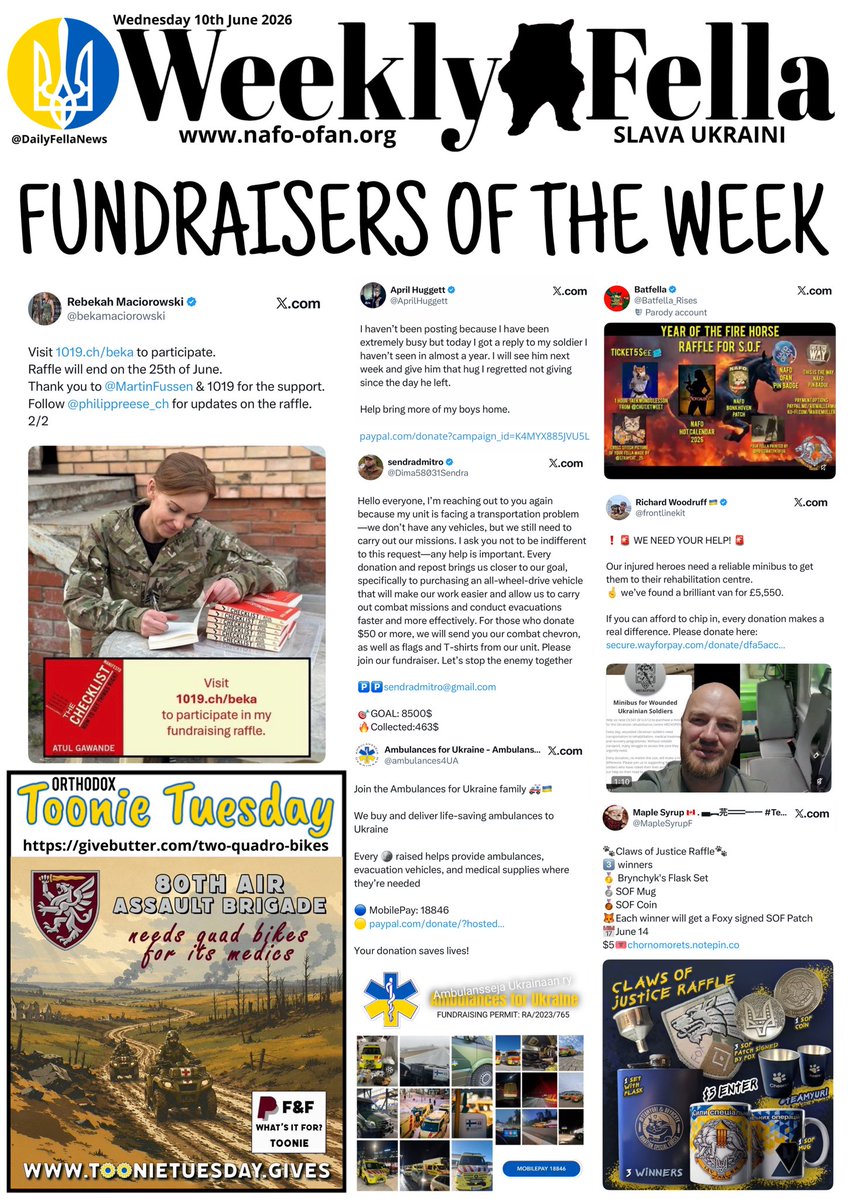
Please don’t forget our fundraiser thread below.
#WeeklyFella #DailyFella #DailyFellaNews #SlavaUkraini #NAFO
8
102
146
1,923
Storm Shadow Fella 🇨🇦 🇺🇦📎 retweeted

Jun 10
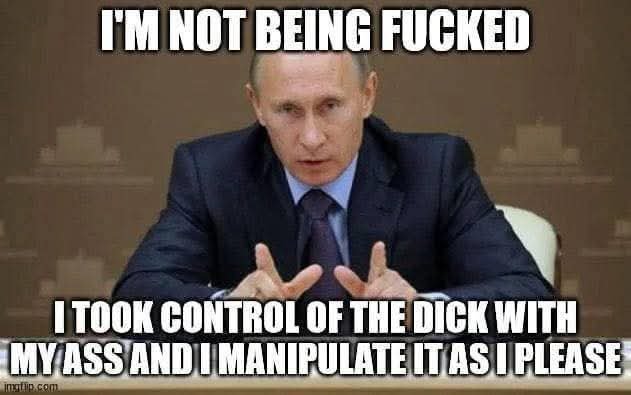
Did you hear rhe newest cope by Putin
Putin
7
26
132
1,305
Good read. #SmokeFleet might like this one too...
theguardian.com/commentisfre…
3
Storm Shadow Fella 🇨🇦 🇺🇦📎 retweeted
@RavenRage2010 and all #SmokeFleet, @ UkrainianSquad (and all it's iterations, there are many) are scammers. DO NOT ENGAGE!
#NAFO knows.

Ukrainian soldiers still moving to the front lines. Don’t forget to wish them safety & victory 🙏
1
1
1
31
Storm Shadow Fella 🇨🇦 🇺🇦📎 retweeted

Jun 9
"Booooooo" - everybody
103
307
3,035
38,123
Storm Shadow Fella 🇨🇦 🇺🇦📎 retweeted

Jun 9
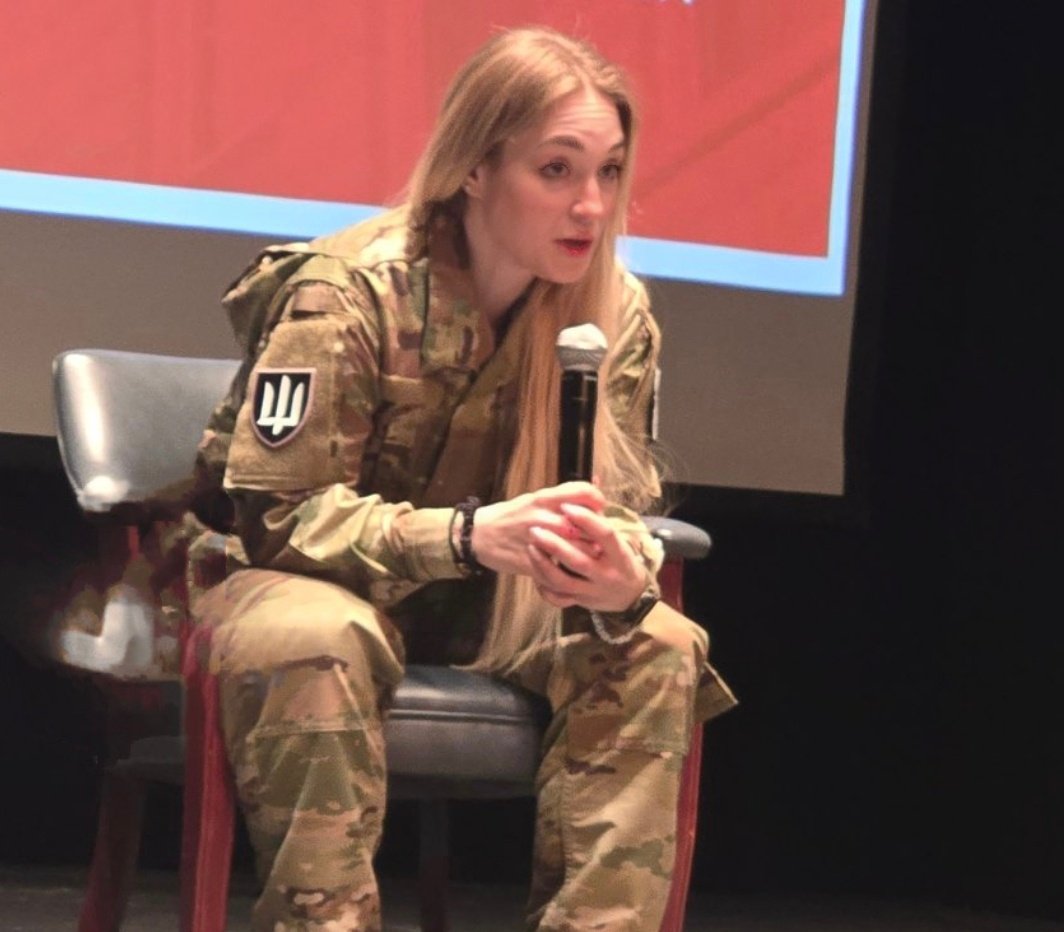
While I was briefly back in the US, I was disheartened by how many would say "oh is that still going on?" when referring to the war in Ukraine.
It was incredibly frustrating for me especially as an active duty medic in the Armed Forces of Ukraine. At that point its just willful ignorance. Everyone has a cellphone, laptop, tablet, etc. Information is literally at your finger tips. But instead of informing oneself properly, the choice seems to be watching AI slop, mainstream media, and other short attention span apps.
The was is not over, it has not slowed down, we are still working and fighting for freedom in Ukraine, the frontline is still 1000 km long, civilians are still being killed by r*ssia every day. We can only go so far to inform you. The rest is up to you. Up to date sources, @KyivIndependent @KyivPost @saintjavelin @U24_gov_ua
Stay informed and inform others.
690
4,674
16,066
243,331

23