
Investor | Entrepreneur | Board Member | Driving Africa’s economic transformation through innovation & impact. Views my own.” @PreciseConsult, @afrenaissancevc
Joined June 2009
- Tweets 26,471
- Following 1,168
- Followers 77,566
- Likes 26,946
1,898 Photos and videos




Pinned Tweet

16 Apr 2025
The EU Deforestation Regulation (EUDR), effective by late 2025, poses a significant and even unfair challenge for #Ethiopia’s 5 million smallholder coffee farmers, requiring traceable, deforestation-free exports. Andrew & I propose a market solution! linkedin.com/posts/henokasse…
2
1
6
4,848
Jan 8
I've just returned from Seychelles, which the New York Times named to its 2026 world's top 52 destinations to visit. Seychelles' success is real and hard earned. Tourism there was not an accident but a deliberate development strategy, executed well.
What's more interesting, though, is how that success is now reshaping prices, livelihoods, and policy choices. I found it to be a useful case study in what happens after tourism "succeeds".
Check out my latest article: What Seychelles Teaches Us About Tourism as a Development Strategy linkedin.com/pulse/what-seyc… via @LinkedIn
4
1
4
1,574
Jan 1
New Year. New Responsibility. Turning African resilience into climate solutions.
Happy New Year 2026!
1
5
534
18 Dec 2025
#Africa’s infrastructure problem isn’t technology. It’s architecture.
Across Africa, we keep seeing the same pattern: strong founders, real demand, successful pilots. And then a plateau.
Health-tech stalls when clinics lose power. Ag-tech struggles when irrigation is financed like a consumer appliance. Mobility startups can’t scale when every charger sits on a fragile balance sheet.
The issue isn’t a lack of innovation. It’s that we’re asking companies to scale on top of infrastructure that was never designed for a distributed, informal, climate-exposed economy.
We’re trying to run a mobile-first economy on a landline infrastructure model.
In this essay, I argue that Africa’s real bottleneck is infrastructure architecture—how assets are designed, governed, and financed—not which technologies we adopt next. The piece explores why telecoms and digital finance scaled, why infrastructure hasn’t, and what it would take to move from perpetual pilots to durable scale.
If you’re working in policy, development finance, climate finance, or infrastructure investing, this framing matters.
open.substack.com/pub/henoka…
6
875
24 Nov 2025
#Africa’s digital systems have advanced quickly, but the interface layer still doesn’t match how people communicate. Most daily interactions happen through speech — multilingual, fast, and shaped by context — yet institutions still rely on text-heavy channels.
Voice AI is infrastructure that is beginning to change this: localized data, adapted models, and enterprise integrations that allow banks, telcos, and public agencies to understand real African speech at scale. The early work is demanding, but the payoff is clear. As accuracy improves and costs fall, voice becomes a practical way to expand service reach and lower the barriers faced by low-literacy or multilingual users.
Africa is part of a wider Global South pattern, but the continent’s linguistic density makes the shift especially meaningful. Voice won’t replace text or call centers, but it will make digital systems more accessible — and bring millions closer to the institutions they rely on.
Check out my latest article: Language as Infrastructure: How Voice AI Is Reshaping Access in Africa linkedin.com/pulse/language-… via @LinkedIn
2
5
586
12 Nov 2025
Development still treats planning as progress. But real transformation comes from learning: fast, honest, adaptive learning.
Nature has always known this. Evolution works by trying, failing, and keeping what works. Africa’s systems must do the same: build feedback, not just frameworks; reward adaptation, not just execution.
Ethiopia’s reforms are live experiments. Their value lies not in perfection, but in what they teach the system next.
The future will belong to those who learn fastest.
Check out my latest article: Learning Like Nature: Why Africa’s Development Must Evolve, Not Just Plan linkedin.com/pulse/learning-… via @LinkedIn
3
529
28 Oct 2025
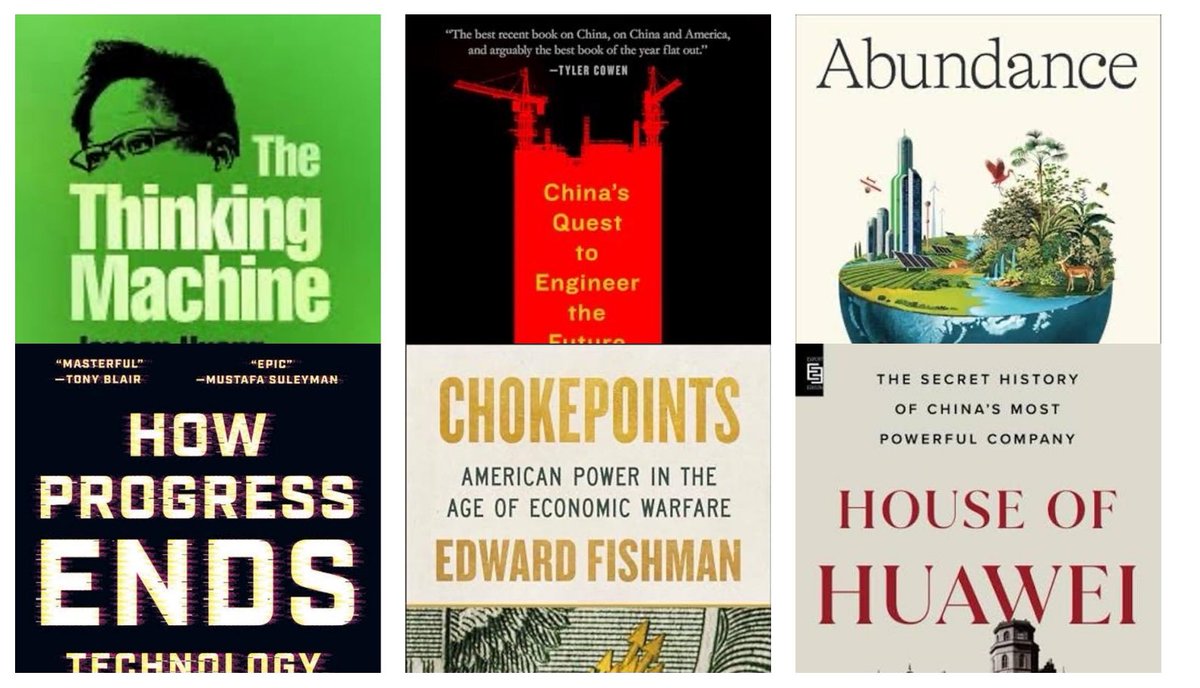
The Financial Times Business Book of the Year shortlist adds up to one thing: advantage in shaping the future will belong to those who control the key bottlenecks of production such as compute, industrial depth, supply chains, and the institutions able to execute at scale.
One of the shortlisted titles, Chokepoints, is explicitly about how control over supply chains translates into real power. The emphasis is shifting from stories of growth to the machinery that enables it. Power is consolidating around those who can build.
4
1,243
24 Oct 2025
The real test of digital transformation is better livelihoods! Can power, data, and finance work together so every connection translates into income, resilience, or dignity?
Ethiopia has built dams to power the nation. Now it’s time for that same public energy to power opportunity.
If we align our energy and digital systems around livelihoods, Ethiopia can turn stranded electrons into engines of inclusion.
From dams to data, digital transformation can become the tool for national transformation.
#Ethiopia #Africa #DigitalTransformation #EnergyTransition #InclusiveGrowth #Innovation #DevelopmentFinance
Check out my latest article: From Digital Access to Digital Livelihoods: Turning Connectivity into Prosperity linkedin.com/pulse/from-digi… via @LinkedIn
1
656

17 Oct 2025
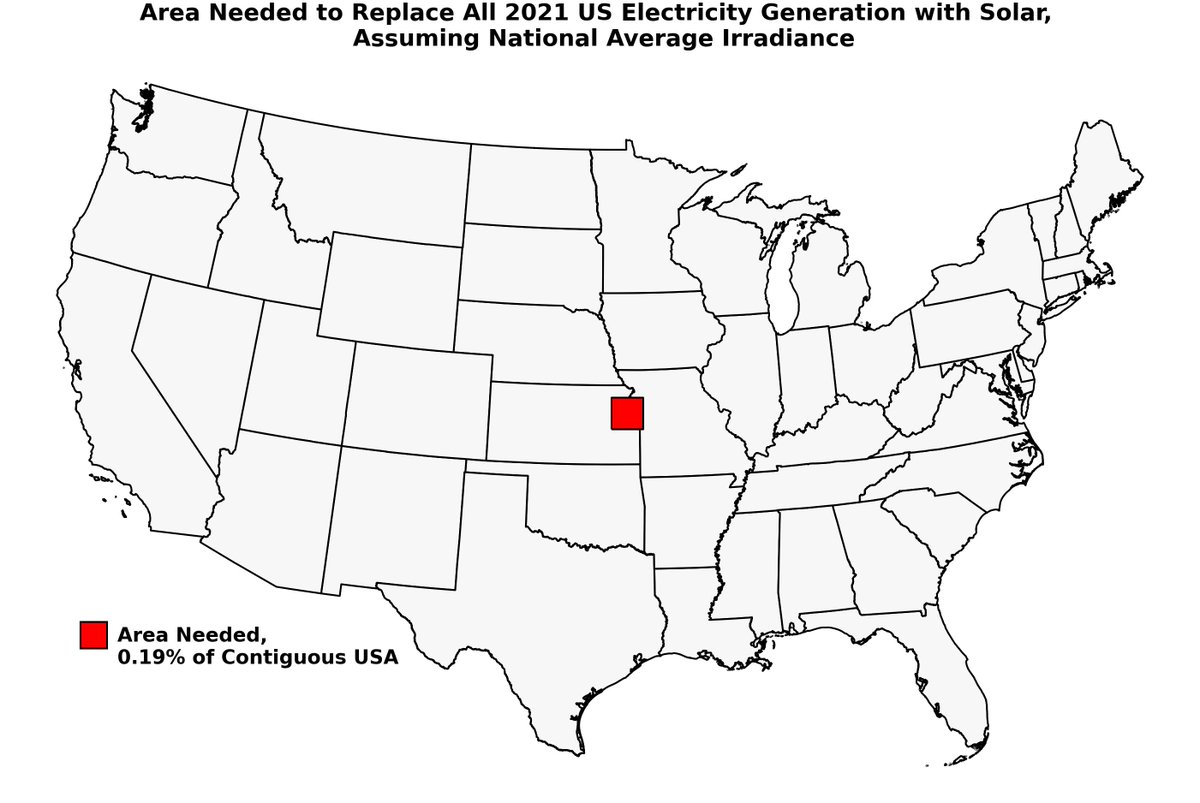
Making Irrigation Work for Farmers #Ethiopia #Africa
Twenty-five years ago, Dr. Dessalegn Rahmato argued that lasting irrigation success depends on participation and local ownership.
Ethiopia’s experience since then confirms that scale alone is not enough. With new solar and digital tools, it is now possible to extend irrigation more efficiently and inclusively.
This essay explores how investment priorities can evolve from building infrastructure to strengthening systems that farmers can manage and sustain.
Read the full essay →
linkedin.com/pulse/rethinkin…
2
7
1,042
16 Oct 2025
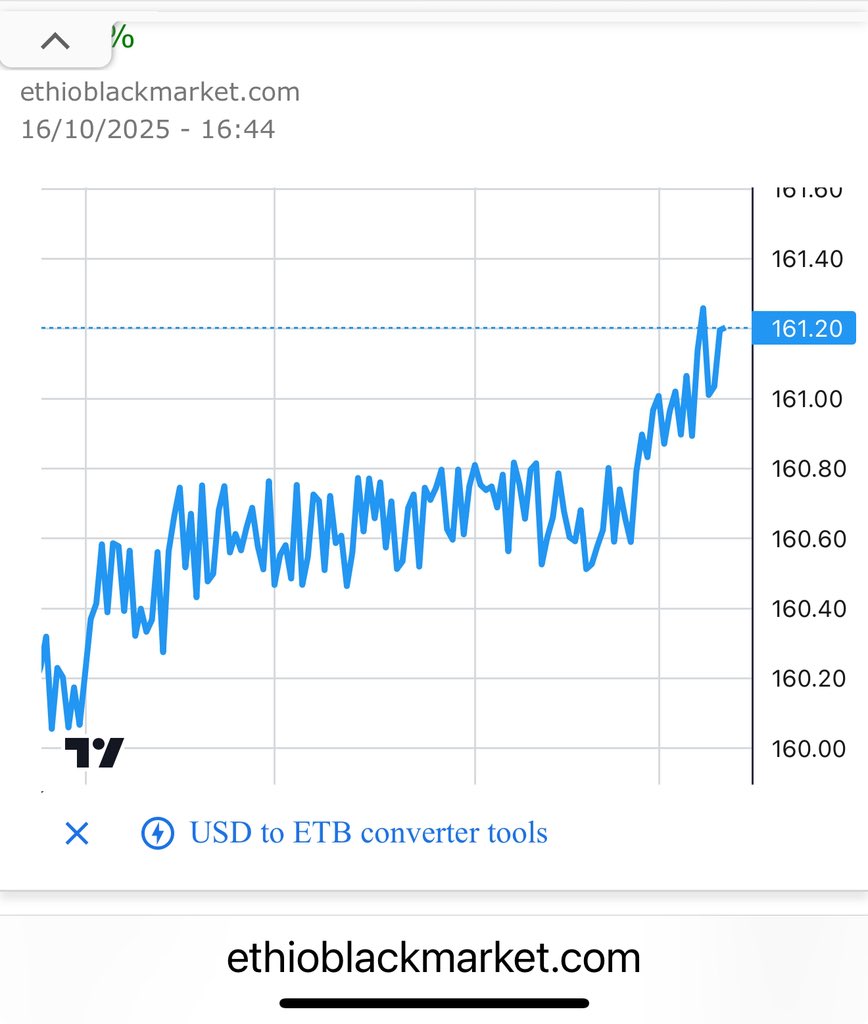
#Ethiopia This guy must be a billionaire by now. All he has to do is: 1) Lower the rate and buy as much dollars as he can. 2) Raise the rate and sell the dollars at a profit. 3) Rinse and repeat.
What world are the rest of us living on?
5
7
1,951
14 Oct 2025
For the first time in recent history, #Ethiopia’s money is moving in response to market information.
Behind the numbers, a quiet revolution is unfolding.
A financial system once built for storage is beginning to circulate through interbank markets, open-market operations, and yield curves that finally speak the language of price, not decree.
We are witnessing the architecture of a market economy being born slow, disciplined, and deliberate.
Check out my latest article: When Money Learned to Move: Inside Ethiopia’s Quiet Financial Revolution linkedin.com/pulse/when-mone… via @LinkedIn
13
20
81
12,519
Henok 🇪🇹🇺🇸 retweeted

11 Oct 2025
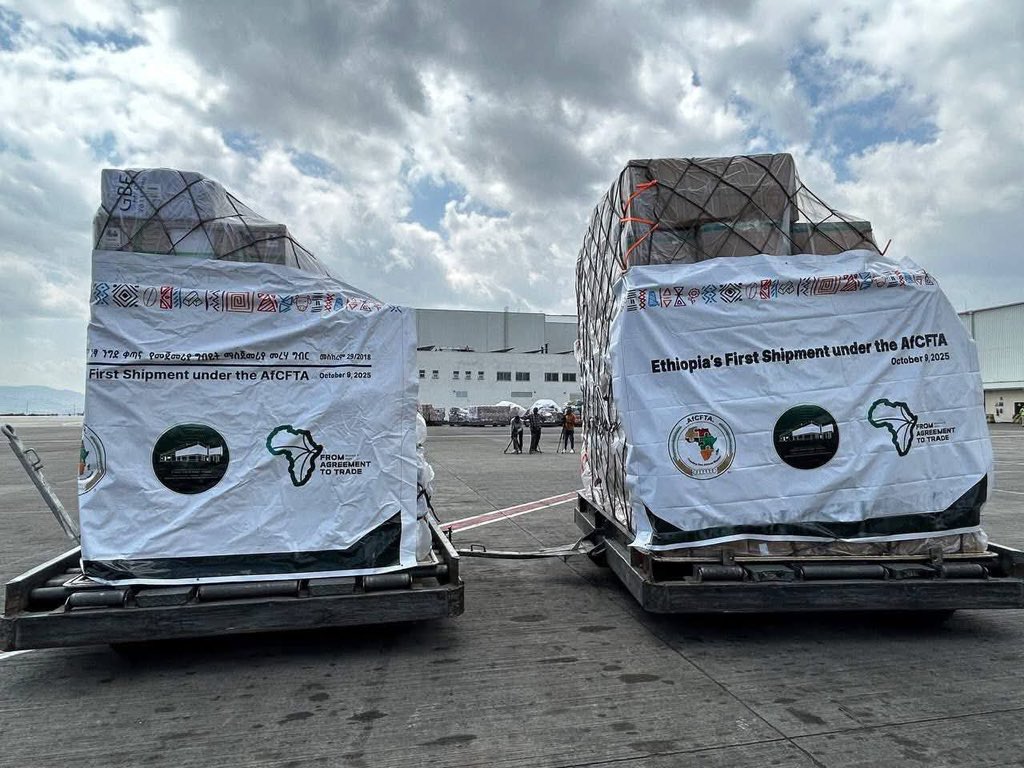
Ethiopia takes a bold step toward Africa’s economic unity by starting trade under #AfCFTA. This milestone boosts intra-African trade, opens new SME opportunities, and enhances connectivity — with @flyethiopian ✈️ as a key enabler.
#AfCFTA

2
7
646
7 Oct 2025
Ethiopia’s banking system isn’t opening fast — it’s opening intelligently.
Beneath the trillion-birr balance sheets, a deeper transformation is underway. Liquidity now has a price. Credit is shifting to the private sector. Policy is learning to guide through market signals rather than directives.
This is not liberalization for its own sake. It’s a deliberate redesign — one that rewards discipline, data, and partnership over speed. For strategic investors, that distinction is everything.
My latest analysis explores how Ethiopia is engineering this balance — and why the country’s quietest reform may turn out to be its most investable.
Ethiopia’s Banking System: Discipline as Opportunity.
Check out my latest article: Ethiopia’s Banking System: Discipline as Opportunity.
linkedin.com/pulse/ethiopias… via @LinkedIn
1
1
8
1,695
6 Oct 2025
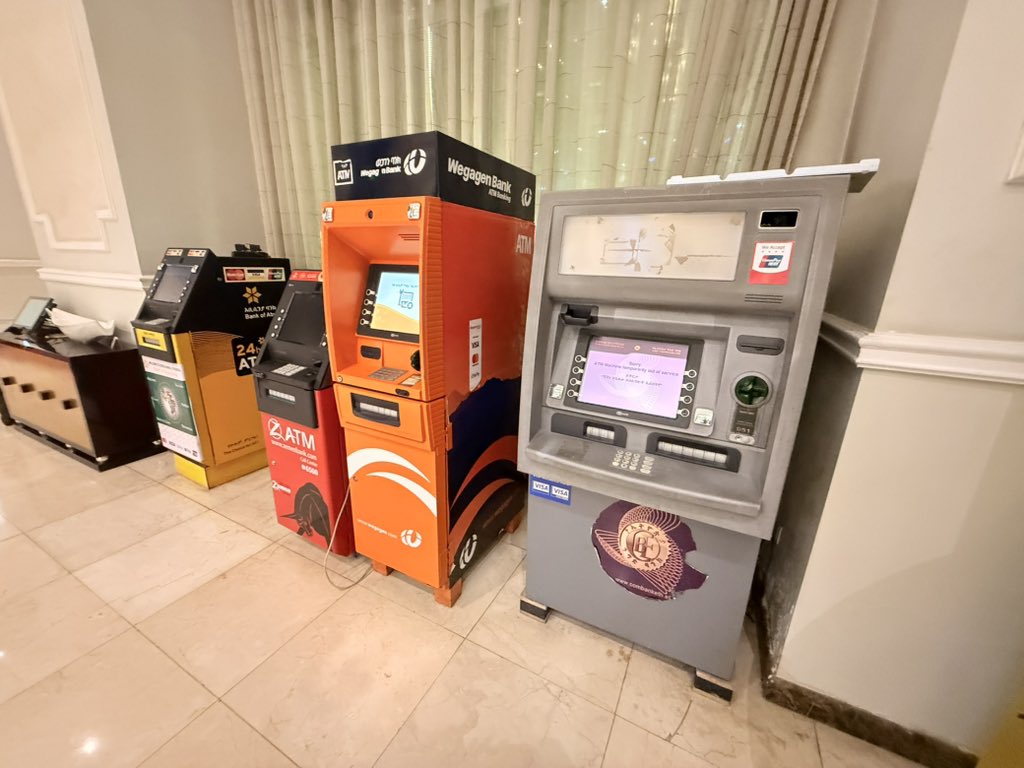
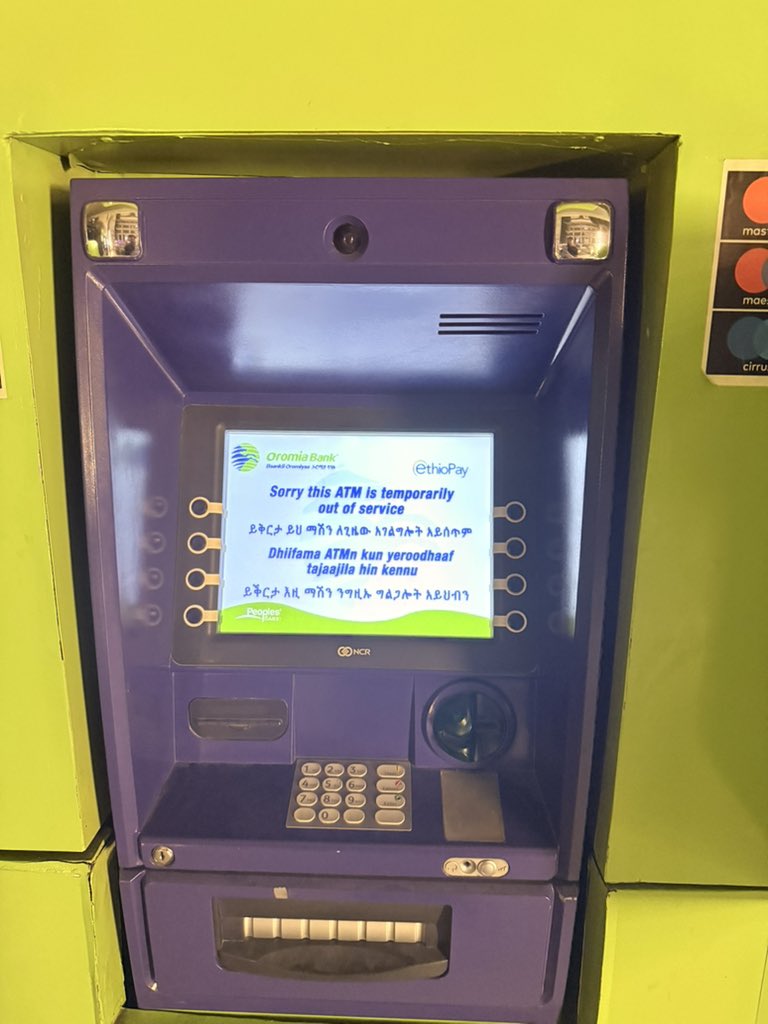
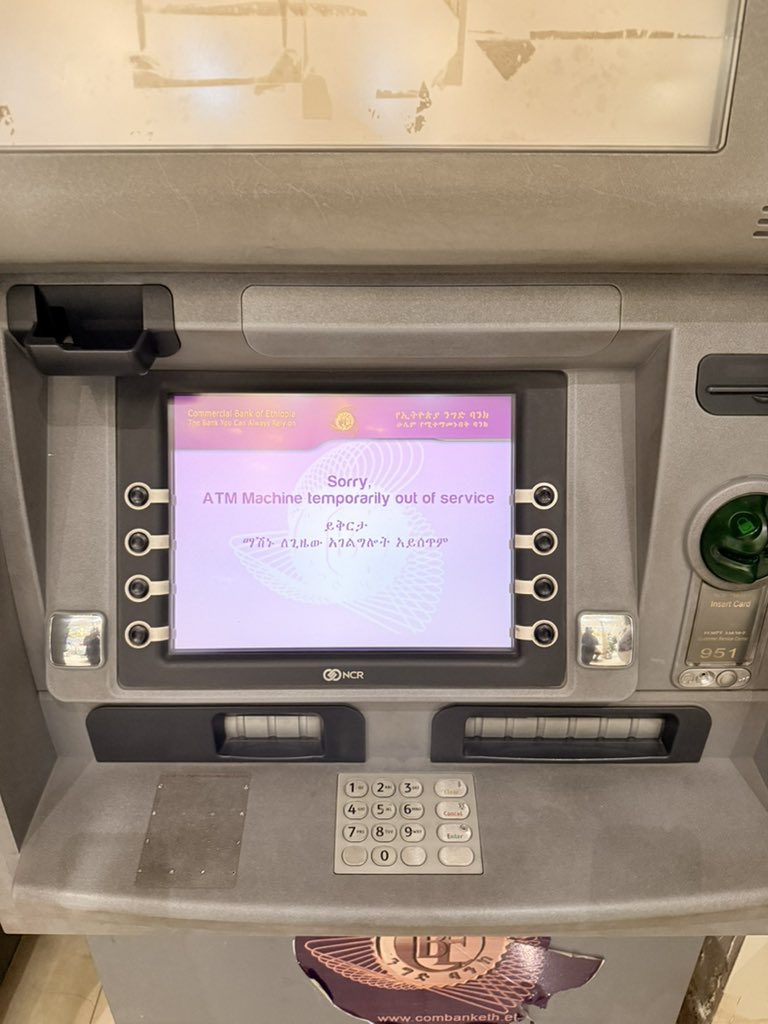
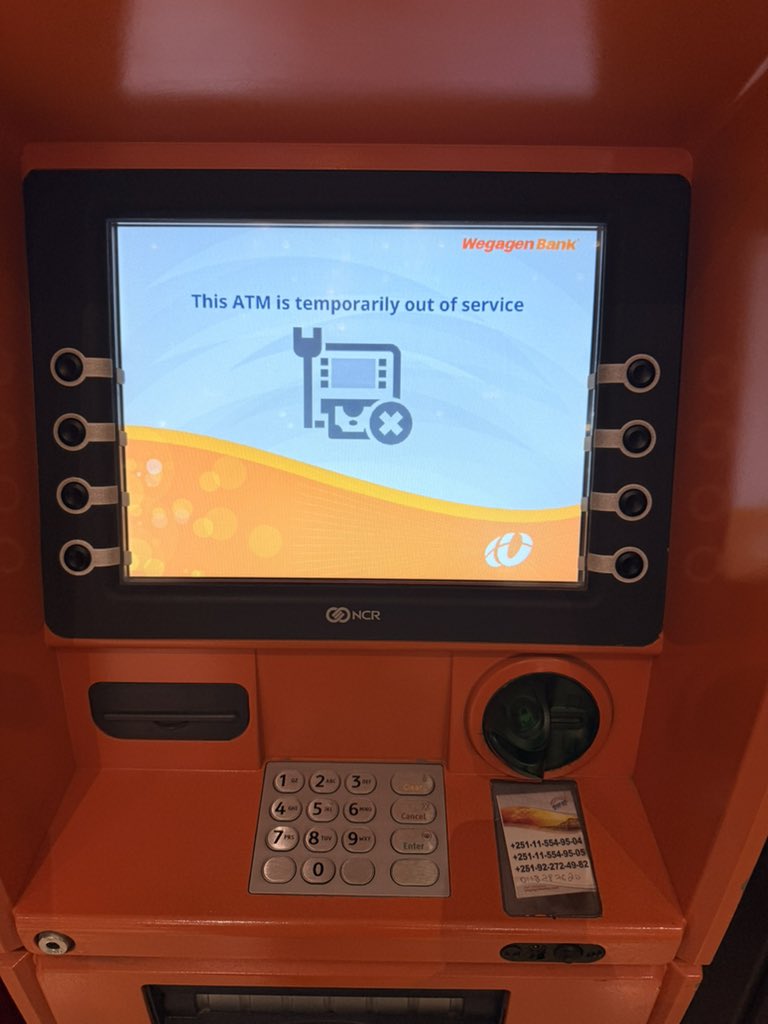
Withdrawing cash from an ATM in #Ethiopia over the weekend is futile, even at an international hotel.
3
4
1,368
2 Oct 2025
“Seven jealous fools playing by her rules, can’t believe her.” — Rodriguez.
Gold is up more than 45% this year. Nearly $3,900 an ounce.
Central banks are buying. Investors are shifting. Reserve managers are diversifying.
What does it mean when the oldest monetary asset outperforms everything else?
And what does it tell us about the system we still trust to hold the world together?
For #Africa, $3,900 gold is both windfall and warning — boosting reserves and revenues, but also tempting a slide back into raw extraction.
Can the continent turn this moment into sovereignty and value, rather than dependency dressed in gold?
2
641
1 Oct 2025
#Africa’s next economy won’t just be built only on dams, highways, or ports. It will be built on distributed systems: cold hubs that save harvests, mini-grids that power communities, battery networks that fuel mobility, and digital rails that move money.
The problem is that these are still treated as private purchases, loaded onto farmers and households. No farmer should be asked to build their own highway — yet that is how we treat the backbone of Africa’s distributed economy today.
The opportunity is simple. Reclassify these systems as public goods and finance them as infrastructure. Do that, and Africa stops bleeding value and starts compounding growth — unlocking a distributed future that is cheaper, faster, and more empowering for millions.
Check out my latest article: No Farmer Should Build Their Own Highway: Rethinking Africa’s Distributed Infrastructure as Public Good. linkedin.com/pulse/farmer-sh… via @LinkedIn
1
4
604
30 Sep 2025
Brazil’s Lesson 👇🏾👇🏾👇🏾
Yesterday I wrote about Africa’s hidden balance sheet (see below) — the hundreds of billions already sitting in our pensions, insurers, and sovereign funds. I argued that this capital could finance Africa’s distributed future: solar pumps, cold rooms, battery swaps, mini-grids, village-level processing.
This morning, in conversation with the ag financing ecosystem in Ethiopia, one case study came up that shows what’s possible when a country unlocks its own savings for agriculture: Brazil’s agri-securitization market.
Brazil faced the same dilemma we do — millions of farmers, fragmented cashflows, and banks unable to carry the full burden. Their solution was to pull agriculture into the capital market. Farmers issue Rural Product Notes (CPRs), promises to deliver their harvest or its cash value. These contracts are bundled by securitization companies into Agribusiness Receivables Certificates (CRAs), which are then sold to investors ranging from pension funds to retail savers. Often sweetened with tax incentives, CRAs provide upfront financing to farmers, while investors are repaid from the proceeds once the crops are harvested and sold.
The result has been transformative: a market with tens of billions of dollars outstanding, where farm receivables have become a mainstream asset class. Farmers gain access to long-term, large-scale capital; investors acquire a new, tradable product; and Brazil has reduced its reliance on government subsidies.
This is exactly the kind of design problem we’ve been talking about: how to turn millions of small, messy transactions into investible portfolios. Brazil shows it can be done at scale.
For Africa, the lesson is obvious. With the right legal frameworks, aggregation vehicles, and risk cushions, our own savings can finance the leap from scattered success to systemic transformation.
👉 Yesterday’s piece was about Africa’s hidden balance sheet. Today’s addition is this: securitization is one of the keys that can unlock it.
29 Sep 2025

#Africa’s hidden balance sheet is vast: hundreds of billions in pensions, insurers, and sovereign funds. Yet most of it sits in government paper, while the real frontier — distributed systems powering food, energy, mobility, and finance — still waits to be scaled.
From solar pumps and cold rooms to mini-grids, battery networks, and digital platforms, this is not charity. It is the architecture of a new economy — and it deserves to be financed as real infrastructure.
The contrast was impossible to ignore last week in Rotterdam and Leiden, birthplace of the modern capital market. Four centuries ago, pooled savings here launched the first stock exchange and financed global trade. Africa today has the same opportunity, if it channels its own savings into building a distributed future.
👉 Check out my latest article: Africa’s Hidden Balance Sheet: The Role of Pensions, Insurance, and Sovereign Funds in Financing the Distributed Future. linkedin.com/pulse/africas-h… via @LinkedIn
2
1
5
1,457
29 Sep 2025
#Africa’s hidden balance sheet is vast: hundreds of billions in pensions, insurers, and sovereign funds. Yet most of it sits in government paper, while the real frontier — distributed systems powering food, energy, mobility, and finance — still waits to be scaled.
From solar pumps and cold rooms to mini-grids, battery networks, and digital platforms, this is not charity. It is the architecture of a new economy — and it deserves to be financed as real infrastructure.
The contrast was impossible to ignore last week in Rotterdam and Leiden, birthplace of the modern capital market. Four centuries ago, pooled savings here launched the first stock exchange and financed global trade. Africa today has the same opportunity, if it channels its own savings into building a distributed future.
👉 Check out my latest article: Africa’s Hidden Balance Sheet: The Role of Pensions, Insurance, and Sovereign Funds in Financing the Distributed Future. linkedin.com/pulse/africas-h… via @LinkedIn
1
4
2,348