
Joined March 2024
- Tweets 4,392
- Following 682
- Followers 779
- Likes 10,770
669 Photos and videos










Jun 13
Some themes to focus on for the next decade:
Space Compute ✅
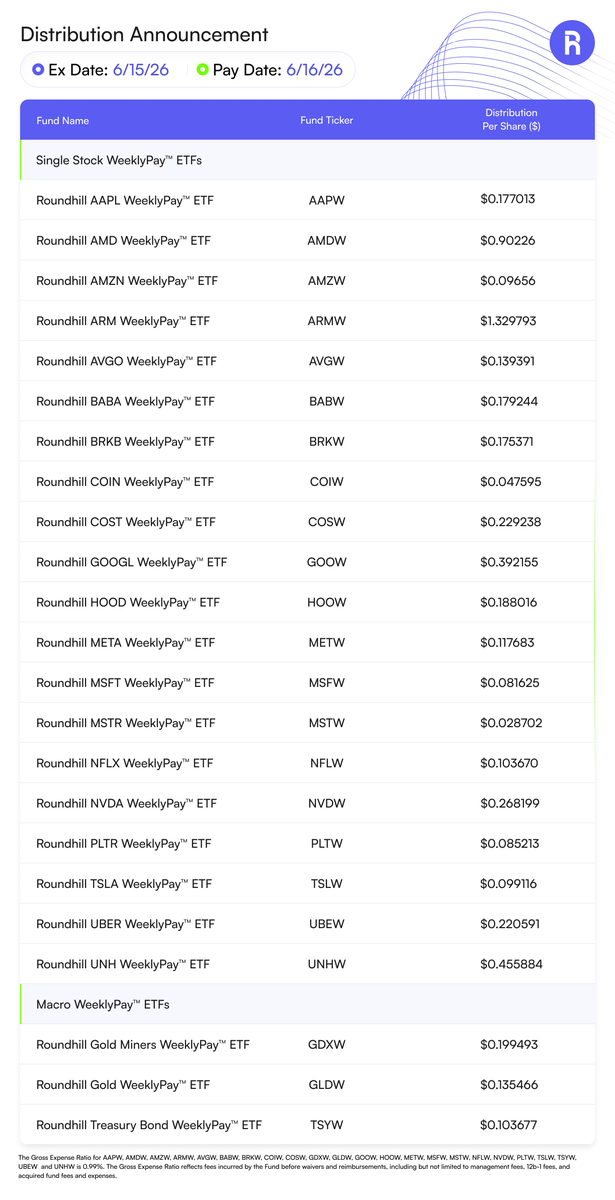
And as a high yield investor, I want to get paid while we wait for takeoff
$XSHP
$KMEM
$DRMY
$DRMP
$SPCI
🔥🚀
Jun 12

Last night nearly 20% of my Family Portfolio was added to the Nasdaq 100.
Its surreal seeing $RKLB, $NBIS and $ALAB reach this milestone after first buying Rocket Lab at $3B market cap, Nebius around $10B and Astera Labs near $8B.
This portfolio was built around themes I believe will matter over the next decade and space plus compute are becoming two of the biggest pillars of the new economy.



2
11
725
Jun 13
Imagine Monday will be red 🩸
Jun 13

JUST IN: 🇺🇸 US government orders Anthropic to suspend foreign access to Mythos Fable 5 AI model, citing national security concerns.
Anthropic has disabled access for all users worldwide.


1
5
244
Jun 12
1. The frontier is the edge where power is contested and claimed
Turner’s frontier thesis is usually remembered as a story about westward expansion. But underneath the geography is a deeper idea about how human beings change (for the better) when they encounter uncertainty.
The frontier breaks old assumptions. It forces adaptation. It exposes what is durable and what are merely inherited habits. It created a recurring test of sovereignty and endless possibility (hope).
Can you feed yourself?
Can you defend yourself?
Can you govern yourself?
Can you build something that lasts when the old order is gone?
The frontier became such a powerful metaphor for American identity. It was not just a place. It was a pressure chamber. It forced people to confront the gap between abstract rights and physical reality. The gap between who they were and who they could become.
Today, cyberspace is the new frontier. It is open, contested, borderless, and filled with opportunity. But like every frontier, it is also filled with bad actors.
The mistake is assuming that because cyberspace feels abstract, it is not physical. But it is.
It runs on energy, machines, chips, cables, servers, miners, and grids.
Behind every digital promise is a physical substrate.
Behind every “cloud” is someone else’s computer.
Behind every right is a defense mechanism - or the lack thereof

1
4
100
Jun 12
2. Life, liberty, and property are a stack.
Jefferson’s Declaration gives the political formula:
Human beings have unalienable rights, including life, liberty, and the pursuit of happiness
His pivot from Locke’s “property” to “pursuit of happiness” was elegant rhetoric, but it introduced a subtle flaw. Happiness is not a tangible, measurable target we can directly secure or defend; it is subjective, fleeting, and hard to aim at without confusion. Property is concrete.
- land
- tools
- bitcoin
- your body
True happiness emerges as life, liberty, and property are secured. Chasing happiness directly undermines the very stack that produces it. Governments exist to secure that stack of life, liberty, and property. When governments no longer secure those rights, people have the right to alter or abolish them.
That sounds political. But it is also deeply practical.
Life is your time on earth.
Liberty is your ability to direct that time.
Property is the crystallization of your time, labor, risk, and judgment.
This is where we see money is not just wealth. It is a language of human action. It communicates what people value. It carries the consequences of choices across time.
So when your property is debased, censored, confiscated, inflated, or trapped, the attack is not only financial. It reaches backward into your life and forward into your liberty.
If your savings can be diluted, your past labor can be quietly taken.
If your transactions can be censored, your future choices can be narrowed.
If your property rights depend entirely on permission, your liberty is conditional. This is the bridge between Thomas Jefferson and Bitcoin. The question is not only
“What is happiness?” or “Why did it change from property to pursuit of happiness?”
The question is:
What kind of property lets a person preserve life and liberty across time?
3
42
Jun 10
No safety net
No one coming to save you
Just you, your wits, and the will to build something better
1
2
9
289
Jun 12
America has always been shaped by frontiers.
Frederick Jackson Turner argued that American exceptionalism wasn’t born from constitutions or institutions, but forged where civilization met wilderness, and people had to adapt to raw reality.
The frontier was violent, messy, and contradictory. Yet that’s exactly why it matters: Freedom isn’t secured by words alone. It is secured where life, liberty, and property meet power.
That same pattern is reemerging - not on the western frontier, but in cyberspace and outer space.
The question is no longer “Who owns the land?” but:
- Who can secure digital property?
- Who can secure outer space?
- Who can defend speech in an age of surveillance and cyber warfare?
- What does individual sovereignty mean when nation-states and machines hold the power?
1
3
95
Jun 12

1
8
431
Homie retweeted

Good governance matters.
Today, Big Digital Energy's Board accelerated the expiration of the Company's Stockholder Rights Agreement after determining it was no longer necessary.
Our responsibility is simple: act in the best interests of all shareholders and continue building a company worthy of their trust.
$BGDE
8
22
1,202
Jun 10
Brainwashing our toddler daughter with Sound of Music rn
This is what I consider cultural Jiu Jitsu
3
16
568
Jun 10
1
8
166
Jun 10
7
386
Jun 9
Sometimes things have to fall apart in order for them to come back together
3
29
Jun 9
Jason is probably right
Assume it’ll happen in the next 4-8 weeks

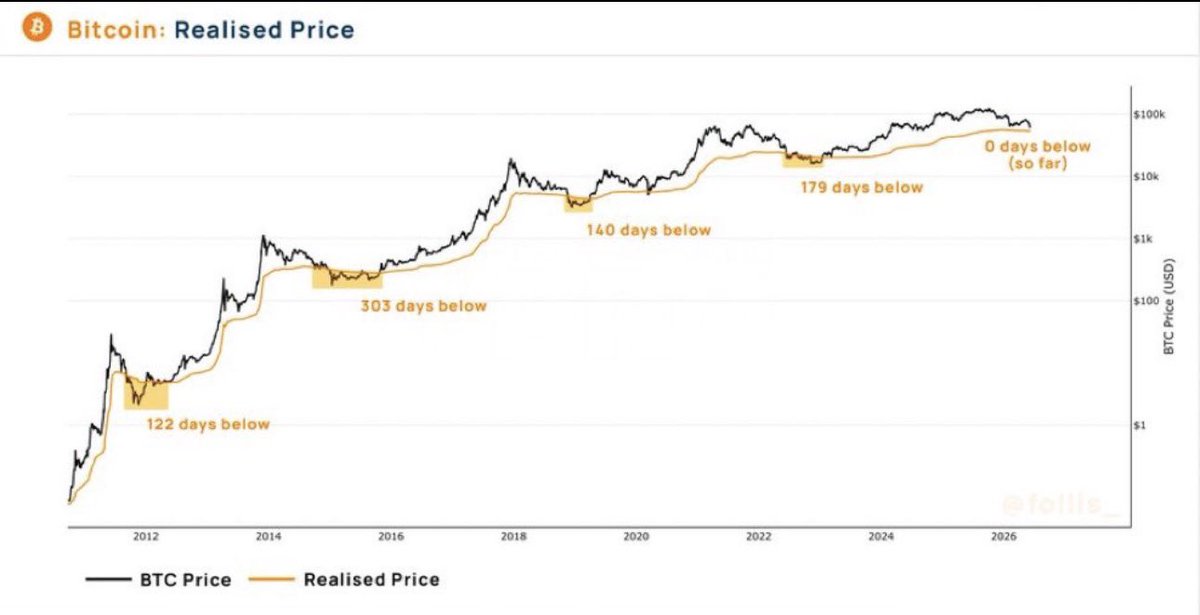
A long post on why the bottom for Bitcoin is not in
Bitcoin's Realised Price is the average cost basis for all holders
Currently it is $53.6k
Bitcoin has NEVER bottomed in a cycle without trading below the Realised Price
2011 → BTC bottomed at $2.1, about 58% below the Realised Price of $5
2015 → BTC bottomed at $152, about 49% below the Realised Price of $300
2018 → BTC bottomed at $3.2k, about 47% below the Realised Price of $6k
2022 → BTC bottomed at $15.4k about 34% below the Realised Price of $23.3k
58%, 49%, 47%, 34% – see a pattern forming?
My prediction for the next Bitcoin bottom is the Realised Price minus 17%
In other words → $44,488 USD
Bookmark this because I know I'm right
Write it down.
5
81
Jun 9
Hello $FOTO 👋🏼
Jun 9

The rotation thesis is right but the timeline is what the market will underprice. Domestic optical names don't have idle capacity waiting for Chinese volume to shift. $LITE, $COHR, and $AAOI all face capacity expansion lead times of 6-18 months minimum. The policy creates the demand signal — manufacturing reality determines when it lands.
6
636
Jun 8
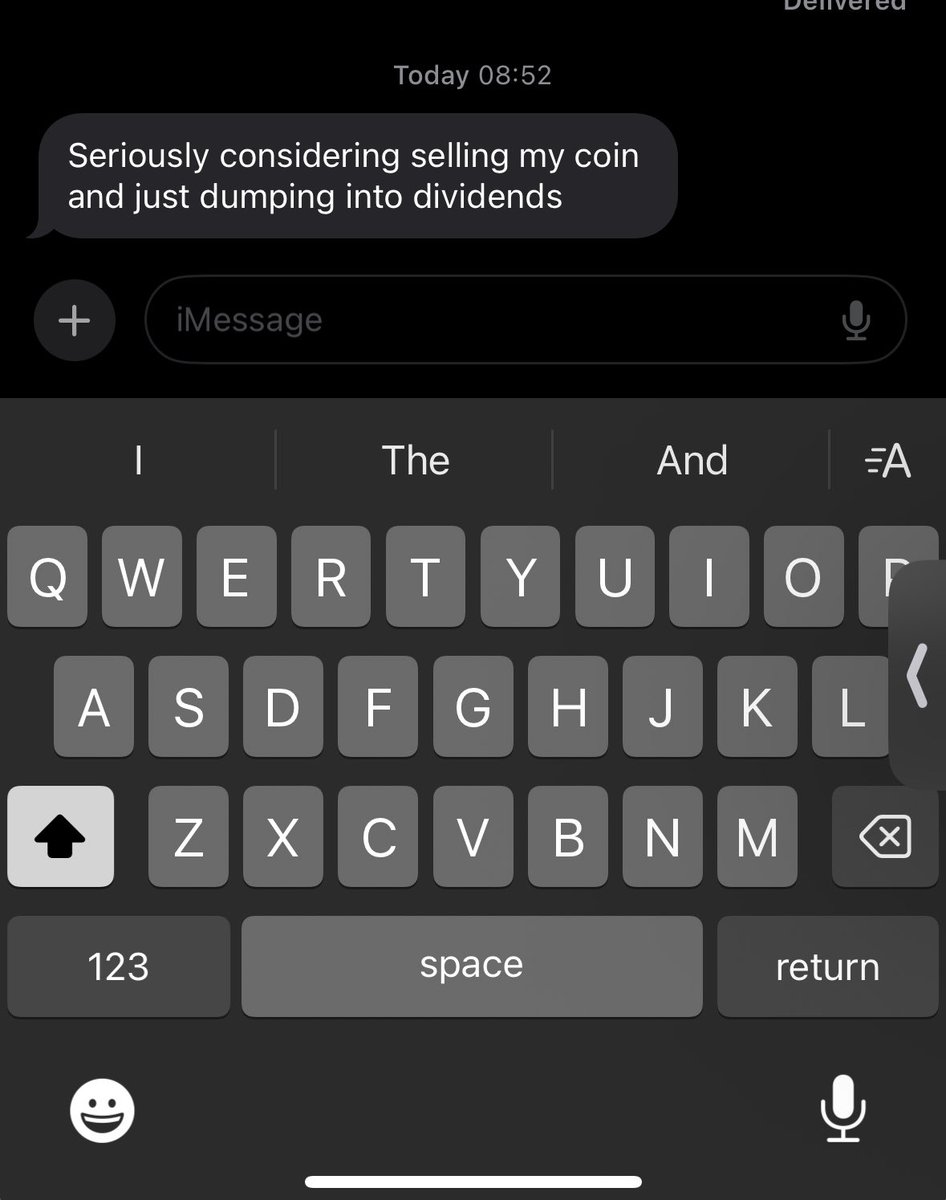
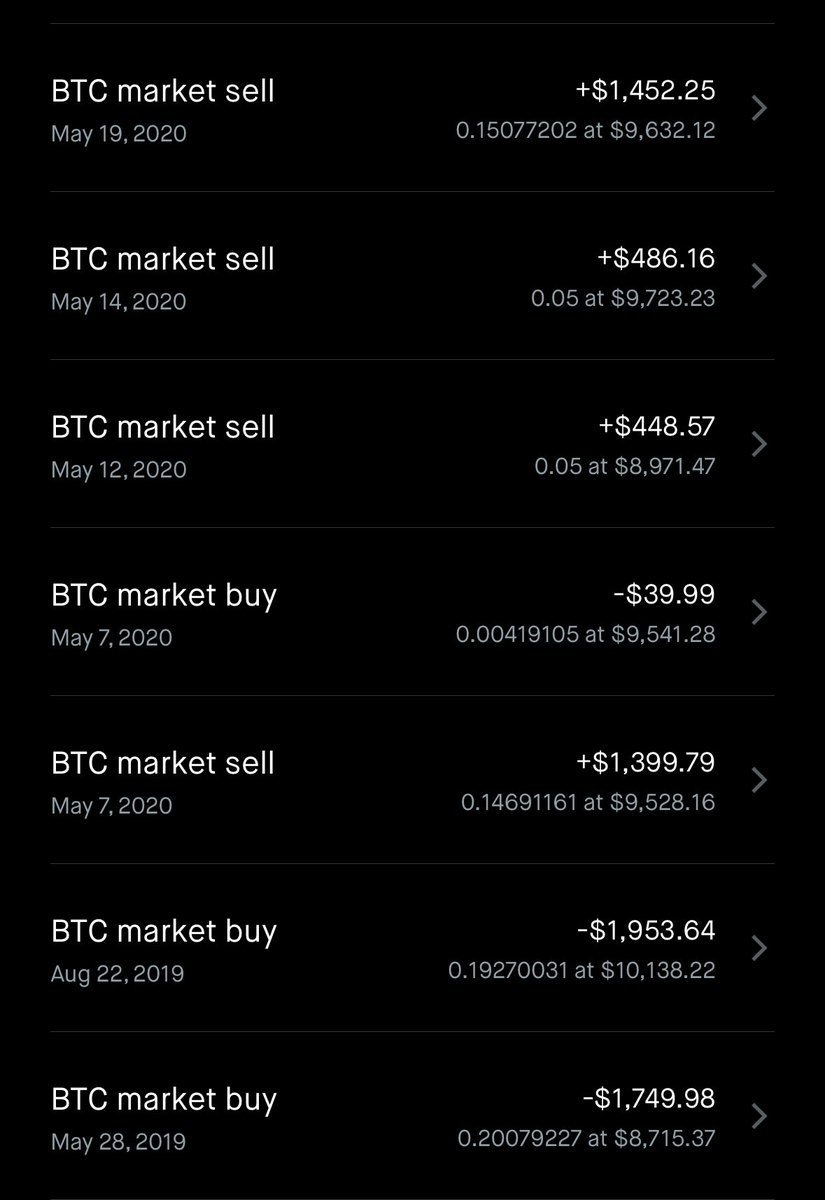
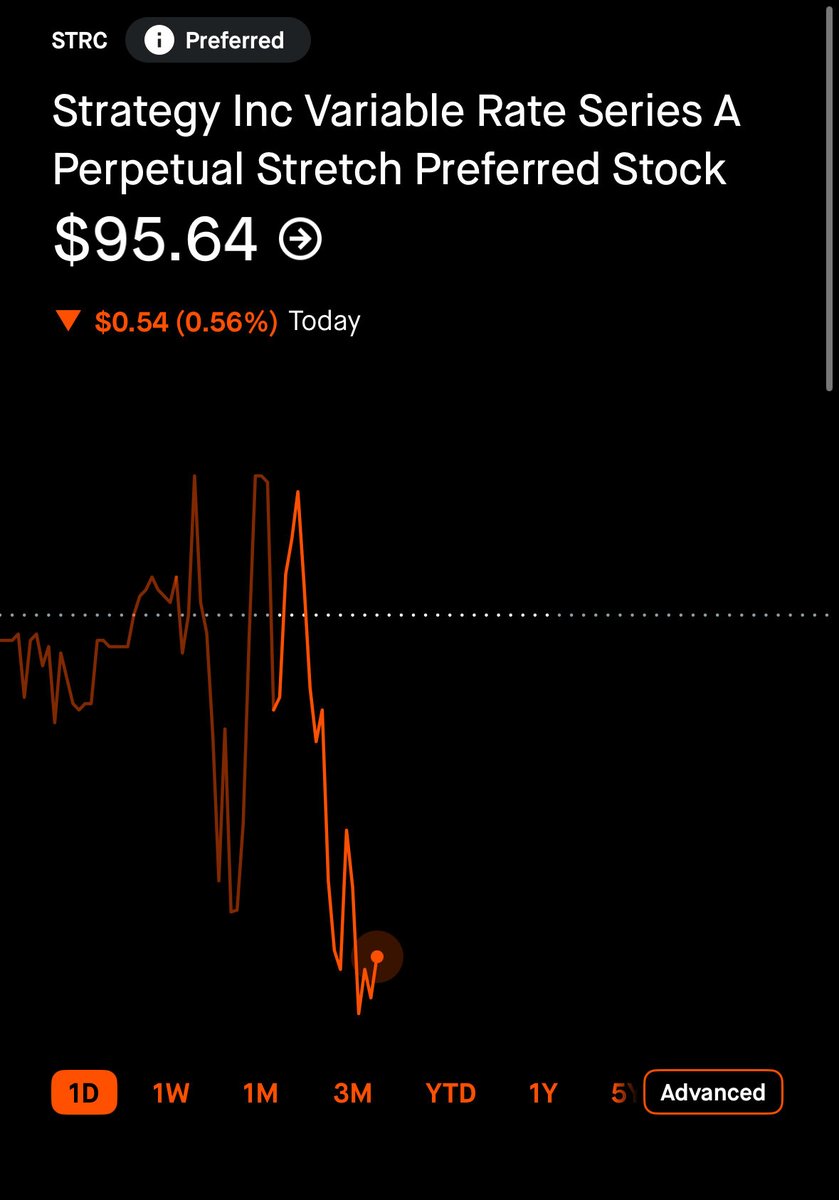
This is the kind of stuff you see when you’re near bitcoin:native bottoms
One of my 2020 cycle friends I orange pilled. It’s been hard for him to HODL
He’s my sentiment check for the average retail investor who borrowed conviction
Check in on your homies
1
10
337