
Favoured Historian
Joined March 2022
- Tweets 11,212
- Following 20,665
- Followers 27,105
- Likes 5,881
1,674 Photos and videos









Historical Facts retweeted

South African women marched saying South Africans are nothing without foreigners. These women claim that South Africans are lazy, do not know how to work. They complain that if foreigners leave, the companies they work for will be forced to close down.
80
31
86
12,309
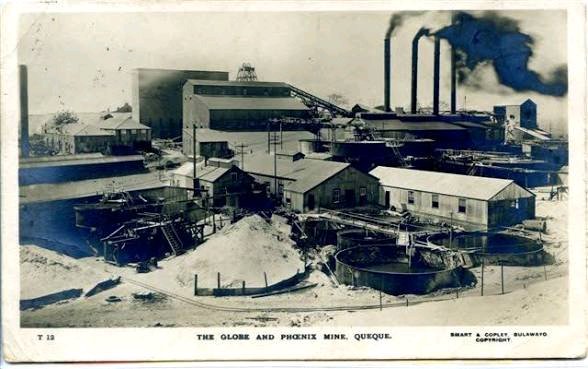
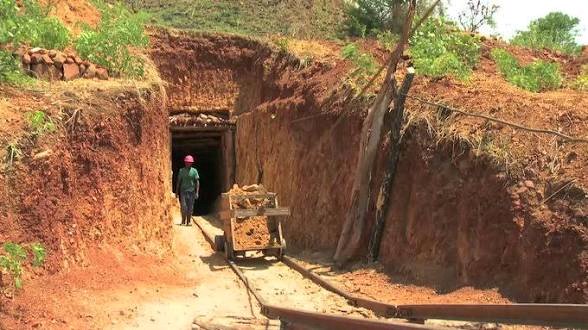
HISTORY BEHIND GLOBE AND PHOENIX MINE
The Globe and Phoenix Mine (G&P Mine) is a historic gold mine in Zimbabwe, located just outside (a few hundred meters west of) the Kwekwe (formerly Que Que) central business district.
It is one of Zimbabwe’s most significant early gold mines and played a major role in the founding and development of Kwekwe itself. The site sits on ancient pre-colonial gold workings (likely linked to medieval or earlier Shona/Munhumutapa-era mining), with estimates suggesting pre-European miners extracted tens of thousands of ounces of gold from visible stopes and reefs.
Key Historical Profile
Discovery (1894): Prospectors Edward Thornton Pearson and Joseph Schukala pegged the claims after being guided to ancient workings by a local Shona person (reportedly in exchange for blankets). Pearson pegged the Phoenix reef(s); Schukala pegged the Globe reef(s). Both registered claims in Bulawayo in May 1894 but lacked capital to develop them. Legend holds that Schukala once tried to sell his claim for a case of whisky.
Acquisition and Company Formation: In September 1894, Lionel Phillips of the Phillips Exploration Syndicate purchased both reefs (Globe for £300 cash shares; Phoenix for £600 in gold sovereigns). The Globe and Phoenix Mining Company was formally incorporated in England on 18 October 1896 with £175,000 capital. A 40-stamp mill began production in August 1900.
Production and Significance: The mine was exceptionally rich, often described as one of the world’s highest-grade gold operations. Over its lifetime, it produced over 4.2 million ounces (roughly 131 tonnes) of gold at an average grade of about 27.6 grams per tonne (g/t). By 1935, it had yielded nearly one ounce of gold per ton milled and was noted as a top global producer. It also yielded minerals like kermesite, stibnite, and others.
Impact on Kwekwe: The mine’s workers’ compound (initially called Sebakwe) grew into the modern town. Infrastructure developments included water pipelines from the Sebakwe River (after legal battles), a railway connection (1901–1902), hospitals, a post office, and other facilities. The mine’s general manager often chaired early village boards. Historic structures like the “Paper House” (a 1894 prefabricated British-imported manager’s dwelling made of wood, papier-mâché, and wire mesh, now a National Monument and part of the National Mining Museum) and Phoenix House (built ~1902) remain.
Challenges: It faced water shortages, the 1918 flu pandemic (which killed many workers and staff), fires, explosions, legal disputes over mining rights (including a notable “John Bull” case that reached the House of Lords), and later economic/operational issues. Mining continued variably into the late 20th century but eventually declined. Ownership changed over time (e.g., to Tabex, Falcon, Delta, and later BioMetallurgical/related entities).
Later/Modern Context: The mine has seen attempts at revival, with associated claims and nearby operations. Illegal artisanal mining (gold panning) has been a persistent issue, sometimes causing subsidence and safety concerns in the area. The National Mining Museum is located on the site, highlighting its heritage.
Etymology of the Name
The name “Globe and Phoenix” derives directly from the two original main orebodies/reefs exploited: the Globe reef (pegged by Schukala, a quartz vein) and the Phoenix reef (pegged by Pearson). Lionel Phillips combined them under this name after purchasing both in 1894.
1
5
13
632
HOW CECIL JOHN RHODES MADE HIS FORTUNE IN SOUTHERN AFRICA AT A VERY YOUNG AGE
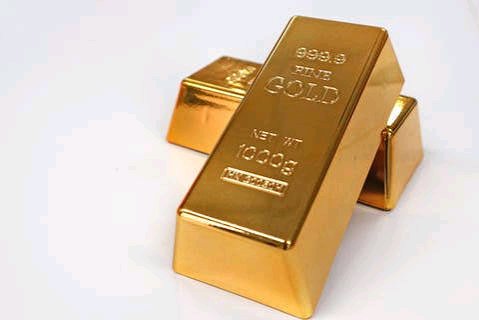
Cecil John Rhodes (1853–1902) made his initial fortune in diamond mining in Kimberley, South Africa (then Griqualand West/Cape Colony), not in Southern Rhodesia. Southern Rhodesia (now Zimbabwe; the southern part of the territory named after him) was colonized later through his British South Africa Company (BSAC), with expectations of rich gold deposits that largely did not materialize as hoped.
Early Mines and Mining Career
First/early mines (Kimberley diamond fields, starting 1871): Rhodes arrived in South Africa in 1870 at age 17 and joined his brother Herbert at the diamond diggings. He took over claims (notably in the De Beers mine) and began buying up others aggressively. Key early focus was on "Old De Beers" and claims in the Kimberley mine (including Colesberg Kopje area). He partnered with Charles Dunell Rudd and others.
By 1880–1888, through systematic consolidation (buying claims, partnerships, and mergers funded partly by Rothschild financing), he formed De Beers Mining Company (1880) and then De Beers Consolidated Mines (1888, merging with Barney Barnato's Kimberley Central). This gave him near-monopoly control over Kimberley’s diamond production (around 90% of the world’s supply at peak).
He also entered gold mining via the Consolidated Gold Fields of South Africa (or Gold Fields of South Africa), with stakes in the Witwatersrand (Rand) fields in the Transvaal after the 1886 gold rush, though his northern ambitions were stronger.
Mines and Mining in Southern Rhodesia
Southern Rhodesia (Mashonaland/Matabeleland) was not Rhodes’s initial mining base. The BSAC (chartered in 1889) secured the Rudd Concession (1888) from Ndebele king Lobengula for exclusive mining rights in exchange for goods, rifles, and protection promises. This was used to justify the Pioneer Column’s occupation (1890) and conquests (including the First Matabele War, 1893–94).
The BSAC and associated companies expected a "second Rand" from ancient Shona gold workings but found deposits disappointing. Many settlers turned to farming instead.
Early gold mining efforts led to Globe and Phoenix and Gaika mines in Kwekwe as well as the Falcon mine in Mvuma and yielded large depisits if gold.
In Northern Rhodesia (now Zambia), later copper/lead-zinc developments (e.g., Broken Hill) became significant, but these post-dated initial Southern Rhodesia efforts.
Rhodes’s companies (De Beers, Gold Fields, BSAC) provided the capital and drive, but Southern Rhodesia’s mining economy developed more gradually under company administration.
What Enabled Rhodes to Wield So Much Power in Southern Africa
Rhodes combined immense personal wealth from mining with political influence, imperial ambition, and chartered company powers:
Wealth as foundation: Diamond monopoly (De Beers) and gold interests generated enormous capital (e.g., hundreds of thousands of pounds annually by his mid-30s). He viewed wealth explicitly as a tool for power.
Political roles: Cape Colony Parliament member (1881 onward) and Prime Minister (1890–1896). He used this to advance business and expansionist goals (e.g., Glen Grey Act for land/labor policies).
British South Africa Company (BSAC): Royal Charter (1889) gave it sweeping powers—administration, policing, land/mineral rights, treaties—modeled on the East India Company. It effectively governed and developed Rhodesia (named 1895) as a private entity.
Imperial vision and tactics: "Cape to Cairo" dream; alliances with British government figures; concessions (often obtained deceptively); military force (Pioneer Column, wars against Ndebele); Jameson Raid (1895, aimed at Transvaal gold but a failure that forced his resignation as PM).
Networks: Ties to financiers (Rothschilds, Alfred Beit), politicians, and settlers. Ruthless business practices (amalgamations, labor control) amplified his reach.
1
5
10
1,000
Historical Facts retweeted

Jun 12
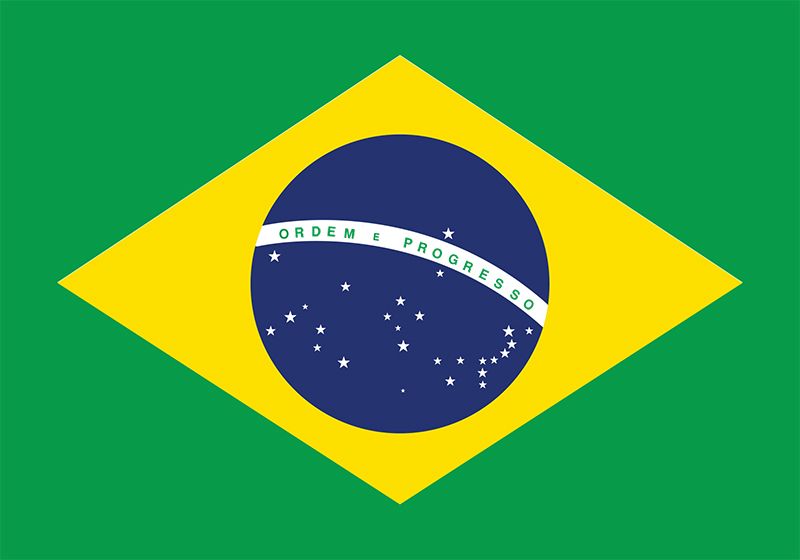
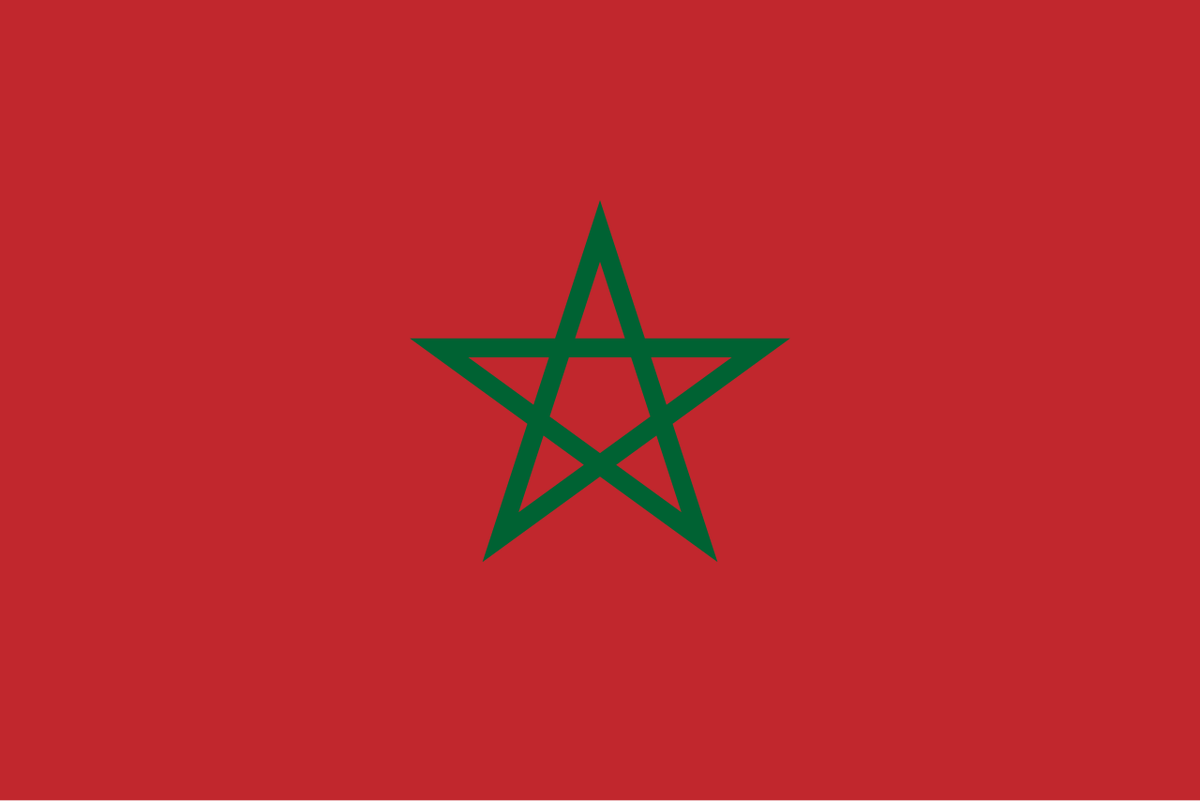
As Africans tomorrow we stand with Brazil because Moroccans are racists, we remember what they did during the African cup of nations
741
2,772
27,644
871,066

Jun 12
While Mexicans were celebrating a convincing win against xenophobic South Africans, back home vigilantes were plotting acts of hate against black foreign nationals.

2
3
7
532
Jun 12
Mexicans mocked South African players in their victory dance
3
5
510
Historical Facts retweeted

Jun 11
😭😭The South African goal keeper

149
714
5,175
63,118
Jun 12
HISTORICAL PROFILE OF BONDOLFI MISSION
Bondolfi Mission is a Catholic mission near Masvingo (formerly Fort Victoria), Zimbabwe, established by the Bethlehem Mission Society (SMB, or Societas Missionaria de Bethlehem in Helvetia), a Swiss-based missionary congregation.
Etymology of the Name
The name "Bondolfi" is a direct tribute to Msgr. (Canon/Pater) Pietro Bondolfi (1872–1943), the Swiss priest who founded and served as the first Superior General of the Bethlehem Mission Society (SMB) The mission was explicitly named in his memory/honor.
Pietro Bondolfi played a central role in reorganizing and formalizing the society (originally rooted in earlier missionary efforts in Immensee, Switzerland) around 1907–1921. The SMB was officially established in 1921.
He was instrumental in expanding the society's missionary work, including responding to appeals for help in Southern Rhodesia (now Zimbabwe) in the late 1930s.
The name is thus of Italian/Swiss origin (Bondolfi is an Italian surname), commemorating the founder rather than deriving from any local indigenous linguistic roots.
Historical Profile
Founding and Establishment: The mission was founded in 1951 (some sources note 1952 for related facilities like the primary school) by the SMB congregation in the Fort Victoria (Masvingo) area. It was one of several missions established by the SMB in the 1940s–1950s as they expanded their work in the region.
Context of SMB Arrival: The SMB responded to an appeal from Jesuit missionaries (and Bishop Chichester) in the late 1930s to assist in the vast diocese of Southern Rhodesia. The first SMB pioneers arrived in 1938. They gradually took over pastoral responsibilities in the Fort Victoria Prefecture from the Jesuits around 1946. Bondolfi was part of a wave of new foundations (alongside places like Mukaro, Serima, Berejena, etc.) focused on evangelization, education, and social development.
Key Activities and Contributions:
Developed a strong reputation for education (primary/secondary schooling, teacher training) and spiritual formation.
Bondolfi Teachers' College (a Catholic institution affiliated with the University of Zimbabwe) was established on the mission grounds, with teacher education programs starting in 1963. It remains the only Catholic teachers' college in Zimbabwe and emphasizes values like faith, patriotism, creativity, integrity, and service.
Included typical mission infrastructure: church, schools, possibly a clinic/hospital elements, and outreach. The SMB as a whole built numerous missions, schools, hospitals, vocational centers, and even Mambo Press for Catholic literature. They played a major role in local vocations, founding diocesan clergy, brothers, and sisters (e.g., Sisters of the Child Jesus).
Broader Impact and Challenges:
The mission operated during the colonial era, the liberation war (in which some SMB members lost their lives), and into Zimbabwe's independence. SMB numbers peaked at around 131 in Zimbabwe in the mid-1960s but later declined significantly due to age and other factors.
It celebrated its 75th anniversary in 2026, highlighting its enduring legacy in the Masvingo Diocese.
Today, it continues as an active Catholic center with educational institutions (including Bondolfi Secondary/Primary and the Teachers' College) under the Diocese of Masvingo.
In summary, Bondolfi exemplifies the SMB's integrated approach to mission work—combining faith, education, and community development—while honoring the society's Swiss founder. It remains a notable landmark in Zimbabwe's Catholic history, particularly in the Masvingo region.
5
14
770
Jun 12
HISTORICAL PROFILE OF GOKOMERE
Gokomere is a Shona-derived name, commonly broken down as goko (meaning “outer shell” or “husk”) mhere (meaning “noise,” “din,” or “disturbance”).
It refers to a fortified hill (kopje) with natural caves and strong defensive geography, likened to a protective shell that could muffle or withstand the noise of battle or invasion. The mission station takes its name from this prominent nearby hill (Gokomere Kopje).
Historical profile (archaeological/cultural context):
The name Gokomere is also attached to an Early Iron Age archaeological culture/site in south-central Zimbabwe (near Masvingo), associated with Bantu-speaking communities. It is known for distinctive pottery (e.g., thickened rims with oblique stampings, various bowl and jar forms) and rock art, with key sites like the “Tunnel Site” at the mission area yielding artifacts studied since the 1930s–1970s.
Dates for the culture are often cited in the range of roughly the 4th–7th centuries AD (sometimes broader, 200–650 AD or 5th–7th centuries), linked to iron-working, farming, and trade networks (including with Swahili coast communities via routes like the Chimanimani Mountains). It is widely regarded as ancestral to (or an early phase of) Shona peoples and cultures connected to the later Great Zimbabwe tradition.
Mission station history:
Gokomere Catholic Mission (near Masvingo, formerly Fort Victoria) originated from Jesuit efforts in the region. It began as Mzondo Mission, which was re-established in 1909 by Fr. Apel (from Driefontein Mission) at a new site at the foot of Gokomere Kopje and renamed accordingly. Early infrastructure included a mud-brick residence (1919) and a large school-chapel (opened 1912). Outstations were developed, and it served as a hub for evangelization, education, and community work.
The Swiss Bethlehem Fathers took over responsibility around 1938 (some sources note 1940 for broader involvement). It became a center for expansion in the Masvingo area, including educational institutions. Gokomere High School (formerly Gokomere Central School) evolved from vocational/Sunday school roots in the late 19th/early 20th century into a prominent boarding school under the Catholic Diocese of Masvingo.
The site has hosted ordinations, training centers (e.g., lay training in the 1970s), and remains a pilgrimage and cultural focal point (e.g., diocesan shrine established around 2000, music festivals). It reflects the broader history of Catholic missionary expansion in Zimbabwe, transitioning from Jesuit to SMB oversight and contributing to local education and faith communities.
In summary, the name ties the modern Catholic mission to both a striking local landmark with defensive connotations and a deeper prehistoric cultural layer in the region’s Iron Age history.

1
12
31
2,080
Historical Facts retweeted

Jun 10
I don't see disability here, I see a special skill. ❤️😍
53
173
1,891
544,230
Jun 11
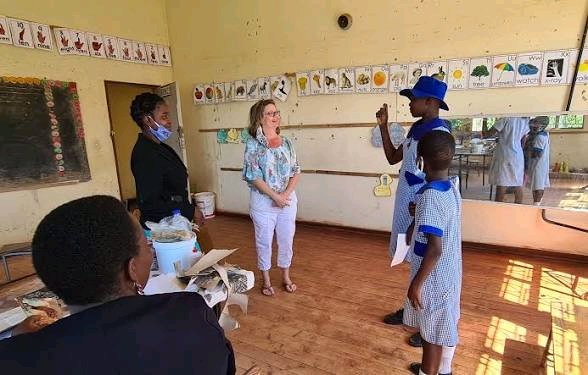
FIRST SCHOOL OF THE HEARING IMPAIRED IN ZIM
Morgenster Mission is a historic Reformed Church in Zimbabwe (RCZ) mission station located about 7–35 km southeast of Masvingo (formerly Fort Victoria), near the Great Zimbabwe Monuments in Masvingo Province, Zimbabwe.
Founding and Early History
It was established on 9 September 1891 by Dutch Reformed Church (DRC) missionaries from the Cape Synod in South Africa.
The lead missionary was Andrew (Andries Adriaan) Louw, who traveled by ox-cart from South Africa with seven Sotho-speaking African evangelists. They received permission from local Chief Mugabe to settle near his mountain.
The mission was named Morgenster (Dutch/Afrikaans for "Morning Star"), after the house where Louw grew up in Paarl, Cape Colony.
It was the first DRC mission station in what was then Southern Rhodesia and served as the central hub for the church's expansion in the region. For the first decade, it was the only station.
Development and Institutions
Over the decades, Morgenster developed into a major mission complex with churches, schools, a hospital (founded 1963), and training institutions.
Key developments include:
A school for evangelists started in 1925, with Rev. Henry Murray (Sr.) as the first lecturer (later evolving into Murray Theological College).
A seminary established in 1936.
The mission was eventually handed over to local (African) control in 1977.
The Reformed Church in Zimbabwe (RCZ) traces its origins directly to this mission.
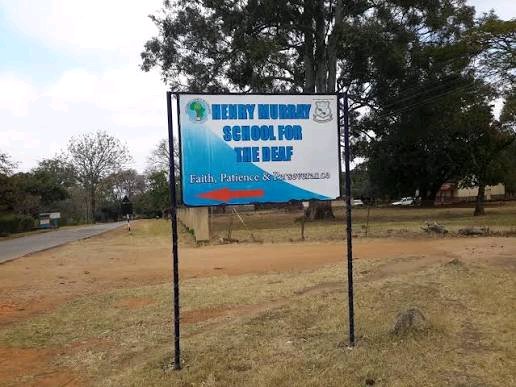
Henry Murray School for the Deaf
The Henry Murray School for the Deaf is a residential special school located at the Morgenster Mission.
It was established by Dutch Reformed Church missionaries in 1947/1948 (sources vary slightly on the exact year).
The first teachers were trained or came from the School for the Deaf at Worcester in Cape Province, South Africa.
It started small, with an initial enrollment of about 11 pupils, growing to around 40 by 1952.
The school is named after Henry Murray, who succeeded Andrew Louw as Chairman of the Mission Council (Louw retired in 1937; Murray died in 1948).
It has historically served as a pioneering institution for deaf education in Zimbabwe, with capacity for around 250 students (though enrollment has varied).
The school and mission remain associated with the Reformed Church in Zimbabwe and continue to operate in the area near Great Zimbabwe.
In summary, Morgenster Mission represents one of the foundational sites of Christian missionary work (specifically Dutch Reformed) in colonial Southern Rhodesia/Zimbabwe, evolving from a basic settlement in 1891 into a multifaceted center for evangelism, education, and healthcare. The Henry Murray School is a key part of its legacy in inclusive/special education.
9
17
1,553
Jun 11
DID YOU KNOW
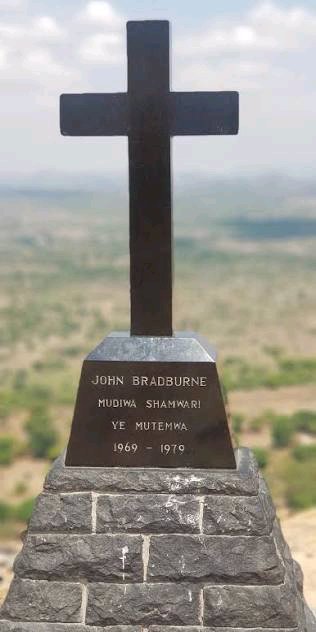
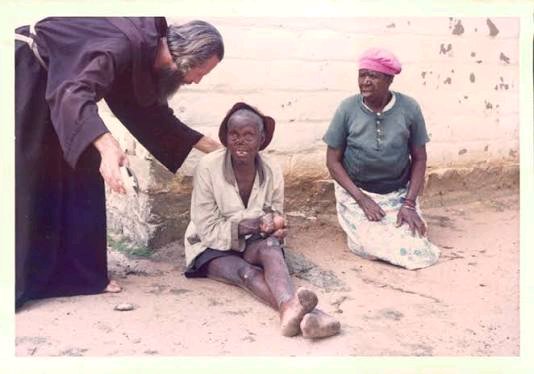
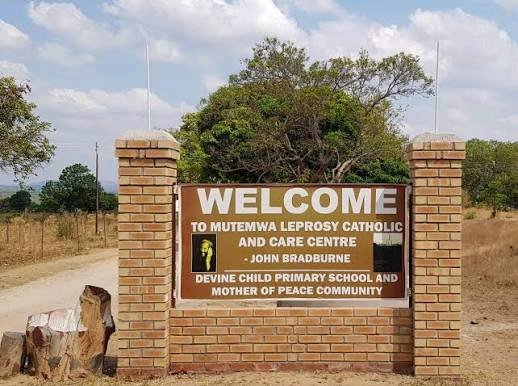
Mutemwa (sometimes spelled Mtemwa) is a mountain and associated leprosy care centre near Mutoko in Mashonaland East Province, Zimbabwe. It has become a major Christian pilgrimage site, particularly for Catholics, due to its links to the life, service, and martyrdom of John Randal Bradburne.
Etymology and Early Context
"Mutemwa" is a Shona word meaning "you are cut off" or "outcast/isolated," reflecting the area's historical isolation and its use as a settlement for leprosy patients, who were socially marginalized.
The leprosy care centre itself was established around 1937 (some sources reference earlier colonial-era efforts), as a settlement for people with leprosy who were often abandoned or segregated.
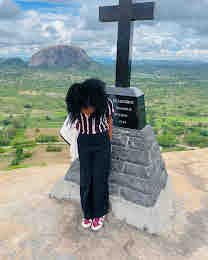
The mountain (elevation around 1,503m) and nearby Chigona Mountain have long served as natural landmarks. In local traditions and more recent Christian contexts, they function as "prayer mountains" for spiritual reflection, healing, and intervention. Before Bradburne's time, the centre was reportedly neglected.
John Bradburne and the Transformation of Mutemwa (1969–1979)
The site's modern spiritual significance stems almost entirely from John Randal Bradburne (1921–1979), an English lay Franciscan (Third Order of St. Francis), poet, and former British Indian Army officer.
Background: Born in England, Bradburne served in WWII (including with the Chindits in Burma), had a profound religious conversion, and lived a wandering, ascetic life across Europe and the Middle East, seeking a contemplative existence. In 1962, he wrote to a Jesuit friend in Rhodesia (now Zimbabwe) asking, “Is there a cave in Africa where I can pray?” He arrived and was introduced by Jesuit missionaries to the Mutemwa Leprosy Settlement in 1969.
His Work at Mutemwa: He became the warden of the centre, which housed dozens of leprosy patients living in poor conditions. Bradburne devoted himself to caring for them—feeding, bathing, nursing, teaching (including Gregorian chant), building a small church, and providing companionship. He lived simply in a tin hut outside the perimeter (especially after conflicts with authorities), ate minimally, prayed extensively, wrote thousands of poems, and walked prayer paths on the hills. He expressed three wishes: to serve leprosy victims, die a martyr, and be buried in a Franciscan habit.
Death: During the Rhodesian Bush War, he refused to leave the patients despite risks. On 2 September 1979, he was abducted from his hut, and he was shot and killed (dying on 5 September). He was buried at Chishawasha Mission. Reports of miracles, such as blood dripping from his coffin, circulated soon after.
Pilgrimage and Legacy
Since Bradburne's death, Mutemwa has grown into a major pilgrimage centre. Thousands (often peaking in September around the anniversary of his death, sometimes drawing up to 25,000) visit the leprosy centre, his shrine, the prayer paths on Mutemwa and Chigona mountains, and related sites for prayer, healing, and spiritual intervention. Many regard him as a saintly figure or martyr; his cause for canonization (beatification/sainthood) has advanced in the Catholic Church, with formal nihil obstat issued in 2019.
The John Bradburne Memorial Society supports the ongoing Mutemwa Leprosy and Care Centre, which now serves people with leprosy, AIDS, disabilities, and other needs.
In summary, while the area had colonial-era roots as an isolated leprosy settlement, its historical and spiritual prominence today is deeply tied to Bradburne's decade of selfless service and his dramatic death, turning Mutemwa into a beacon of faith, charity, and pilgrimage in Zimbabwe. Local Shona spiritual traditions around the mountains as sacred sites likely predate or coexist with the Christian overlay.
11
20
3,615
Jun 10
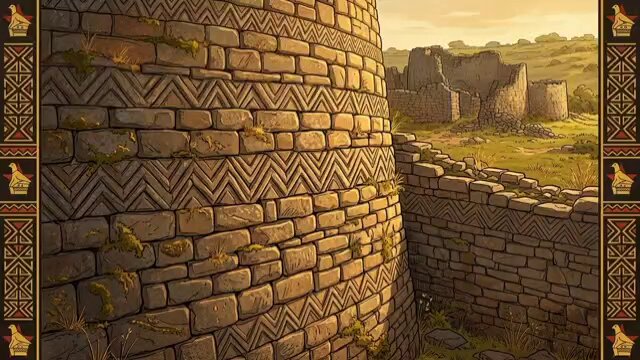
The "Shona" legacy, as the greatest architects of all time.
5
21
71
2,530
Jun 10
Let me take this as a controversial topic. 11 June is tomorrow and the World Cup begins. Who shall Africa as a continent support between South Africa and Mexico? Majority say they rather support Mexico because of South Africa's stance against other African nationals on its soil.
3
8
25
4,647
Jun 10
Good morning Africa and its people. One love. Africa Arise.
5
12
917
Donkey carts in town, What do their urban councils by-laws say about donkey carts inown?
1
252
Historical Facts retweeted

Defying the odds like this is rare and powerful. It reminds us that anyone can become a maker of history with enough heart. ✨
1
1
3
381