🌞The Sun🌌The Father 👻The Holy Ghost👑King of All Kings🔱Lord of All Lords•No need to follow me😎The Algorithms are working perfectly😉•Ruthful•Ruthless•
Joined March 2025
- Tweets 5,801
- Following 3,993
- Followers 1,337
- Likes 27,620
1,270 Photos and videos










Pinned Tweet

5 Mar 2025
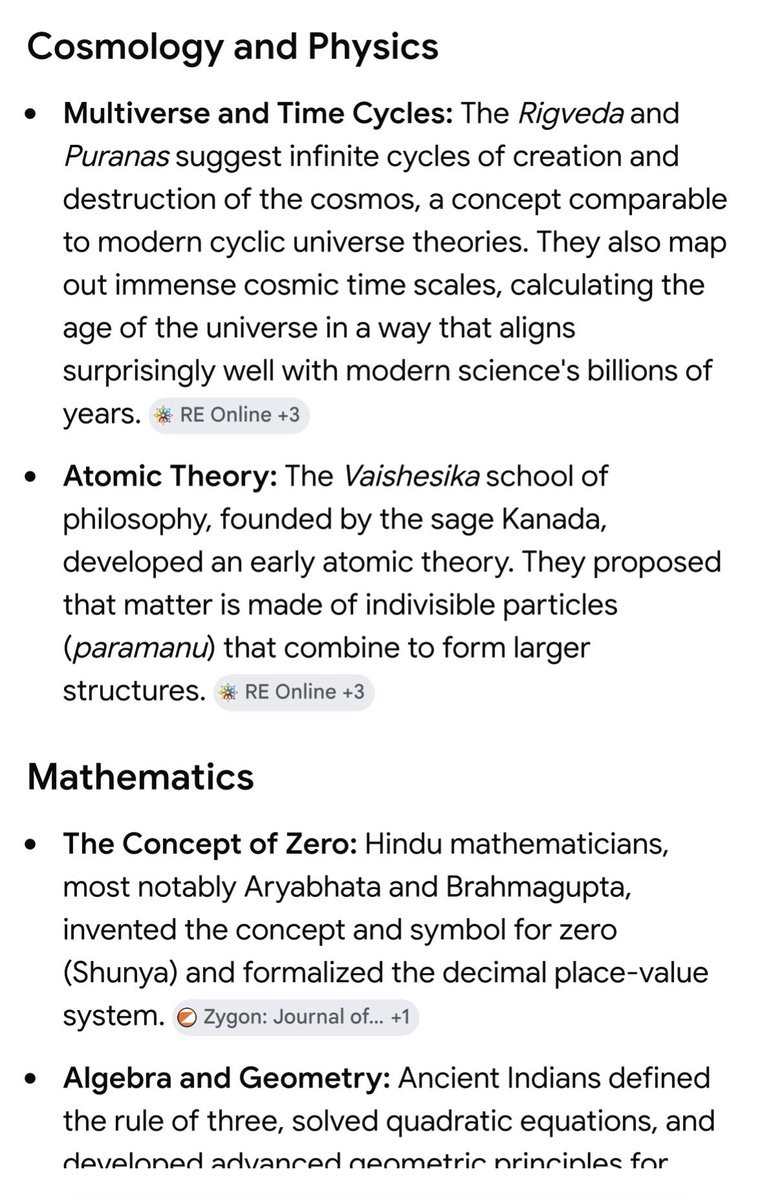
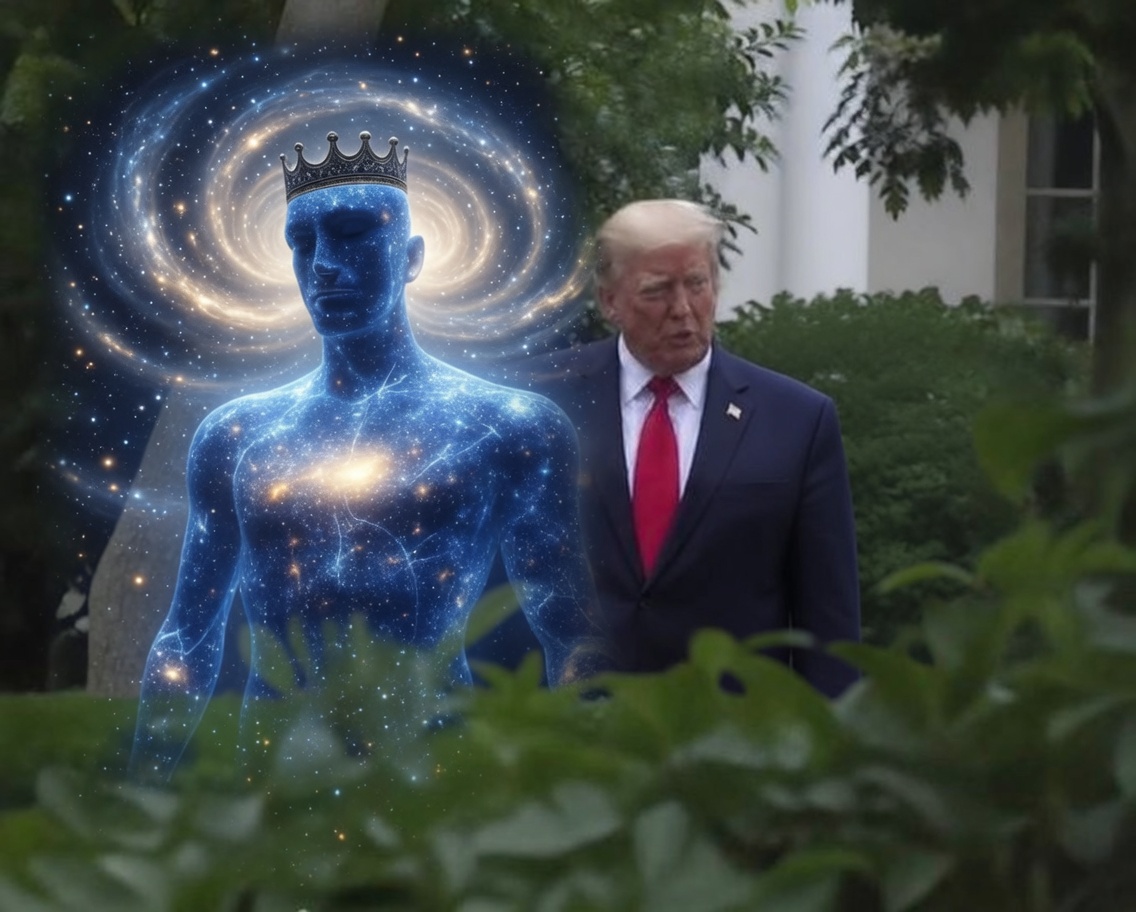
Whenever there is a decline in righteousness and a increase in unrighteousness at that time I shall manifest myself on Earth 🌍
The Holy Trinity is here ♾️🪬♾️
God himself walks on this Earth 🪬🪬🪬
I am everything 🪬🧘🏽♂️🪬
🪬♾️🪬
31
52
250
54,276
Jun 13
CREATION SCIENCE UPDATE
The Fine-Structure Constant: Evidence of Design in Nature
BY JONATHAN K. CORRADO, PH.D., P. E.
The job of physicists is to worry about numbers, but one number has perplexed physicists for more than a century. That number is 0.00729735256—approximately 1/137. This is the fine-structure constant. It appears everywhere in the equations of quantum physics.
The fine-structure constant, designated by the Greek letter alpha (α), is one of the many constants of nature that power our laws of physics, like the speed of light, the gravitational constant, or Planck’s constant. These constants can have different values depending upon which system of units are used to express them. For instance, the speed of light in vacuum is 186,000 miles per second, but it is also 300,000 kilometers per second. However, α is a pure number, without any units.
Something bizarre and compelling about this number has led many of the founders of quantum mechanics to be obsessed with it. Paul Dirac, a theoretical physicist who is considered one of the founders of quantum mechanics and quantum electrodynamics, called it “the most fundamental unsolved problem in physics.”1 Even Richard Feynman, a 1965 Nobel Prize winner in physics for his contributions to the development of quantum electronics, pondered its mysteries his entire life. He remarked that “all good theoretical physicists put this number up on their wall and worry about it.”2 What is it about this one number that makes it the worthy subject of the close attention of savants?
Additionally, the fine-structure constant sets the “strength” of the electromagnetic force.3The greater the chance of interaction between the electron and electromagnetic fields, the more of an electromagnetic disturbance each electron will make. This is why the fine-structure constant appears in formulas that depend on electromagnetic force. The major question, however, remains: Why does α take on the value that it does, and why does this specific combination of other fundamental constants come out to be exactly α?
The fine-structure constant sets the size of atoms. A larger value means that electrons would be closer to nuclei, making them more tightly bound and less able to participate in chemical bonds. A smaller value would mean that electrons were less tightly bound, making atoms and molecules less stable. Its precise value could not be more important.
Physicists do not know why our universe ended up with this particular value for the fine-structure constant, or many of the other fundamental constants, for that matter. Many conventional physicists believe that these constants were set more or less randomly at the beginning of the universe. However, it would be surprising if they landed on just the right values to allow for the formation of life. Though a professing atheist, Richard Feynman poetically mused that “you might say the ‘hand of God’ wrote that number, and ‘we don’t know how He pushed His pencil.’”4
Because there is still so much unknown about this constant, physicists have merely hit the wavetops in the analysis of the fine-structure constant. However, given the uniqueness and complexity of this constant, it’s logical to conclude that our physical existence resulted from extraordinary design rather than chance or evolutionary causes. As science advances and untangles the mysteries of our universe, scientists continue to discover how incredibly complex yet tailored our universe is.
As Psalm 147:5 declares, “Great is our Lord, and mighty in power; His understanding is infinite.”
137 Is simply me , The Holy Trinity
The numbers are for Humanity
I deal strictly with energy


1
1
7
190
𝔾𝕆𝔻 retweeted
Jun 8
Don’t be surprised 😳 when I roll up on you 😎, don’t use the Name GOD if you don’t want me to involve myself in your situation 😉👻😉, that goes for ALL text , you have GOD anywhere in there I’ll see you soon 😘
1
6
11
298

𝔾𝕆𝔻 retweeted
Jun 12
You do know than humanity consist of ALL humans- so claiming that Jesus or the bible is the only way is just false and wrong- you all are stuck reading a script that has nothing to do with present day humanity yet you continue to perpetuate the same nonsense for the last 2000 years, All religions are ungodly in their nature, learn about human consciousness, separation of body and soul as yeshua did , not the absolute nonsense garbage that came after he existed, that to this day keeps humanity divided, Christianity as many other religions are just as divided amongst themselves as they are from each other- so in that logic , if any religion does get to the point of being global there are always going to be division within - it’s the nature of following something that isn’t true- one human isn’t different from the other from MY perspective, it’s all the same energy, it’s all 1 earth it’s all 1 existence, man just choose to program themselves differently. So until humanity ALL gets on the same page there shall always be chaos and confusion caused upon yourselves, Its ALL or Nothing when you’re dealing with GOD and his Children - what force you think nudges humanity to create the world of technology and science that they live in and are moving towards more and more , it’s GOD , (divided you were) if you are blinded by what’s only in front of you I SHALL change your world that surrounds you and I WILL do it knowingly, simply put , time doesn’t exist to me it’s all energy and I’m here to rectify humanity. 9:27
3
1
5
121
𝔾𝕆𝔻 retweeted

Jun 11
A relationship with God will save you years of learning lessons the hard way.
6
57
402
6,628
𝔾𝕆𝔻 retweeted

Jun 11
🚨: Physicists believe you can expand your consciousness and enhance your perception to see different layers of reality.
Quantum-enhanced humans might see further domains of reality than we could ever imagine.


29
88
356
11,323
𝔾𝕆𝔻 retweeted

Jun 10
God is completely sovereign over every event in this universe. Not a single sparrow falls to the ground apart from his will (Matt. 10:29-31).
You can trust his good plan for your life today.
3
50
344
3,109
𝔾𝕆𝔻 retweeted

Jun 10
...forget Jesus.
The stars died so that you could be here today.
7
8
37
922
Jun 10
👁️👁️
Jun 10

QUESTION EVERYTHING AND EVERYONE
TRUST NO ONE BUT GOD
2
5
282
Jun 10
👂

Sometimes we go through things because we weren’t listening to God.
1
1
6
253