
We focus on founders building the infrastructure, data systems, and frontier applications powering the future of space. From launch systems to orbital services
Joined January 2026
- Tweets 56
- Following 28
- Followers 5
- Likes 60
47 Photos and videos



Pinned Tweet

May 19
We have made a video on Space-Based data centres. Take a look :)
youtu.be/x8SOh7ZEeVg?si=x_2w…
1
14
Apr 22
Has the launch cost problem been solved?
Full interview with Kerry Wisnosky is on Hypernova Fund’s channel: youtu.be/iYshIi1kClI
#SpaceEconomy #NewSpace #OrbitalData #Space #LEO #hypernovafund #usa #spacenews
2
38
Apr 21
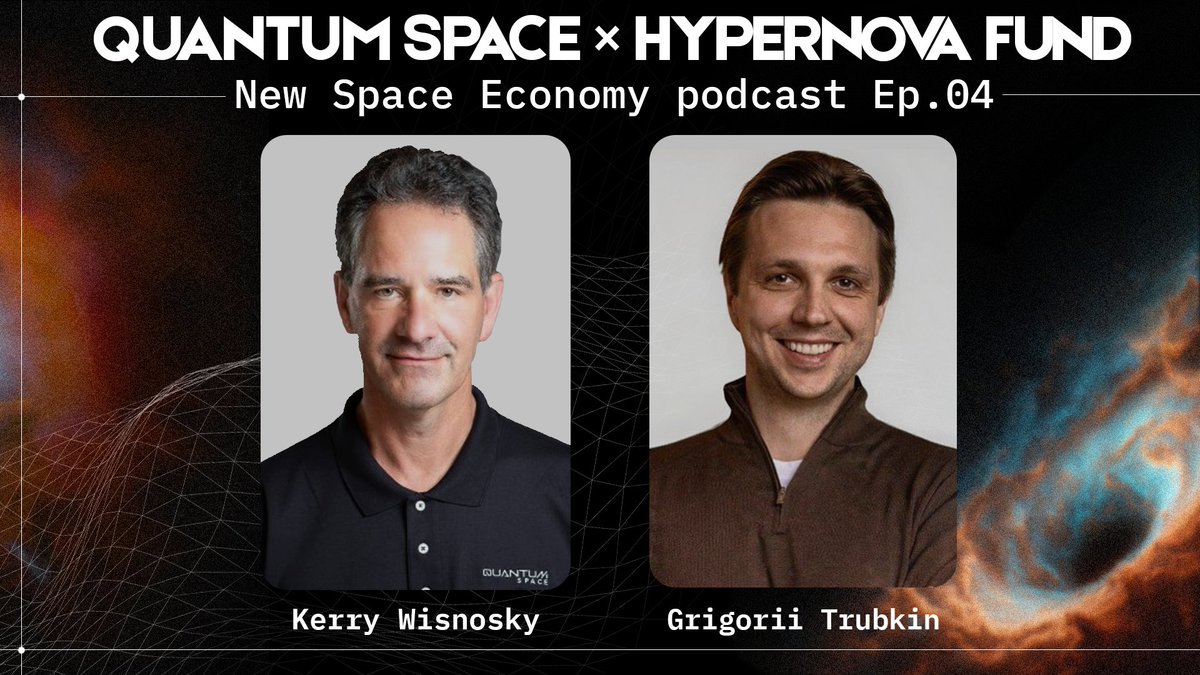
In this episode, Kerry Wisnosky, CEO of @QuantumSpace_US discusses how multi-orbit platforms (LEO, MEO, GEO) are transforming space infrastructure, defense, and commercial tech.
Watch the full interview on Hypernova Fund’s channel: youtu.be/iYshIi1kClI
1
38
Apr 17
The $50 Billion Unlock
The Trump administration's $50 billion space investment goal by 2028 is not just plausible—it is a floor. The bottleneck was never technology or ambition. It was paperwork. Until now, companies pursuing orbital data centers, in-space manufacturing, or space-based power faced a mission authorization loophole with no clear agency empowered to say yes. They were stuck in interagency purgatory with no clock and no guardrails, and capital froze as a result.
The Department of Commerce has proposed closing that gap by making the Office of Space Commerce a one-stop shop with firm deadlines and a presumption of approval. This voluntary framework provides a clear repeatable path to certification while China faces no such red tape, and the U.S. is finally streamlining to let innovation compete on speed.
Paired with NASA and DOD pivoting to commercial solutions and the FAA and FCC cutting bureaucracy, the message to Wall Street is unmistakable. The Commercial Space Federation is fully behind this proposal. This is how an orbital economy gets unlocked.
spacenews.com/the-path-to-50…
#SpaceEconomy #NewSpace #OrbitalData #RegulatoryReform #LEO
1
22
Apr 16
Phantom's Thermal Gambit
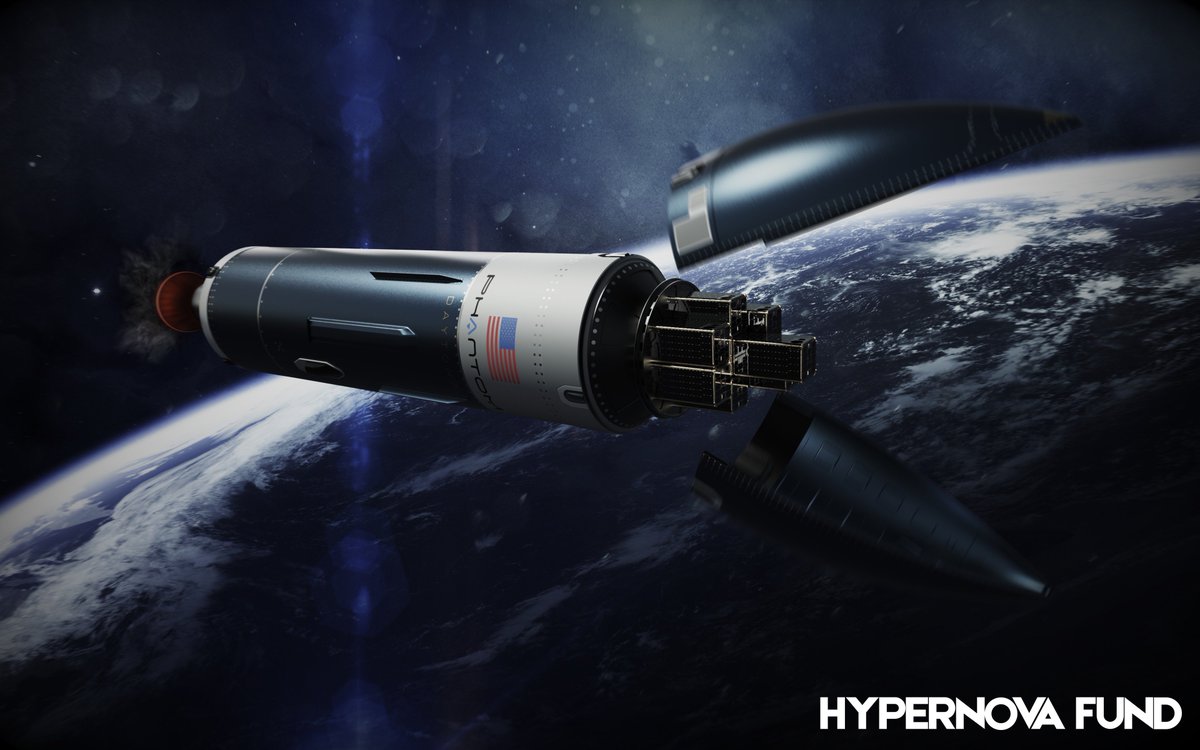
Tucson-based Phantom Space has acquired Thermal Management Technologies, securing what it calls the missing piece for orbital data centers—advanced heat rejection. AI payloads generate massive thermal loads in a vacuum, and TMT's integrated hardware sheds that energy without adding punishing mass overhead. CEO Jim Cantrell says owning this capability in-house is already shaving months off the timeline for a planned 66-satellite Phantom Cloud constellation.
Rather than chasing massive in-space supercomputers like SpaceX or Starcloud, Phantom is building an open mesh network focused on orbital edge processing and low-latency data backhaul. The architecture includes 10-kilowatt "Galactic Sky micro data centers" distributed across the constellation, with a Block I demonstration mission targeting the second half of 2027.
As LEO heats up both thermally and competitively, Phantom is betting that controlling thermodynamics will determine who wins the orbital data race just as much as raw compute power ever could.
spacenews.com/phantom-space-…
#PhantomSpace #OrbitalData #SpaceEconomy #EdgeComputing #ThermalManagement #LEO #NewSpace #SatelliteTech
3
34
Apr 14
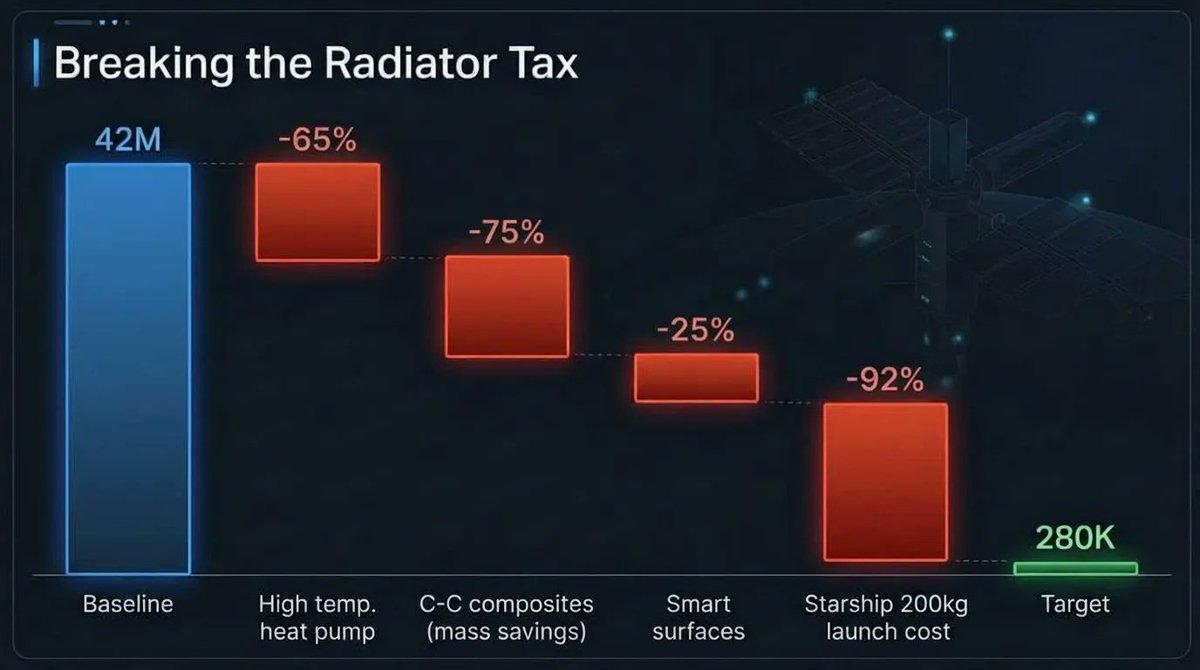
Combined Impact — The Multiplicative Stack
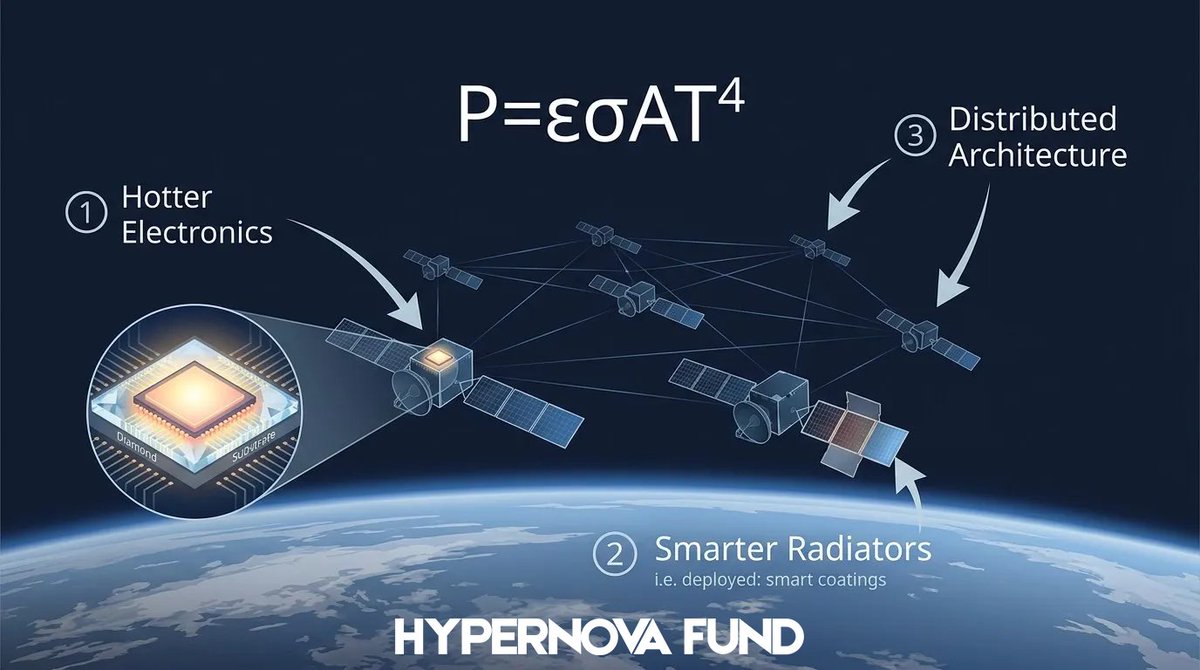
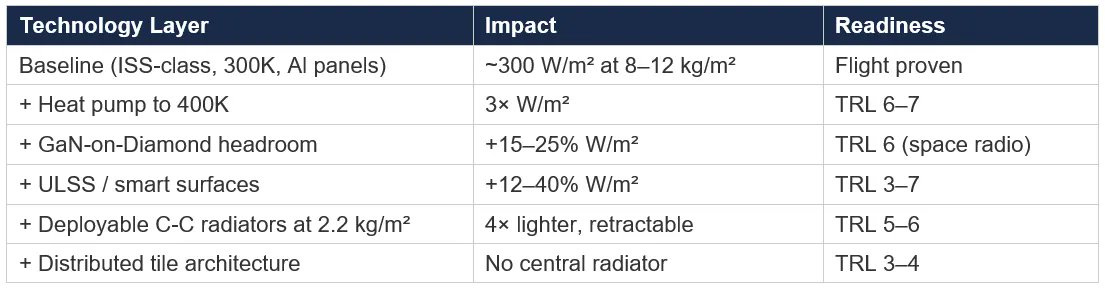
Here's where it gets interesting. The three strategies we've covered—hotter electronics, smarter radiators, and distributed architectures—are not alternatives. They compound.
Start with the baseline: a conventional 1 MW thermal system today requires thousands of square meters of heavy aluminum honeycomb radiators, translating to tens of millions in launch costs just for cooling.
Now apply the stack:
Strategy 1 pushes the radiator loop to 400K by running electronics hotter—leveraging the T⁴ curve to slash required area by 60–70%.
Strategy 2 adds multiple layers: smart variable-emissivity surfaces deliver another 20–40% orbit-averaged gain by dynamically modulating ε between sun-facing and deep-space-facing segments. Carbon-Carbon composites drop areal density from 8–12 kg/m² to just 2.2 kg/m², making large deployed radiators mass-efficient. High-emissivity surface treatments and advanced heat pipes close the remaining gaps.
Strategy 3 eliminates single-point thermal failures and allows workload scheduling to further reduce peak thermal demand—while distributed architectures avoid the monolithic "8 km² radiator" problem entirely.
The result: a 1 MW orbital data center that once required 50–100 tons of thermal hardware can now be cooled with just 1,000–1,400 kg of advanced radiators. Launch cost for the thermal subsystem drops from $20–42M to roughly $200–280K—a reduction of two orders of magnitude.
The implication: MW-class orbital compute becomes mass- and cost-feasible within this decade. The radiator tax—once considered the hardest physical barrier—is rapidly becoming a solvable engineering problem through layered innovation.
The question is no longer whether orbital data centers can scale, but which technology stack gets there first.
2
32
Apr 13
Co-Planar Solar Radiator Design — Elegance Through Geometry
Both Sophia Space and Starcloud converge on the same elegant thermal principle: a flat structure where one face captures solar energy and the opposite face radiates waste heat into deep space. On a dawn-dusk Sun-Synchronous Orbit (SSO) along the terminator, the solar face always points sunward, the radiator face always points to cold space—no complex pointing mechanisms required.
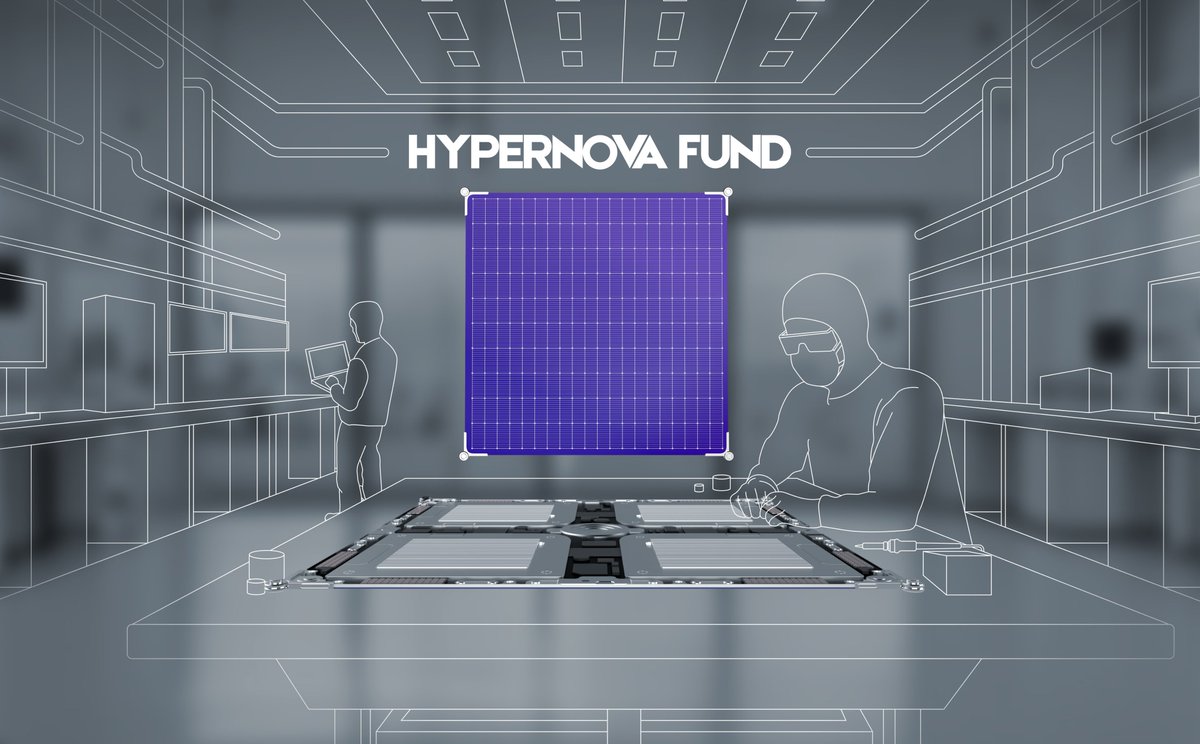
Sophia Space (Pasadena, CA) applies this as modular 1m × 1m × 1cm TILEs, each self-contained with compute, solar panel, and passive radiative backplate. Each TILE manages ~50–300W through direct radiation—no centralized coolant loop, no single-point thermal failure. Aerospace America reports 92% of power goes directly to computation (vs. ~60–65% on Earth). Sophia envisions scales from a single TILE on a host satellite to a full ODC of ~2,500 TILEs, with Axiom Space MoU for the U.S. "Golden Dome" defense architecture.
Starcloud (Redmond, WA) applies the same principle at larger scale: co-planar arrays where each panel serves dual duty. Their whitepaper estimates radiator area can be less than half the solar array area. Starcloud-1 (launched November 2025, NVIDIA H100) validates the approach; Starcloud-2 (late 2026) targets 100× power generation and positive cash flow.
The takeaway: sometimes the best thermal management system is no "system" at all—just geometry that lets physics work in your favor.
starcloudinc.github.io/wp.pd…
digital-edgemagazine.com/pos…
aerospaceamerica.aiaa.org/in…
2
66
Apr 10
Don't Build a Bigger Thermos — Build a Constellation
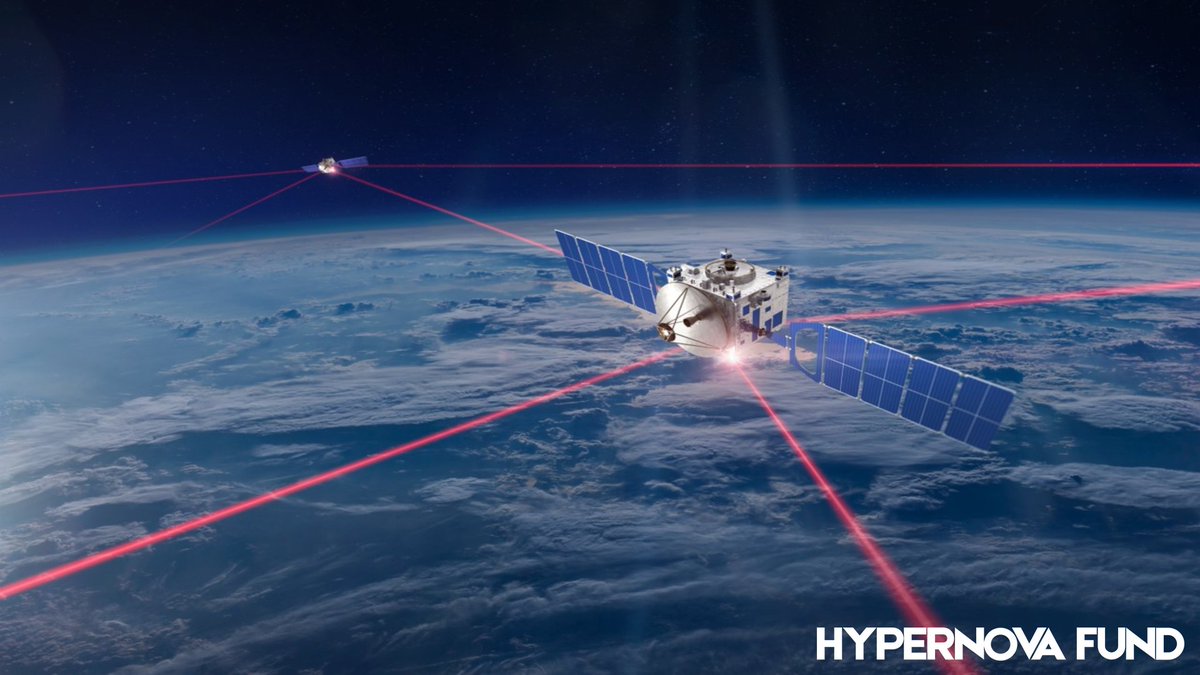
The most elegant solution to the radiator tax may be to avoid the monolithic radiator problem entirely. Instead of one massive spacecraft rejecting megawatts through a single thermal system, distribute the workload across dozens or hundreds of smaller orbital compute nodes—each managing its own modest thermal load independently.
Distributed Compute Across a Satellite Constellation
Nodes communicate via high-bandwidth optical inter-satellite links (OISL), which already support 100 Gbps on Starlink and are rapidly becoming commoditized. This approach offers several thermal advantages:
- Each node rejects only kilowatts, not megawatts—well within the capability of compact, passive radiators with no deployable mechanisms
- Workload scheduling can route computation to nodes with the most favorable thermal conditions (e.g., those currently in eclipse or facing deep space), dynamically balancing heat load across the constellation
- Failed nodes are replaced individually without impacting system capacity—the thermal equivalent of the resilience that made terrestrial cloud computing robust
- Modular scaling avoids the "8 km² radiator" challenge of a monolithic GW-class data center entirely
This mirrors terrestrial hyperscale evolution: Google, AWS, and Microsoft don't build one enormous building—they distribute across dozens of facilities. China's "Three-Body Problem" constellation (2,800 satellites, first 12 launched May 2025) represents the most ambitious instantiation of this philosophy.
#space #spacefacts #spacenews #spacex #nasa #hypernovafund
1
25
Advanced Heat Transport — From Chip to Radiator
Efficiently moving heat from chip to radiator across meters of spacecraft structure is its own bottleneck. Three generations of technology address this:
- Loop Heat Pipes (LHPs) passively transport kilowatts over several meters with minimal temperature drop and no moving parts—proven on dozens of spacecraft including ISS and Hubble.
- Variable-Conductance Heat Pipes (VCHPs) add active thermal switching: they can "turn off" heat transport when the radiator faces the Sun, preventing overcooling and reducing thermal cycling stress.
- Oscillating Heat Pipes (OHPs), developed by ThermAvant Technologies under NASA SBIR funding, deliver 14× the thermal conductance of solid aluminum at 40% lower mass. At Technology Readiness Level (TRL) 7–8, they represent the most mature path to lightweight, high-throughput heat transport for orbital compute.
For higher-temperature loops, alternative working fluids (ammonia, acetone, specialized organics, and even liquid metals for >200°C regimes) enable the coolant to operate closer to radiator temperature, minimizing the thermal "delta-T penalty" across the system.
The takeaway: no single technology solves the radiator tax alone. But combined—higher ε surfaces, deployable C-C panels, smart emissivity switching, and advanced heat transport—the path to MW-class orbital cooling becomes visible.
#space #spacenews #hypernovafund
1
27
Lightweight Materials & Deployable Systems
@SierraSpaceCo is developing deployable radiator systems at TRL 6. The most advanced designs use lightweight Carbon-Carbon (C-C) composite panels—NASA Glenn and Allcomp Corp. have demonstrated C-C radiators at just 2.2 kg/m², versus 8–12 kg/m² for traditional aluminum honeycomb.
Combined with the deployable form factor, this means a 500 m² radiator system could weigh ~1,100 kg and pack into a volume small enough for a single Falcon 9 fairing—a proposition that would have been physically impossible with rigid aluminum panels.
For context: that same 500 m² with traditional aluminum honeycomb would weigh 4,000–6,000 kg, requiring multiple dedicated launches just for the cooling system. Carbon-carbon composites change the calculus entirely.
#hypernovafund #space
1
26
Smart Variable-Emissivity Surfaces
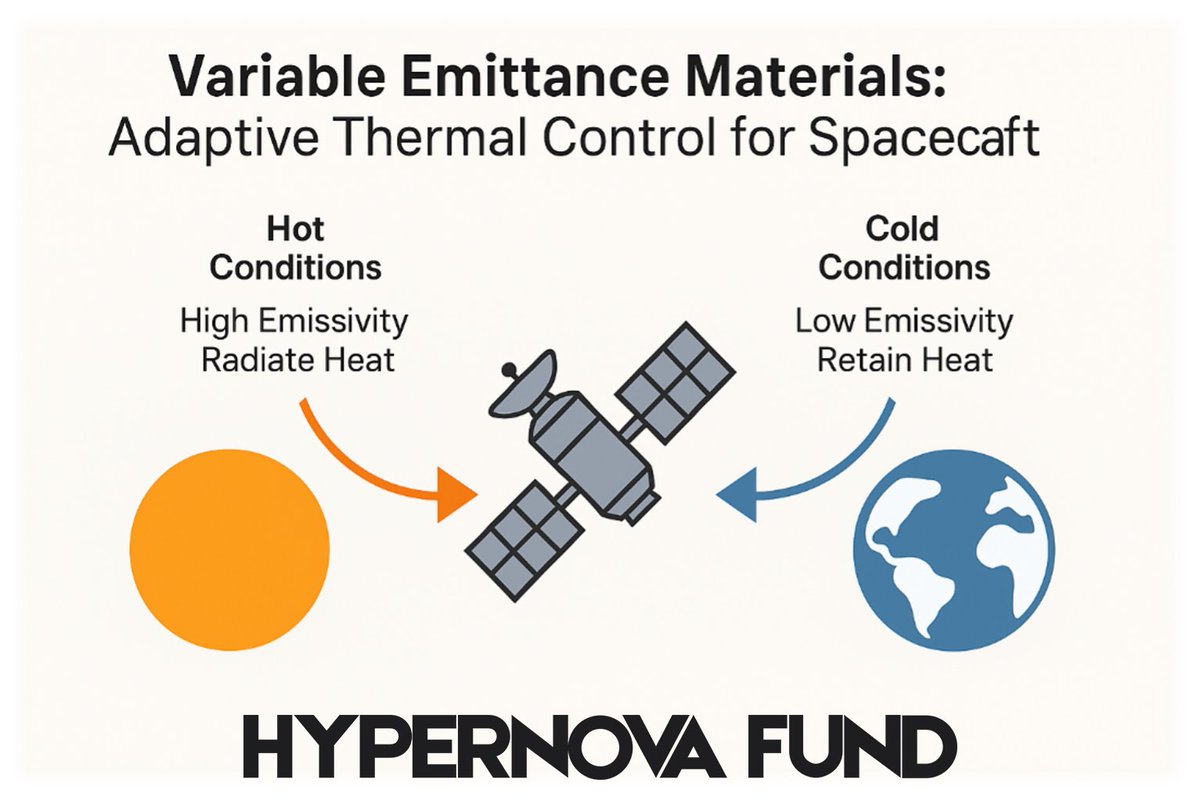
Smart Radiator Devices (SRDs) use electrochromic or thermochromic coatings (e.g., VO₂-based multilayers) to modulate emissivity from ~0.1 to ~0.9 dynamically. This means: maximum emission when facing cold deep space, minimum when facing the Sun or Earth. The orbit-averaged gain: 20–40% more effective W/m² from the same radiator area.
Deployable Radiators: Unfoldable Area on Demand
One of the most practical paths to MW-class cooling is simply having more radiator area—but stowing it compactly for launch and deploying it in orbit. Modern deployable radiators fold into tight packages that fit standard launch fairings and unfurl into panels tens or hundreds of square meters in size once on orbit.
What makes them especially attractive is active thermal management: deployable radiators can be opened when heat rejection is needed (e.g., during peak compute loads or when facing deep space) and retracted or folded when not (e.g., to minimize heat gain during sun-facing orbital segments, or to protect surfaces during maneuvering). This on-demand capability turns the radiator from a passive dead mass into an actively managed thermal asset.
#space #hypernovafund
1
23
Squeeze More Watts from Every Square Meter
Even without changing the electronics, several technologies can significantly increase the effective heat rejection per unit area of radiator. Each approach attacks the problem from a different angle—materials, thermodynamics, or geometry—and together they stack into a powerful multiplier.
Heat Pumps: Trading Watts for Mass
A vapor-compression heat pump keeps GPUs at 60–70°C while boosting the radiator loop to 400 K (127°C). At 400 K, radiative emission is ~3.2× higher than at 300 K, potentially cutting radiator area by 60–70%. The thermodynamic cost—20–40% additional power—is favorable when solar energy is nearly free in orbit.
Femtosecond Laser Surface Structuring (ULSS)
A particularly interesting emerging approach: Quantum Qool (Omaha, NE) uses ultrafast femtosecond laser pulses to create permanent nano- and microstructures on metallic radiator surfaces. Peer-reviewed research from the University of Nebraska-Lincoln demonstrates that this process achieves near-unity broadband omnidirectional emissivity on aluminum—boosting ε from ~0.1 (bare metal) to 0.95 without any coatings, paints, or films.
Why this matters for space:
· No coatings to degrade. Traditional white paints and OSR mirrors degrade under UV, atomic oxygen, and radiation in LEO. ULSS creates permanent surface modifications at the material level.
· Process scales to any metallic surface—radiators, heat sinks, heat pipes—in a single manufacturing step.
For orbital radiators, pushing ε from a typical 0.85 (painted surface) to 0.95 translates to ~12% more radiated power per m²—a modest but "free" improvement that stacks with other gains.
#space #hypernovafund
1
17
SiC: The 500°C Computer
NASA Glenn Research Center has demonstrated Silicon Carbide (SiC) integrated circuits operating continuously at 500°C for over one year, surviving 60 days in simulated Venus conditions (460°C, 93 atm), and tolerating 7 Mrad of radiation. In 2025, the DoD funded a $7.5M program (Michigan, NASA Glenn, GE Aerospace, Wolfspeed, Ozark IC) to scale SiC JFET fabrication to 150mm wafers.
SiC won't replace GPUs—it's far too slow for AI workloads. But it enables a heterogeneous thermal architecture: SiC-based power converters, controllers, and sensors operate at 300–500°C in the "hot zone" near radiators, while GPUs remain in a much smaller "cold zone."
This approach could reduce the volume requiring low-temperature cooling by 30–50% —a massive reduction in radiator area, structural mass, and overall system complexity.
The combination of diamond cooling (pulling heat out efficiently) and SiC electronics (pushing heat tolerance higher) creates a compounding effect. Each technology amplifies the other, multiplying the leverage of the T⁴ curve.
#space #hypernovafund #NASA
2
35
How much does the delay cost?
Watch full interview with @LongshotSpace CEO on the Hypernova Fund yt channel: youtu.be/os5MKgi_gLU
#space #spacepodcast #hypernovafund
2
23
How Big Is the Radiator Tax?
The ISS External Active Thermal Control System—the most complex space cooling system ever built—uses 156 m² of radiator panels to reject just 70 kW.
For context: a single NVIDIA DGX H100 consumes 10.2 kW.
Now scale that to a modest 1 MW orbital data center (~100 racks). The math gets brutal:
· Radiator area needed: ~2,200–4,500 m²
· Mass: 50–100 metric tons
· Launch cost (Starship, $1,000/kg): $50–100M
· Launch cost (conventional): $200–400M
That's $20–42M just for the cooling system—before a single compute node, solar panel, or structural component. The thermal subsystem can easily equal or exceed the mass of everything else combined.
And if you're thinking bigger: Starcloud's vision of a 5 GW orbital data center would require ~8 km² of radiator surface—larger than the entire territory of Gibraltar.
The question for investors is clear: which technologies can shrink this number by 3–10×?
We see three independent strategies, each attacking the problem from a different angle:
1. Higher operating temperatures — pushing electronics to run hotter, leveraging T⁴ to slash radiator area
2. Advanced radiator materials — deployable, lightweight structures with high emissivity and conductivity
3. Alternative heat rejection — liquid droplet radiators, phase-change materials, or direct waste heat utilization
The thermal bottleneck isn't just an engineering detail—it's the single largest driver of mass, cost, and feasibility for orbital compute at scale. Whoever solves the radiator tax wins the orbit.
#space #hypernovafund

1
38
The most direct path to shrinking radiators: raise the operating temperature of compute hardware. If chips tolerate higher temperatures, the entire thermal chain—from cold plate to radiator—runs hotter, moving into the steep part of the T⁴ curve.
GaN-on-Diamond: Diamond Cooling for Space
@AkashSystems (Oakland, CA) has pioneered commercial GaN-on-Diamond technology. Diamond's thermal conductivity—2,200 W/m·K, over 5× copper—pulls heat away from active semiconductor junctions so effectively that hot-spot temperatures drop by 10–20°C under identical conditions.
Key milestones:
· Space heritage achieved: January 2025, Diamond-Cooled satellite radio launched with Pixxel on LEO mission
· $68.2M CHIPS Act allocation (plus Khosla Ventures, Peter Thiel backing) for scaling production
· $27M server contract with NxtGen Datacenter for Diamond-Cooled AI servers
· Demonstrated 10.3°C hot-spot reduction on NVIDIA RTX 4070 GPU, enabling sustained boost clocks without thermal throttling
Why it matters for orbital compute: Every degree of junction temperature headroom translates directly to higher radiator operating temperature and smaller radiator area. A technology that reduces the chip-to-radiator thermal resistance is a direct multiplier on the T⁴ lever.
#space #hypernovafund
1
35
Mike Grace from @LongshotSpace view on how to run a company.
Watch full interview on the Hypernova Fund yt channel: youtube.com/shorts/dS-1tLxY_…
#podcast #spacepodcast #hypernovafund #space
1
19
Mar 31
Space isn’t cold—it’s a thermos.
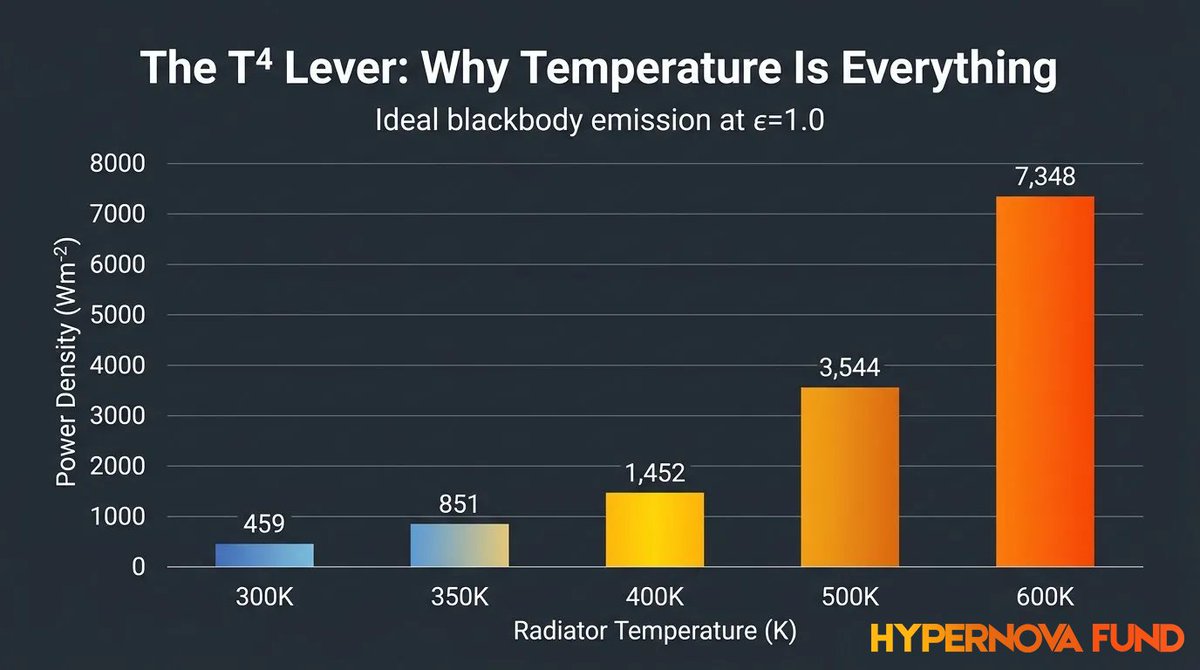
There's a common misconception that space is freezing. In reality, there's no air, no water, no convection. The only way to shed waste heat is through thermal radiation, governed by the Stefan-Boltzmann law:
P = ε · σ · A · T⁴ (Stefan-Boltzmann)
To reject heat (P), you have exactly three levers:
- More radiator area (A) → adds mass, cost, and complexity
- Higher temperature (T) → the most powerful lever due to T⁴
- Higher emissivity (ε) → limited by material science
A radiator at 500K rejects 7.7× more heat per m² than one at 300K. That's the difference between a functional spacecraft and one that cooks itself.
But running electronics hotter shortens lifespan and pushes components to their limits. Every watt of compute demands a watt of heat rejection, and with no atmosphere to help, radiator area scales directly with power.
Thermal management in orbit isn't just an engineering challenge—it's a law of physics. And the physics doesn't negotiate.
#hypernova #space
1
15
Mar 30
How did Mike Grace build his first cannon in his garage?
Watch the full interview: youtube.com/watch?v=os5MKgi_…
#spacepodacst #podcast #space #hypernovafund #longshot
4
47
Mar 29
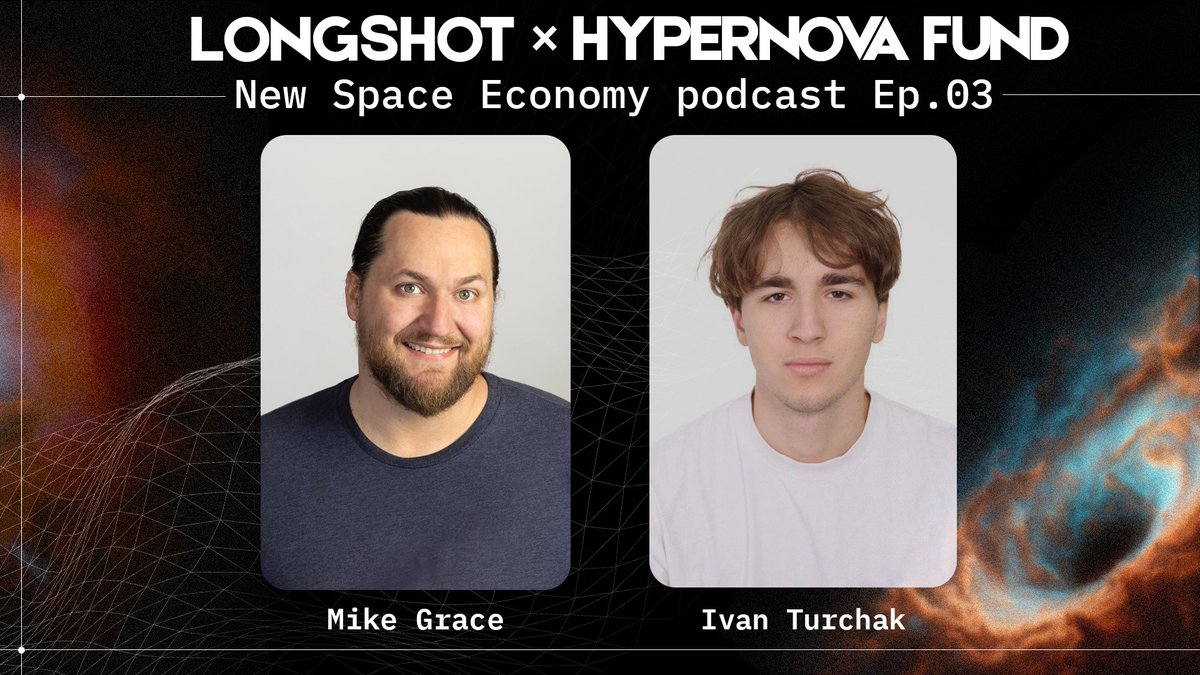
In 3rd episode, we sit down with Mike Grace, CEO and Founder of @LongshotSpace , to explore how a combat engineer turned biologist turned aerospace founder is building a kilometers-long pneumatic cannon to shoot payloads into orbit at a fraction of the cost of rockets.
Watch the full episode here : youtube.com/watch?v=os5MKgi_…
2
355