A new research initiative between @NIHRBioResource, @KingsCollegeLon and @GenomicsEngland, focusing on health outcomes for UK-based Black communities.
- Tweets 24
- Following 56
- Followers 45
- Likes 11
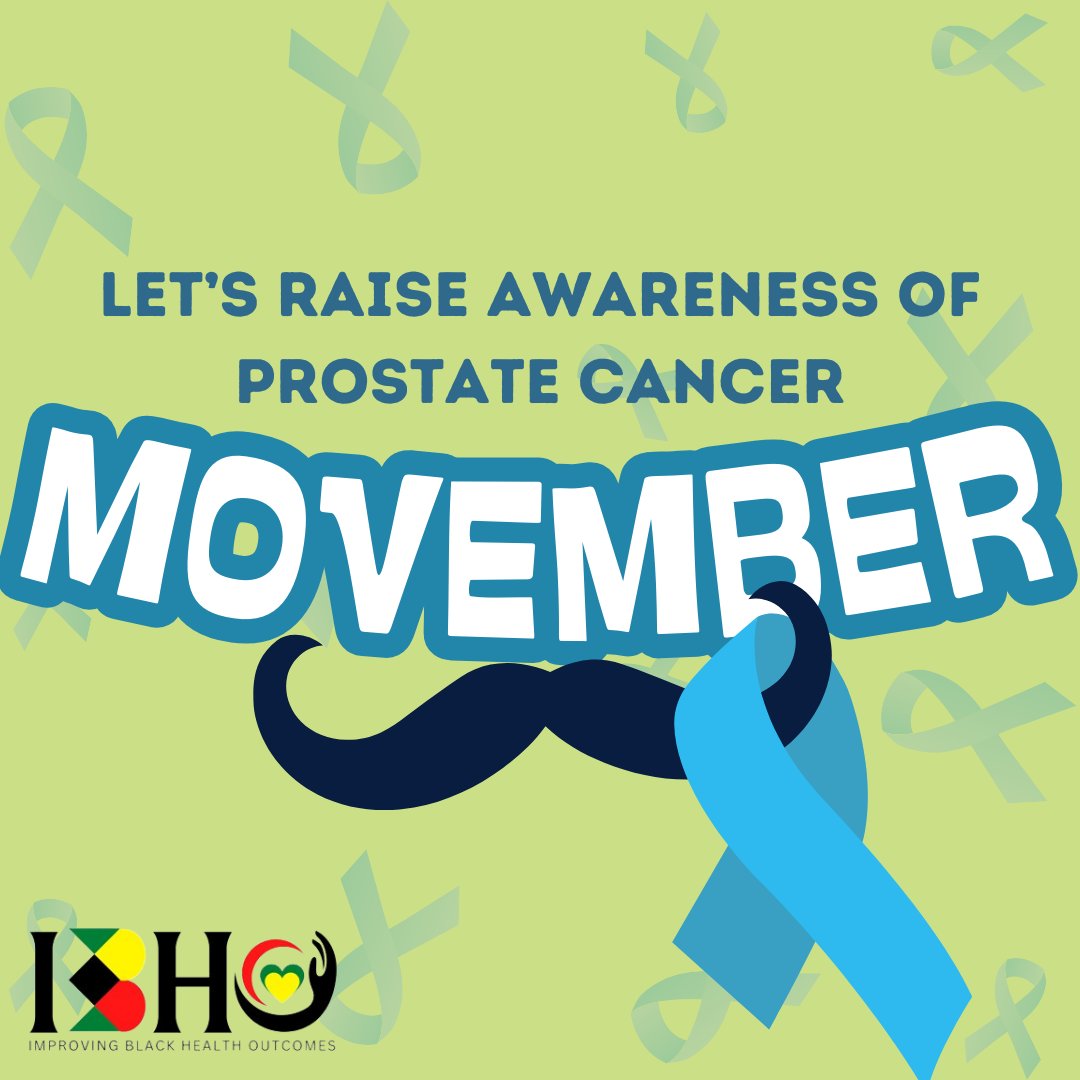


ALT Light green background with light blue ribbons. Blue and white text, "Movember", in the centre with a graphic of a moustache with a blue ribbon below it and blue text, "Let's raise awareness of prostate cancer" above it. IBHO logo in the bottom left corner.
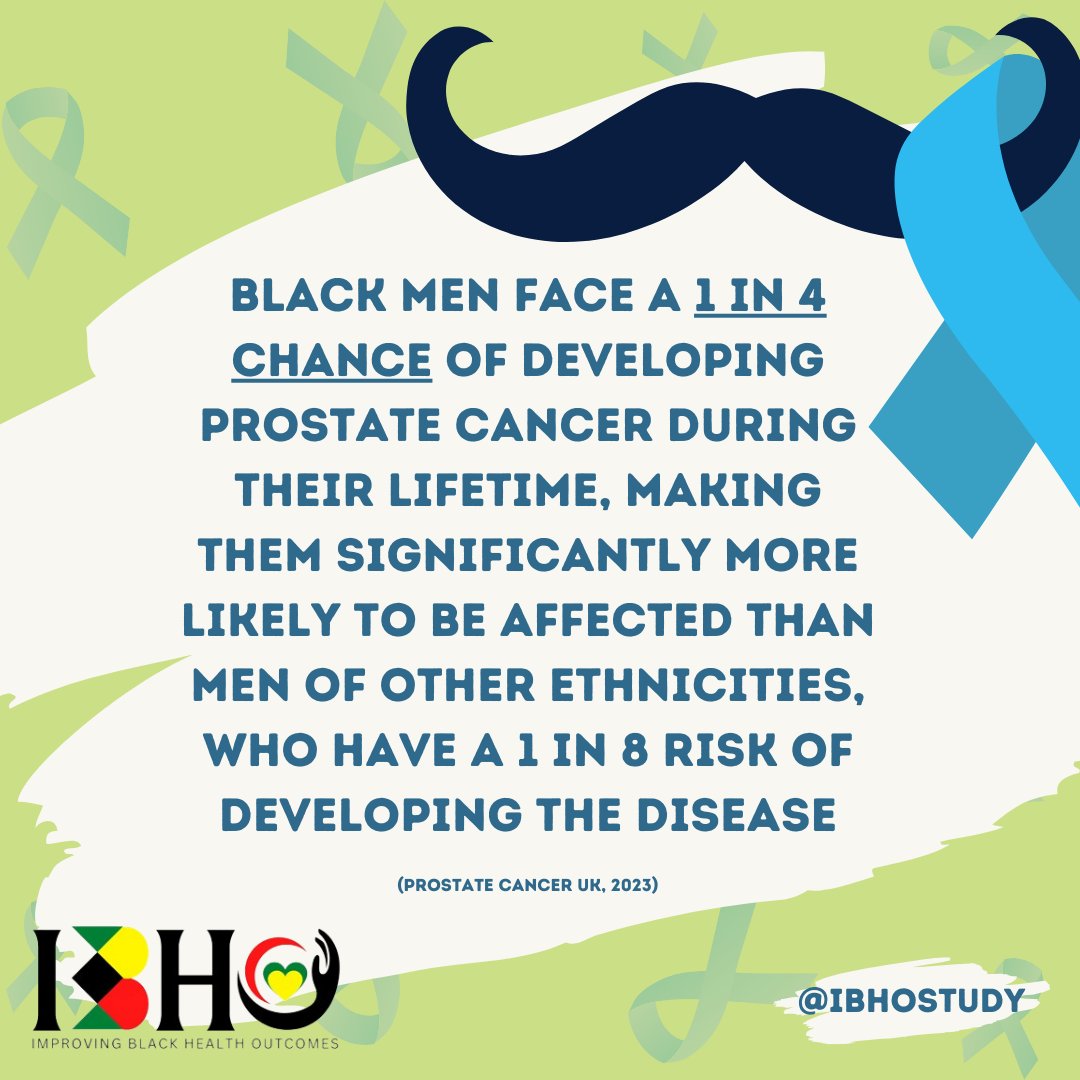
ALT Light green background with light blue ribbons. Graphic of a moustache with a blue ribbon in the top right corner and IBHO logo in the bottom left corner. Blue text, "Black men face a 1 in 4 chance of developing prostate cancer during their lifetime, making them significantly more likely to be affected than men of other ethnicities, who have a 1 in 8 risk of developing the disease (Prostate Cancer UK, 2023)" in a white text box in the centre. Blue text, "@IBHOstudy", in a white text box in the bottom right corner.
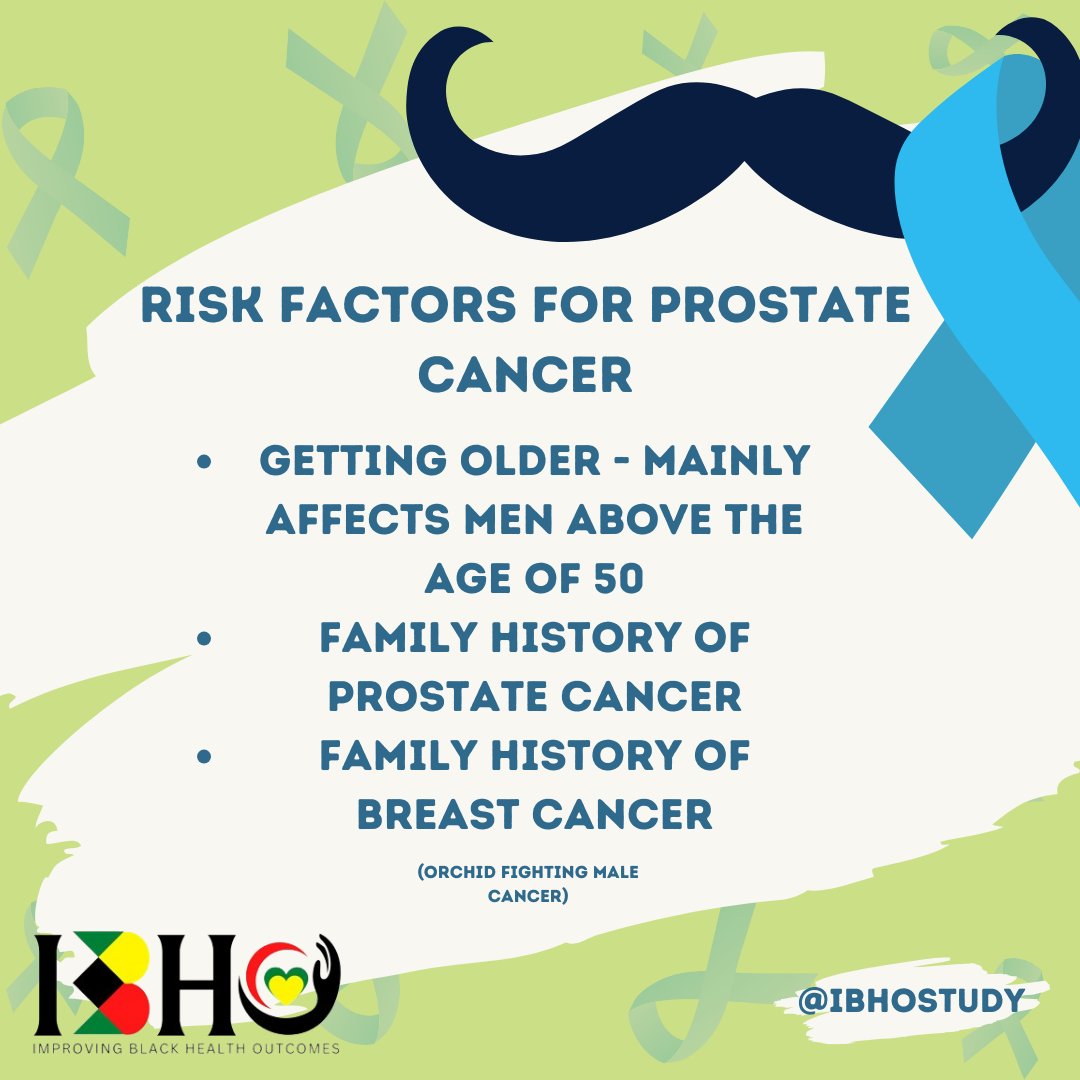
ALT Light green background with light blue ribbons. Graphic of a moustache with a blue ribbon in the top right corner and IBHO logo in the bottom left corner. Blue text, "Risk factors for prostate cancer: Getting Older - mainly affects men above the age of 50; family history of prostate cancer; family history of breast cancer (Orchid Fighting Male Cancer)" in a white text box in the centre. Blue text, "@IBHOstudy", in a white text box in the bottom right corner.
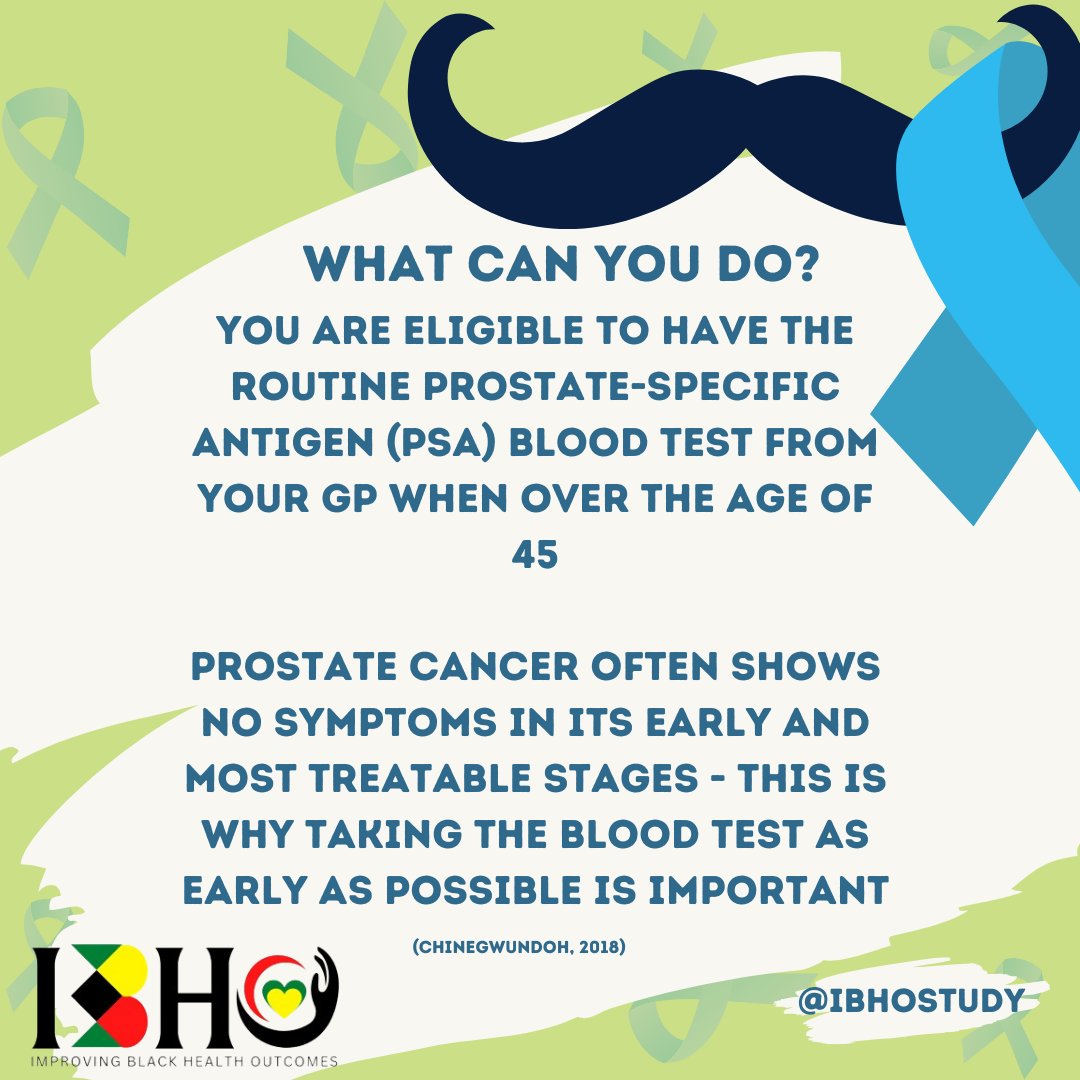
ALT Light green background with light blue ribbons. Graphic of a moustache with a blue ribbon in the top right corner and IBHO logo in the bottom left corner. Blue text, "What can you do? You are eligible to have the routine prostate-specific antigen (PSA) blood test from your GP when over the age of 45. Prostate cancer often shows no symptoms in its early and most treatable stages - this is why taking the blood test as early as possible is important (Chinegwundoh, 2018)" in a white text box in the centre. Blue text, "@IBHOstudy", in a white text box in the bottom right corner.


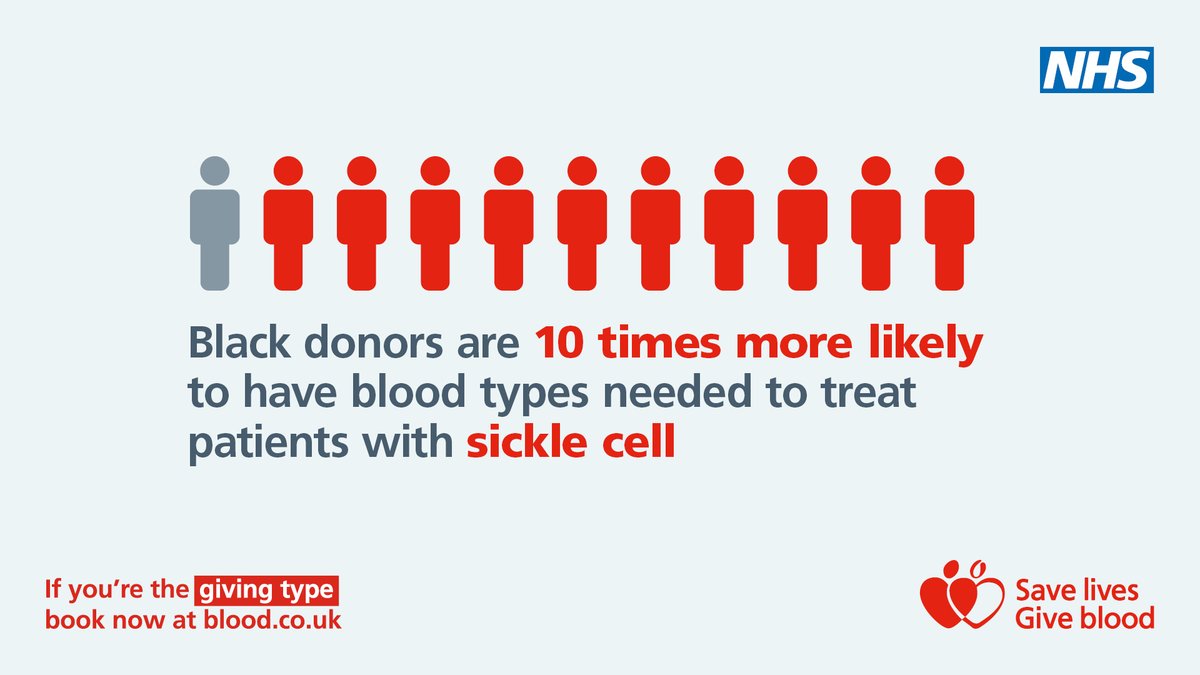
ALT Infographic with a pale blue/grey background. 11 outlines of figures are standing in the middle, 1 is grey, 10 are red. Below it reads the text: "Black donors are 10 times more likely to have blood types needed to treat patients with sickle cell." The NHS logo is in the top right hand corner, the save lives give blood logo is in the bottom right hand corner and the text "If you're the giving type, book now at blood.co.uk" is in the left hand corner.


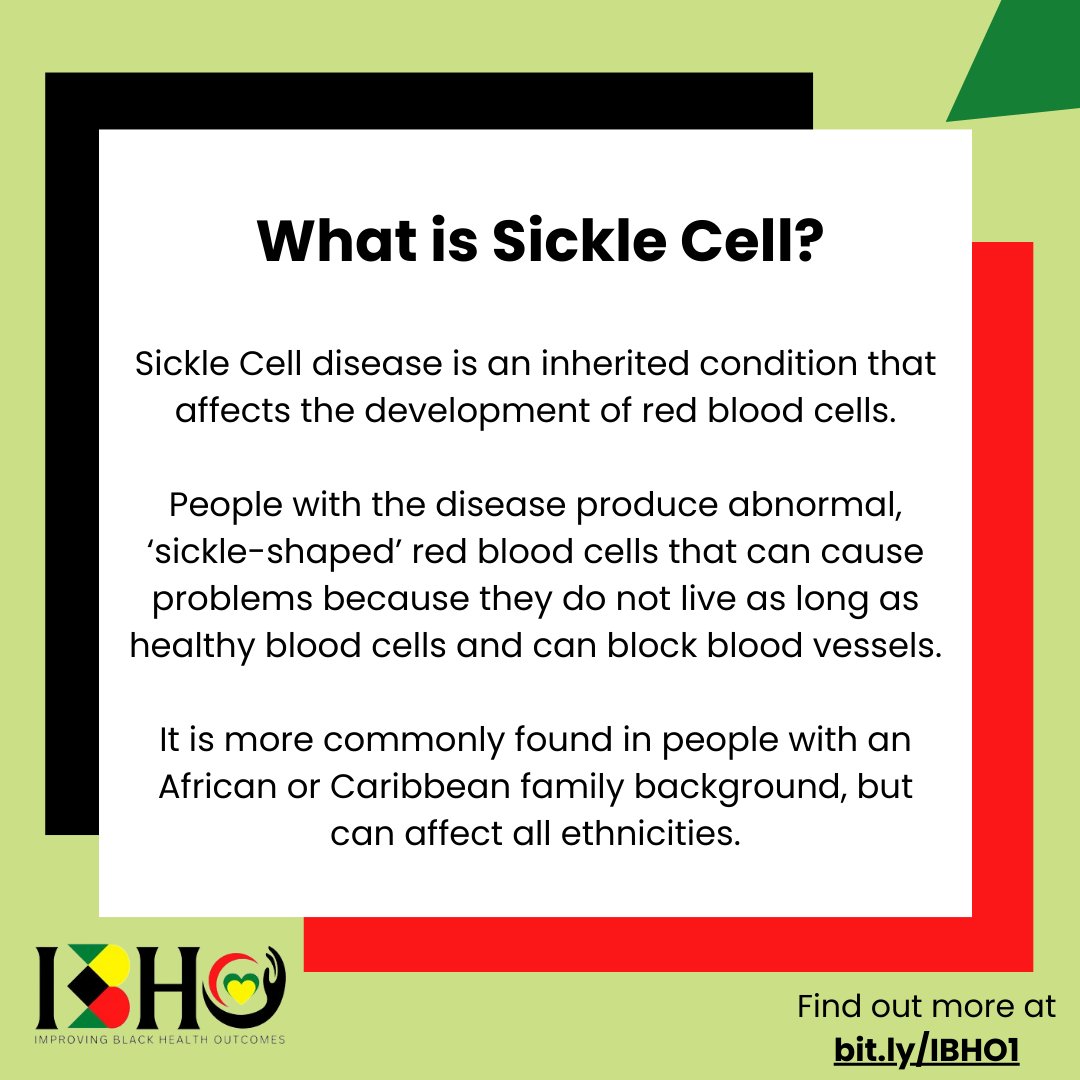
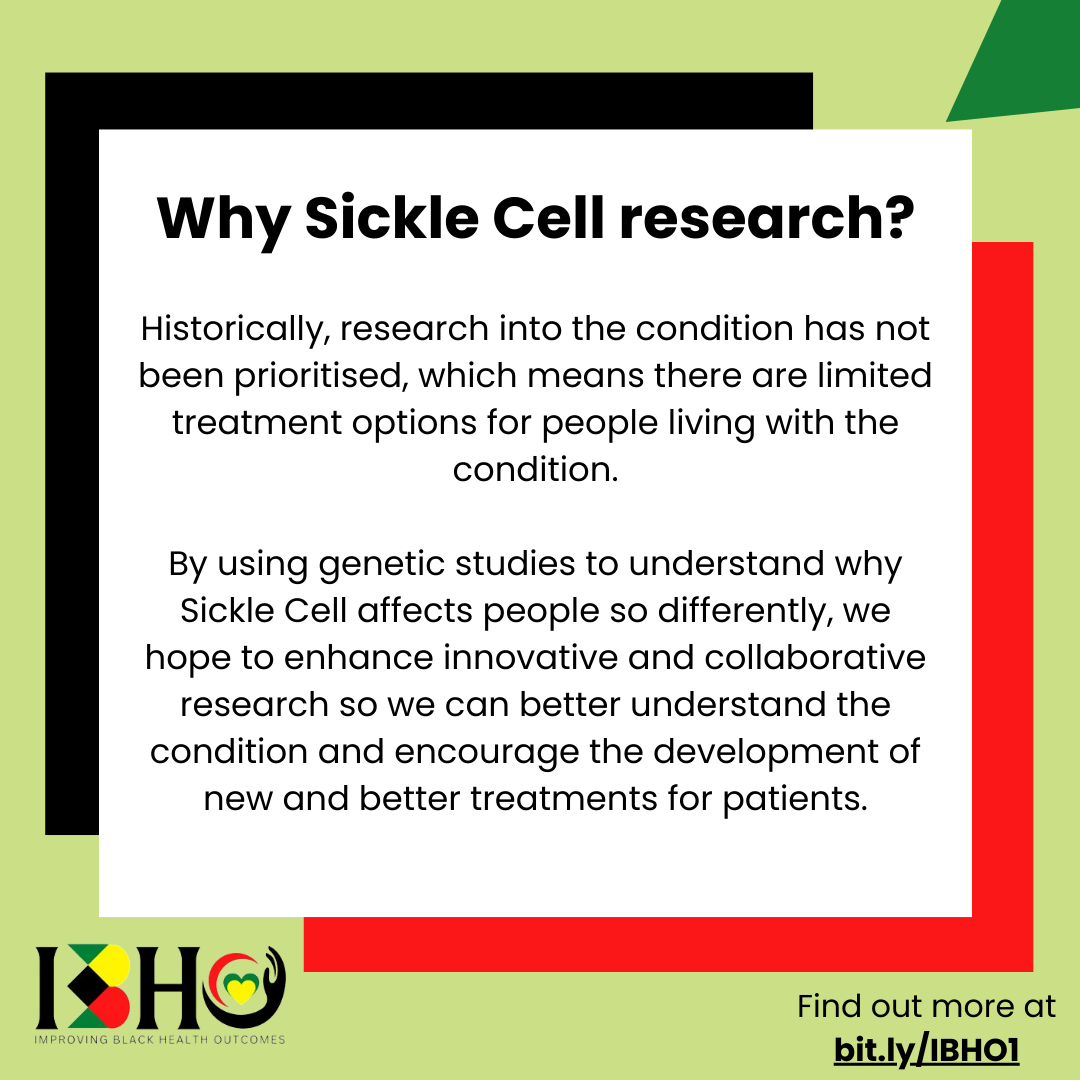
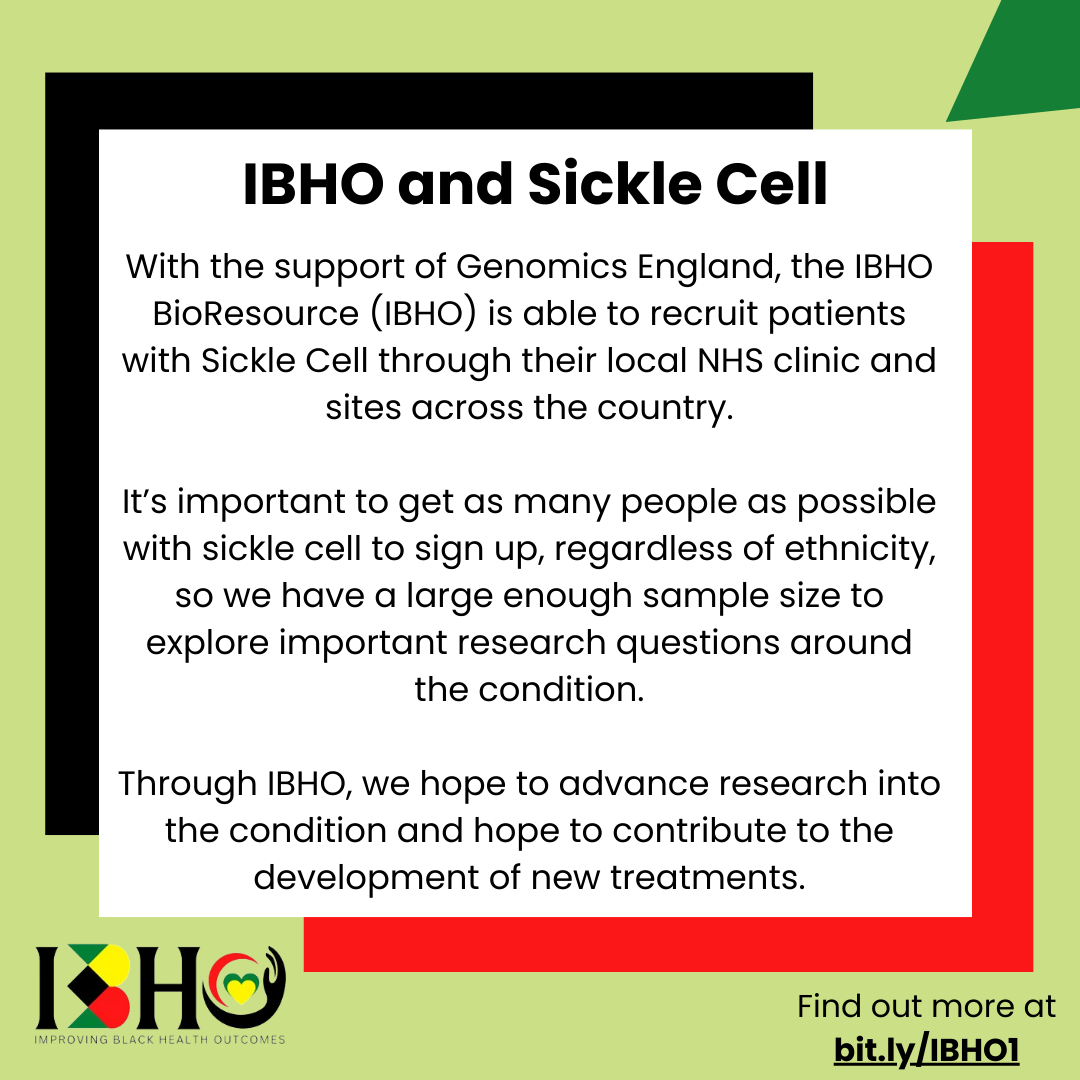
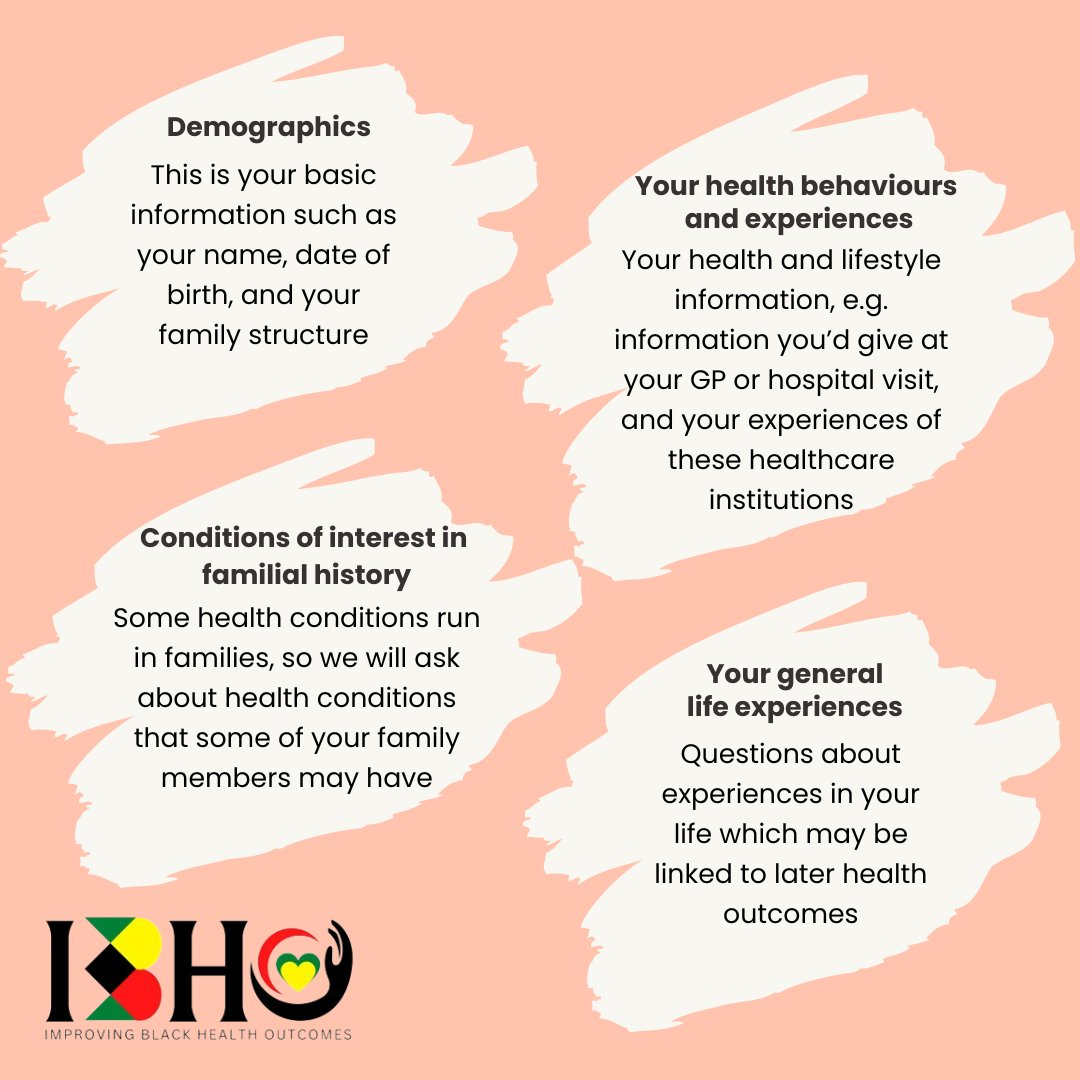
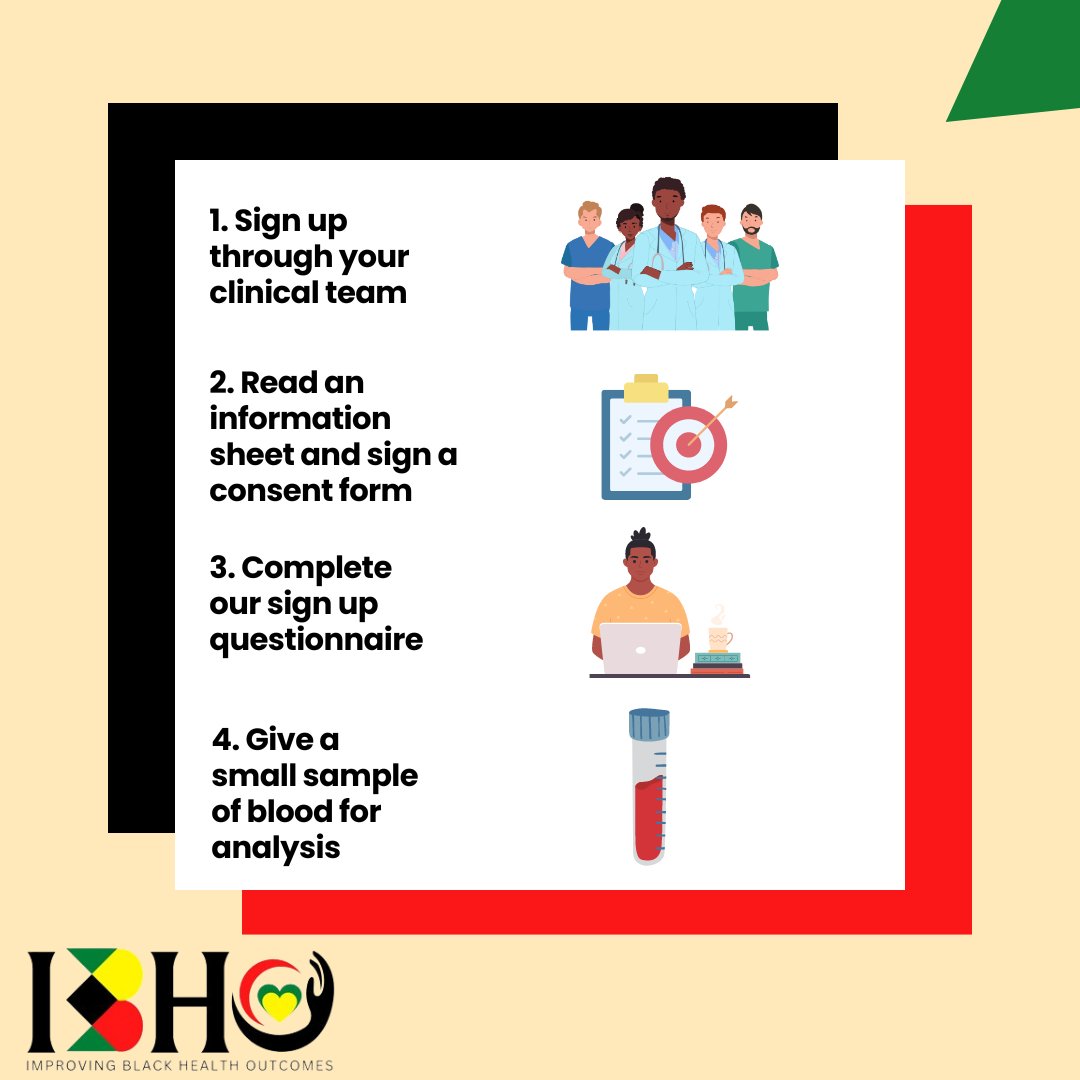
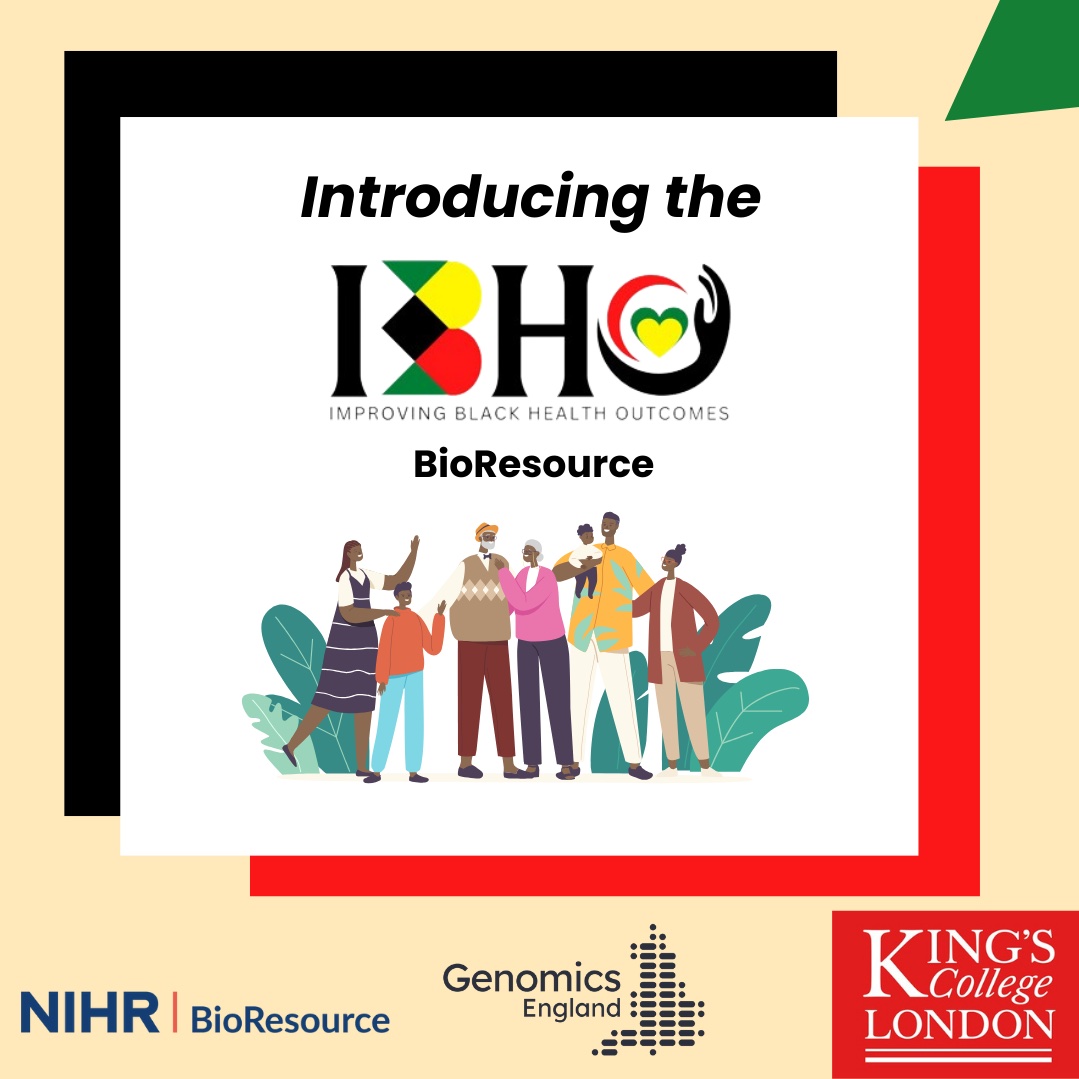
ALT A framed image of people gathered together under the IBHO logo, with the three research partner logos underneath
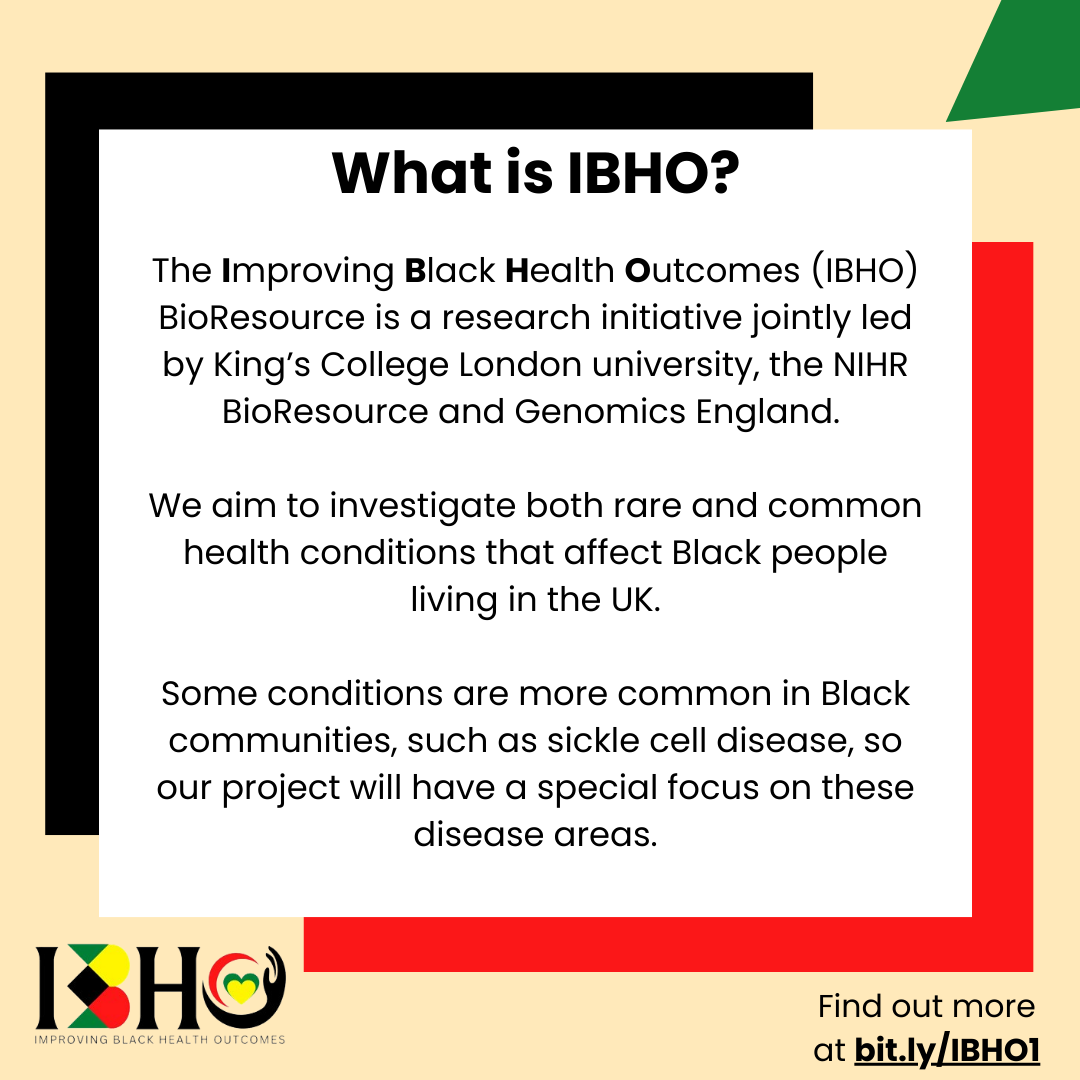
ALT A framed page describing what the IBHO BioResource is. A three-partner research project aiming to investigate rare and common health conditions that affect Black people living in the UK.
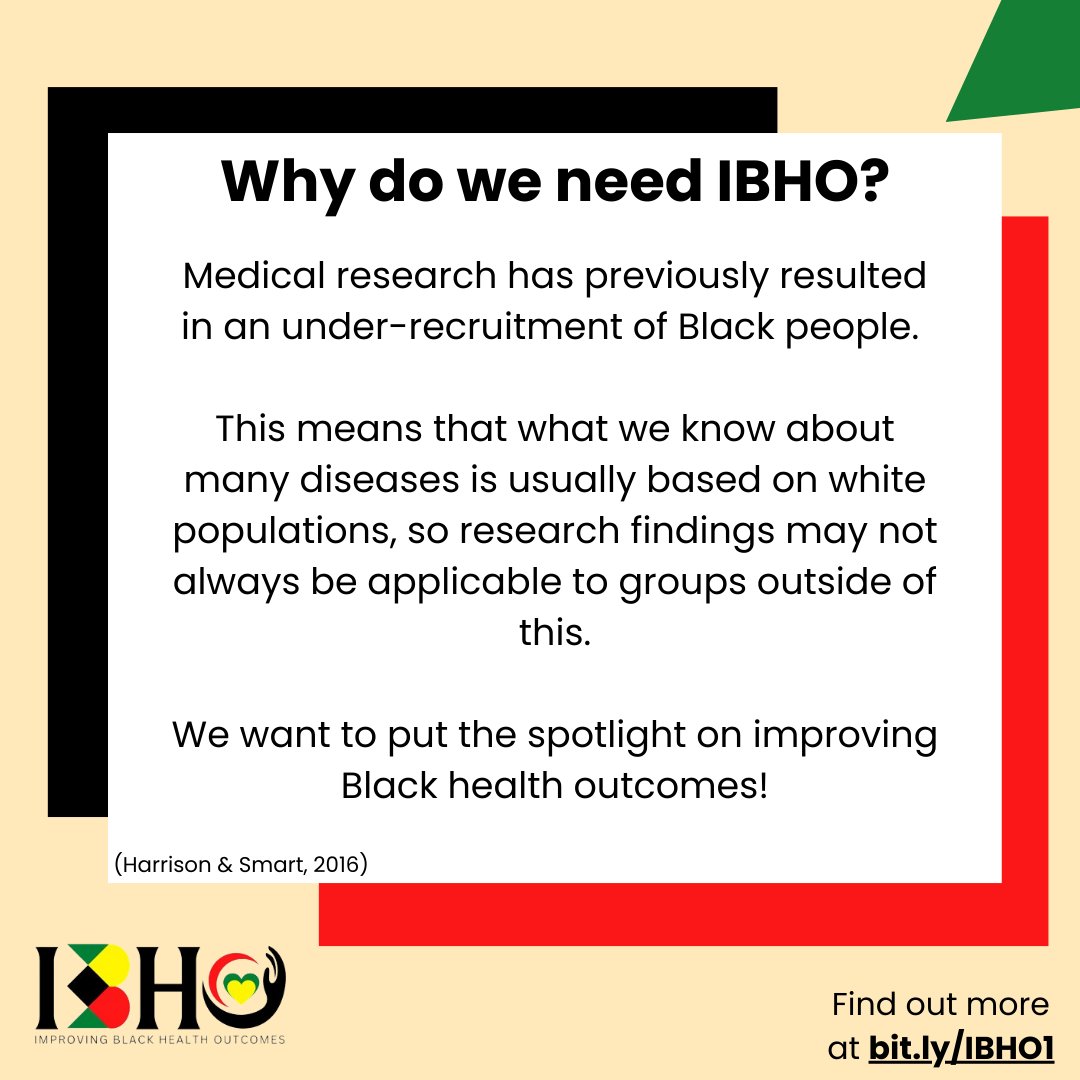
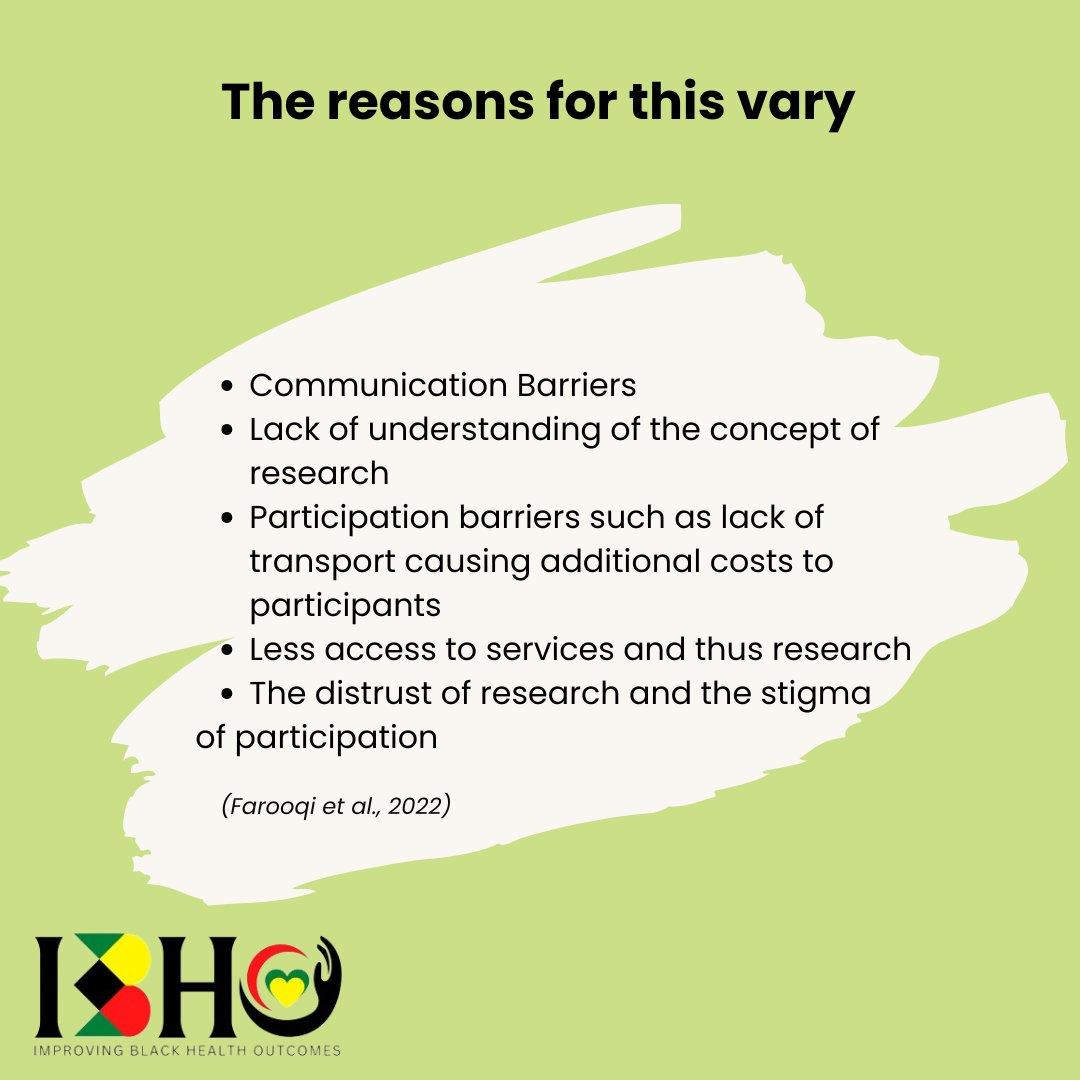
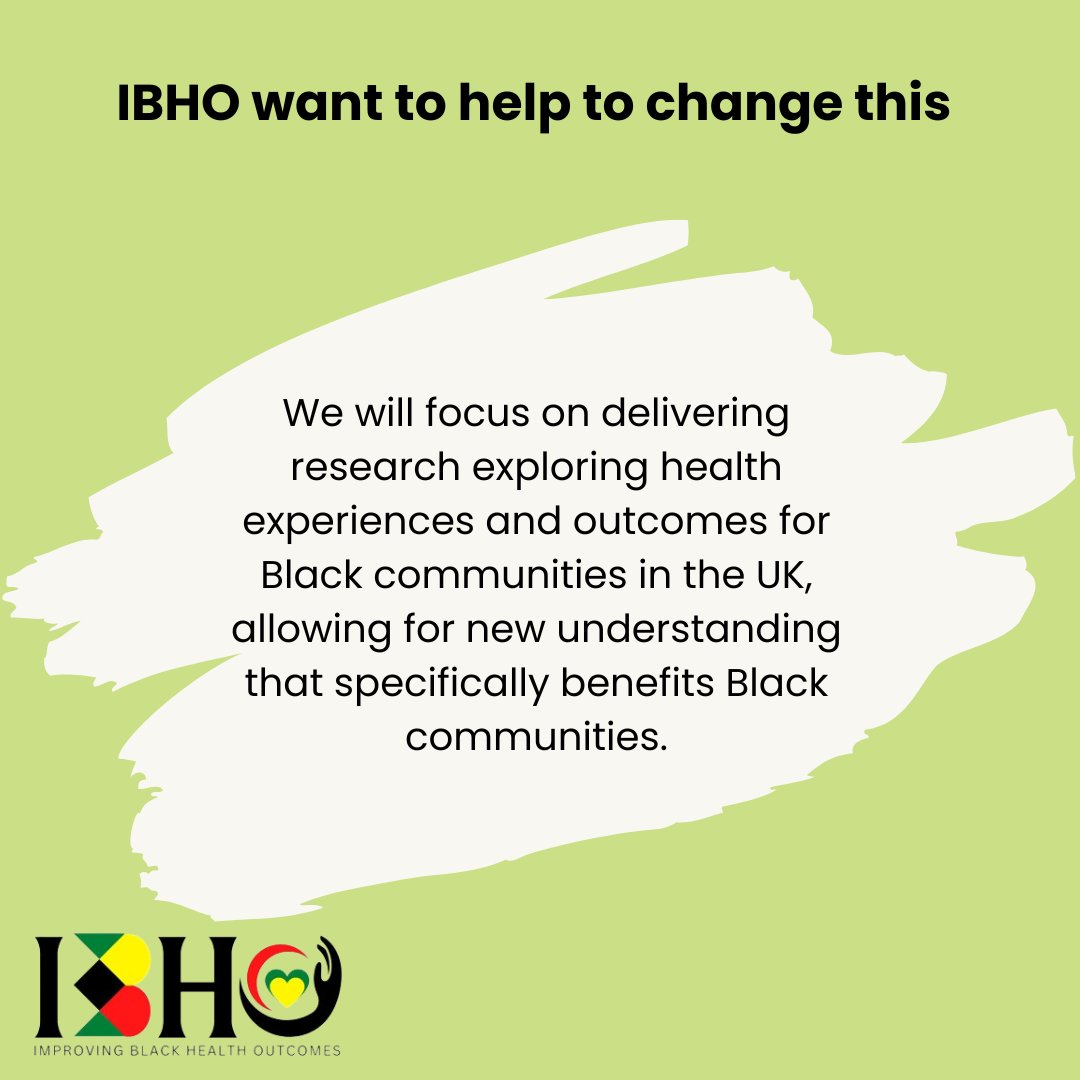
ALT A framed page explaining why IBHO is needed. Medical research has previously resulted in an under-recruitment of Black people, therefore what is known about many diseases is based on white groups so may not be applicable to other people. Projects like IBHO are needed to address this.
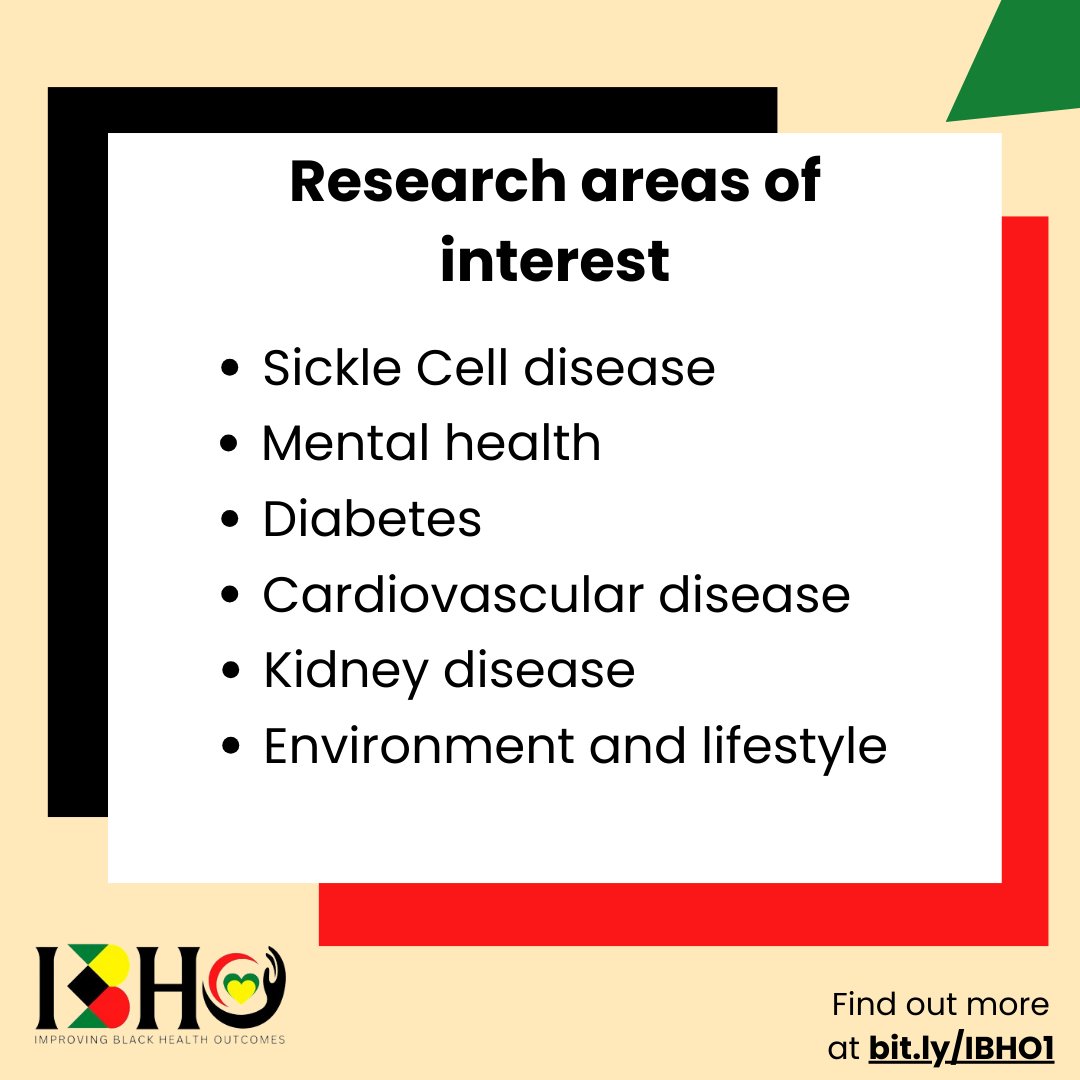
ALT A framed image detailing the research areas of interest: sickle cell disease, mental health, diabetes, cardiovascular disease, kidney disease, environment and lifestyle.