
IPLD is the data model of the content-addressable web. It allows us to treat all hash-linked data structures as subsets of a unified information space.
Joined February 2017
- Tweets 16
- Following 0
- Followers 401
- Likes 26
Photos and videos

Underneath #IPFS is a system known as @IPLDbot that deals w/ all the heavy lifting that IPFS does to store data on-chain & create hash-links which we see as CIDs. But what is IPLD, & why is it important in the grander scheme of things? Read all about it: blog.ipfs.io/what-is-ipld/
11
21

✨Release #20! ✨ 0.7.0 is packed mostly with stability improvements, but we also shipped support for #excel! 📊 Check out our full release notes here: github.com/qri-io/qri/releas…
#opensource #dweb #IPFS #opendata #publicdata #qri #distributedweb #datacommons #CLI #p2p #golang #IPLD
4
8

CIDv1 is coming soon™ by default to IPFS
Learn why this is important and how it is getting done at github.com/ipfs/ipfs/issues/…
6 Feb 2019

Refactoring JS #IPFS to use CID v1 and base32 encoding by default...looks like this might be a long day 😂
1
5
IPLD retweeted

28 Jan 2019
The summary from Golang #IPFS, #libp2p and #IPLD Hack Week in London is up at --blog.ipfs.io/65-london-hack-… 🇬🇧 It includes video report backs on Bitswap, Provider Strategies, an intro to a much waited GraphSync Spec, IPLD Selectors and more! Go check it out while it is still hawt 🔥
9
29
IPLD retweeted

14 Jan 2019
We're excited to announce the launch of ProtoSchool, an educational community that teaches decentralized web protocols and tools through online tutorials and local chapter events. Join us on today's #IPFS Weekly Call at 17:00 UTC to learn more! github.com/ipfs/team-mgmt/is…
1
30
60
IPLD retweeted

27 Aug 2018
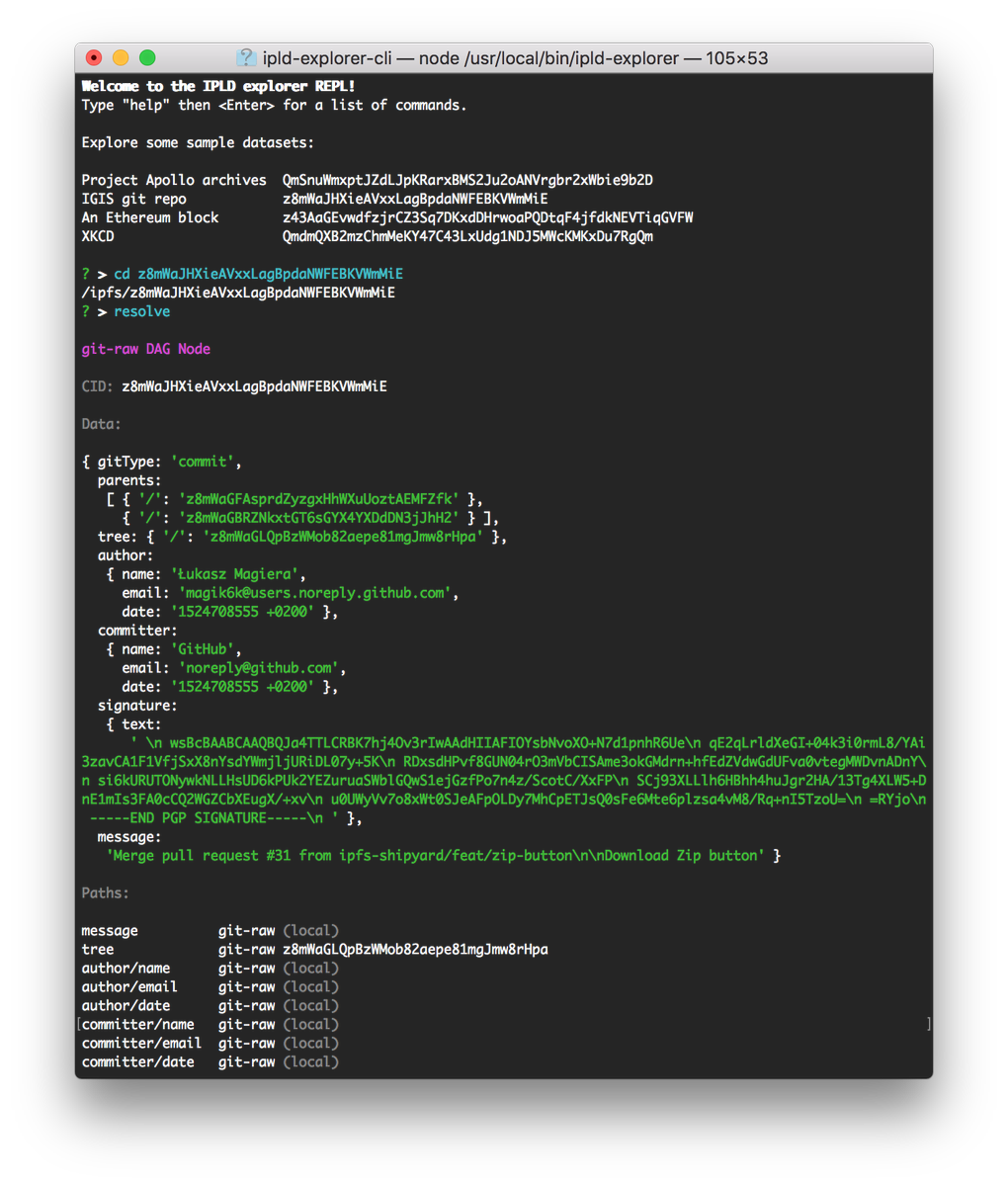
I upgraded the #IPLD explorer CLI tool to support all the exotic node types that IPLD can resolve! youtu.be/O0PbC2ElRPI npmjs.com/package/ipld-explo… #IPFS #git
2
10
31

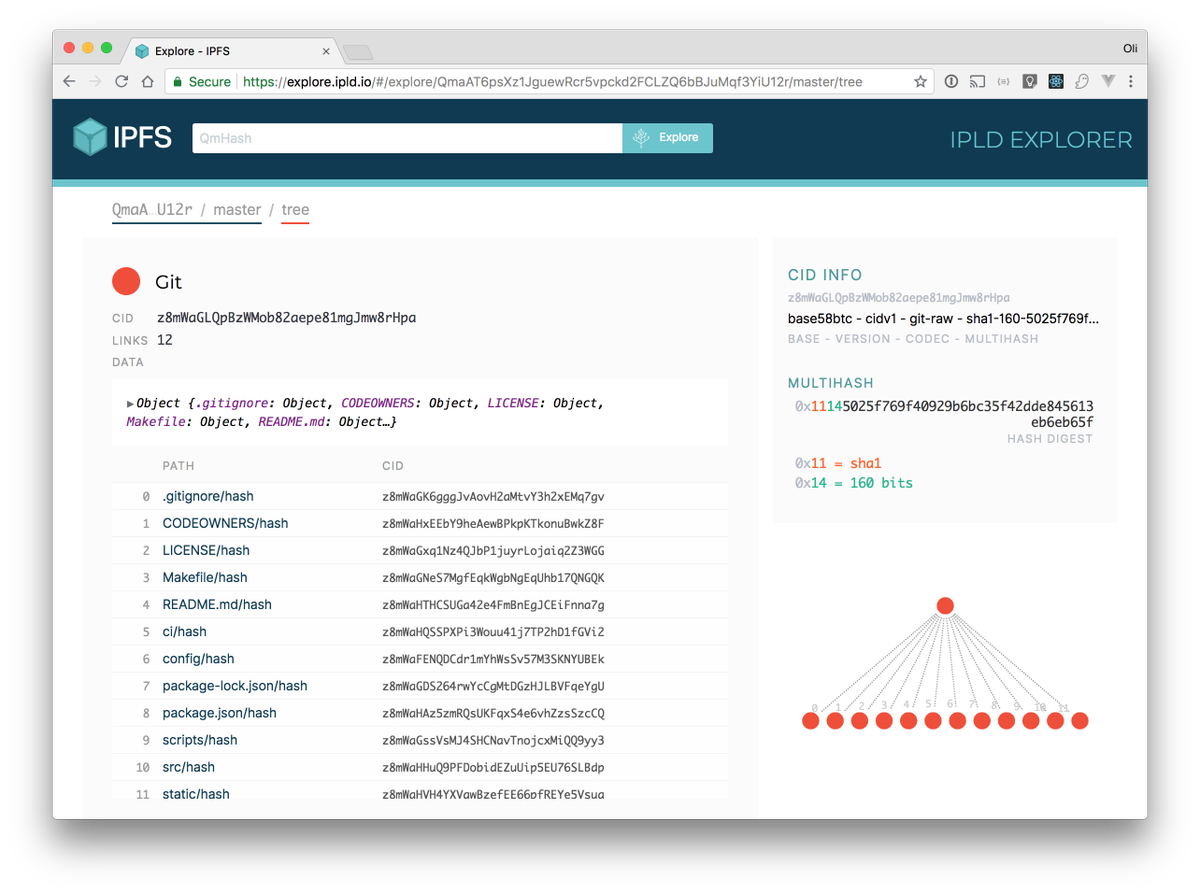
I made a thing to EXPLORE THE IPLD MERKLE FOREST!
explore.ipld.io
If your system uses content-addressing then IPLD Explorer wants to traverse its nodes. Right now, @IPFSbot files, @ethereum and Git are go!
1
18
64
IPLD retweeted

22 Feb 2018
Recently posted @noridoteco's use case for IPFS and IPLD on github github.com/ipld/ipld/issues/…. Decentralized tech is still super early with tons of groundbreaking innovations waiting to be made. Thanks @vmx and @daviddias for the help so far. cc @IPLDbot @IPFSbot
4
6
IPLD retweeted
18 Jan 2018
3rd talk from the @IPFSbot Lisbon Meetup is ⬆️ youtu.be/wldudAZTM4E @vmx with NOISE noisesearch.org/
1
3
8
IPLD retweeted
6 Jan 2018
It seems that more people are picking up on what IPLD is for (InterPlanetary Linked Data). I’ve had a good amount of conversation describing and exploring what @IPLDbot is and can do and so I thought it would be a good time to share some of the highlights with you all.
1
13
50
IPLD retweeted
5 Jan 2018
I'm pumped for the #IPFS Lisbon Meetup that me @pgte, @vmx and @VictorBjelkholm are putting up next week meetup.com/ipfs-lisbon-meetu…
7
14
46
IPLD retweeted
20 Nov 2017
Cool demo from @b_fiive on his work building QRI, Distributed Open Data collab and analysis youtu.be/djw-f7UdeMc?t=15m8s using #IPFS & @IPLDbot
5
5
IPLD retweeted
4 Sep 2017
JS-#IPFS got support to traverse git graphs using @IPLDbot during the weekend thanks to @Magik6k github.com/ipld/js-ipld-reso… TY Łukasz ❤️🌟🚀
2
5
8
Ohai 🌍! I've a website now ipld.io
1
1
4