
Joined July 2013
- Tweets 38,931
- Following 330
- Followers 34,452
- Likes 10,831
946 Photos and videos




Darren Shepherd retweeted

I just got hit by Engineering layoffs
My philosophy for frontend development is NOT tokenmaxxing to ship as much as possible, but rather beauty in simplicity while keeping complexity and chaos to a minimum.
Who's hiring?
---
I've worked with React Native for three years
I'm very good at CSS and have a good eye for intuitive designs (creator of @webtui, btw)
I can adapt to any web framework very quickly
I'm very good at maintaining a clean and organized commit history as well as working with others in a VCS like git
I'm not afraid to RTFM (read the friendly manual) and I'm good at writing documentation
And lastly, I write most of my code by hand because I truly care about the software I'm building and how people will use it
13
21
144
7,321
I have an agent that checks for low disk space and deletes things. What could possibly go wrong?
1
1
282
I really love telling my agent to just look at the browser and fix it themselves. (yes my agent is not gendered)
2
247
I'm curious how people are leveraging hooks with their coding agents. What cool things are you doing or what effective things are you doing?
5
2
7
2,193
I knew I was doing something wrong

My heuristic is that any diff an agent generates over ~1500 lines is too big and is indicative that the problem needs to be decomposed. This is my general pattern now for feature work:
1. Try to implement the whole feature, loosely guided. I call this the "draw the owl" prompt in reference to the meme. Expect garbage, you're going to get garbage.
2. If the diff is less than 1500 lines, review it and iterate normally. If the diff is more than 1500 lines, prompt the agent to decompose the problem into atomic, incremental, reviewable tasks. Simultaneously, do this yourself.
3. Agents will very often make these tasks way too specific to the shape they solved. You need to massage it into the right general shape. Do that.
4. Kick off new agents to work on those incremental things (as parallelized as possible). Apply the same rules.
5. At a certain, point, repeat the "draw the owl" prompt. At some point, you will get beneath your review-ability threshold.
This has been producing consistently high quality, maintainable, reviewable chunks of code that have a good handoff to either merge as-is or human refinement.
And with the latest frontier models at xhigh thinking, these are all slow enough that you can usually have multiple going concurrently while you are actively reviewing others or working on your own tasks.
HITL (human-in-the-loop) agents are still super important, especially for feature work. Features touch the human boundary in terms of UI, API, etc. And net new stuff can introduce pathologies in the architecture that violate desired invariants (these should be represented in specs or tests but we aren't perfect!).
I know a lot of the leading edge agentic discourse is about "loops" and agents driving agents continuously. I do some of that (will report on that later). But, in terms of raw daily get-shit-done type of work, this is my most rewarding pattern at the moment.
1
6
947
If I piss you off, take assurance that I haven't done anything worthwhile for like a decade. I peaked like 2019 and I've just a has been since then.
2
6
772
"docker buildx bake" was such a bad idea. I really wished they had made a better UX.
1
462
What a crappy way to start off a week. I apparently woke up today and was like, "Hey there's a community I've haven't pissed off at. Let me try doing that."
341
I 100% blame @vincentfiduccia for retiring. You wouldn't have to listen to me complain about this crap if it wasn't for him.

who knew when I started down this personal frontend journey I'd have so many new things to hate and develop an opinion on.
1
1,241
who knew when I started down this personal frontend journey I'd have so many new things to hate and develop an opinion on.
4
5
1,990
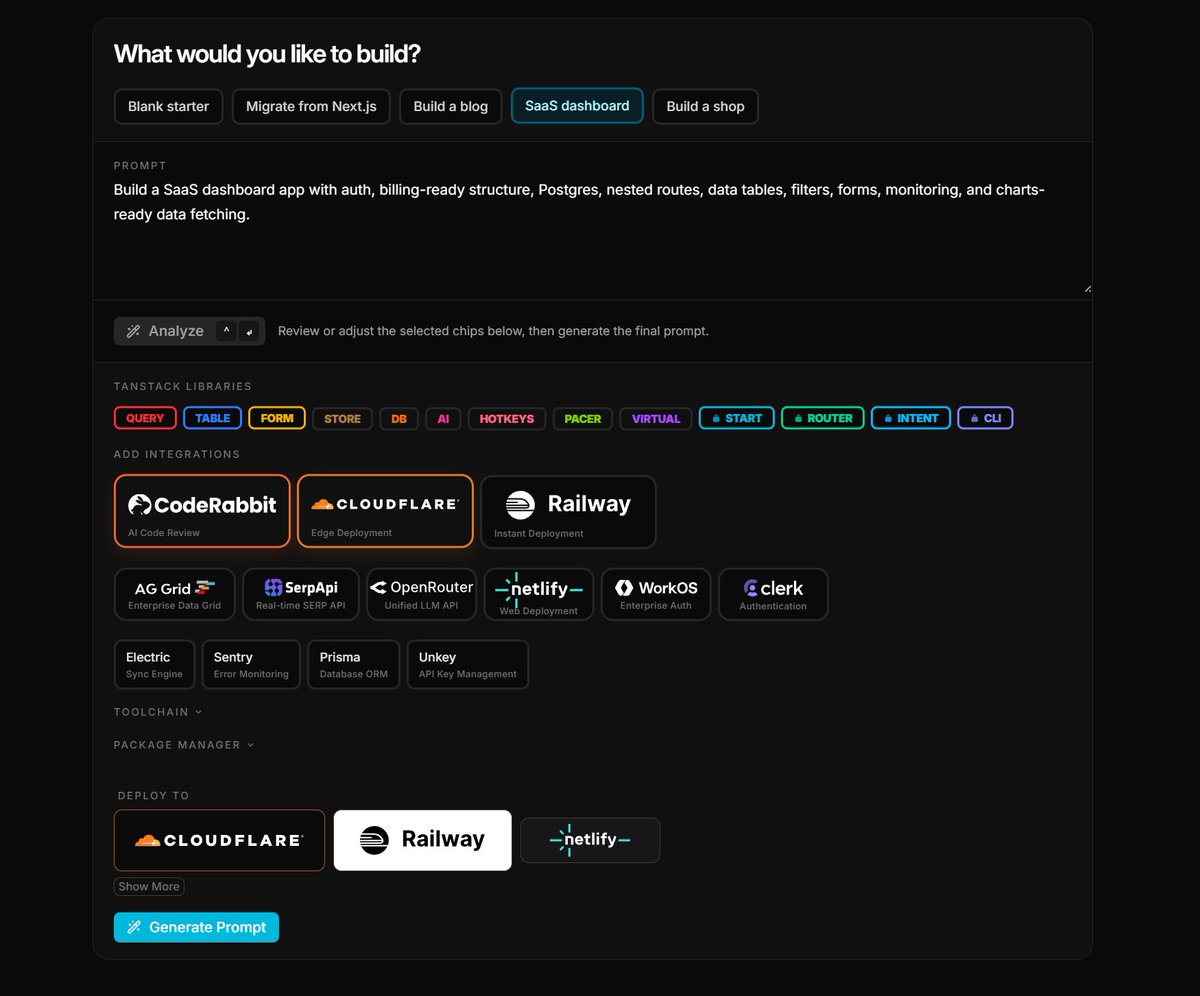
omg, the horror!!!!! People talk about the great dx of tanstack. Somehow that didn't translate to the web page. Do people disagree? Does this make sense to you? Is what React people want?
4
6
2,473
Ok, so now I'm on this tanstack kick. The site really makes AI look bad :) It seems like a lot of AI was used to create tanstack.com but there's so much, "use AI to use this" Copy prompt, the homepage has an agent on it. So this is a difficult tradeoff. I'm just trying to look at this and be like, "What the heck is this?" Having to run AI first to know what it is is hard.
425
Web components really seem like not a bad thing. I'm just saying.
2
960
I really don't think the answer to generative UI for chatbots is really some component system. Why can it not just be simple HTML in Markdown? Why does it have to be a fancy tool and schema? Markdown already supports embedded HTML. Like, think more like old school eBay post.
6
15
1,939
Following @JenMsft really makes you wanna be on insider builds. I've held off on my main work PC, but I might do it. I just really hate updating and restarting. I wish I could get these updates without the massive upgrades. This is nice thing about Linux packages is that updates seem so much less intrusive and expensive.

Any streamers here?
We're working on an option to hide your name from Start menu if you'd prefer learn.microsoft.com/windows-…
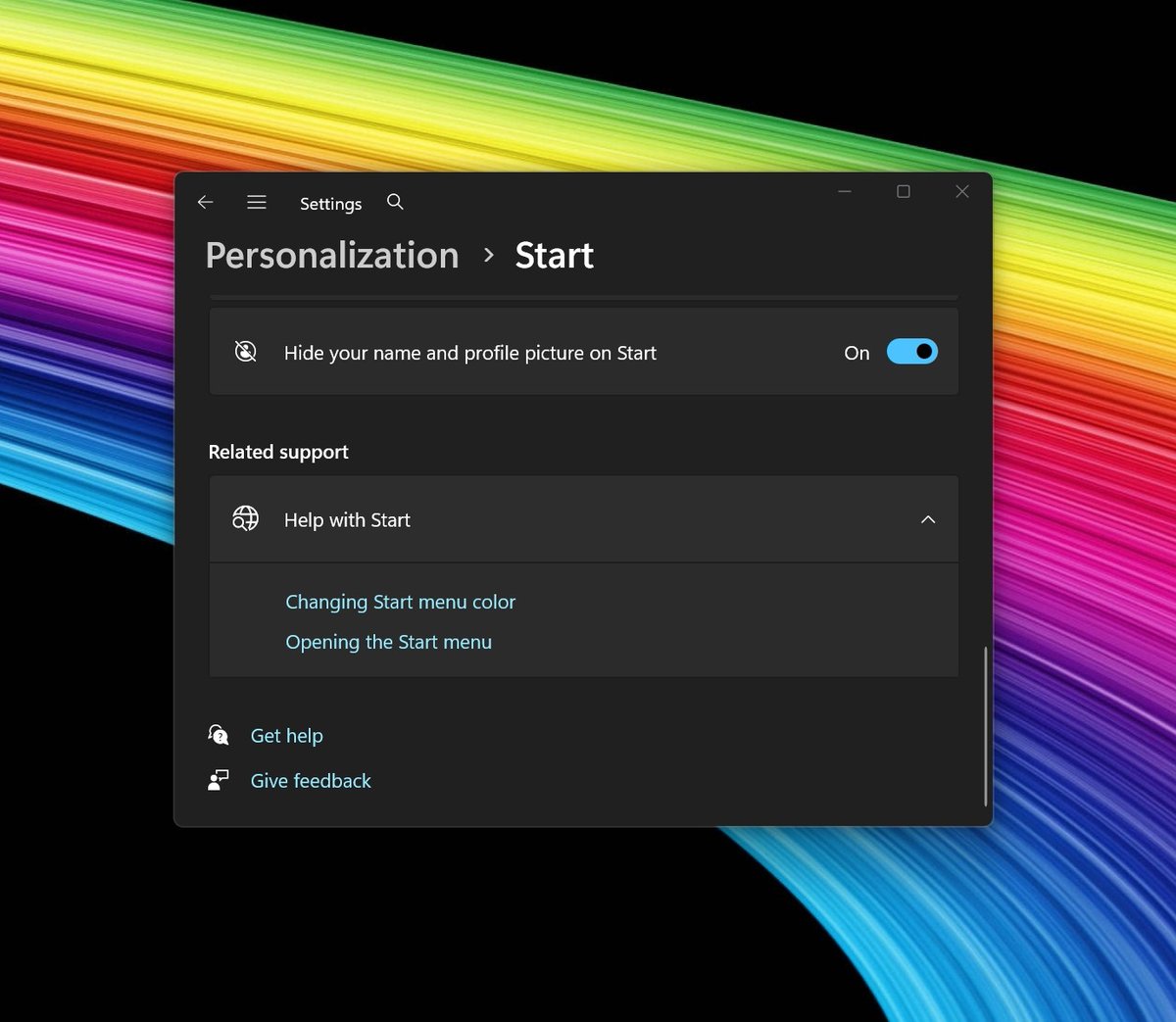
ALT A screenshot of the Start menu settings - a toggle to hide your name and profile picture checked
3
858
If we just encoded UUID as crockford base32 it would be a much better world.
1
1,818
One of my favorite docker commands is:
docker system prune -af
Because I get to type af.
(@jessfraz this always reminds me of contained.af RIP)
1
8
1,079
Does anyone else find it comical that OMG (the standards group) is called omg? Because omg, it's terrible. Are there people that really like standards? I mean I have a healthy appreciation for what they do but is there anyone who really enjoys them? It's like the hall monitor of coding.
1
603
This is odd. I think we're going to have a renaissance of software design. I started my career where software design was really important. This was the Gang of Four J2EE time. But I think it was a combination of the trend in offshoring and then also microservices that effectively destroyed our focus on software design because honestly we could get away with much poorer design.
But what I'm finding is if you have strong software design, AI can move much quicker. So if I invest more of my personal effort into software design and less into implementing lines of code, because AI can do that, I'm ending up with a significantly higher quality piece of code.
Just code. The problem I'm finding is that good software design is suddenly important. Because if I have a good strong design, effectively the scaffolding of a project, I can get AI to fill in the gaps really quickly. But it's fairly inefficient to prototype and design that design by just having AI write stubbed code. I end up with too much noise. I need something that's more focused.
1
3
954