
Breaking down Web3 Projects through Content || AI Enthusiast
Joined June 2019
- Tweets 15,305
- Following 1,417
- Followers 1,859
- Likes 24,922
950 Photos and videos







/Maryclaire (privacy szn) retweeted

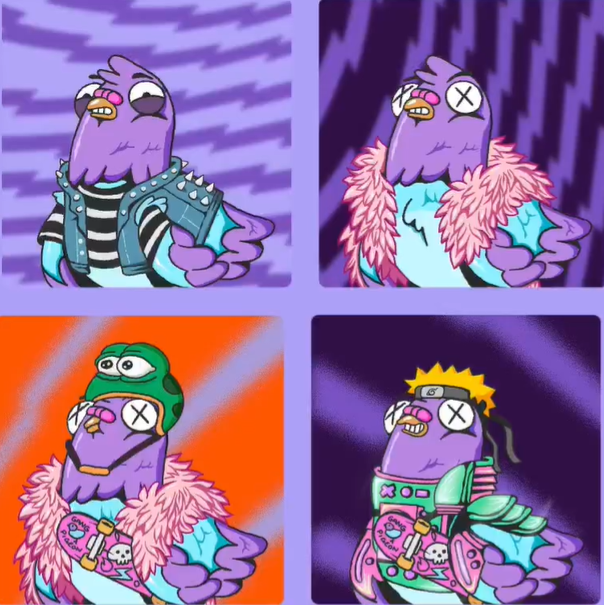
NFTs got kind of lost once everything turned into just guessing prices and flipping stuff.
This Wingston collection feels different though. It seems like it is going back to the parts that actually mattered at the start like the art and the group around it plus some real use instead of just pictures.
It is a free mint on @RallyOnChain and connects to something people are already using.
Holding one gives you access to certain things like better access to VIP events or staking options and it even bumps up your score in the system which might help you stand out a bit.
Want a whitelist spot?
- Join campaigns on Rally
- Complete creator tasks and missions
- Earn rewards while building your onchain reputation
- Secure your whitelist for the free mint
I think creators end up getting more from running campaigns and building that reputation over time.
It feels like a steadier way than just hoping for the next big wave to hit.
10
1
17
127
/Maryclaire (privacy szn) retweeted

Jun 13
𝐒𝐜𝐚𝐥𝐞 𝐅𝐚𝐬𝐭. 𝐓𝐡𝐢𝐧𝐤 𝐅𝐚𝐬𝐭𝐞𝐫.
We have officially entered the high-throughput era. L2 rollups like ZKsync and Polygon CDK generate thousands of TPS for absolute cent, completely solving the execution bottlenecks that used to stall Ethereum.
Yet, every single one of these hyper-scalable networks hits the exact same hard ceiling: 𝐭𝐡𝐞𝐲 𝐚𝐫𝐞 𝐜𝐨𝐦𝐩𝐥𝐞𝐭𝐞𝐥𝐲 𝐝𝐞𝐭𝐞𝐫𝐦𝐢𝐧𝐢𝐬𝐭𝐢𝐜.
They can calculate asset balances and state transitions flawlessly, but they are totally blind to the internet, unable to interpret qualitative data, read text, or reason through real world variables.
----------------
This is the exact 𝐩𝐫𝐨𝐛𝐥𝐞𝐦 GenLayer’s Rollup Integration handles. Instead of building an isolated network from scratch, GenLayer plugs its cognitive execution framework right into existing Ethereum Layer-2 rollups.
This creates a powerful hybrid system. You get the ultra cheap, lightning fast transaction speeds of a modern rollup, combined with GenLayer’s ability to run Intelligent Contracts that read the web and think.
18
4
32
418
/Maryclaire (privacy szn) retweeted
If you're building on Genlayer like I am, one thing you'll run into pretty quickly is transaction receipts.
At first glance they can look overwhelming, leader receipts, validator votes, equivalence outputs, node configsgas usage, and a lot more.
In this video, I break down the key fields inside a @genlayer transaction and explain what each section tells you about execution and consensus.
Useful if you're debugging Intelligent Contracts, exploring the simulator, or just trying to understand what's happening under the hood.
8
1
17
484
If you're building on Genlayer like I am, one thing you'll run into pretty quickly is transaction receipts.
At first glance they can look overwhelming, leader receipts, validator votes, equivalence outputs, node configsgas usage, and a lot more.
In this video, I break down the key fields inside a @genlayer transaction and explain what each section tells you about execution and consensus.
Useful if you're debugging Intelligent Contracts, exploring the simulator, or just trying to understand what's happening under the hood.
8
1
17
484
/Maryclaire (privacy szn) retweeted

Jun 12
Designers! This one's for you!
There is a new Special Quest on the @GenLayer Portal for the rebrand of the GenLayer Brain Game.
Create a banner that captures the spirit of the event: original, outstanding, and impossible to scroll past.

34
17
125
2,702
/Maryclaire (privacy szn) retweeted
8
5
23
481
/Maryclaire (privacy szn) retweeted

Jun 5
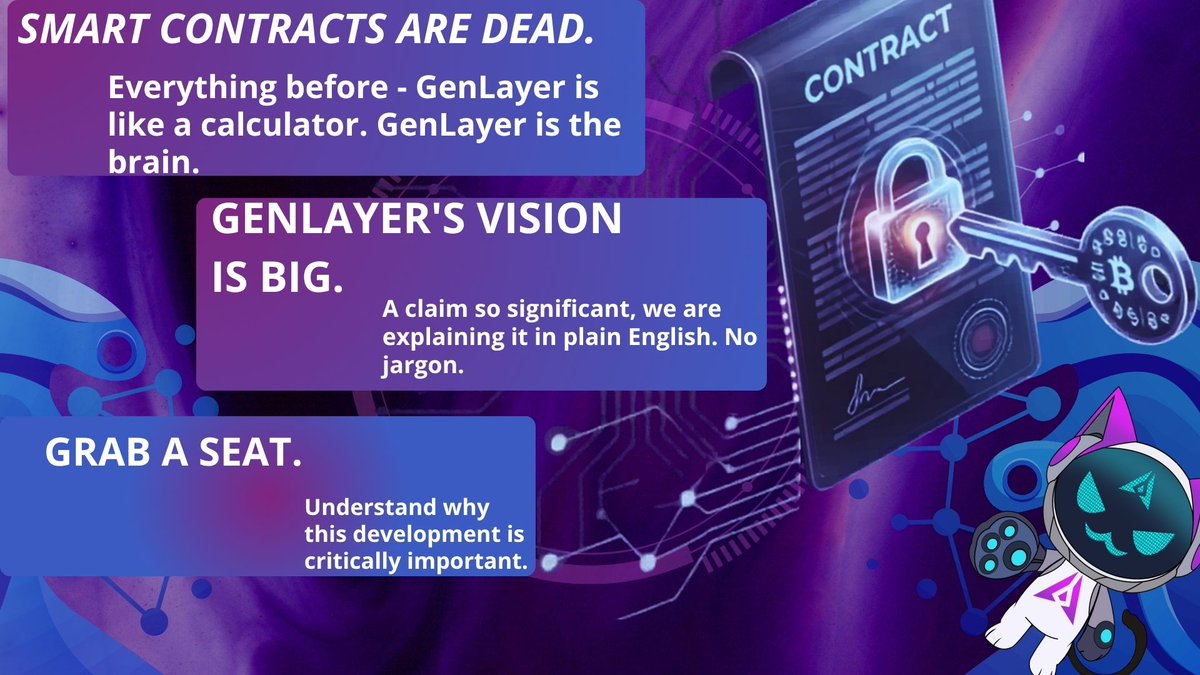
Smart Contracts Were Never Actually Smart. GenLayer Just Proved It and Built Something That Actually Is
SMART CONTRACTS ARE DEAD.
Yeah, I know. Big claim.
But hear me out because what @GenLayer just built makes everything before it look like a calculator trying to beat an actual human brain.
Let me explain why. Plain English. No fancy words.
Grab a seat. This one's worth it.
8
2
13
116
Just read this aticle piece on outcome markets, Exchange OS, and why market resolution is still one of the biggest bottlenecks in permissionless finance.
A few points stood out

13
3
17
292
Everyone wants faster markets.
Nobody wants to wait days for disputes, reviewers, or governance processes just to find out what the outcome was.
"Anyone can deploy an outcome market."
Cool.
But who actually decides what happened when the market has disputes?
1
6
50
The key point here is to treat market resolution as infrastructure instead of rebuilding it for every new venue.
If outcome markets are going to scale, resolution probably has to scale with them.
There is no two ways about it.
@RuzgarFlns
3
40
/Maryclaire (privacy szn) retweeted
Just tried out FUD Markets Mainnet and loved it.
I went long on $ETH after the recent dip and shorted $HYPE after its big rally, expecting a pullback.
Trade execution was fast, the UI was clean, and my position history updated instantly.
Smooth experience overall. Check out my video below to see the process, and try FUD Markets yourself to put your conviction onchain.
Big ups to the @FUDmarkets team for the smooth experience.
May 27

FUD. IS LIVE ON MAINNET!
crypto finally has a conviction layer.
🧪 tested by 7,000.
🔵 built on @base
⚖️ settled by @GenLayer
📈 trade the FUD → fud.markets
20
5
34
1,310

80
80
293
34,060
The Self-Rebalancing Portfolio: Building Autonomous Asset Managers
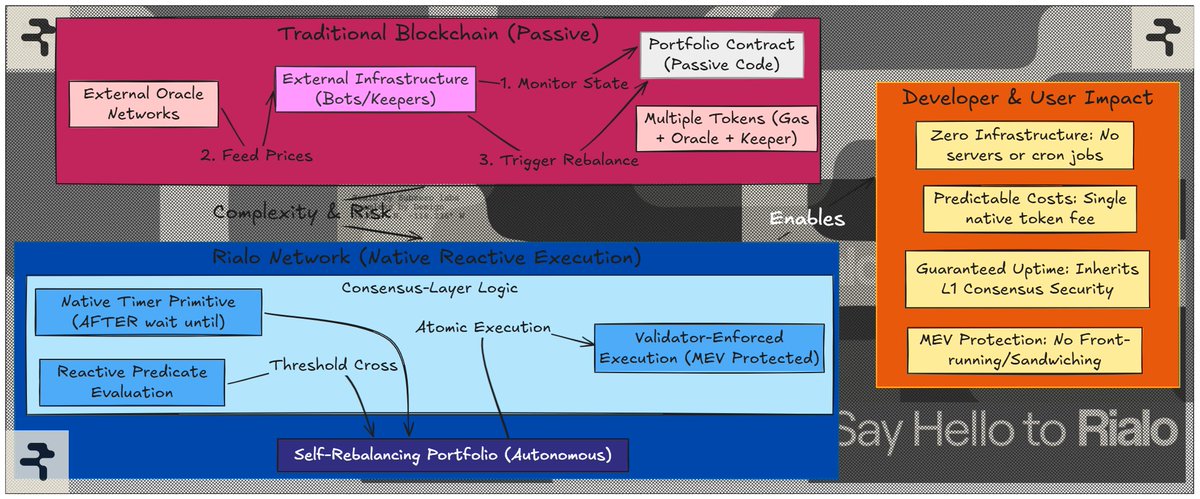
On traditional blockchains, an automated portfolio manager is structurally incomplete. Because contracts are passive code,
developers must run external servers or rent third-party "keeper" networks to regularly call the contract, evaluate pool balances, and execute rebalancing trades.
Rialo replaces this clunky design with native reactive execution.
The Native Timer Primitive: Instead of "bots orbiting a blockchain," @RialoHQ contracts can natively schedule their own execution queues.
Using the AFTER wait until pattern, a portfolio contract can pause its state and schedule a recurring wake-up block (e.g., every 3600 seconds) to perform a portfolio health check.
Reactive Predicate Evaluation: The Rialo network natively evaluates complex logical conditions (predicates).
A portfolio contract can subscribe to a variety of real-time signals, including AMM pool parameters, collateral ratios, and validator-attested price streams.
The moment any of these inputs cross a predefined threshold, the rebalancing transaction is automatically triggered on-chain.
Validator-Enforced Fairness (MEV Protection): Because the evaluation and the swap execution happen natively inside the validator-ordered consensus block,
Rialo protects the portfolio from front-running and sandwich attacks that typically drain yield during large-scale rebalancing on legacy chains.
The User & Developer Impact: Predictable Operations and Safe Autonomy
By moving the automation pipeline inside the Layer 1, Rialo removes the engineering overhead and financial volatility that historically crippled automated DeFi primitives:
No Infrastructure Scaffolding:
Developers write and deploy a single contract using the Rialo CDK.
There is no need to host a NodeJS cron server, write API polling scripts, or manage external database connections. The entire automated manager is self-contained.
Single-Token Cost Predictability:
On traditional chains, running an automated rebalancer requires holding multiple tokens: gas tokens for execution,
oracle tokens to fetch prices, and keeper tokens to pay for triggers.
Rialo consolidates the entire execution lifecycle into a single native token fee model, allowing fund managers to accurately budget their long-term operational costs.
Same Uptime as the Chain:
External bots can crash, run out of funds, or get priced out during periods of intense gas volatility.
Because Rialo evaluates the portfolio's predicates at the consensus layer, the automated rebalancer inherits the exact same uptime, resilience, and security as the validator network.

Rialo is changing how intellectual property works by turning IP into something that can react, execute,
and pay out automatically based on real-world activity. Instead of creators waiting months to receive royalties through distributors, middlemen,
and outdated accounting systems, payouts can now happen instantly and directly from engagement itself.
The reason this matters is because traditional blockchains were never built to interact with platforms like Spotify, YouTube, TikTok, or other Web2 services in a native way.
Most Web3 applications today still depend on external oracles, relayers, or manual scripts just to pull basic engagement data onchain.
That setup is expensive, slow, and creates unnecessary layers of trust.
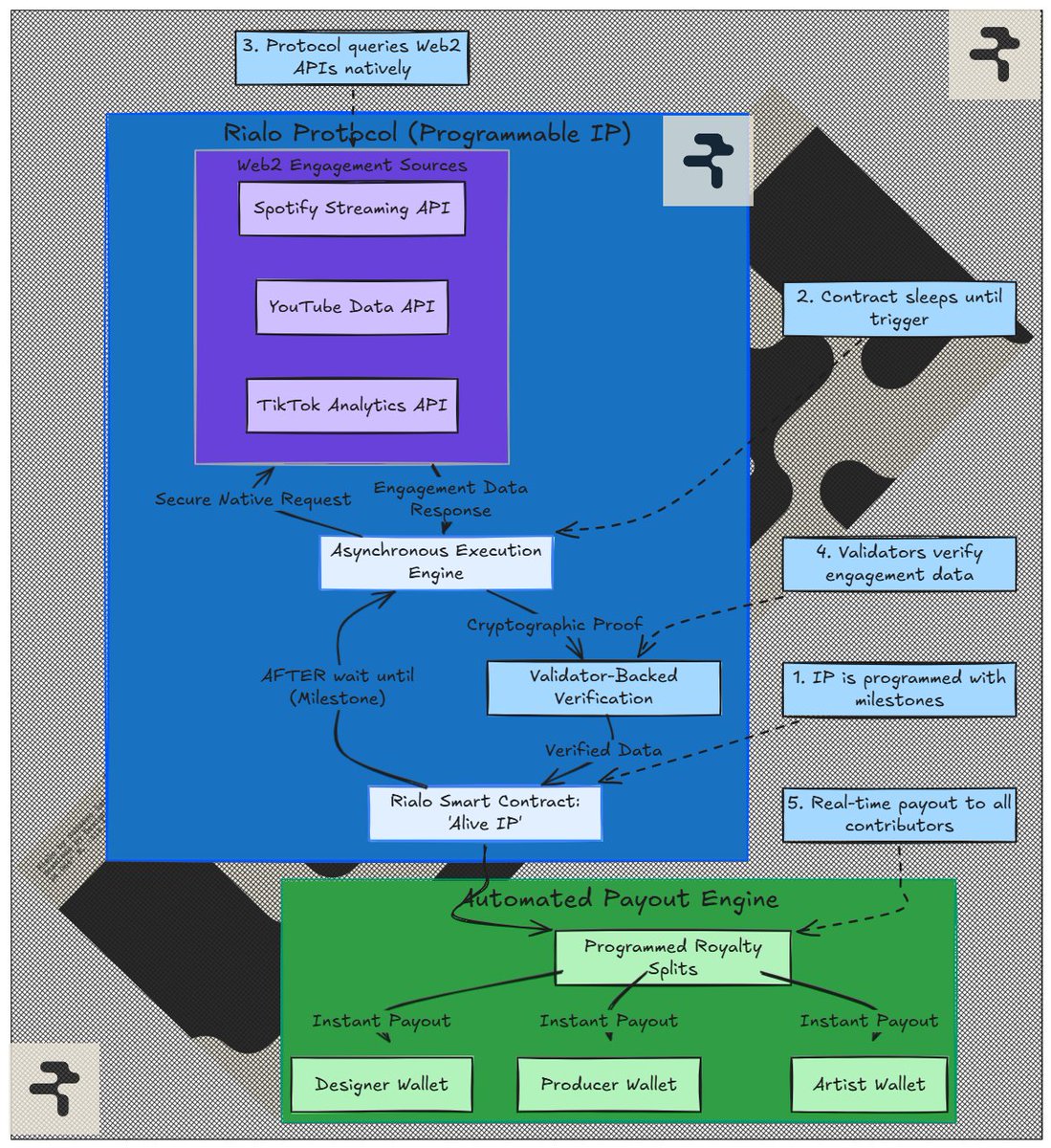
@RialoHQ solves this with native web connectivity and its asynchronous execution model through the AFTER wait until pattern.
Here’s what that actually means in practice:
A smart contract on Rialo can pause itself, make a secure request directly to a streaming platform’s API, wait for the response, and then continue execution automatically once the data is verified.
So instead of constantly running external bots to monitor streams or views, the contract handles the entire process itself.
For developers, this removes one of the biggest headaches in creator-focused Web3 apps.
The contract can literally sleep, check engagement milestones, and wake itself up to execute payouts when conditions are met.
Even more important, the verification process is secured at the protocol level through validator-backed cryptographic verification,
meaning creators do not have to trust a single centralized party to report engagement numbers honestly. Every payout becomes transparent and auditable onchain.
The impact on creators is massive.
Today, musicians, producers, designers, and other creatives often wait 60 to 90 days before receiving revenue from their work.
By the time payments arrive, multiple intermediaries have already taken percentages through fees, distribution cuts, and administrative costs.
With Rialo, royalties can move in real time.
Imagine an artist releasing a song with a producer and a graphic designer attached to the project.
Instead of signing complex agreements and relying on distributors to manually process split payments months later, they deploy a Rialo smart contract with their royalty logic already programmed in.
The contract is set to trigger every time the song reaches another 10,000 streams on Spotify.
Once the milestone is reached, Rialo securely queries the platform’s API, verifies the engagement data, and immediately executes the payout split between all contributors automatically.
The entire process happens natively within the protocol, using a single token across the entire lifecycle instead of forcing developers to manage separate systems for gas, oracle payments, and settlement infrastructure.
What Rialo is really doing is making intellectual property programmable.
Not just tokenized or stored onchain.
But alive, reactive, and capable of executing financial logic automatically based on real-world attention itself.
14
19
331
/Maryclaire (privacy szn) retweeted
The biggest thing about Co-Invest isn't AI giving trade ideas.
It's that we're starting to replace interfaces with intent.
The moment you can research a market, size a position, set risk parameters, and place a trade from a single conversation, the interface changes completely.
That's why @coinvestai on @liquidtrading is a really big deal.
We've spent years building better trading apps. Now we're entering a world where the app disappears and intent becomes the interface.
Long BTC with a stop here. That's all you need to say.
AI agents won't replace traders. They'll become the execution layer for human conviction.
This feels like an early glimpse of how we'll interact with financial markets in the next decade.
May 26

Today, Co-Invest is live.
The first way to trade directly through ChatGPT and Claude.
4
2
10
166