
We Are An Institute For Indian Knowledge Systems. We Envision The Well-being Of Every Being. We Enable Seekers Fulfil Their Potential, Passion & Purpose.
Joined June 2015
- Tweets 28,473
- Following 0
- Followers 39,052
- Likes 4,086
10,819 Photos and videos
Pinned Tweet

Jun 11
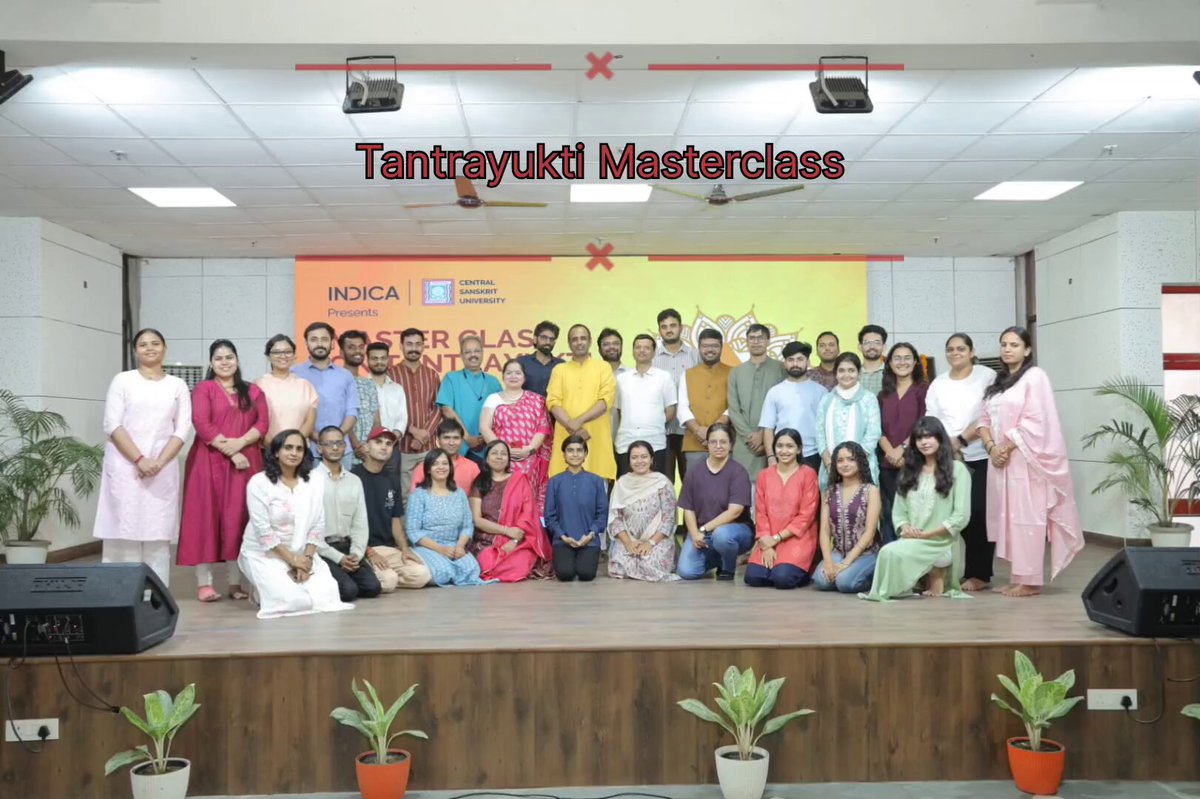
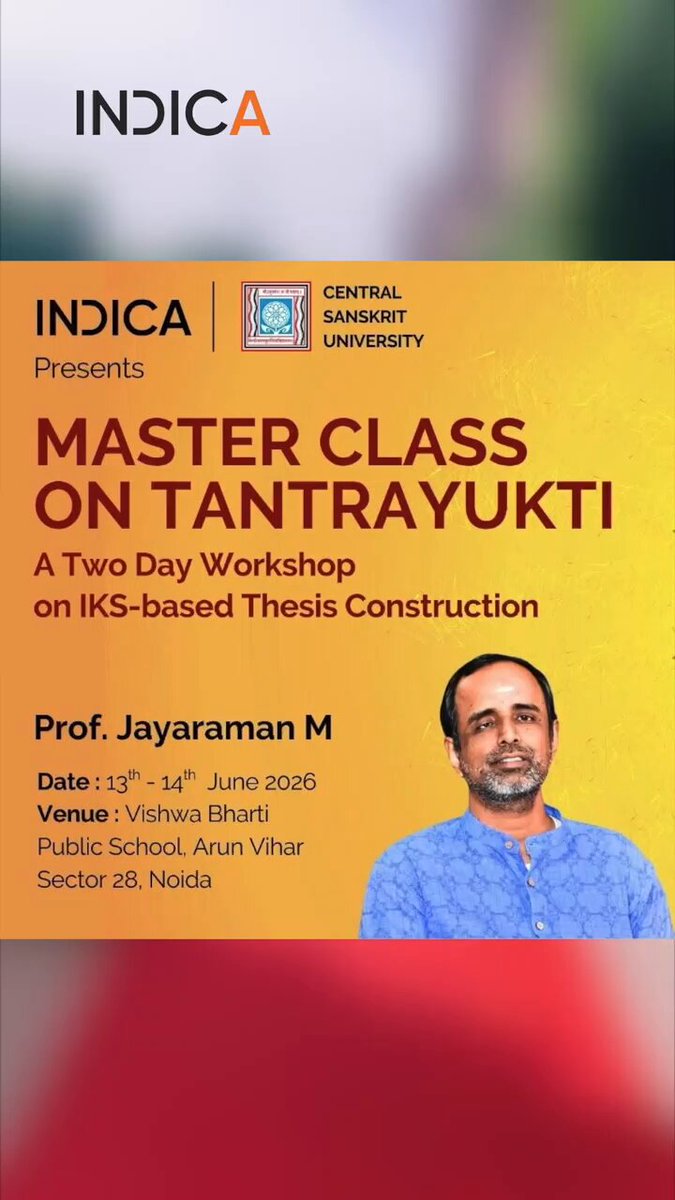
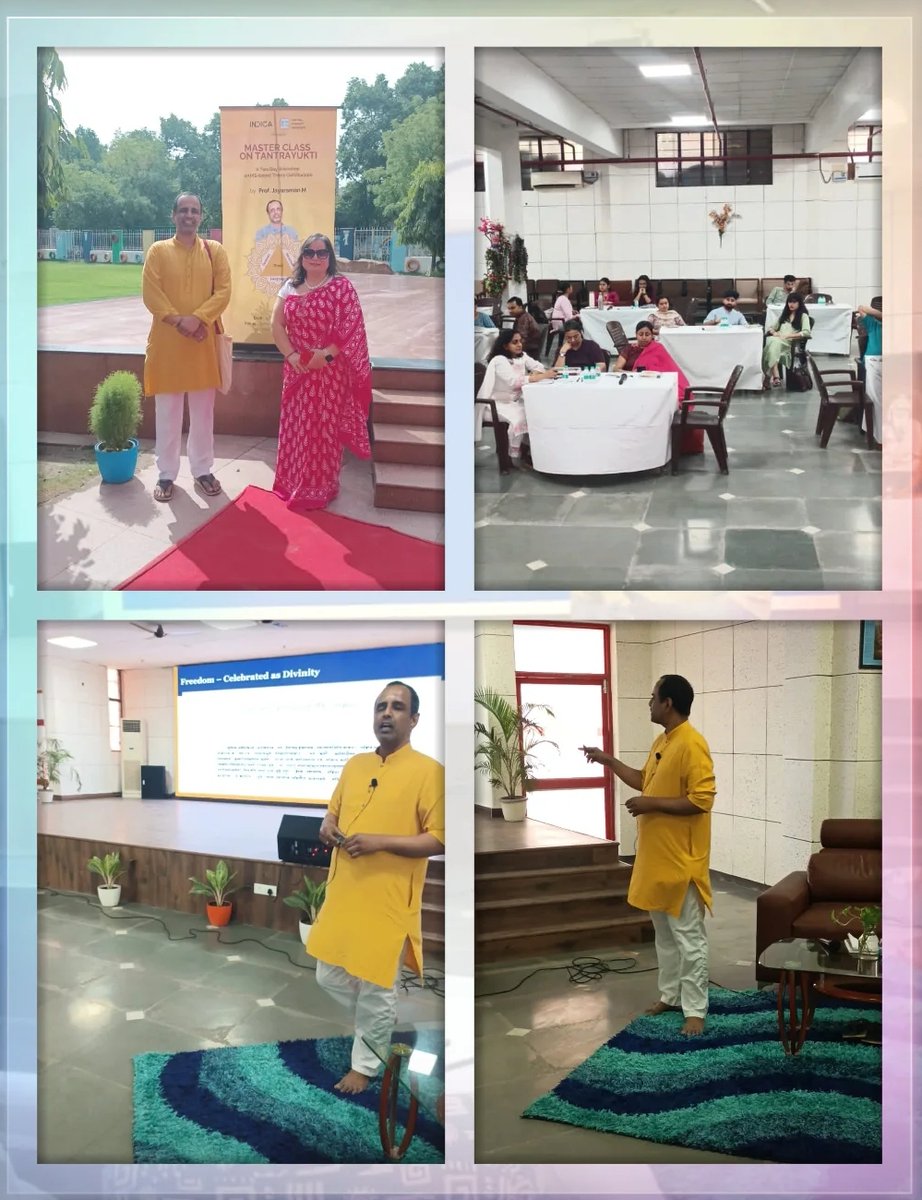
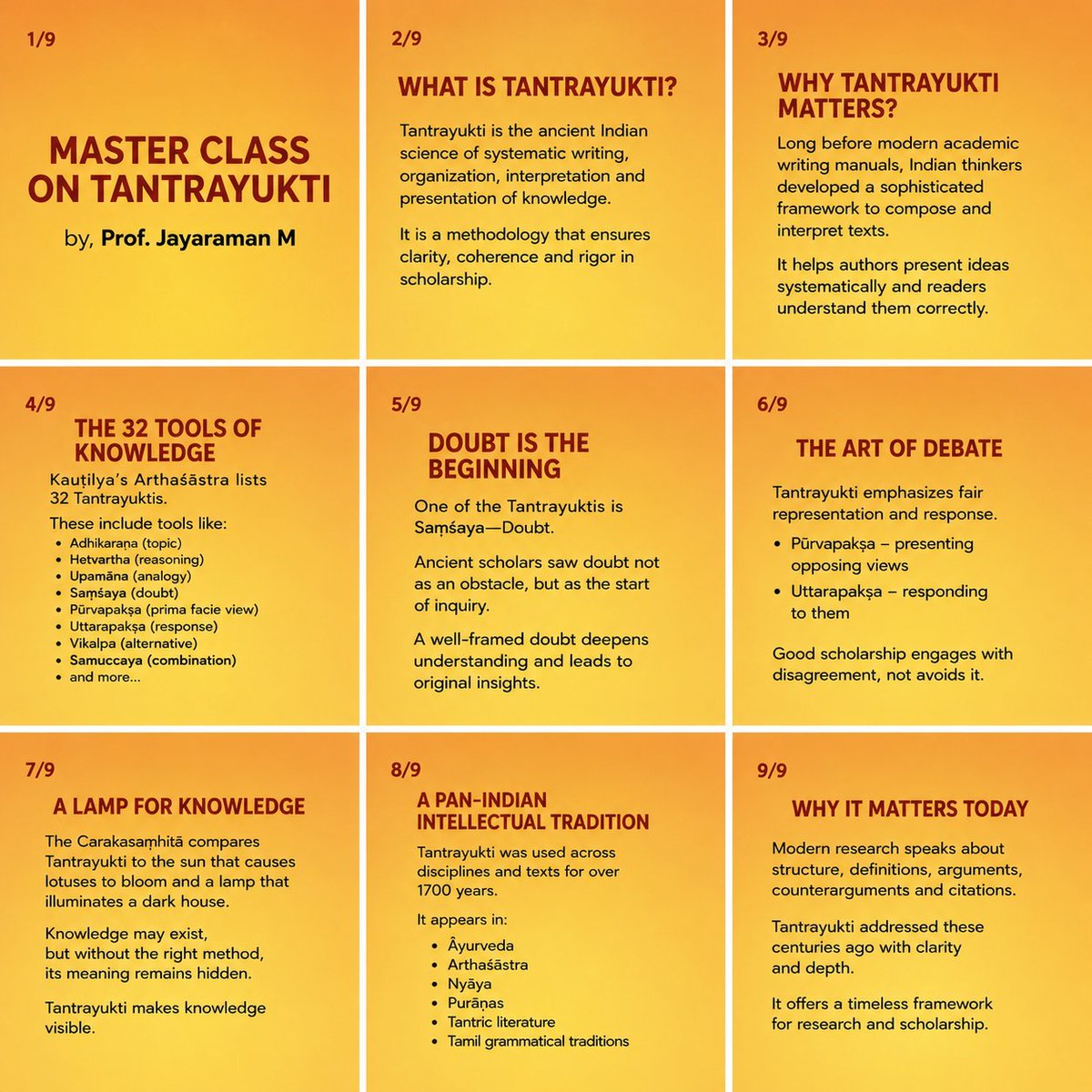
The Master Class on Tantrayukti will be held in New Delhi between June 13 and 14 by Professor Jayaraman M, by INDICA in collaboration with @CentralSanskrit University.
Tantrayukti is, at its core, a strikingly elegant way of thinking about how knowledge comes into form. What makes it intellectually beautiful is not only its technical sophistication, but the way it refuses to separate clarity from creativity, or structure from insight. It treats writing not as the passive recording of ideas, but as a disciplined craft in which thought is continuously shaped, refined, and made intelligible through carefully designed intellectual “devices.”
Prof Jayaraman has written a book on Tantrayukti published by INDICA. In a article on the same published in Samvadasamgrahah brought out by the IKS division of the Ministry of Education, he writes at the heart of it lies a simple but profound intuition: ideas do not arrive fully formed. They need architecture.
The pairing of Tantra and Yukti already carries this sensibility. Tantra is expansion - the unfolding of a field of knowledge in its fullness. Yukti is the intelligent act of holding that expansion together without letting it collapse into confusion. One gives breadth, the other gives coherence. Together, they create a balance between openness and rigor that feels remarkably modern in its sensibility.
What is intellectually remarkable is how systematically this was developed across traditions for over a millennium and a half. Whether in the philosophical debates of Sanskrit texts, the precision of Ayurvedic treatises, the grammatical discipline of Tamil literature, or the analytical structures of Buddhist scholastic writing, Tantrayukti functions as a shared cognitive grammar. It is less a “theory” in the abstract sense and more a lived intellectual practice - something that shapes how thought is generated, organised, and communicated.
The Carakasaṃhitā captures this beautifully through metaphor when it compares Tantrayukti to a lamp in a dark room or sunlight opening a field of flowers. The image is not ornamental. It is epistemological. These devices do not add meaning from outside; they allow what is already present but unarticulated to become visible.
What is particularly sophisticated is the way Tantrayukti does not privilege one mode of reasoning. It includes doubt (saṃśaya) as a generative tool, not a flaw; it builds space for objection and response (pūrvapakṣa and uttarapakṣa) as part of the structure of thought itself; it allows for omission, implication, analogy, and invention as legitimate linguistic strategies. Knowledge here is not linear exposition but layered articulation.
Even uncertainty is methodised. Doubt is not the opposite of knowledge—it is its starting point.
Seen this way, Kauṭilya’s enumeration of 32 yuktis is less a rigid taxonomy and more a map of intellectual dexterity. Content generation, structural design, and linguistic refinement are not separate stages of writing; they are interwoven movements within thinking itself. A text is not assembled after thought; it is thought taking shape through structured articulation.
What makes the system quietly extraordinary is its psychological depth. It recognises that clarity is not natural - it is constructed. It requires restraint, selection, sequencing, and a sensitivity to how meaning unfolds in time. It also recognises that excessive rigidity can suffocate insight, and so builds in flexibility through exceptions, alternatives, and interpretive openings.
In that sense, Tantrayukti is not just a methodology of writing. It is a philosophy of cognition.
There is something deeply contemporary in this. In an age overwhelmed by fragmented information, rapid interpretation, and unstructured assertion, Tantrayukti offers a reminder that intelligence is not merely about having ideas, but about knowing how to hold them together without distortion. It is about giving thought a form that allows it to be shared without losing its depth.
Ultimately, its beauty lies in its restraint. It does not try to dominate thought with a single system. Instead, it offers a set of subtle instruments that help thought become itself—clearer, more articulate, and more alive in its expression.
Wishing all the participants a very fruitful session of enquiry and growth.
5
9
612
INDICA retweeted
Jun 13
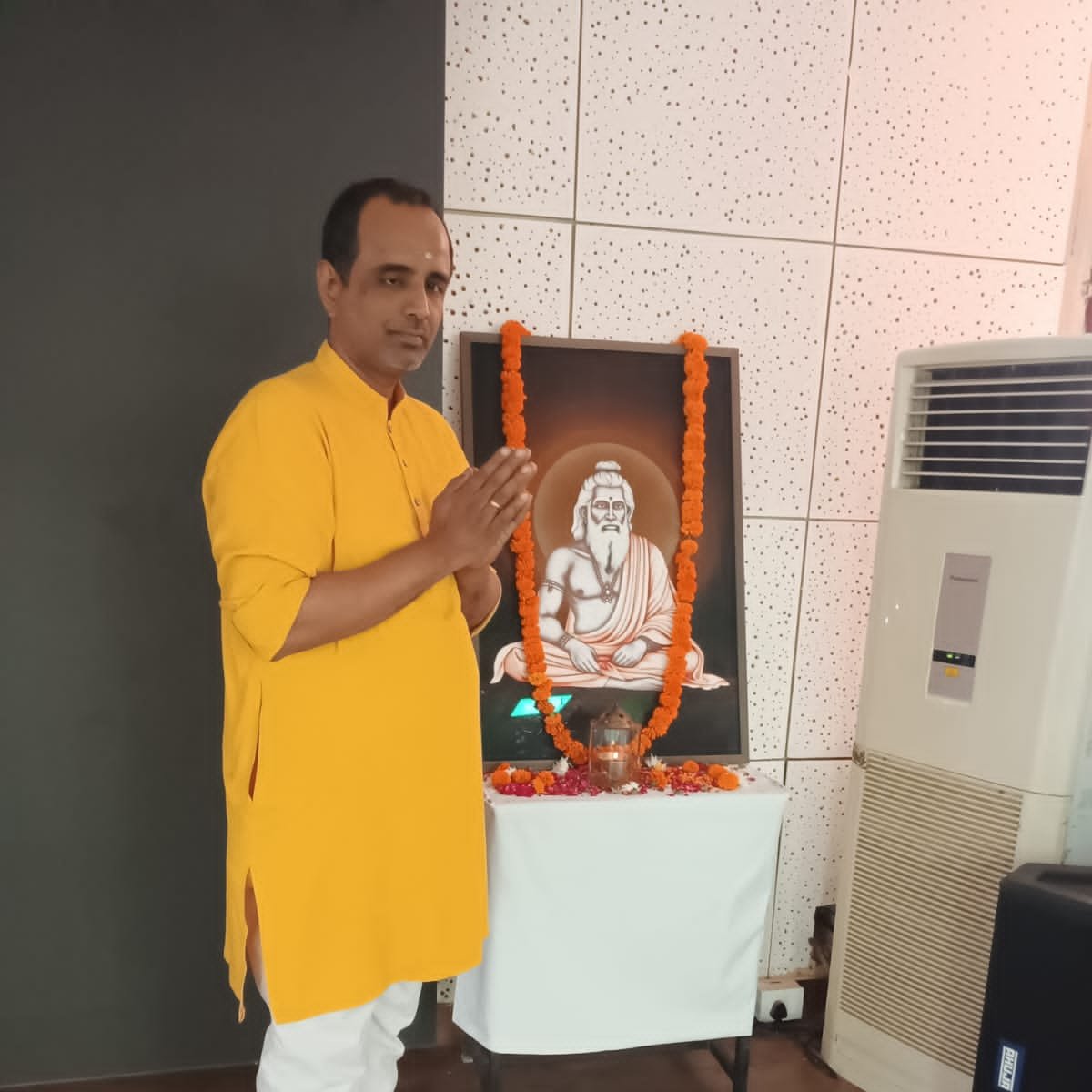
INDICA's Master Class on Tantrayukti commenced with the chanting of the Śrī Veda Vyāsa Stutiḥ by Prof M Jayaraman, the Acharya of the sessions.
Who is Vyāsa?
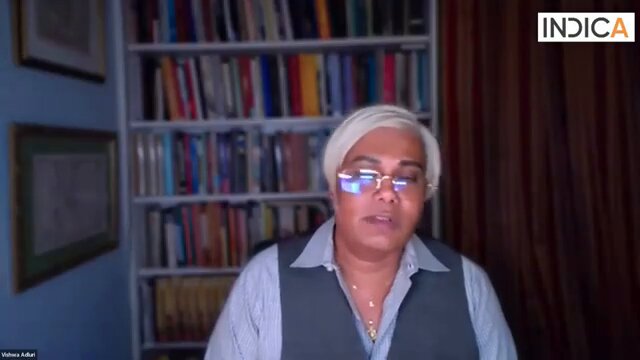
For Prof. Vishwa Adluri, the answer cannot be found within the familiar categories of modern scholarship. The attempt to identify Vyāsa as merely the historical author of the Mahābhārata already presupposes a framework foreign to the text itself. The Indian tradition does not present Vyāsa simply as an individual writer but as a civilizational intellect, the figure through whom the Vedic vision is gathered, organized, transmitted, and made available to human understanding.
As Adluri notes, "Vyāsa is not just an author but the very breath of Brahman - the ongoing revelation of Dharma." This is a theological claim. Vyāsa belongs to what Adluri describes as Brahmavāda, a textual and intellectual tradition whose authority does not depend upon historical verification but upon its capacity to reveal metaphysical truth. Within this framework, revelation is an ongoing process through which Dharma continues to be disclosed.
Seen in this light, the Mahābhārata is an inquiry into the Veda, a sustained reflection on the meaning of revelation itself. The war, the moral dilemmas, the debates, and the teachings are not merely narrative devices but instruments through which Vedic knowledge is examined, interpreted, and brought into the sphere of human experience.
For Adluri, Vyāsa stands at the centre of this entire enterprise. Vyāsa is the principle that links revelation, textuality, interpretation, and lineage. The tradition of Vyāsa extends beyond the ancient world and continues through teachers who preserve and transmit this vision in every generation. The Mahābhārata therefore remains a living text because Vyāsa remains a living presence within the tradition.
If we approach the Mahābhārata solely as history or mythology, we may fail to see what it understands itself to be: a Mimāṁsā of the Veda and a vehicle of Brahmavāda. In our fixation on the "when" and the "where," we risk overlooking the deeper questions of the "what" and the "why"—the very questions the tradition, through Vyāsa seeks to illuminate.
youtu.be/zAdtKnGWuJc?si=H4EW…
4th Swami Dayananda Saraswati Memorial Lecture
8
18
899

INDICA retweeted
Jun 13
At INDICA we try to explore Text, Traditions and Beyond
Conference on Devadasi Traditions: youtu.be/J6abW55nysk?si=DdFW…
The Devadasi is often remembered through narratives constructed by others - colonial administrators, social reformers, modern commentators, and even contemporary cultural discourse. Lost amidst these competing accounts is a far more important reality: the agency of the women themselves.
In her reflections on the Devadasi tradition, Padma Bhushan Swapnasundari urges us to look beyond inherited stereotypes and recover the voices, choices, and aspirations of the practitioners who shaped this remarkable cultural world. The Devadasi was not merely an object of ritual or a passive figure within a social institution. She was an artist, intellectual, patron, teacher, devotee, and custodian of sophisticated knowledge systems.
These women mastered complex traditions of music, dance, poetry, language, and ritual practice. They preserved artistic lineages across centuries, trained disciples, commissioned works, supported temples, and participated actively in the cultural life of their communities.
Equally significant was their spiritual agency. Far from being confined to prescribed social roles, many Devadasis emerged as seekers, composers, patrons of sacred institutions, and individuals engaged in profound journeys of devotion and self-realization. Their lives reveal a world in which artistic practice and spiritual pursuit were deeply intertwined.
To recognize this agency is not to romanticize history or ignore its complexities. Rather, it is to restore the Devadasi to the centre of her own story. The tradition cannot be understood solely through laws, reforms, texts, or social debates. It must also be understood through the women who lived it, shaped it, and transmitted it.
Perhaps the most important question is not what society did to the Devadasi, but what the Devadasi herself created—through discipline, devotion, artistry, and an unwavering commitment to preserving some of India's most refined cultural traditions.
In recovering that agency, we recover a more truthful understanding of India's civilizational memory.
6
10
477
INDICA retweeted
There is a new India emerging out there from out #Tantrayukti #MasterClass.
Scholarly. Enquiring. Learning. Seeking.
Respectful of the Tradition. Creating a new Engagement with the Shastra.
Striving for Continuity between Past-Present-Future.
Creative in the Present.
#INDICA
14h

Report Note: Attracting Serious Scholars Through the Tantrayukti Workshop**
The response to the Tantrayukti workshop reflects something deeper than participant numbers - it demonstrates the emergence of a serious community of inquiry seeking rigorous engagement with India’s knowledge traditions.
The cohort reveals a remarkable concentration of research-oriented participants: faculty members, doctoral scholars, independent researchers, early-career academics, and professionals transitioning into formal inquiry. A large majority are presently engaged in or preparing for substantial intellectual work in the form of theses, dissertations, book projects, and long-form research initiatives. This is not a cohort drawn by trend, curiosity, or surface-level engagement; it is composed of individuals actively entering the demanding disciplines of scholarship and knowledge creation.
What makes this particularly significant is the diversity of domains represented. Participants are working across sacred geography, Indian psychology, yogic sciences, Sanskrit studies, philosophy of language, consciousness studies, legal thought, historiography, epic traditions, media studies, and contemporary applications of Indic frameworks. Such breadth suggests that Tantrayukti is being recognised not merely as a textual technique but as a living methodological framework capable of informing multiple fields of inquiry.
Equally striking is the stage at which many participants currently stand. A substantial number are at proposal development, literature review, and early writing phases - precisely the stage where methodological clarity has the greatest long-term impact. Their decision to invest time in a workshop on Tantrayukti indicates a growing recognition that meaningful engagement with Bharatiya knowledge systems requires more than studying content; it demands understanding indigenous modes of interpretation, reasoning, organisation, and knowledge transmission.
This cohort therefore represents an important signal for the wider Indic intellectual ecosystem. It shows that there exists today a serious constituency of learners who are willing to move beyond consumption toward disciplined study, original research, and sustained scholarship. The ability of this workshop to convene such participants speaks to the credibility of its intellectual offering and to the growing desire for frameworks rooted in Indian epistemic traditions.
The Tantrayukti workshop by stands as evidence that rigorous, method-driven engagement with Indic knowledge continues to attract committed scholars - and that the future of this ecosystem is being shaped not by fragmented interest, but by sustained and serious inquiry.
INDICA is grateful to Prof Jayaraman and @CentralSanskrit
1
5
8
770
INDICA retweeted
Honored to be part of the cohort. 🤌
14h
Report Note: Attracting Serious Scholars Through the Tantrayukti Workshop**
The response to the Tantrayukti workshop reflects something deeper than participant numbers - it demonstrates the emergence of a serious community of inquiry seeking rigorous engagement with India’s knowledge traditions.
The cohort reveals a remarkable concentration of research-oriented participants: faculty members, doctoral scholars, independent researchers, early-career academics, and professionals transitioning into formal inquiry. A large majority are presently engaged in or preparing for substantial intellectual work in the form of theses, dissertations, book projects, and long-form research initiatives. This is not a cohort drawn by trend, curiosity, or surface-level engagement; it is composed of individuals actively entering the demanding disciplines of scholarship and knowledge creation.
What makes this particularly significant is the diversity of domains represented. Participants are working across sacred geography, Indian psychology, yogic sciences, Sanskrit studies, philosophy of language, consciousness studies, legal thought, historiography, epic traditions, media studies, and contemporary applications of Indic frameworks. Such breadth suggests that Tantrayukti is being recognised not merely as a textual technique but as a living methodological framework capable of informing multiple fields of inquiry.
Equally striking is the stage at which many participants currently stand. A substantial number are at proposal development, literature review, and early writing phases - precisely the stage where methodological clarity has the greatest long-term impact. Their decision to invest time in a workshop on Tantrayukti indicates a growing recognition that meaningful engagement with Bharatiya knowledge systems requires more than studying content; it demands understanding indigenous modes of interpretation, reasoning, organisation, and knowledge transmission.
This cohort therefore represents an important signal for the wider Indic intellectual ecosystem. It shows that there exists today a serious constituency of learners who are willing to move beyond consumption toward disciplined study, original research, and sustained scholarship. The ability of this workshop to convene such participants speaks to the credibility of its intellectual offering and to the growing desire for frameworks rooted in Indian epistemic traditions.
The Tantrayukti workshop by stands as evidence that rigorous, method-driven engagement with Indic knowledge continues to attract committed scholars - and that the future of this ecosystem is being shaped not by fragmented interest, but by sustained and serious inquiry.
INDICA is grateful to Prof Jayaraman and @CentralSanskrit
1
1
93
INDICA retweeted
The Book: Tantrayukti
The Author: Prof. M Jayaraman @YogaJayaraman
Publisher: INDICA @IndicaOrg
indica.in/books/books/tantra…
1
3
188
INDICA retweeted
14h
Report Note: Attracting Serious Scholars Through the Tantrayukti Workshop**
The response to the Tantrayukti workshop reflects something deeper than participant numbers - it demonstrates the emergence of a serious community of inquiry seeking rigorous engagement with India’s knowledge traditions.
The cohort reveals a remarkable concentration of research-oriented participants: faculty members, doctoral scholars, independent researchers, early-career academics, and professionals transitioning into formal inquiry. A large majority are presently engaged in or preparing for substantial intellectual work in the form of theses, dissertations, book projects, and long-form research initiatives. This is not a cohort drawn by trend, curiosity, or surface-level engagement; it is composed of individuals actively entering the demanding disciplines of scholarship and knowledge creation.
What makes this particularly significant is the diversity of domains represented. Participants are working across sacred geography, Indian psychology, yogic sciences, Sanskrit studies, philosophy of language, consciousness studies, legal thought, historiography, epic traditions, media studies, and contemporary applications of Indic frameworks. Such breadth suggests that Tantrayukti is being recognised not merely as a textual technique but as a living methodological framework capable of informing multiple fields of inquiry.
Equally striking is the stage at which many participants currently stand. A substantial number are at proposal development, literature review, and early writing phases - precisely the stage where methodological clarity has the greatest long-term impact. Their decision to invest time in a workshop on Tantrayukti indicates a growing recognition that meaningful engagement with Bharatiya knowledge systems requires more than studying content; it demands understanding indigenous modes of interpretation, reasoning, organisation, and knowledge transmission.
This cohort therefore represents an important signal for the wider Indic intellectual ecosystem. It shows that there exists today a serious constituency of learners who are willing to move beyond consumption toward disciplined study, original research, and sustained scholarship. The ability of this workshop to convene such participants speaks to the credibility of its intellectual offering and to the growing desire for frameworks rooted in Indian epistemic traditions.
The Tantrayukti workshop by stands as evidence that rigorous, method-driven engagement with Indic knowledge continues to attract committed scholars - and that the future of this ecosystem is being shaped not by fragmented interest, but by sustained and serious inquiry.
INDICA is grateful to Prof Jayaraman and @CentralSanskrit
8
15
1,573
3h
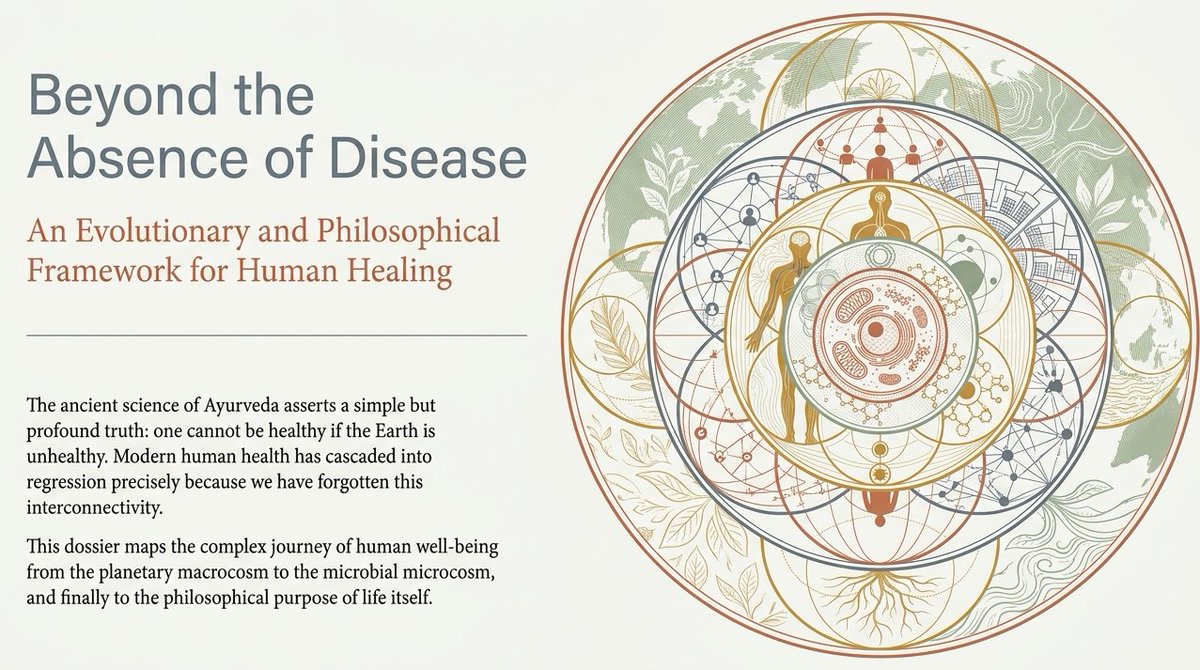
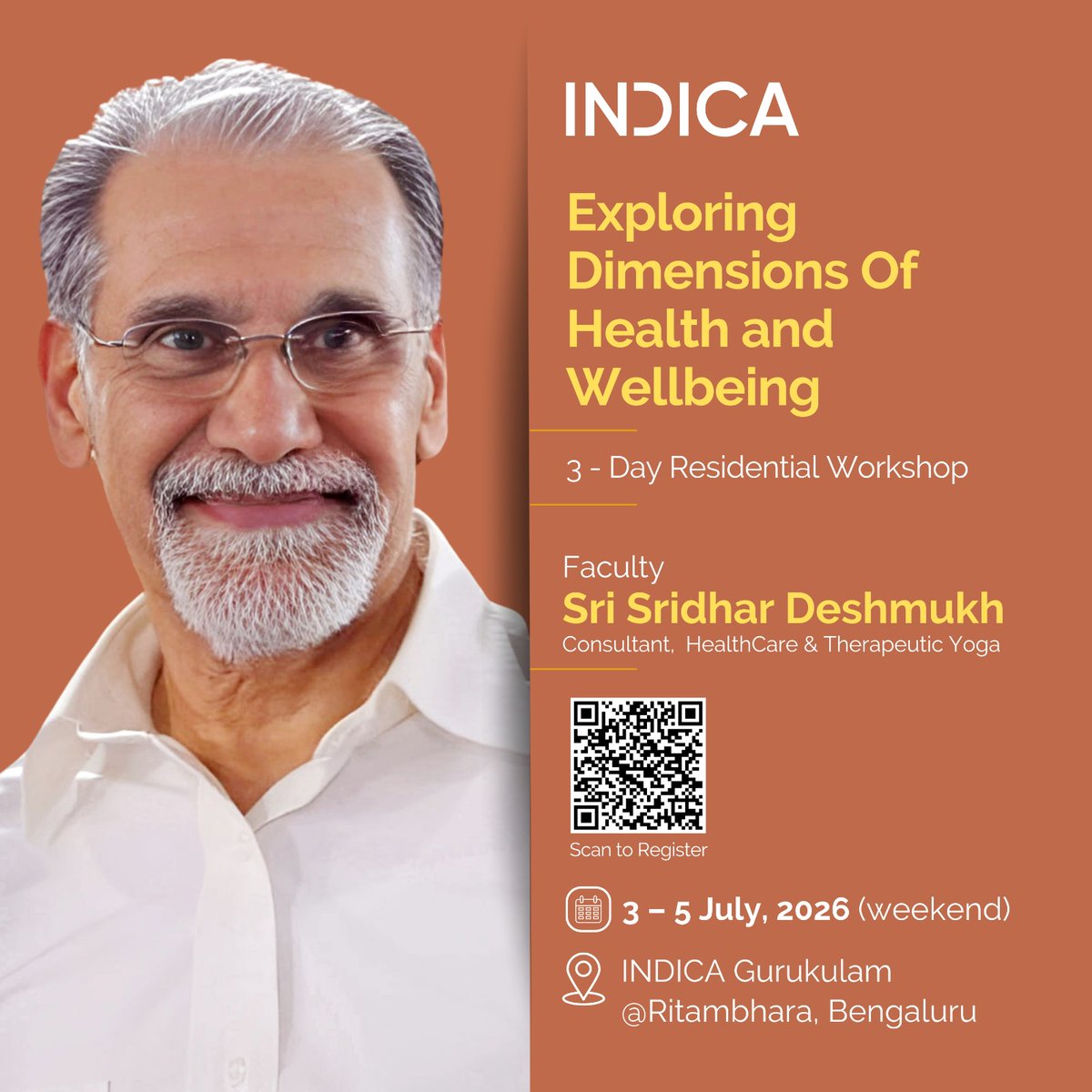
Exploring Dimensions Of Health And Wellbeing | 5th Edition with Shri Sridhar Deshmukh at Ritambara, Bengaluru, July 3-5
For several decades, Shri Sridhar Deshmukh has been exploring a question that lies at the intersection of Ayurveda, evolutionary biology, epigenetics, microbiome science, and human health: why are chronic diseases increasing despite unprecedented advances in medicine?
His research suggests that the answer may lie in a fundamental mismatch between our ancient biology and our modern environment. While human genetics evolved over hundreds of thousands of years, our lifestyles have transformed dramatically within a few generations. The result is a growing disconnect between what the human body is designed for and how it is required to function today.
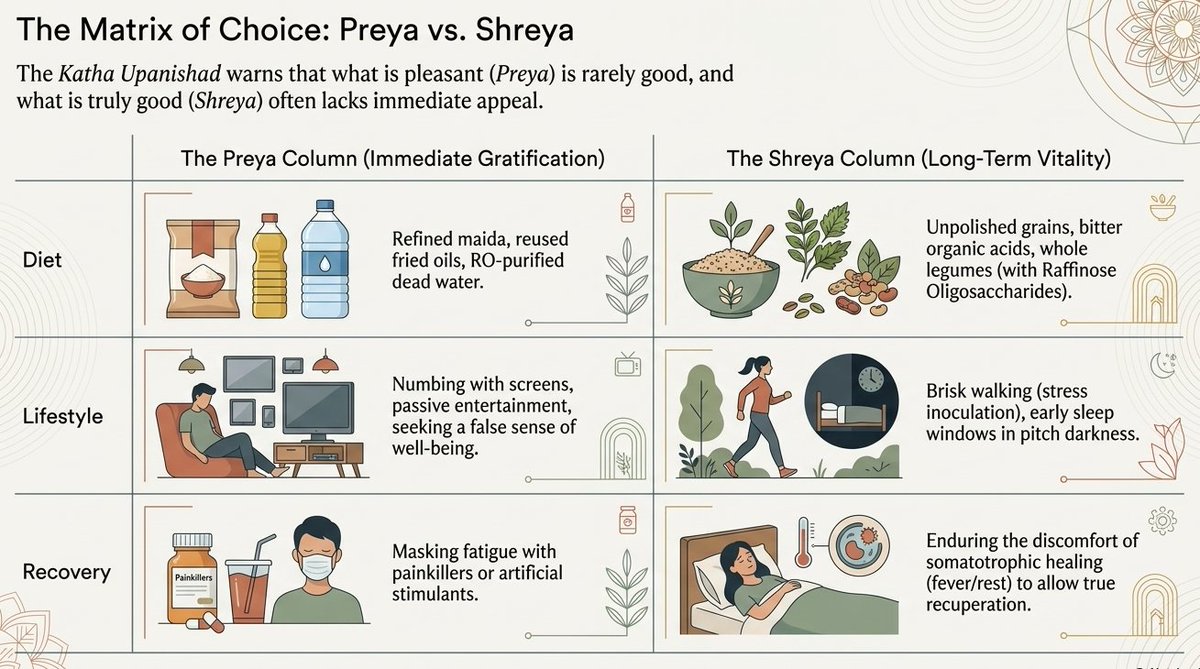
Drawing upon contemporary research in epigenetics, Sridhar argues that health is influenced far less by genetic destiny than commonly assumed. Genes provide a blueprint, but their expression is shaped by environmental signals such as nutrition, movement, sleep, stress, social relationships, and daily habits. This insight resonates strongly with Ayurveda's longstanding emphasis on lifestyle, rhythms, and environment as determinants of wellbeing.
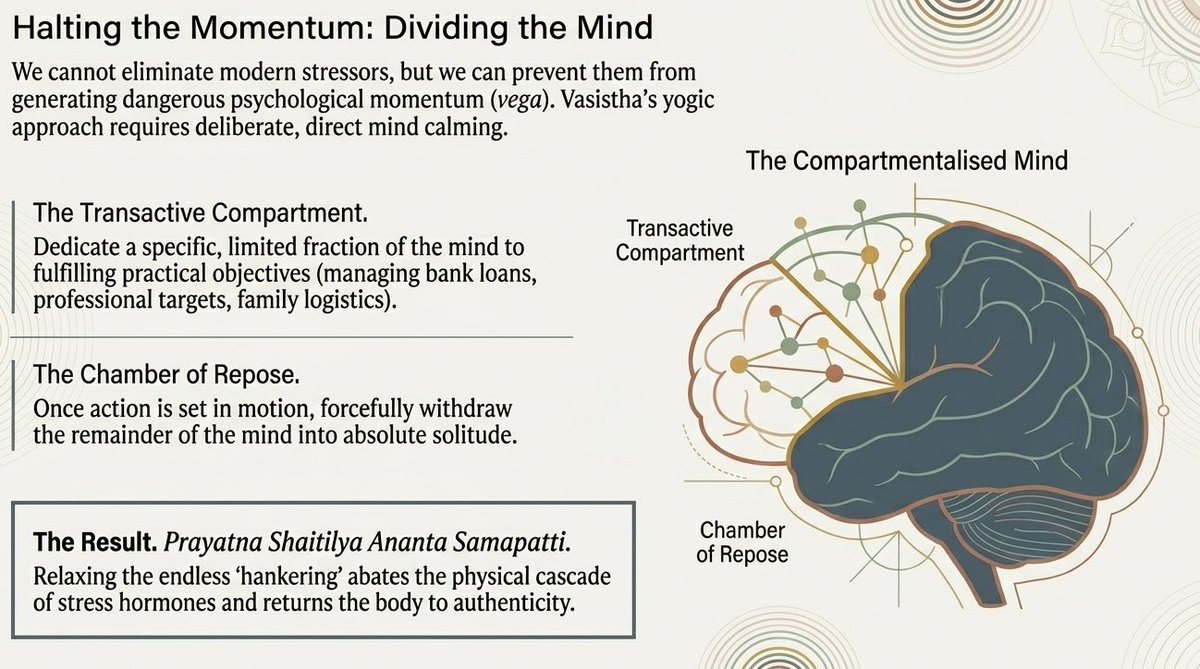
A significant aspect of his work examines chronic stress through the lens of evolutionary medicine. Human beings evolved to respond to short-lived physical threats. Modern stress, however, is largely psychological and continuous. Work pressures, information overload, financial anxiety, and constant stimulation activate biological survival mechanisms that were never designed to remain switched on indefinitely. Sridhar's research explores how this persistent state of physiological alertness contributes to disruptions in sleep, immunity, metabolism, digestion, and emotional wellbeing.
Another major area of inquiry is the relationship between biodiversity and human health. Through the combined perspectives of microbiome science and Ayurvedic ecology, he investigates how the dramatic reduction in dietary and environmental diversity has altered the microbial ecosystems that play a crucial role in immunity, metabolism, and resilience.
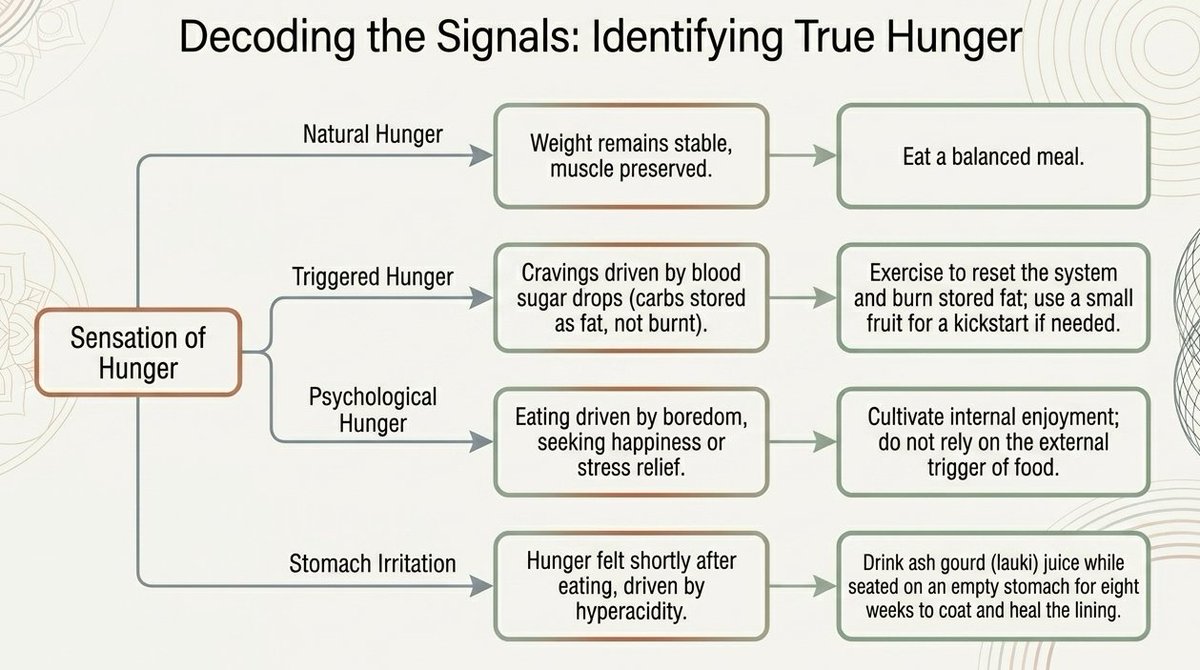
What makes Sridhar's work distinctive is its systems-based approach. Rather than viewing health as the management of isolated symptoms, he examines the interconnected relationships between genetics, metabolism, microbial ecology, stress physiology, behaviour, and environment. His research points towards a simple yet profound conclusion: health emerges when human beings live in greater alignment with their biological design.
This exploration forms the basis of his upcoming workshop with INDICA Yoga, where participants will engage with some of the most important questions at the intersection of modern science and ancient wisdom.
@YogaIndica @aurovinaya
indica.events/event/explorin…
2
2
105
Jun 13
Invitation to Participate | Meta Retreat on Indic Literary Ecosystem: indica.in/invitation-to-part…
At a time when public discourse is increasingly distorted, attention is compressed, and narratives are often disconnected from civilisational memory, literary ecosystems matter more than ever.
A literary festival is not merely a cultural event - it is a modern Yajna: a space where ideas are offered, narratives are questioned and renewed, and societies recover the ability to think deeply together.
The INDICA Centre for Writing and Publishing is convening an invitation-only Meta Retreat on the Indic Literary Ecosystem - bringing together organisers, curators, publishers and ecosystem builders to reflect on the origins, differentiation, shared challenges, innovation and the future of the literary culture in India.
This retreat seeks to strengthen not only individual platforms but the larger ecosystem that shapes how India reads, remembers, imagines and narrates itself.
As part of this gathering, two additional participants will be selected through an open call.
If you are building platforms, creating spaces for dialogue, publishing distinctive voices, or contributing to India’s literary landscape, we invite you to apply.
Because literature does not merely reflect society - it helps shape the stories through which a civilisation understands itself.
Please apply by mailing to cwp@indica.org.in with the subject: Meta Retreat on Indic Literary Ecosystem
Your brief profile,
The vision of your event/platform/publishing company
The number of editions of your festival if applicable
The uniqueness you will be able to bring to the discussion
Photographs/Links as applicable
This is the 16th Meta Retreat being held by INDICA. You can read about the concept and the previous retreats here indica.in/the-vision-and-jou…
@Sai_swaroopa @SaamaanyaJ @dimplekaul_in @indicatoday @yoginisd
3
5
303
Jun 13
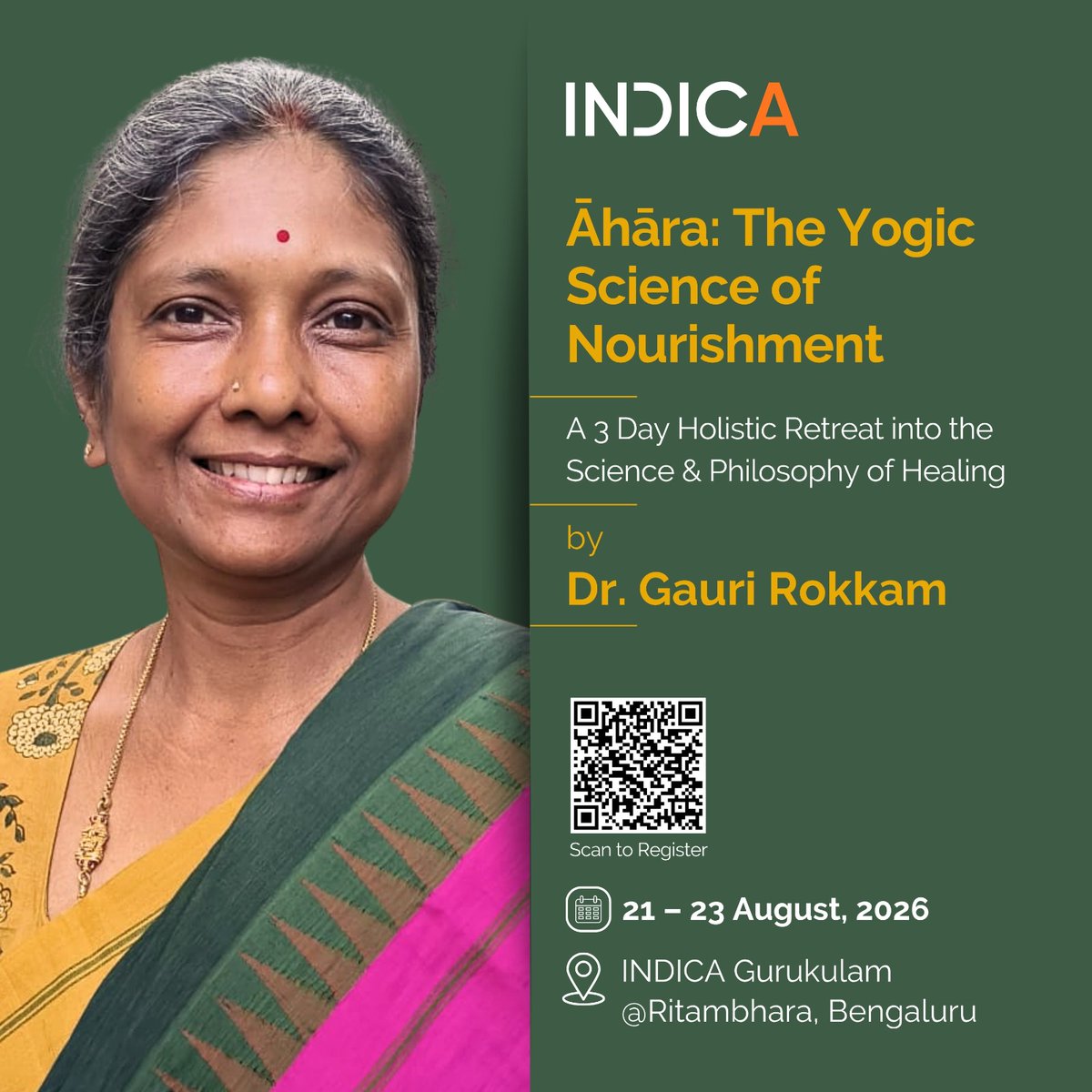
Āhāra: The Yogic Science of Nourishment
A 3 Day Holistic Retreat into the Science & Philosophy of Healing
By Dr. Gauri Rokkam
Date: 21 – 23 August 2026
@YogaIndica @aurovinaya
Venue: INDICA Gurukulam @Ritambhara, Bengaluru
What does it truly mean to nourish ourselves? Āhāra, in the yogic tradition, extends beyond food on the plate - it includes everything we consume through the senses, mind, and daily habits.
Rooted in classical yogic wisdom, this retreat invites participants to explore nourishment as a conscious practice that shapes vitality, clarity, balance, and wellbeing.
Through reflective learning and embodied exploration, participants will engage with traditional insights on food, lifestyle, awareness, and the
indica.events/event/ahara-th…
2
5
163
Jun 13
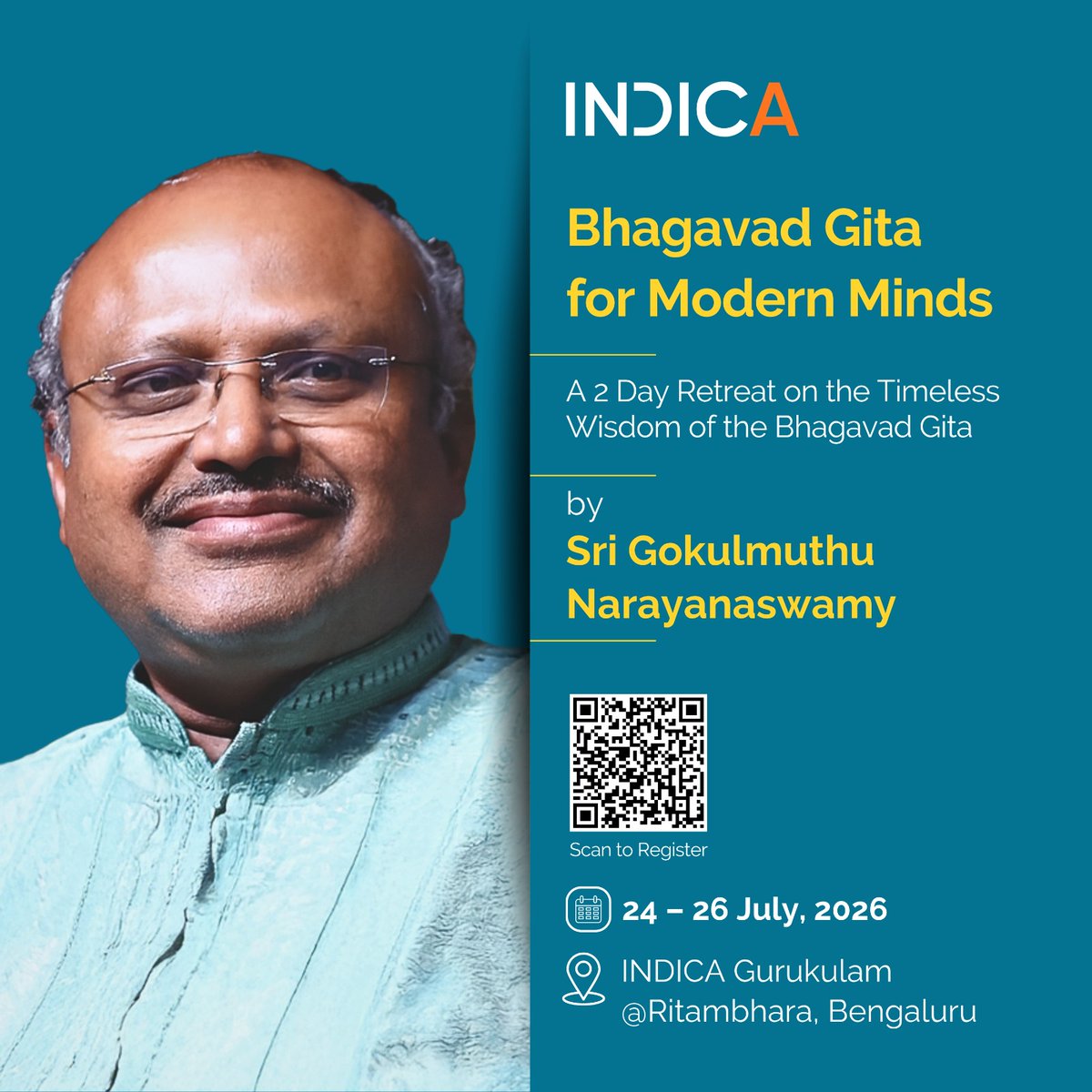
Bhagavad Gita for Modern Minds
A 2 Day Retreat on the Timeless Wisdom of the Bhagavad Gita
By Sri Gokulmuthu Narayanaswamy
Date: 24–26 July 2026
Venue: INDICA Gurukulam @Ritambhara, Bengaluru
The Ramakrishna Order sees the Bhagavad Gita not as philosophy alone, but as a way of living. Sri Ramakrishna’s call - “First God, then the world”—and Swami Vivekananda’s “Arise, awake, and stop not till the goal is reached” embody the Gita in action: rooted inwardly, engaged outwardly.
Join Sri Gokulmuthu Narayanaswamy - devotee of Sri Ramakrishna, founder of the Vivekananda Study Circle at IIT Madras, mentor to student communities at IISc and Ramakrishna Math, and a long-time teacher of Vedanta, Bhagavad Gita, and Vivekananda’s thought.
Drawing from his experience teaching the Gita across more than fifteen student batches and from his book Essence of the Bhagavad Gita for Modern Minds, this retreat offers a reflective and practical immersion into the Gita for contemporary life.
Register now: indica.events/event/bhagavad…
@YogaIndica @advaitaacademy
2
4
215
Jun 13
Exploring Dimensions of Health and Wellbeing
A 3 - Day Residential Workshop on Wellness
By Sri Sridhar Deshmukh
Date: 03 - 05 July, 2026
Venue: INDICA Gurukulam @Ritambhara, Bengaluru
What does it mean to understand health - not as an isolated condition, but as a living relationship between body, environment, nourishment and consciousness?
In the 5th edition of "Exploring Dimensions of Health & Wellbeing', Sri Sridhar Deshmukh brings together decades of engagement with biology, ecology, nutrition and Yoga into an integrated exploration of human wellbeing.
Known for his deeply intuitive yet grounded approach, Sri Deshmukh invites participants to look beyond fragmented models of health and engage with the intelligence of the body in dialogue with nature, lifestyle and awareness.
This immersive residential workshop offers an opportunity to explore wellbeing through lived practice, contemplative inquiry and embodied understanding—drawing from both contemporary health insights and the yogic knowledge tradition.
A journey towards seeing health not merely as treatment, but as harmony.
@YogaIndica
Register Here: indica.events/event/explorin…
1
4
131
INDICA retweeted

Jun 13
What would it take to reimagine the Indic literary ecosystem - not merely as a publishing industry, but as a living civilizational organism?
For centuries, Bharata nurtured an extraordinary ecology of storytellers, poets, commentators, philosophers, translators, patrons, performers, and seekers. Literature was embedded within a larger cultural network that sustained memory, meaning, and imagination across generations. It was beyond isolated act of authorship.
Today, we find ourselves at an interesting threshold. While interest in Indian Knowledge Systems (IKS), civilizational narratives, and native intellectual traditions is growing, the ecosystem that can nurture, refine, disseminate, and sustain such literary production remains fragmented. Writers seek readers. Readers seek guidance. Institutions seek direction. Publishers seek viable pathways. The question before us is larger than any single book or author.
The proposed MetaRetreat on the Indic Literary Ecosystem invites participants into a rare space of reflection and co-creation. Drawing upon the spirit of Samvada in Indian Tradition, it seeks to bring together practitioners, thinkers, scholars, publishers, translators, and cultural leaders to collectively examine the present condition of Indic literary culture and imagine its future. The broader objective is beyond diagnosis - the generation of frameworks, possibilities, and pathways for renewal.
Civilizations endure through the stories they tell, preserve, reinterpret, and pass on - beyond political and economic power. The future of Indic thought may well depend on the future of its literary ecosystem.
For the registration/invitation page, see:
INDICA Invitation to Participate in a MetaRetreat on Indic Literary Ecosystem
indica.in/invitation-to-part…
@Sai_swaroopa @IndicaOrg
3
11
518
INDICA retweeted

Jun 13
They hold the space, found the platforms and light up the dais to celebrate literature and shape ideas.
What goes on in the minds of these organisers, curators and publishers who held the spotlight upon Indic Literary Space? The vision they saw, the challenges they faced or continue to face, the innovation they apply and their outlook for the future. This Meta Retreat throws light on the same, concluding with a collective Sankalpa to shape the Indic Literary space.
Two spots open for this otherwise Invite-only gathering of distinguished trailblazers in this @IndicaOrg Meta Retreat for Indic Literary Ecosystem
indica.in/invitation-to-part…
3
8
732
Jun 13
INDICA Master Class on Tantrayukti in Collaboration with Central Sanskrit University by Dr M Jayaraman
INDICA, in collaboration with Central Sanskrit University, is currently conducting a Master Class on Tantrayukti in New Delhi as part of its continuing commitment to creating meaningful platforms for the study and application of Indian Knowledge Systems.
Conceived as an advanced academic offering, the Master Class brings together scholars, researchers, students, and practitioners for a sustained engagement with indigenous frameworks of knowledge, inquiry, and textual traditions. Through such initiatives, INDICA seeks to enable deeper encounters with Bharatiya intellectual traditions while fostering contemporary relevance and interdisciplinary dialogue.
The programme reflects a shared institutional vision of making classical knowledge systems accessible through structured learning experiences that combine academic rigour with living traditions of thought.
The Master Class is being coordinated and organised by @dimplekaul_in, Director – Outreach and Special Projects, whose efforts continue to strengthen collaborative academic initiatives and create spaces for meaningful engagement with India’s knowledge heritage.
Through such offerings, INDICA continues to expand avenues for serious scholarship, public learning, and the revitalisation of India’s civilisational knowledge traditions.
3
6
349
INDICA retweeted

If I were to add one thing to this conversation today, it could be this:
Life is rarely understood from the outside.
It reveals itself through participation.
Through love.
Through loss.
Through wonder.
Through attention.
The rest is commentary.
Thank you, @IndicaOrg ! 🌙
Jun 12
Why Going Far is the Only Way Home
What if the greatest obstacle to a meaningful life is the belief that we are running out of time?
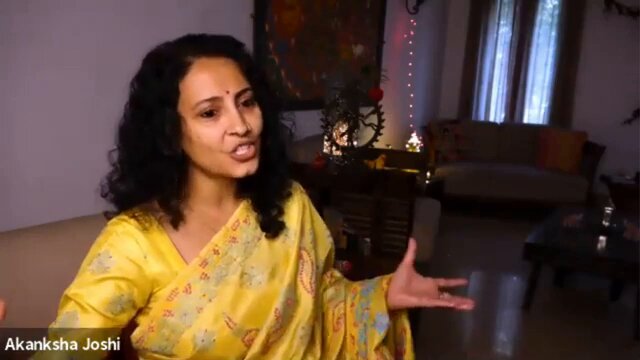
Filmmaker and seeker Akanksha Damini Joshi, author of the newly published Aalolika, and Co-Founder of the Center for Embodied Knowledge, offers a powerful alternative to the modern obsession with urgency. Drawing from a story in the Vishnu Purana, she reflects on how Lord Vishnu journeys across the world with Garuda, only to return and realize that sometimes one must travel very far to come truly near. The seeker’s path, too, often circles through the world before arriving at the self.
Central to her reflections is what she calls the “Yoga Plan” - the Dharmic understanding that life unfolds across vast stretches of time, not within the confines of a single lifetime. This perspective replaces anxiety with steadiness, encouraging wholehearted effort without attachment to immediate results. Yet this freedom requires Viveka, or discernment, lest patience slip into complacency.
Joshi’s insights emerge not only from scripture but from lived experience. She recalls entering meditative states while dancing in a crowded Delhi discotheque, discovering that meditation is not merely a technique but an inward flowering that can arise anywhere. She also argues that ecological healing begins within. Forests are destroyed outside only after the forests within have been neglected; rivers are dammed outside only after the inner river of bliss has run dry.
Equally profound is her reflection on death. Raised in an army family, she learned early that awareness of mortality does not diminish life - it intensifies it. In the Dharmic tradition, Yama, the Lord of Death, is also a teacher who reveals what truly matters.
For Joshi, India’s wisdom traditions remain alive, not merely in texts or institutions, but in ordinary people whose lives embody timeless insights. The ultimate invitation is to see life as Leela - a divine play - where even struggle becomes part of a larger unfolding story.
Sometimes, the longest journey is simply the journey back to ourselves.
Follow INDICA for more such Quests. Full interview: youtu.be/RIMrqO7fLL4?si=uzl-…
@nkgrock @daminijosh
2
6
534
Jun 13
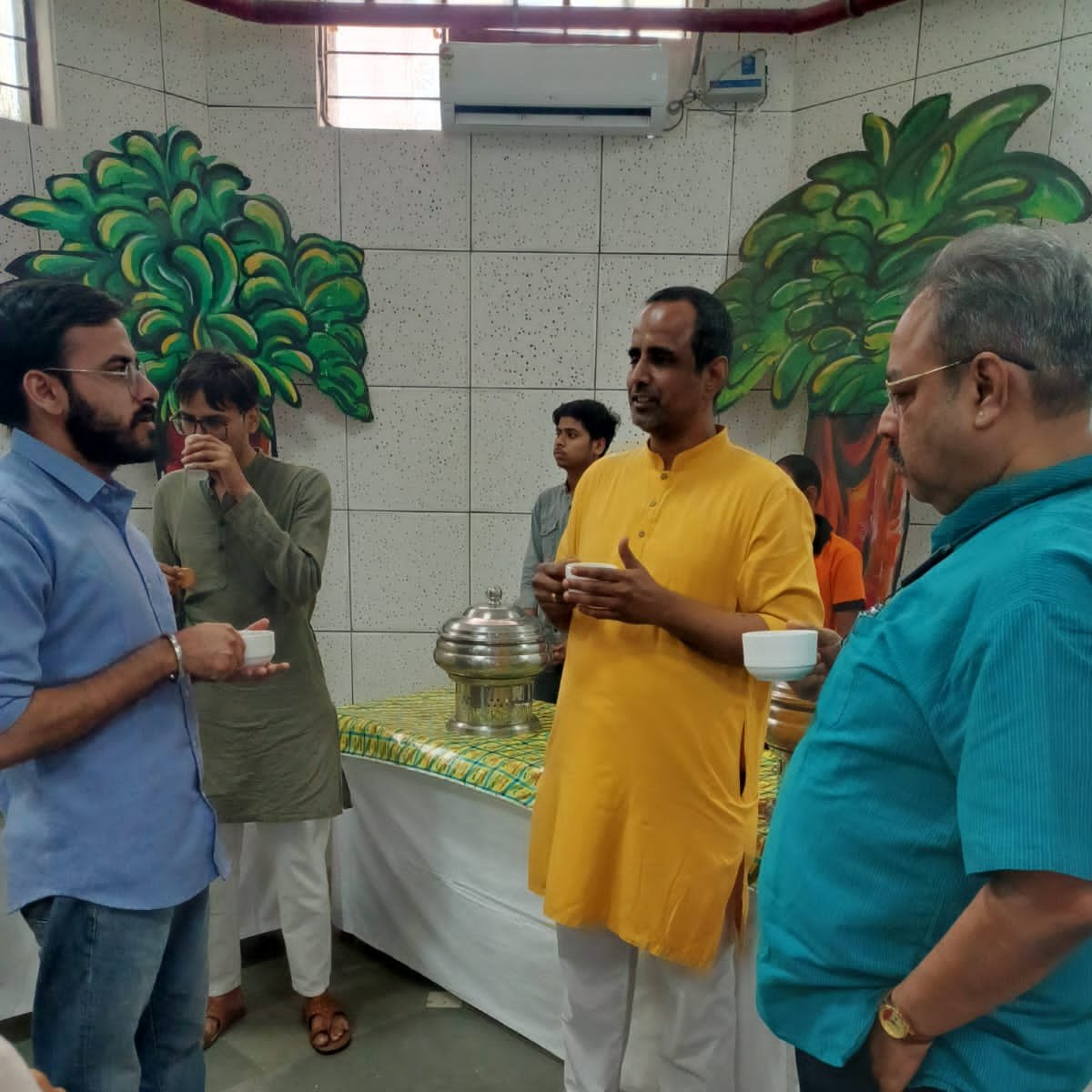
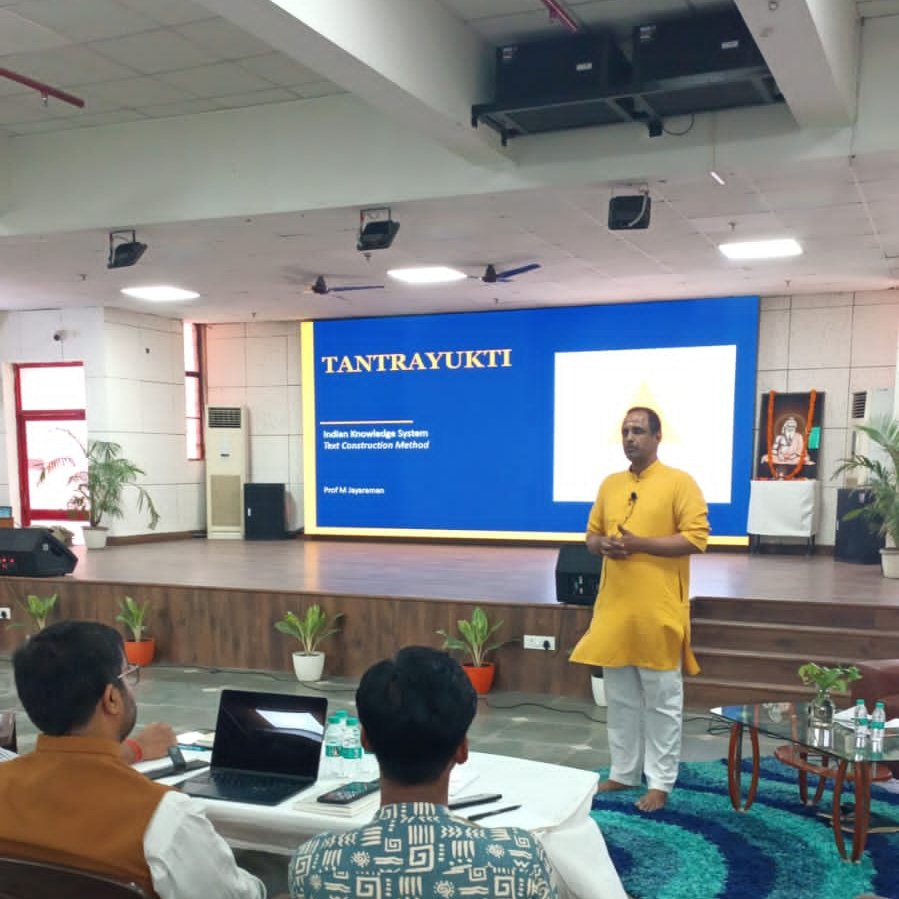
The Master Class on Tantrayukti by Dr M Jayaraman has commenced today with the sacred chanting of Vyāsa Stuthi and the Inaugural Address by Ms. Dimple Kaul, Director Outreach and Special Projects INDICA.
Over the next two days, participants will journey into the profound Indic traditions of:
📷 Śāstric reasoning
📷 Textual interpretation
📷 Knowledge organisation
📷 Scholarly inquiry
Under the guidance of Dr. M. Jayaraman, scholars, researchers, students, and seekers are exploring Tantrayukti — the classical methodology behind composing and interpreting śāstric texts.
A beautiful beginning to two days of deep learning and meaningful dialogue with a deep dive into Indic knowledge systems.
A vibrant atmosphere of inquiry and learning continues through engaging discussions and reflections.
#Tantrayukti #INDICA #IndicKnowledge #Sanskrit #Shastra TraditionalKnowledge IKS
2
5
194
INDICA retweeted
Jun 12
Why Going Far is the Only Way Home
What if the greatest obstacle to a meaningful life is the belief that we are running out of time?
Filmmaker and seeker Akanksha Damini Joshi, author of the newly published Aalolika, and Co-Founder of the Center for Embodied Knowledge, offers a powerful alternative to the modern obsession with urgency. Drawing from a story in the Vishnu Purana, she reflects on how Lord Vishnu journeys across the world with Garuda, only to return and realize that sometimes one must travel very far to come truly near. The seeker’s path, too, often circles through the world before arriving at the self.
Central to her reflections is what she calls the “Yoga Plan” - the Dharmic understanding that life unfolds across vast stretches of time, not within the confines of a single lifetime. This perspective replaces anxiety with steadiness, encouraging wholehearted effort without attachment to immediate results. Yet this freedom requires Viveka, or discernment, lest patience slip into complacency.
Joshi’s insights emerge not only from scripture but from lived experience. She recalls entering meditative states while dancing in a crowded Delhi discotheque, discovering that meditation is not merely a technique but an inward flowering that can arise anywhere. She also argues that ecological healing begins within. Forests are destroyed outside only after the forests within have been neglected; rivers are dammed outside only after the inner river of bliss has run dry.
Equally profound is her reflection on death. Raised in an army family, she learned early that awareness of mortality does not diminish life - it intensifies it. In the Dharmic tradition, Yama, the Lord of Death, is also a teacher who reveals what truly matters.
For Joshi, India’s wisdom traditions remain alive, not merely in texts or institutions, but in ordinary people whose lives embody timeless insights. The ultimate invitation is to see life as Leela - a divine play - where even struggle becomes part of a larger unfolding story.
Sometimes, the longest journey is simply the journey back to ourselves.
Follow INDICA for more such Quests. Full interview: youtu.be/RIMrqO7fLL4?si=uzl-…
@nkgrock @daminijosh
10
23
2,170