
Edustoke is India's Largest #School Discovery, Selection & Reviews Platform.
Joined December 2015
- Tweets 940
- Following 50
- Followers 149
- Likes 107
538 Photos and videos

Jun 13
On World Day Against Child Labour, we stand firmly against children being forced into labour—whether in factories, fields, mines, homes, or on the streets.
Every child deserves safety, education, dignity, and the freedom to simply be a child.
1
1
Jun 13
At the same time, perhaps we should ask another question:
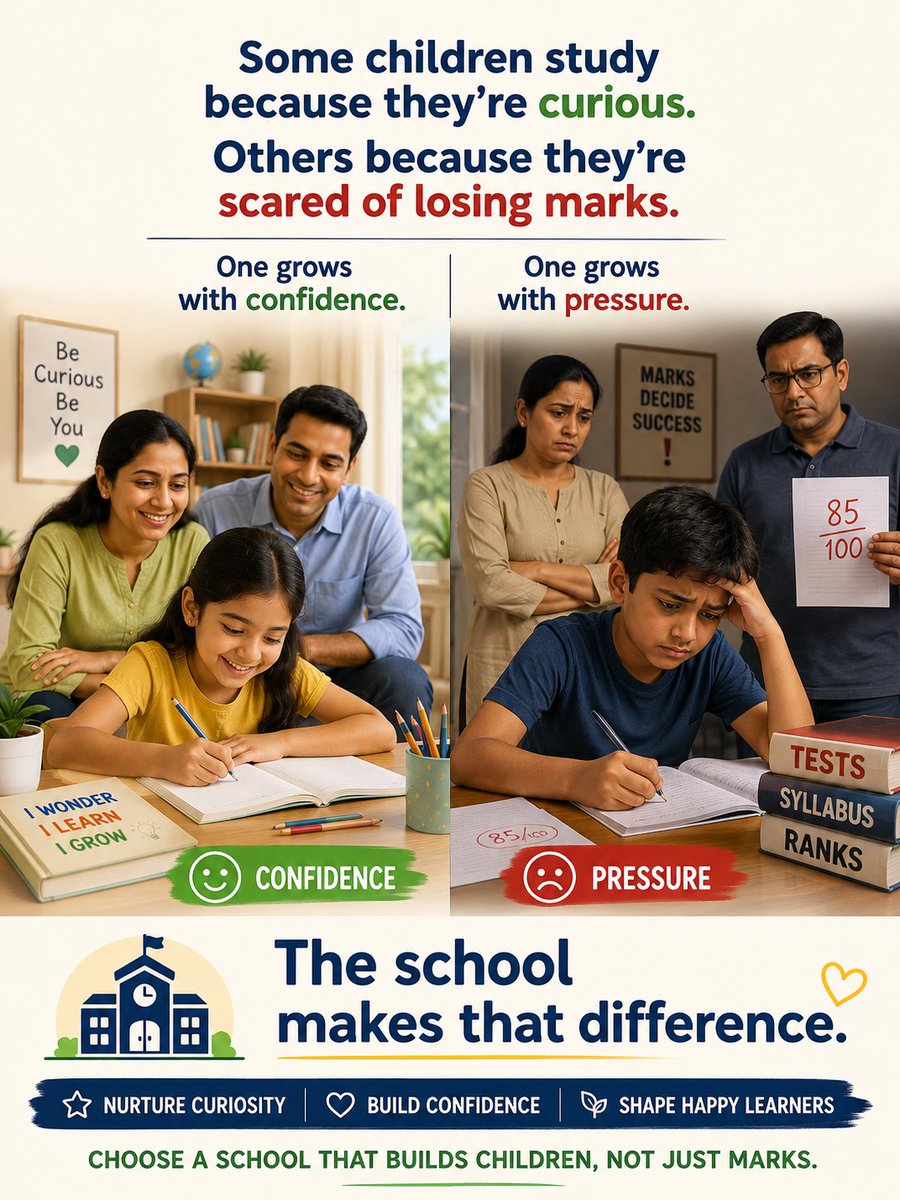
When a child's day is consumed by school, coaching, tests, rankings, and endless performance pressure, we call it "preparing for the future."
But what happens to the present?
1
1
Jun 13
Child labour and academic pressure are not the same.
But both remind us of an important truth:
A child's worth cannot be measured only by their productivity.
This World Day Against Child Labour, let's protect childhood in every form.
Jun 11
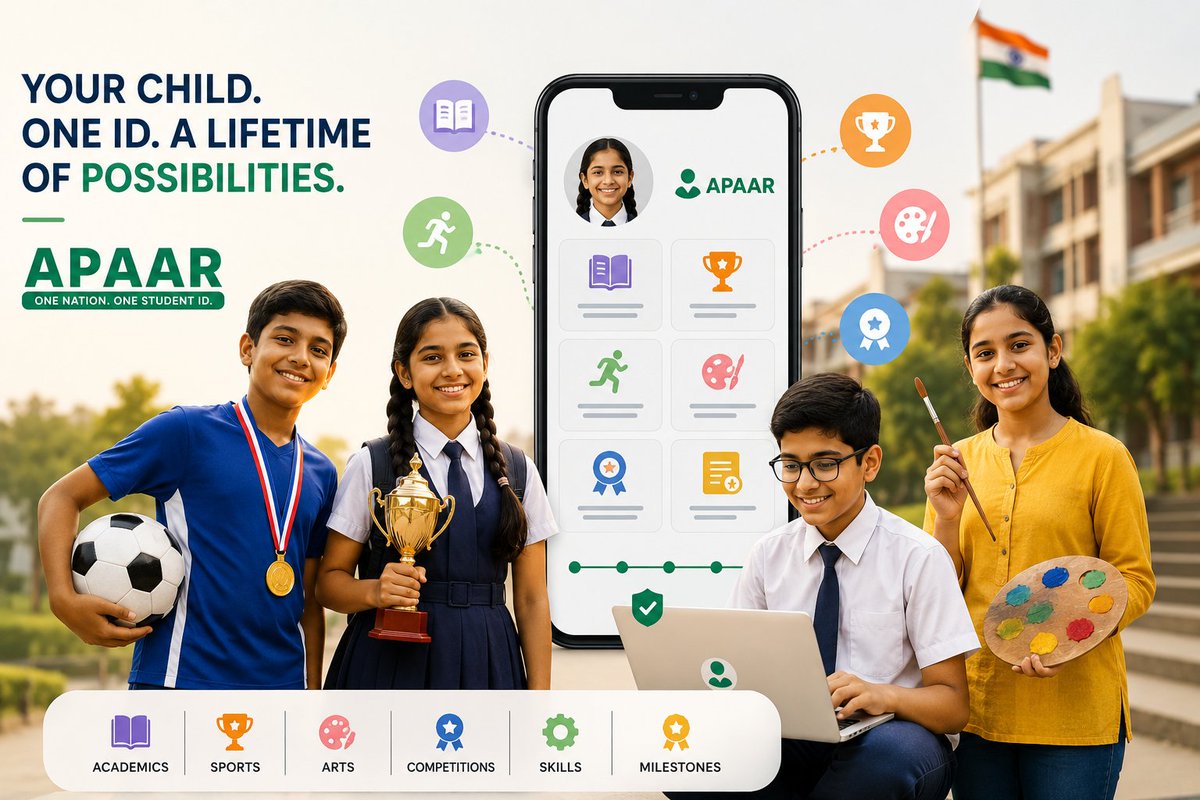
Your child now has a permanent digital academic identity.
It's called APAAR.
And it doesn't just record exam scores.
Not just exam scores but sports, competitions, skills, milestones- every learning experience, documented under one lifelong profile.
1
8
Jun 11
Think of APAAR as your child's learning passport.
Not a report card that gets lost in a drawer. A living record that stays with them - across schools,platforms
For the first time, the system is asking
Not "how many marks did you score?"
“What Skills have you built?”
1
2
Jun 11
When every experience gets documented, the experiences your child gets matter more than ever.
Which school they attend.
What opportunities they're given.
What skills they're allowed to discover.
Choose schools that give them something worth recording.
1
Jun 8
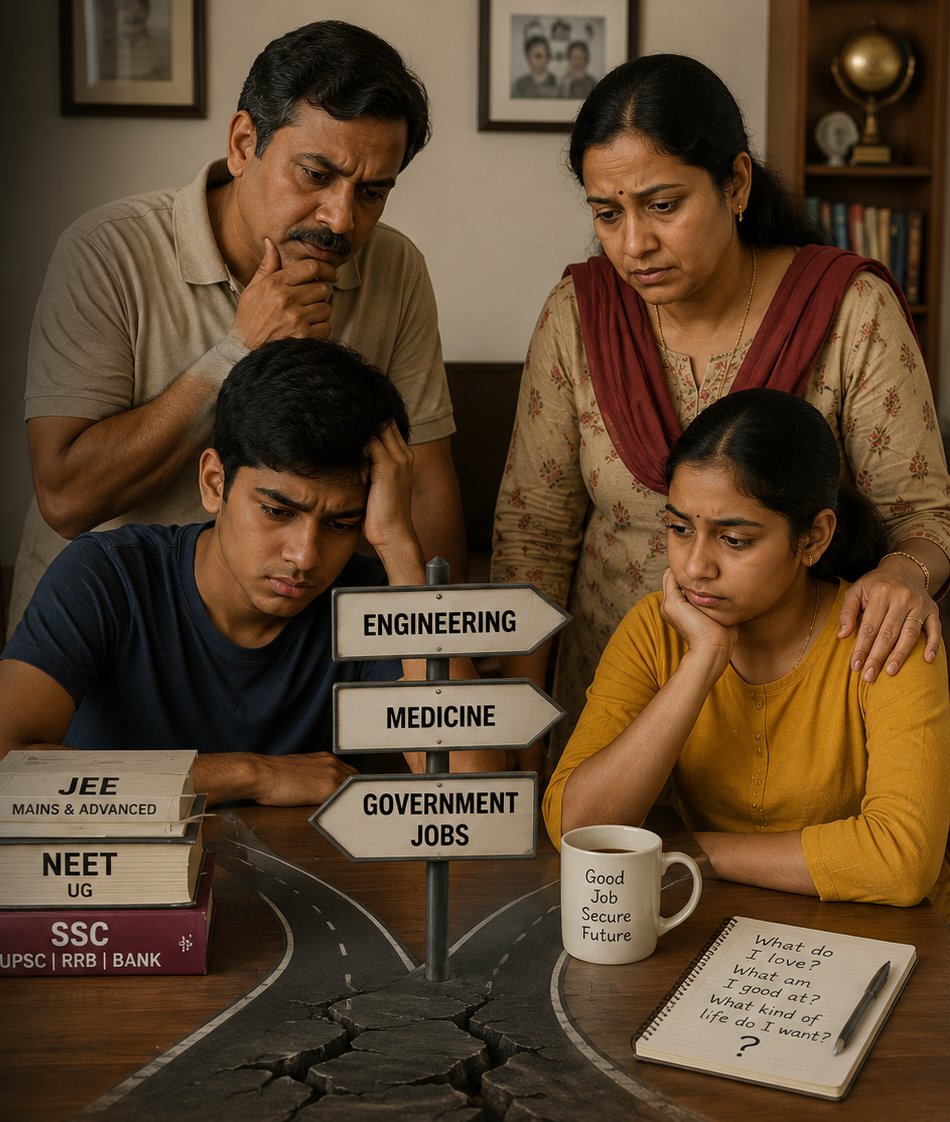
For decades, Indian parents have believed there are 3 "safe" career options:
Engineering.
Medicine.
Government jobs.
But what if the safest path has quietly become the riskiest one?
1
9
Jun 8
Every year, millions of students compete for a limited number of seats and jobs.
The result?
Higher competition, longer preparation cycles, rising stress levels, and no guarantee of success.
The problem isn't ambition.
It's everyone chasing the same definition of success.
1
9
Jun 8
Meanwhile, AI, automation, climate tech, robotics, design, digital commerce, creator businesses, and emerging industries are creating opportunities that barely existed a decade ago.
The future belongs to adaptable learners, not just degree holders.
6
Jun 6
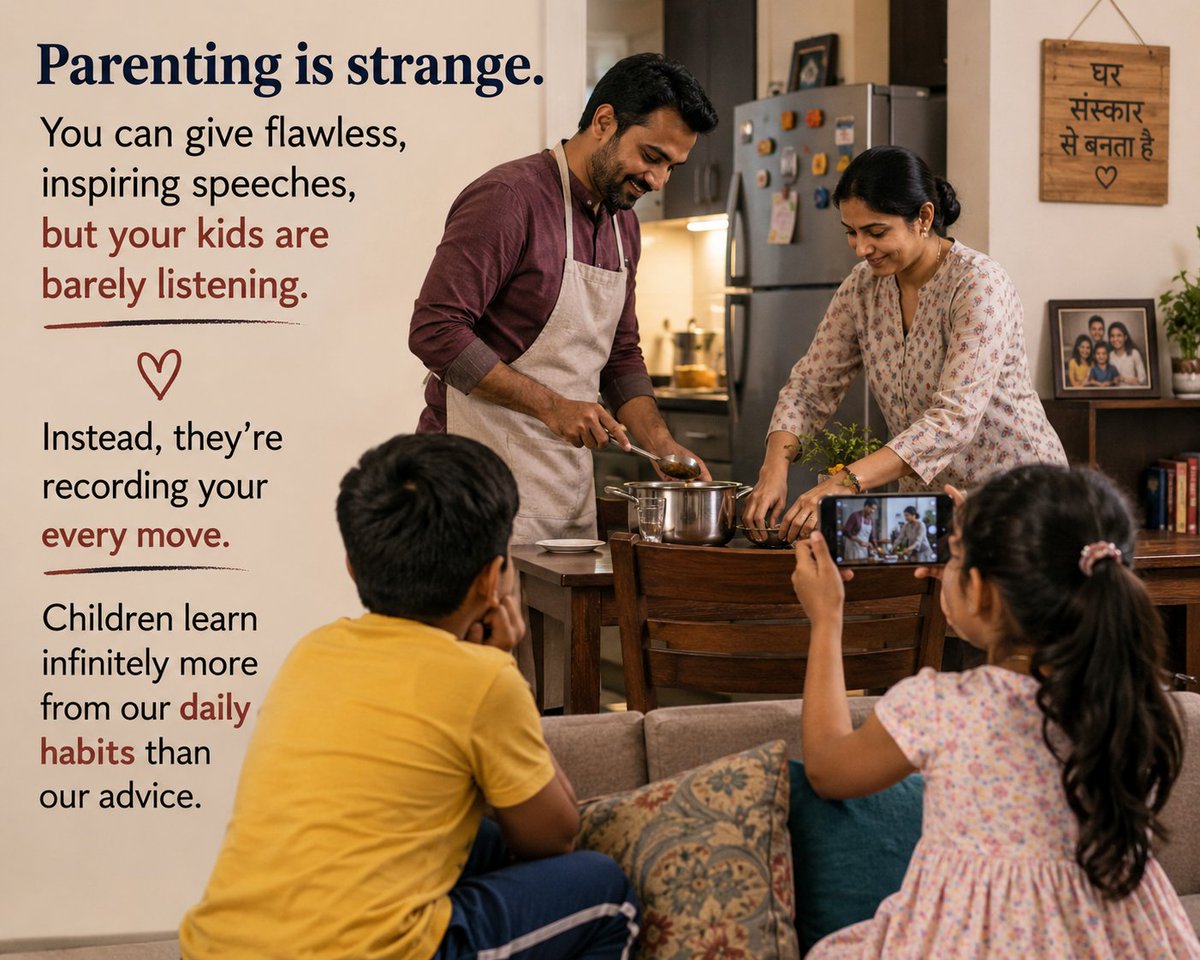
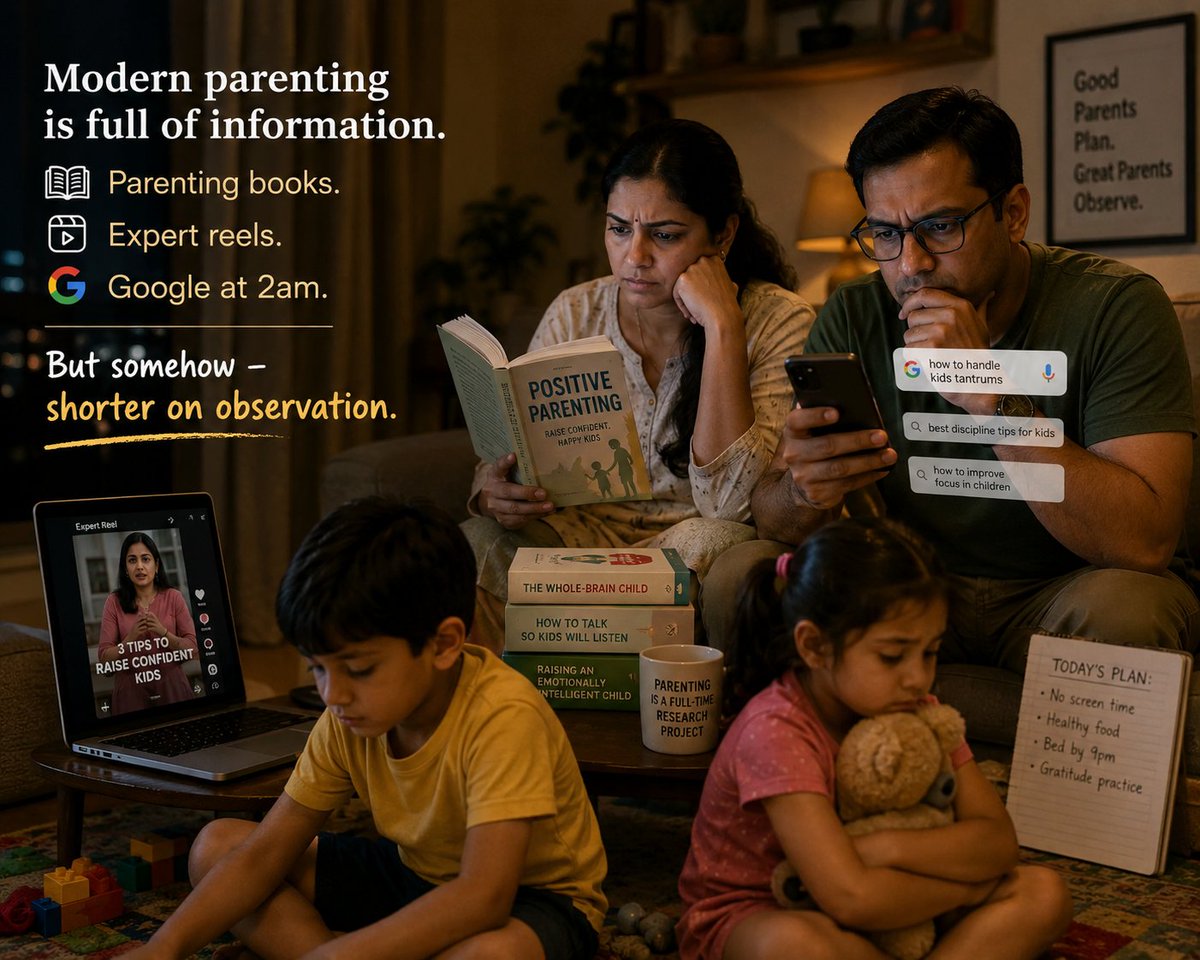
Parenting is strange. You can give flawless, inspiring speeches, but your kids are barely listening. Instead, they’re recording your every move. Children learn infinitely more from our daily habits than our advice.
1
3
Jun 6
Science backs this up: neuroscientists found that "mirror neurons" in the brain cause kids to automatically mimic their parents' actions and emotional reactions. They don't copy what you tell them to do; they copy who you are.
1
2
Jun 6
To raise resilient, curious kids, we have to model those habits first.
The right environment at home and school shapes who they become.
Edustoke
1
Jun 3
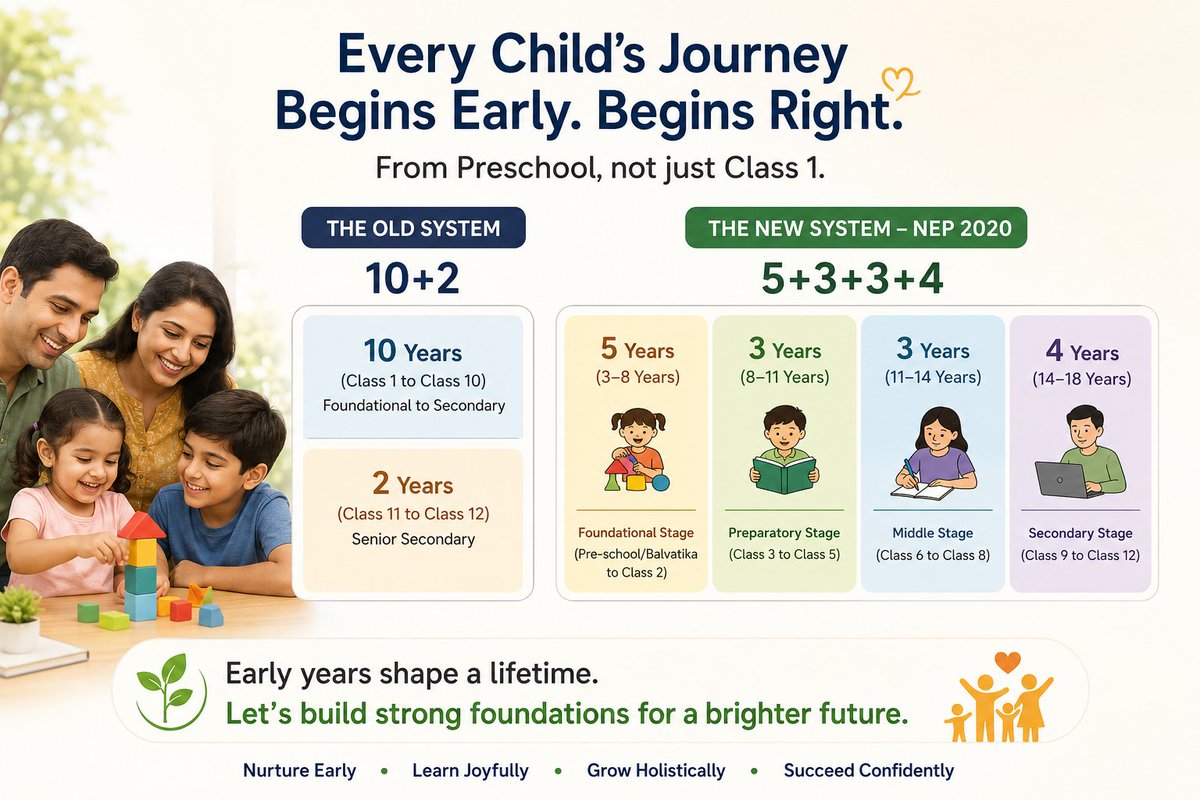
For decades, Indian schools followed the 10 2 system.
The 5 3 3 4 structure under #NEP2020 is gradually reshaping school education.
The biggest shift is the recognition that a child's educational journey begins at preschool-not Class 1.
1
18
Jun 3
Here's how the new framework works:
5 years = 3 years of Preschool/Balvatika Classes 1 & 2
3 years = Classes 3–5
3 years = Classes 6–8
4 years = Classes 9–12
For the first time, children aged 3–8 are formally recognized as being in the Foundational Stage of education.
1
23
Jun 3
The message is clear:
The early years are no longer seen as preparation for school. They are school.
For parents, that makes choosing the right early learning environment more important than ever.
Because foundations built at 4 can influence outcomes at 14.
13
Jun 2
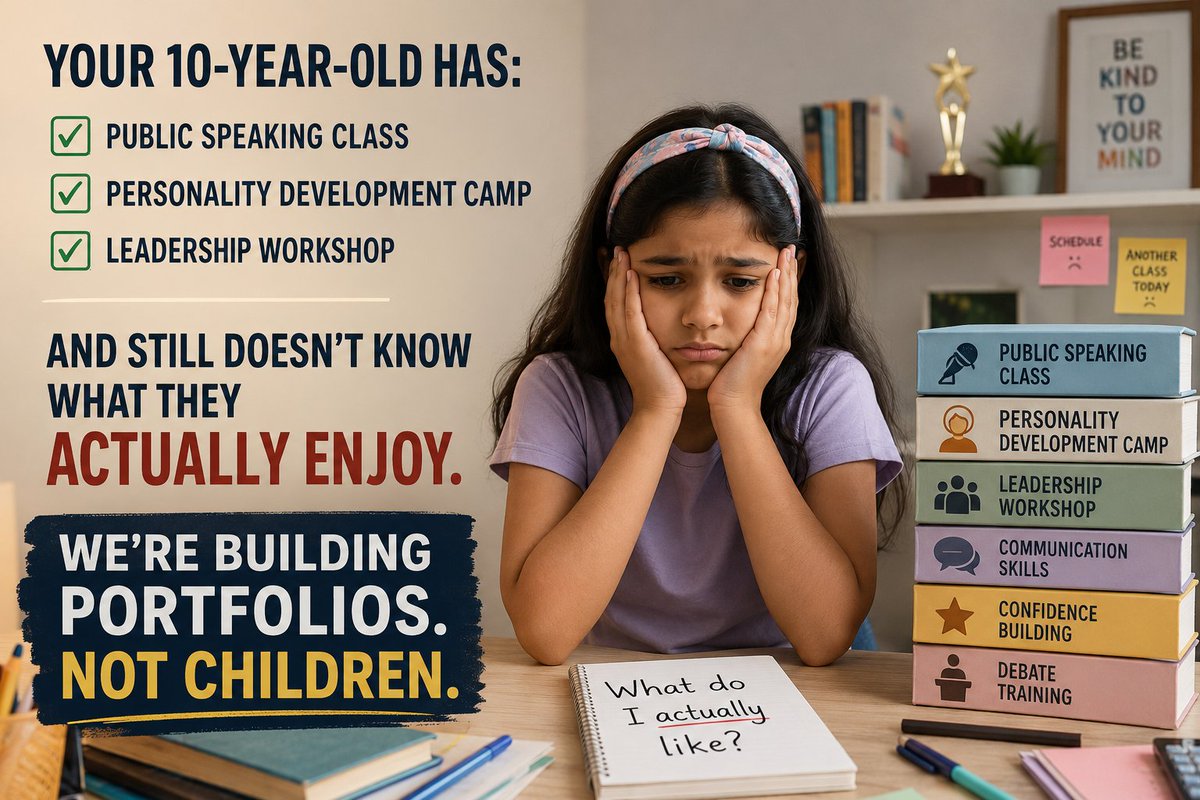
Your 10-year-old has:
✓ Public speaking class
✓ Personality development camp
✓ Leadership workshop
And still doesn't know what they actually enjoy.
We're building portfolios. Not children.
1
10
Jun 2
When every hobby needs a certificate -
the child who loved painting for no reason quietly stops painting.
We're editing children before they've written the first draft.
1
3
Jun 2
The most secure adults weren't the most polished children.
They were just given enough time to figure out who they actually were.
What did your parents let you do freely - that you wish you gave your child more of?
- Edustoke
2
Jun 1
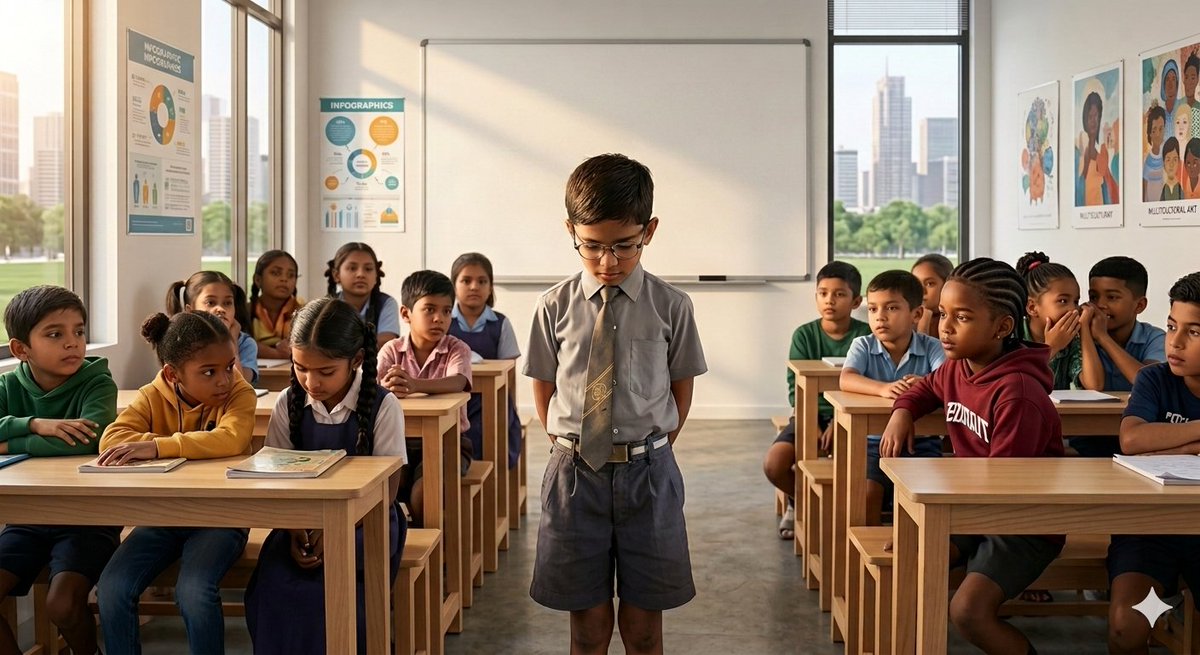
Do you remember the moment you felt small in front of the whole class?
Most adults do.
That's not a small thing. That's how long one classroom moment can stay with a child.
1
2
Jun 1
When a child is afraid of getting it wrong - they stop trying to get it right.
Their brain shifts from "let me think" to "let me hide."
A classroom that laughs at mistakes doesn't just hurt feelings. It quietly shuts down learning.
1
5
Jun 1
Before you check the exam results and the playground size
Ask one more question-
Does this school make it safe to be wrong?
Because a child who feels safe enough to fail is a child who will eventually figure it out.
That's the school worth finding.
- Edustoke
23