Fishing and gundogs ..I environmentalists , conservationist , champion of social justice , scientist (retired)U.K , Passionate Zionist.
Joined August 2019
- Tweets 130,207
- Following 18,587
- Followers 32,759
- Likes 362,574
8,277 Photos and videos















Pinned Tweet

27 Apr 2025
My new petition to get all your support for an enquiry .
Glasgow city council and their employees cannot get away with what they did to my wife’s veterinary clinic..
Please sign and share any questions don’t hesitate to ask ..
Ta .
chng.it/YH6qLxbmpt
109
199
410
83,100
Watching the build up to the Scotland game , watching 94 and 98 great memories and remembering it was before the SNP parasites infected our country ..
Mon Scotland we can do this ….😃
6
3
69
790
Big Bruiser and Sgt Sydney dog would like to convey their best wishes to the Scotland 🏴 team for tonight’s match ..
They would also like to convey their worst wishes to Swinney and the rest of his paddystinian mob .
Don’t let them spoil our football folks ..
10
7
70
863
Jun 12
Sorry but it’s not “gut wrenching “ to see terrorists jailed ..
These people are terrorists you complete tit …🙄
Jun 12

Gut wrenching to see four young people jailed for direct action against an arms supplier to Israel.
Years in prison for protesting to save lives in Gaza, with 'terrorism' used despite no jury convicting them of it.
A truly dangerous attack on the right to protest.
1
9
109
1,059
Thomas Ingram retweeted

Jun 12
🔥 “It was quite damning about the way the Scottish Government conducts itself in terms of FOI.” That's been my experience too with SG & Edinburgh Council when trying to uncover the truth behind the long running venue saga that's holding up our inquiry! @FOIScotland @DvdHmltn
9
39
91
5,461
Thomas Ingram retweeted

I always enjoyed working with the SAS, whether it was climbing or breaching.
Here’s a great article about the bond between Delta Force and SAS:
share.google/OGfOEF1yTBtPx8o…
18
156
1,804
34,451
Jun 11
So …
Who cuts funding and demoralises and prosecutes those who would defend us ??
Meanwhile funding those that should not be here and is doing us irrevocable harm ??
The Labour Party , the SNP and the Greens ..
Agree with them your hunky dory disagree and you are far right racist ..
Am I over the target ???
1
8
67
958
Thomas Ingram retweeted

Jun 11
It's hard to beat Israeli technology!
TEL AVIV, Israel - The Israelis are developing an airport security device that eliminates the privacy concerns that come with full-body scanners.
It's an armoured booth you step into that will not X-ray you, but will detonate any explosive device you may have on your person.
Israel sees this as a win-win situation for everyone, with none of this crap about racial profiling.
It will also eliminate the costs of long and expensive trials.
You're in the airport terminal and you hear a muffled explosion. Shortly thereafter, an announcement:
"Attention to all standby passengers,
El Al is pleased to announce a seat available on flight 670 to London.
Shalom!
419
1,388
8,306
230,655
Jun 10
So ….
Everything in the U.K. is broken ..
Everything in Scotland is broken ..
Where is the hope folks ?? What is there to look forward to ??
Anyone??
49
13
148
5,097
Jun 10
The @snp and the @scottishgreens have conspired to prevent the Scottish public an investigation into Sturgeon and Murrells corruption .
Now why would they do that ?? And why would they deny the Scottish public transparency and truth ??
Anyone ??
31
89
363
3,763
Thomas Ingram retweeted

Surprised? Anyone?👇🏻🙄
Jun 10

'Shameful' Nicola Sturgeon to speak at Irish event promoting the break-up of the UK at 'IRA' chant festival scottishdailyexpress.co.uk/n…
6
16
91
3,694
Thomas Ingram retweeted

24/6/2026 - In other news today the Aberdeen walk in centre is closing due to funding difficulties. We were unable to find a government spokesperson on this matter!
1
5
883
Jun 10
So ….
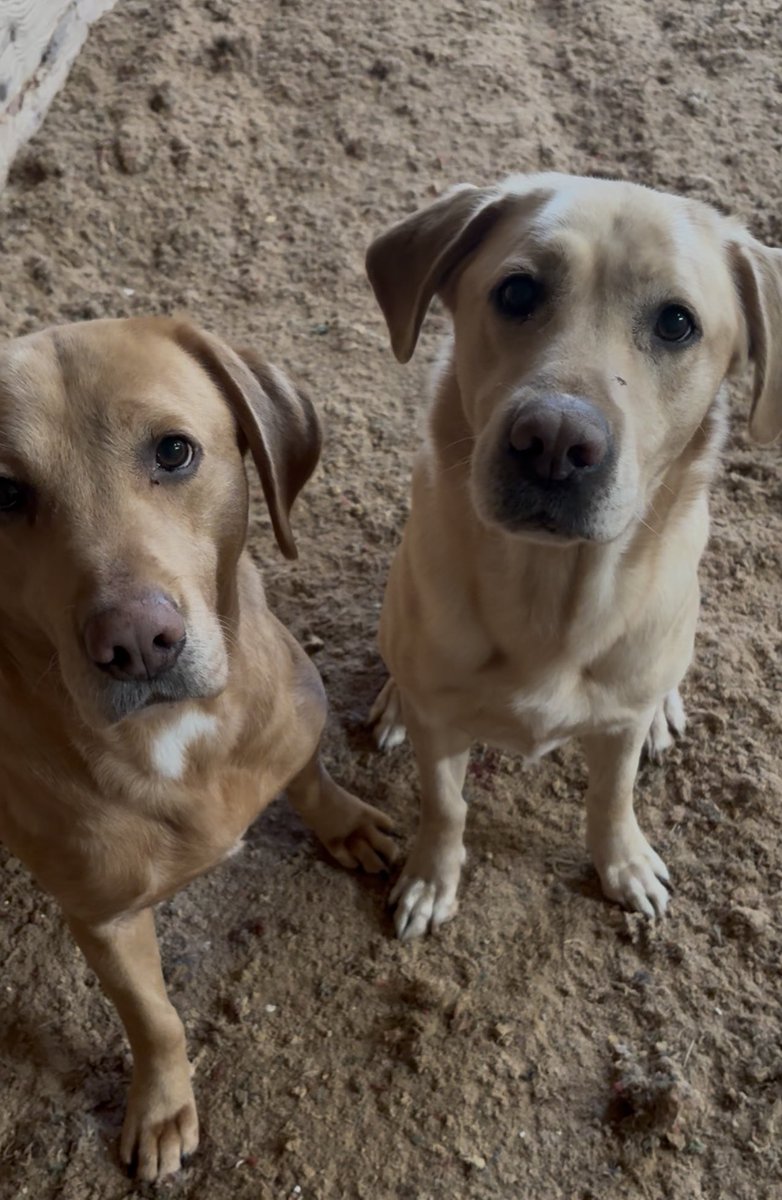
A few book entries on this video 🙄
Members of the Squad are not allowed to drag their arses on anything including sand 🙄
The senior squad member SGT Sydney dog allows one of his squad (Big Bruiser ) to be insubordinate 🙄
Book entries all round and loss of fruit rations for 24hrs 📕🙄
11
2
56
1,906
Thomas Ingram retweeted

Jun 10
Andrew Neil blames the SNP for Scotland being 'misinformation capital' of the UK and even gives an example scottishdailyexpress.co.uk/n…
27
139
507
12,959
Thomas Ingram retweeted

I grew up in a Hezbollah stronghold in Lebanon’s Bekaa Valley. Israel was not a country in my education. It was a crime. A wound kept open on purpose. Every funeral, every slogan, every sermon pointed in the same direction: there, across the border, is the source of your suffering. Believe it. Repeat it. Pass it on.
I believed it. I repeated it. For years.
Then I moved to France. And I met Jews.
Not the abstraction. Not the enemy. People. Neighbors. Colleagues. And the collision between what I had been taught and what I was seeing in front of me was so violent — so intellectually embarrassing — that I had no honest choice but to start over. To read. To ask. To dismantle, brick by brick, everything I had been given as truth.
What I found on the other side of that dismantling was not just the absence of hatred. It was something I had not expected: admiration.
Let me be precise about what I am defending and what I am not.
I am not defending every Israeli policy. I am not defending any government unconditionally. I am not asking anyone to check their critical faculties at the door.
I am defending what Israel is. What it represents. What it has built, against every conceivable pressure, in a region that has largely failed its own people.
Israel is a democracy in a neighborhood of autocracies. It is a state governed by law in a region where law is routinely weaponized against citizens. It is a country where Arabs sit in parliament, where women lead, where dissent is not a death sentence. It is imperfect — as every democracy is — but it is genuinely, structurally different from everything surrounding it.
That difference is not incidental. It is the point.
The so-called Palestinian cause, as it is prosecuted today, is not a national liberation movement. I say this not to dismiss Palestinian suffering; suffering is real, and real people pay its price. I say it because the infrastructure of the “cause” — its funders, its ideologues, its loudest champions — has never been interested in Palestinian statehood. It has been interested in Jewish elimination.
Look at who built the movement’s international architecture. Look at the 1997 Tehran OIC summit, where the language of “apartheid” was first systematically attached to Israel, not by Palestinians, but by the Iranian regime, for export. Look at Durban. Look at who profits when the conflict continues and who loses when it resolves. The answer is never the Palestinian family in Gaza. The answer is always the regime, the militia, the ideological infrastructure that needs the wound open.
The Palestinian cause, as it functions on the world stage today, is a tool of an anti-western civilizational project. Its goal is not a state alongside Israel. Its goal is a world without Israel, and, by extension, a world where the values Israel represents are defeated. Liberal democracy. Jewish self-determination. The idea that a small people can survive, build, and insist on their own dignity against the will of those who would erase them.
When western progressives march under that banner, they are not marching for freedom. They are marching for the annihilation of the only thing in the Middle East that resembles what they claim to value.
I came to Judaism slowly, the way you come to something true, not in a rush, but in accumulation.
It was not the politics that moved me first. It was the texts. The insistence, running through thousands of years of Jewish thought, that the human being is created in the image of G-d, and that this is not a metaphor but an obligation. An obligation to see the other. To argue. To question. To hold power accountable, including your own.
I had grown up in a culture where the highest virtue was submission. To the leader, the militia, the narrative. Judaism confronted me with the opposite proposition…
Read the rest of the essay on my Facebook page.

230
1,392
4,291
86,603
Jun 9
When wolves rape the daughters in the open streets and the shepherds prosecute the parents for crying out, the flock has no king only traitors wearing the crown.
It needs to stop … now …
3
16
179
3,099
Jun 9
So …..
Now Big Bruiser thinks he’s a horse 🐴 🙄
Which is against regulations ..📕🙄
22
6
177
4,780
Thomas Ingram retweeted

😂 Achmed the Dead Terrorist in Abu Dhabi hits different.
“Silence! I kill you!”
Crowd cheers and claps.
Then he sees the front row living in mansions with hot wives and starts rethinking the whole “blow myself up for 72 virgins” business plan.
“I had no idea these options were available!”
Jeff Dunham cooking the audience in their own backyard.
Absolute legend. 🤣
16
423
2,110
86,101
Thomas Ingram retweeted

Pinched from tik tok
20
68
259
22,827