
Joined December 2023
- Tweets 59,527
- Following 4,172
- Followers 5,710
- Likes 123,175
3,480 Photos and videos


Tomi of ROYAL LINE FOODS retweeted

The more you obsess over the outcome, the harder it is to achieve it.
Shift your focus to the daily actions, the process, and the results will come naturally.
Success is a byproduct of consistent effort.
13
32
122
1,873

Young Queen, Your words have weight.
Let them be your bond

Young King,
Keep your words and act with honour. If you can't keep a promise, be honorable and present a detailed explanation on why you can't meet up.
You are a king, not a Nigerian politician.
1
1
64
Thank you

Hello Ma'am
@lynn130415
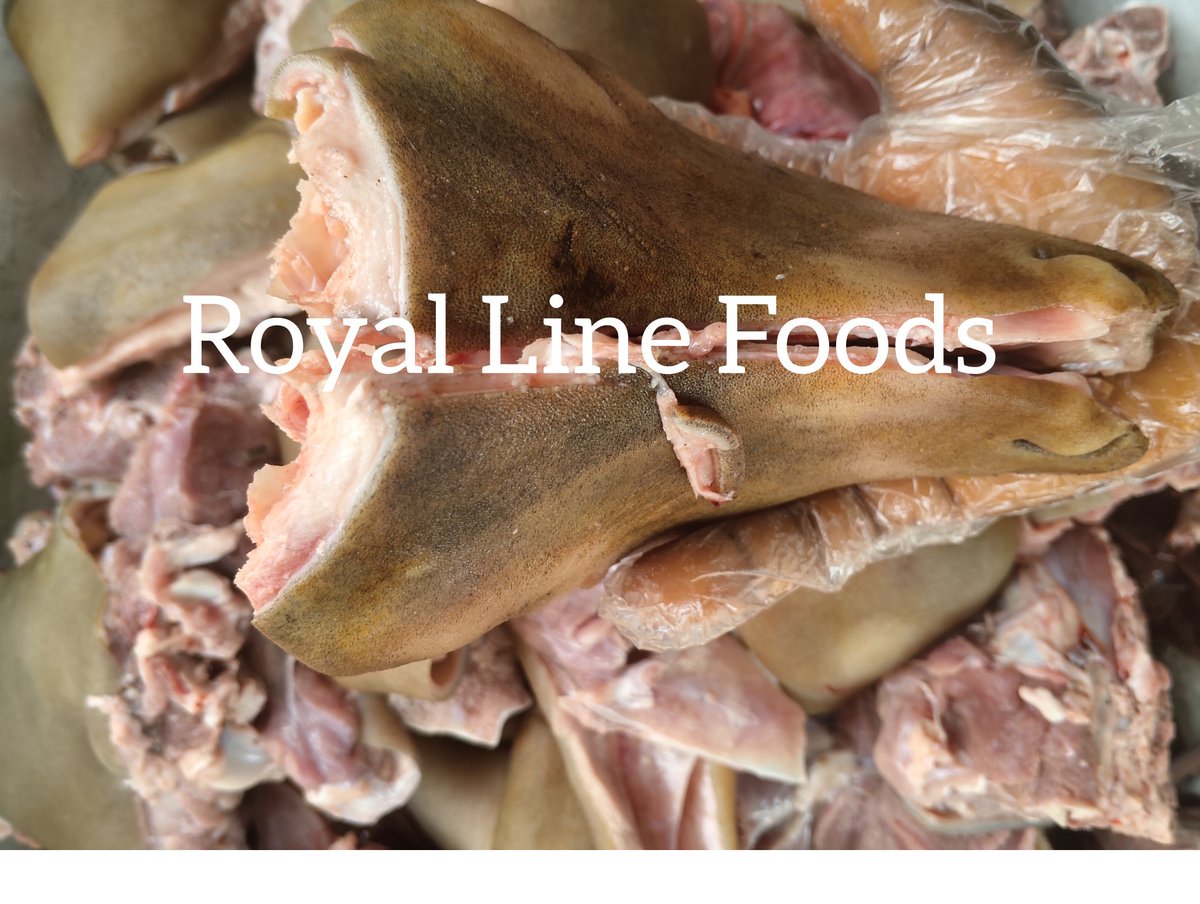
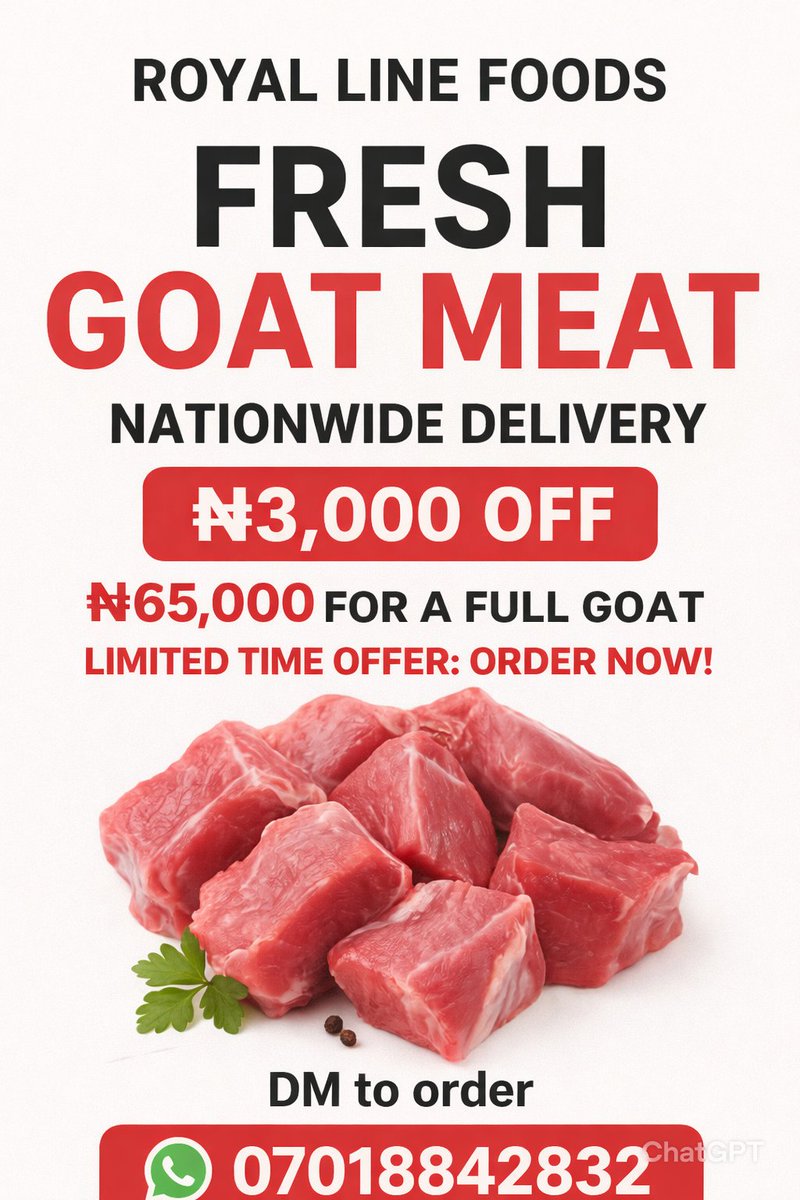
we will sell THE FULL GOAT to you at just 65,000 Naira.
The Head, Legs, Thighs, Intestines..... Everything!
You get the meat Cleaned, Portioned and FROZEN.
Let's deal Ma'am
07018842832
14
Nooooo
I am not at all

Are you joking?
77
Thank you so much
Doing business in Nigeria has taught me not to waste good seasons.
When sales are coming in, I think wise business owners shouldn't just celebrate. It's time to prepare.
You know why, I have learnt that volatile economies can cause a drastic change without warning.
Could be an unrest, fuel scarcity, increased cost of raw materials and many other factors.
That’s why sustainability matters.
The goal is not just to make money during good times.
The goal is to build a business that can survive tough times too.
Small habits make a difference:
✔ saving or investing during profitable periods
✔ treating customers well
✔ reducing waste
✔ learning multiple ways to sell
✔ staying visible even when sales are slow
In business, consistency is a superpower.
For me ehn, I need to work on learning multiple ways to sell and staying visible.
As a business owner, What do you need to improve on?
P.S I am carrying A FULL RAM. Oven Dried to perfection. Delivered to Port Harcourt.
Price 180,000
Got Meat needs?
Local or Export...
Reach out here. wa.me/2347018842832
24
🤣🤣 moral of the story
Buy a goat
This is ... One of the reasons the laziest people on earth are people with girlfriends.
Having a babe can make you lazy. Productivity just starts declining somehow.
When you have something that puts food on your table, you treat it like a job. You wake up early, stay committed, and make sure it survives.
If you own a goat, you'll wake up by 6 a.m. without hesitation. No alarm needed. That goat must eat.
But with a girlfriend...? Before you know it, your whole day is gone. You're on calls, replying messages, settling misunderstandings, and discussing things that happened in dreams.
At least a goat won't ask, "So you've changed...?"
1
1
29
Business Owner... Read this
Competing on price is race to the bottom.

Uber was the first to touch down in Nigeria. They were doing well... until Bolt caught wind of the opportunity.
Bolt studied the market closely, watched what Uber was doing, and more importantly, what Uber wasn’t doing.
Then they made their move.
But before we get to the game Bolt played, let’s look at Uber’s game:
Uber had two customers to satisfy: the passengers and the drivers.
But maybe without knowing, they started treating passengers as the real customers and drivers as just the workforce. In a way, they weren’t wrong. But they missed something critical.
Drivers began to complain about the commission cuts, about how little attention they were getting.
Still...
Uber kept their standards high. Clean cars, professional drivers, and screened vehicles with specific requirements.
It worked.
Back then, driving Uber was a status thing. If you were behind the wheel, you were somebody.
Everything ran smoothly.
Then Bolt entered.
They didn’t sneak in quietly at all. They showed up with a loudspeaker, offering lower cuts for drivers than Uber.
Drivers checked, downloaded both apps, and compared earnings.
You guessed right.
Bolt was treating them better.
And gradually, the drivers migrated.
Bolt, who came to share the market, ended up owning most of it.
But the game wasn’t over.
Then, Vroommmmm!
InDrive arrived.
They looked at Bolt and Uber... and undercut them both. Even better, they gave passengers and drivers a chance to negotiate, turning rides into a real marketplace.
Now it got messy.
And at one point, you’d open Bolt… and there’d be no drivers.
Why?
They were busy on InDrive.
Suddenly, all three companies weren’t fighting for passengers anymore. They were fighting for drivers.
And in that fight...
They all lost.
Today, a typical Bolt, Uber, or InDrive ride feels no different from a regular roadside taxi.
Except that you don't have someone choking you from the sides of the seats.
Don’t expect a working AC. Don’t wear white unless you want it stained.
The ultimate comfort is gone.
And look at something:
None of these companies is doing anything today that truly resonates with passengers, nor with the drivers.
Drivers show up in tattered and dirty clothes, looking unkempt.
People don’t open the app because they love the service anymore.
They open it because they have somewhere to go.
And it’s no longer which service do I enjoy...
It’s simply who’s closest to me.
That’s what a messy competition can do.
It lowers the standard for everyone.
Now imagine...
If Uber had taken a different path.
As Bolt dropped driver percentages, Uber could’ve gone up... Upped their standards, tightened vehicle requirements, introduced quarterly inspections. Kept only newer, cleaner cars.
Yes...
Maybe at a slightly higher price, but for a market segment that values comfort, that could’ve been a golden opportunity.
Remember also:
This isn’t a Western market, and it’s different here.
In Nigeria, many still see ride-hailing as a luxury or only a necessity when in a rush.
But there’s also a large group: car owners who don’t always want to drive. The elite, the rich, and corporate businesses who rely on these services for transport.
Imagine if one company had held that premium standard. Today, they’d dominate that space.
And now... if you’ve been paying attention, you’ve already learned a few things along the way.
But I’ll break them down clearly, one by one:
Competing on price alone is a race to the bottom.
Bolt dropped prices, InDrive dropped them further.
Now, nobody wins (they might be making profits, but value is gone). Compete on value, not just cost.
Standards set you apart, especially in a crowded market. If Uber had doubled down on car quality and experience, they could’ve owned the premium lane. There’s always a segment willing to pay for better.
React fast, but also think forward.
When new players enter, don’t just copy; strategize. Anticipate where the market is going, while considering your demographics.
In whatever, show your workforce they are your strength.
.
.
.
See You Again Next Time.
I'm The Mad Profit Guy.
7
Apt. 👍
Another thing that has helped me with my enterprise is rendering services.
I didn't have money to start a business, but I knew it was business or nothing...
So I got a job.
The job wasn't enough to fund the business at that time...
So I took a loan from a friend, which I serviced with my salary from my job.
I built the business till it started paying me twice my monthly salary after about 2 years.
So, I quit my job.
And since then, I have been doing my own thing.
This might be a good way to go into business if you don't have money of your own.
59
Tomi of ROYAL LINE FOODS retweeted
Apply for the 2026 MT Scholarships 👇
I wish you the very best.
form.jotform.com/mtscholarsh…
33
180
518
32,751
Tomi of ROYAL LINE FOODS retweeted

Whether you're 20, 30, 40, 50, or older, it's not too late.
You can still make it.
Don't be discouraged.
8
16
18
184
Tomi of ROYAL LINE FOODS retweeted

Good morning!
The mind is where the magic happens!
Have a wonderful day ahead
36
41
56
623
Tomi of ROYAL LINE FOODS retweeted
5
17
29
249
Doing business in Nigeria has taught me not to waste good seasons.
When sales are coming in, I think wise business owners shouldn't just celebrate. It's time to prepare.
You know why, I have learnt that volatile economies can cause a drastic change without warning.
Could be an unrest, fuel scarcity, increased cost of raw materials and many other factors.
That’s why sustainability matters.
The goal is not just to make money during good times.
The goal is to build a business that can survive tough times too.
Small habits make a difference:
✔ saving or investing during profitable periods
✔ treating customers well
✔ reducing waste
✔ learning multiple ways to sell
✔ staying visible even when sales are slow
In business, consistency is a superpower.
For me ehn, I need to work on learning multiple ways to sell and staying visible.
As a business owner, What do you need to improve on?
P.S I am carrying A FULL RAM. Oven Dried to perfection. Delivered to Port Harcourt.
Price 180,000
Got Meat needs?
Local or Export...
Reach out here. wa.me/2347018842832
6
9
149
Tomi of ROYAL LINE FOODS retweeted

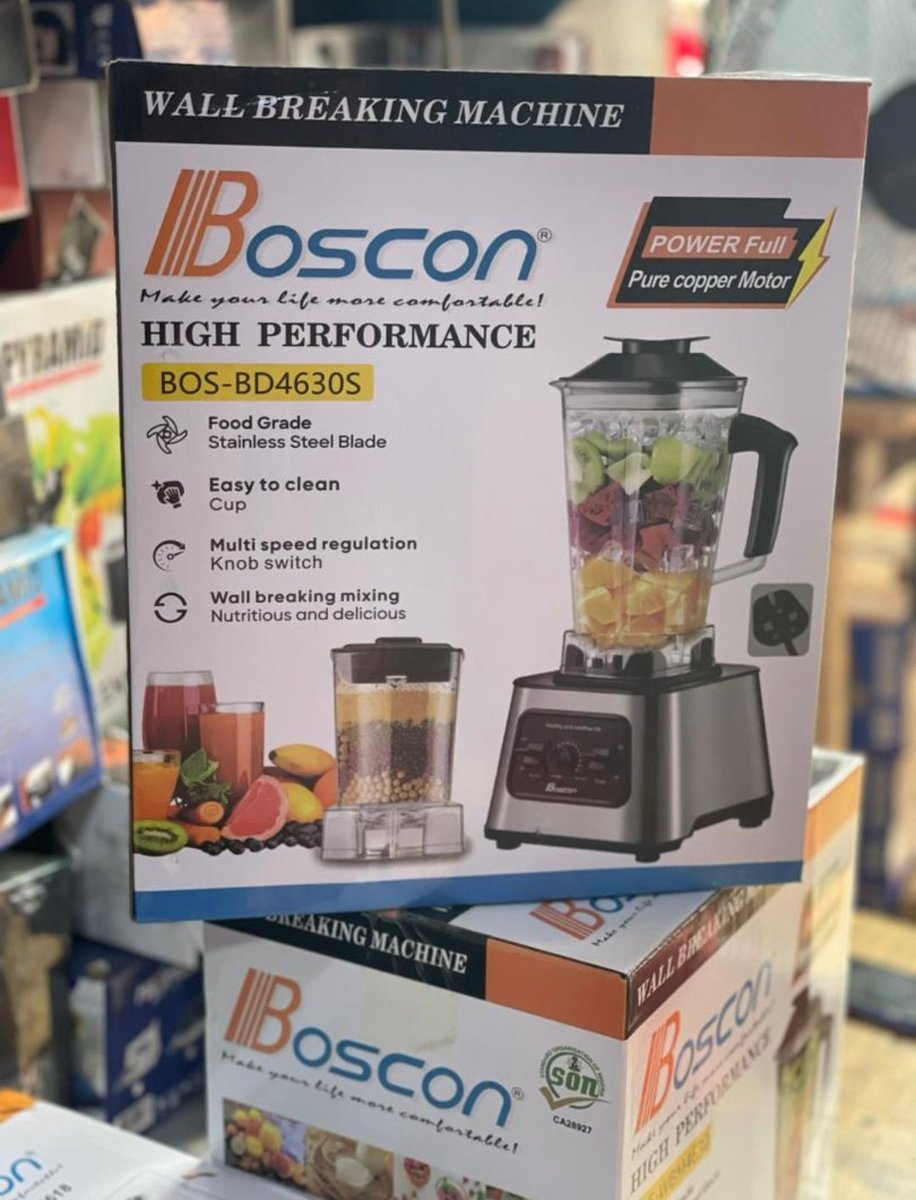
Boscon
High Performance blender
45k
Location is ibadan
Nationwide delivery

Algorithm is poor, so you don't want to show up??
Consistency is another part of business.
What are you selling today?
Drop it & support others.
11
85
83
836
Thank you sir
Jun 15
In this economy, every smart saving matters.
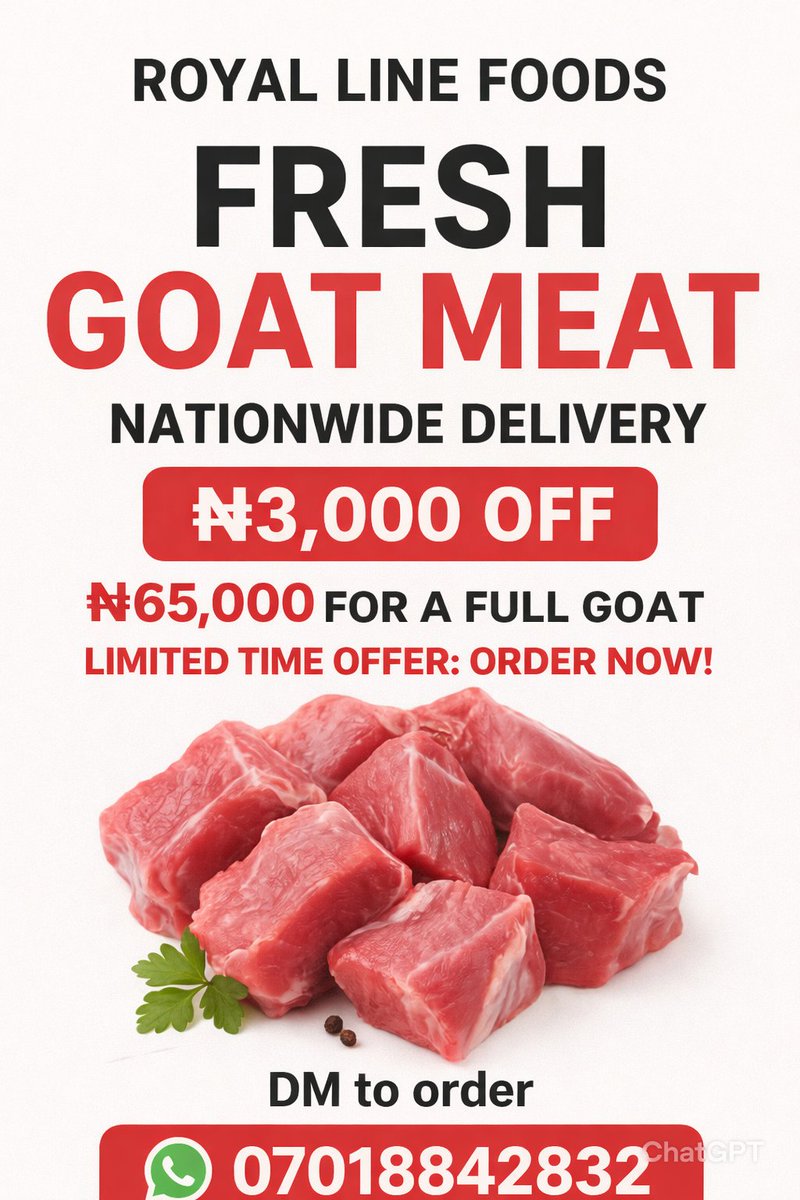
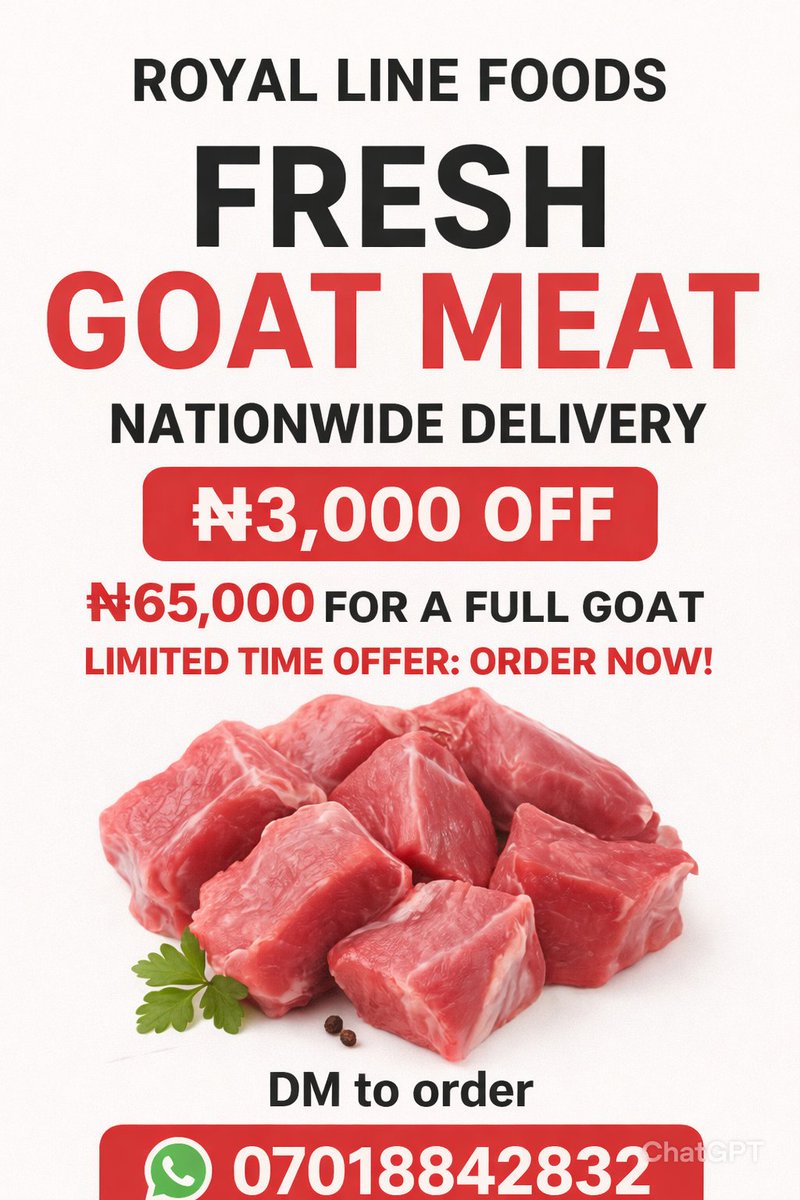
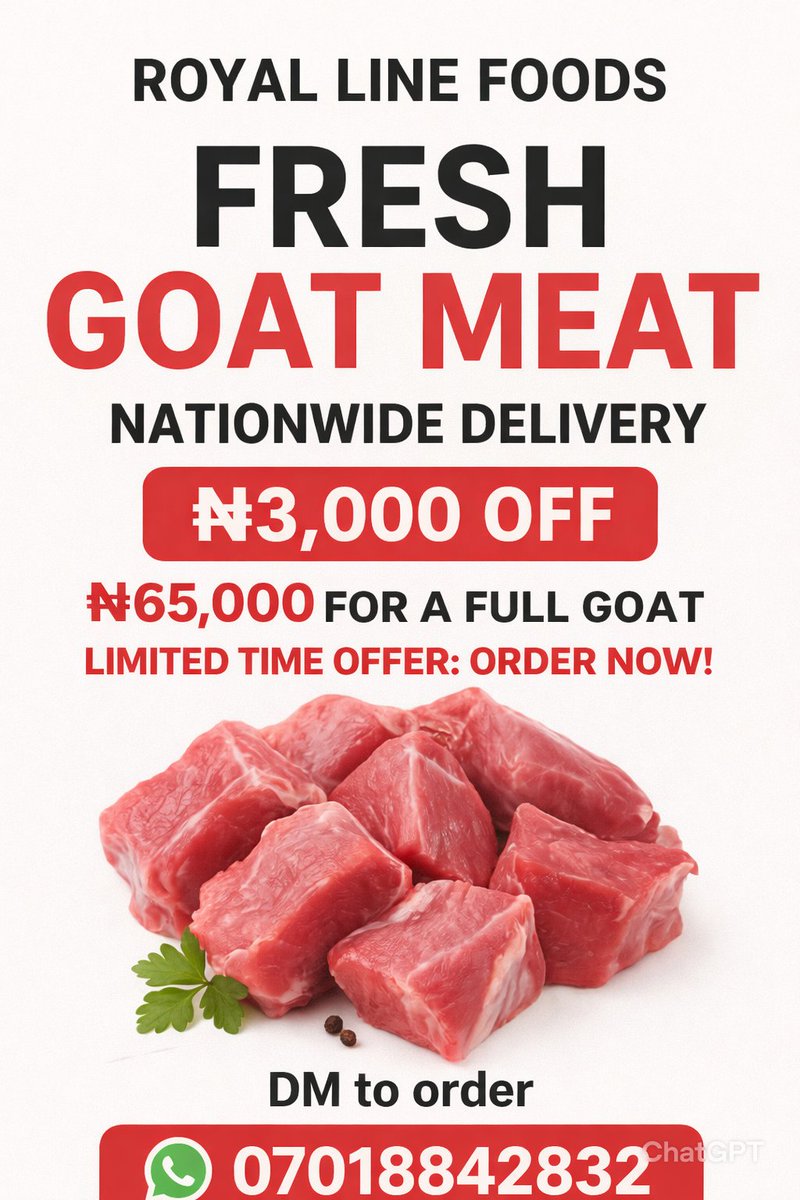
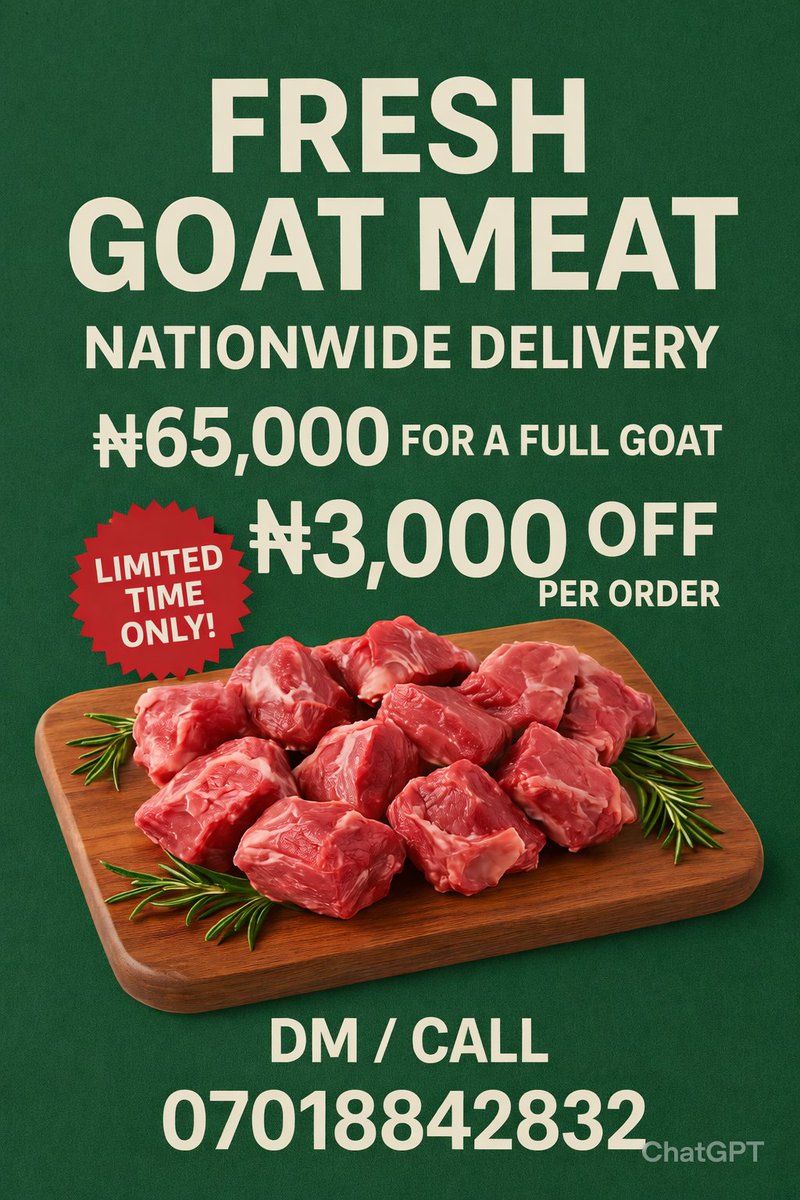
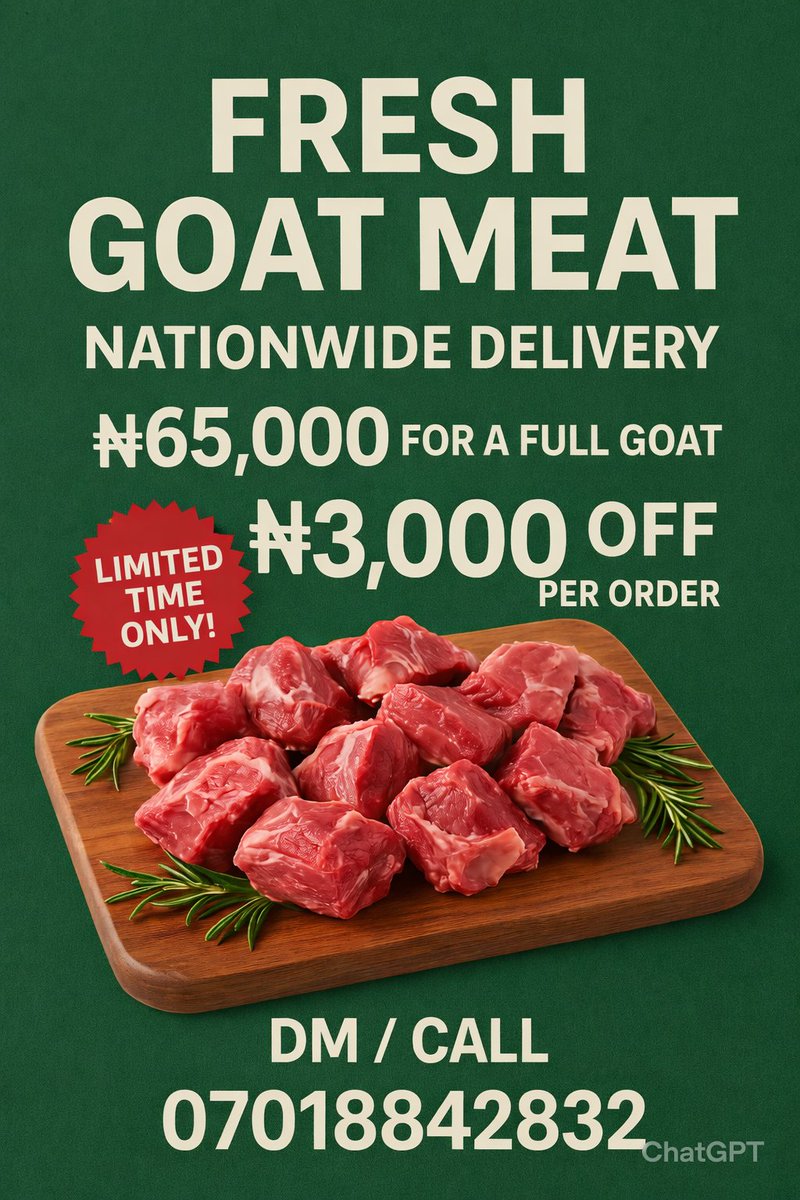
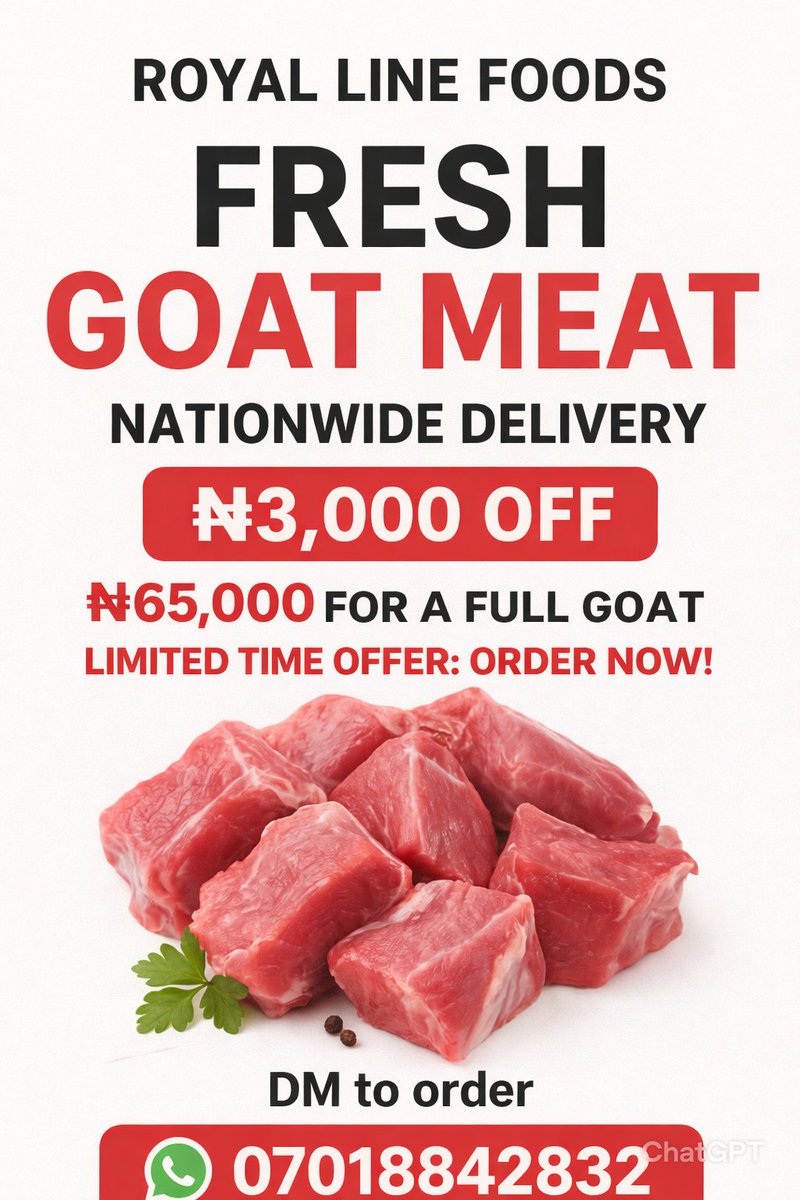
We are in this with you and that’s why we decided to reduce our FRESH GOAT MEAT PRICE by ₦3,000.
You get A FULL GOAT for 65,000(Washed and Cleaned)
Are you a family person, Afood vendor, a grill lover... You can enjoy quality meat without stress ❤️
Good food should still be accessible.
Orders open now.
wa.me/2347018842832
34
Hello Ma'am @lynn130415 we will sell THE FULL GOAT to you at just 65,000 Naira.
The Head, Legs, Thighs, Intestines..... Everything!
You get the meat Cleaned, Portioned and FROZEN.
Let's deal Ma'am
07018842832
Jun 15

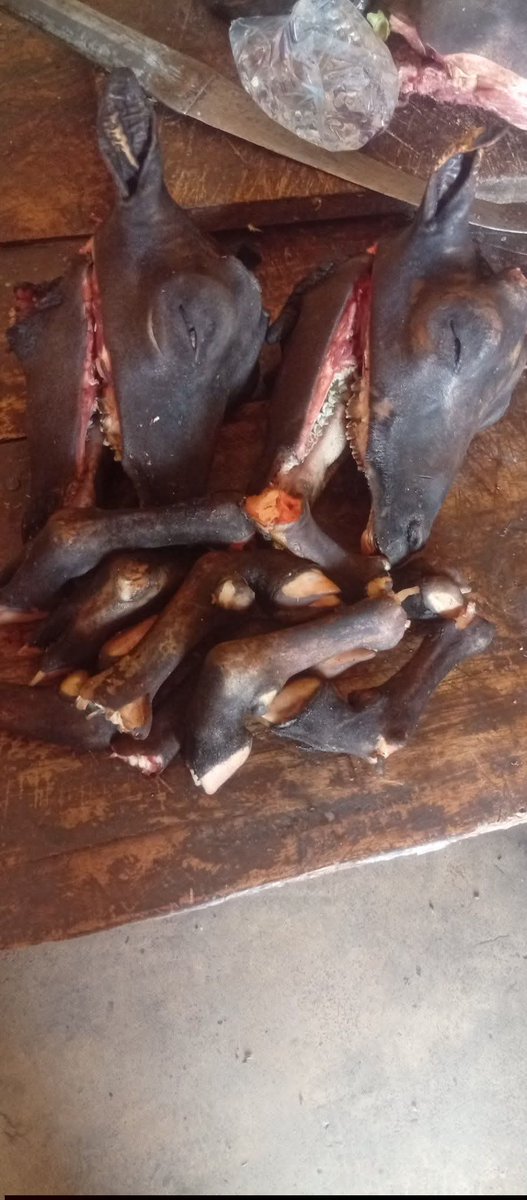
I'm in my customer's shop now, he said I should pay 9k for this. But, I'm trying to price it down to 6k. Is 6k a fair bargain?
1
2
5
529
I really want to be an adult O my people.
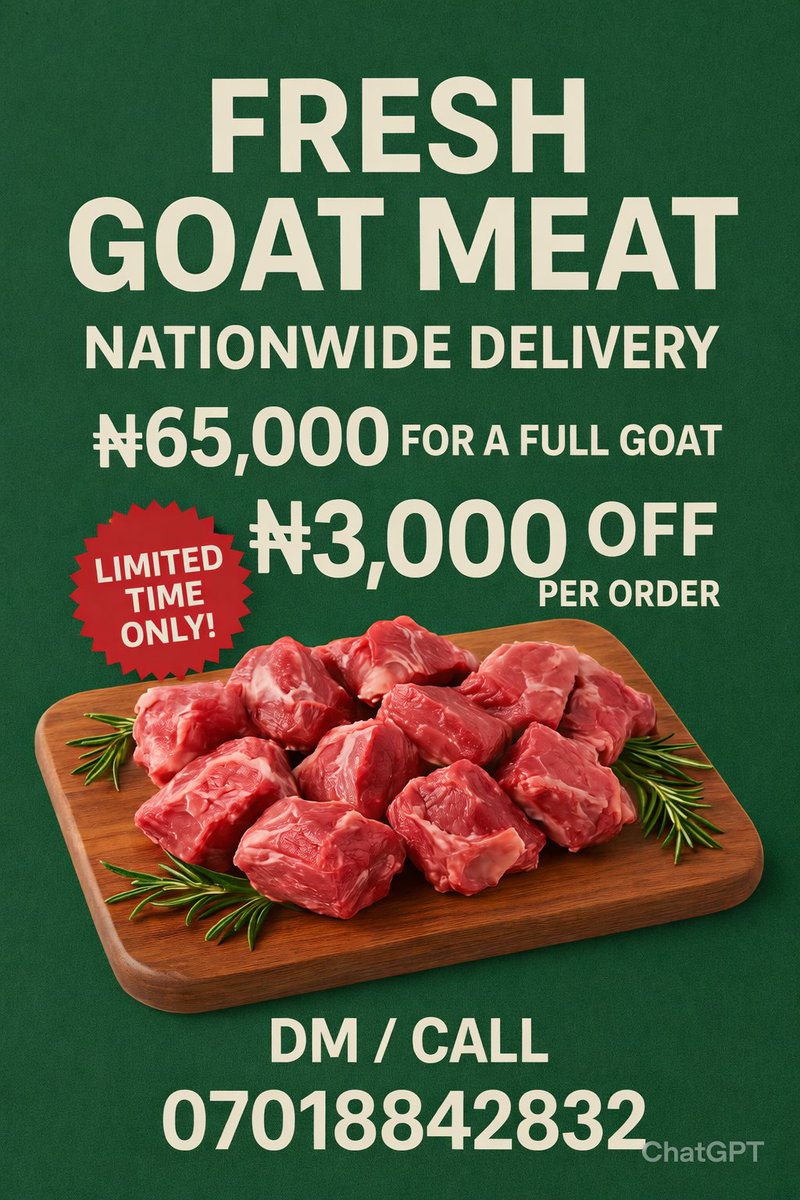
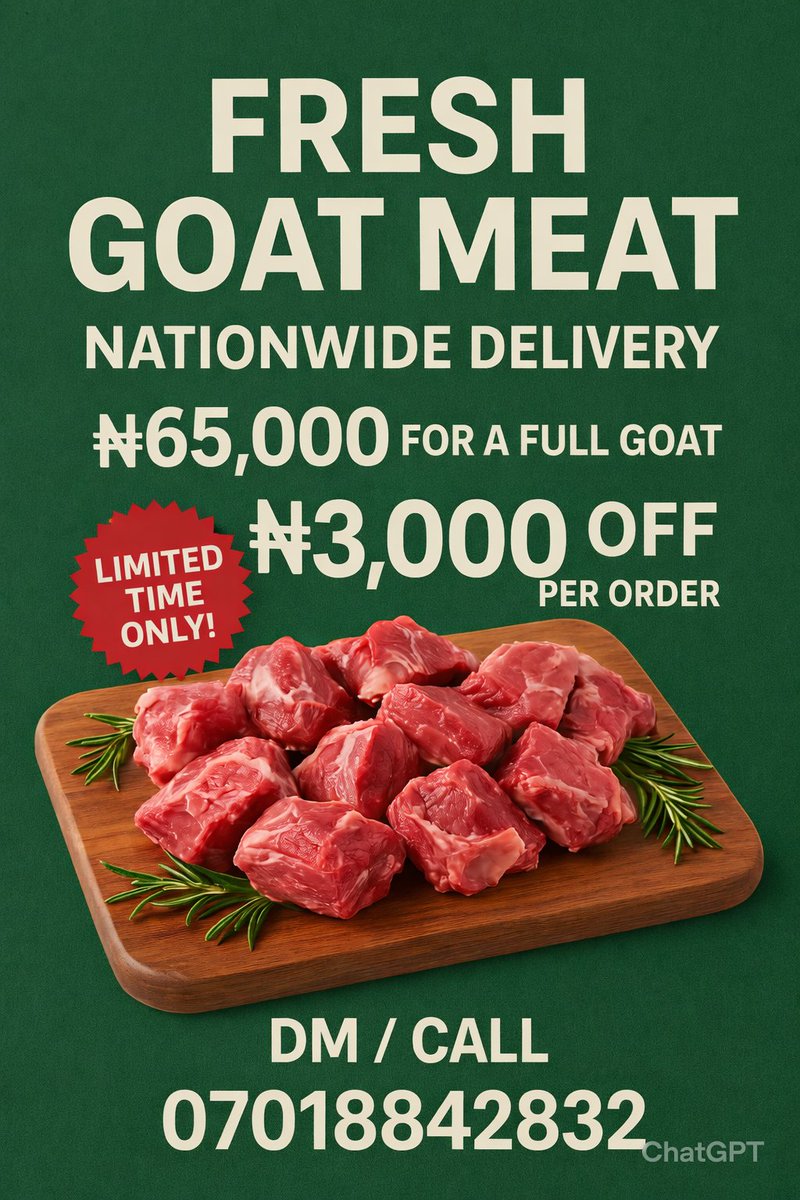
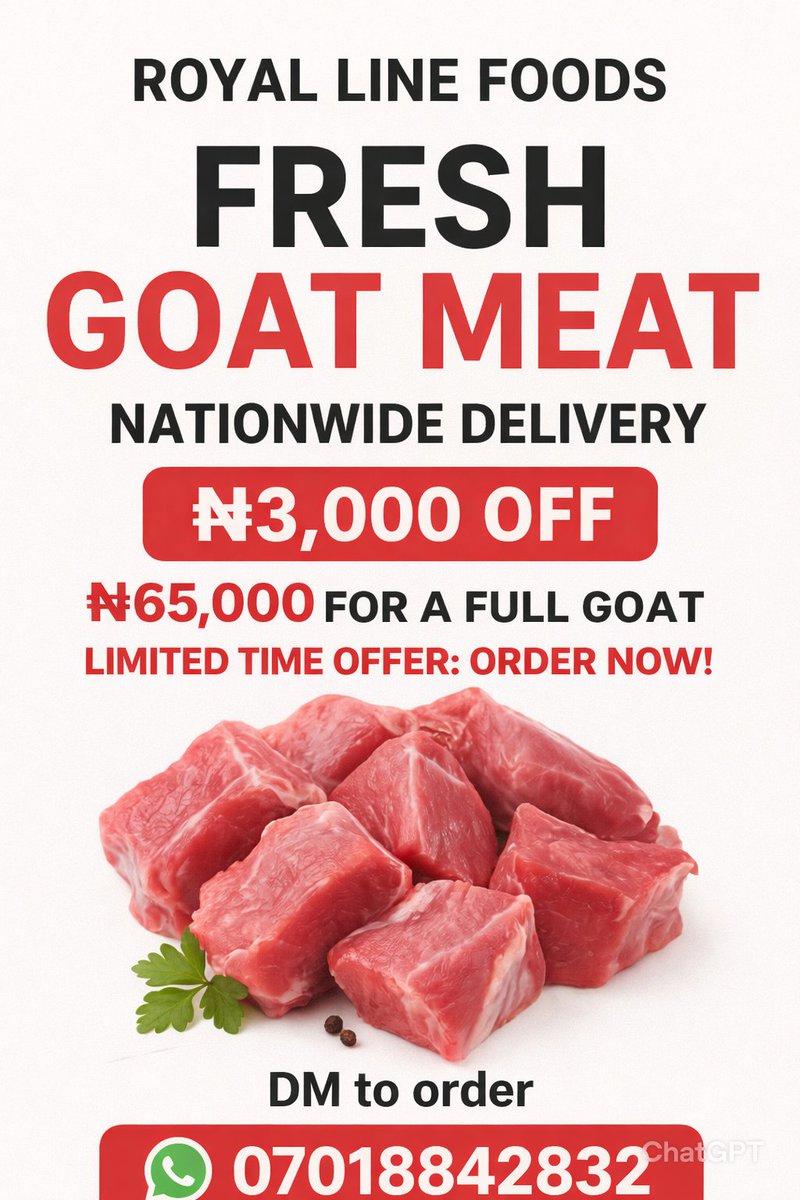
I am here with sweet FRESH GOAT MEAT deals.
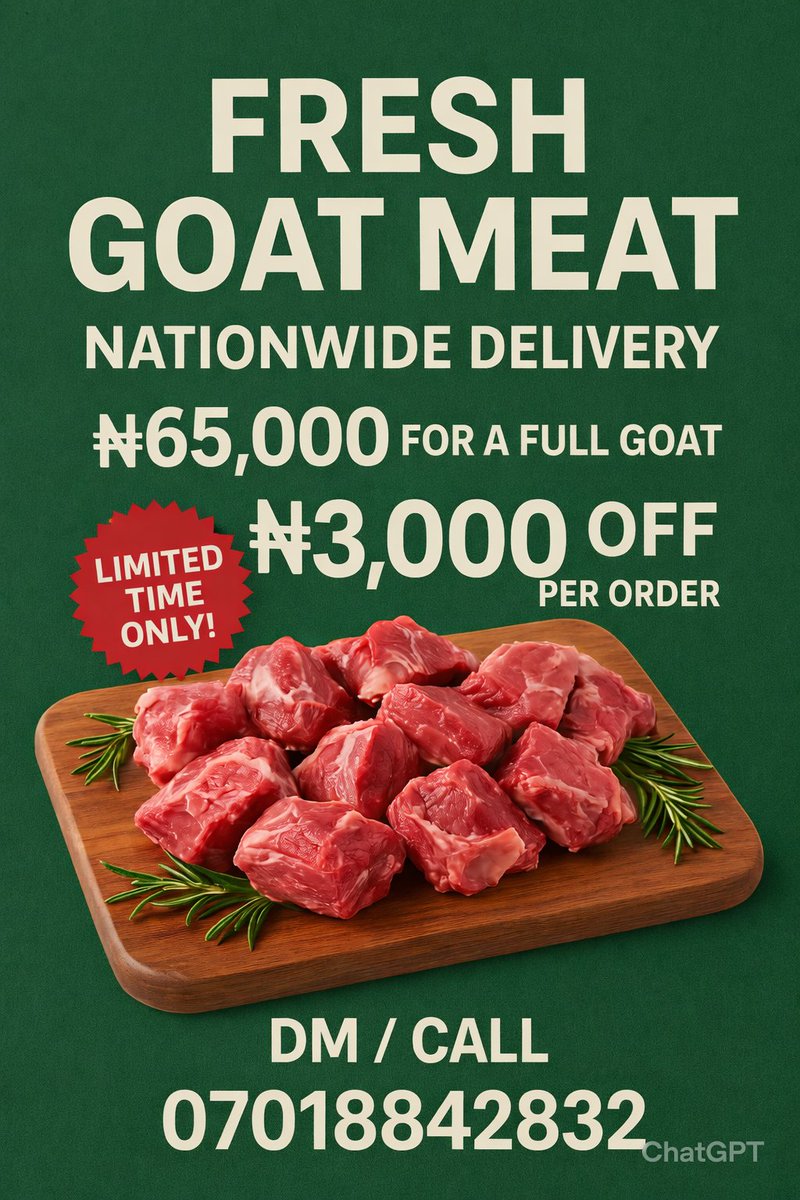
65,000 for A FULL GOAT.
Processed. Cleaned. Packaged
Let's get your freezer stocked.
Limited slots available.
wa.me/2347018842832
Jun 15

"I support my man in every little way, I can support."
"No matter how little, but something for your man."
"How can you close your eyes and watch your man pay all the bills? Even if it is Maggi for soup, do something, no matter how little"
Na that "little" I no want. I dey forbid am. Why is every financial input you want to make in your relationship and marriage "little?" I want my partner's support in every way possible. You dey forbid to do big thing? Where is the partnership?
You're an adult. I expect you to behave like an adult and that includes, sorting bills.
1
85
Tomi of ROYAL LINE FOODS retweeted

Jun 15
Good morning !!!
Never knew they made my video yesterday when i was checking the sex of the rabbits and trying to sort them in the new cages. Love this so much ❤️
1
3
12
316