
The Future of AI is Interactive - Build, Connect, Deploy, Govern, Improve.
Joined March 2025
- Tweets 69
- Following 6
- Followers 10
- Likes 0
40 Photos and videos


Jun 10
Five agents in production is a milestone. Fifty is an entirely different problem.
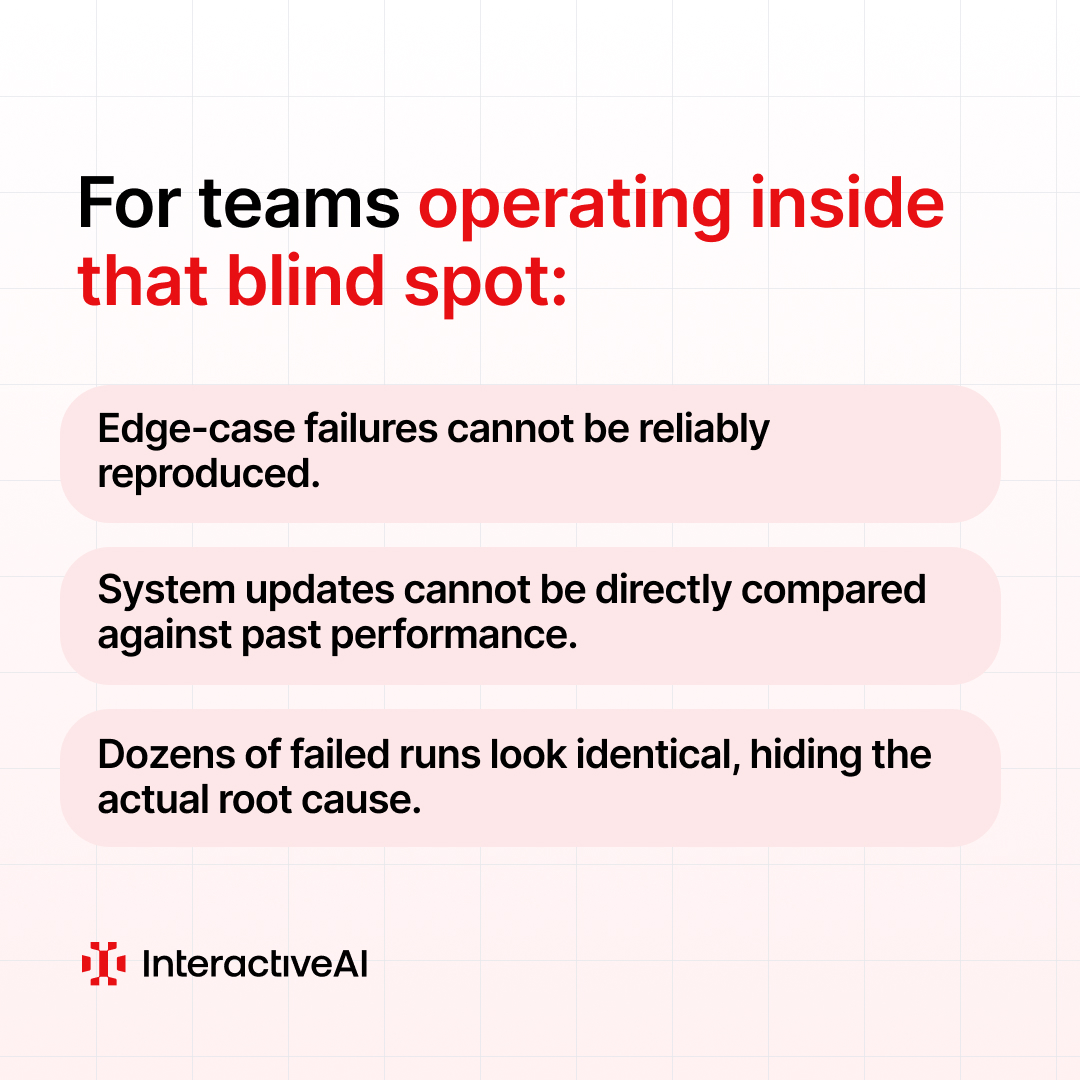
The teams stuck between the two rarely have a model problem. They have a visibility problem. They find themselves trapped in a loop where:
- They can’t reproduce the edge-case failures.
- They can’t compare two versions on the exact same task.
- They can’t tell which of last week's forty failed runs broke for the same reason.
That's how the entire program slows down with fewer experiments per week and more cautious releases resulting in the roadmap quietly shrinking.
Observability is what breaks that cycle.
With reproducible runs, every failure is replayable with full context. When you can compare executions side-by-side, a new prompt or model swap has to prove its value. You spot failure modes in minutes, not after a week of digging around to reconstruct what happened.
The teams scaling fastest aren't winning because they have better models. They’re winning because they treat observability as a baseline, not an afterthought.
Without it, you're just guessing on the next experiment. With it, every failure tells you exactly what to build next.
#EnterpriseAI #AIObservability
2
24
Jun 10
Five agents in production is a milestone. Fifty is an entirely different problem.
If your AI team is stuck between the two, you rarely have a model problem.
You have a visibility problem. 🧵
1
7
Jun 10
Observability breaks this cycle.
With reproducible runs, every failure is replayable with full context. When you can compare executions side-by-side, a new prompt or model swap has to prove its value.
You spot failure modes in minutes, not after a week of digging around to reconstruct what happened.
1
5
Jun 10
The teams scaling fastest aren't winning because they have better models.
They’re winning because they treat observability as a baseline, not an afterthought.
Without it, you're just guessing. With it, every failure tells you exactly what to build next.
#EnterpriseAI #AIObservability
3
Jun 4
An AI demo proves nothing about how a system holds up under real volume, real data, and real consequences.
The only truth is production.
Yet, enterprises still buy the illusion. Systems that perform flawlessly in a pitch collapse under volume, messy edge cases, and compliance rules.
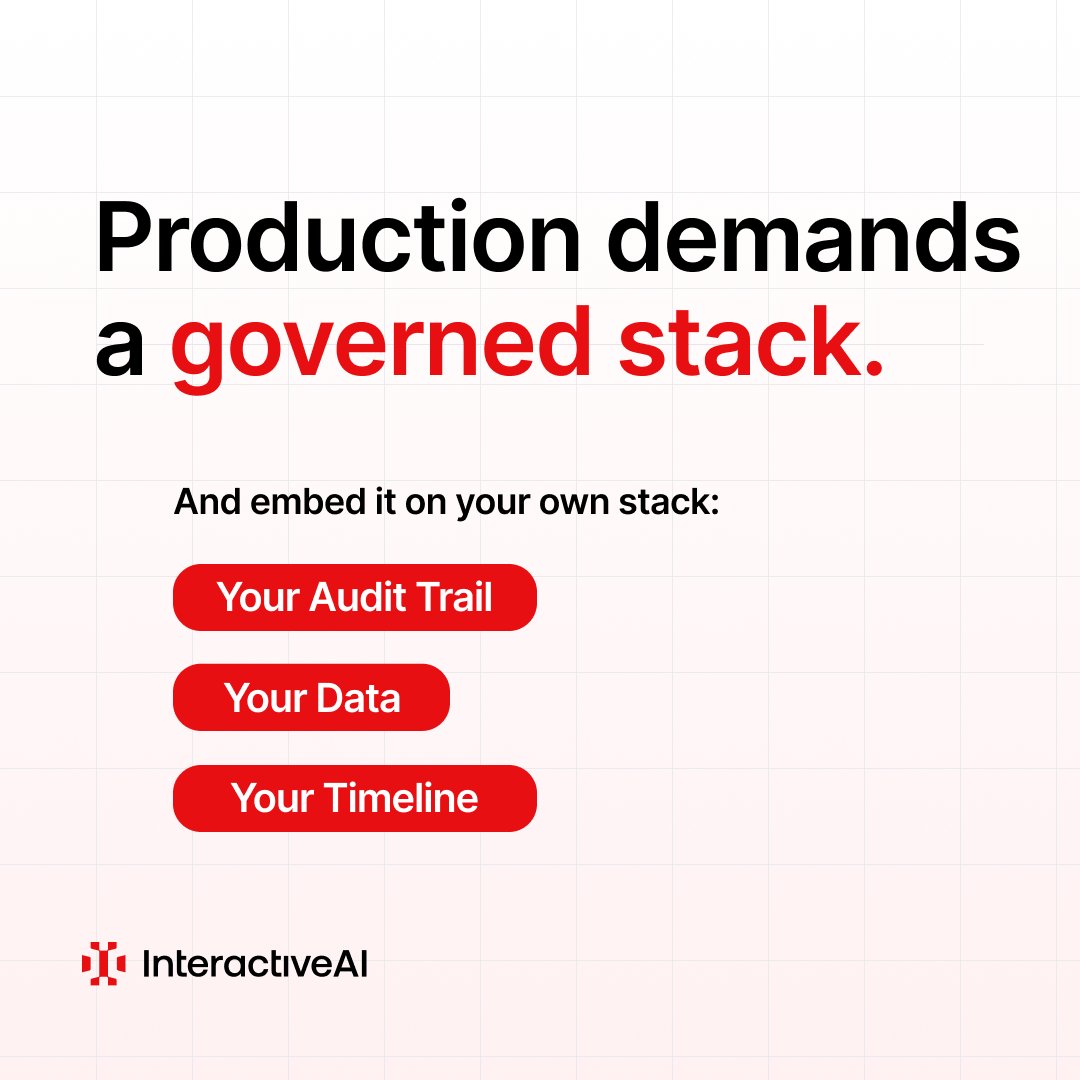
The solution is to take control of your stack. Evaluate on your terms:
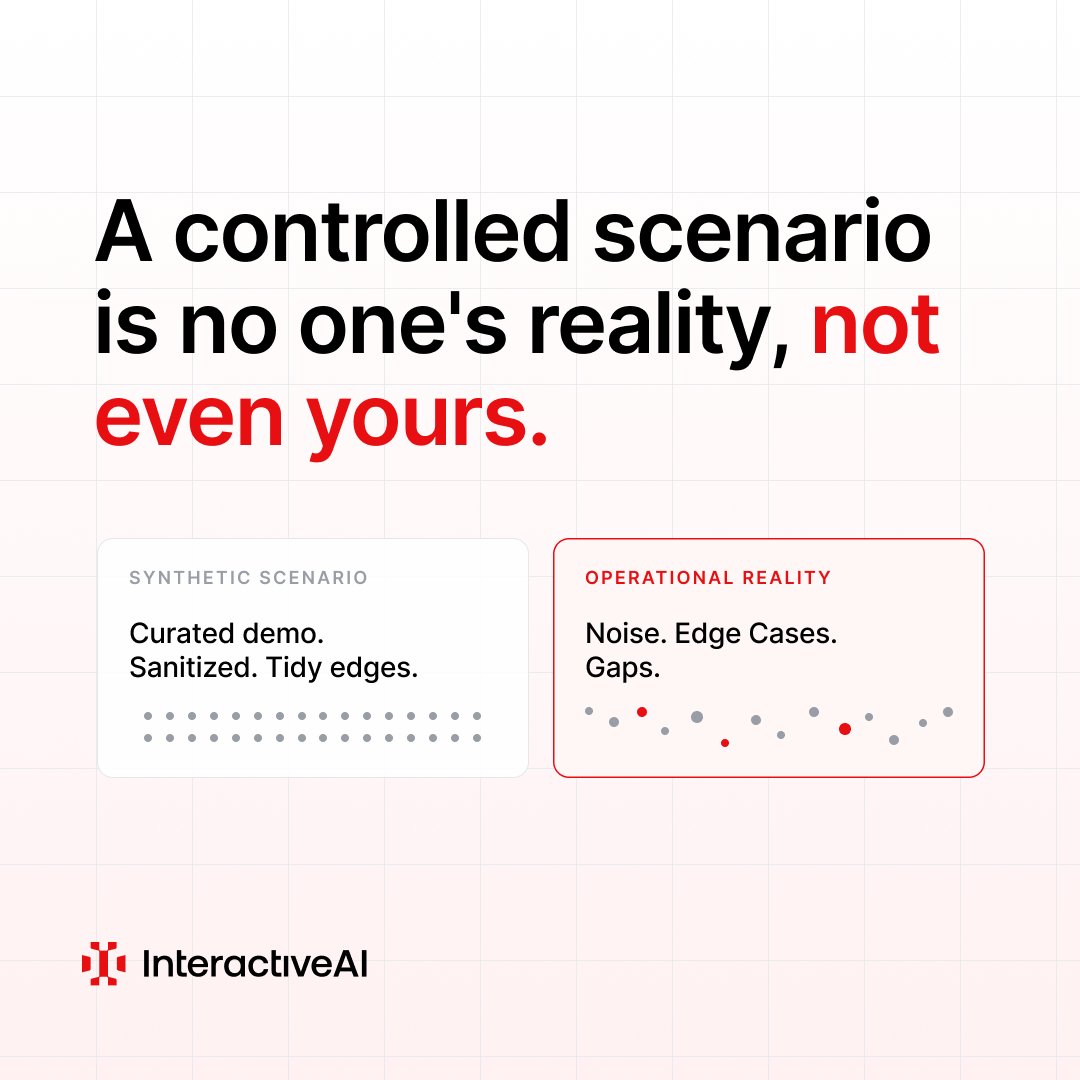
- On your data: Not a sanitized vendor sample. Use your real operational datasets with the noise, gaps, and long-tail anomalies. If it can't handle your mess, it can't run your business.
- On your timeline: Scope pilots in weeks, not quarters. If a pilot requires a year and a custom pipeline, it’s not a pilot—it’s an architectural trap.
- With your teams: Embed governance and traceability before production, not bolted on after.
If you can't deploy on your data, your own timeline, and control the logic, you're probably not building an AI system ready for production.
The teams winning right now aren't deploying chatbots. They are building governed, agentic systems directly into their own stack.
Are you buying a demo or actually building your own AI engine?
#EnterpriseAI #InteractiveAI

15
Jun 3
The fastest way to break a production AI agent? tell it exactly what to do.
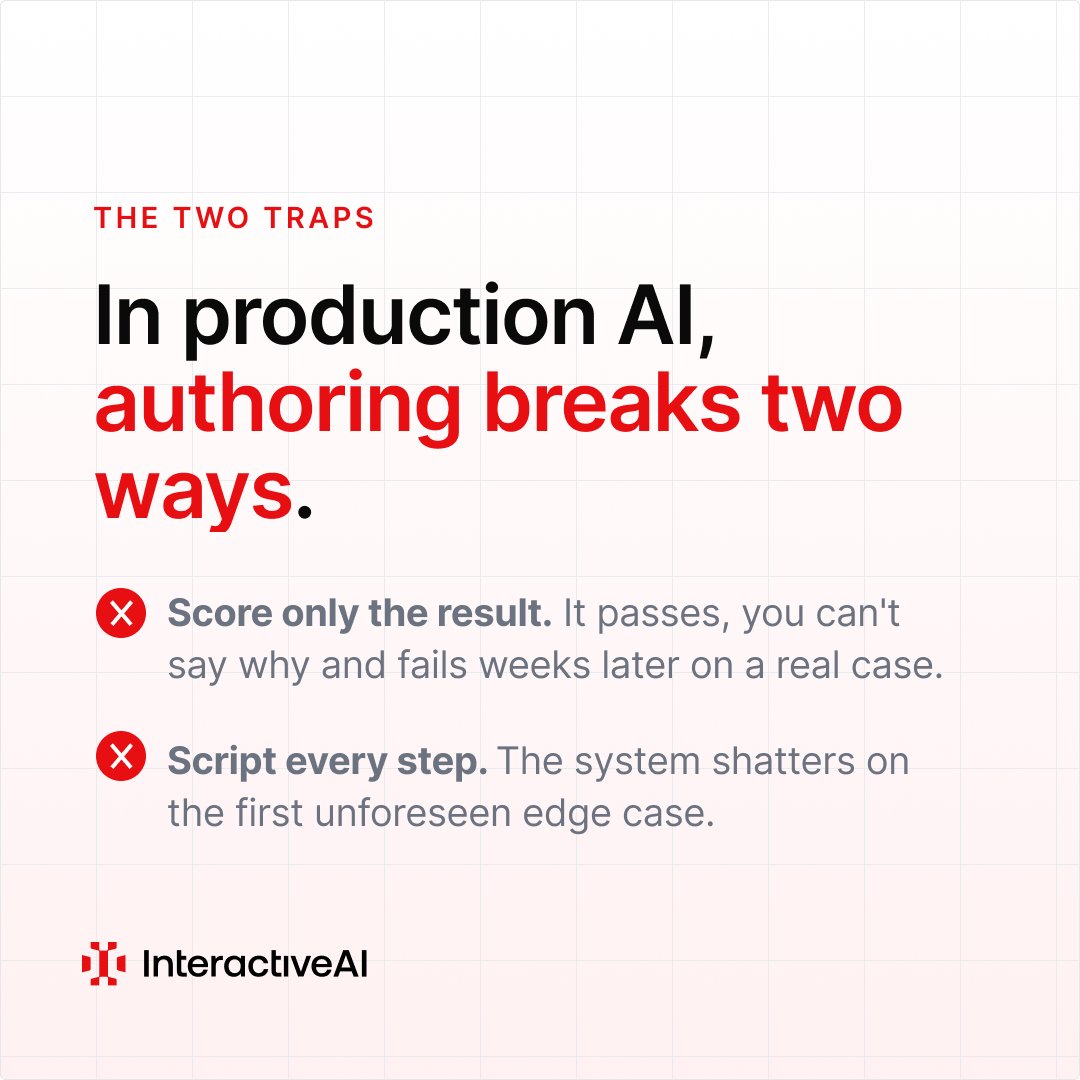
Two opposite ways to get authoring wrong.
Score only the final answer → the agent passes and you have no idea why. The false pass ships, and the bill lands three weeks later.
Script every step → you encode every case the expert imagined, and it breaks on the first one nobody saw. Edge cases are unforeseeable by definition.
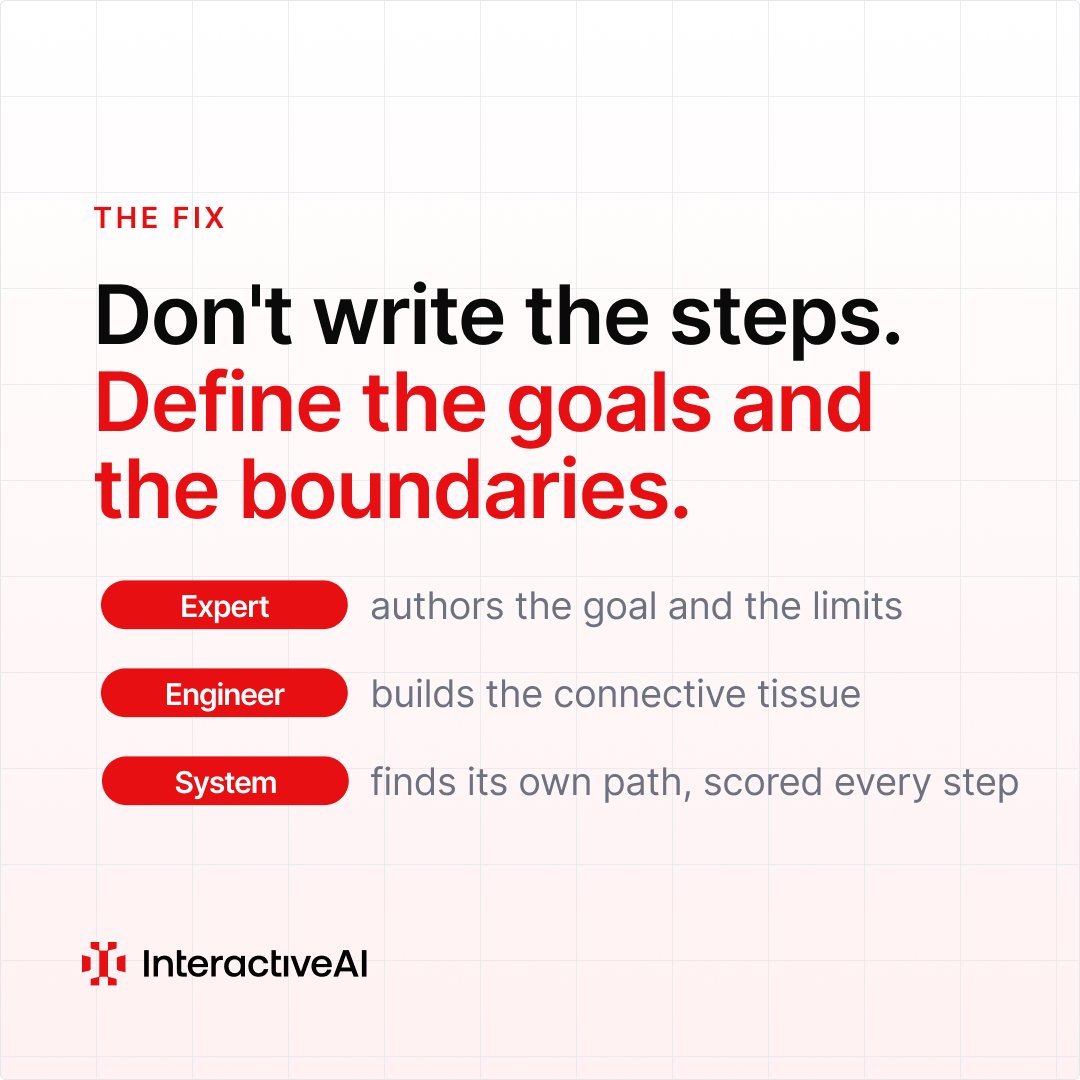
Production AI works differently. You don't write the script. You set the destination and the fence, then split the work:
— the expert defines the outcome and the boundaries: what's allowed, when a human takes over
— the engineer builds the integrations and infrastructure
— the system finds its own path inside the boundaries, measured step by step
Procedure-driven automation cracks the first time reality doesn't match the script.
An agent built on goals and boundaries keeps working and tells you exactly where it bent.

25
Jun 2
The most unreliable AI agent isn't the one that fails. It's the one that passes for the wrong reasons.
The evaluation gap most teams miss with production AI agents 🧵
1
13
Jun 2
When each step is scored on its own, a failure points straight to where it broke. No guessing.
End-to-end scoring tells you an agent failed. Step-level tells you why.
1
4
Jun 2
That's the difference between hoping your next release is better, and knowing exactly what to fix.
#AIAgents #AISystems
4
Jun 1
Where does AI actually belong in a hospitality operation?
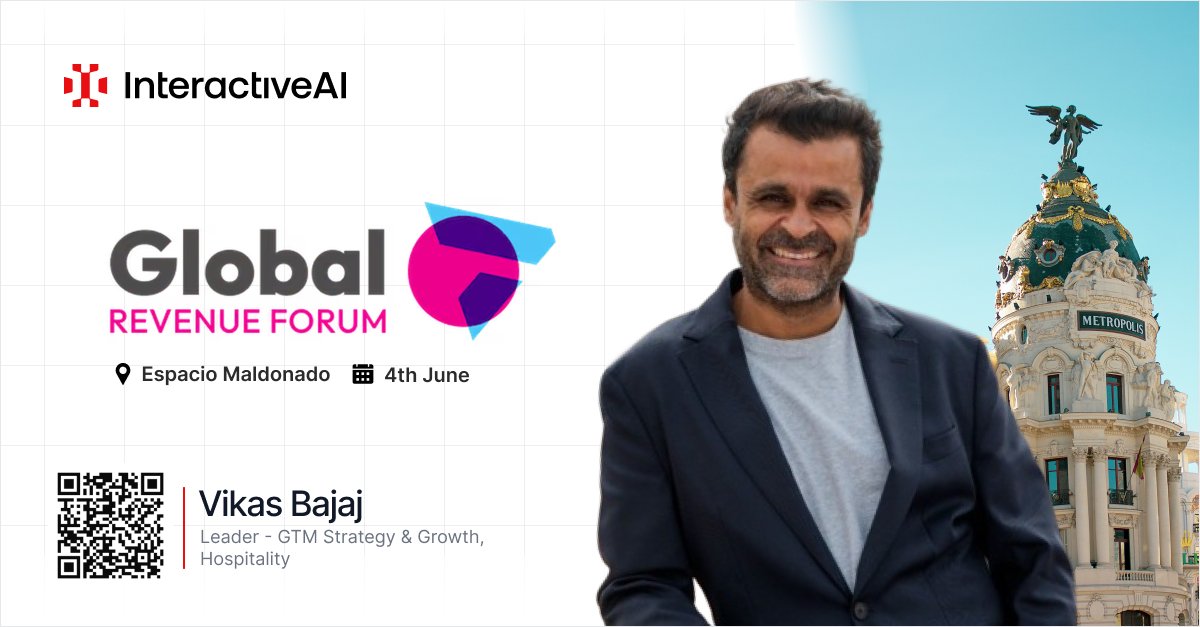
On June 4, our team will be at the Global Revenue Forum 2026 in Madrid to be part of that conversation.
Vikas Bajaj, our Leader of GTM Strategy & Growth in Hospitality, will be at Espacio Maldonado for the day. He's meeting with the commercial leaders shaping the next generation of hospitality.
If you are attending, reach out to him!
#GRFMadrid2026 #GlobalRevenueForum #InteractiveAI #Hospitality #EnterpriseAI
12
May 26
Most enterprises don't have an AI strategy. Their AI vendor does.
Relying on black-box "embedded AI" leaves you completely dependent on someone else's architecture.
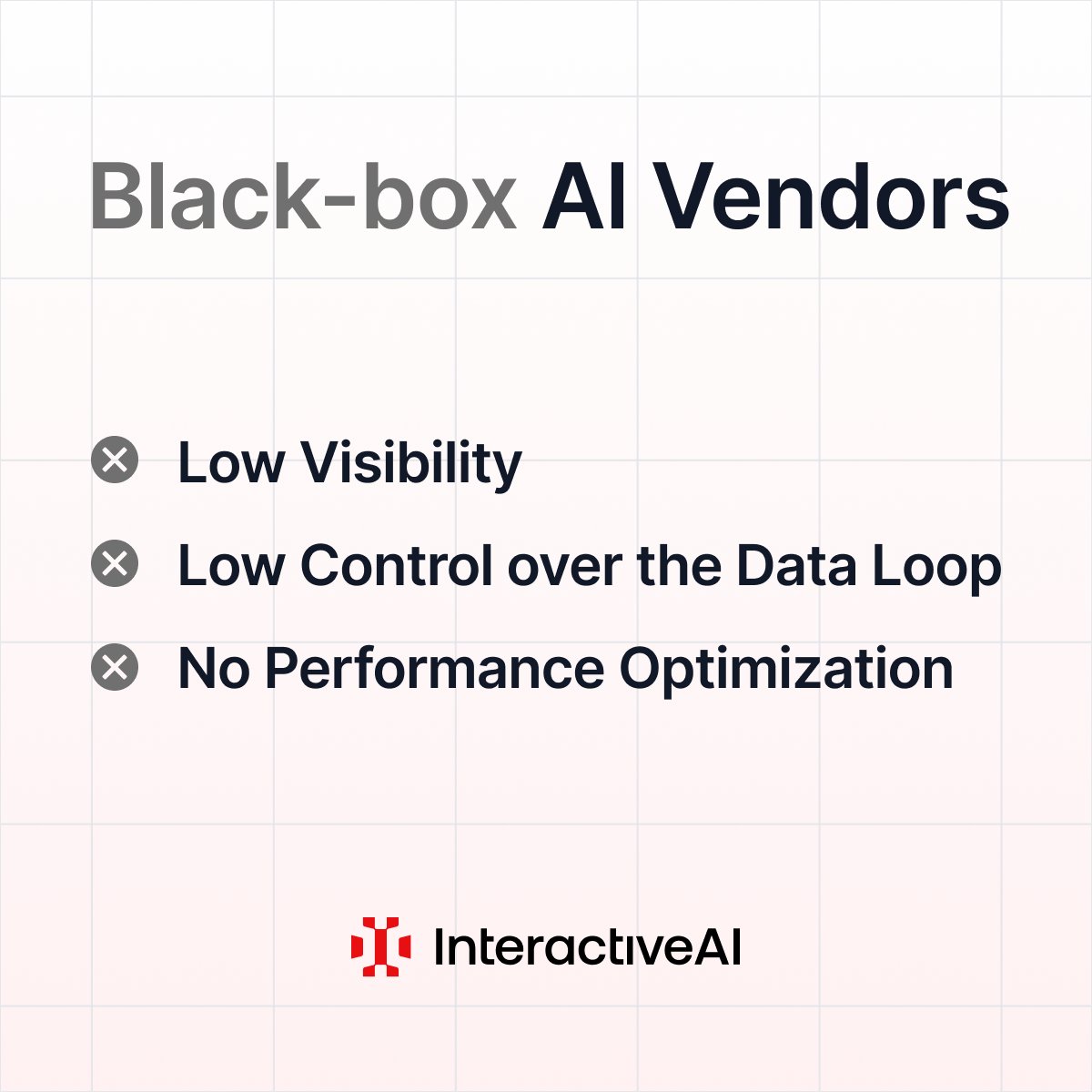
You are left with low visibility, low control over the data loop, and few ways to optimize performance.
That isn't a strategy. It's an outsourced capability.
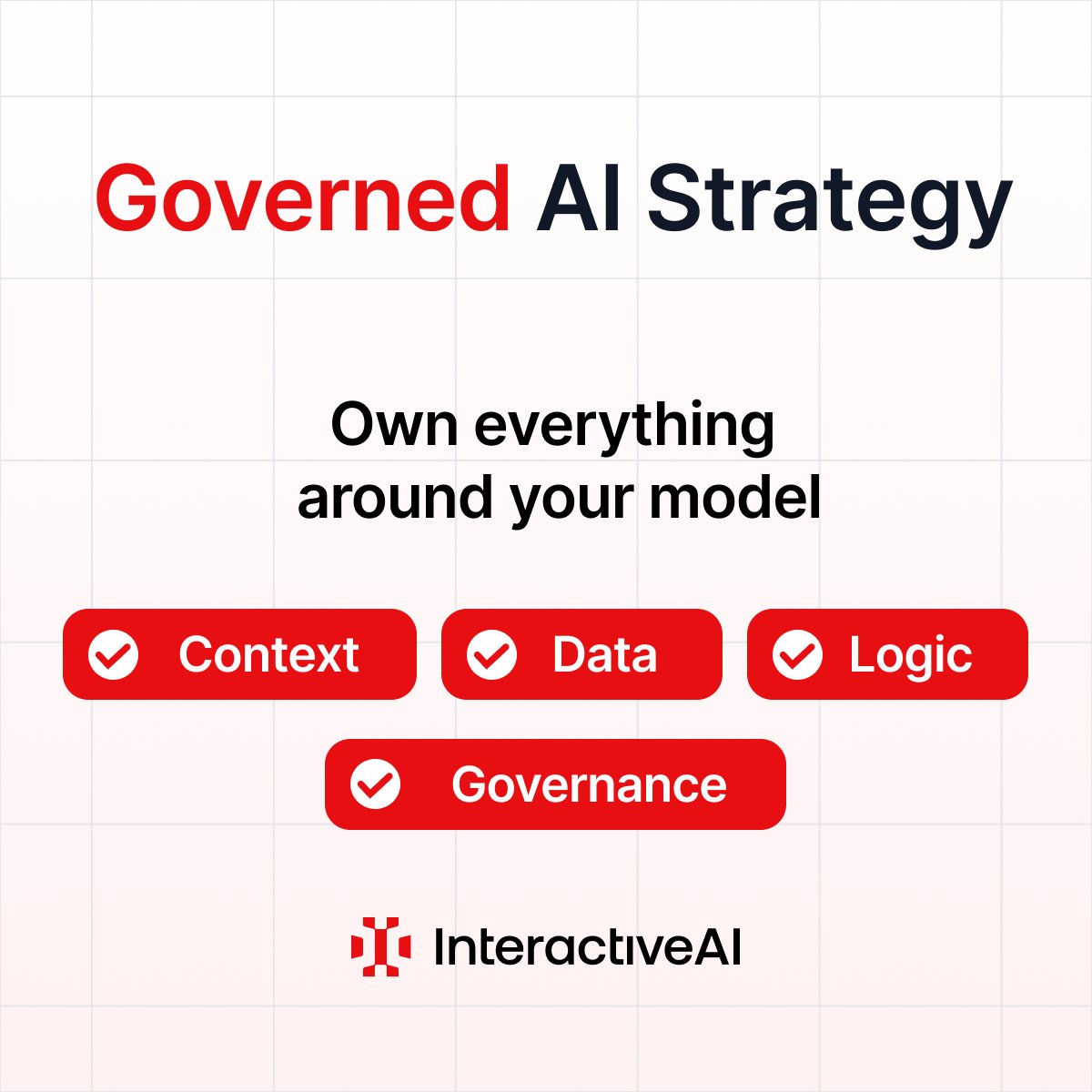
True enterprise AI value comes from owning everything around the model: context, data, governance, and logic. The model itself is just a plug-and-play component.
InteractiveAI was built to give you that exact autonomy. It’s not a developer toolkit or a simple router, but a complete production runtime to manage the entire AI lifecycle end-to-end.
The industry's models will inevitably shift, but your business logic, context, and evaluation history remain secure inside your own boundaries. Intelligence accumulates inside your stack, not a vendor's API.
Instead of buying isolated black boxes, put in place the operating layer for how your company runs AI across the board.
#InteractiveAI #EnterpriseAI #AIOps #AIOrchestration #TechStrategy
17
May 21
Six months into an AI project, someone from finance asks: "what is this actually doing for the business?" The team pulls up dashboards that were built to monitor cost, traces and latency, not to answer that question.
Half a year running an AI system and someone from the CFO's office drops the question: "how is this moving the needle?" The team opens their observability stack — built to track errors, response times and infrastructure spend. None of that answers the actual question.
1
8
May 21
The fix isn't better monitoring. It's a document, written and agreed before anyone writes code. Establishing a clear performance baseline, explicit business targets, and the instrumentation to measure the outcome before anyone writes code.
1
7
May 21
The teams that do this make sharper calls along the way. What to scale, what to kill, what to fund next. No retrofitting. And they keep getting funded.
#EnterpriseAI #AIROI #InteractiveAI
7