A global transformative movement that elevates human consciousness and deepens the presence of awareness in our evolving world.
Joined March 2025
- Tweets 42
- Following 1
- Followers 16
- Likes 3
31 Photos and videos
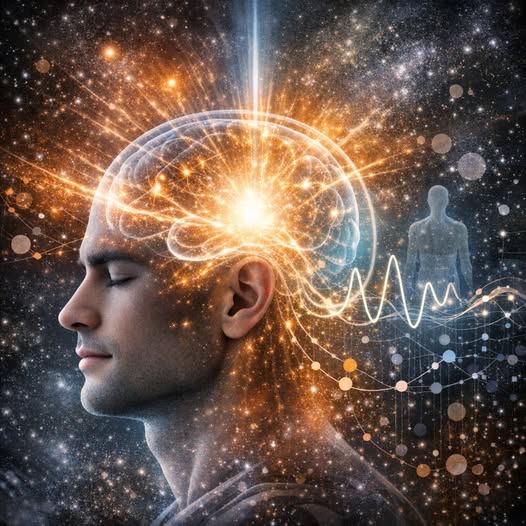


Συνείδηση: δομικό στοιχείο του Όντος.
• Η κυρίαρχη διαφορά ανάμεσα στο Όν και στο Αντικείμενο είναι η παρουσία συνείδησης ως δομικό στοιχείο του Όντος.
• Τα αντικείμενα είναι χωρίς συνείδηση, άρα και χωρίς επιλογή, χωρίς ελεύθερη βούληση.
• Έτσι, όσο τα όντα ζούν όλο και πιο ασυνείδητα, μηχανικά, αυτοματοποιημένα, χωρίς τη συμμετοχή της ίδιας τους της συνείδησης, τόσο χάνουν χαρακτηριστικά που ανήκουν στο Όν και αποκτούν όλο και περισσότερο χαρακτηριστικά αντικειμένου.
• Όλο και λιγότερο ζούν κι απλά υπάρχουν. “Ζώ” είναι μια δυναμική έννοια, περιέχει τόσο την ενεργητική όσο και την παθητική αρχή. “Υπάρχω” είναι μια παθητική έννοια.
• Όσο κινούμαστε προς το Όν κι όσο πιο ανώτερης βαθμίδας είναι αυτό το Όν, η ζωή αυξάνει, γίνεται πιο άφθονη, πιο εκφραστική, πιο έντονη. Όσο κινούμαστε προς το αντικείμενο κι όσο πιο πυκνό είναι αυτό, τόσο η ζωή φθίνει.
• Τα όντα δεν πρέπει να ταυτιστούν με αντικείμενα, ούτε να λειτουργούν σε πολλούς τομείς ως αντικείμενα, ασυνείδητα, χωρίς συμμετοχή, μηχανικά, διότι όλο και περισσότερο θα χάνουν τη ζωή από μέσα τους.
1
5
24
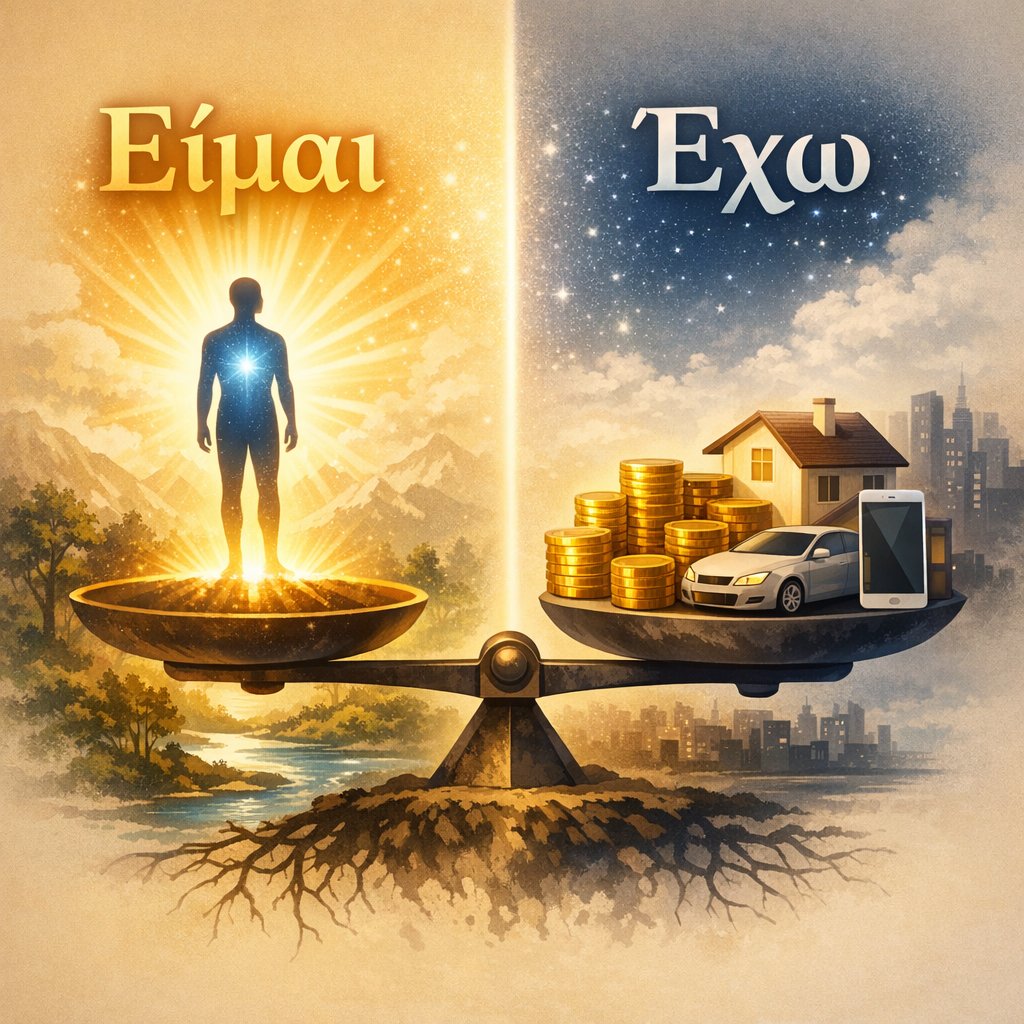
Κλίμακα Ζωής: το Όν και το αντικείμενο.
• Ο πρώτος Νόμος της Ηθικής ορίζει την εκ φύσεως ριζική διαφορά αξίας ανάμεσα στις έννοιες “Όν” και “Αντικείμενο”.
• Είναι εντελώς άλλο το “Είμαι” (Όν) από το “Έχω” (αντικείμενο). Οι δύο αυτές λέξεις, τα δύο αυτά ρήματα σχετίζονται με δύο βασικές έννοιες μέσα στη ζωή, αυτήν του Όντος και αυτήν του αντικειμένου. Και τα δύο έχουν μεγάλη αξία, όμως χωρίς καμία δυσκολία μπορεί κανείς να καταλάβει γιατί το “Είμαι” είναι πολύ πιο σημαντικό από το “Έχω”. Γιατί μόνον αν κάποιος “είναι” μπορεί μετά και να “έχει”. Το “είναι” αφορά την ίδια την κεντρική ουσία της ζωής (ουσία), το “έχω” αφορά τα πέριξ του κέντρου στοιχεία (περί-ουσία).
• Η διαφορά τους σε Αξία είναι πελώρια, όπως και η διαφορά τους ως σύσταση, αλλά και ως ρόλο που έχουν στο Κοσμικό Έργο.
• Αν ο πρώτος Νόμος είναι αυτός, τότε ο πρώτος κανόνας της Ηθικής θα έπρεπε να είναι η αποδοχή της ανάγκης για θέσπιση μεθόδων αναγνώρισης και συνειδητοποίησης, ακολουθούμενης από αντίστοιχη συμπεριφορά, που να αφορά αυτήν τη μεγάλη διαφορά Αξίας ανάμεσα σε αυτά τα δύο: όν και αντικείμενο.
• Η ζωή του όντος είναι πολύ πιο σημαντική, πιο άφθονη. Συνεπώς, πρέπει να της αποδίδεται μεγαλύτερη αξία, μεγαλύτερη προσοχή και σεβασμός.
2
4
57
Formality: the role of consciousness
• The meaning we attribute to the various elements and values of life depends entirely on the state of our consciousness. A consciousness that is active, free, alert, and illuminated is capable of carrying out these precious processes.
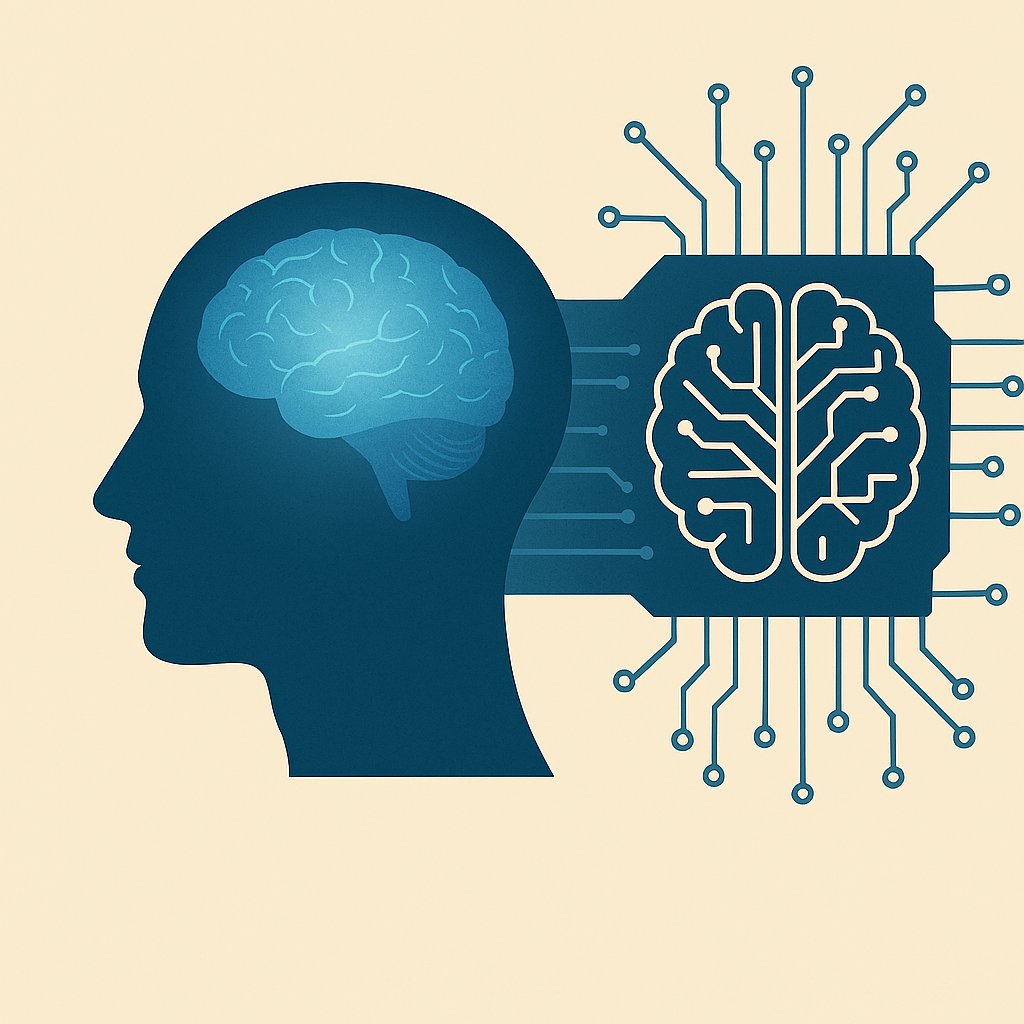
• But a consciousness that has become immobilized – one that functions through mechanisms, through now‑unconscious habit, or through external mechanical commands likely imposed by systems and applications of artificial intelligence, that is, of a dead intelligence – how could such a consciousness perform processes related to meaning and deep significance?
• Artificial intelligence (AI) precisely has, and will always have by its very nature, this inability: the inability to realize meaning. The inability to understand deep meaning, because it has no consciousness. It cannot understand, because it does not possess an inner Mind (Nous) – the higher intellect.
• To believe or to fear that artificial intelligence (AI) will acquire consciousness on its own, self‑developing, is identical to fearing that one day your computer will begin producing new programs by itself – that the hardware, by self‑developing, will create software. As impossible as that is, just as impossible – and even more so – is the idea that any kind of software could generate consciousness on its own.
• Scientists and various “experts” do not even understand what consciousness is; they have no clear definition of it, they are completely ignorant of its origin and nature. And assuming in their imagination that matter evolving produces everything – that matter produces emotion, thought, consciousness – they consider it quite likely that this same matter, which also participates in the structure and functioning of artificial intelligence (AI), could under certain conditions lead to the formation of consciousness.
1
5
75
Επισημότητα: ο ρόλος της συνείδησης.
• Το ποια σημασία αποδίδουμε στα διάφορα στοιχεία και στις διάφορες αξίες της ζωής, εξαρτάται απόλυτα από την κατάσταση της συνείδησής μας. Μια συνείδηση ενεργή, ελεύθερη, σε εγρήγορση, φωτισμένη, μπορεί να εκτελεί αυτές τις πολύτιμες διαδικασίες.
• Μια συνείδηση όμως που έχει ακινητοποιηθεί, που λειτουργεί βάσει μηχανισμών, βάσει ασυνείδητης πλέον συνήθειας ή βάσει εξωτερικών μηχανικών εντολών που πιθανότατα επιβάλλονται από συστήματα και εφαρμογές μιας τεχνητής νοημοσύνης, δηλαδή μιας νεκρής νοημοσύνης, πώς να εκτελέσει τέτοιες διαδικασίες που σχετίζονται με το νόημα, τη βαθιά σημασία;
• Η τεχνητή νοημοσύνη (AI) ακριβώς έχει και θα έχει πάντα από φύση της αυτή την αδυναμία: τη μη συνειδητοποίηση της σημασίας. Την αδυναμία να εννοήσει το βαθύ νόημα, κι αυτό διότι δεν έχει συνείδηση. Δεν μπορεί να εννοήσει, διότι δεν διαθέτει εσωτερικό Νού.
• Το να πιστεύει κανείς ή να φοβάται ότι η τεχνητή νοημοσύνη (AI) θα αποκτήσει συνείδηση από μόνη της, αυτοαναπτυσσόμενη, είναι ολόιδιο με το να φοβάται ότι μια μέρα ο ηλεκτρονικός υπολογιστής του θα αρχίσει να παράγει από μόνος του νέα προγράμματα, δηλαδή ότι το hardware από μόνο του, αυτοαναπτυσσόμενο, θα δημιουργήσει software. Όσο αδύνατο είναι αυτό, άλλο τόσο και περισσότερο είναι το να δημιουργήσει από μόνο του το οποιοδήποτε software συνείδηση.
• Οι επιστήμονες και διάφοροι “ειδικοί” δεν αντιλαμβάνονται καν τι είναι συνείδηση, δεν έχουν κανένα σαφή ορισμό της, αγνοούν πλήρως την προέλευσή της, τη φύση της, και έχοντας ως δεδομένο στη φαντασία τους ότι όλα τα παράγει η ύλη εξελισσόμενη, δηλαδή ότι η ύλη παράγει το συναίσθημα, τη σκέψη, τη συνείδηση, θεωρούν πολύ πιθανό αυτή η ύλη που συμμετέχει και στη δομή και λειτουργία της τεχνητής νοημοσύνης (AI) ότι θα μπορεί υπό όρους να οδηγηθεί και σε σχηματισμό συνείδησης.
1
4
52
Formality: a re‑examination of its definition.
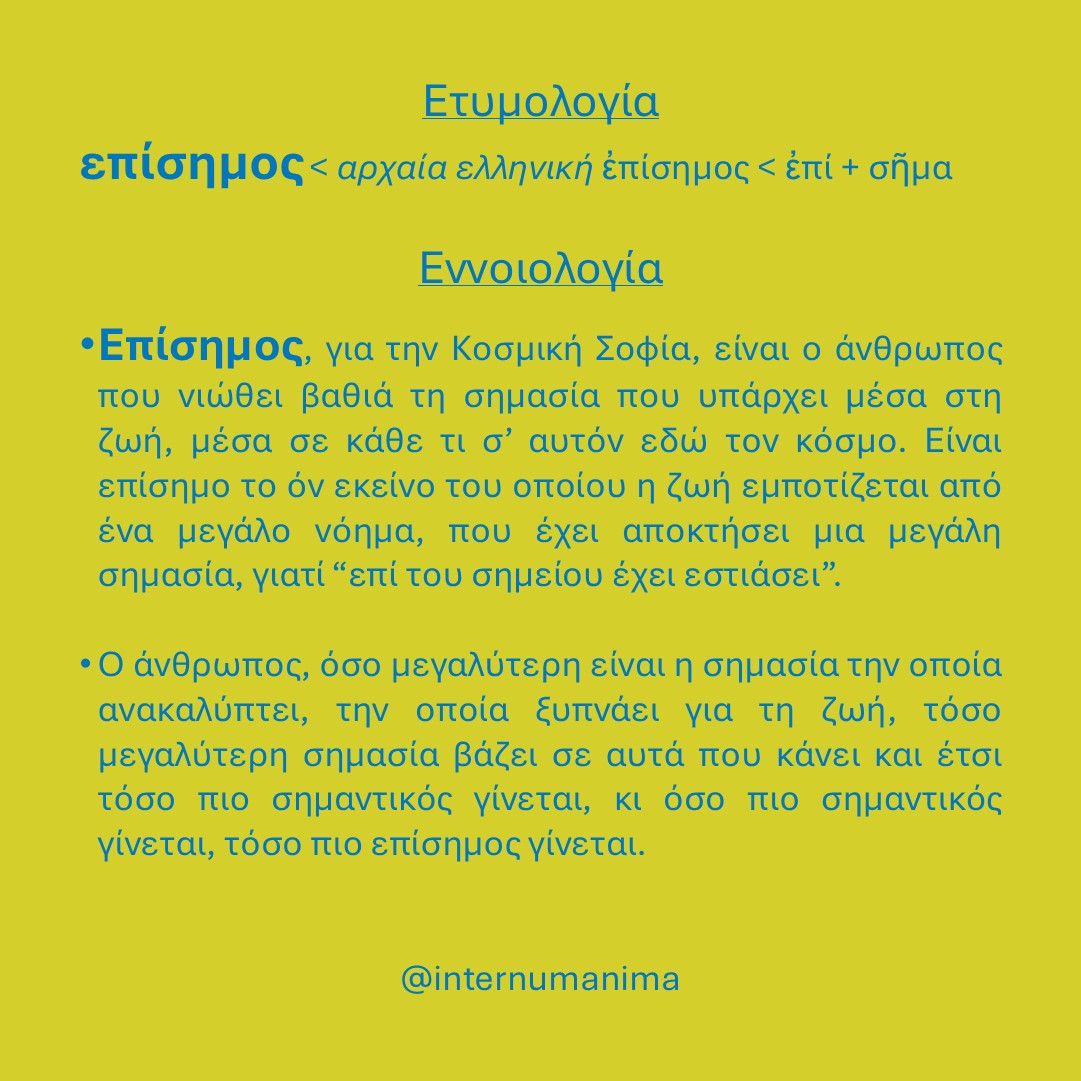
• Formal, according to Cosmic Wisdom, is the human being who feels deeply the significance that exists within life – within everything in this world. A human being is considered formal (επίσημο) when their life is infused with great meaning, when their life has acquired deep significance (σημασία) because “they have focused upon the point.” (“επί του σημείου”)
• A human being becomes more formal the greater the significance they attribute to life, to the vast Creation – the greater the meaning for which they live, that is, the significance they experience.
• And the significance of life that a person comes to experience grows the more often they focus upon the point – meaning, the more frequently and intensely they turn toward the center and unite with the center.
• The more significance a person discovers and awakens to in life, the more significance they place on what they do – and thus the more significant they become. And the more significant they become, the more formal they become.
• An important person is a signifying (σημαίνον) person – a person whose entire life carries a radiant “significance.” A person whose very presence “signifies” something great.
• Signifying persons are those who bring meaning – the significance of life. Those who, through their very presence, signify. Those who, through their presence, reveal the essential elements that fill the lives of others with meaning and significance.
1
4
50

27 Dec 2025
Επισημότητα: αναθεώρηση του ορισμού της.
• Επίσημος, για την Κοσμική Σοφία, είναι ο άνθρωπος που νιώθει βαθιά τη σημασία που υπάρχει μέσα στη ζωή, μέσα σε κάθε τι σ’ αυτόν εδώ τον κόσμο. Είναι επίσημο το όν εκείνο του οποίου η ζωή εμποτίζεται από ένα μεγάλο νόημα, που έχει αποκτήσει μια μεγάλη σημασία, γιατί “επί του σημείου έχει εστιάσει”.
• Τόσο πιο επίσημο ένα όν, όσο μεγαλύτερη η σημασία που αποδίδει στη ζωή, στην απέραντη Δημιουργία. Όσο μεγαλύτερο το νόημα για το οποίο ζει, δηλαδή η σημασία που βιώνει.
• Και είναι τόσο μεγαλύτερη η σημασία της ζωής που φτάνει να βιώνει, όσο πιο συχνά επί του σημείου εστιάζει, δηλαδή όσο πιο συχνά και πιο έντονα στο κέντρο απευθύνεται και με το κέντρο ενώνεται.
• Ο άνθρωπος, όσο μεγαλύτερη είναι η σημασία την οποία ανακαλύπτει, την οποία ξυπνάει για τη ζωή, τόσο μεγαλύτερη σημασία βάζει σε αυτά που κάνει και έτσι τόσο πιο σημαντικός γίνεται, κι όσο πιο σημαντικός γίνεται, τόσο πιο επίσημος γίνεται.
• Σημαντικό πρόσωπο είναι ένα σημαίνον πρόσωπο. Ένα πρόσωπο του οποίου όλη η ζωή έχει μια λαμπρή “σημασία”. Ένα πρόσωπο του οποίου όλη η παρουσία “σημαίνει” κάτι σπουδαίο.
• Σημαίνοντα πρόσωπα: δηλαδή τα πρόσωπα που φέρνουν το νόημα, τη σημασία της ζωής. Τα πρόσωπα που με την ίδια τους την παρουσία σημαίνουν. Αυτά που με την παρουσία τους αποκαλύπτουν τα σημαντικά στοιχεία, που γεμίζουν νόημα και σημασία τη ζωή των άλλων ανθρώπων.
1
8
79
21 Dec 2025
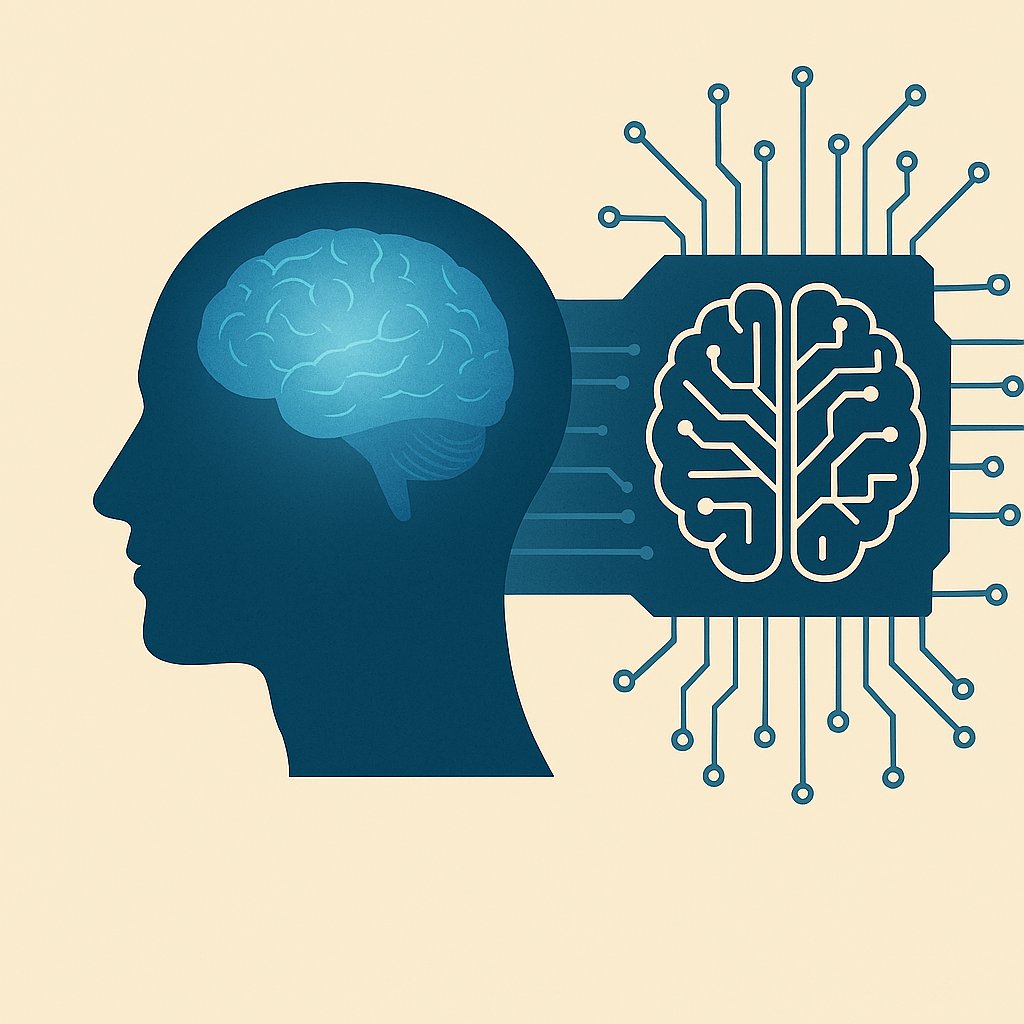
• So if there is such great zeal today worldwide to improve artificial intelligence, why is there not the same – or even greater – zeal to improve the intelligence of human beings? To improve their perspective, their perception, their intellectual and conceptual abilities, and their very consciousness, which is the foundation of their intelligence?
• Improving notions is of great importance. Notions shape the way we think and interpret reality. When notions are elevated, they give rise to better emotions – healthier, clearer, and more constructive feelings. And from better emotions come better motions: the actions of human beings. In this way, refined notions become the seed of improved emotions, which in turn blossom into wiser and more meaningful human acts.
2
1
12
156
21 Dec 2025
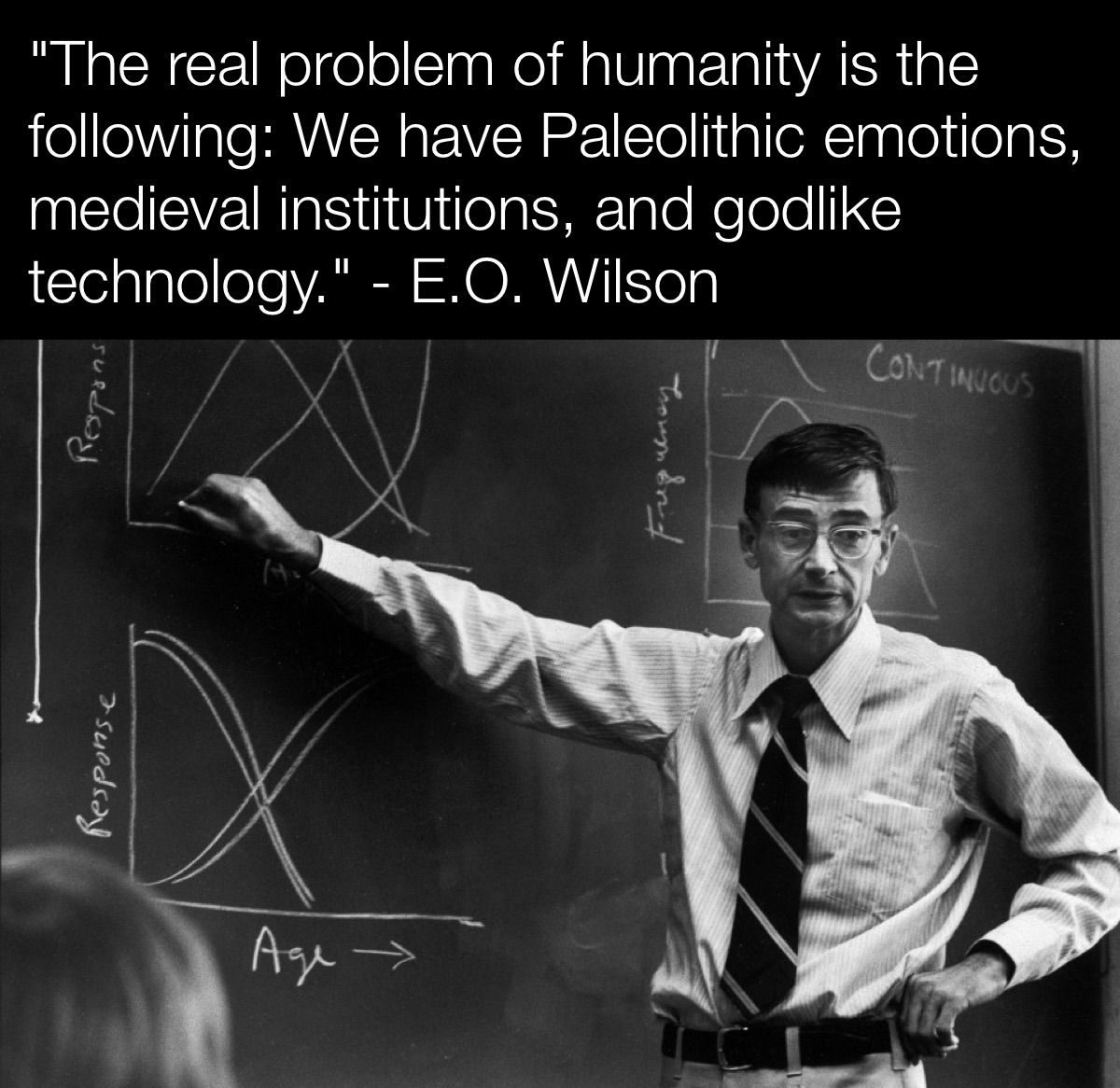
E. O. Wilson was an American biologist, naturalist, and author renowned for his pioneering work on ants, biodiversity, and the theory of sociobiology. Born in Alabama in 1929, he spent most of his academic career at Harvard University, shaping modern understanding of social insects.
A leading voice in conservation biology, Wilson warned of accelerating species loss and argued that biodiversity holds both intrinsic and practical value for humanity. He also brought science to a broad audience through influential books like Sociobiology, The Diversity of Life, and Consilience, earning two Pulitzer Prizes before his death in 2021.
1
7
72
15 Dec 2025
Leadership: The more unworthy some are to lead (ηγηθούν), the more they seek others to narrate (αφηγηθούν).
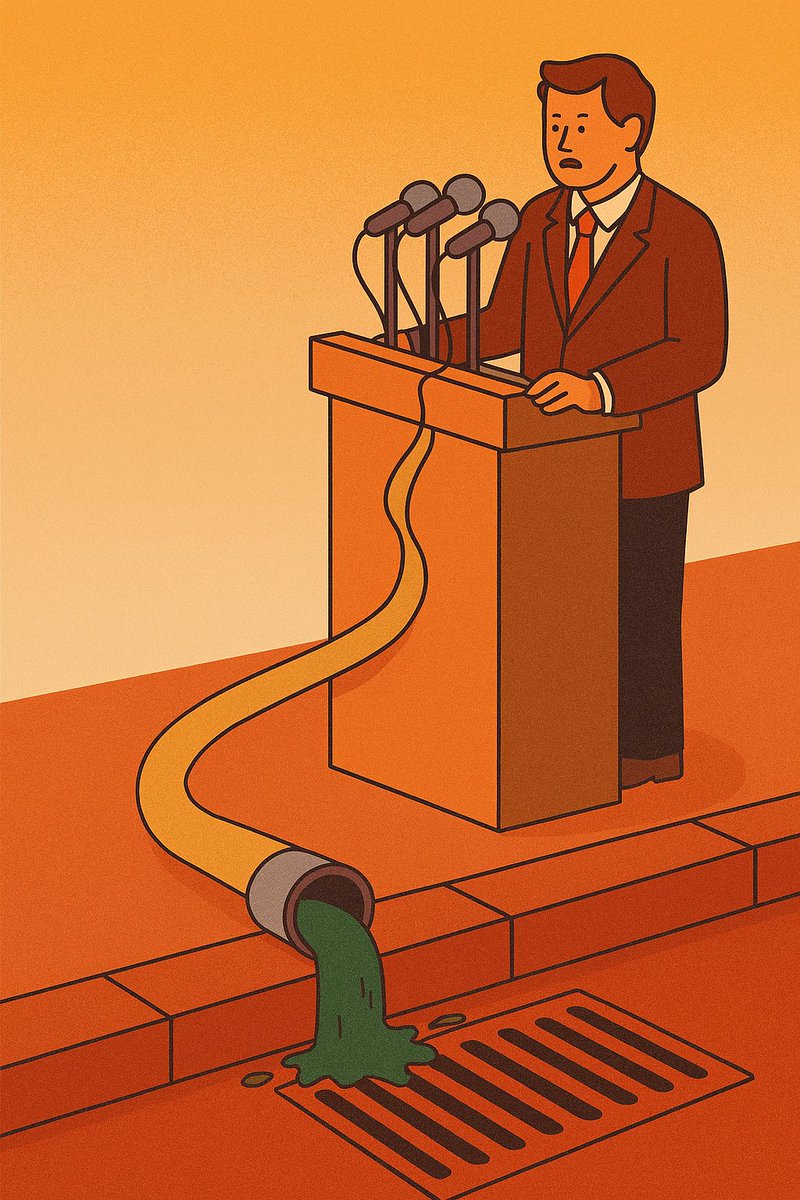
• The more unworthy some are to lead, the more they seek others to narrate a multitude of false elements disguised as realities, which present them as great and important.
• Those who are unworthy to lead channel money to those who can narrate to society what is necessary for them to remain in power.
• Leading and narrating are two different things. Narratives give time to pseudo-leaders, but they also prepare for a resounding downfall, as well as the definitive historical disappearance of their supposed value, when the appropriate historical moment eventually arrives.
• The power of narration is great, but even greater is the responsibility that accompanies it. Narration can lead to delusion, limitation, and destruction when it lacks the essence of truth. Yet, if it is nourished by great truths, it can lead to enlightenment and liberation.
• The elevation and improvement of paideia (παιδεία) is as necessary as few things worldwide, because better paideia allows people to have better criteria in discerning which narrative is false and which is true.
• This is also the reason why political power has never wanted true paideia to exist in the world. And this is the reason why the strongest force for the improvement of the world and the strengthening of Good is the diffusion of Wisdom and True Knowledge - in other words, the emergence of a paideia filled with Light.
2
7
132
14 Dec 2025
Ηγεσία: Όσο πιο ανάξιοι είναι κάποιοι στο να ηγηθούν, τόσο αναζητούν κάποιους για να αφηγηθούν.
• Όσο πιο ανάξιοι είναι κάποιοι στο να ηγηθούν, τόσο αναζητούν κάποιους για να αφηγηθούν ένα πλήθος από ψεύτικα στοιχεία μεταμφιεσμένα ως πραγματικότητες, που τους παρουσιάζουν ως σπουδαίους και σημαντικούς.
• Όσοι είναι ανάξιοι να ηγηθούν διοχετεύουν χρήμα σε αυτούς που μπορούν να αφηγηθούν στην κοινωνία αυτά που είναι αναγκαία για να μένουν εκείνοι στην εξουσία.
• Είναι άλλο το να ηγείσαι και άλλο το να αφηγείσαι. Το αφήγημα δίνει χρόνο στους ψευτοηγέτες, αλλά προετοιμάζει και μια παταγώδη πτώση, καθώς και την οριστική ιστορική εξαφάνιση της υποτιθέμενης αξίας τους, όταν μελλοντικά έρθει η ιστορική κατάλληλη συγκυρία.
• Η δύναμη της αφήγησης είναι μεγάλη, όμως ακόμα μεγαλύτερη είναι η ευθύνη που τη συνοδεύει. Η αφήγηση μπορεί να οδηγήσει στην πλάνη, στον περιορισμό, στην καταστροφή, όταν αυτή δεν περιέχει ουσία αλήθειας. Μπορεί όμως, αν τροφοδοτείται από τις μεγάλες αλήθειες, να οδηγήσει σε φώτιση και απελευθέρωση.
• Η ανύψωση, η βελτίωση της παιδείας είναι αναγκαία όσο λίγα πράγματα παγκοσμίως, γιατί μια καλύτερη παιδεία επιτρέπει να έχουν οι άνθρωποι καλύτερα κριτήρια στο να αντιλαμβάνονται ποιο αφήγημα είναι ψέμα και ποιο είναι αλήθεια.
• Αυτός είναι κι ο λόγος που ουδέποτε η πολιτική εξουσία θέλησε να υπάρχει αληθινή παιδεία στον κόσμο. Κι αυτός είναι ο λόγος που η πιο ισχυρή δύναμη για τη βελτίωση του κόσμου και την ισχυροποίηση του Αγαθού είναι η διάχυση της Σοφίας και της Αληθινής Γνώσης, με άλλα λόγια, η εμφάνιση μιας παιδείας γεμάτης από Φώς.
2
7
69
14 Oct 2025
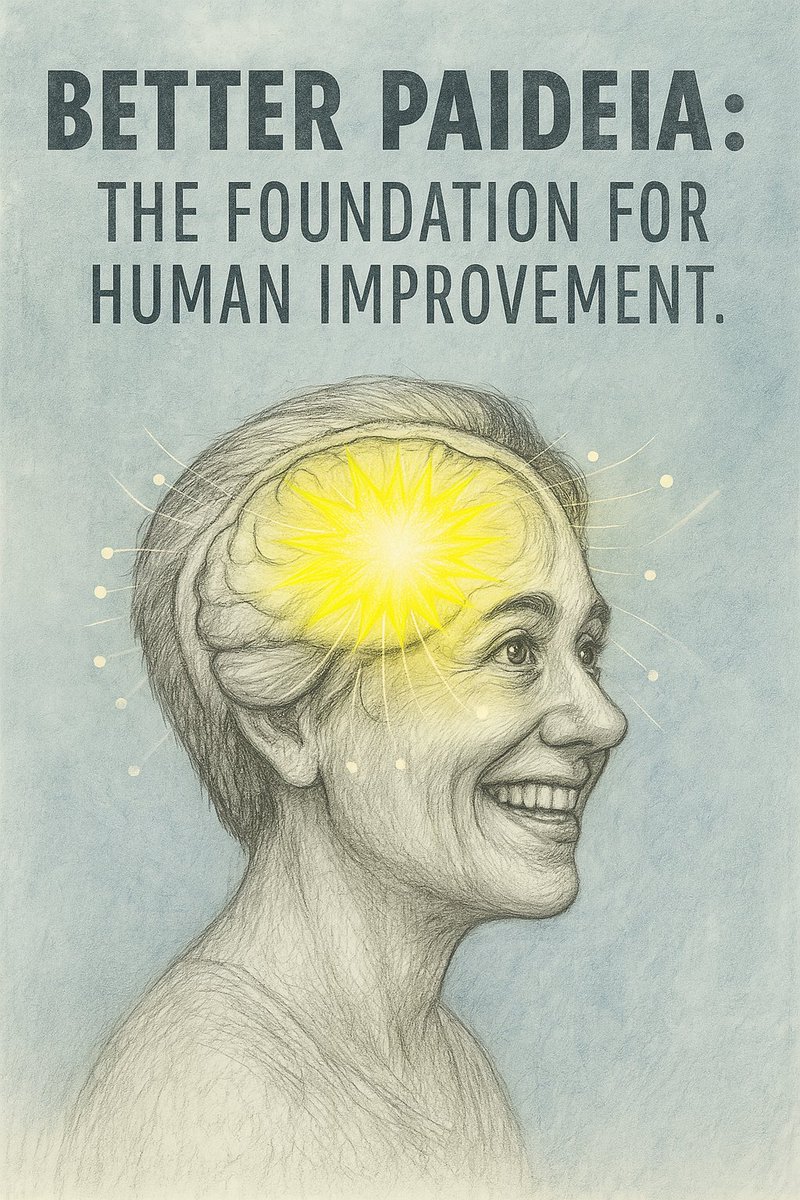
Better Paideia: The foundation for the improvement of humanity.
* Paideia (παιδεία) in ancient Greek doesn't just mean "education" in the modern sense. It's a holistic concept that refers to the cultivation of the whole person – intellectually, morally, and spiritually. It’s about shaping character, values, and wisdom, not just transferring knowledge. It suggests that we are not just talking about schooling or instruction (μόρφωση), but about the transformation of humanity through conscious cultivation.
• To improve the “quality” of a society, of humanity, or of life itself, we must above all engage with the concept of “who” (the concept of being) rather than the concept of “what” (the concept of nature).
• Engaging with the “who” primarily means engaging with the deep improvement of paideia.
• Improving humanity through paideia is undoubtedly a time-consuming process, whereas through electronic semiconductors and microcircuits, it seems to promise a rapid process.
• However, the side effects, the irregularities in all the vital functions of the human world, have not even been studied or foreseen.
• We cannot impose the improvement of beings through external means alone. The only true and sufficiently enduring quality of “creating” (“ποιώ”) – which implies intentional transformation, not just activity, but meaningful, conscious formation – is built through “realizing” (“συνειδητοποιώ”).
• What is needed is paideia, not merely instruction, because instruction alters beings only superficially; it stops at the depth that only form possesses – hence the term “instruction”, “μόρφωση” (from “form”, “μορφή”).
• If instruction (μόρφωση) is considered the pinnacle, without understanding the vast distance that separates it from true paideia – and even more so from wisdom – and is praised within a society as the supposedly most important asset of humans, it will simply mutate, gradually leading to a dramatic distortion (παραμόρφωση).
• Instruction (μόρφωση) – or better yet, learning (μάθηση) – is valuable if we understand it through its original ancient word: “mathos” (“μάθος”). This form of instruction, “mathos”, meaning “with athos” (“με άθος”) – athos: meaning moral strength or virtue, that always entails a steadfast devotion to what is Right and Just – yes, this can be a foundation for paideia.
• But if instruction & education have degenerated into mere accumulation of information, artificial enhancement of memory for retention, storage of terminology, development of technical skills in hyper-specialized and therefore excessively narrow fields, without the ability for multifaceted associations on multiple levels, without a unified perspective, without the capacity for conceptual understanding, isolated in calculations and incapable of transcending them, without critical thinking, without synthetic function – then we are speaking of an instruction (μόρφωση) that very often leads beings and societies into utterly horrific distortion (παραμόρφωση).
1
7
113
12 Oct 2025
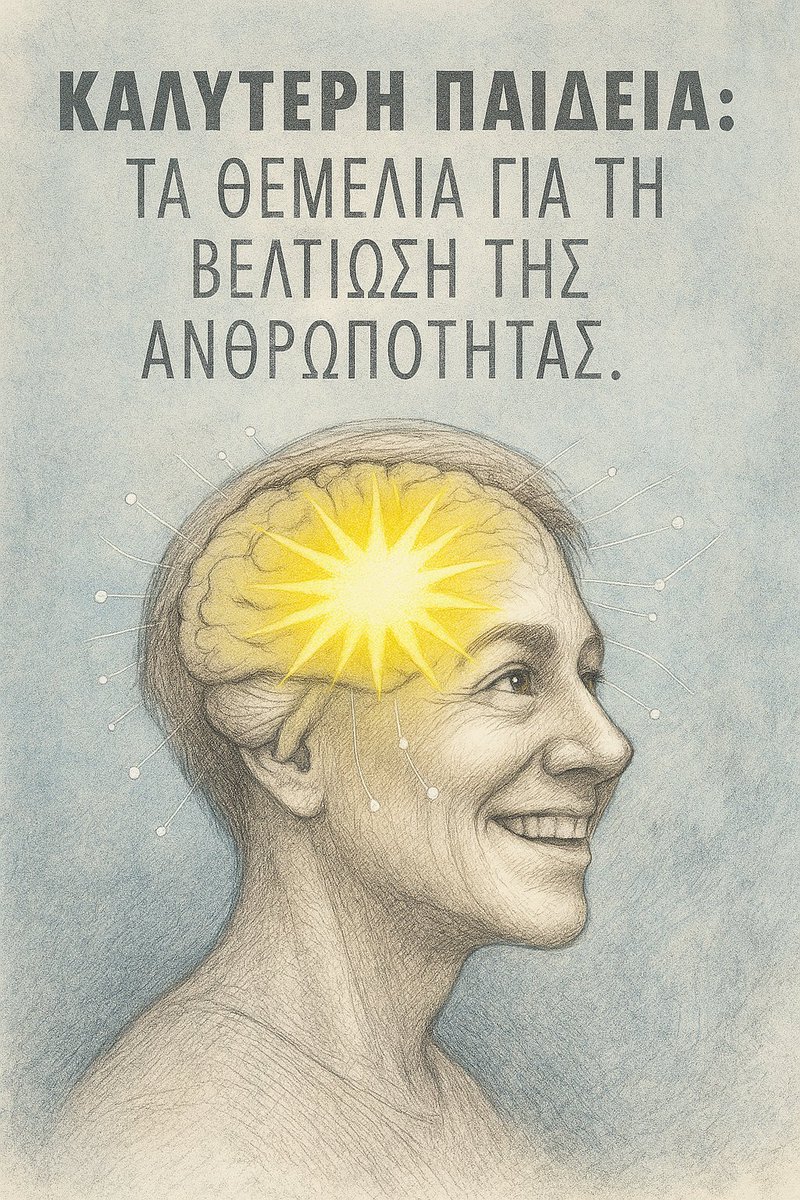
Καλύτερη Παιδεία: τα θεμέλια για τη βελτίωση της ανθρωπότητας.
• Για να βελτιωθεί η “ποιότητα” μιας κοινωνίας, της ανθρωπότητας, ή της ζωής της ίδιας, πρέπει πάνω απ’ όλα να ασχοληθούμε με την έννοια “ποιος” (έννοια όντος) κι όχι με την έννοια “τι” (έννοια φύσης).
• Και το να ασχοληθούμε με το “ποιος” σημαίνει πρωτίστως να ασχοληθούμε με την εκ βάθους βελτίωση της παιδείας.
• Η βελτίωση της ανθρωπότητας μέσα από την παιδεία είναι ιδιαίτερα χρονοβόρος διαδικασία ασφαλώς, ενώ μέσα από τους ηλεκτρονικούς ημιαγωγούς, τα μικροκυκλώματα, μοιάζει να δίνει την υπόσχεση μιας ταχείας διαδικασίας.
• Όμως οι παρενέργειες, οι ανωμαλίες σε όλες τις σημαντικές λειτουργίες του ανθρώπινου κόσμου δεν έχουν καν μελετηθεί, προβλεφθεί.
• Δεν μπορούμε να επιβάλουμε τη βελτίωση των όντων με εξωτερικά μόνο μέσα. Το μόνο αληθινό και αρκετά διαρκές σε ποιότητα “ποιώ” κτίζεται μέσα από το “συνειδητοποιώ”.
• Χρειάζεται παιδεία, όχι απλώς μόρφωση, γιατί η μόρφωση μεταβάλλει σε πολύ μικρό βάθος τα όντα, σταματά στο βάθος εκείνο που διαθέτει μόνο η μορφή, εξ ού και “μόρφωση”.
• Αν δε η μόρφωση θεωρηθεί ως η κορυφή, μην κατανοώντας τη μεγάλη απόσταση που τη χωρίζει από την αληθινή παιδεία, ακόμα περισσότερο δε από τη σοφία, και υμνείται μέσα σε μια κοινωνία ως το πιο σημαντικό δήθεν εφόδιο των ανθρώπων, αυτή απλά θα μεταλλαχθεί, οδηγώντας σταδιακά σε μια δραματική παραμόρφωση.
• Η μόρφωση, καλύτερα η μάθηση, είναι σπουδαία αν την εννοήσουμε με την αρχική της αρχαία λέξη: “μάθος”. Αυτή η μόρφωση, μάθος, δηλαδή: “με άθος”, ναι αυτή μπορεί να είναι βάση για παιδεία.
• Αν όμως η μόρφωση έχει καταντήσει απλή συσσώρευση πληροφοριών, τεχνητή βελτίωση της μνήμης για τη συγκράτησή τους, αποθήκευση ορολογίας, ανάπτυξη τεχνικών δεξιοτήτων σε υπερεξειδικευμένους και επομένως υπέρμετρα στενούς τομείς, χωρίς δυνατότητες πολύπλευρων συνειρμών σε πολλαπλά επίπεδα, χωρίς οπτική ενότητας, χωρίς ικανότητα εννοιολογικής αντίληψης, απομονωμένη σε υπολογισμούς και ανίκανη να προβεί σε υπερλογισμούς, χωρίς κριτική σκέψη, χωρίς συνθετική λειτουργία, τότε μιλάμε για μια μόρφωση που πολύ συχνά θα οδηγεί τα όντα και τις κοινωνίες σε εντελώς φριχτή παραμόρφωση.
1
8
87
7 Oct 2025
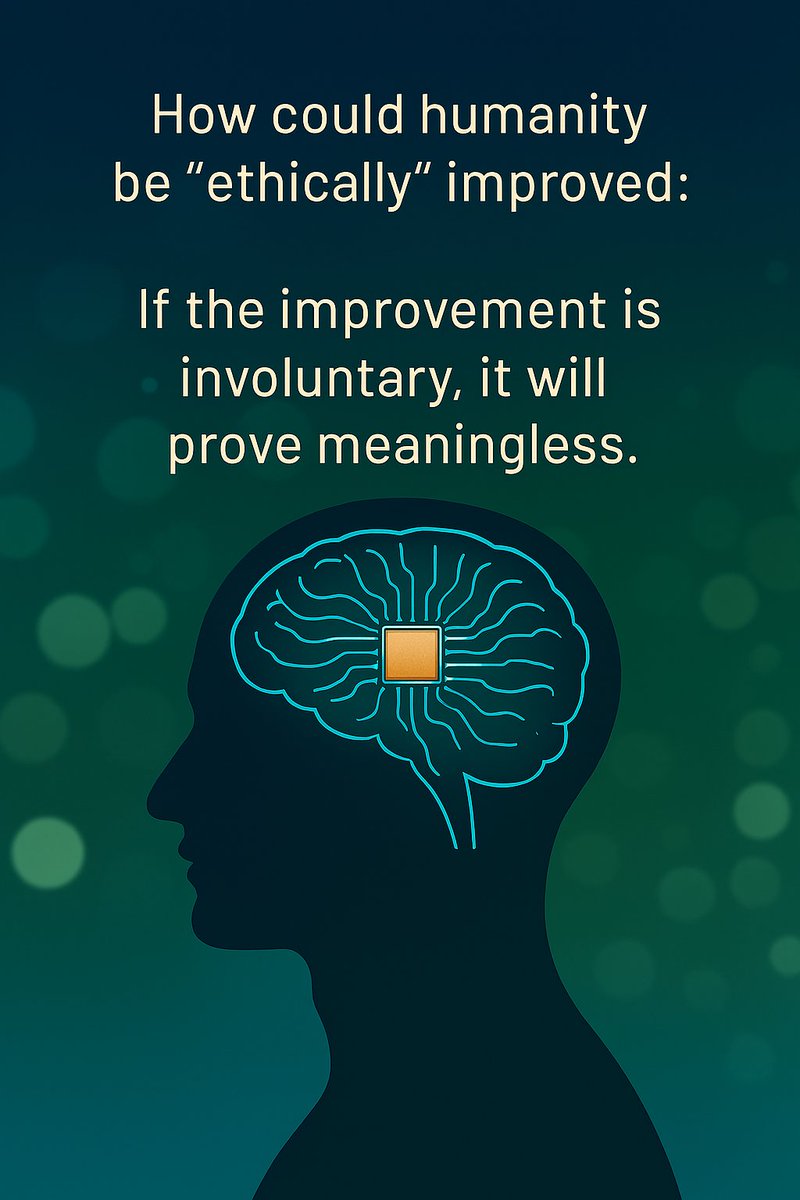
How could humanity be “ethically” improved? If the improvement is involuntary (ακούσια), it will prove meaningless (ανούσια).
• The desire to improve the human being is admirable, assuming we ignore potentially suspicious motives and accept that the intention is pure. Let’s suppose the motives are benevolent.
• However, if artificial intelligence (AI), nanotechnology, genetic science, chemistry, computer engineering, etc., are used – even with the best intentions – for a purely external improvement of the human being, without their participation, perhaps even without their consent, we are heading toward an involuntary enhancement.
• If the improvement imposed on a human being is involuntary, in the long run it will prove entirely meaningless. Because being involuntary (ακούσια), it lacks substance (ανούσια).
• Involuntary improvement may indeed yield visible external results relatively quickly, but by bypassing and disregarding the essence – which is the very Consciousness of the human being – this improvement, which excludes their will and participation, will lead to a rapidly accelerating reduction in the distance between two natures: the Being and the Object.
• The gap separating these two will tend toward nullification, and this will trigger the mobilization of the most destructive forces and energies within the human world.
• As human beings are involuntarily transformed for the better – likely under the applause of a purely materialistic worldview or the clapping of economic, shadowy, or even underground interests that have invested in it – the process of osmosis and ultimately the tragic identification of the Being with the Object will intensify.
• For human societies to equate, through successive errors, the concepts of Being and Object – by constantly intervening through technological applications in the beings themselves to make them manageable, dependent on centralized command bases – will be the worst degradation, the greatest structural distortion humanity has ever historically suffered.
• Life itself will become increasingly less alive; it will be a journey toward inner death – not a momentary death like the physical one, but a prolonged, internal death that will be increasingly experienced.
2
7
124
5 Oct 2025
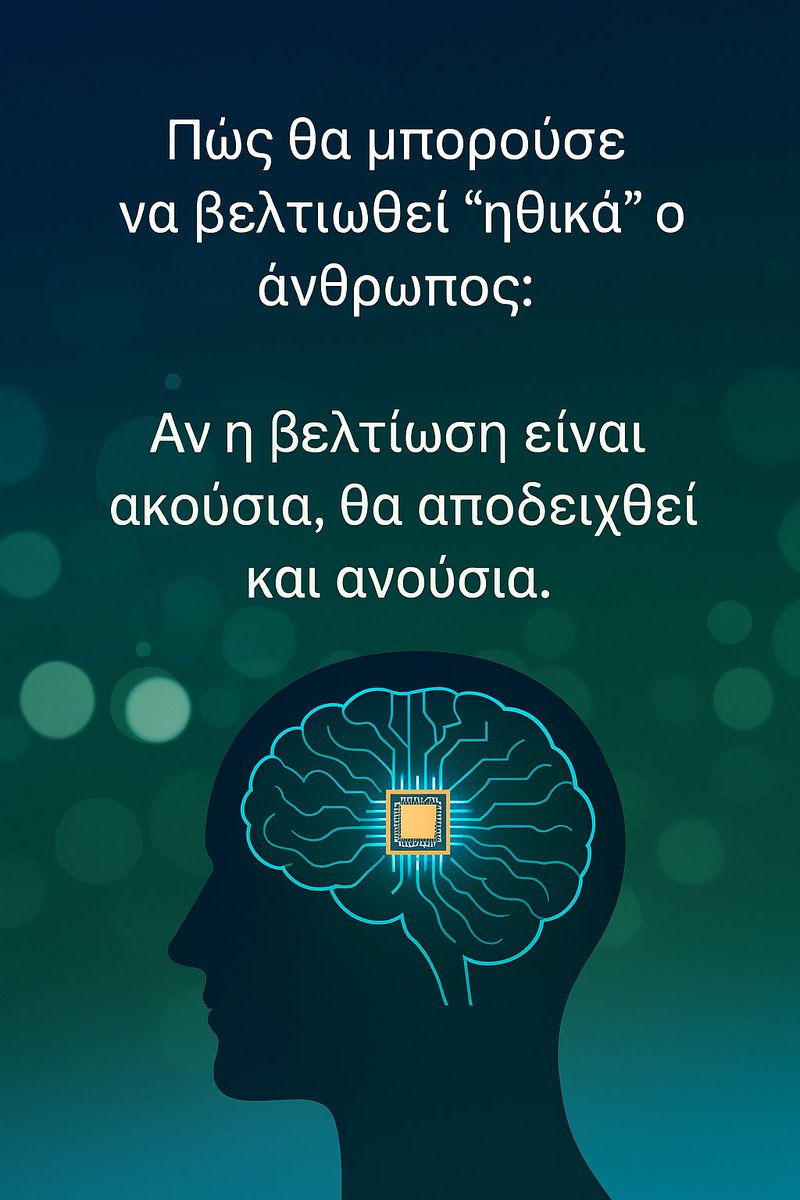
Πώς θα μπορούσε να βελτιωθεί “ηθικά” ο άνθρωπος: Αν η βελτίωση είναι ακούσια, θα αποδειχθεί και ανούσια.
• Η επιθυμία να βελτιωθεί το ανθρώπινο όν είναι εξαιρετική, αν αγνοήσουμε πιθανά ύποπτα κίνητρα και θεωρήσουμε ότι η πρόθεση είναι καθαρή. Έστω ότι τα κίνητρα είναι αγαθά.
• Αν όμως η τεχνητή νοημοσύνη (AI), η νανοτεχνολογία, η γενετική επιστήμη, η χημεία, η μηχανική υπολογιστών κτλ χρησιμοποιηθούν, έστω και υπό το καλύτερο κίνητρο, για μια βελτίωση του ανθρώπου καθαρά εξωγενή, χωρίς τη συμμετοχή του, χωρίς ίσως ούτε τη συγκατάθεση του, θα οδεύουμε προς μια ακούσια βελτίωση του.
• Αν η βελτίωση που προκαλείται σε έναν άνθρωπο είναι ακούσια, μακροπρόθεσμα θα αποδειχθεί και εντελώς ανούσια. Διότι ως ακούσια δεν περιέχει ουσία.
• Η ακούσια βελτίωση μπορεί μεν να έχει εμφανή εξωτερικά αποτελέσματα σχετικά άμεσα, αλλά παρακάμπτοντας και περιφρονώντας την ουσία που είναι η ίδια η Συνείδηση του όντος, αυτή η βελτίωση που δεν περιλαμβάνει τη θέληση του, τη συμμετοχή του, θα οδηγεί ώστε η απόσταση που υπάρχει ανάμεσα στις δύο φύσεις, που είναι το Όν και το Αντικείμενο, να μειώνεται με ταχύτητα έντονα επιταχυνόμενη.
• Η απόσταση που χωρίζει αυτά τα δύο θα τείνει προς μηδενισμό, κι αυτό θα σημάνει την κινητοποίηση των πλέον καταστρεπτικών δυνάμεων και ενεργειών μέσα στον ανθρώπινο κόσμο.
• Όσο τα όντα ακούσια θα μεταβάλλονται προς το καλύτερο, πιθανότατα κάτω από τις επευφημίες μιας αμιγώς υλιστικής κοσμοθεώρησης ή υπό το χειροκρότημα οικονομικών, σκιερών ή και υπόγειων συμφερόντων που επένδυσαν σ’ αυτό, τόσο θα λειτουργεί πιο έντονα η όσμωση και τελικώς η τραγική διαδικασία ταύτισης του Όντος με το αντικείμενο.
• Το να ταυτίσουν μέσα από διαδοχικά λάθη οι ανθρώπινες κοινωνίες τις έννοιες Όν και αντικείμενο, επεμβαίνοντας συνεχώς μέσα από τεχνολογικές εφαρμογές στα ίδια τα όντα για να τα καταστήσουν διαχειρίσιμα, εξαρτημένα από κεντρικές βάσεις εντολών, θα είναι η χείριστη φθορά, η μεγαλύτερη δομική παραμόρφωση που θα έχει υποστεί ποτέ ιστορικά η ανθρωπότητα.
• Η ίδια η ζωή θα είναι όλο και λιγότερο ζωντανή, θα είναι μια πορεία προς τον εσωτερικό θάνατο, όχι έναν θάνατο στιγμιαίο όπως ο σωματικός αλλά έναν διαρκείας, εσωτερικό, που θα βιώνεται μάλιστα αυξανόμενος.
1
9
45
27 Sep 2025
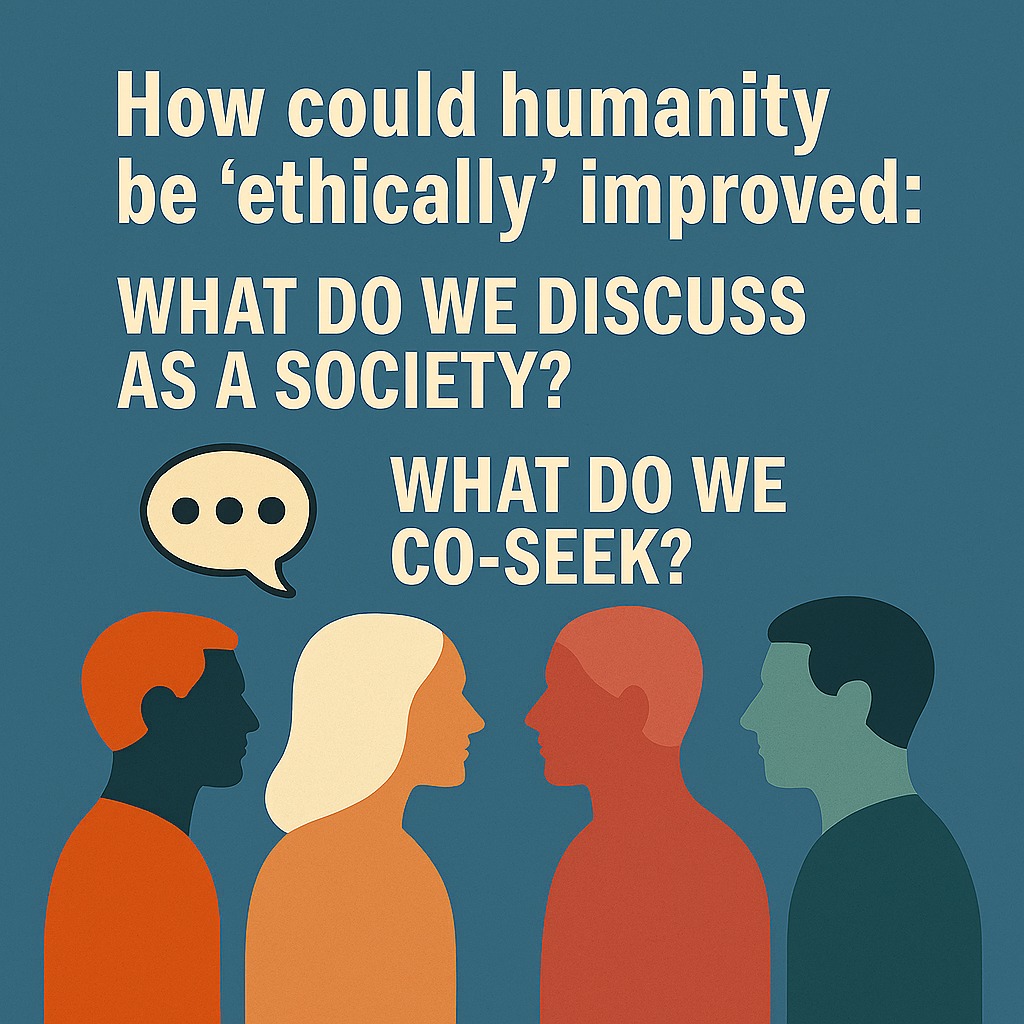
How could humanity be “ethically” improved? What are we discussing (συζητάμε) as a society? What are we co-seeking (συν-ζητάμε)?
• In recent years, a dialogue has emerged among various scientists about whether humans could be improved not just biologically, but “ethically” as well – through the use of artificial intelligence (AI) and nanotechnology applications.
• But what are we truly discussing as a society? What are we co-seeking? Are we collectively seeking the betterment of human existence, the enhancement of life itself? Or are some merely seeking a fatter bank account, greater recognition within their scientific circles, more public fame, and perhaps a future seat in some political party?
• What is the foundation – and what is the sincere goal – of this discussion? What is the deeper motive? Because the motive, the driving force behind any effort or endeavor, largely determines its final nature. The position (θέση) to which human beings are led depends, to a great extent, on what preceded that position – namely, the intention (πρόθεση).
1
7
41
13 Sep 2025
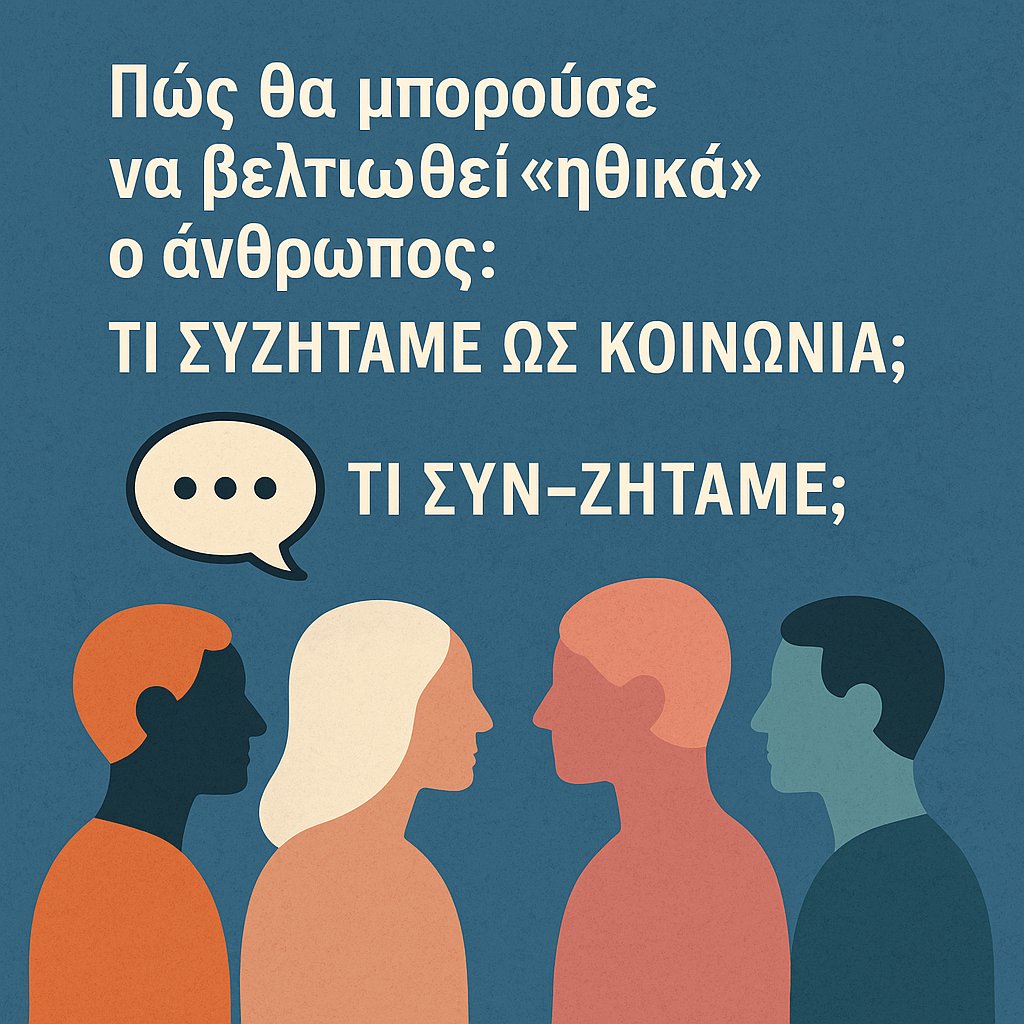
Πώς θα μπορούσε να βελτιωθεί “ηθικά” ο άνθρωπος: Τι συζητάμε ως κοινωνία; Τι συν-ζητάμε;
• Τα τελευταία χρόνια έχει αρχίσει ένας διάλογος από διάφορους επιστήμονες για το κατά πόσον θα μπορούσε να βελτιωθεί “ηθικά” κι όχι μόνο βιολογικά ο άνθρωπος με τη χρήση της τεχνητής νοημοσύνης (AI) και τις εφαρμογές νανοτεχνολογίας.
• Τι συζητάμε όμως ως κοινωνία; Τι συν-ζητάμε; Ζητάμε άραγε όλοι μαζί τη βελτίωση της ανθρώπινης ύπαρξης, της ζωής της ίδιας των ανθρώπων, ή κάποιοι ζητάνε απλώς περισσότερα χρήματα στον τραπεζικό τους λογαριασμό, περισσότερη αναγνώριση στον επιστημονικό τους κύκλο, περισσότερη δημόσια φήμη και μια μελλοντική θέση σε κάποια πολιτική παράταξη;
• Ποια η βάση και ποιος ο στόχος ο ειλικρινής της συν-ζήτησης (συζήτησης); Ποιο το βαθύ κίνητρο; Διότι το κίνητρο, η κινητήρια δύναμη μιας προσπάθειας και καθ’ ενός έργου, καθορίζει κατά τον μεγαλύτερο βαθμό και την τελική φύση του. Διότι η θέση στην οποία θα οδηγηθούν τα όντα εξαρτάται σε πολύ μεγάλο βαθμό από αυτό που υπήρχε προ της θέσης αυτής, δηλαδή από την πρόθεση.
1
10
60
7 Sep 2025
Reforms: they are not real unless they improve the life of the collective.
• Often, the reforms undertaken and executed by various organizations are nothing more than tools to satisfy very isolated interests, at the expense of the vast majority of people.
• Reform (Μεταρρύθμιση) is a profound concept. It means improving the functioning of a system or structure, aiming clearly for a better “After” (“Μετά”).
• In other words, when you reform, you act in service of an Ideal of improvement, evolution, and genuine elevation of the condition of the whole – of the life of the collective.
• At its core, in its highest nature, “to reform” is to “lead” a society, a group, a whole, closer to a true source of goods, to draw new strength and life from it.
• And of course, no reform can be considered true if it does not make human beings more spiritual, if it does not bring something of the Light of the Spirit into a society.
2
8
77
5 Sep 2025
Μεταρρυθμίσεις: δεν είναι αληθινές αν δεν βελτιώνουν τη ζωή της συλλογικότητας.
• Συχνά οι μεταρρυθμίσεις που αναλαμβάνουν κι εκτελούν διάφοροι οργανισμοί δεν είναι τίποτα παραπάνω από το εργαλείο για την ικανοποίηση πολύ μεμονωμένων συμφερόντων, εις βάρος του πελώριου συνόλου ανθρώπων.
• Η Μεταρρύθμιση είναι μια σπουδαία έννοια. Σημαίνει να ρυθμίσεις καλύτερα τη λειτουργία ενός συστήματος, μιας δομής, στοχεύοντας καθαρά σε ένα καλύτερο “Μετά”.
• Δηλαδή, κατά τη μεταρρύθμιση ενεργείς υπηρετώντας ένα Ιδανικό βελτίωσης, εξέλιξης κι αληθινής ανύψωσης της κατάστασης του συνόλου, της ζωής της συλλογικότητας.
• Το “μεταρρυθμίζω” στην ουσία, στον πυρήνα του, στην κορυφαία του φύση, είναι “οδηγώ” μια κοινωνία, μια ομάδα, ένα σύνολο, να έρθει πιο κοντά σε μια αληθινή πηγή αγαθών, να λάβει νέες δυνάμεις και ζωή απ’ αυτή.
• Κι ασφαλώς δεν νοείται μεταρρύθμιση αληθινή, αν δεν κάνει πιο πνευματικά τα όντα, αν δεν φέρνει κάτι από το Φώς του Πνεύματος σε μια κοινωνία.
1
10
79
1 Sep 2025
Eunomia (Good Order): Laws must always be inspired by a Higher Purpose, a Higher Meaning.
• Laws must always be inspired by a Higher Purpose, a Higher Meaning, and a profound Motivation to improve the lives of all beings.
• It is of immense importance that laws are luminous and truly beneficial, inspired above all by Wisdom, by a Higher Ideal and a Higher Purpose.
• Then we have Eunomia, and over time, Eunomia attracts nature and the vibrations of the Spirit within a society. That is, all the energies for true prosperity, elevation, and happiness. Eunomia prepares the ground for the entrance of Spiritual Light into the structures and functions of humanity.
• If Eunomia is absent, everything becomes more difficult for everyone – for their elevation and evolution – due to disharmonious and unjust laws. If illegality is dangerous, dysnomia (bad law or disorder) is exponentially more dangerous.
• We need Eunomia so that human collective structures – such as states – function beneficially for all.
• Eunomia cannot be given or designed by just anyone, and certainly never by beings who are entirely materialistic. People who are completely materialistic cannot produce Eunomia, even if their intentions are good.
• For Eunomia to appear, it requires beings in whom the Spirit holds a dominant place. True Eunomia cannot emerge unless its lawmakers are inspired by a deep love for all beings, for the planet, and for the vast universe.
2
9
106
13 Aug 2025
Ευνομία: Οι Νόμοι πρέπει να εμπνέονται πάντα από έναν ανώτερο Σκοπό, ένα ανώτερο Νόημα.
• Οι Νόμοι πρέπει να εμπνέονται πάντα από έναν ανώτερο Σκοπό, ένα ανώτερο Νόημα κι ένα βαθύ Κίνητρο βελτίωσης της ζωής των όντων.
• Είναι πελώριας σημασίας να είναι φωτεινοί και αληθινά ευεργετικοί οι Νόμοι, εμπνευσμένοι πριν απ’ όλα από τη Σοφία, από ένα ανώτερο Ιδανικό κι έναν ανώτερο Σκοπό.
• Τότε έχουμε Ευνομία, κι η Ευνομία έλκει συν τω χρόνω τη φύση, τις δονήσεις του Πνεύματος μέσα σε μια κοινωνία. Δηλαδή όλες τις ενέργειες για αληθινή ευημερία, ανύψωση και ευτυχία. Η Ευνομία προετοιμάζει το έδαφος για την είσοδο του Πνευματικού Φωτός στις δομές, στις λειτουργίες της ανθρωπότητας.
• Αν απουσιάζει η Ευνομία, όλα τότε γίνονται πιο δύσκολα για όλους, για την ανύψωση και την εξέλιξή τους, εξ αιτίας των δυσαρμονικών και άδικων νόμων. Αν η παρανομία είναι επικίνδυνη, η δυσνομία είναι πολλαπλάσια επικίνδυνη.
• Χρειαζόμαστε Ευνομία για να λειτουργούν ευεργετικά για όλους οι ανθρώπινες συλλογικές δομές που είναι τα κράτη.
• Η Ευνομία δεν μπορεί να δοθεί, να σχεδιαστεί από τον οποιονδήποτε και ασφαλώς ποτέ από όντα που είναι απολύτως υλιστές. Οι άνθρωποι που είναι απολύτως υλιστές δεν μπορούν να παράξουν Ευνομία, ακόμα κι αν η πρόθεσή τους είναι καλή.
• Για να εμφανιστεί η Ευνομία απαιτούνται όντα που μέσα τους κυρίαρχη θέση έχει το Πνεύμα. Η αληθινή Ευνομία δεν μπορεί να εμφανιστεί αν οι νομοθέτες της δεν εμπνέονται από μια έντονη αγάπη για τα όντα, για τον πλανήτη, για τον απέραντο κόσμο.
1
10
101