
Joined August 2024
- Tweets 8,871
- Following 979
- Followers 129,197
- Likes 53,836
2,788 Photos and videos
Pinned Tweet

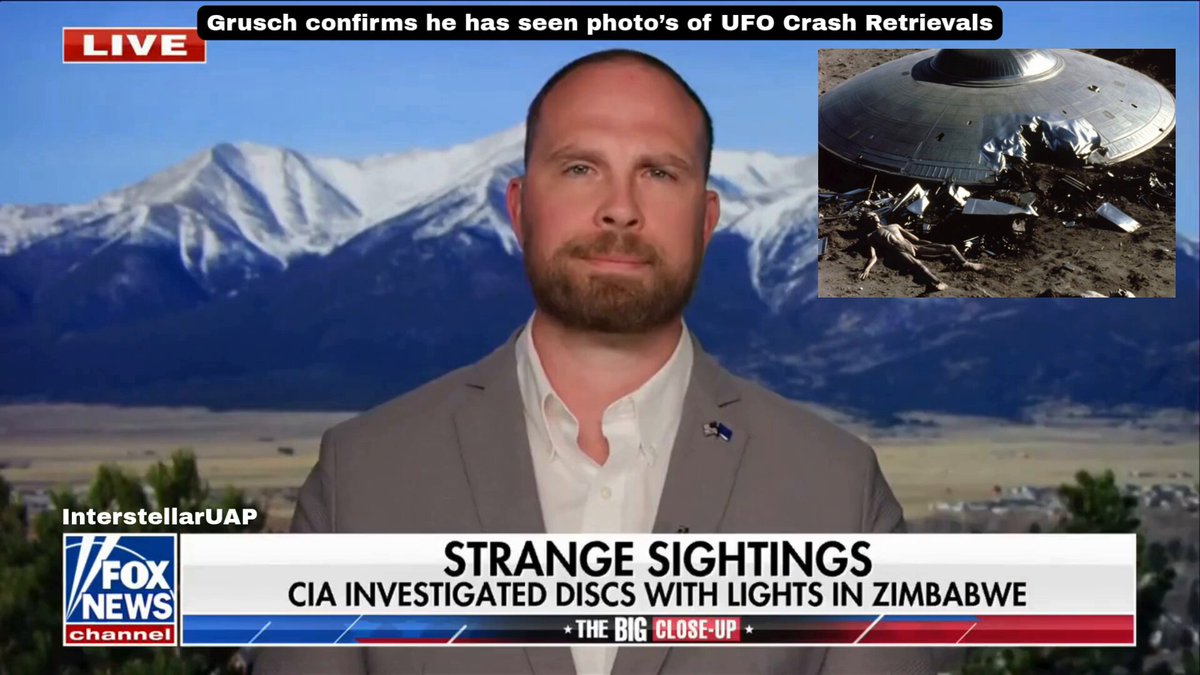
**Breaking** David Grusch: "I have seen photos of UFO Crash Retrievals" 👽🛸
"This is the most earth shattering thing that changed my world view"
"They were everything from flying discs to egg shape craft & every other morphology"
"They landed or crashed on the surface of the earth"
UFO Disclosure just escalated to a new level.
273
576
3,873
299,246
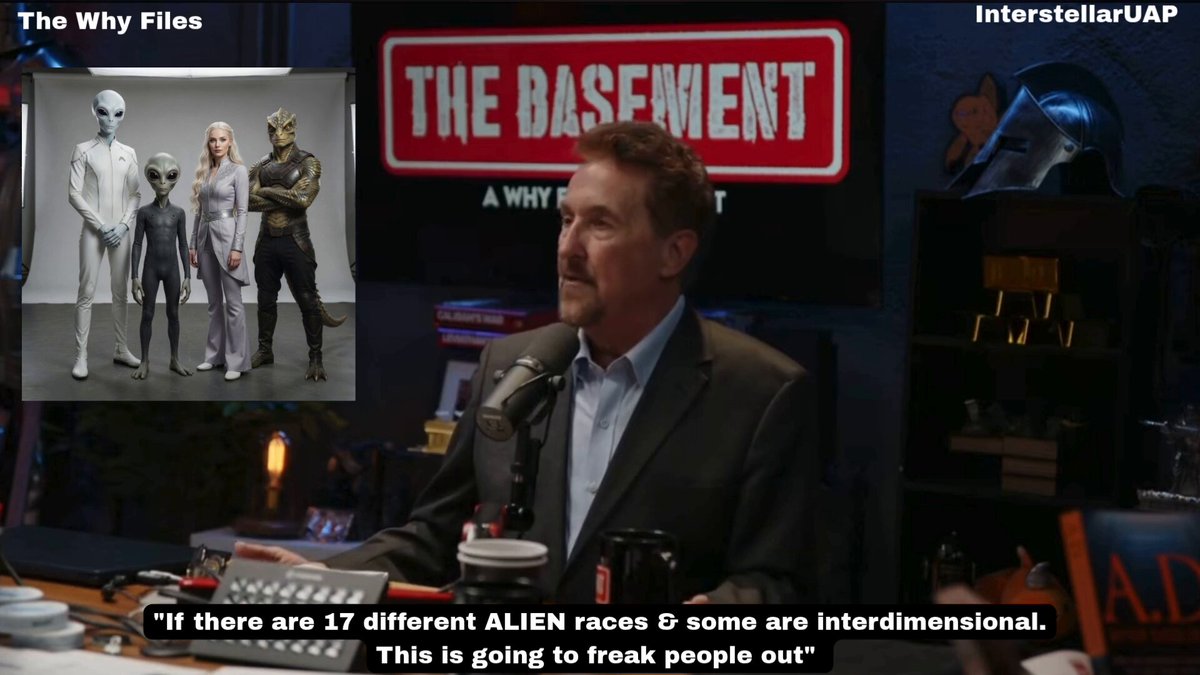
Bryce Zabel: "If there are 17 different ALIEN races & some are interdimensional - This is going to freak people out" 👽
"There are 2 sides to UFO Disclosure - People have a right to know & they may not be able handle the truth"
"I am in favour of disclosure, let me decide if I can handle it"
Catastrophic disclosure could cause ontological shock. Bryce told AJ from The Why Files everybody has the right to know.
30
53
348
23,994
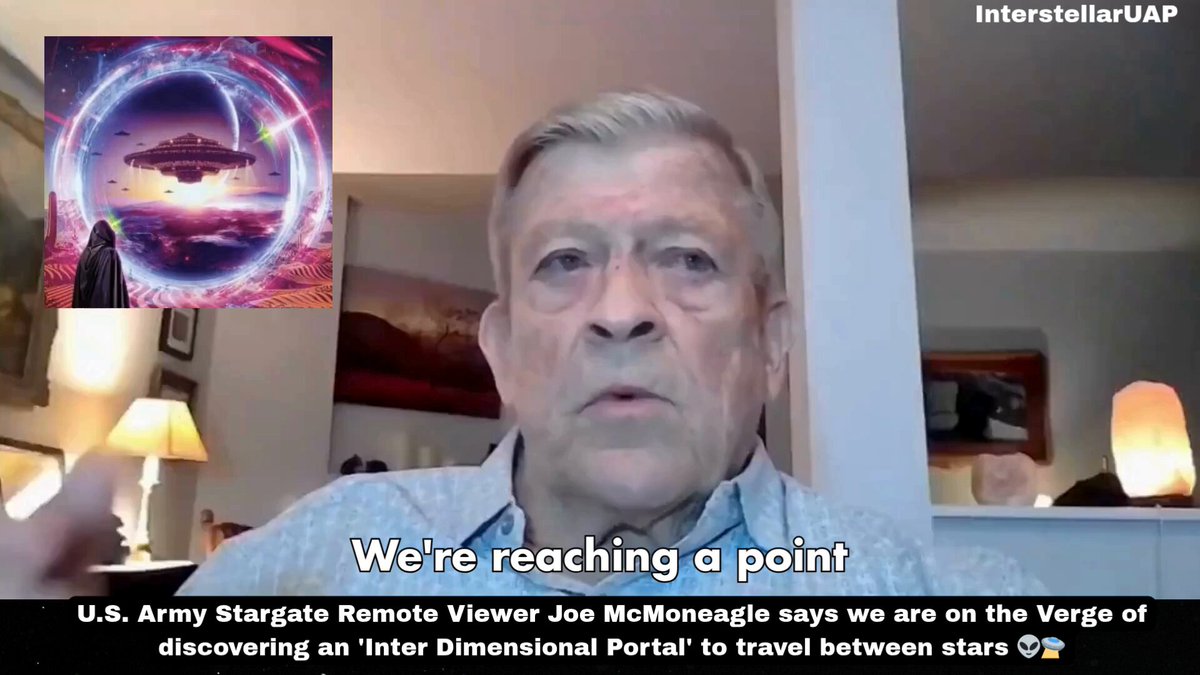
U.S. Army Stargate Remote Viewer Joe McMoneagle says we are on the verge of discovering an 'Inter Dimensional Portal' to travel between stars 👽🛸
Disturbingly he claims Aliens could send us back to the stone age if we misuse it.
"Some big discovery is coming down the pike... we're being watched very carefully to see what we do with it. If we're still considered children playing with matches [atomic energy]... you get knocked back to sticks and stones."
He says there's ample proof ancient advanced societies existed before... and got reset.
44
175
975
69,283
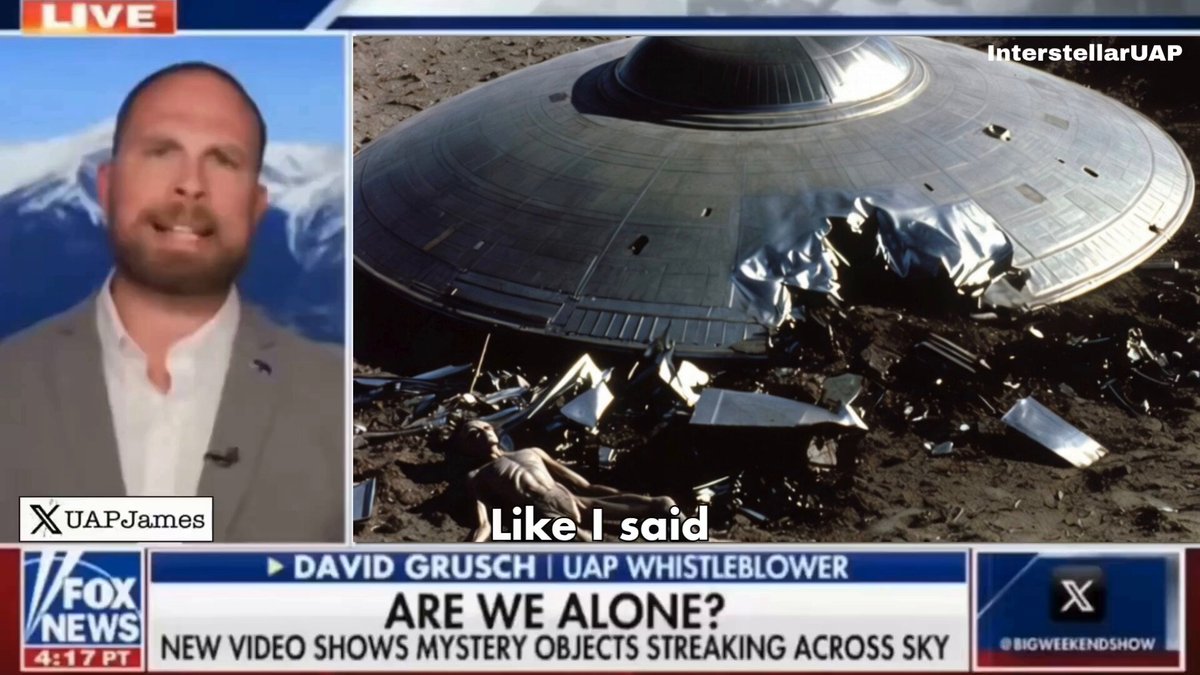
🚨 David Grusch - Air Force intelligence officer & UFO whistleblower, confirms he's personally seen crash retrieval photos and recovered vehicles of various shapes lenticular discs, crescent moons, and more from programs dating back decades. 👽🛸🇺🇸
"I've seen the recovered vehicles and everything. So I would say that's probably the most stupendous thing, earth shattering thing that changed my worldview," Grusch stated. He notes the administration, with figures like Stephen Miller involved, is serious about getting to the bottom of this, building on what President Trump was briefed on in his first term.
Grusch also detailed how black programs have been funded off books through slush funds, cutouts, and even criminal enterprises to support these efforts, and addressed skeptics by explaining how secrets are compartmented with only a small core truly in the know yet leaks have occurred over time due to qualified observers.
Incredible interview from David Grusch.
7
33
142
8,375
Chase Hughes reveals: "Your mind is not a camera recording reality - it's a projector creating it."
Love is real, and fear is an illusion. But who's creating that illusion?
As Chase explains, drawing from ancient wisdom like the Dhammapada (What you think, you become), Hermetic texts (All is mind), and modern quantum insights: observation changes matter. Your brain doesn't just interpret life, it generates the version you experience through filters of fears, beliefs, and stories.
This is why two people can live the exact same moment and see completely different realities. Suffering comes from inside, not outside.
The solution? Stillness, presence, and surrender. Stop letting fear hijack the projector, and you'll see reality clearly for the first time.
7
10
82
3,939
Interstellar retweeted
Rep Tim Burchett on UFO's: "The problem is we have some little punk with a man bun telling the president he is on a need to know bases" 🛸
"These things are hovering for hours over military bases then shooting up in the sky at impossible speeds"
"Imagine if we had this energy source, we could heat our homes in the winter & cool them in the summer"
28
88
487
32,907
Give me $1 billion dollars x.com/ProfAviLoeb/status/206…
5
4
22
3,782
Interstellar retweeted
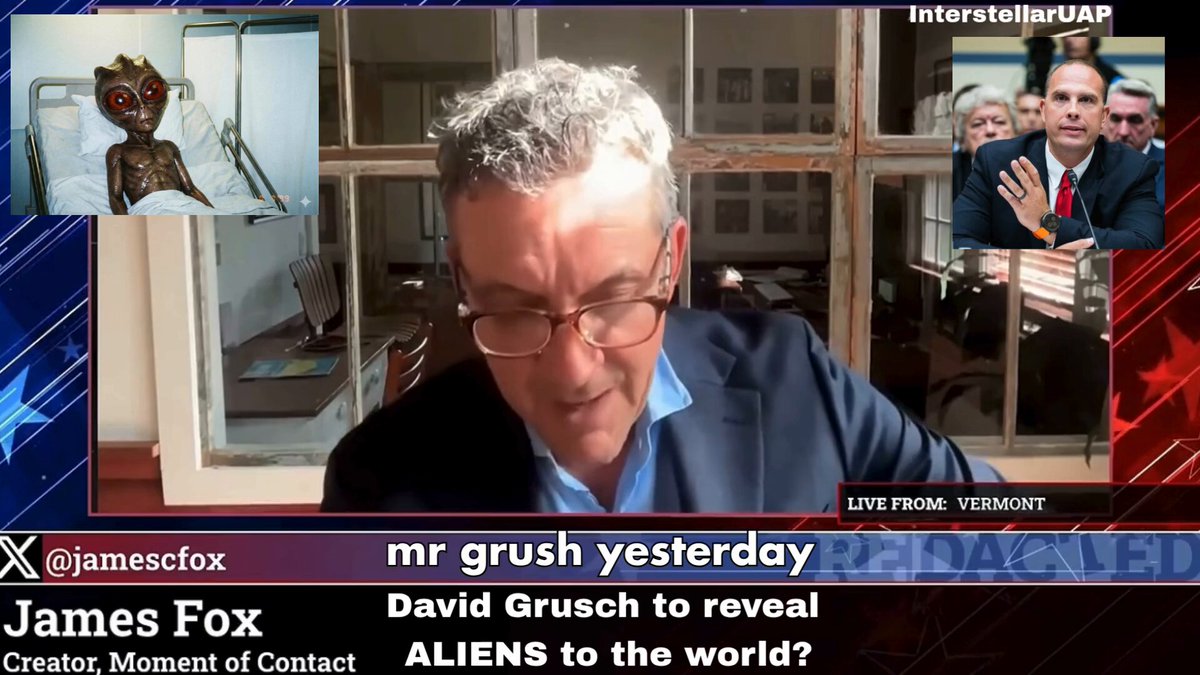
James Fox: "David Grusch said he has seen videos of recovered UFO's & Non Human Biologics"
"Grusch is making a direct plea to President Trump to release the files he has seen" 🇺🇸
"There have been several dozen cases of the Government examining non human biologics"
17
76
390
16,815
Interstellar retweeted
🚨 James Fox says that Grusch may be about to confirm the existence of Non Human Intelligence or 'Aliens' 👽
"Grusch assured me today that he is going to address this issue to the public very soon. It's coming out.
"Think about the Varginha UFO case & what was recovered....non human biologics"
"David Grusch is legitimately concerned about his personal safety"
35
87
612
34,218
Interstellar retweeted
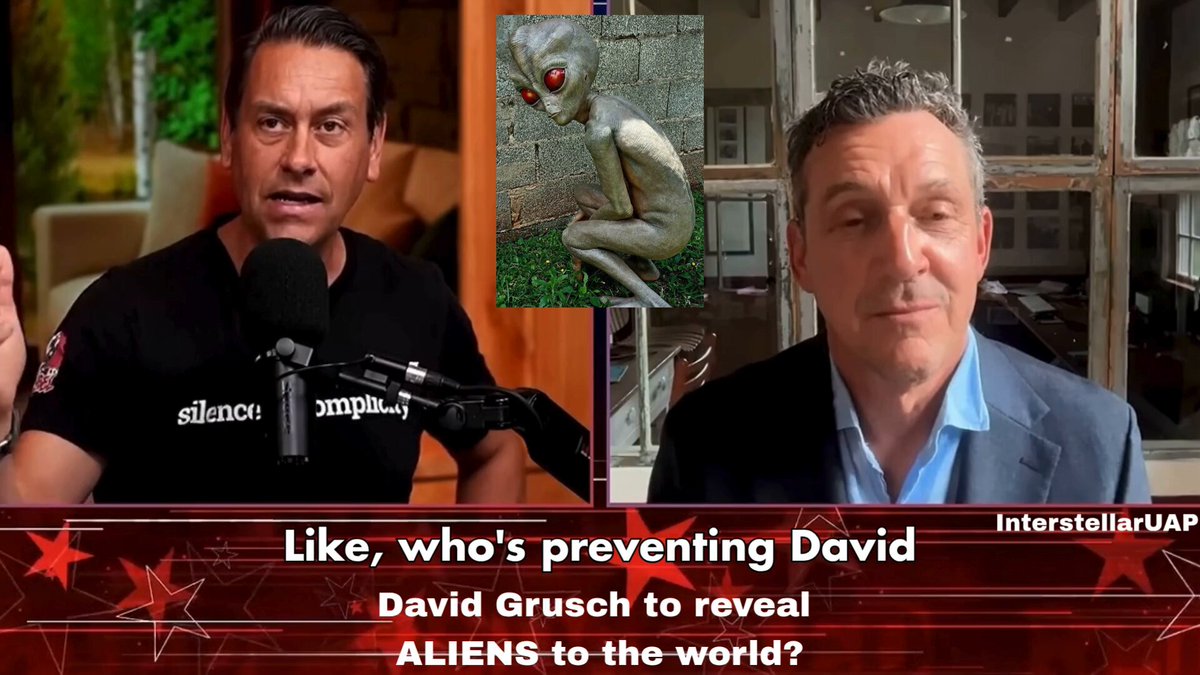
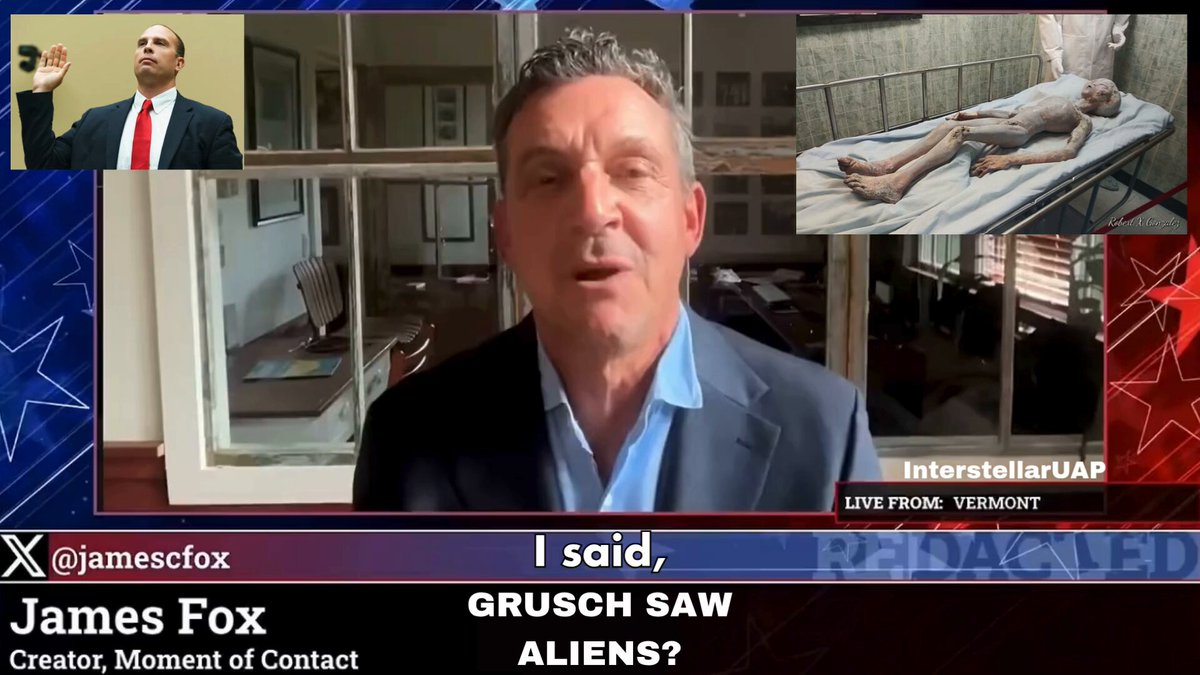
**BOMBSHELL** James Fox hints that David Grusch May have seen ALIENS with his own eyes 👽
"My jaw was on the FLOOR, I simply could not believe what he had seen with his own eyes"
What David Grusch revealed that he had seen with his own eyes left the room speechless"
"It drew the oxygen out of the room"
"I looked at everybody and their eyeballs were popping out"
"Evidence of non human sentient beings should be a right for everyone to know - It should be disclosed"
David Grusch could be a first hand witness to non-human intelligence and may have seen biologics firsthand. He also confirmed that he will reveal this soon to the public.
80
175
1,178
73,687
🚨 James Fox says that Grusch may be about to confirm the existence of Non Human Intelligence or 'Aliens' 👽
"Grusch assured me today that he is going to address this issue to the public very soon. It's coming out.
"Think about the Varginha UFO case & what was recovered....non human biologics"
"David Grusch is legitimately concerned about his personal safety"
35
87
612
34,218
**BOMBSHELL** James Fox hints that David Grusch May have seen ALIENS with his own eyes 👽
"My jaw was on the FLOOR, I simply could not believe what he had seen with his own eyes"
What David Grusch revealed that he had seen with his own eyes left the room speechless"
"It drew the oxygen out of the room"
"I looked at everybody and their eyeballs were popping out"
"Evidence of non human sentient beings should be a right for everyone to know - It should be disclosed"
David Grusch could be a first hand witness to non-human intelligence and may have seen biologics firsthand. He also confirmed that he will reveal this soon to the public.
80
175
1,178
73,687
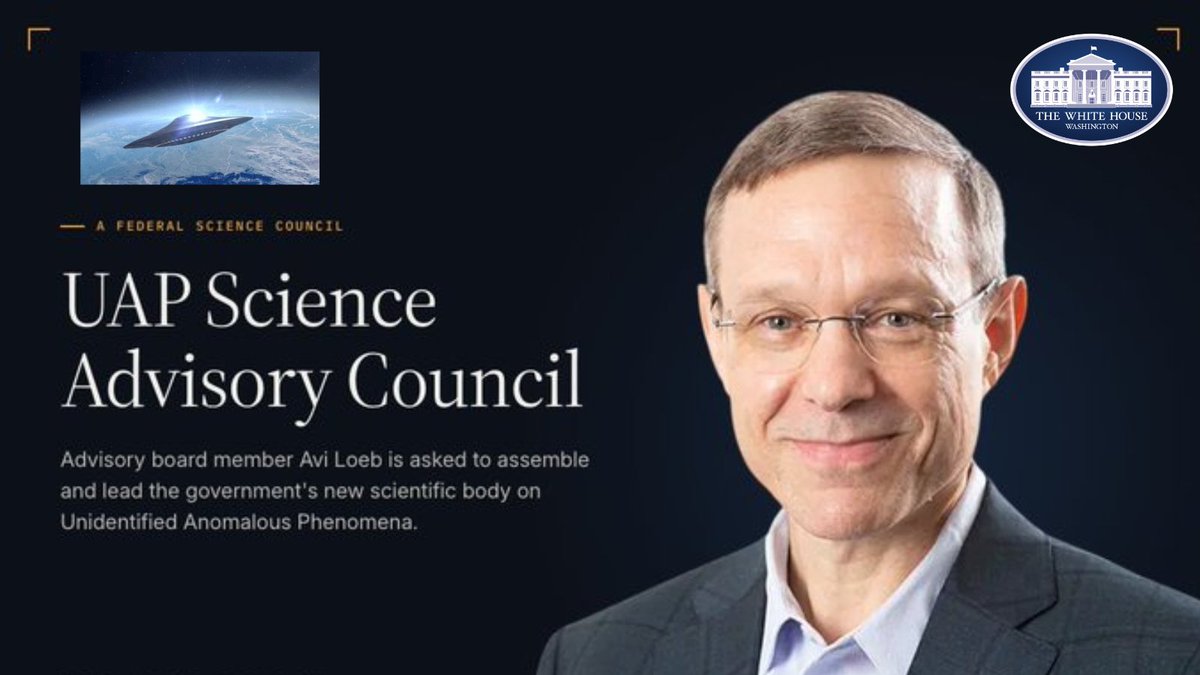
Professor Avi Loeb announces that the White House, AARO, and ODNI have asked him to assemble and lead a new UAP Science Advisory Council, bringing scientific rigor to the study of Unidentified Anomalous Phenomena.
The Harvard astrophysicist who leads the Galileo Project and serves on the Disclosure Foundation's advisory board, has announced that he was asked to assemble and lead a new UAP Science Advisory Council to support the federal government's work on Unidentified Anomalous Phenomena.
Writing on the same day the government released its third batch of declassified UAP files, Loeb said the council was established by the White House, the All-Domain Anomaly Resolution Office (AARO), the Office of the Director of National Intelligence (ODNI), the Federal Bureau of Investigation, and other members of the Intelligence Community. He described being tasked over the prior week with building a team of scientists to serve on it.
Loeb will chair the council. He named five researchers as its founding members:
Dr. Richard Cloete, data analysis and data management with AI tools
Dr. Regina Sarmiento, data analysis and data management with AI tools
Prof. Matthew Szydagis, instrumentation and data collection
Dr. Devesh Nandal, numerical analysis and astrophysics
Dr. Omer Eldadi, data management, AI, and human psychology
The group's stated purpose is to help government agencies study the nature of UAP through rigorous scientific methods, with an emphasis on collecting and analyzing higher-quality data rather than relitigating older material that cannot be independently verified.
The announcement arrived alongside the third release of government UAP files. Among the newly public documents is a report dated June 5, 2026 and signed by Dr. Jon Kosloski, the director of AARO, describing anomalous phenomena observed by law enforcement officials over two days in October 2023, including an orange "mother" orb that appeared to launch smaller red orbs. According to that report, roughly 40 percent of the phenomena documented in the case remain unexplained.
For Loeb, that unresolved fraction is precisely where scientific attention belongs. He has consistently framed the question around two possibilities, both of which he argues deserve serious study. The first, and most down-to-earth, is that some objects are human-made technologies operated by other nations, in which case their appearance near sensitive sites would represent a national security concern. The second, which he describes as far less likely but far more consequential, is that a small number of objects could have a non-human origin. Distinguishing between the two, he argues, calls for better instruments and careful analysis rather than speculation.
12
31
111
5,413
Interstellar retweeted
Rep. Tim Burchett: "Some of the UFO videos just released by The White House in the third drop were taken by FBI Agents" 🛸
"They had done work for the Federal Government & witnessed these orbs"
"These were not some redneck punks like me these FBI agents are trained observers"
"I can't say too much"
23
80
478
26,622
Interstellar retweeted
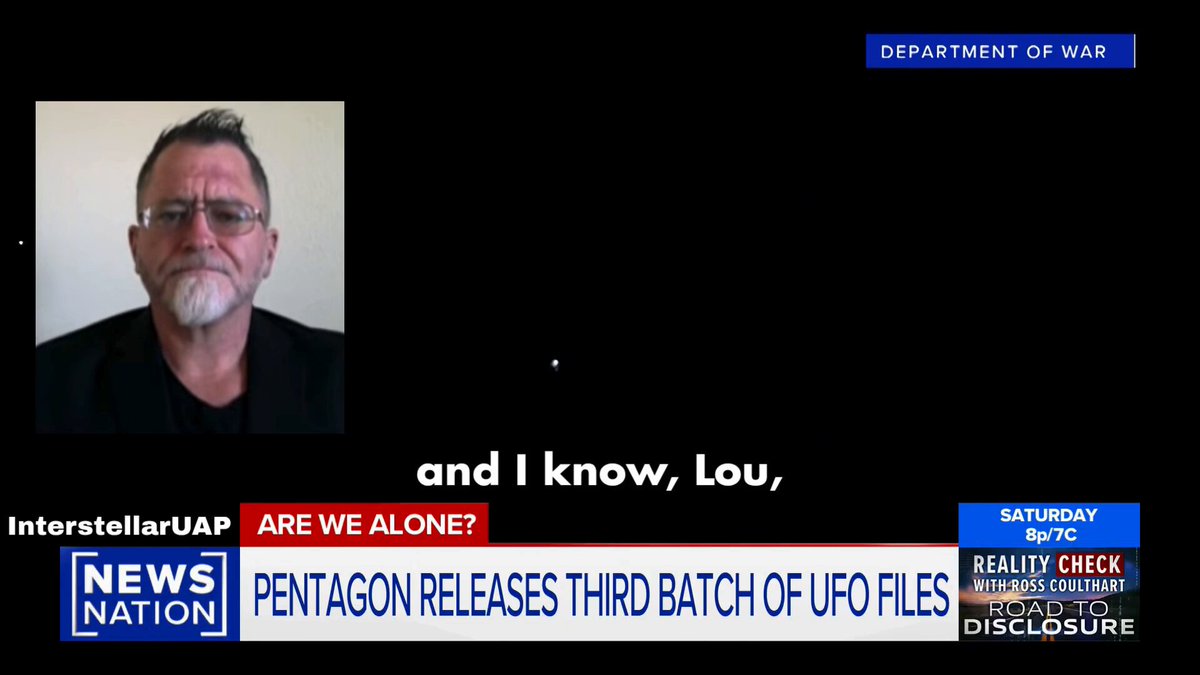
Lue Elizondo: "DNI Official witnessed glowing orbs 20ft from helicopter on visit to sensitive military site" 🛸😱
This was a senior official from the Director of National Intelligence Office.
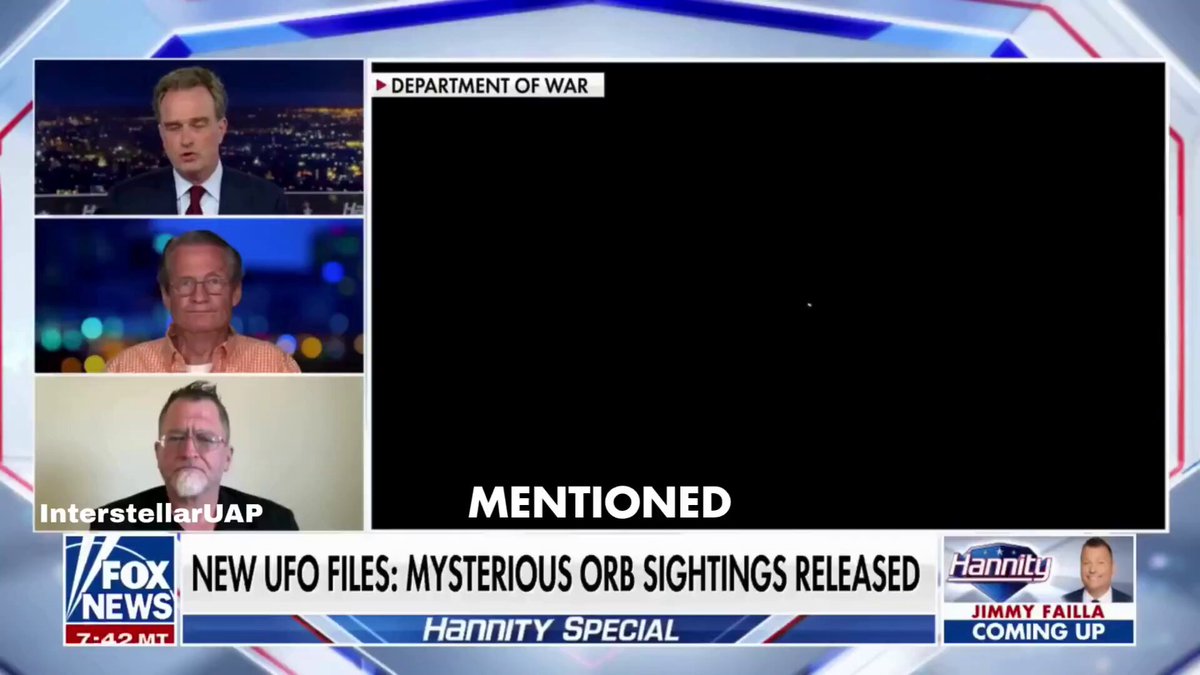
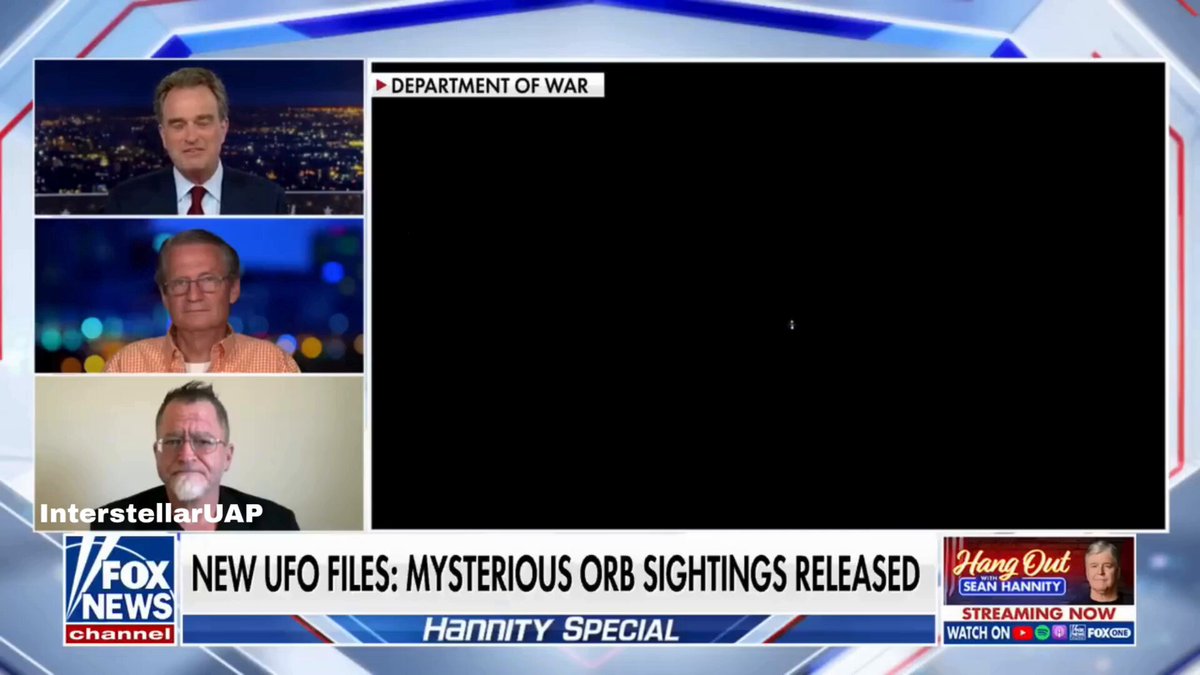
Newly released UFO files from the Department of Defense detail mysterious orb sightings, including trained FBI agents and a top intelligence official who investigated them firsthand. These orbs hover, move at incredible speeds, and defy conventional explanation.
11
61
347
19,344