
Joined March 2024
- Tweets 37,927
- Following 5,081
- Followers 6,434
- Likes 96,082
1,708 Photos and videos















Pinned Tweet

~FYI~
I am NOT suicidal
I'm an exceptional driver
I do not drink or do drugs (sober since 2009), no infractions since that time
I'm psychologically sound
I would not harm anyone
I am being targeted for being a truth telling, conservative Christian
1
3
163
Qụanŧum Lịtterb¤x retweeted

Jun 15
Trump Settles Iran and Ukraine as the War Machine Loses Control x.com/i/broadcasts/1lKQRREpy…
77
1,026
2,421
36,254
Qụanŧum Lịtterb¤x retweeted

🚨So complicated that the
million dollar check writers
can't figure it out. Keep in mind that this is onlv one
example of the fraud thats
being perpetrated on the taxpayers. And I'm sure that
manv others are doing the
same thing, not iust Somalis. #SomaliFraud #WashingtonState
11
219
191
4,714
Qụanŧum Lịtterb¤x retweeted
Trump is no grifter!
Tell me i'm wrong...
13
119
223
5,019
Qụanŧum Lịtterb¤x retweeted

This is the most unhinged, nuclear-level meltdown ever Schmidt has ever unleashed.
For Democrats to lecture ANYONE about the weaponization of government against the opposition is peak hypocrisy and absolutely ludicrous.
They’ve been doing it for years — and got caught.
What do you think? 👇
#Weaponization #DeepState #DemocratHypocrisy
255
1,590
8,574
49,126
Qụanŧum Lịtterb¤x retweeted

Steven Eugene Kuhn:
232
1,182
7,561
41,469
Qụanŧum Lịtterb¤x retweeted

Jun 16
Mass arrests have been reported. The DOJ has charged 324 defendants, including 96 medical professionals, across 50 federal districts and 12 state attorney general offices in connection with healthcare fraud schemes involving over $14.6 billion in alleged losses.
787
11,014
43,399
691,655
Qụanŧum Lịtterb¤x retweeted

Jun 15
🚀 Ron Baron now has roughly $25 billion invested in SpaceX, making it the largest position across his funds.
After speaking with Elon Musk, Baron says Musk believes @SpaceX is still "just getting started."
The long-term vision is enormous: Starlink, reusable rockets, AI infrastructure, compute, chips, and a global communications network that few competitors can match.
@RonBaronAnalyst believes SpaceX is years ahead in several key industries and expects the investment to generate hundreds of billions of dollars over time.
The most interesting part? SpaceX generated about $19 billion in revenue last year, yet some projections see a path toward $1 trillion in annual revenue by 2030!
That's the kind of scale investors are trying to wrap their heads around. 👀 $SPCX
70
162
2,233
7,766,099
Qụanŧum Lịtterb¤x retweeted

Assistant Attorney General Colin McDonald today in Ohio:
"Federal and state partners have come together as one to battle the fraud crisis that has crippled our taxpayer funded programs and robbed the American purse for too long. Under @POTUS, @VP, and Acting Attorney General @DAGToddBlanche, the days of brazen thievery of taxpayer dollars, is over."
There is nowhere we won't go to fight fraud.
81
224
862
31,376
Qụanŧum Lịtterb¤x retweeted
Assistant Attorney General Colin McDonald joined
@GowdyAmerica last night to discuss how the Fraud Division is aggressively protecting American taxpayers and finally putting an end to the robbing of America’s purse.
50
105
446
18,347
Qụanŧum Lịtterb¤x retweeted

I would take this a couple steps further and argue that a key reason libs reliably fail to model the theory of mind of those they disagree with is the hegemonic institutional power they enjoyed for almost a century, starting with what Walter Lippmann described in Public Opinion in 1922 all the way through ‘The arc of the moral universe is long, but it bends toward justice’ Obama-ism.
From the seat of elite institutional power (the media, academia, government, the arts) libs looked out unidirectionally and had great power to regiment public opinion with supervisory and regulatory discretion over the manufacture of ideas and ideology, particularly in the postwar period where certain ‘explanations’ became sacrosanct in service of narrativizing the teleology of Progress.
People make fun of libs for eliding ‘explanations’ and ‘justifications’ but… that’s just something you’re going to do if you have power: You will select ‘explanations’ that are at minimum ideologically compatible and prohibit those that are not. Libs worked within the framework of this institutional advantage for so long that they just took for granted their discretionary power to decide what ideas should even be considered and along these lines rejected the notion that an accurate account of ‘theory of mind’ should be freely granted unless there was some advantage in it. (Why cede that power?)
This institutional advantage started to break down seriously about a decade ago and libs realized they were losing a stranglehold on narrative-making and ideological production. A key reason there was so much hysteria over ‘platforming’ was an awareness institutional capacity to manufacture and direct consensus was breaking down.
So a big part of the issue here is that libs haven’t updated their software to account for the new circumstances on the ground. They still think it’s their job to provide ‘regulatory approval’ of different ideas and ideological factions and not only do they not have any interest in understanding those they disagree with, they are working off the idea that just by providing an accurate account of those they disagree with they are unnecessarily ceding power and authority.
This is ridiculous of course. That ship has long sailed and many elite institutions are running on fumes. But many libs will be loathe to give up the pretense of their authority absent some cataclysmic crack up, and what that would entail given their still holding fast to delusions of grandeur after more than a decade of Trump stomping through and turning things over, I do not know.

It is not just that liberals don’t know what conservatives think. Not knowing what other people think would be like, you think they support immigration, but it turns out they’re against immigration. Liberals know that conservatives are against immigration. They’re not confused or uneducated about *what* conservatives think.
What they lack is a model of how and why conservatives think as they do. What most of them cannot do is take the other side of the argument in a debate. When they model conservatives it basically reduces to, “well, I guess I’m just a big dumb idiot racist.” If you point this out, they do long threads about how you’re desperate for their approval, which is just another demonstration of the same phenomenon.
The term that people use for this kind of understanding is, “theory of mind.” It’s not my term. I didn’t invent it. We could use some other term. But you need *some* term for this to distinguish it from merely not understanding what other people think.
I don’t really see the utility of finding some other term. This term captures it pretty well. People know what it means. It seems to be working just fine.
49
112
753
62,192
Qụanŧum Lịtterb¤x retweeted

Jun 13
Utah CD1 Democrat candidate Liban Mohamed has mobilized Somali-Americans nationwide for 85% of his campaign donations.
In May, he held a Somali-American fundraiser in Minneapolis w/ Ilhan Omar. He also gathered w/ Somali-Americans in Seattle & Virginia. deseret.com/politics/2026/06…
52
146
457
74,968
Qụanŧum Lịtterb¤x retweeted

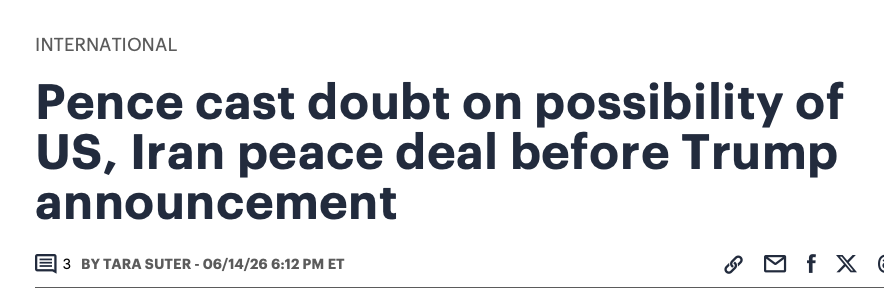
MEK's entire value proposition is regime change. They're selling themselves as "the democratic alternative"; Rajavi is "president-elect" of a government-in-waiting.
Trump's current Iran posture is negotiation, not regime change. (Side note - IMO, true regime change is probably impossible without a land war, which is a nonstarter.)
That'd explain why Pence, Pompeo, Short, and that entire crew are counter-signaling a peace deal.

8
258
1,298
21,411
Qụanŧum Lịtterb¤x retweeted

Jun 15
Happy Birthday to Trump – surreal at the White House.
The vibe!
2
1
5
353
Qụanŧum Lịtterb¤x retweeted

Jun 15
🚨 JUST IN: President Trump just WALKED OUT with DANA WHITE for UFC Freedom 250 at the White House
EPIC! 🔥
Happy birthday, Mr. President! Peace in the Middle East and celebrating America in a newly beautified capital, I voted for this 🇺🇸
112
532
3,414
83,723
Qụanŧum Lịtterb¤x retweeted
Pence's OGE financial disclosure, filed for his 2024 presidential candidacy, lists $190,000 from "National Council of Resistance of Iran" for a June 2022 speech at the MEK compound in Albania. Can't get more direct receipts than that.


34
1,070
2,838
26,324
Qụanŧum Lịtterb¤x retweeted

Jun 15
It must suck to have to pretend to be mad at this
3,583
22,683
217,366
4,712,182
The G🫡AT!

1
10
😭🙏🏼💔
Jun 13

This is:
The United States Deputy Chief of Staff for Policy and Homeland Security Advisor, Stephen Miller:
“The reason why those Americans in North Carolina, those mothers, those fathers, those precious little children, were left to die begging their government for help that never came is because the Democrats turned FEMA into an illegal alien resettlement agency.”
Meaning:
The Democrats said FEMA had NO money and left fathers to die in Maui.
The Democrats said FEMA had NO money and left mothers to die in East Palestine, Ohio.
The Democrats said FEMA had NO money and left children to die in North Carolina.
BUT FEMA had an extra $1 BILLION to spend on illegals, including Social Security, Medicaid, SNAP, and voter registration.
And, as a bonus, they complain that Elon Musk is now a trillionaire.
16
🦉 Empires built on sand and extraction don’t last. The reality of the natural order eventually reasserts itself, regardless of what the bureaucrats in D.C. want to believe. Reality is undefeated.
15
Qụanŧum Lịtterb¤x retweeted

Jun 13
Is America a dying empire or a rising superpower? You ultimately decide.
43
408
1,145
33,940