
just a guy who occasionally tweets.
Joined May 2011
- Tweets 254
- Following 65
- Followers 126
- Likes 33
5 Photos and videos

Jonathan Bernhard retweeted

21 Jul 2023
People who follow a plant-based diet account for 75% fewer greenhouse gas emissions than those who eat more than 3.5 ounces of meat a day, according to new research. A vegan diet also results in significantly less harm to land, water and biodiversity. nyti.ms/3OmbsFE
1,434
1,411
4,443
1,884,277
Jonathan Bernhard retweeted

20 Jul 2023
"Eating a vegan diet massively reduces the damage to the environment caused by food production, the most comprehensive analysis to date has concluded. [...] it turned out that what was eaten was far more important ... than where and how it was produced." theguardian.com/environment/…
10
87
325
28,016
Jonathan Bernhard retweeted

29 Jun 2023
Read more on this new ruling, & the deeper conversation it leads us to, in our latest article.
bit.ly/3JEhYF3
1
55
Jonathan Bernhard retweeted
28 Jun 2023
Question for our community: How does your Jewish practice enhance your connection to food?
1
51
Jonathan Bernhard retweeted
20 Jun 2023
The Jewish value of tza’ar ba’alei chayim (צער בעלי חיים) is to prevent unnecessary suffering to animals.
This value is central to building a sustainable Jewish animal advocacy movement.
Learn more about our mission, work, & available resources: JIFAnimals.org.
2
3
75
Jonathan Bernhard retweeted
19 Jun 2023
Proud to have @BCC1972 as a #DefaultVeg partner!
Together, we can create positive change, one plate at a time. 🍽️
Learn more about creating a DefaultVeg food policy for your Jewish community:
jifanimals.org/what-we-do/fo…

2
4
193
Jonathan Bernhard retweeted
16 Jun 2023
Shabbat shalom from our community to yours!
We'd love for you to comment below and introduce yourself so we can get to know you!
To get to know the JIFA team visit bit.ly/45Womkr

1
2
53
Jonathan Bernhard retweeted

15 Jun 2023
Have you read the recent Statement on Christians Ethics and Animal Agriculture from the Alliance of Baptists?
We are so thankful to have been part of this process on the way Christians care for animals farmed for food.
Read the entire statement: tinyurl.com/bd8rd543
5
5
584
Jonathan Bernhard retweeted
30 May 2023
JIFA works with organizations & institutions to implement #DefaultVeg policies.
Align your community's food choices with your Jewish values.
Click the link below to learn more or email shalom@jifanimals.org.
bit.ly/3qcukgQ
1
30
Jonathan Bernhard retweeted

11 May 2023
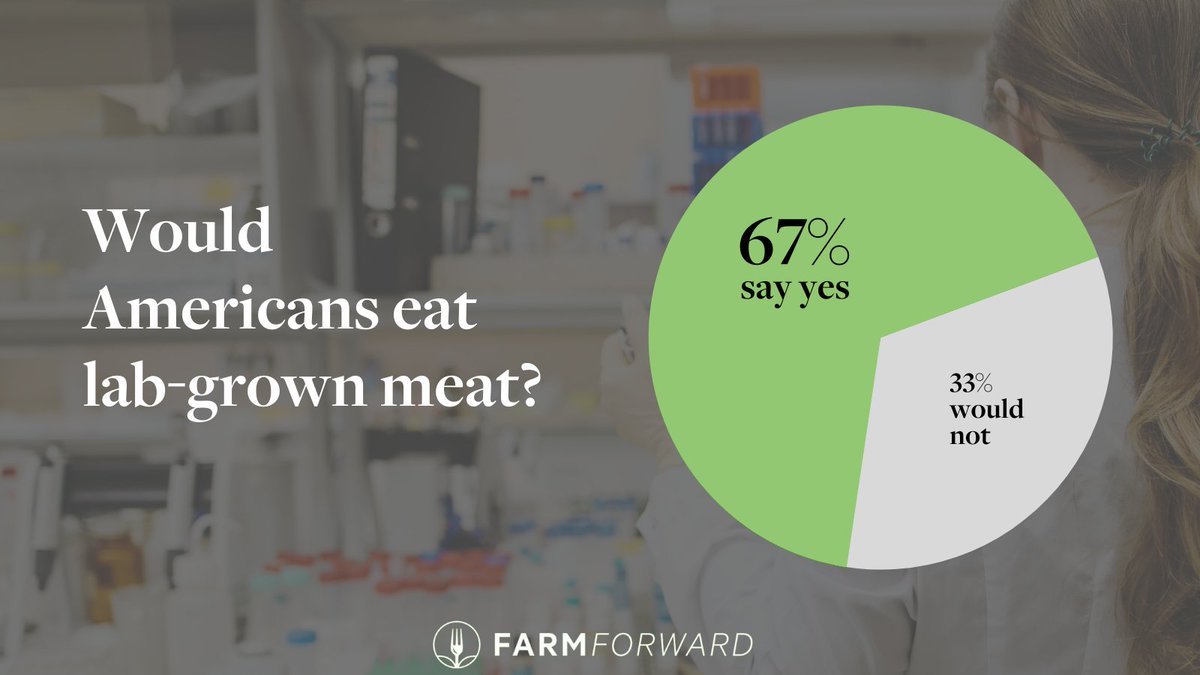
Our 2022 consumer survey shows that two-thirds of Americans would eat #labgrownmeat. Would you? Why or why not?
1
1
4
115
Jonathan Bernhard retweeted
25 Apr 2023
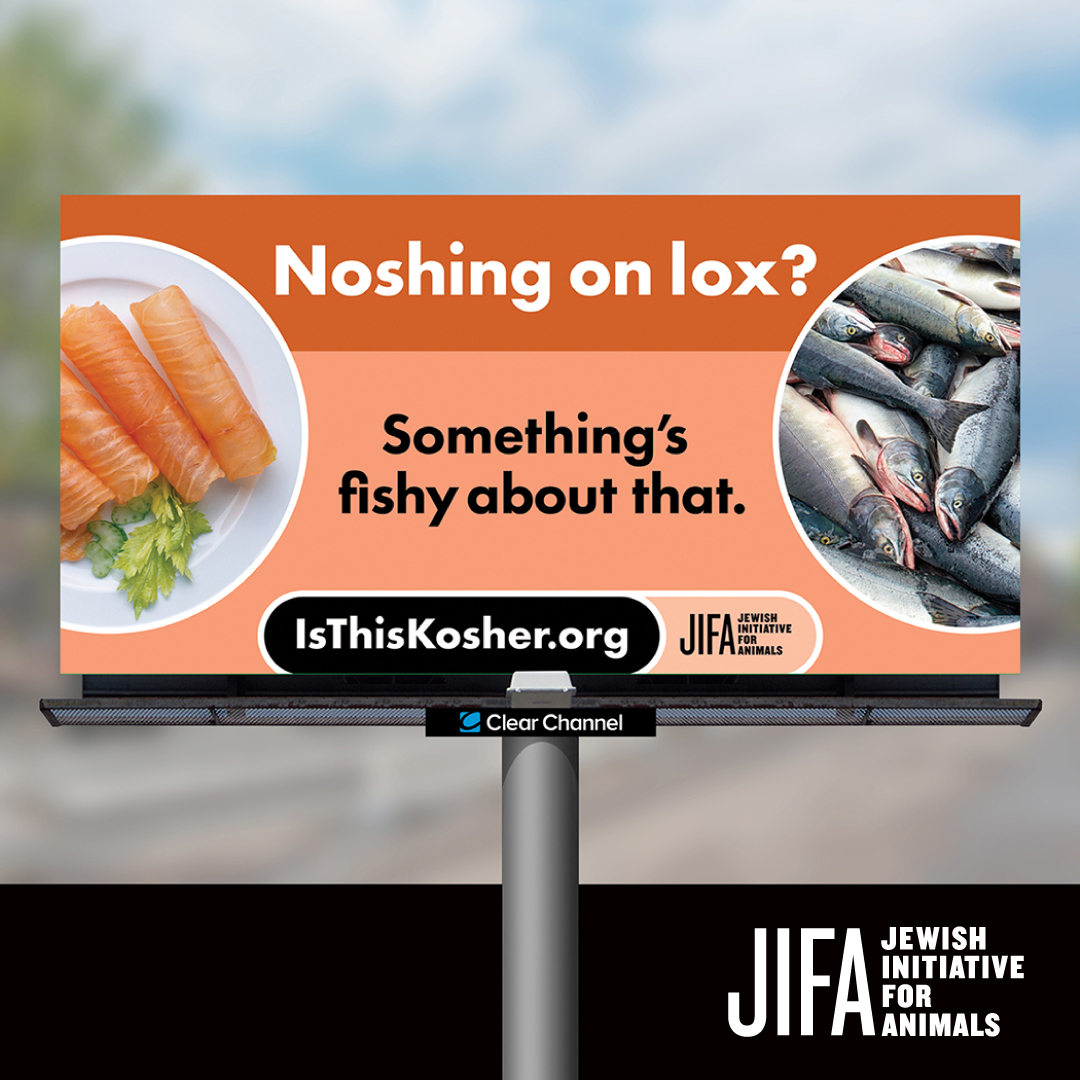
LA found a provocative message on billboards this week. The question “is this #kosher?” displays the farmed animals behind Jewish comfort foods many hold dear like fish, namely salmon (lox), all of whom are #factoryfarmed or industrially fished. isthiskosher.org
1
4
55
Jonathan Bernhard retweeted
20 Apr 2023
Local news in abuzz with conversation about #isthiskosher. Read more from @alemolina in @RNS about JIFA’s billboard campaign and its part in the growing movement for Jewish ethical eating.
bit.ly/3AilRu2
1
1
204
Jonathan Bernhard retweeted
20 Apr 2023
Thanks to our sister organization, Jewish Initiative for Animals (@JIFAnimals), new billboards across Los Angeles are asking residents “is this #kosher?” The food in question: matzah ball soup that usually contains chickens, 99% of whom are #factoryfarmed. isthiskosher.org

1
2
129
Jonathan Bernhard retweeted
14 Apr 2023
We’re excited to share our latest work with you… stay tuned for some big news on this channel in the coming week! #shabbatshalom
1
48

29 Mar 2023
Yep yep yep!
29 Mar 2023

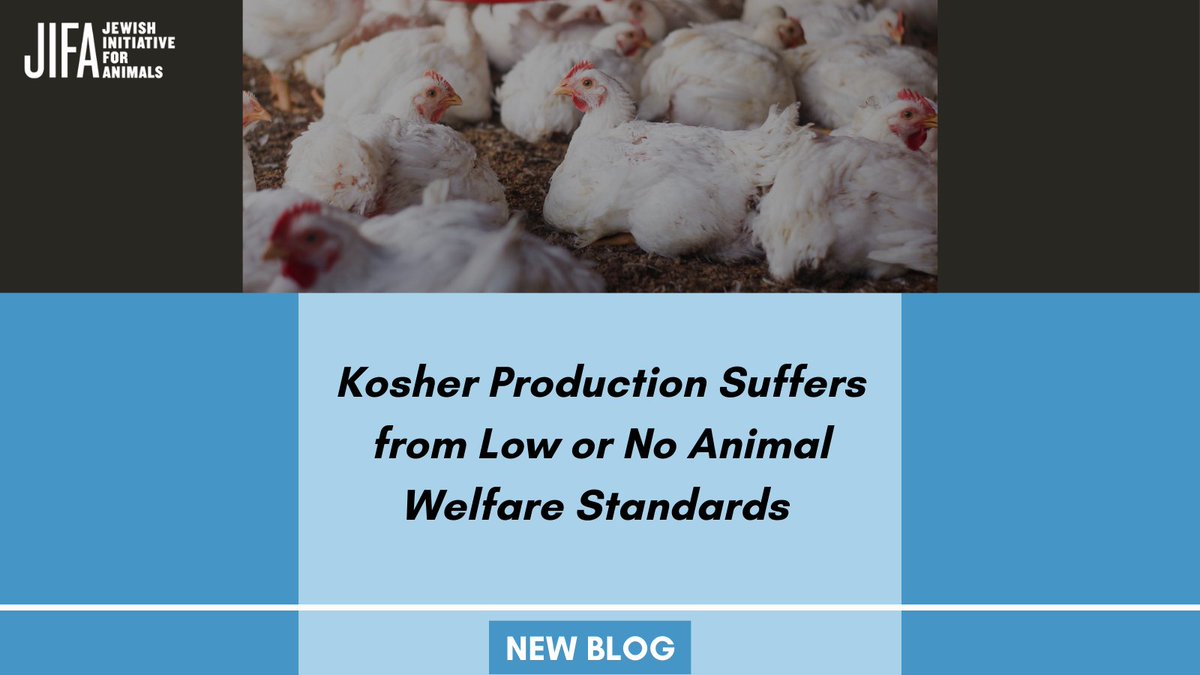
The expansion of industrial animal agriculture has fundamentally changed the meaning of kosher. Methods of breeding and raising animals for kosher and non-kosher markets are almost, if not entirely, indistinguishable. Learn more: bit.ly/3lRn8Vi
1
2
73
Jonathan Bernhard retweeted
20 Mar 2023
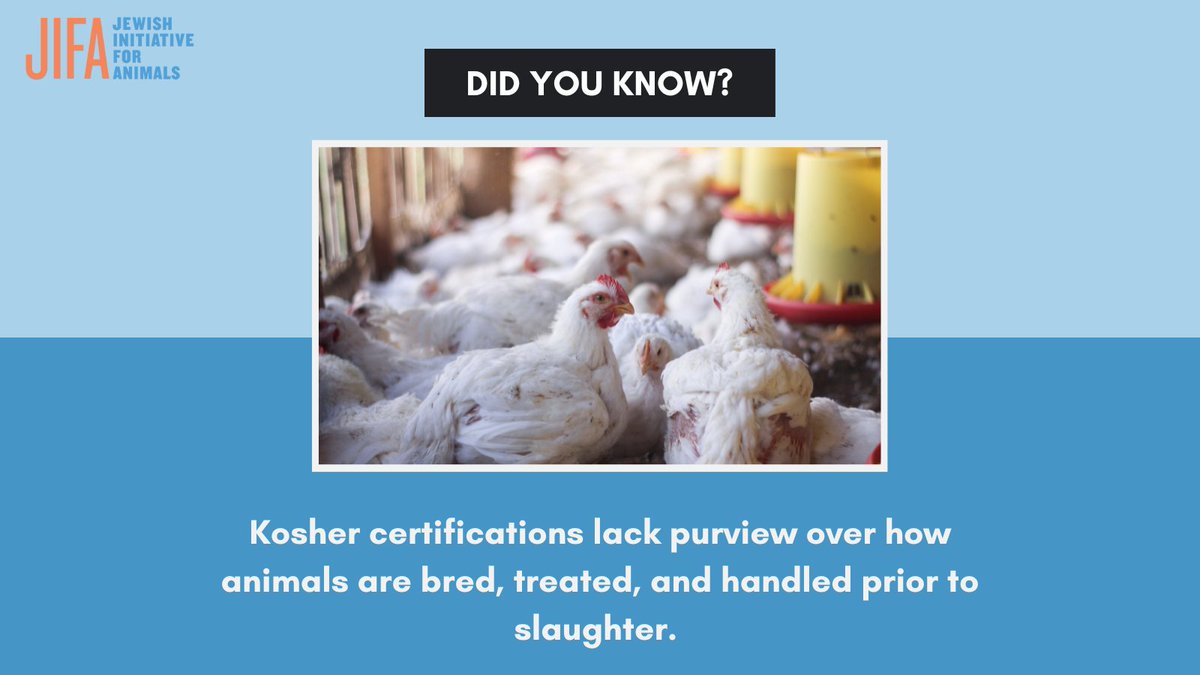
Genetic welfare and outdoor access aren’t different for animals raised for the kosher market: for example, the vast majority of kosher chickens have been genetically manipulated to mature quickly and are slaughtered at just 38-48 days old.
Learn more: jifanimals.org/blog/genetic-…
1
61
Jonathan Bernhard retweeted
13 Mar 2023
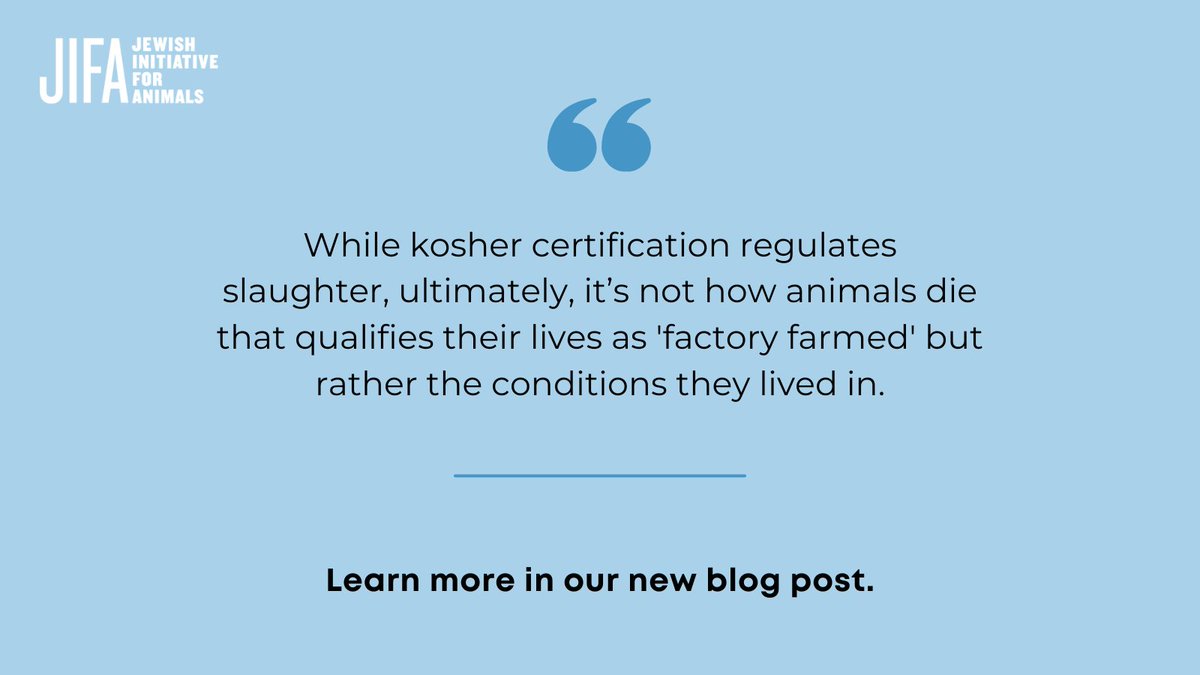
Though kosher certification regulates slaughter, it’s not how animals die that qualifies them as “factory farmed”—it’s the conditions they were forced to live in.
Learn more about the kosher industry in our new blog: jifanimals.org/blog/virtuall…
1
1
32
Jonathan Bernhard retweeted
13 Mar 2023
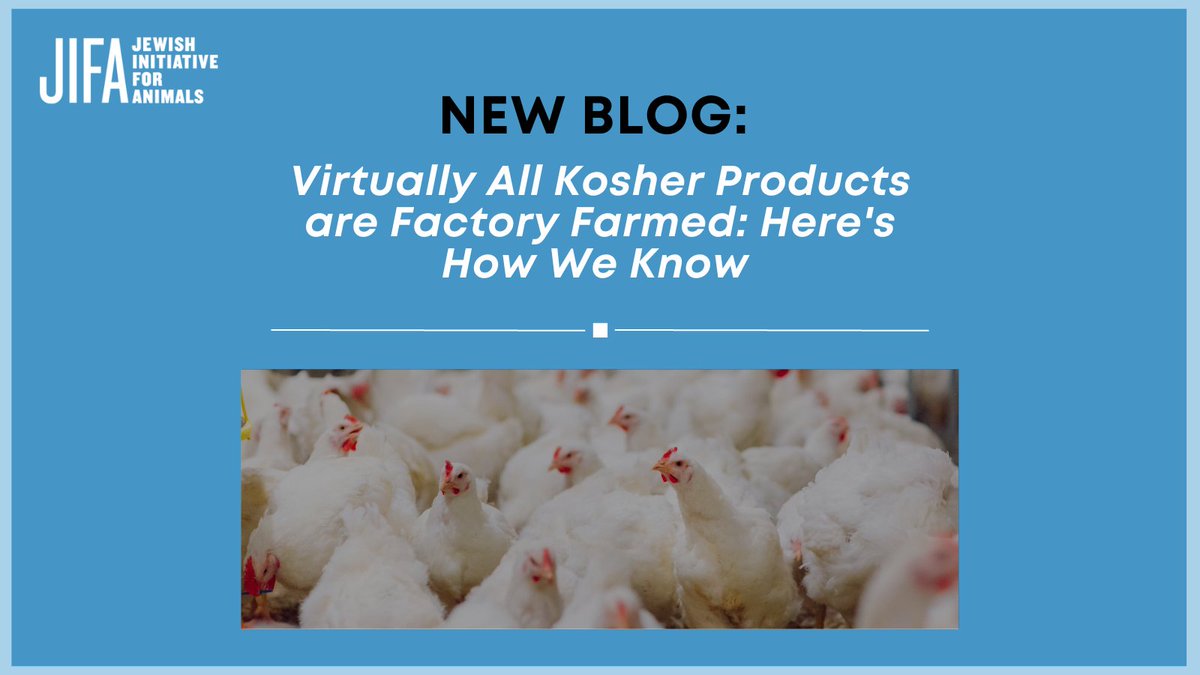
Many people mistakenly believe that kosher production is better for animals. Most kosher products come from factory farms, where animals suffer from unhealthy genetics and languish in filthy, crowded conditions.
1
1
1
48
Jonathan Bernhard retweeted
6 Mar 2023
#Purim starts tonight! Sharing this thought-provoking piece from our Director of Programs, Melissa Hoffman, on turning food norms on their head to inspire an even more joyous celebration. Happy flipping and feasting!
blogs.timesofisrael.com/vnah…
2
2
78