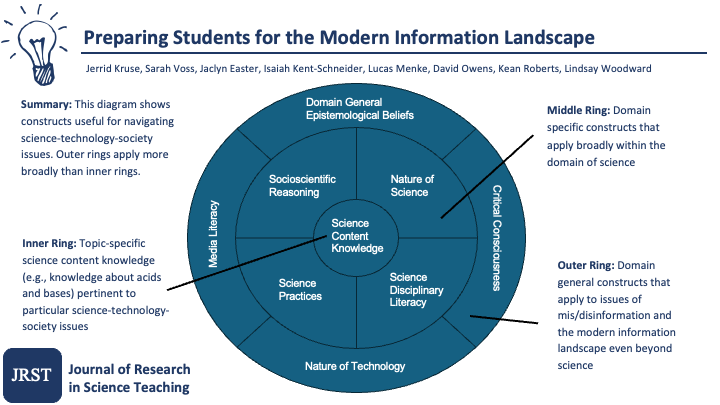
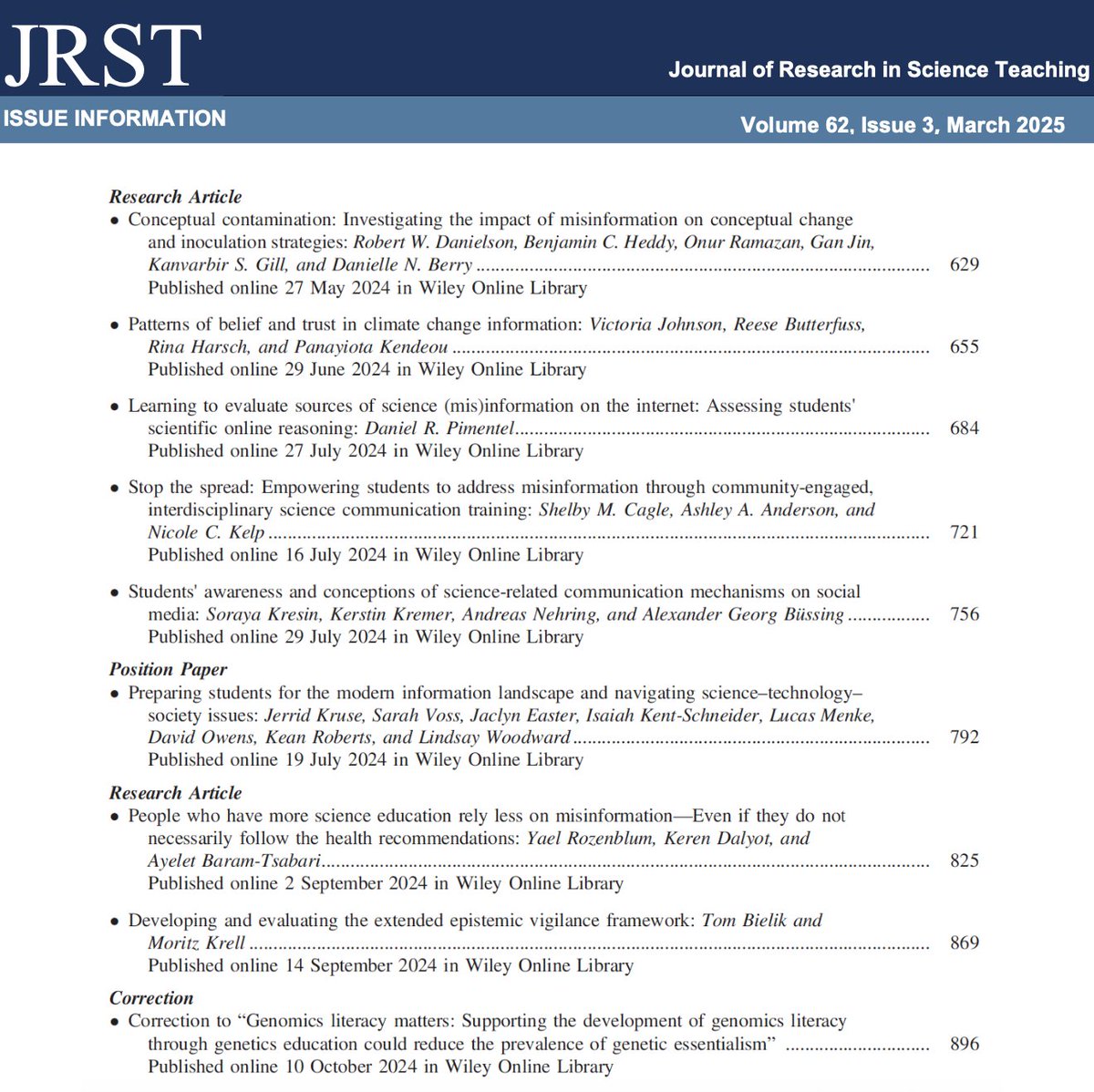
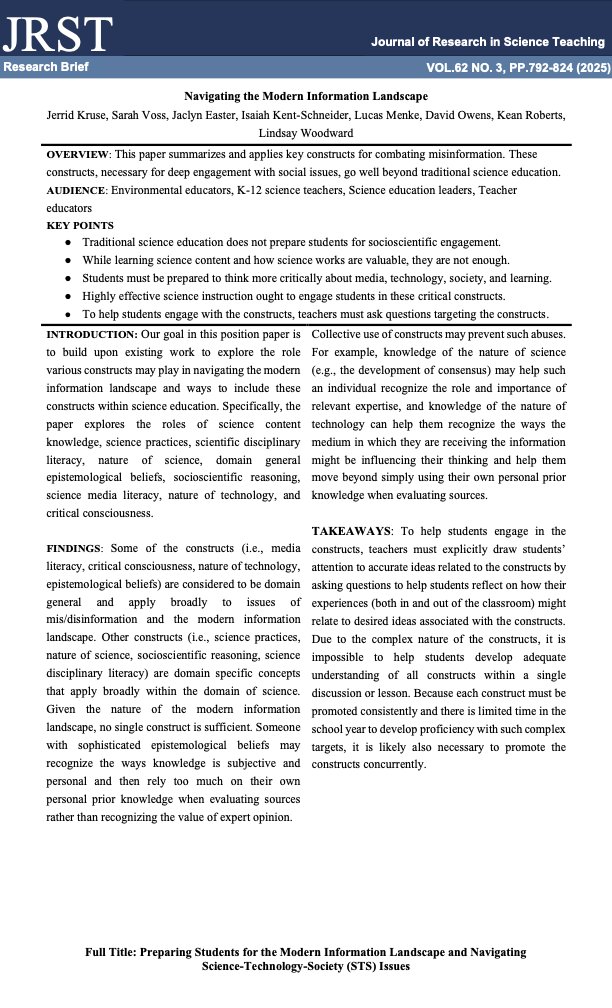
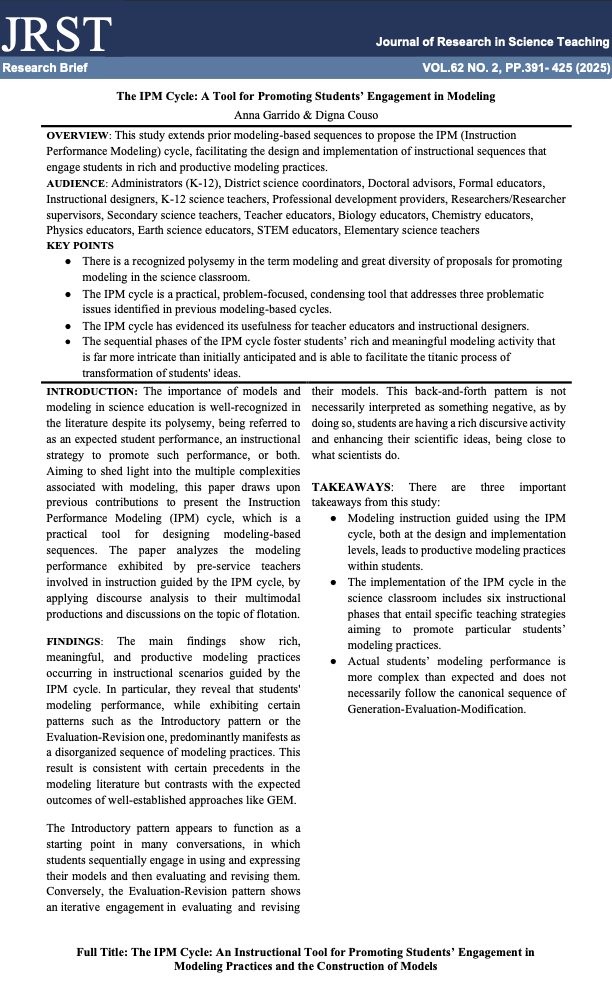
New Position paper: Preparing students for the modern information landscape and navigating science–technology–society issues
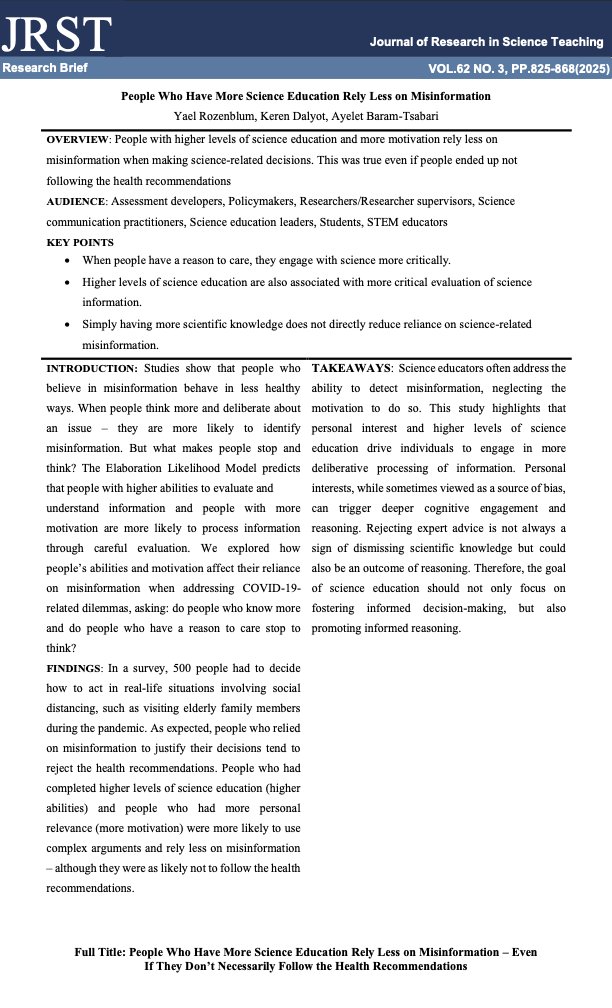
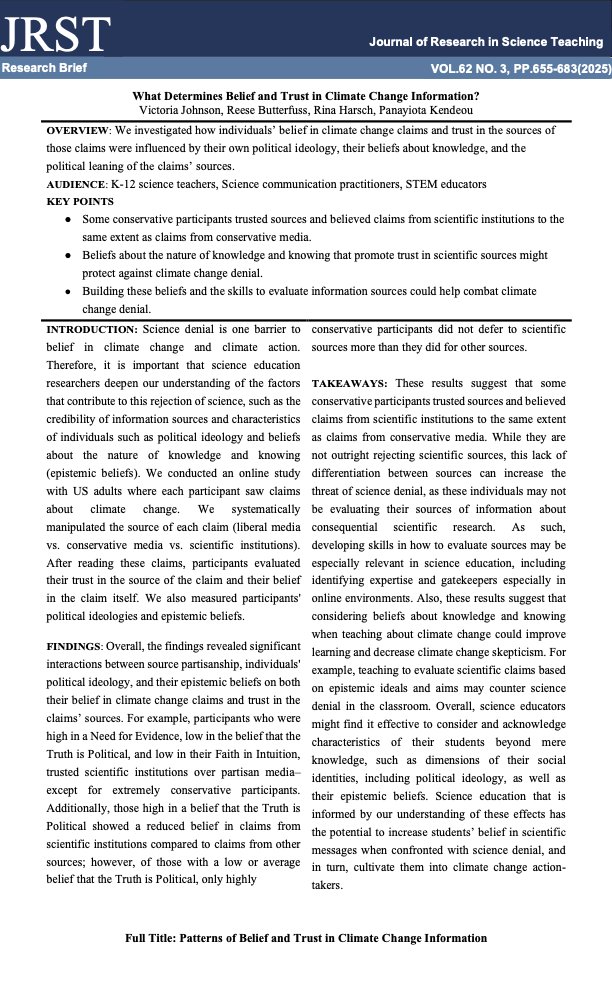
Check the following research brief and visual abstract to explore more!
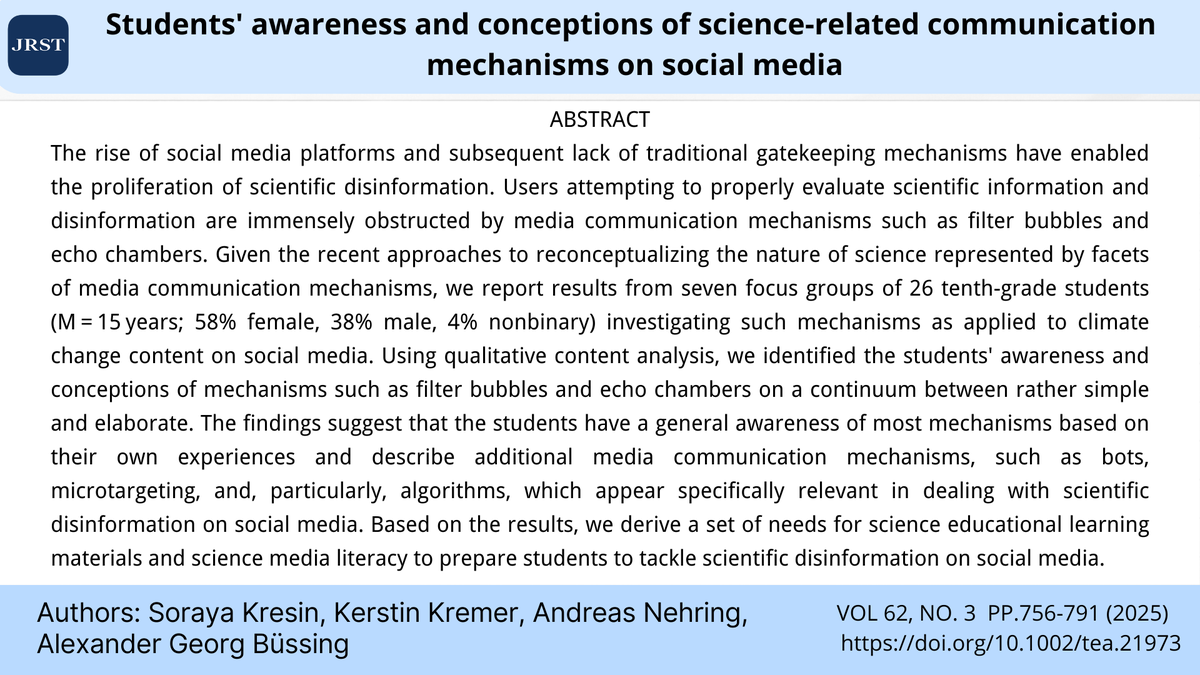
New article: Students' awareness and conceptions of science-related communication mechanisms on social media
check it out here doi.org/10.1002/tea.21973
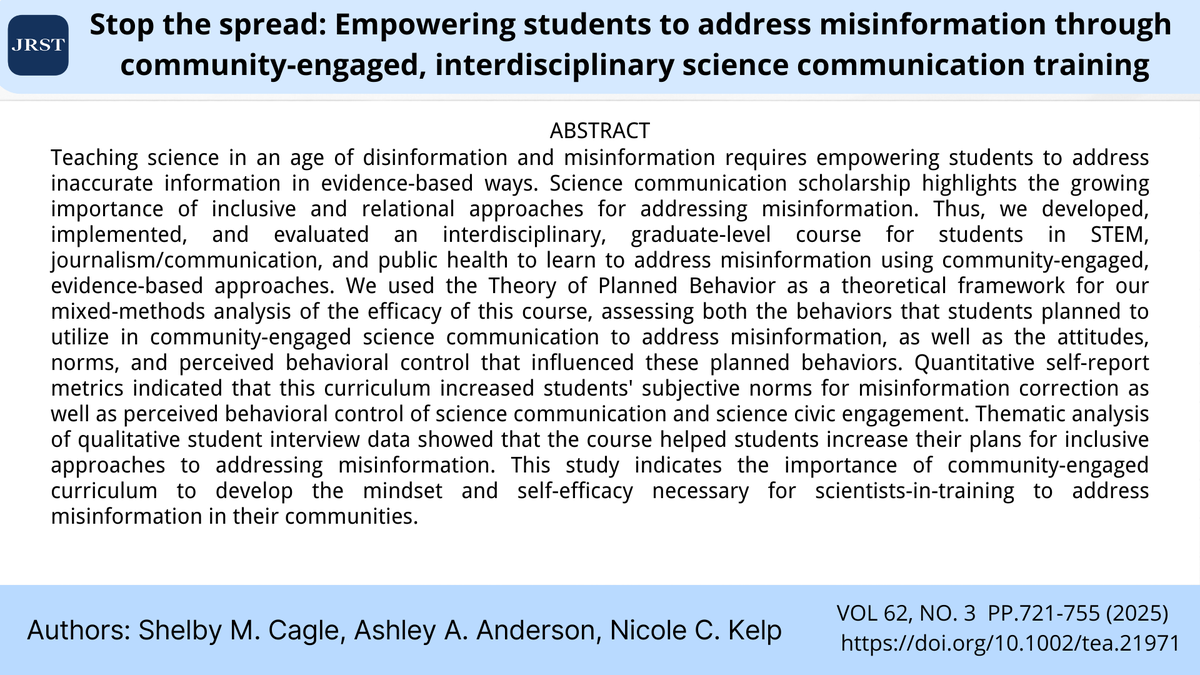
This new study shows how a community-engaged, interdisciplinary course helps grad students tackle misinformation with inclusive, relational approaches.
#misinformation
Check it out here onlinelibrary.wiley.com/doi/…
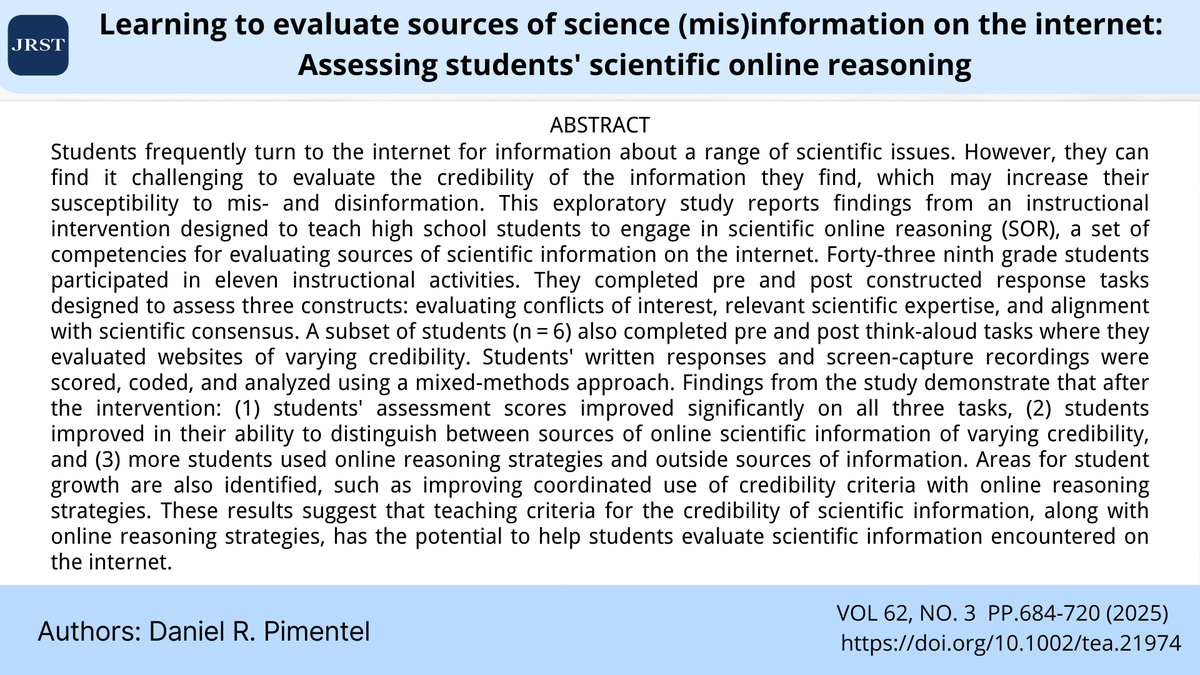
New study alert! How do students evaluate online science info? This new study explores how teaching scientific online reasoning (SOR) helps students distinguish credible sources from misinformation.
🔗 onlinelibrary.wiley.com/doi/…
This article investigated how individuals’ belief in climate change claims and trust in the sources of those claims were influenced by their own political ideology, their beliefs about knowledge, and the political leaning of the claims’ sources.
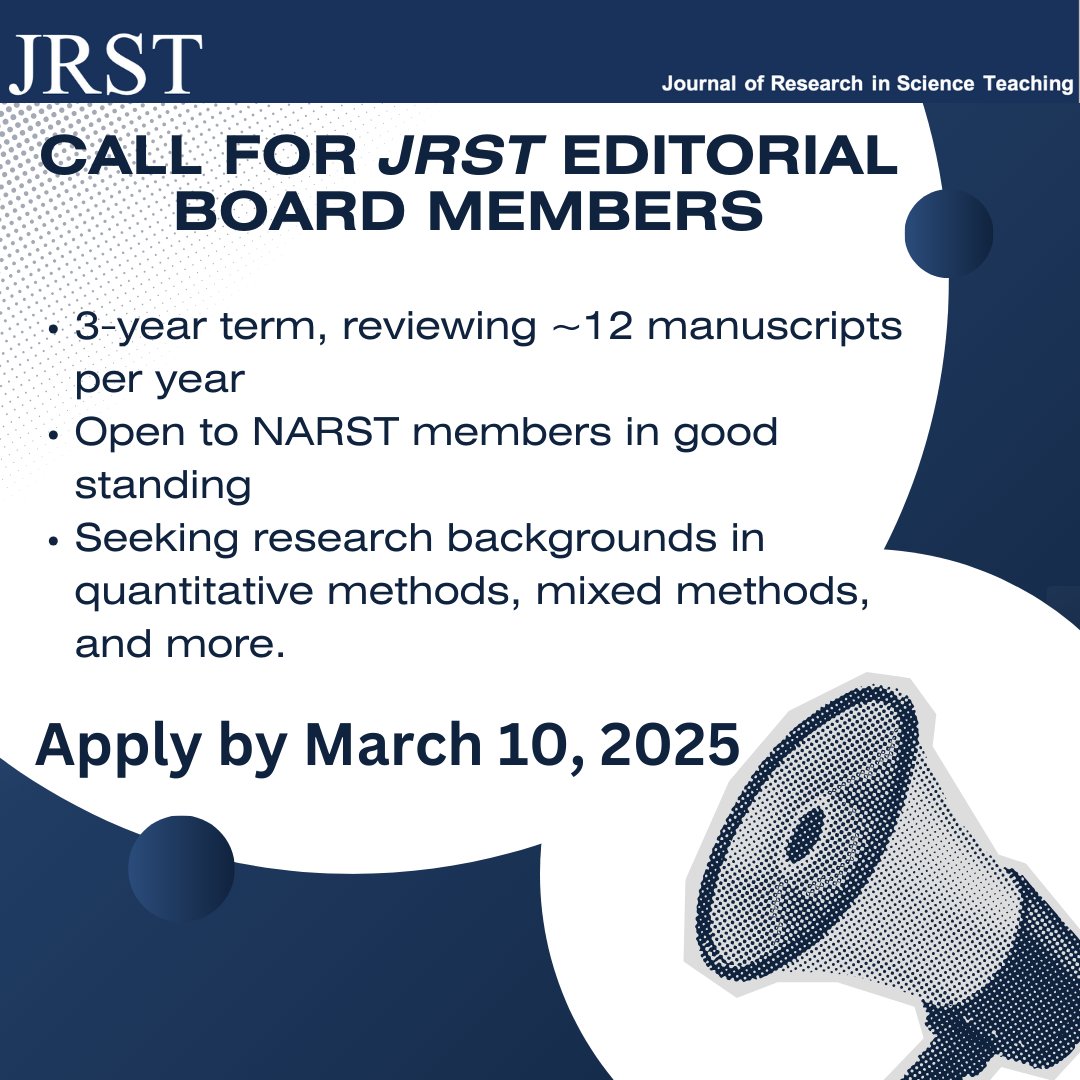
DUE SOON: @JRSTpub is seeking dedicated scholars to join our Editorial Board! Consider contributing to the profession, shaping the field, & ensuring the quality of science education research.
🔗Apply by 𝗠𝗮𝗿𝗰𝗵 𝟭𝟬, 𝟮𝟬𝟮𝟱: shorturl.at/gjQ1F
❓Contact jrst@nd.edu
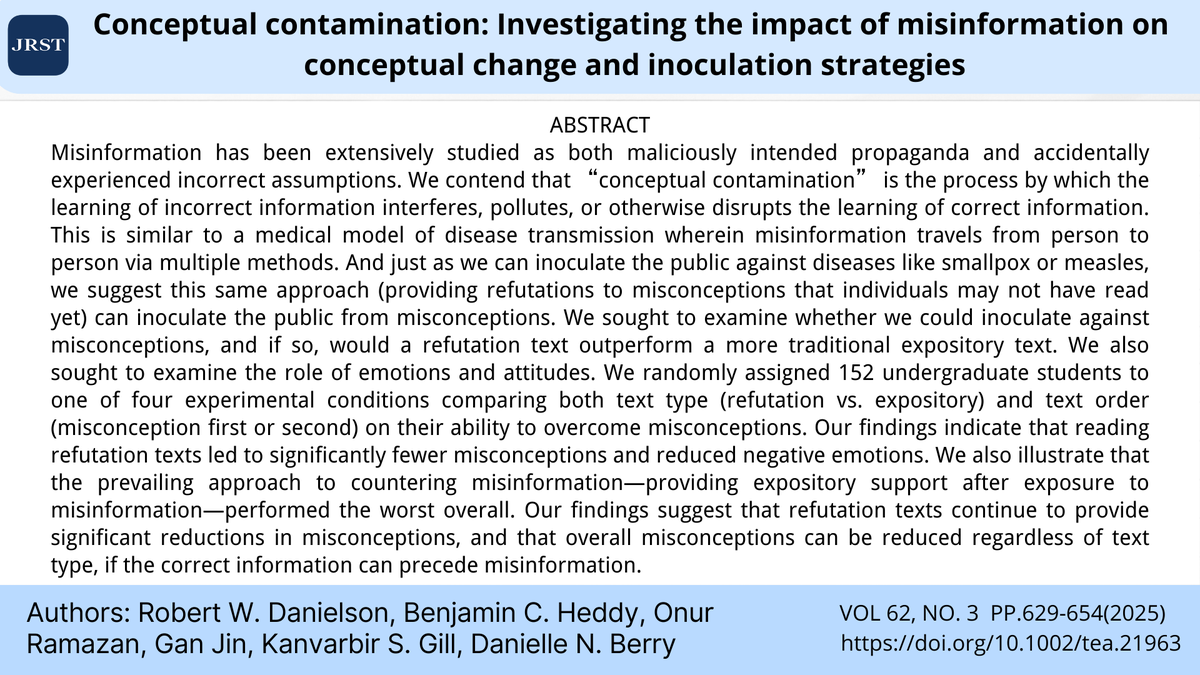
New Study Alert!!!
Misinformation spreads like a virus, but can we inoculate learners against it?
Check this study out here to get more insights on fighting misinformation in science education onlinelibrary.wiley.com/doi/…
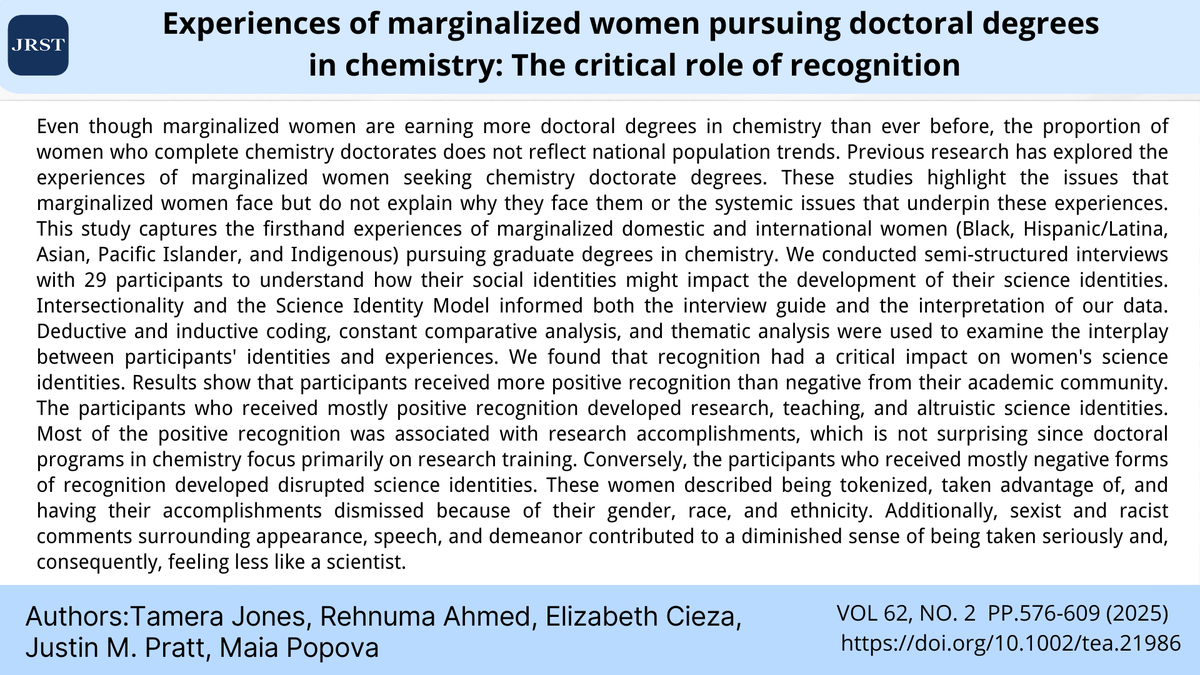
New article: Experiences of marginalized women pursuing doctoral degrees in chemistry: The critical role of recognition
Check here to explore more doi.org/10.1002/tea.21986
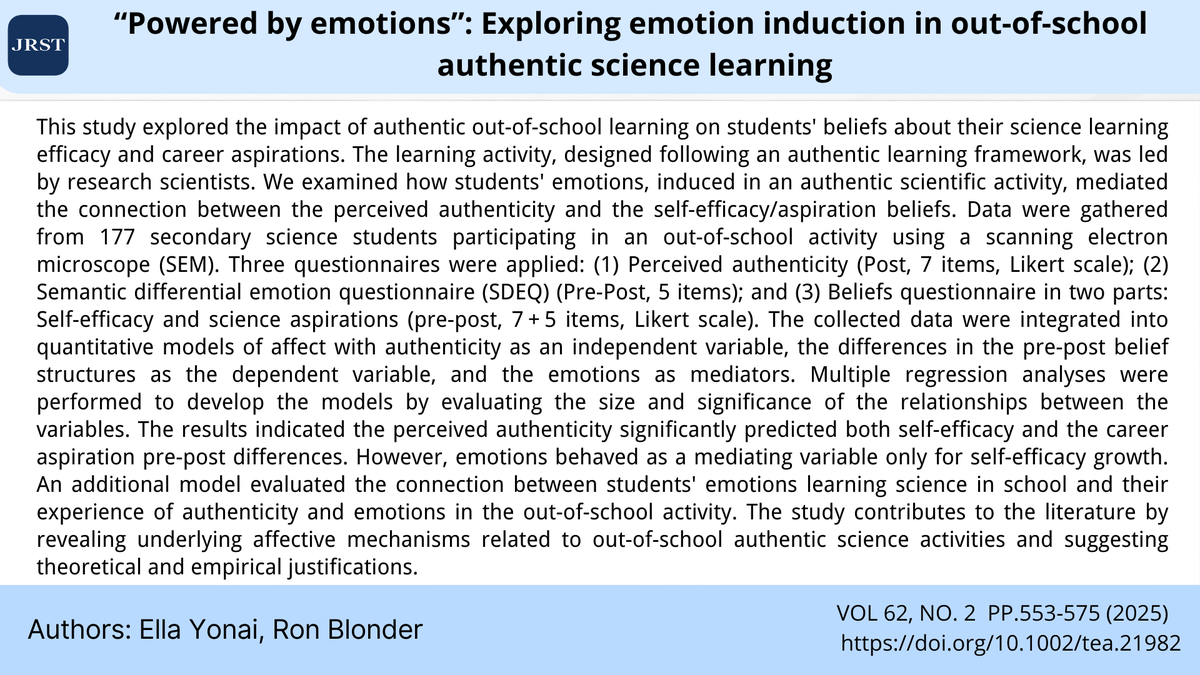
New article: “Powered by emotions”: Exploring emotion induction in out-of-school authentic science learning
Check it out here doi.org/10.1002/tea.21982
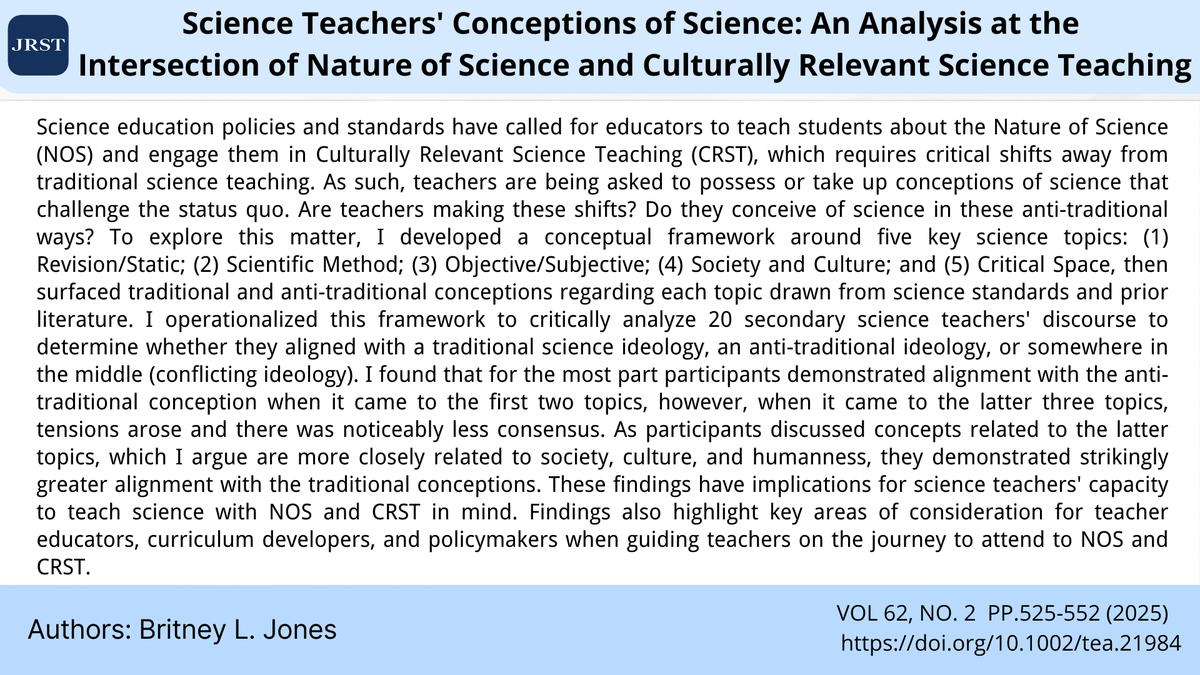
New article: Science Teachers' Conceptions of Science: An Analysis at the Intersection of Nature of Science and Culturally Relevant Science Teaching
Check it out to see more doi.org/10.1002/tea.21984
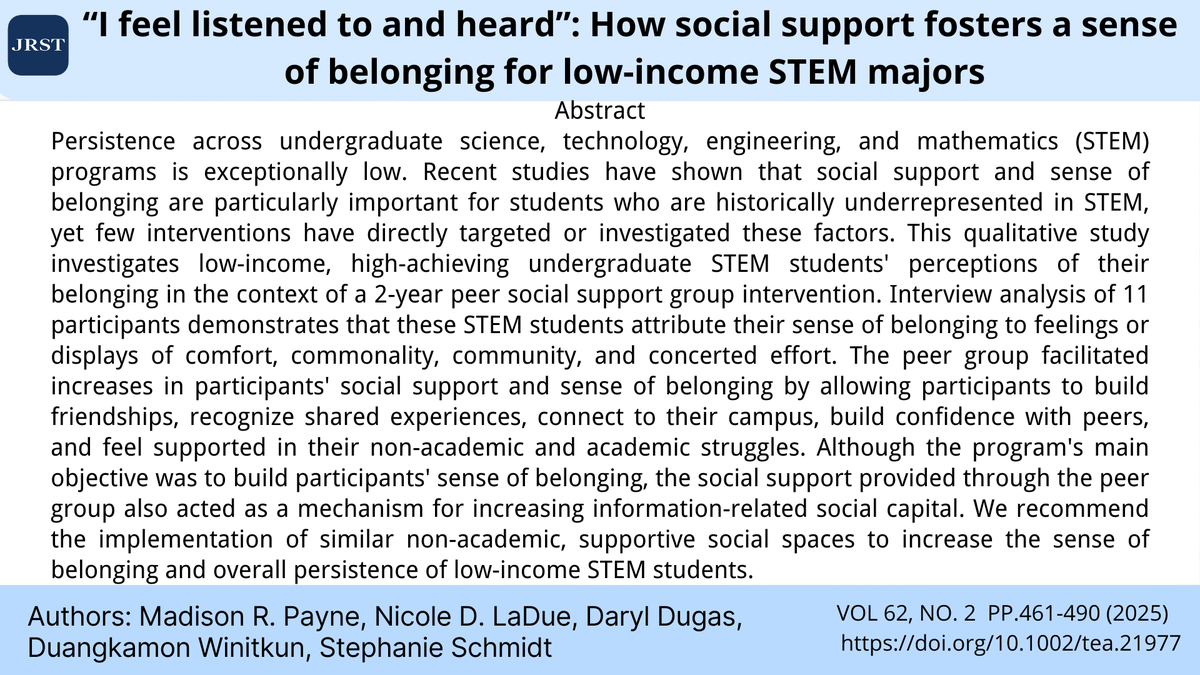
New article: “I feel listened to and heard”: How social support fosters a sense of belonging for low-income STEM majors
Check it more here doi.org/10.1002/tea.21977
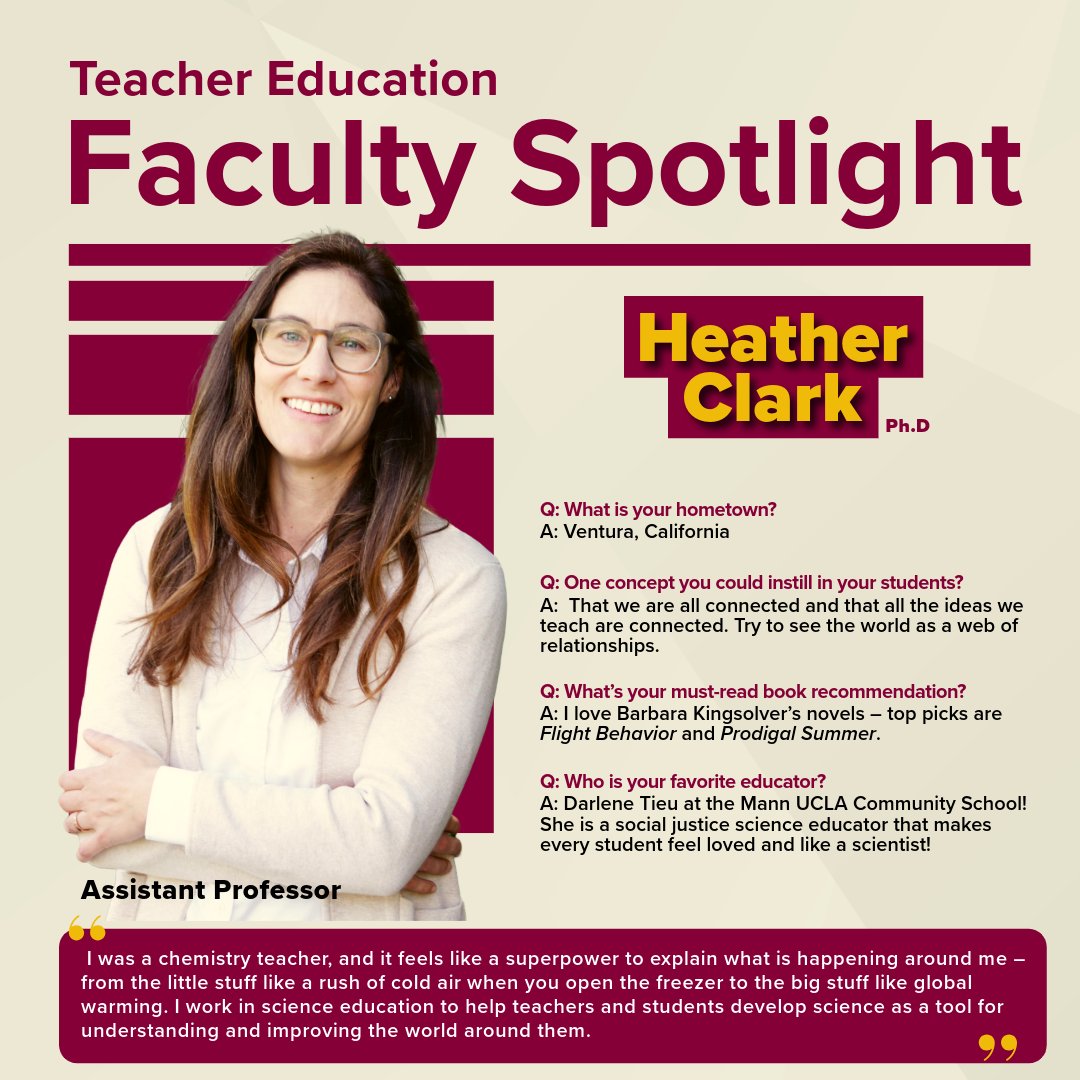
Our first S'25 Faculty Spotlight features Dr. @heatherfclark, Asst. Prof. in Teacher Education. Dr. Clark recently received the @NSTA/@NARSTorg 'Research Worth Reading' award by @JRSTpub for her publication “Exploring science teachers' efforts to frame phenomena in the community”
ALT Headshot of Dr. Heather Clark, Ph.D., Assistant Professor in Teacher Education. Text says 'Faculty Spotlight.' What is your hometown? A: Ventura, California. One concept that you could instill in your students? That we are all connected and that all ideas we teach are connected. Try to see the world as a web of relationships. What's your must-read book recommendation? I love Barbara Kingsolver's novels--top picks are Flight Behavior and Prodigal Summer. Who is your favorite educator? Darlene Tieu at the Mann UCLA Community School! She is a social science educator that makes every student feel loved and like a scientist! "I was a chemistry teacher and it feels like superpower to explain what is happening around me - from the little stuff like a rush of cold air when you open the freezer to the big stuff like global warming. I work in science education to help teachers and students develop science as a tool for understanding and improving the world around them."
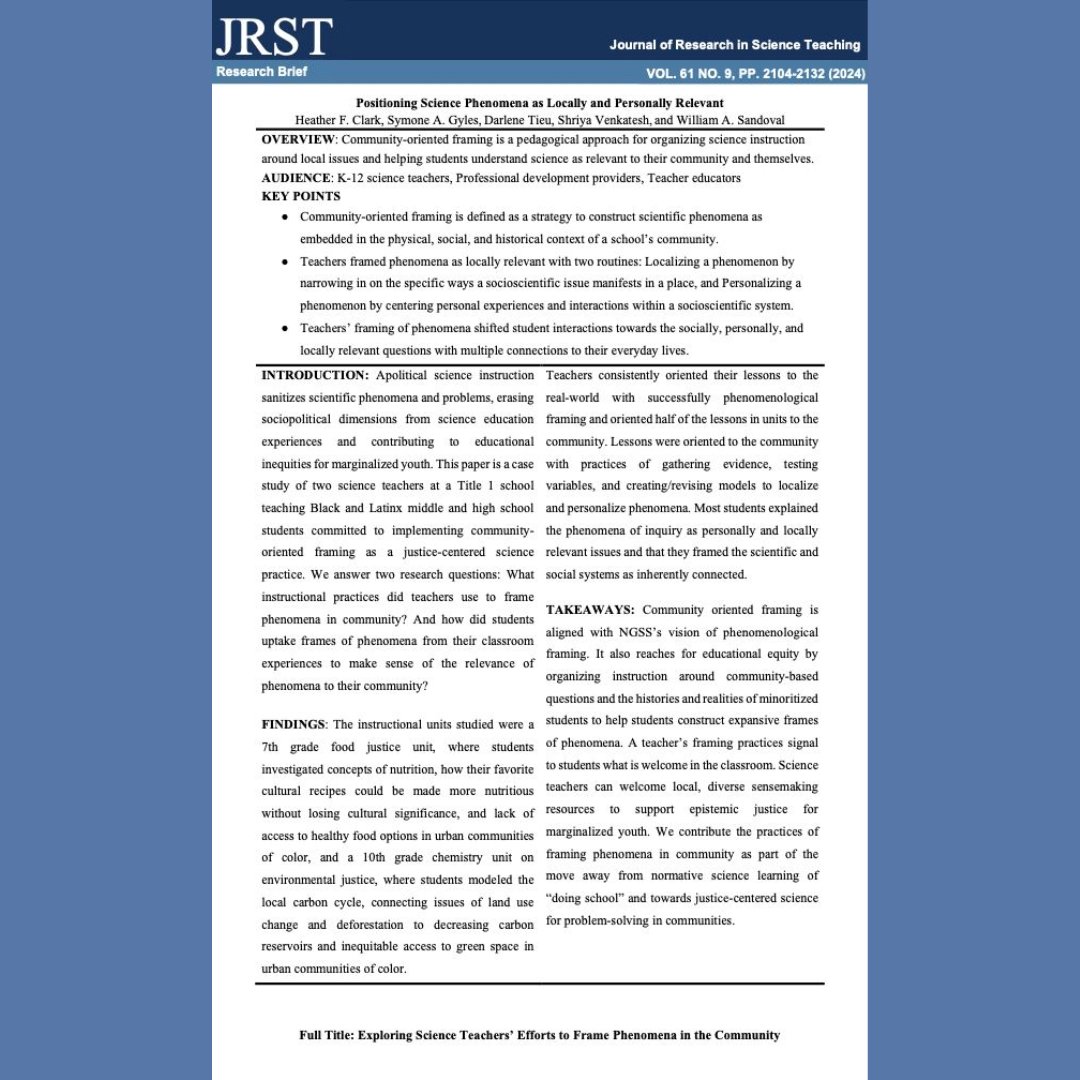
ALT Research brief of Dr. Heather Clark's publication "Exploring science teachers' efforts to frame phenomena in the community," that includes overview, audience, key points, introduction, findings, and takeaways.
Honored to join Journal of Research in Science Teaching @JRSTpub as an Associate Editor! Looking forward to contributing to the advancement of #ScienceEd
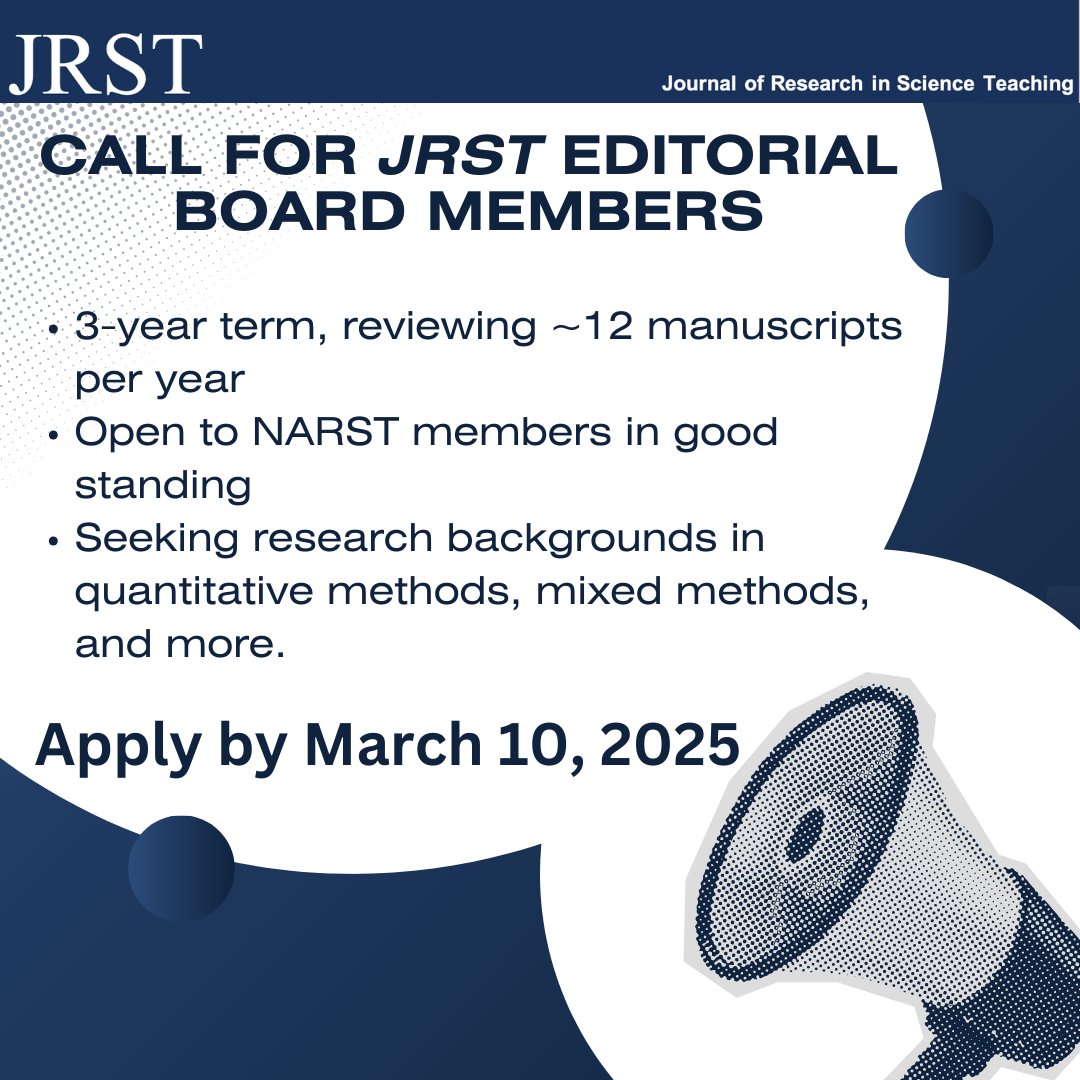
@JRSTpub is seeking dedicated scholars to join our Editorial Board! Consider contributing to the profession, shaping the field, & ensuring the quality of science education research.
🔗 Apply by 𝗠𝗮𝗿𝗰𝗵 𝟭𝟬, 𝟮𝟬𝟮𝟱: shorturl.at/gjQ1F
❓Contact jrst@nd.edu
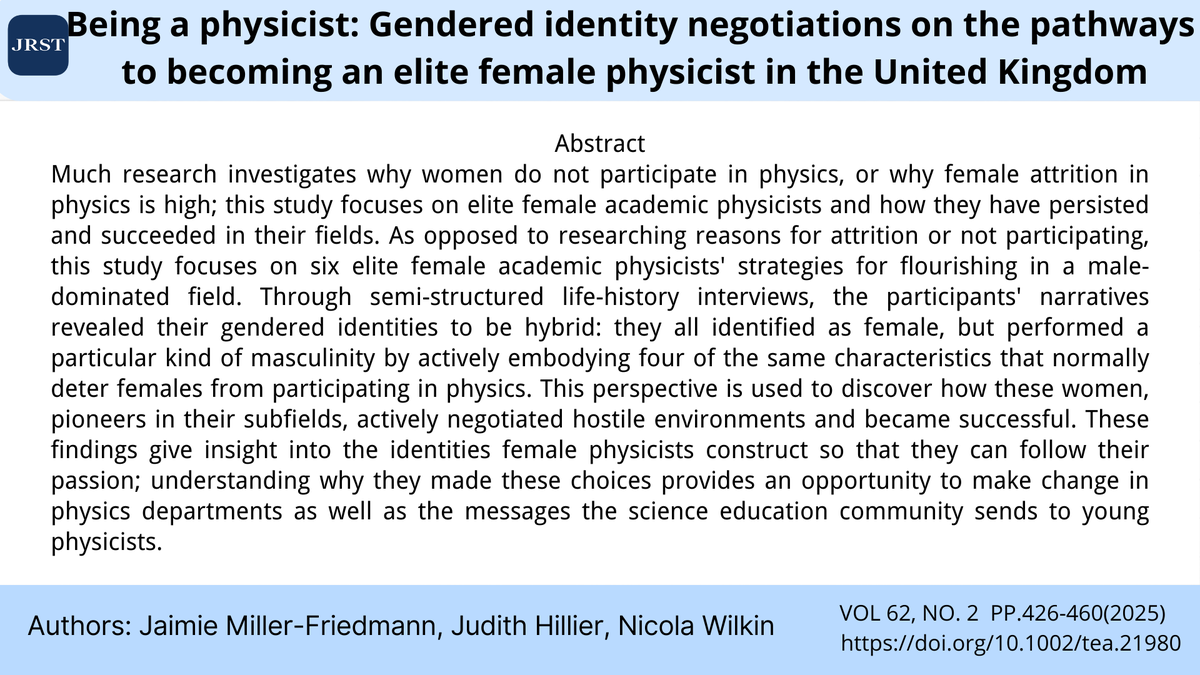
New article: Being a physicist: Gendered identity negotiations on the pathways to becoming an elite female physicist in the United Kingdom
Check it out here doi.org/10.1002/tea.21980
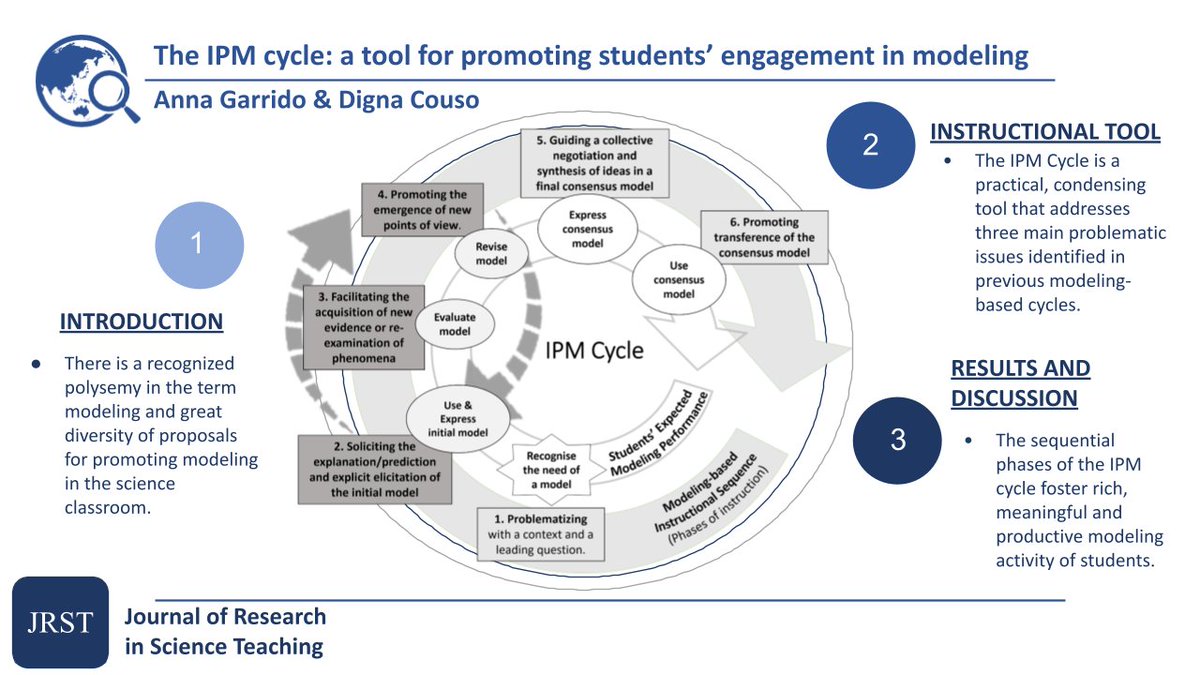
This study extends prior modeling-based sequences to propose the IPM (Instruction Performance Modeling) cycle, facilitating the design and implementation of instructional sequences that engage students in rich and productive modeling practices.