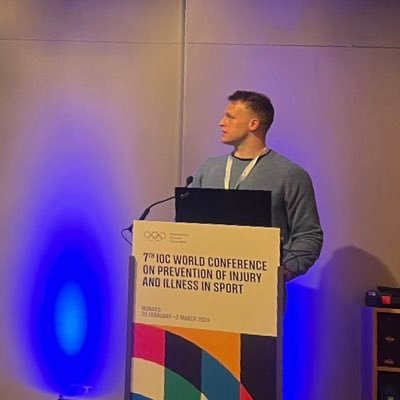
Research Fellow at @Carnegie_Sport in the @CARR_LBU group. Researching brain injury in rugby using instrumented mouthguards
Joined October 2021
- Tweets 111
- Following 136
- Followers 123
- Likes 123
18 Photos and videos

Pinned Tweet

21 Jan 2025
New paper!📰
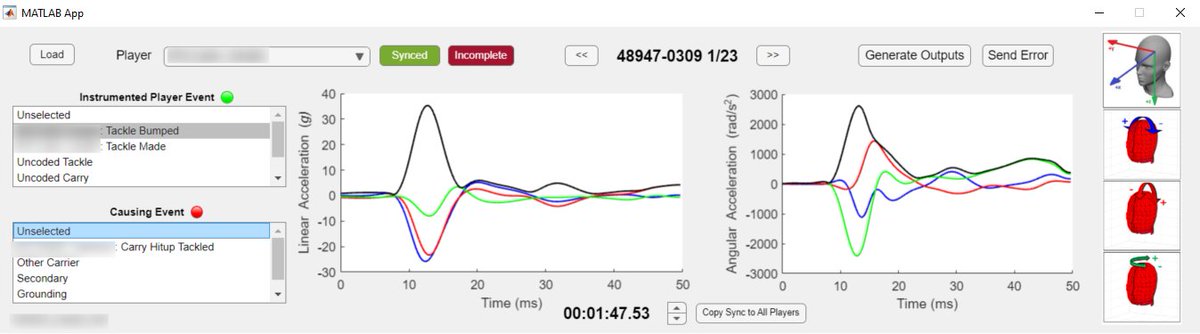
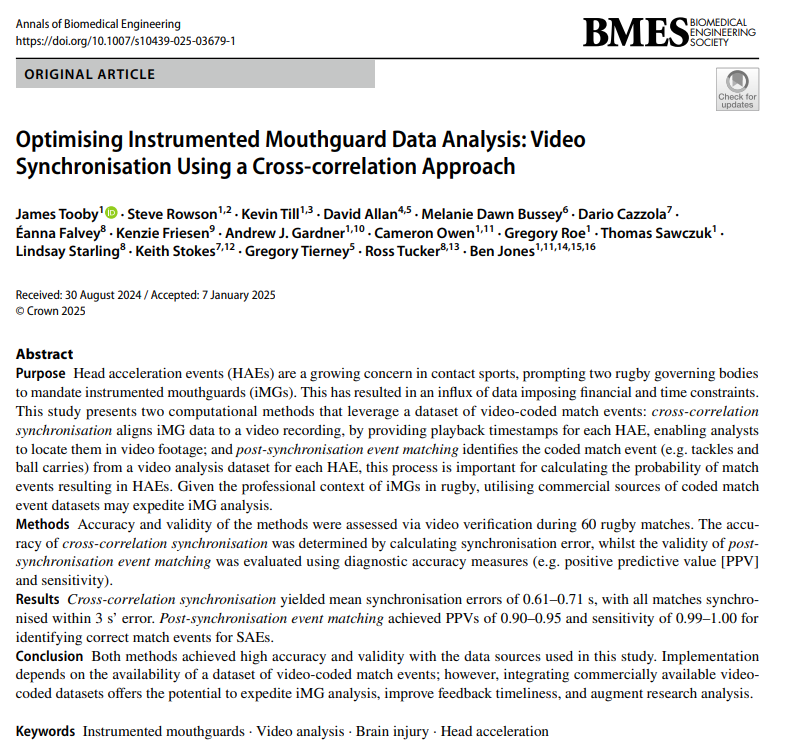
This study details two computational methods leveraging commercial video analysis data that have been central for:
- Synchronise HAEs to video footage
- Quantify HAE risk from rugby match events
- Rapidly generate iMG reports for teams
3
3
10
534
9 Jun 2025
✏️New paper!
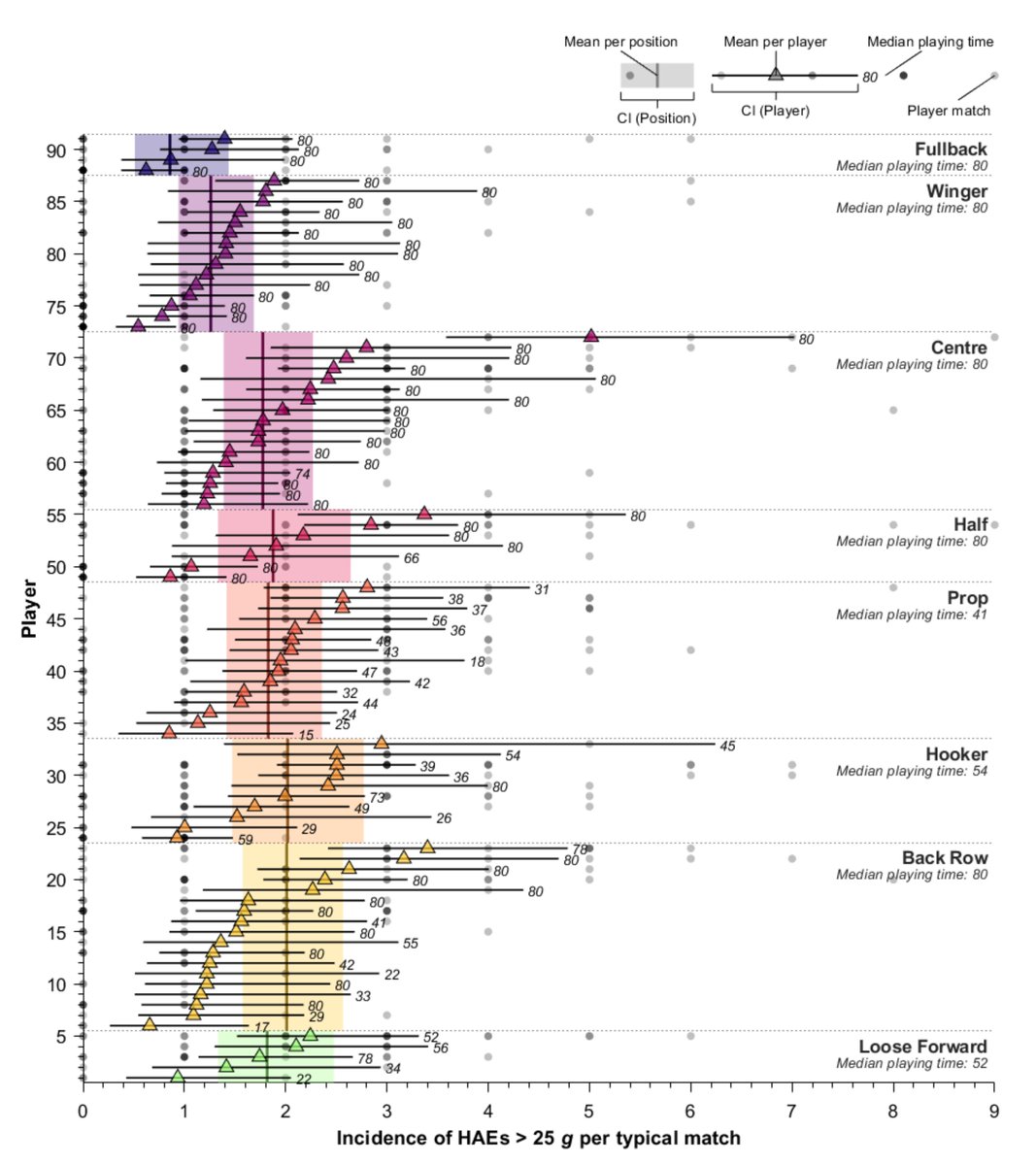
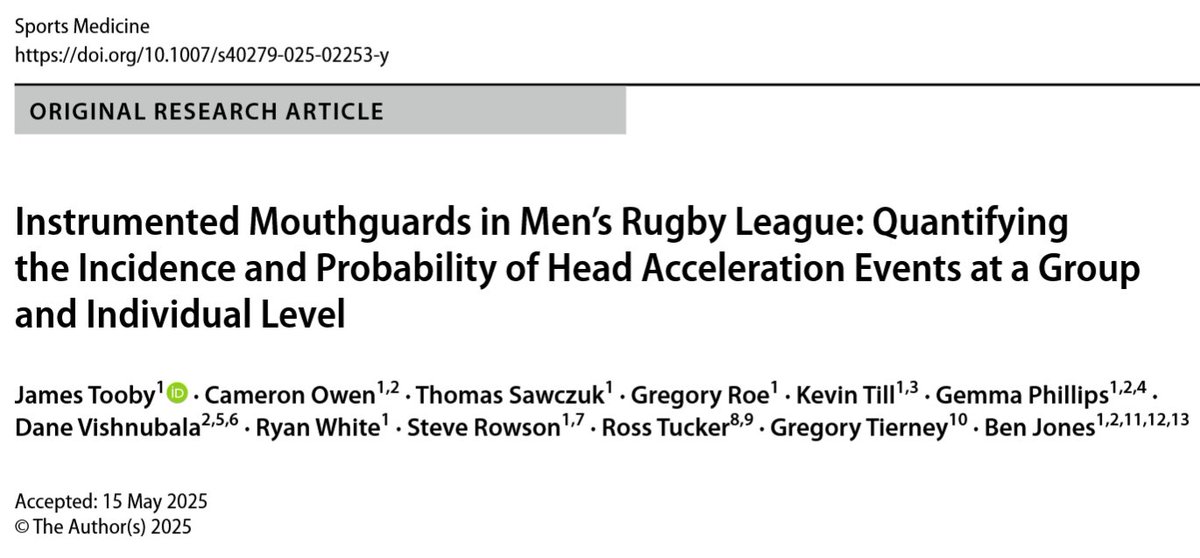
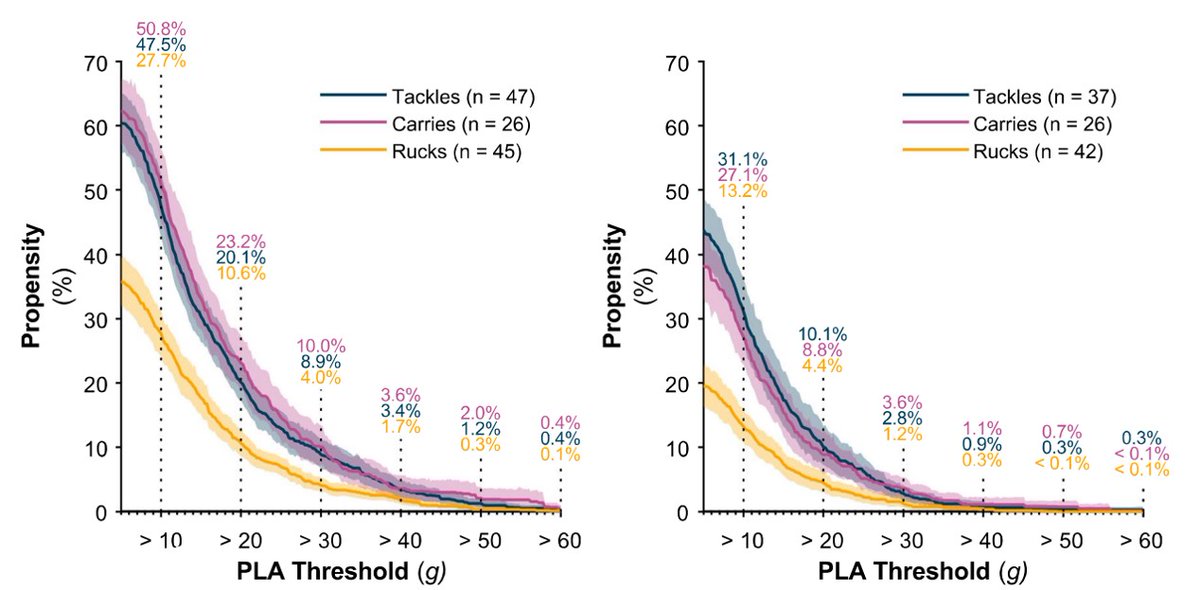
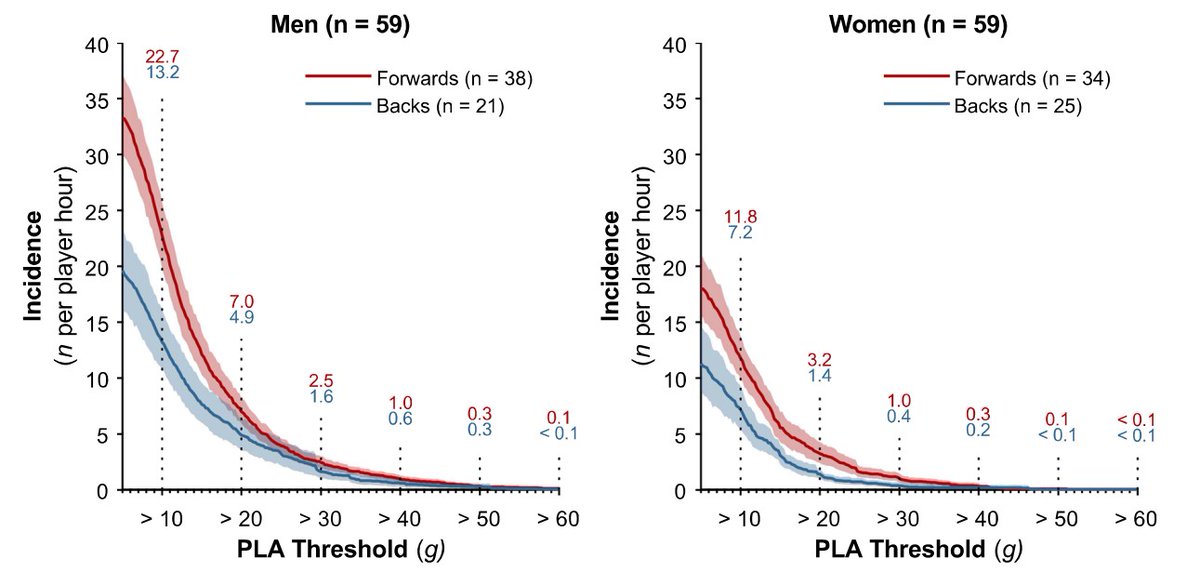
Head acceleration event (HAE) exposure in professional men’s rugby league:
📉Fewer HAEs per player match in rugby league compared to union
📉HAEs less likely in rugby league tackles compared to union
📈Individuals with elevated HAE values
🔓rdcu.be/epNCc
1
4
13
364
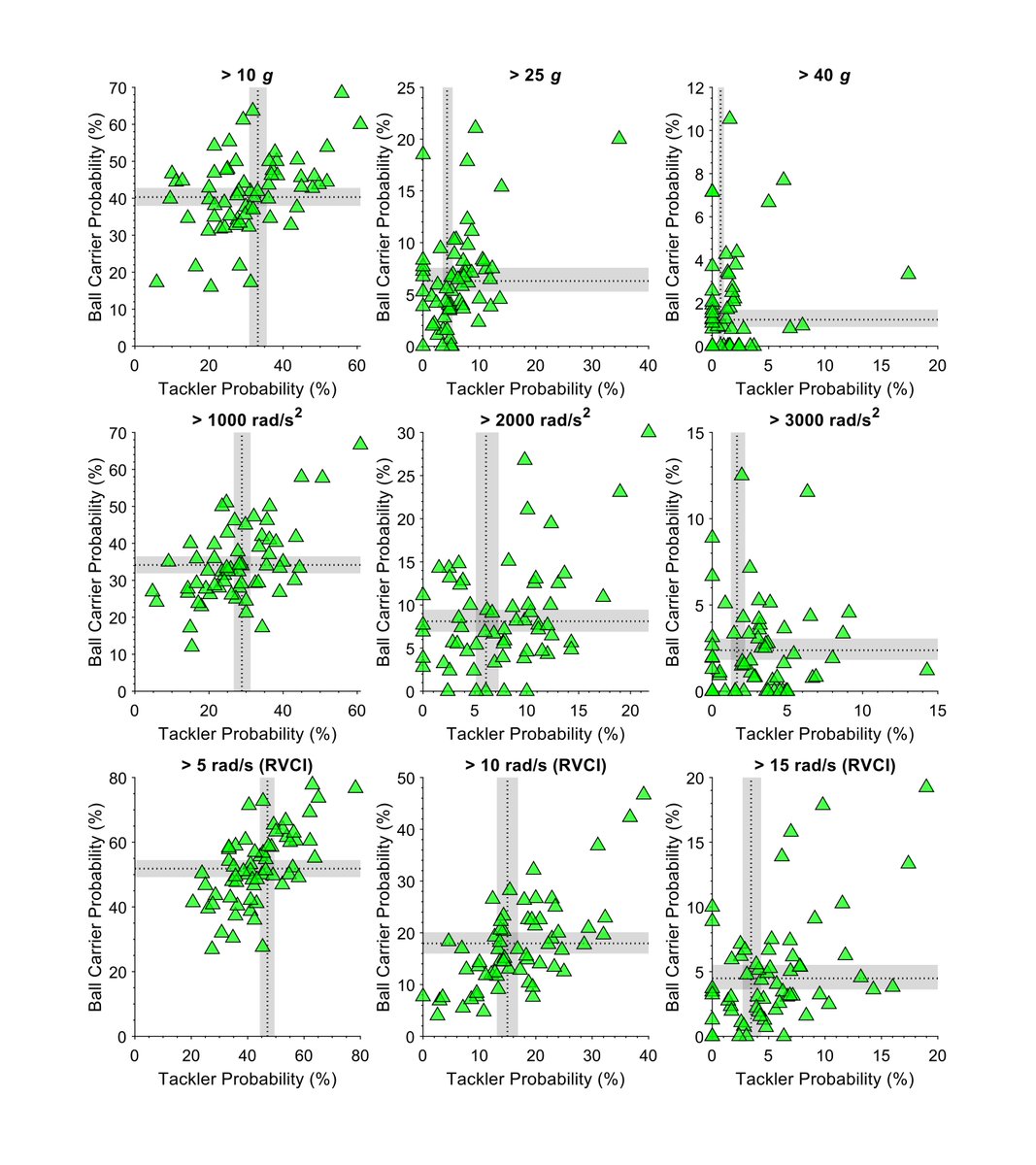
9 Jun 2025
Despite these lower findings on average, some players exhibit elevated values
🧠If these are persisted over multiple matches and seasons, these players may be at an increased risk of neurological effects
1
39
9 Jun 2025
📉How can we reduce HAE exposure in rugby league and rugby union?
❓Why is probability so much higher in rugby union?
📈How can we monitor and manage players with elevated HAE exposure?
rdcu.be/epNCc
31
22 Jan 2025
Here is the link! rdcu.be/d68UG
21 Jan 2025

New paper!📰
This study details two computational methods leveraging commercial video analysis data that have been central for:
- Synchronise HAEs to video footage
- Quantify HAE risk from rugby match events
- Rapidly generate iMG reports for teams
2
73
21 Jan 2025
It is important to note that these methods rely on the availability of a dataset of video-coded match events, however, they have also been effective with another dataset since this paper was written!
1
59
21 Jan 2025
These methods continue to be used in rugby research and practice, and may also be implemented in different sports. All source code is available in the Supplementary Materials of the paper!
1
56
21 Jan 2025
Speaking to the publishers to get the Supplementary Materials added to the website!
51
21 Jan 2025
Using our datasets, this process was very reliable and had reasonably good accuracy!
1
42
21 Jan 2025
With our datasets, this process was also very effective; the PPV for identifying the correct event was > 0.9 for both rugby union and rugby league!
1
39
21 Jan 2025
Post-synchronisation event matching (catchy, I know!) simply aligns each SAE to the coded match event which we think caused it, based on their newly aligned timestamps. For example, if we have a dataset of coded rugby tackles, we can identify which one caused each SAE.
1
34
21 Jan 2025
New paper!📰
This study details two computational methods leveraging commercial video analysis data that have been central for:
- Synchronise HAEs to video footage
- Quantify HAE risk from rugby match events
- Rapidly generate iMG reports for teams
3
3
10
534
21 Jan 2025
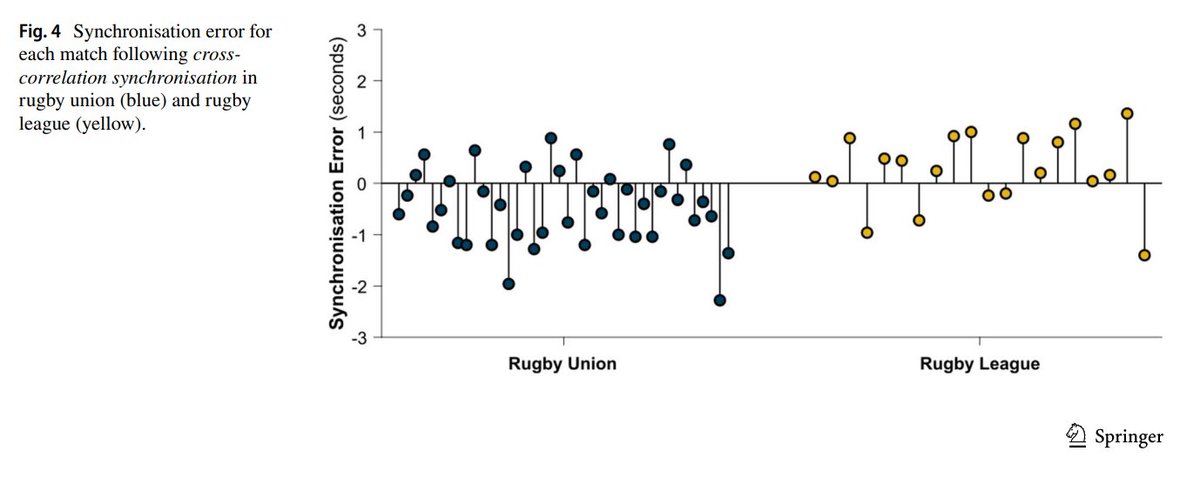
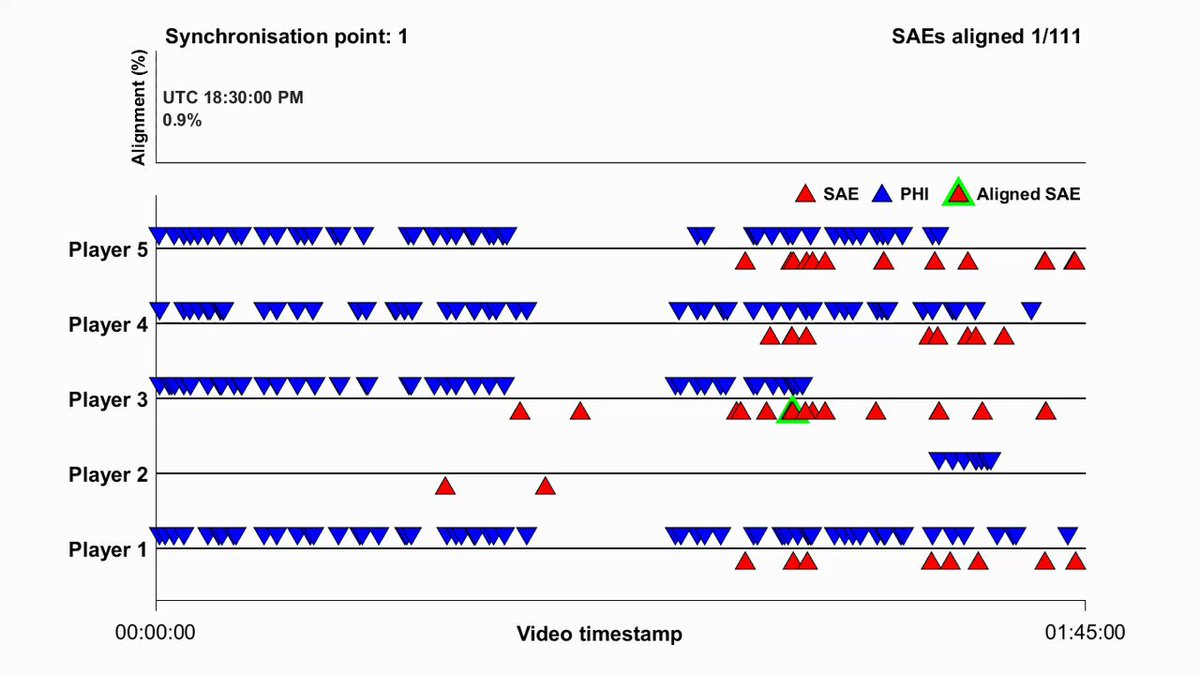
Cross-correlation synchronisation takes a dataset of potential head impacts (PHI) and a dataset of sensor acceleration events (SAEs) to determine the synchronisation point that aligns the most together. This allows us to identify the SAEs in video footage.
1
2
41
James Tooby retweeted

1 May 2024
📢New paper by @xianghao_zhan et al.!
We used an AI model to eliminate some of the noise measured by instrumented mouthguards: "peak kinematics after denoising were more accurate"
Such models will help improve the quality of our head impact datasets! 👀
ieeexplore.ieee.org/document…
1
3
12
615
James Tooby retweeted
11 Mar 2024
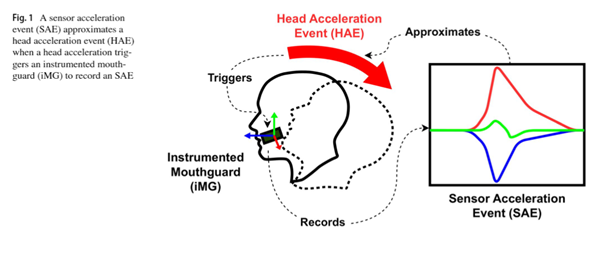
A great piece to understand limitations of head impact sensors:
🗝️Triggering mechanisms and processing algorithms are far from perfect.
🗝️Head impact measures are estimations of true exposure and should always be interpreted with caution.
More thoughts below [1/?]...
11 Mar 2024
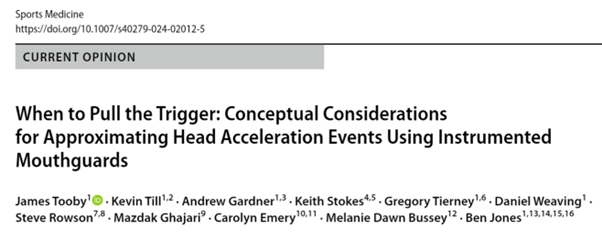
New current opinion piece📝
rdcu.be/dAHBp🔓
With the growing use of iMGs across sports, this piece explores the technical constraints of the devices for measuring head acceleration events and considerations for the interpretation of iMG data...
[1/13]
1
2
10
925
11 Mar 2024
New current opinion piece📝
rdcu.be/dAHBp🔓
With the growing use of iMGs across sports, this piece explores the technical constraints of the devices for measuring head acceleration events and considerations for the interpretation of iMG data...
[1/13]
2
15
24
6,447
11 Mar 2024
To conclude, this article was written to highlight technical constraints of iMGs and considerations of iMG data with the goal of improving the interpretation of iMG data within research, practice, and the media.
[12/13]
1
1
170
11 Mar 2024
Therefore, hopefully this can serve as a useful resource for all iMG stakeholders, including researchers, readers of research, practitioners, journalists, etc., etc.
Here is the link to read the full article again:
rdcu.be/dAHBp🔓
[13/13]
2
3
191