
Official journal of @Amerurological. Leading research, clinical insights & global urology literature. The Journal of Urology® is where ideas become impact.
Joined June 2011
- Tweets 11,582
- Following 5,923
- Followers 41,993
- Likes 698
4,731 Photos and videos







Pinned Tweet

Apr 9
The May 2026 Journal of Urology® is here! Stay current with cutting-edge research, clinical insights and global literature in the most cited journal in the field!
🔗 Read now: bit.ly/41UycT1
1
1,058
Jun 12
Can understanding shifts from localized to widespread pain improve care for patients with chronic pelvic pain syndromes?
In this comment, the authors highlight how the study identifies key clinical and psychosocial factors—such as somatic symptom awareness and social support—that may drive pain progression, offering insights to guide earlier intervention and personalized management.
🔗 Click to read more: bit.ly/4dOMpX5
626
Jun 12
🔬 Can ctDNA Predict Bladder Cancer Recurrence?
A bicenter study suggests precystectomy ctDNA status may forecast recurrence-free survival (RFS) and upstaging in high-risk NMIBC patients.
💡 Early Detection - Detectable ctDNA pre-surgery linked to worse RFS
📈 Upstaging Risk - Higher odds of pathological upstaging and metastasis
#BladderCancer #ctDNA #CancerResearch #RFS
tnyp.me/CWPl1QbQ/x
1
2
6
903
Jun 11
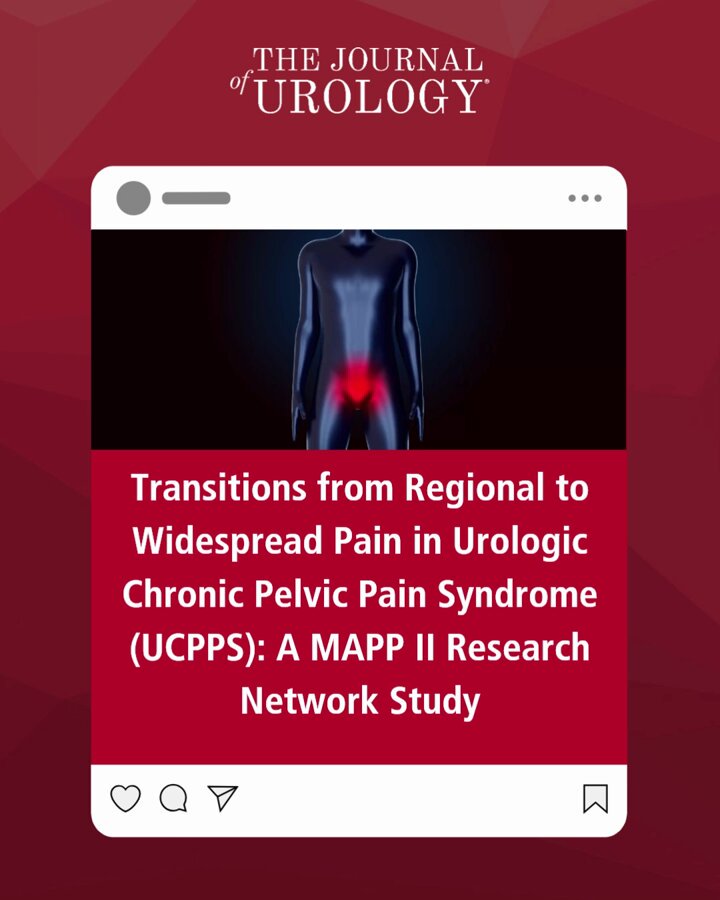
Can certain clinical and social factors predict when localized pelvic pain becomes widespread in chronic pelvic pain syndromes?
In this article, researchers show that progression to widespread pain is linked to higher baseline somatic symptoms and lack of social support, highlighting key predictors that may help guide earlier, more targeted interventions.
🔗 Click to read more: bit.ly/4feHMbu
2
853
Jun 10
Can fascial interposition alone reliably replace cautery in vasectomy techniques?
In this comment, the authors highlight promising findings while emphasizing key limitations—such as retrospective design and incomplete follow-up—and call for further research to confirm true effectiveness and guide future practice.
🔗 Click to read more: bit.ly/4nZ6a35
1
813
Jun 9
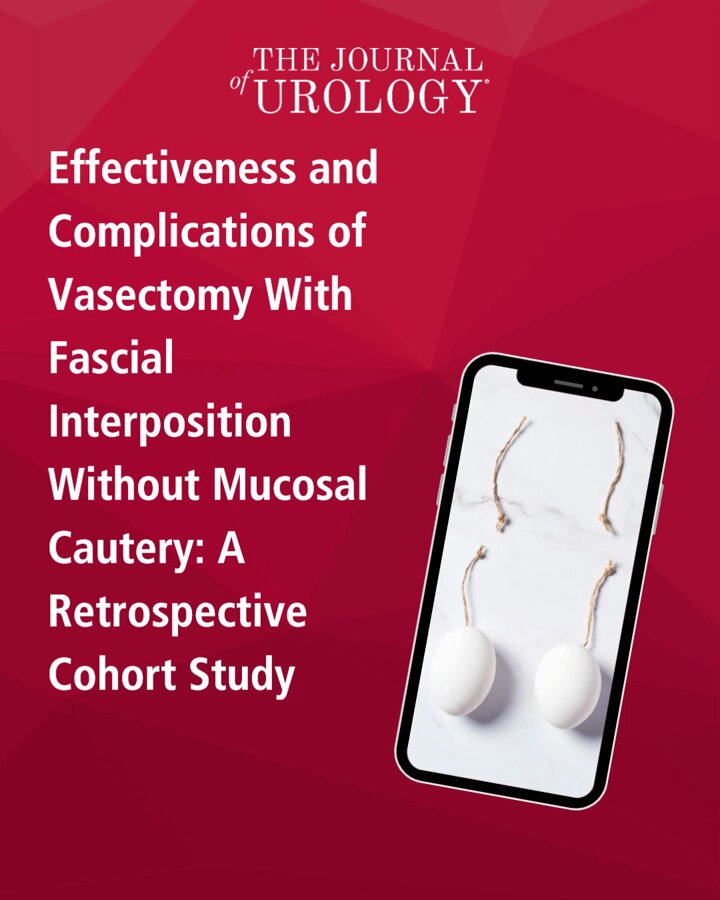
Can vasectomy be simplified without compromising effectiveness or safety?
In this article, researchers show that fascial interposition alone—without mucosal cautery—achieves comparable success and complication rates, suggesting a simpler, lower-cost technique may expand access to care.
🔗 Click to read more: bit.ly/4dPz7d7
1
2
920
Jun 8
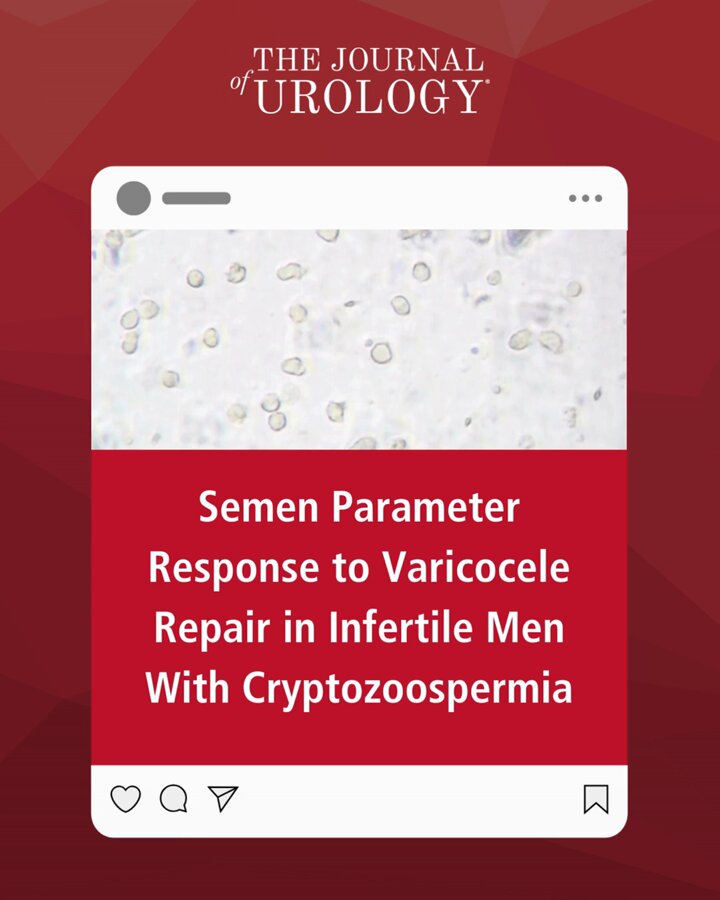
Can varicocelectomy meaningfully improve fertility outcomes in men with cryptozoospermia?
In this comment, the authors highlight encouraging response rates after repair while emphasizing the need for careful patient counseling and consideration of concurrent sperm retrieval strategies to optimize outcomes.
🔗 Click to read more: bit.ly/4u4H9F7
1
4
776
Jun 8
Have we misunderstood the role of testosterone in prostate cancer for nearly a century?
Dr. Abraham Morgentaler, author of, "Testosterone Does Not Drive Prostate Cancer: Presenting the New Framework of Androgen Adequacy vs Inadequacy," reviews evidence refuting the idea that testosterone drives prostate cancer and proposes a new framework focused on androgen adequacy vs inadequacy to guide clinical thinking and future research.
🔗 Read more: bit.ly/4a80CgL
4
13
2,116
Jun 7
Can varicocele repair improve fertility outcomes in men with even the most severe forms of low sperm count?
In this article, researchers show that over half of men with cryptozoospermia experienced meaningful improvement in semen parameters after varicocele repair, potentially expanding their fertility treatment options and reducing the need for surgical sperm retrieval.
🔗 Click to read more: bit.ly/4veTV4I
1
9
1,113
Jun 6
Can awake intravesical injections in children be further optimized to improve comfort and scalability?
In this comment, the authors support the feasibility of clinic-based awake injections while emphasizing strategies like reducing injection burden and incorporating child life support to enhance tolerability and expand adoption.
🔗 Click to read more: bit.ly/4nSHKrU
718
Jun 5
Can awake, in-clinic botulinum toxin injections be a practical alternative for children with neurogenic bladder?
In this article, researchers show that awake intravesical BoNT injections are highly feasible and well tolerated in pediatric patients, offering a safe, efficient outpatient option that may reduce anesthesia exposure and improve access to care.
🔗 Click to read more: bit.ly/4a0nkYd
3
1,071
Jun 4
Has the long-standing belief that testosterone fuels prostate cancer finally been overturned?
In this comment, the authors support a shift away from the androgen hypothesis, highlighting evidence behind the androgen adequacy framework and emphasizing that restoring physiological testosterone levels may be safe and beneficial for appropriately selected patients.
🔗 Click to read more: bit.ly/4f9sNzq
2
660
Jun 3
Does testosterone actually drive prostate cancer risk and progression?
In this article, the authors present compelling evidence that it does not, introducing a new framework of androgen adequacy vs inadequacy to better explain the relationship between testosterone and prostate biology.
🔗 Click to read more: bit.ly/4a80CgL
2
620
Jun 2
Does ureteral dilation better predict UTI risk than hydronephrosis severity in infants?
In this article, researchers show that hydroureter—not hydronephrosis alone—is a key driver of infection risk, supporting more targeted use of antibiotic prophylaxis based on ureteral involvement.
🔗 Click to read more: bit.ly/4dR5Rma
3
7
1,733
Jun 1
Could low testosterone actually signal a higher risk of prostate cancer progression during active surveillance?
In this comment, the authors highlight emerging evidence that lower testosterone levels may be linked to more aggressive disease, suggesting it could serve as a valuable and potentially modifiable factor in guiding patient management.
🔗 Click to read more: bit.ly/4vlywqN
1
3
795
May 31
Can baseline testosterone levels help predict which prostate cancer patients on active surveillance are at higher risk of progression?
In this article, researchers found that low testosterone (≤300 ng/dL) was linked to increased risk of higher-grade progression (GG3 or above), suggesting it may be a valuable prognostic marker to guide surveillance and treatment decisions.
🔗 Click to read more: bit.ly/4wV4taK
7
12
1,721
May 30
Can implantable tibial neuromodulation truly deliver consistent, reliable outcomes for patients with urge urinary incontinence?
In this comment, the author examines the TITAN 2 results while raising key concerns about comparative efficacy, declining patient satisfaction, and the lack of sham-controlled trials, emphasizing the need for more rigorous studies to better guide clinical decision-making.
🔗 Click to read more: bit.ly/3RNwotd
769
May 29
Could a small implantable device offer lasting relief for patients with urge urinary incontinence?
In this article, the TITAN 2 pivotal study shows that implantable tibial neuromodulation significantly reduced UUI episodes and improved urgency, frequency, and quality of life—with benefits sustained through 12 months and a favorable safety profile.
🔗 Click to read more: bit.ly/4ocsS89
751
May 28
Can improving recovery pathways transform the patient experience after repeat TURBT procedures?
In this comment, the authors highlight how the EMBRACE trial demonstrates that an ERAS approach can meaningfully reduce symptom burden and improve quality of recovery, underscoring the importance of structured perioperative care even for common outpatient procedures.
🔗 Click to read more: bit.ly/3Q3YCiZ
2
810
May 27
EDITORS CHOICE: Does testosterone really fuel prostate cancer—or is that decades-old belief overdue for a rethink?
JU Editor, @siemensr, talks about how new evidence is challenging the long-standing paradigm and introducing a novel framework of androgen adequacy vs inadequacy to better understand prostate cancer biology.
🔗 Read more: bit.ly/4a80CgL
3
9
1,870
May 27
Could a simple care pathway significantly improve recovery after one of the most common bladder cancer procedures?
In this article, researchers show that an enhanced recovery after surgery (ERAS) protocol for ambulatory TURBT led to better quality of recovery, less pain, fewer urinary symptoms, and lower incontinence rates compared with usual care.
🔗 Click to read more: bit.ly/49rfK8Z
2
1,093