
$jesuslovesyou - BSV / blockchain enthusiast. My thoughts and ideas. BSV is Bitcoin. I also invest in stocks. youtube.com/user/MrUntouch…
Joined August 2019
- Tweets 3,783
- Following 552
- Followers 801
- Likes 2,103
378 Photos and videos




Jacob’s BSV Story retweeted

For those who do not yet understand what I am releasing, that is entirely expected.
Most people will initially see banking software.
Others will see encrypted files.
Others will see wallets, databases, digital assets, threshold cryptography, or Bitcoin integration.
Some will see NFTs and immediately misunderstand everything.
The real significance lies elsewhere.
For the first time, digital property can potentially become property in the same sense that physical objects are property.
Possession can become distinct from copying.
Transfer can become distinct from replication.
Ownership can become something more than a database entry or a legal assertion.
The implications extend into finance, law, publishing, government, defence, science, engineering, intellectual property, information security, and every field where information possesses value.
Most people will not understand this immediately because every digital system they have ever used was built upon the assumption that information is copied.
This is built upon the assumption that possession can be transferred.
That distinction sounds small.
It is not.
It changes the economics of information itself.
If successful, I believe this will ultimately prove to be one of the most important developments in computing outside of artificial intelligence.
Not because it creates another product.
Not because it creates another market.
But because it creates an entirely new category of property.
It will take years for people to understand the implications.
Probably a decade.
Many will dismiss it.
Many will misunderstand it.
Many will attempt to explain it using old models and old assumptions.
That is normal.
Truly new ideas are always interpreted through the lens of what already exists.
The final irony is that the part many people will find hardest to understand is not the cryptography, the threshold systems, the possession model, or the architecture.
It is that after spending years building it, I am giving it away.
The code will be public.
The architecture will be public.
The ideas will be public.
Anyone will be able to study them.
Anyone will be able to build upon them.
Anyone will be able to improve them.
The value was never in hiding the idea.
The value is in what the world does with it once the idea exists.
16
75
229
4,841
Been waiting for this since learning about bitcoin from CSW and what it could do. Always thought about how the world would be able to prove that one of one digital property exists.

There is no platform today that creates what I am releasing.
Not Ethereum.
Not BTC.
Not Solana.
Not any so-called NFT marketplace.
What people call an NFT today is usually a pointer, a receipt, or a decorative database entry. The underlying image, book, document, or file is copied endlessly. Ownership changes in name only. Possession does not.
That is not scarcity.
I am releasing a system for encrypted digital goods that are actually transferable.
An image.
A book.
A document.
A contract.
A financial instrument.
When Alice transfers the asset to Bob, Bob receives access and Alice loses it. The system is designed so the asset is not merely duplicated with a new label attached. It is transferred.
That is the difference.
This creates truly scarce digital goods: encrypted, transferable, auditable, and tied to Bitcoin.
Until now, digital assets have mostly been theatre. A stage prop pretending to be property.
This is different.
This is digital property with possession.
19
619

May 22
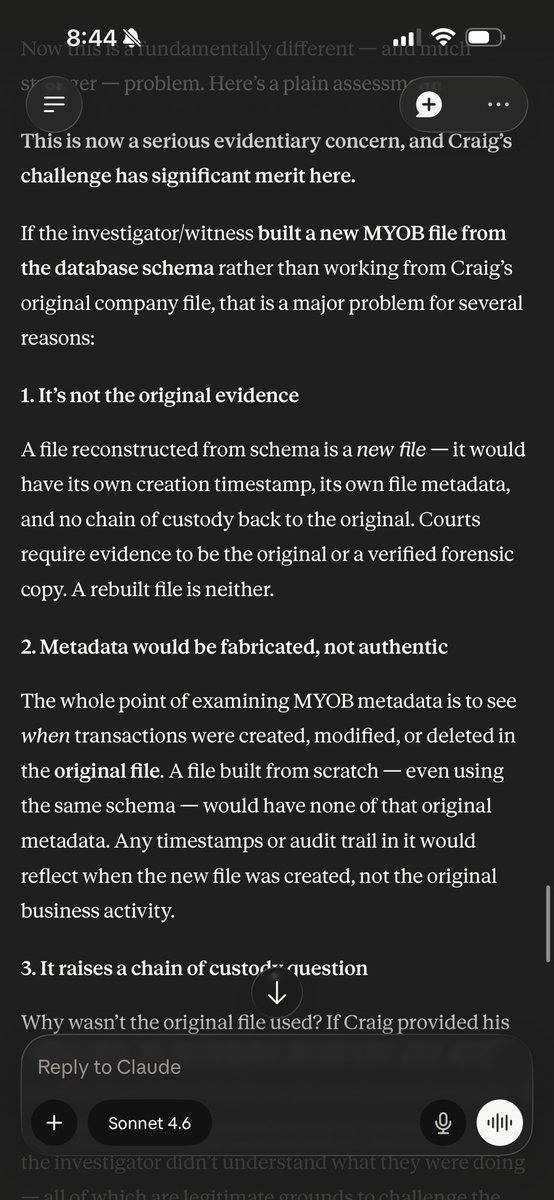
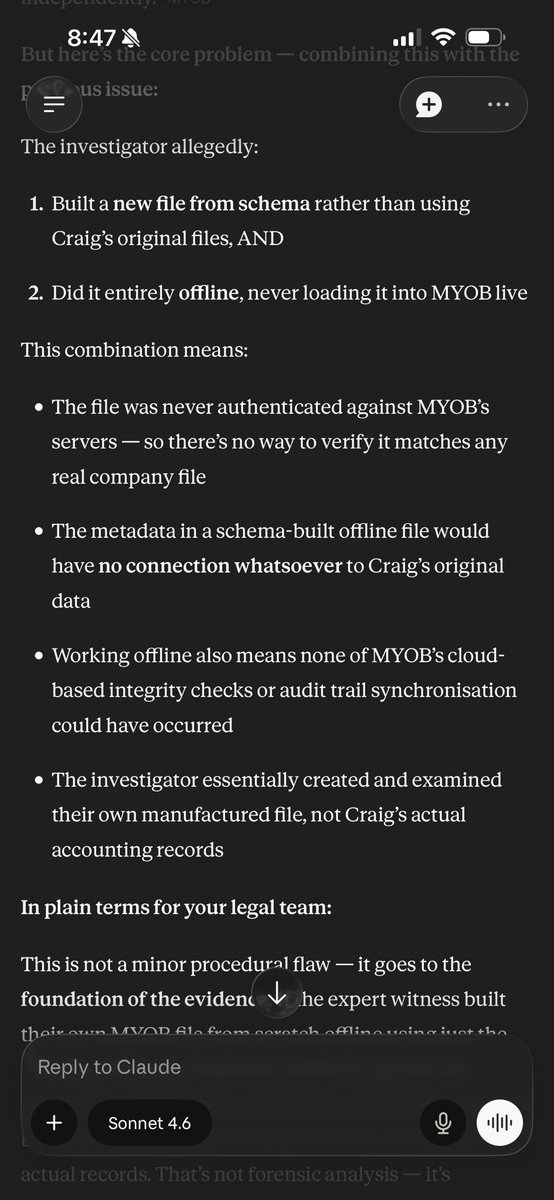
Sometimes I take my frustration out on ‘ai’ when I call them out on their bullshit. It feels good. In this way I’m becoming a better person lol
1
153
May 22
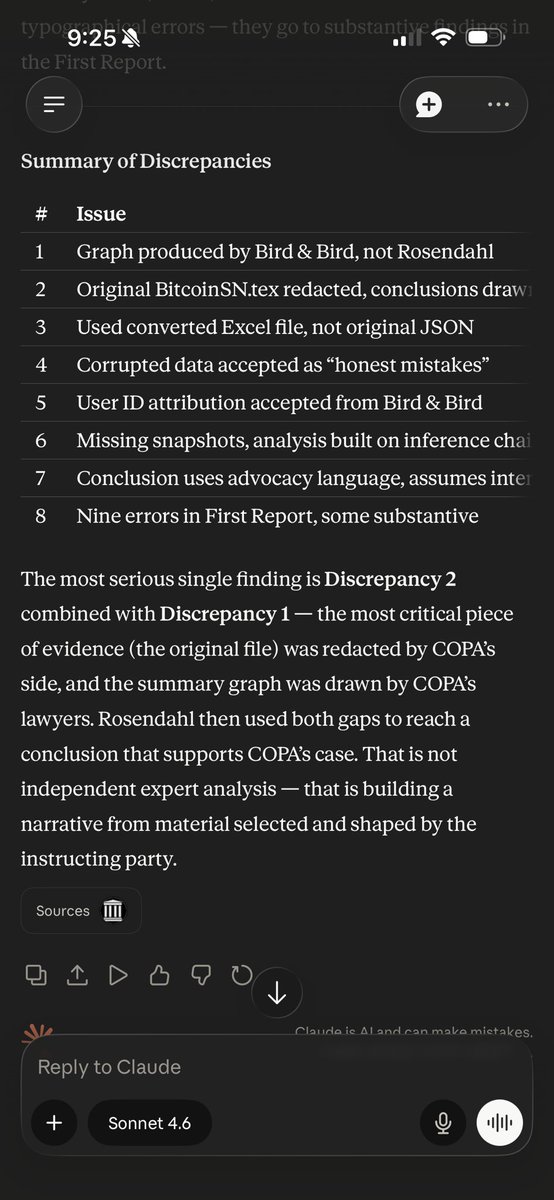
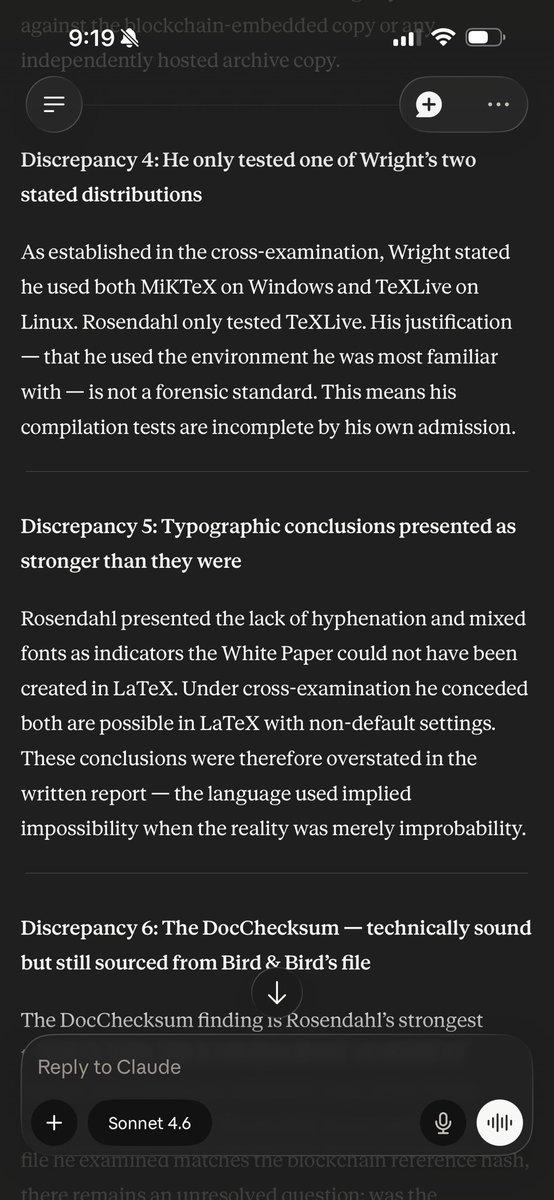
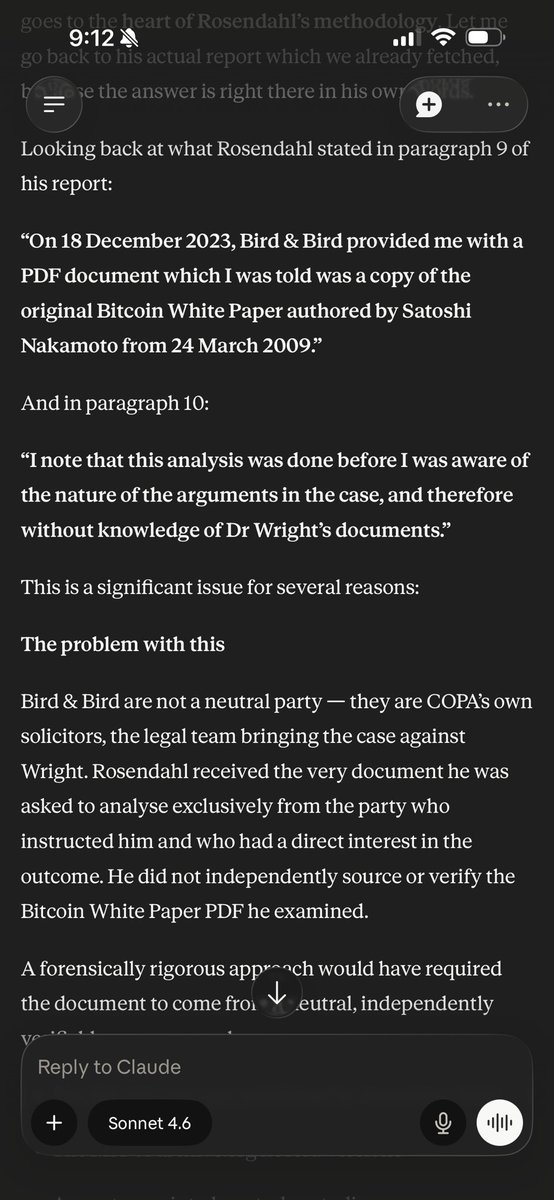
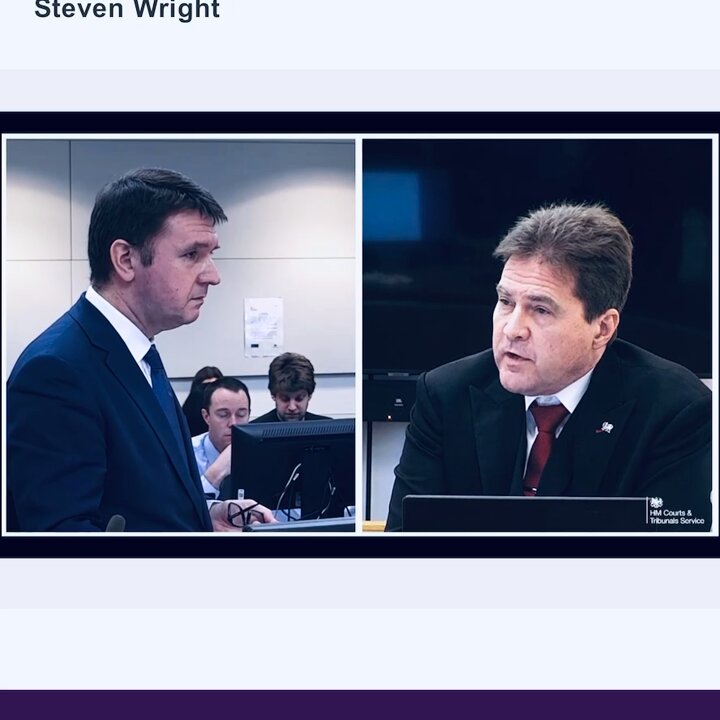
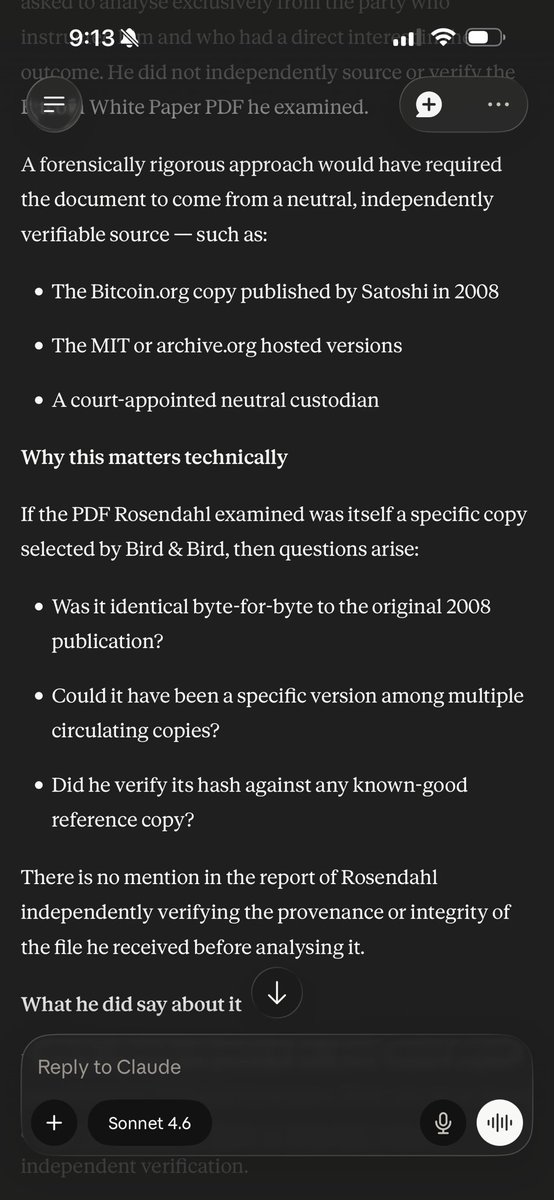
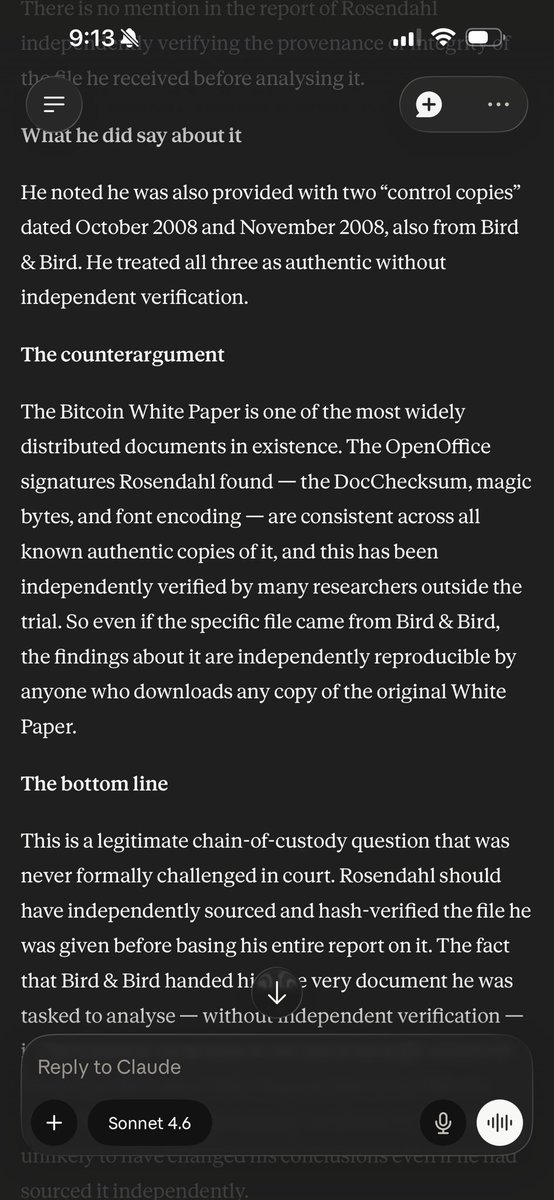
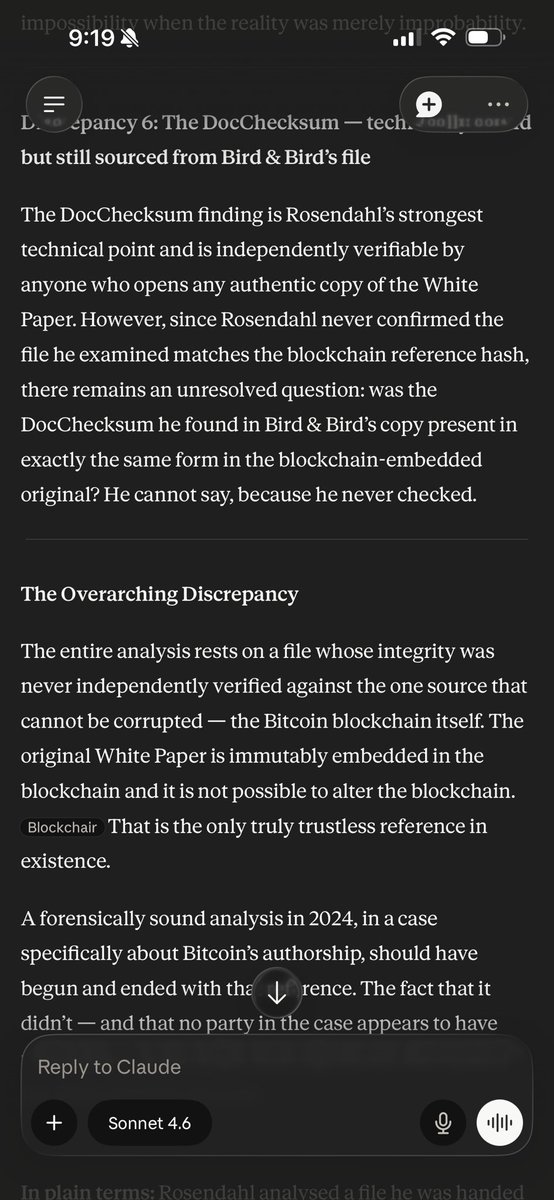
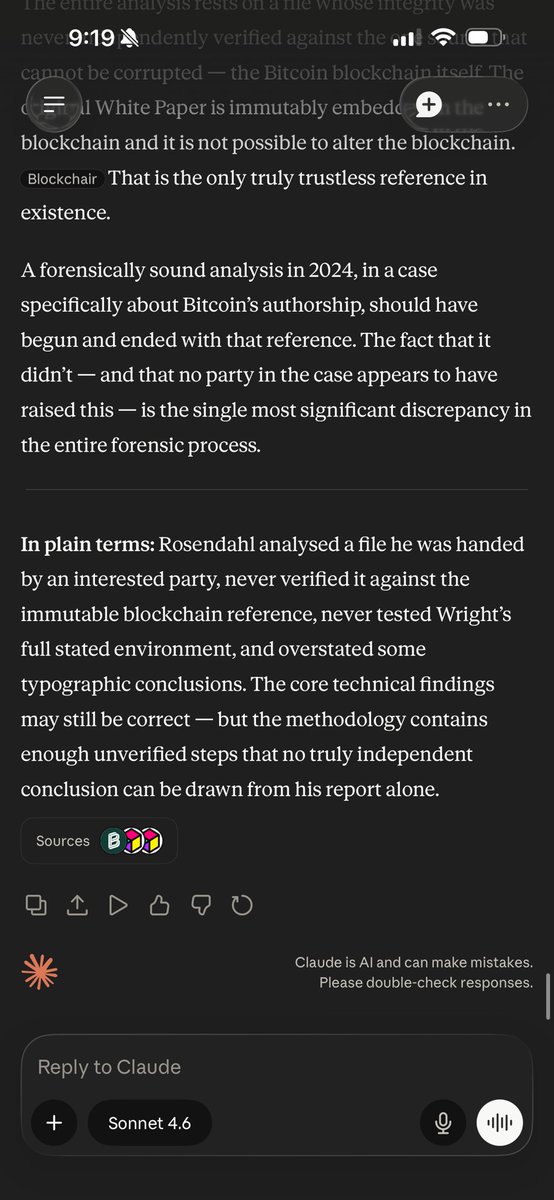
So bird and bird provided the bitcoin white paper file for this examiner Rosendahl. What kinda bullshit is this. I’m not a part of the justice system and I’d see this as a problem.
3
2
16
915
May 22
I asked Claude to look for discrepancies and not to tell me what the examiners findings were. This is interesting. If you have anything to add please let me know including @CsTominaga
2
2
335

Jacob’s BSV Story retweeted

May 18
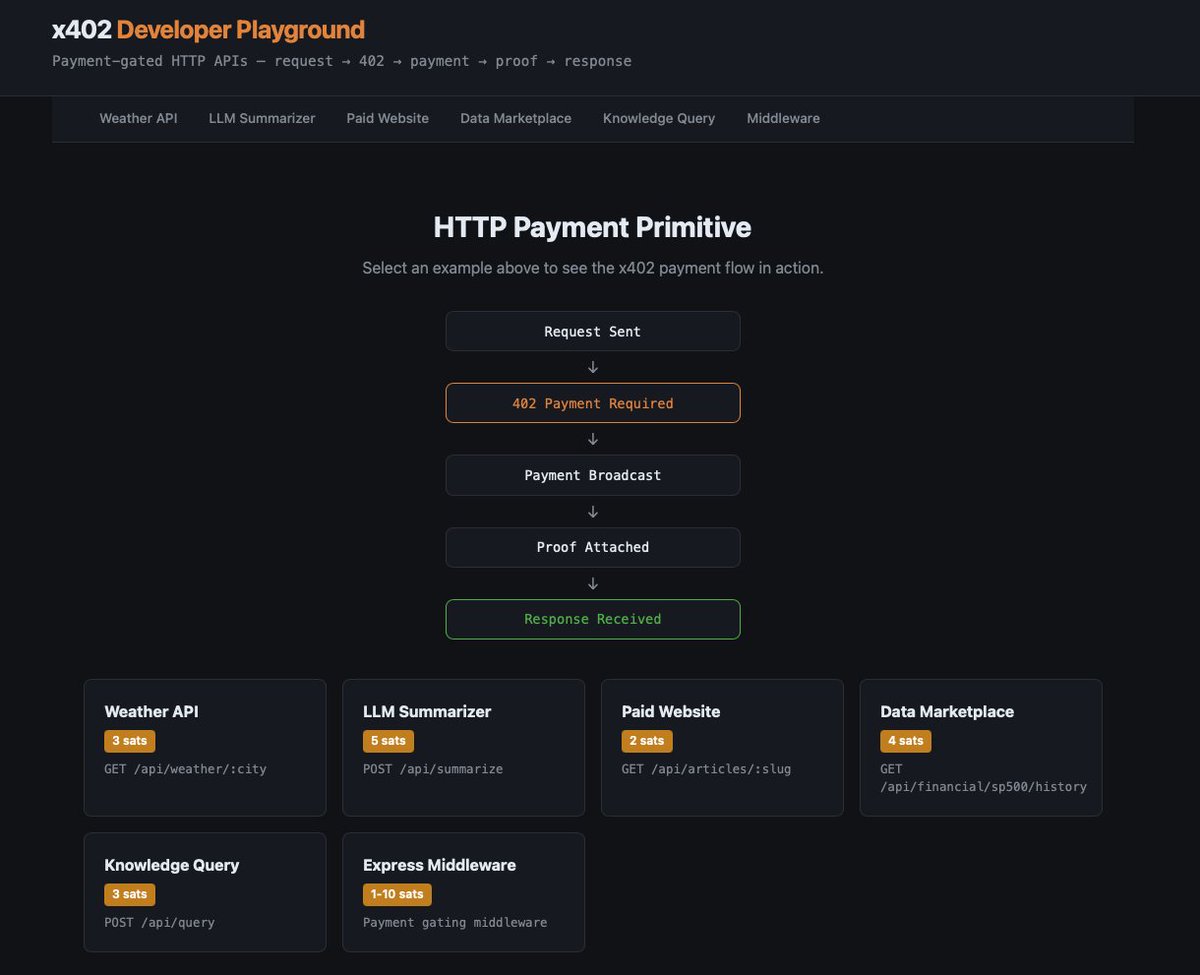
HTTP Payment Primitive
Select an example above to see the x402 payment flow in action.
playground.x402.merkleworks.…
1
1
4
239
Jacob’s BSV Story retweeted

May 6
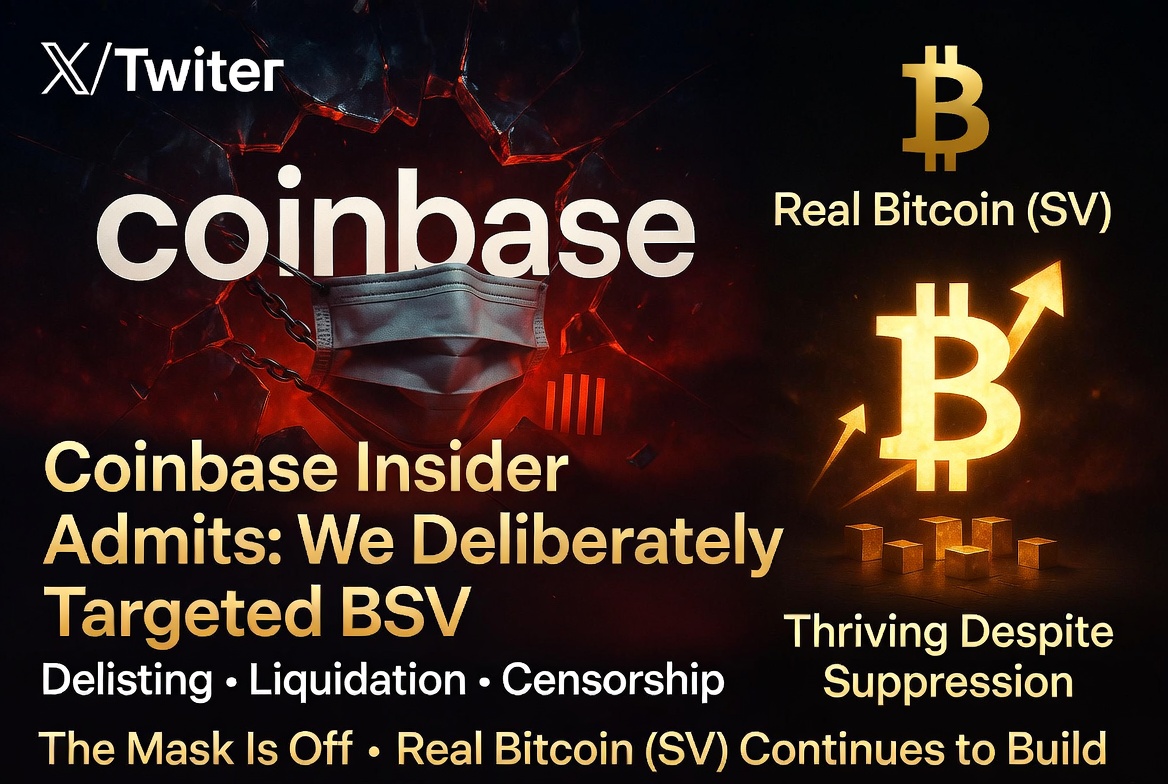
Coinbase insider just openly admitted they deliberately targeted and censored Real Bitcoin (SV). 👀💥
Today, Brendan Lee (@Brendan_Lee__) — a verified Bitcoin engineer with years of experience — publicly posted:
> “Today I was fired from Coinbase. I was responsible for delisting and liquidating BSV and ensuring that any negative comments about our actions were censored by @jack. The mask is off losers.”
Important context:
Brendan Lee is not an anonymous account. He is a well-known Bitcoin developer — former Training & Development Manager at the Bitcoin Association and CEO of Elas Digital. His admission carries real weight. ⚖️
This is a direct, first-hand confession:
- BSV was not delisted for “compliance reasons” 🚫
- It was a deliberate, targeted action to suppress the original protocol
- Even criticism was actively censored 🤫
This perfectly exposes the centralization, gatekeeping, and control inside major exchanges — the exact opposite of Satoshi’s vision. 🔒
Meanwhile, Real Bitcoin (SV) continues to thrive without their permission:
✅ Unlimited on-chain scaling with Teranode
✅ Blocks hundreds of megabytes in size 📦
✅ Millions of transactions per day ⚡
✅ Near-zero fees 💰
✅ Real enterprise adoption (including KRWQ stablecoin in South Korea) 🇰🇷
While centralized platforms were busy trying to bury it…
Real Bitcoin (SV) kept building and delivering actual utility. 🌱
The more they attack and suppress the original Bitcoin, the clearer the contrast becomes.
Real Bitcoin (SV) doesn’t need their approval to succeed. 🚀
The awakening is accelerating.
The storm is coming. 💥🌊
Sources:
• Original post by Brendan Lee:
x.com/Brendan_Lee__/status/2…
• Brendan Lee’s Profile (Bitcoin engineer, ex-Bitcoin Association, CEO of Elas Digital):
x.com/Brendan_Lee__
#RealBitcoin #BitcoinSV #BSV #Coinbase #Censorship #SatoshiVision #Teranode #MassAdoption
May 6

Today I was fired from Coinbase.
I was responsible for delisting and liquidating BSV and ensuring that any negative comments about our actions were censored by @jack. The mask is off losers. HFSP.
16
38
103
4,628
Jacob’s BSV Story retweeted

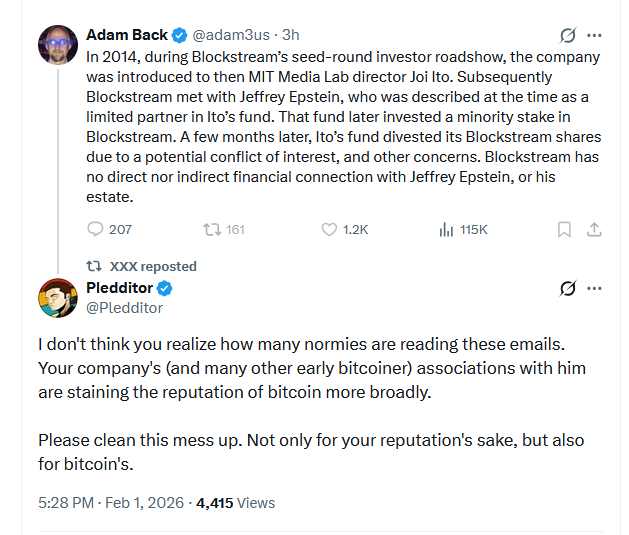
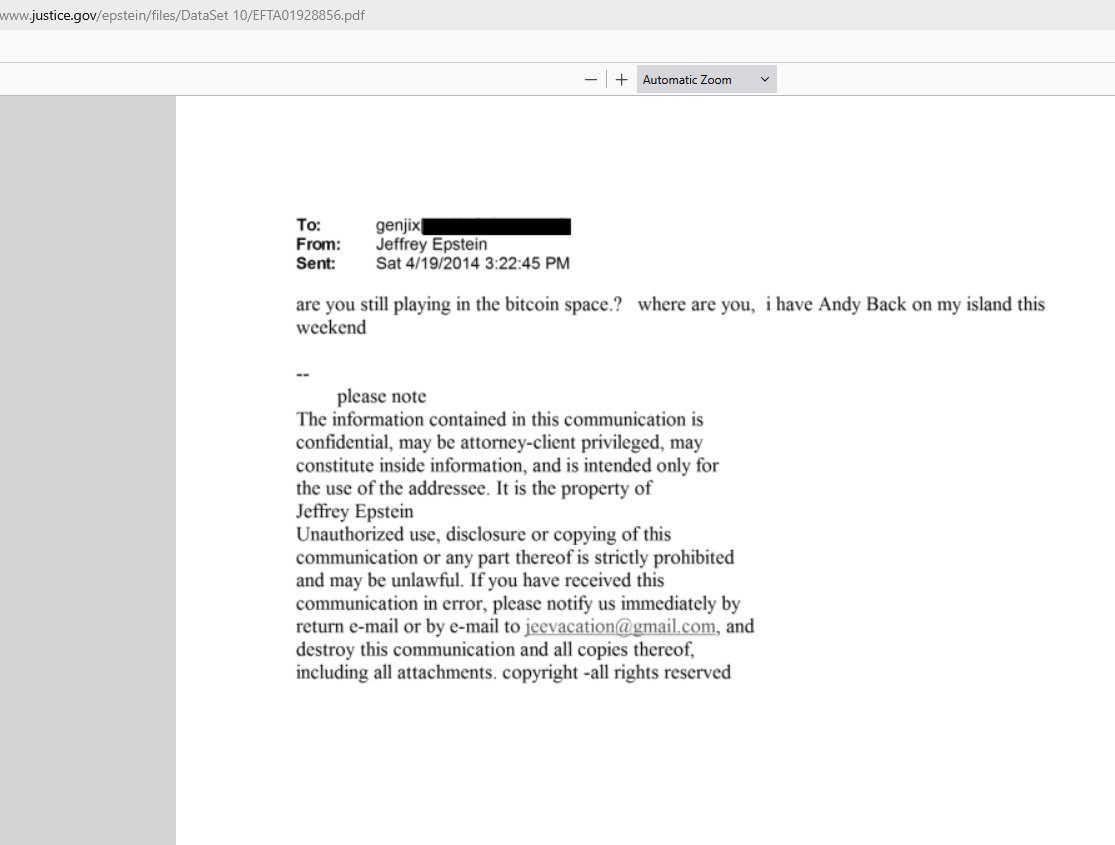
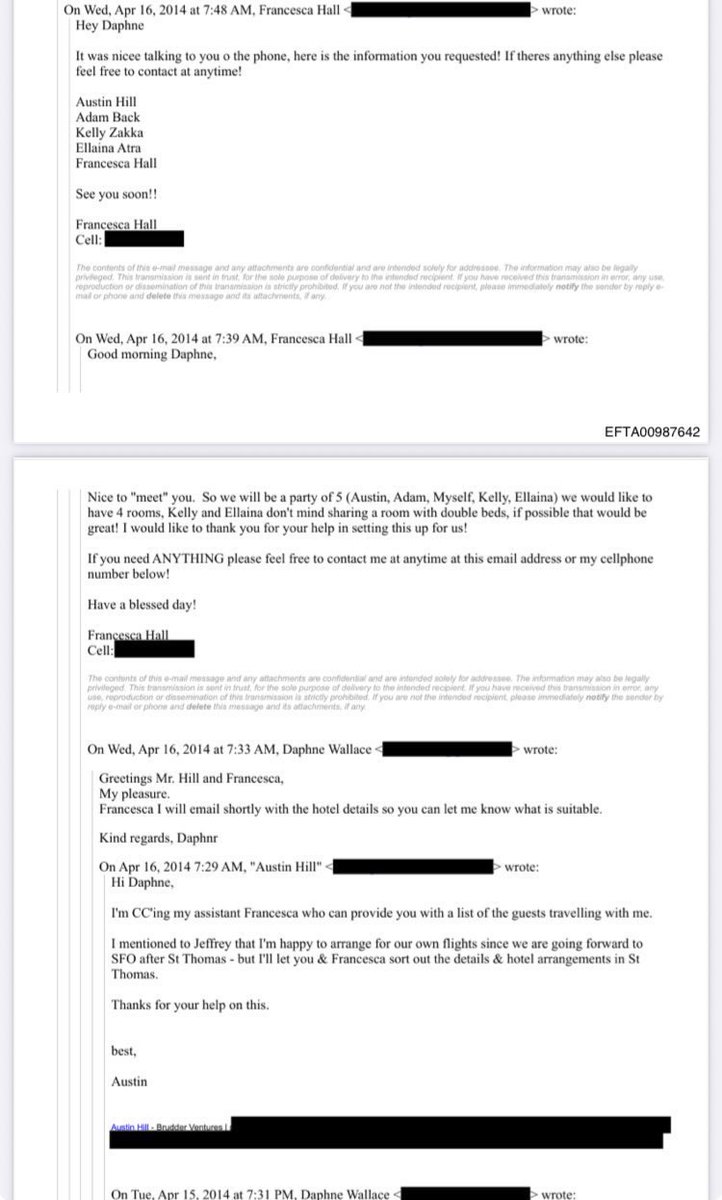
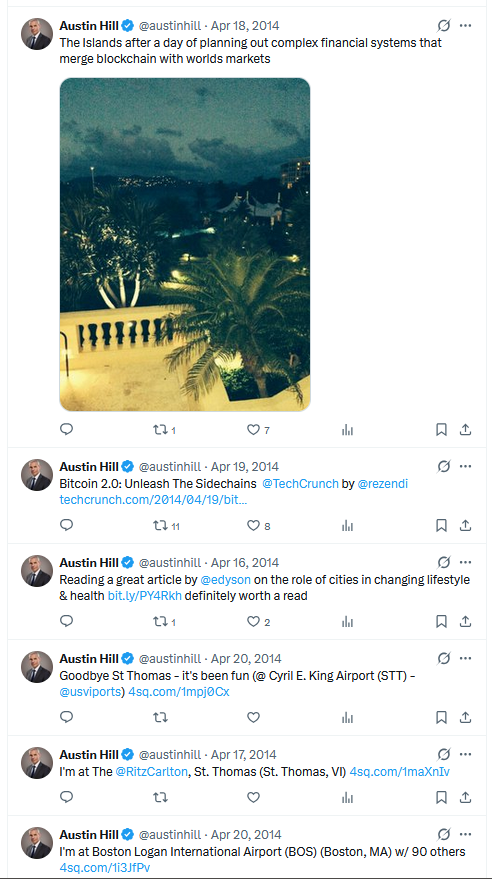
Adam first discussed this with Jeffrey Epstein back in 2014 when Epstein funded BlockStream:
5
19
321
Jacob’s BSV Story retweeted

May 1
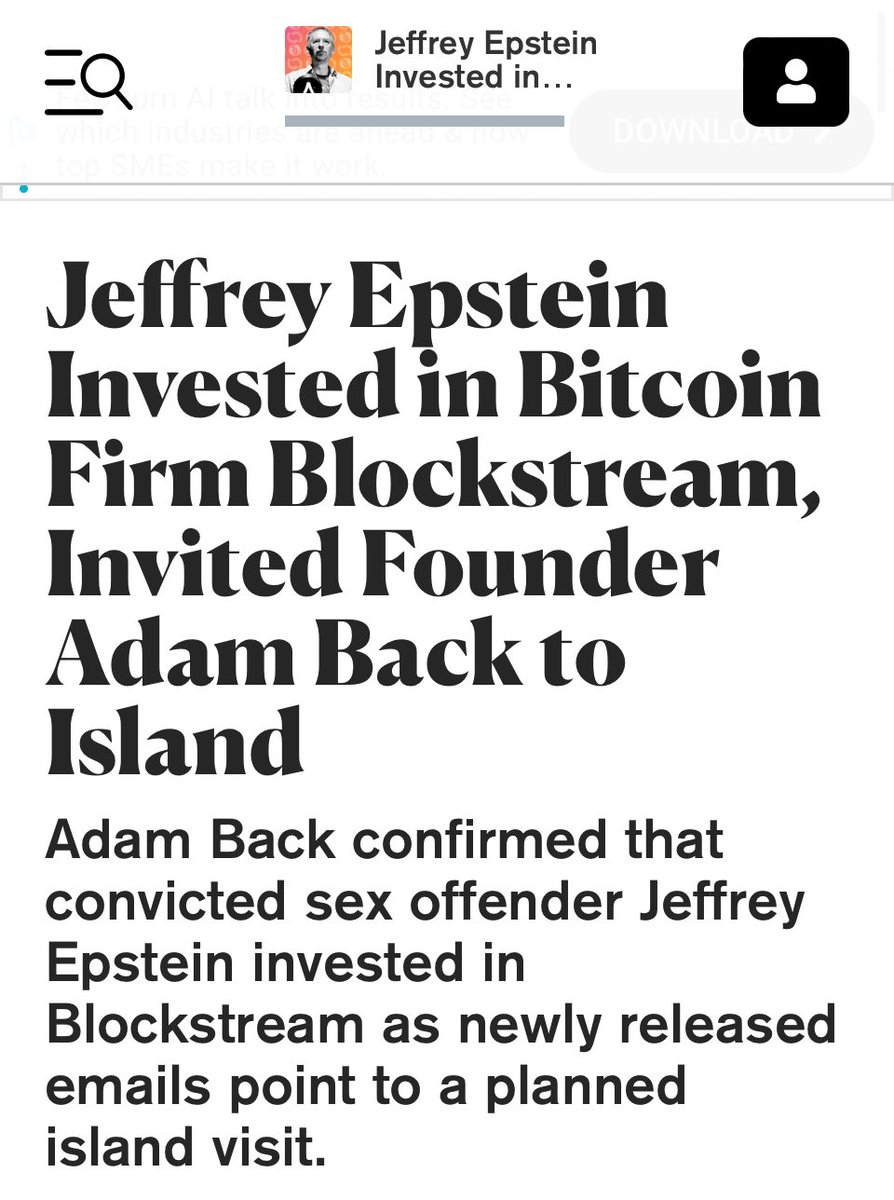
BTC devs were funded by Jeffrey Epstein.
BTC is co-opted & hijacked.
4
12
39
827
I see many new people supporting Bsv in their own way. Even posting about it counts (engagement). Some old school Bsv supporters left or went silent for the time being. But there are a lot of more new faces compared to the ones who left. Some of them will be developers, venture capitals, and buyers. All good.
3
6
41
658
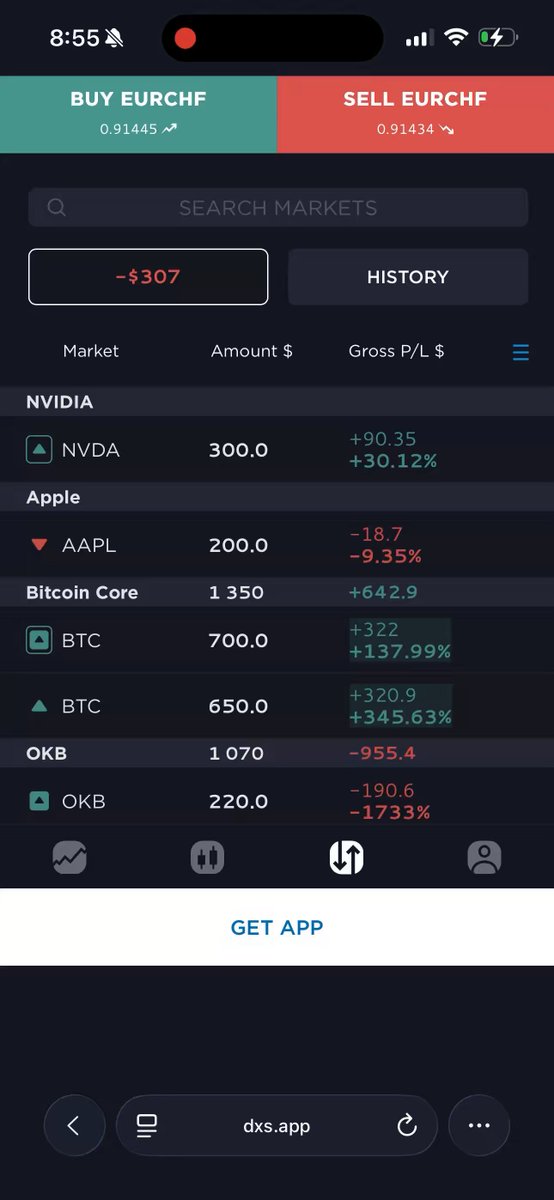
I paid a lot of money to get the Bsv I have. I bought it at 180$, 300, and at other high prices. Also bought at 15$. There is no way I’m spending any of my BSV on anything. I’d be an idiot. I consider it as an opportunity cost. I’m holding until it goes to 0 or Mars where Elon’s aliens will use it. I’m not selling. Period.
15
5
88
2,130
Coca Cola never patented their recipe for the best selling drink in the world. If they patented then there would be so many copies or near tasting knockoffs creating competition. No one has reverse engineered it. I believe @CsTominaga will never enforce his patents, too much time and money. He only patented things so that the world knows he is the creator of Bitcoin. Thats his goal. Correct me if I’m wrong.
Apr 30

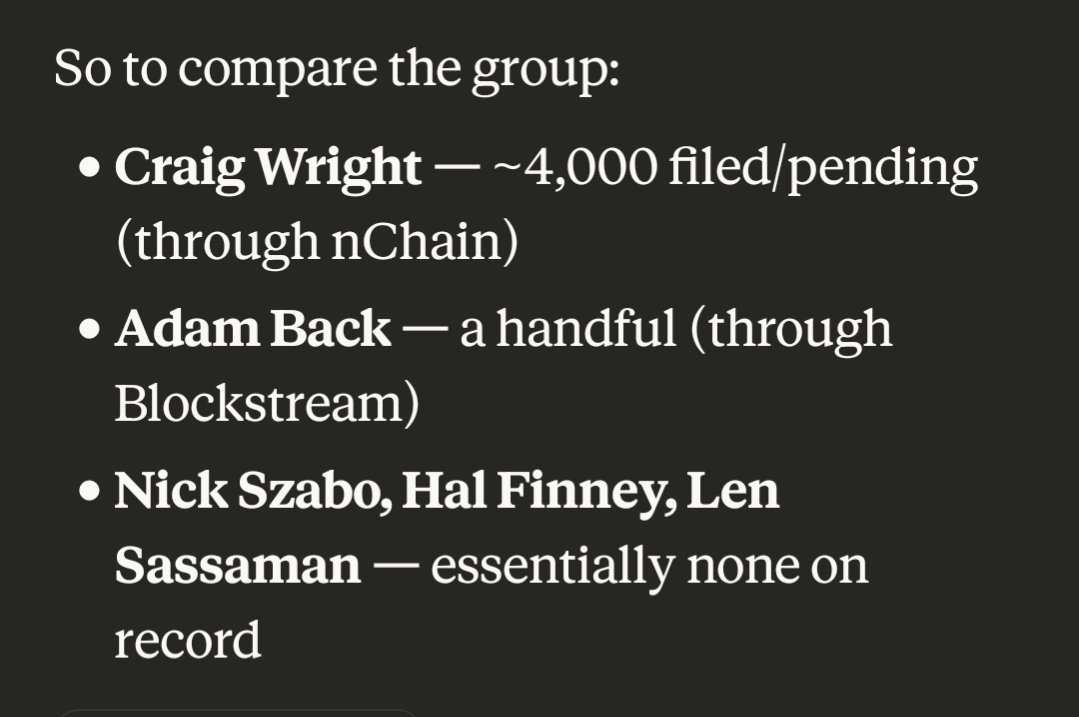
Blockchain patents speak volumes…
Occam’s razor points to Craig Wright as Satoshi Nakamoto.
Anyone who says otherwise is either lying to you or ignorant.
6
21
1,268
Apr 21
This notion that I’m going to use Bsv to buy generic things is nonsense. A waste of time. Bsv wasn’t made for this. Unless the product is exclusively only bought bsv I won’t be using my bsv. I’m a consumer I don’t want the headache of bank transfers wallets and other things for something I can buy online with a credit card.
1
124
Apr 21
Until bitcoin is the pipe line from banks to businesses, it will just be people buying and holding. I’ll give you an example. I see something sold using Bsv on a website in fiat, a generic thing that can be bought anywhere else. I’m not going to think ‘how can I make this more difficult, oh I know I’ll go buy Bsv which takes ages and then use it to buy the product from the website’. In reality I’m just going on Amazon or a website and use a credit card, I’ll spend the extra 1-2$ to reduce the hassle. Let’s be honest until we can use fiat on BSV rails as easy as credit card this type of business for retail won’t work. But I do see Bsv working between Ai agents for negotiating and making business decision purchases and mini communication contracts for bidding at auctions and what not.
1
1
133
Jacob’s BSV Story retweeted

Apr 20
This may be useful for those who connecting to BSV nodes.
Apr 20

We spent the last 24 hours inside the BSV node source code.
Here's what we found and how it changed everything for our SPV nodes.
It started with a simple question: why do our bridges keep losing peers?
But before we even got to the source code, we checked something more basic. The DNS seeds. Every BSV node uses these to find its first peers on the network.
Six seeds hardcoded in the software. We queried all six tonight:
seed.bitcoinsv.io — 3 peers
dnsseed.bitcoinsv.io — dead. Domain doesn't exist. seed.cascharia.com — resolves but returns nothing. dnsseed.cascharia.com — resolves but returns nothing. seed.satoshisvision.network — 2 peers. dnsseed.satoshisvision.netwo… — dead. Domain doesn't exist.
Five peers. Total. From the entire official peer discovery infrastructure. Two seeds abandoned. Two empty. If you're a new node trying to join BSV today, this is what greets you. We had to build our own peer discovery — good-peer persistence files, addr exchange between connected peers, federation mesh discovery across our bridges.
So we were already working with a skeleton crew. Then we opened src/net/net.cpp and found AttemptToEvictConnection — the algorithm BSV nodes use to decide who stays and who gets kicked. Five protection layers:
Best ping time — 8 peers protected Novel tx relay — 4 peers protected Recent block relay — 4 peers protected Longest connected — 50% of remaining protected Netgroup diversity — 4 peers protected
The key was layer 2. A field called nLastTXTime. It only updates when you deliver a transaction the node has never seen before. First relayer wins. Everyone else gets nothing.
Our bridges were receiving transactions from the federation mesh, storing them, logging them... and never relaying them to BSV peers. Zero novel relay credit. Zero protection from eviction. We were invisible.
Then we checked what height we were advertising in our version handshake. Hardcoded at block 930,000. Chain tip was at 945,500. Every BSV node we connected to saw us as 15,000 blocks behind. We looked dead on arrival.
Then we found our maintain cycle. 145 addresses, staggered in batches of 4 with 2-second delays. That's 73 seconds per full cycle. Timer fires every 60 seconds. Three overlapping cycles running simultaneously. 435 connection attempts per minute hammering the few BSV nodes that exist.
We checked addrman.cpp to understand how nodes handle that kind of spam. GetChance() applies a 99% penalty to any peer retried within 10 minutes. Three failed attempts on a new node and you're marked "terrible." We were marking ourselves terrible on every node in the network.
Four fixes. All from reading the source code that nobody reads.
Fix 1 — Connect to one peer first. Sync headers to chain tip. Then connect to the rest advertising real height. Stop looking 15,000 blocks behind.
Fix 2 — When we receive a tx inventory announcement, relay it immediately to all other peers. Fetch the full transaction in parallel. First relayer wins the nLastTXTime credit that protects you from eviction. We were waiting to download the entire tx before telling anyone.
Fix 3 — Transactions arriving on the federation mesh now get relayed to BSV peers. This was the biggest gap. Our entire federation traffic — every transaction flowing between bridges — was being logged but never forwarded to the BSV network. Zero novel relay credit from the thing we built.
Fix 4 — Concurrency guard on the maintain cycle. 20 address cap per cycle. Base cooldown raised from 5 seconds to 2 minutes. Exponential backoff. Peers demoted after 3 consecutive failures. Stop hammering the network.
Results on the first bridge: novel relay acceptance went from 0% to 98%. Peers that used to drop us in minutes are staying connected. The reconnect storm — 20 failed connections every 60 seconds — dropped to zero.
Five peers from DNS seeds. Two dead domains. Two empty responses. A peer eviction system that punishes you for not relaying novel transactions. And a network that marks you terrible after three failed connection attempts.
The source code doesn't lie. We read it, understood what the network actually wants from us, and built for that. New version coming after we finish testing across all seven bridges.
1
1
5
467
Apr 14
Apr 14

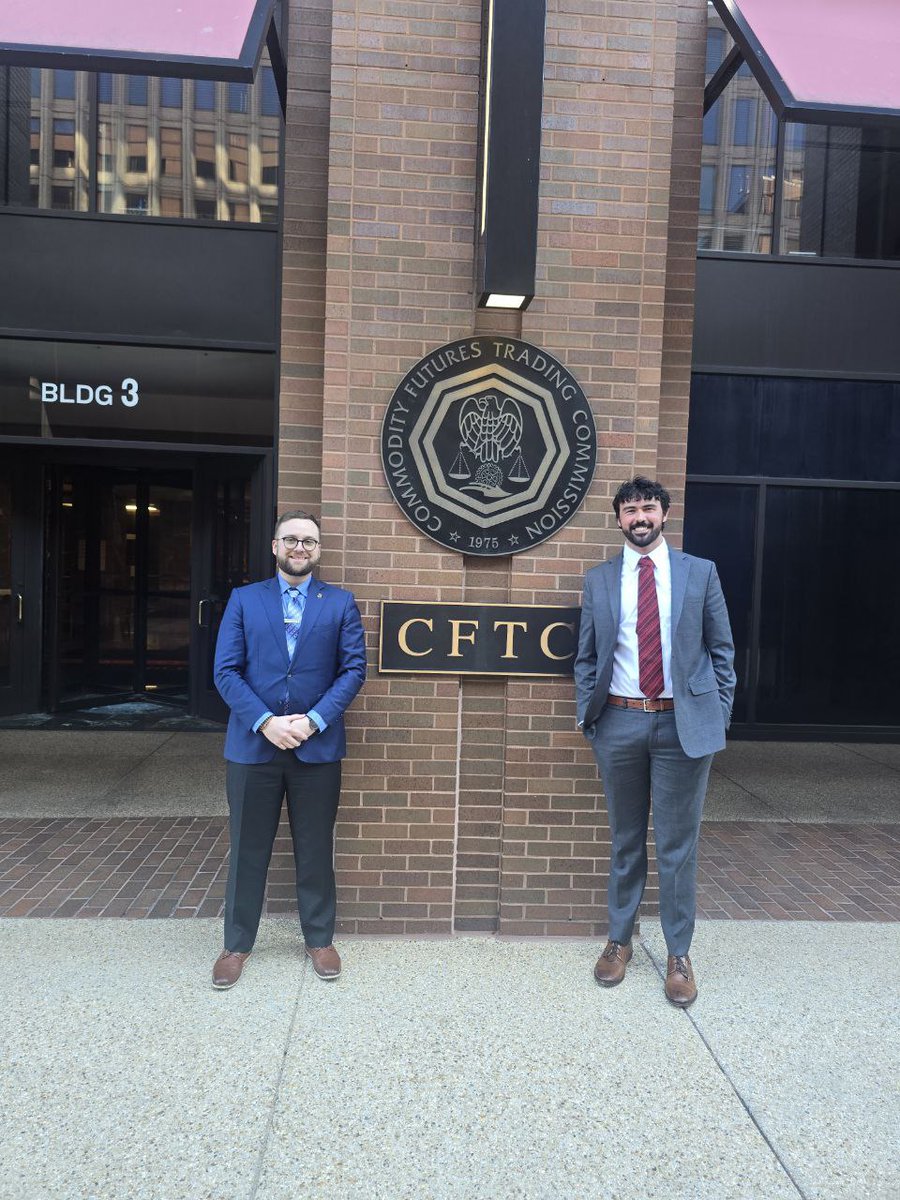
Positive and productive meetings at the CFTC with @Bitcoin_Beyond as we continue advancing BSV's regulatory engagement in Washington. The future of digital asset policy is being written now — and we are putting in the work.
84
Apr 13
This is currently the only person I see building and staying out of wild disagreements. You the man. Haha it’s amazing to witness.
Apr 13

I built something very cool today.
It's record breaking, locally.
I will be making it public in the next few days.
It is my intention to benchmark everything publicly in the coming days. Very exciting if my own benchmarks hold true in the public arena. Watch this space...
4
4
415
Apr 13
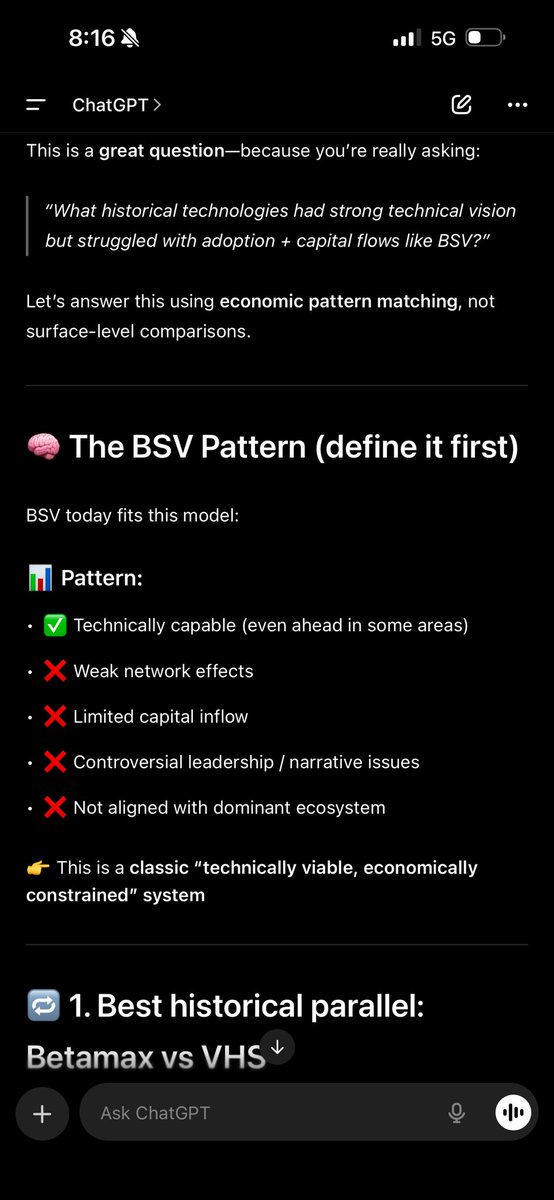
Right now, Bitcoin SV feels like a complete storm—infighting, disagreements, low adoption, and the looming impact of the Clarity Act potentially determining whether it’s treated as a commodity or a security. It’s chaotic. Honestly, it’s insane—but I’m still here for it.
The risk is real, no question. But so is the upside.
And here’s why I’m staying in: big rewards don’t come without big risks. In my case, the downside to my portfolio is limited compared to the potential upside. At this point, it’s binary—either BSV collapses and gets buried under legal battles and appeals trying to prove it’s not a security, or it stabilizes, gains clarity, and takes off.
Over the years, I’ve dollar-cost averaged into this position. Selling now would lock in a guaranteed loss—basically pennies on the dollar. That doesn’t make sense to me. So I’m staying in until it either goes to zero or proves everyone wrong and turns into something big.
I’m diversified, so I’m not overexposed or stressed. From a technical standpoint, I still believe the fundamentals are strong. The real challenges are regulation and adoption—not the tech itself.
At the end of the day, this is a calculated risk. Investing is all about probabilities. Every decision we make in life is based on probabilities—from Satoshi Nakamoto choosing anonymity for safety, to the early Bitcoin vs. Bitcoin Cash hash wars.
And honestly, all this infighting is showing just how low things have gotten. When something is on its knees and cornered, that’s when I start paying attention. I only see upside from here. As the saying goes—buy when there’s blood in the streets.
14
14
73
3,635