The Topmost °•° Not every food for thought is edible.
Joined October 2023
- Tweets 1,230
- Following 357
- Followers 65
- Likes 21,219
112 Photos and videos
Sbu Jacobs retweeted

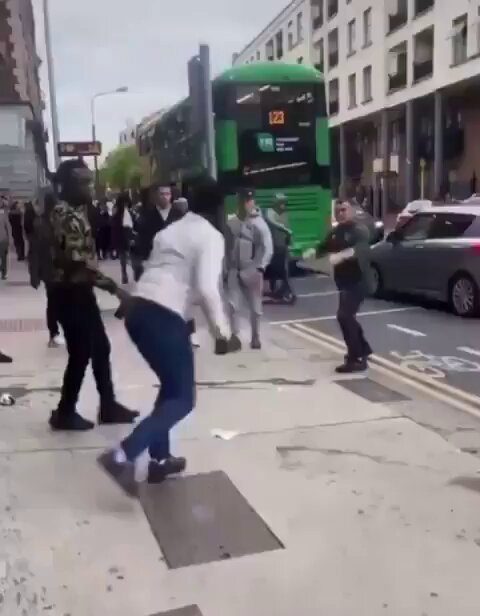
🇮🇪⚔️ Un grupo armado ha emitido una ADVERTENCIA a los políticos irlandeses:
"Has INUNDADO nuestras comunidades con HOMBRES (migrantes) DE EDAD MILITAR"
"No nos sentaremos y veremos nuestra cultura y religión DESTRUIDAS"
1,388
13,048
63,440
1,104,841
Sbu Jacobs retweeted

Jun 1
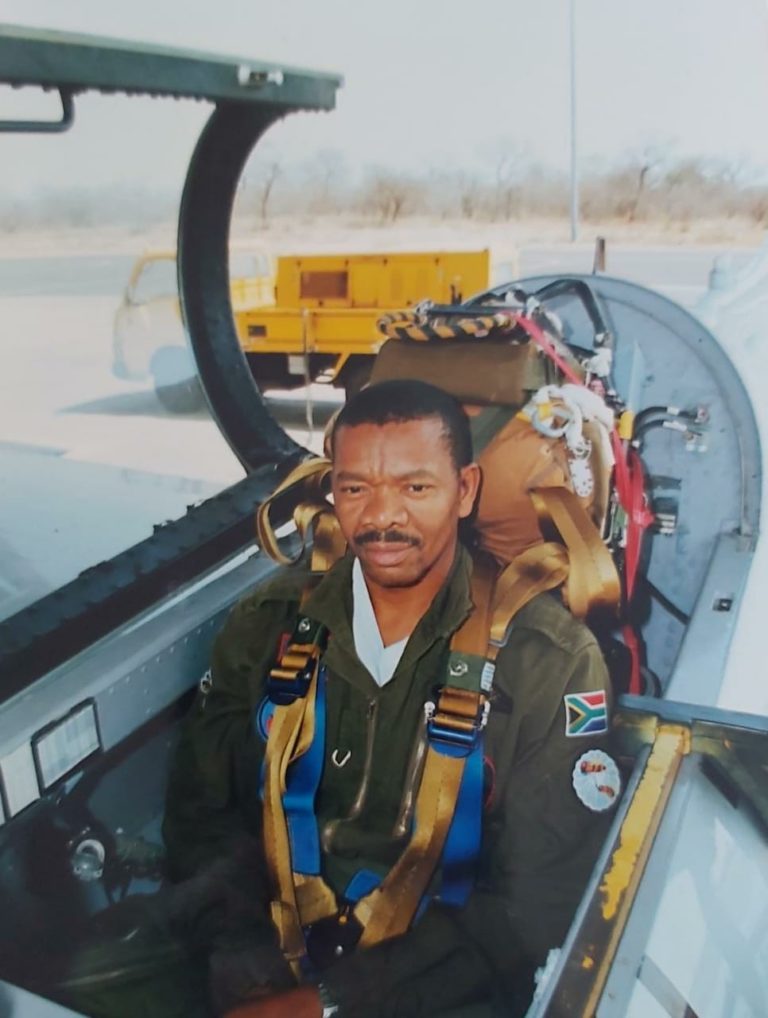
The first black South African to qualify as a licensed air transport pilot and SAAF's first black general officer - General Nhlanhla Lucky Job Ngema. Image Source: Defense Web
37
773
3,640
51,583
Sbu Jacobs retweeted

President Cyril Ramaphosa must resign.
1,062
3,316
11,907
543,122
Sbu Jacobs retweeted
May 7
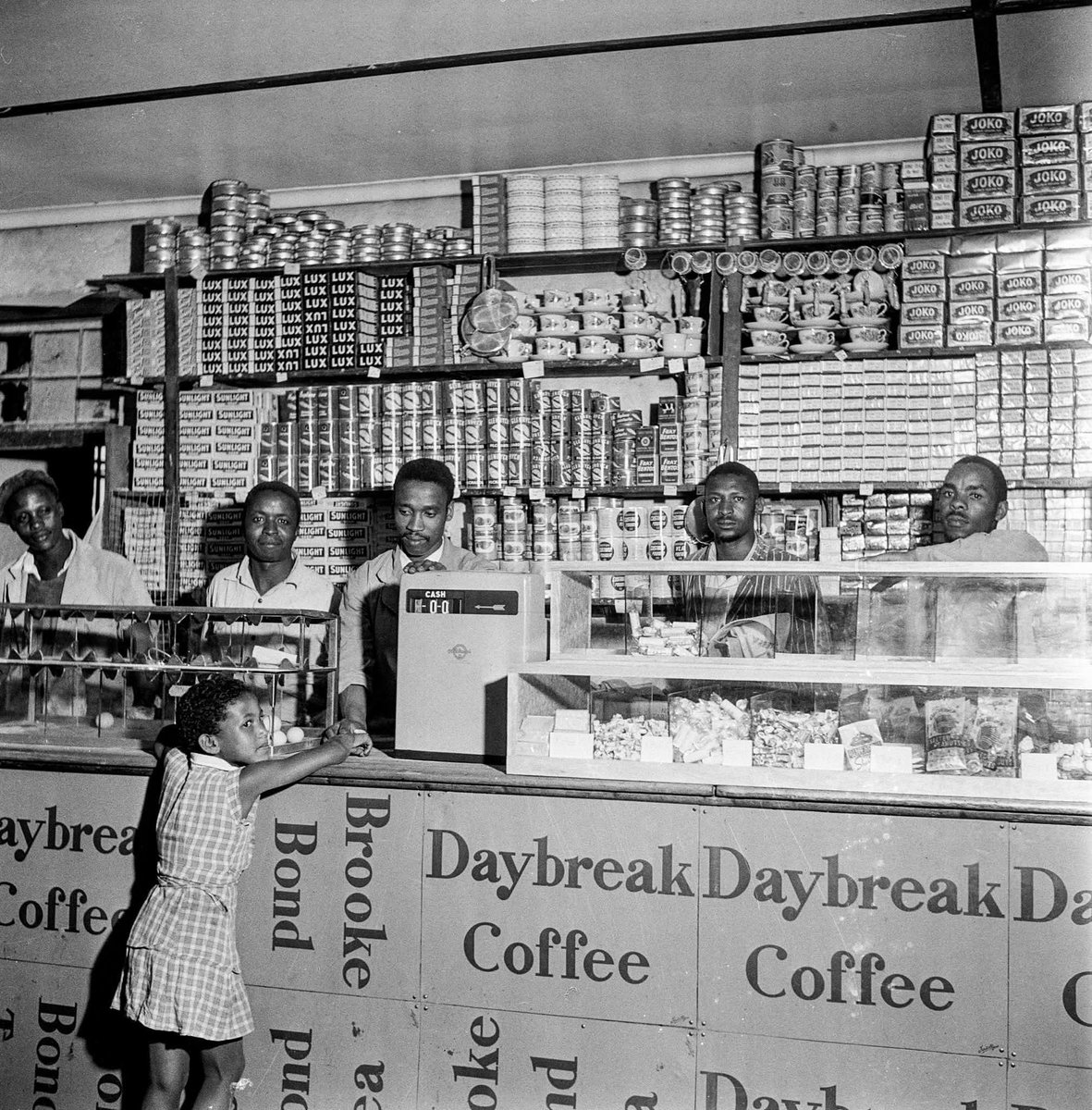
A grocery shop in Pimville, Soweto, South Africa 1956. Source: Drum Social Histories
58
748
2,337
80,511
Sbu Jacobs retweeted
May 5
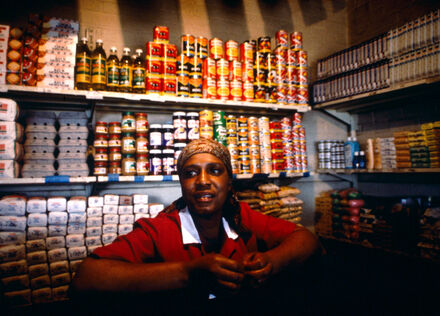
A woman sits at the counter of her spaza (tuck shop), c late 1980s. Credit: Ken Oosterbroek Collection
44
517
1,684
107,582

Sbu Jacobs retweeted
Apr 18
The Last Grave at Dimbaza (1973) is a seminal documentary that provided one of the first unflinching looks at the harsh realities of apartheid in South Africa for international audiences. Shot clandestinely with hidden cameras by South African exiles and British filmmakers, the footage was smuggled out of the country to bypass strict censorship laws. The producers included Nana Mahomo, Antonia Caccia, Andrew Tsehiana. Source: IMDb, Youtube
132
2,514
4,221
347,583
Sbu Jacobs retweeted

4 Aug 2022
Wanting South Africa to have a secure border doesn’t make you Xenophobic.
913
29,593
56,601
Sbu Jacobs retweeted

Mar 13
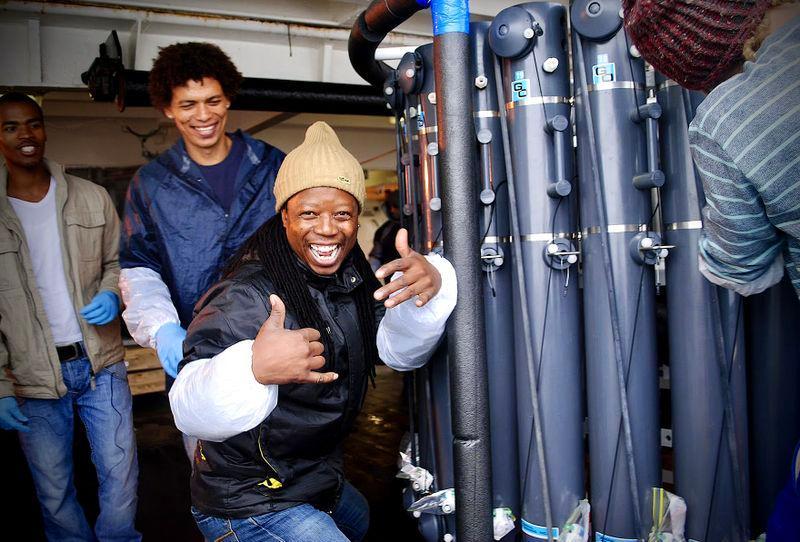
their names are Dr. Thato Mtshali (Antarctic ocean researcher linked to CSIR/SOCCO), Prof. Marcello Vichi (director of MARiS and head of UCT oceanography), Dr. Sandy Thomalla (chief scientist at SOCCO), and many others across South Africa’s Antarctic research community ! 🇿🇦

South African Scientists outperformed Princeton, Oxford and Stanford Researchers in the field of Antarctic and Southern Ocean science.
They ranked among the best in the world in the field of study.
Credit: @dailymaverick.
19
2,771
8,911
134,723
Sbu Jacobs retweeted
Feb 19
Victim of police brutality, Johnny Mashiane, a 15-year-old activist, spent a month in a psychiatric hospital following his release from detention. A normal child before his arrest, barely able to speak after his release. Footage from the 1986 documentary Witness to Apartheid by Kevin Harris
123
1,634
2,590
127,079
Sbu Jacobs retweeted

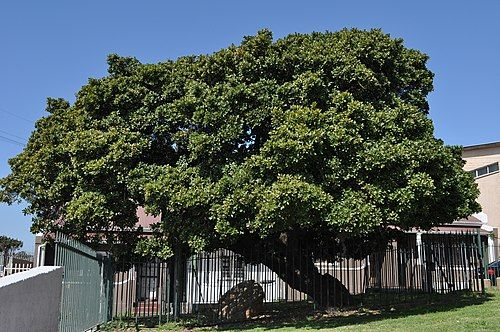
Treaty Tree
The massacre of 64 Portuguese sailors, including de Almeida, took place close to the Treaty Tree in modern day Woodstock in 1510.
The Treaty Tree, in Afrikaans: Verdragboom or Traktaatboom is a 500 year old white milkwood tree on Treaty Road and south of the rail line in Woodstock, Cape Town, South Africa. Peace was made under the tree on 10 January 1806 after the Battle of Blaauwberg, thereby starting the second British occupation of the Cape and leading to the permanent establishment of the Cape Colony as a British possession. Until 1834, slaves were sold and convicts hanged under it.
Prior to the arrival of the Dutch, the tree was a feature of the local landscape since at least the early 1500s. During the Battle of Salt River, in 1510, a massacre by Khoikhoi of 64 Portuguese sailors and their commander Dom Francisco de Almeida took place close to the tree.
The City of Cape Town owns the property, and the tree was declared a monument in 1967
2
23
128
5,453
Sbu Jacobs retweeted
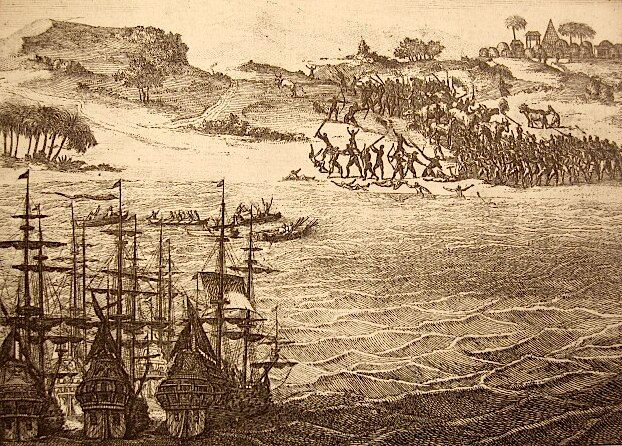
Battle of Salt River, (1510)
Long before Cape Town existed, the area around Table Bay was already a well-used and well-understood landscape. Salt River Lagoon and the nearby plains were occupied by San hunter-gatherers and Khoi pastoralist communities who moved seasonally with their cattle, following grazing and water. For thousands of years, this was a functioning indigenous world with its own systems of land use, trade, language, and diplomacy.
In 1510, this landscape became the site of the first recorded military conflict between Europeans and indigenous people in what would later become South Africa. Known as the Battle of Salt River, the encounter ended in a decisive defeat for the Portuguese and the death of one of their most senior commanders, Francisco de Almeida, the Viceroy of Portuguese India..
The people the Portuguese encountered were part of a Khoikhoi-speaking community known as the ǃUriǁʼaekua, later recorded by Europeans as the Goringhaiqua. They were pastoralists, not hunter gatherers, and their wealth and survival depended on cattle. Cattle were not simply livestock but central to social status, trade, marriage arrangements, and spiritual life.
The ǃUriǁʼaekua were not isolated. They formed part of a network of related Khoikhoi groups spread across the Cape region, each with defined territories, seasonal movement patterns, and political leadership. They were also experienced traders and negotiators, having long interacted with passing ships along the coast.
By the early 16th century, European vessels had already begun stopping intermittently at the Cape to take on fresh water, meat, and firewood. These encounters were often tense but usually brief and transactional.
Francisco de Almeida was returning to Portugal in late 1509 after achieving a major victory over Muslim forces at the Battle of Diu in the Indian Ocean. This victory secured Portuguese dominance over key sea routes to India and the East Indies.
In February 1510, Almeida’s fleet anchored in Table Bay to replenish water supplies. The ships involved included the Garcia, Belém, and Santa Cruz. Initial contact with the local ǃUriǁʼaekua appears to have been peaceful. There was trade, likely involving cattle and food exchanged for metal goods.
At this stage, relations followed a pattern that had worked elsewhere along the African coast: brief cooperation without settlement.
Trouble began when a small group of Portuguese sailors, variously recorded as 12 or 13 men, left the shore and entered a nearby ǃUriǁʼaekua village. The village was likely located inland, in what is today the Observatory or Mowbray area, near the Liesbeek River system.
What happened next is contested. Portuguese sources differ on whether the sailors attempted to steal cattle or whether the ǃUriǁʼaekua attempted to take goods from them. What is consistent across accounts is that the encounter turned hostile and the Portuguese were chased out of the village and back to their ships.
Importantly, contemporary Portuguese historian Gaspar Correa places the blame squarely on the sailors. He records that the local people were already suspicious of Portuguese intentions and feared that they might attempt to establish themselves permanently.
Even Almeida himself reportedly acknowledged that his men were likely responsible for provoking the conflict.
Back on the ships, the humiliated sailors demanded retaliation. Portuguese officers debated the matter at length. Almeida was reluctant. He was aware of the risks and conscious of the possibility that his men had acted unlawfully.
Despite these reservations, Almeida eventually agreed to a punitive raid the following morning. He did not lead the force himself but allowed his captains, Pedro and Jorge Barreto, to command it.
This decision would prove fatal.
On the morning of 1 March 1510, a force of approximately 150 Portuguese soldiers set out from the beach. They were armed with swords, spears, and crossbows. Their objective was to raid the village, seize cattle, and reassert authority.
When they settled, they found it largely deserted. Only a small number of children and cattle remained. Believing the villagers had fled in fear, the Portuguese began abducting children and driving off cattle.
This was exactly what the ǃUriǁʼaekua had anticipated.
Rather than confronting the Portuguese immediately on open ground, the ǃUriǁʼaekua allowed them to move inland into bushier terrain. South African military historians believe this was a deliberate tactic to negate the Portuguese advantage in weaponry.
Once the Portuguese were sufficiently committed, the counterattack began.
Around 170 Khoikhoi fighters launched a coordinated assault using stones, fire-hardened wooden spears, and poisoned arrows. Their most effective tactic, however, involved cattle.
The ǃUriǁʼaekua had trained their cattle to respond to specific whistles and calls. During the attack, the warriors used the cattle as moving shields, advancing behind them while hurling weapons at close range. This neutralised the Portuguese swords and crossbows, which were poorly suited to chaotic, close-quarters fighting in dense terrain.
The Portuguese formation broke. What had begun as a punitive raid quickly turned into a disordered retreat back toward the shore. The attackers maintained pressure, driving the Portuguese downhill toward the beach near the mouth of what is now Salt River.
At this critical moment, disaster struck. The landing boats had been moved further along the shore to a distant watering point. When the Portuguese reached the beach, there was no immediate escape.
Sensing the opportunity, the ǃUriǁʼaekua intensified the attack.
During the chaos on the beach, Francisco de Almeida entered the fight, either attempting to rally his men or defend the retreat. He was killed along with 64 Portuguese soldiers, including 11 captains.
Some Portuguese managed to escape by running along the beach to reach the boats at the watering point. The rest were cut down.
Almeida’s body was recovered later that day and buried near the site of his death. Two years later, Portuguese sailors returned and erected a cross on the grave.
The defeat at Salt River was a major embarrassment for Portugal. Losing the Viceroy of India in a coastal skirmish was unprecedented. The event reinforced and formalised an existing Portuguese policy: ships were forbidden to land at the Cape.
This decision had long-term consequences. By avoiding the Cape, the Portuguese surrendered a strategic advantage to later European powers. When the Dutch, English, and French began competing for the Indian Ocean trade, they did land, resupply, and eventually establish permanent presences.
It would be another 150 years before the Dutch East India Company founded a refreshment station at the Cape in 1652.For European observers, the battle cemented the reputation of the Khoikhoi as fierce and capable fighters. For indigenous communities, it became an early example of successful resistance to foreign aggression.
Writers from the 16th century onwards used the battle as a moral lesson. Portuguese chroniclers such as João de Barros and Luís de Camões reflected on the dangers of arrogance and uncontrolled violence. Later British writers framed it as a warning about the limits of military power.
Despite its significance, the Battle of Salt River is poorly marked and little known. The landscape has been transformed by industry, railways, and canals. One theory suggests that Almeida may be buried beneath an abandoned railway shunting yard near the Liesbeek/Salt River canal.
Today, commuters pass through the area unaware that it was once the site of a defining moment in South African history.
The Battle of Salt River challenges the idea that European dominance at the Cape was inevitable. It shows that indigenous communities were organised, strategic, and capable of defending their land long before formal colonisation began.
It also explains why the Cape remained unsettled by Europeans for more than a century after Dias rounded it. The lesson of 1510 was clear this was not empty land, and it was not undefended.
6
21
86
3,465