
I build electric cars and I watch baseball.
Joined October 2014
- Tweets 56,506
- Following 2,821
- Followers 1,495
- Likes 83,815
1,277 Photos and videos









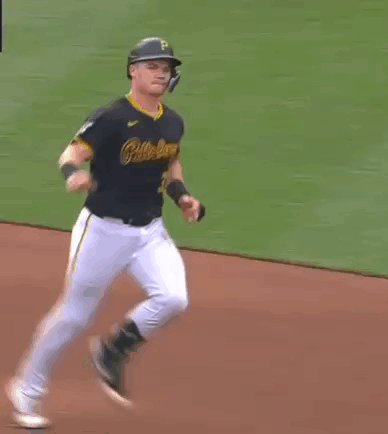

Lol, it's kind of funny listening to John Wehner being unintentionally racist by assuming that Lawrence Butler is fast because he's black. Butler has a slower sprint speed than Ryan O'Hearn. And that has been the case in each of Butler's 4 seasons.
#LetsGoBucs
2
67

Jun 14
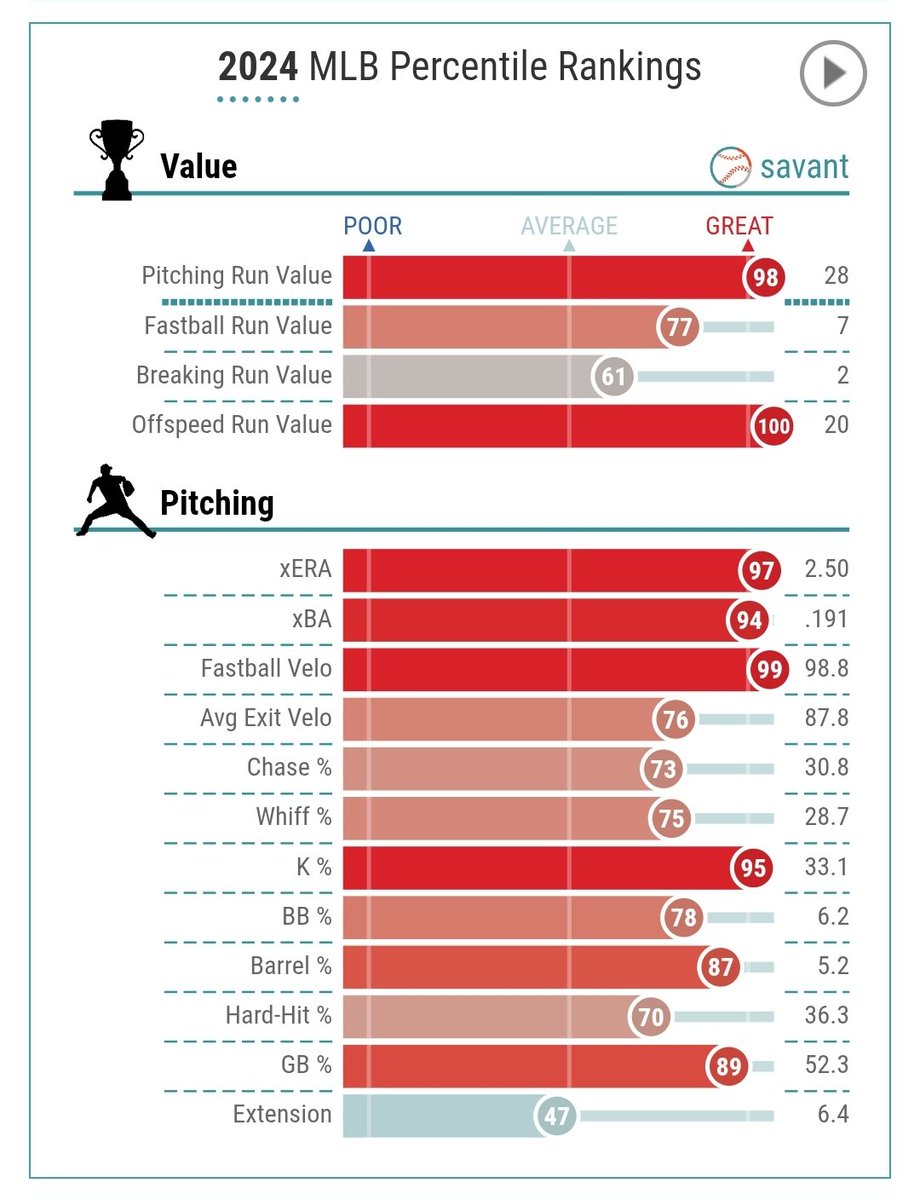
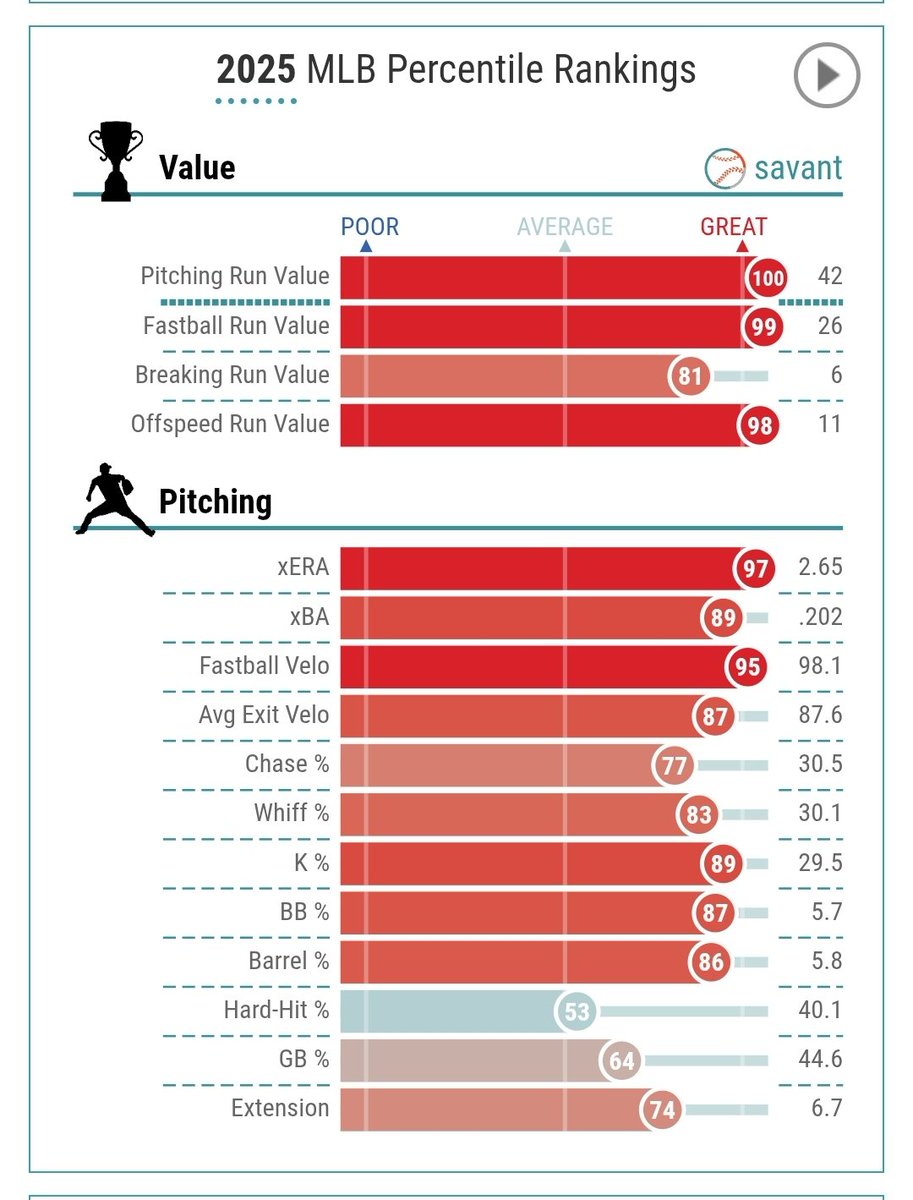
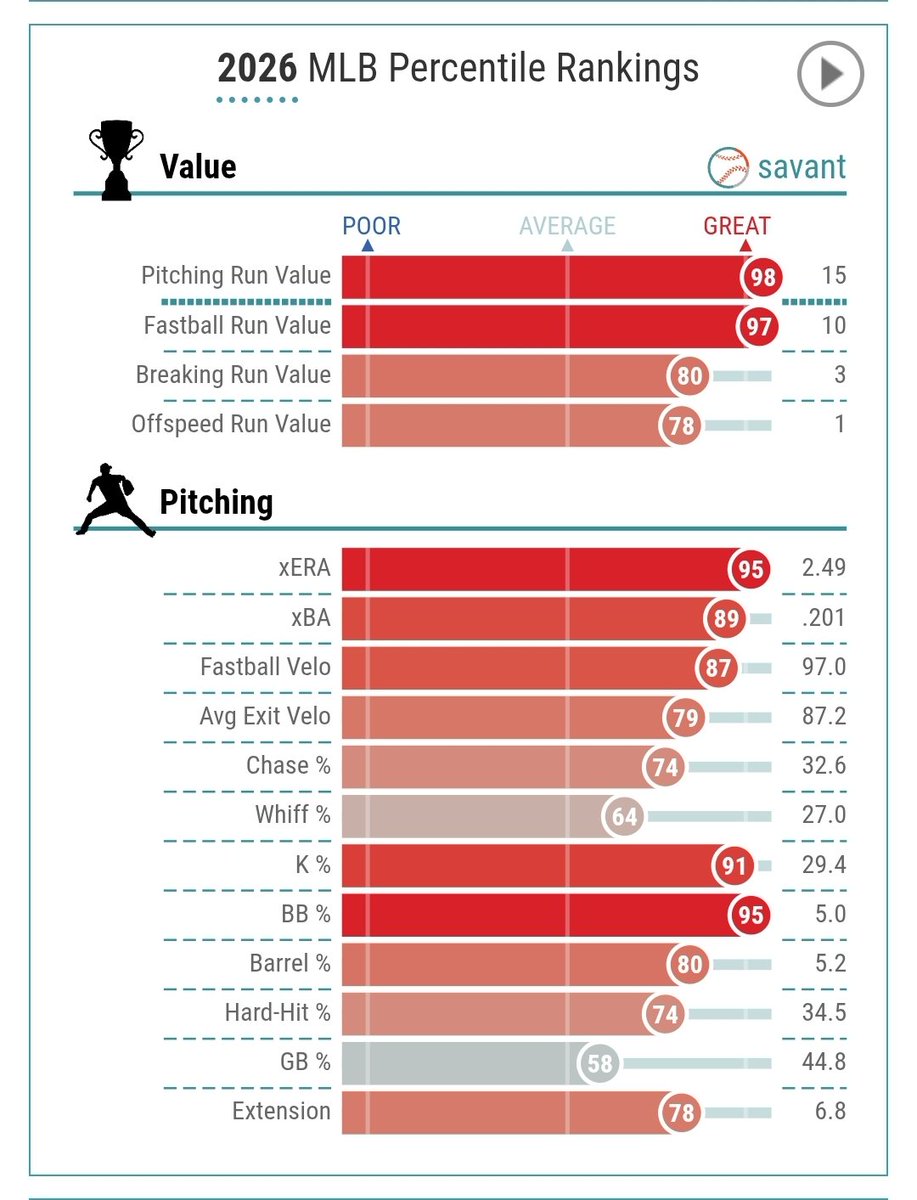
Paul Skenes in 2024
Paul Skenes in 2025
Paul Skenes in 2026
There's zero wrong with him
Chill the fuck out
#LetsGoBucs
3
45
Jun 14
RT @thefriscobay: what would happen if an mlb player wrote something disparaging or just disagreeing in chalk on the hats they wear for arm…
93
Jun 14
Today was a good win. It may have been more important to our season than winning in a blowout. Getting a close victory without the bullpen blowing the save was huge for this team's confidence.
#letsgobucs
29
Jun 13
Through 2 innings, Bubba's command has been much better. I don't know this for sure, but it appears that his back is more upright during his leg lift instead of rocking backward and appears to be on a more solid balance point for his delivery.
#letsgobucs
65
James Larson retweeted

Jun 12
First Major League HR for Rafael Flores Jr!
20
98
1,227
125,017
James Larson retweeted
Jun 11
That bat flip was out of this world. 🌍
⭐️🗳️ pirates.com/vote
31
222
2,093
66,774
Jun 12
With as bad as the bullpen has been... isn't it at least worth a shot to see how Michael Kopech would do?
#LetsGoBucs
75
James Larson retweeted

Jun 7
Since 2022, the LA Dodgers have a losing record against just 3 teams:
-The Houston Astros (.417)
-The Philadelphia Phillies (.429)
-The Pittsburgh Pirates (.440)
1
16
340
27,958
Get Jhostynxon Garcia off my team. Boston... take him back, give us Aroldis Chapman
1
1
298
James Larson retweeted

The Pirates starting pitching is World Series contending caliber. The Pirates offense is World Series contending caliber.
The Pirates bullpen is the difference between their record representing that and being just wild card contenders.
22
17
421
15,676
James Larson retweeted

This is the owner of MLB Trade Rumors, who has a superficial understanding of sports economics. Before I continue, I want to say that his website is excellent and worth visiting. However, he does not know what he is talking about when it comes to sports economics.
Sports leagues are unique. They are joint ventures, not traditional monopolies. Without that joint venture, there is no league. There are no Dodgers or Giants. There is nothing. Teams would essentially become exhibition squads like the Savannah Bananas, or they might operate under something like the old WWF territory system, playing random opponents in their region as separate, independent businesses.
That is not how sports leagues function. They form a collective entity that creates the business of Major League Baseball. Major League Baseball cannot be a monopoly over itself.
Here is what is interesting about sports leagues: they create one of the most pro-labor environments in the history of collective bargaining. Within the business they create and establish a de facto competitive labor market. Players secure jobs inside the Major League ecosystem, where the league’s own member teams compete aggressively for those players and drive their wages higher.
It is like a franchise owner who operates multiple McDonald’s restaurants and allows those restaurants to compete with one another for the same employees.
Beyond that, other leagues, other sports, other industries, and other entertainment companies can compete with Major League Baseball for its players. Players are not obligated to play for Major League Baseball or one of its licensed teams. They have a wide range of options for employment as baseball players or in entirely different fields.
When people talk about monopolies in this context, they do not know what they are talking about.
It is also misguided to frame self-interested management as evil for protecting its own interests while portraying the union as engaged in some noble endeavor. Both sides are self-interested and are simply looking out for their respective priorities. That is their prerogative as business owners on one side and as a collective union on the other.
Of course Major League Baseball looks out for its own interests. Tim will claim to know its motives with certainty, but he has no clue. He is simply spouting opinions based on what he believes, and he attempts to castigate ownership with really bad takes that do not stand up to reason (as indicated by his monopoly argument). The problem is that economics does not support what he believes.
Finally, and here is the critical point I highlighted earlier today, one of the single biggest issues from an exploitation perspective is the surplus value extracted from arbitration-eligible players. The union had a chance to correct this back in 1994. They have a chance again. Yet their opposition to a salary cap, which really only impacts high AAVs and those high AAVs are partially funded by the very surplus value exploited from arbitration-eligible players, remains their priority. And Tim's right in line with them, protecting multi-millionaires who are going to be multimillionaires either way.
As you can see, both the owners and the union are exploiting that surplus value. The only problem is that the union is supposed to represent the players who are getting exploited, but they're too interested protecting the top end. It's more important to preserve the supposedly large share of revenue for a limited amount of people rather than hundreds of its members gaining earlier access to the labor market.
Tim is pro-union, he isn't pro-player, even though he may think he is.
Jun 4

Give me a legal monopoly with taxpayer subsidies. Then we’ll be apple to apples and you can decide if you’re cool with me ignoring what customers want routinely but then pandering to them on one issue when it’s extremely financially advantageous to me
10
3
36
8,631
James Larson retweeted

Paul Skenes xERA by year:
2024: 2.50
2025: 2.65
2026: 2.28
Some of you need to chill.
26
15
517
38,074
The Pirates have lost 6 games where they had the lead late in the game where their win probability was 88% or higher. The Pirates are currently 33-29 and sit in 3rd place in the NL Central. However, they could very easily be 39-23 and sit half a game above the Brewers.
2
5
284
James Larson retweeted

Jun 3
Honestly don’t care about the owners or the players motivations. What the fans are interested in is a system that levels the playing field by rewarding strategy and execution over spending.
We want our teams to have a shot.
More fans engaged is good for both the owners and players.
Jun 3

It’s not. Fans think it is. But it’s not.
7
4
23
2,481
James Larson retweeted

Jun 3
Dodgers got a sweetheart deal when they went bankrupt. MLB has also catered rules for them. I'd say they should quiet down but what's the point. The spoiled brat gets what it wants anyway.
Jun 3

Dodgers fire back at critics of LA's big spending amid MLB CBA talks usatoday.com/story/sports/ml…
57
5
65
16,316
James Larson retweeted

Jun 3
Mitch Keller's career ERA is 4.50
Bubba Chandler's BRIEF career ERA 4.54
Let the rookie figure it out , he's our 5th starter
6
1
71
3,755
James Larson retweeted
Suppose I'm an owner and I have $60 million in revenue sharing. My expected win-loss record is 75 wins. I can invest that $60 million in three four-year contracts at $20 million apiece. This would improve my expected wins to 82.
If I sign those three contracts, my revenue stays relatively flat unless we overperform, in which case I will see a modest increase in revenue. However, underperforming is just as likely, and my revenue will decrease in that scenario. I also face the risk that if those contracts underperform, which the odds suggest they will, I will have $60 million locked up. That pretty much guarantees my revenue is going to be flat or decrease, and I will be locked into a mediocre payroll, revenue, and competitiveness.
Why spend the $60 million? What is the upside?
As an owner, this risk is what limits my payroll capacity. Players are not being realistic if they think their pay is not already capped by revenue and the associated risk for the 25 teams that do not have a higher and more stable revenue base, irrespective of their competitiveness. Now you want to penalize me for not assuming this risk. This is going to force me to lock in contracts that statistically will end in underperformance more times than not and hurt my competitiveness and revenue.
The problem you are missing and not addressing with that proposal is that my revenue is heavily contingent on competitiveness. You are going to force me to lock in mediocrity more times than not. I am okay with risking more payroll dollars, and that mediocrity, using revenue share dollars, if my side of revenue were more stable like the top five markets.
Jun 3

A lot of comments keep mentioning that I am not considering the floor. The players effectively proposed a soft floor which penalizes teams for spending under it. And there was no cap attached to it!
The owners can spend more without restricting player salaries. They won’t.
29
4
32
9,364
James Larson retweeted

Jun 3
I’m old enough to remember these same silly arguments in 1992 and 1993 with the NFL and it turned out great, and the players needed up making so much money beyond their wildest dreams. Why, because every market had a chance and a belief. That’s still the case today..tiny GB, Buffalo, KC same chance as NY, LA, Chicago. In baseball, 12 tom15 teams dead before opening day and then watch as they lose their best players. Lock them out!
3
1
6
1,138