
Beauty is truth, truth beauty; that is all ye know on earth, and all ye need to know.
Joined August 2018
- Tweets 74,102
- Following 6,485
- Followers 801,839
- Likes 229,378
15,746 Photos and videos




Pinned Tweet

Jun 11
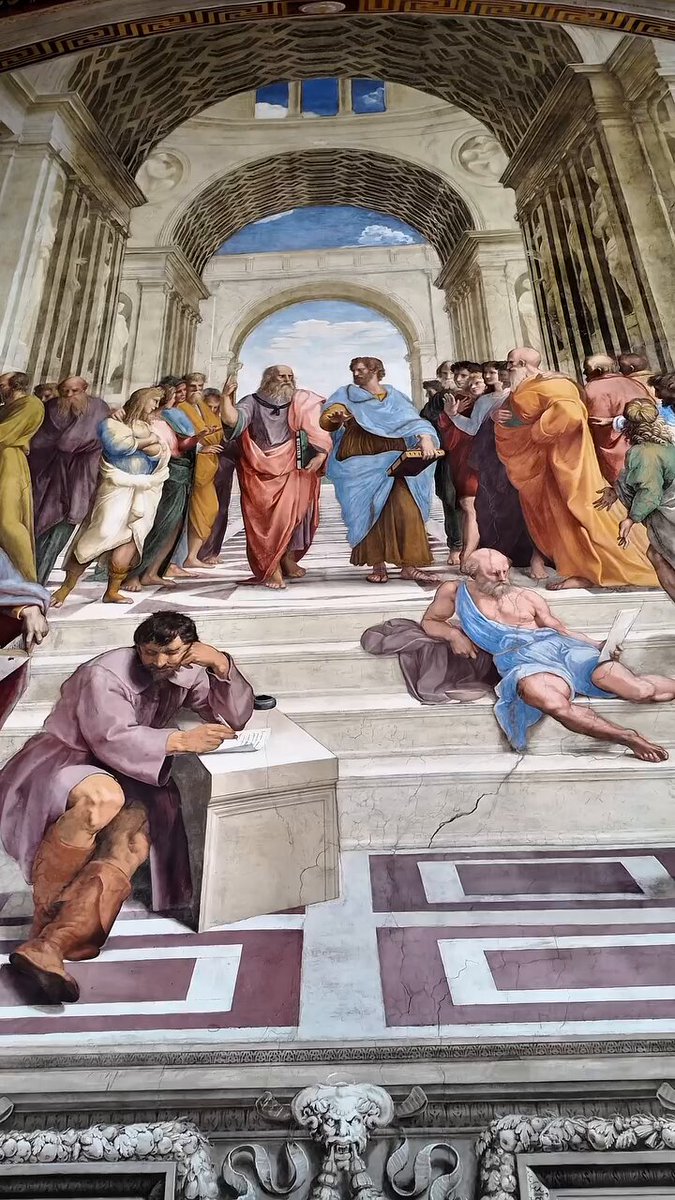
The most famous painting of the ancient Greek philosophers is full of hidden portraits of Renaissance artists.
The figure of Plato is Leonardo da Vinci. The brooding man writing alone on the marble block is Michelangelo. And in the corner, looking straight out at you, is the painter himself...
It is called the School of Athens, and Raphael painted it on the wall of the Pope's private apartments in the Vatican between 1509 and 1511. He was in his mid-twenties.
Across a vast painted hall, he gathered more than fifty of the greatest philosophers, mathematicians, and scientists of the ancient world into a single imagined gathering that never happened.
At the very center, beneath a soaring archway placed at the vanishing point so your eye is pulled straight to them, stand the two men who divided Western thought between them. On the left is Plato, white-haired, pointing one finger up toward the heavens, holding his book the Timaeus. Beside him is his student Aristotle, holding his Ethics and reaching his hand out flat toward the earth. In a single gesture, Raphael captured the whole argument: Plato pointing to the world of ideas above, Aristotle to the physical world in front of us.
But the genius of the fresco is in its faces. Raphael had almost no ancient portraits to work from, so he did something audacious: he painted some of the philosophers of antiquity using the features of the artists of his own age...
Plato was given the face of Leonardo da Vinci, then an old man, whom Raphael revered. The melancholy figure seated alone in the foreground, leaning on a block of marble and lost in thought, is widely believed to be Michelangelo, who was at that very moment painting the Sistine Chapel ceiling a short walk away. Raphael cast him as Heraclitus, the philosopher known for his solitary temperament. The mathematician Euclid, bent over a compass to teach a cluster of students, was given the face of the architect Bramante, the man then designing the new St. Peter's Basilica.
And on the far right edge, in a dark cap, one young man looks directly out of the fresco and meets the eye of anyone standing in front of it. That is Raphael, placing himself among the greatest minds in history...
Raphael died in 1520 at the age of 37. He was buried in the Pantheon, an honor rarely accorded to an artist, and his epitaph, written by Pietro Bembo, reads: “Here lies Raphael, by whom Nature feared to be outdone while he lived, and when he died, feared she would die with him.”
I write a weekly newsletter for over 50,000 people who love rediscovering the beauty of the past. You can join us at the link below, and if you'd like to support my work, a paid subscription is what makes it possible:
James-lucas.com/welcome
Thanks for reading.
19
205
790
28,466
Leonardo da Vinci invented the self supporting bridge in the 1400s. Here’s how it works:
171
1,557
21,111
2,258,760
James Lucas retweeted
Jun 12
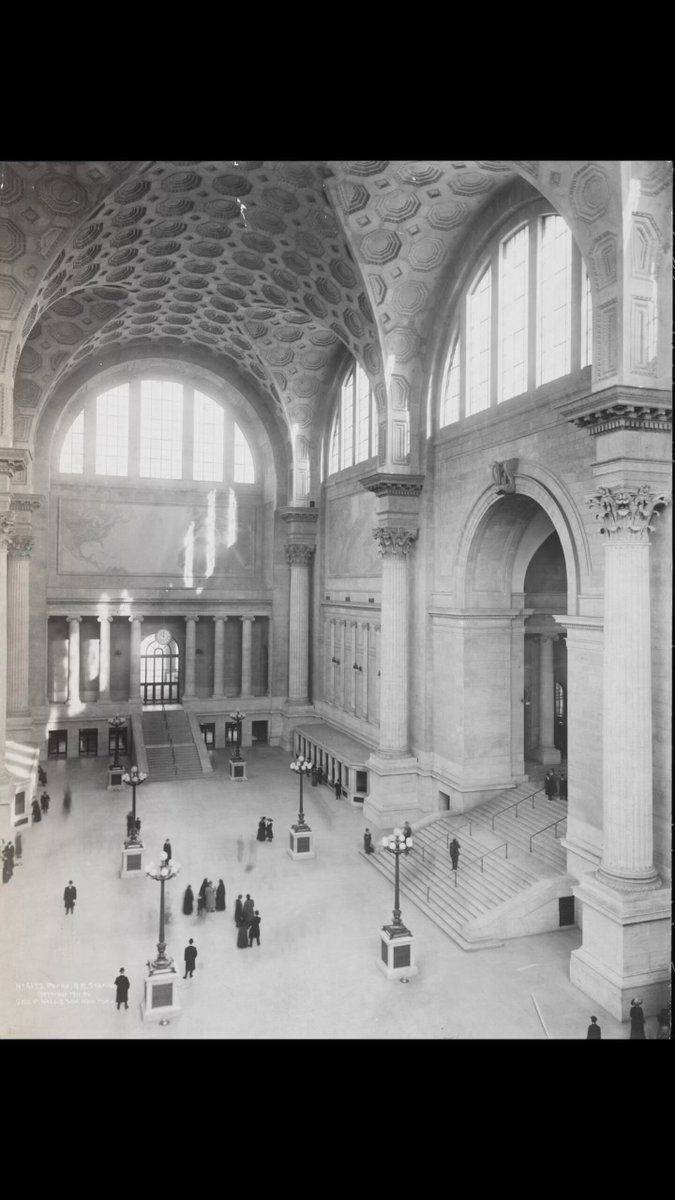
In 1963, New York City committed what one critic called an act of vandalism against its own soul. It tore down the most beautiful building it had ever built, and it has regretted it every day since.
The building was Pennsylvania Station, and for half a century it was one of the great rooms of the world...
It opened in 1910, designed by the architects McKim, Mead & White, and it covered eight acres in the heart of Manhattan. Its main waiting room was modeled on the Baths of Caracalla in ancient Rome, with ceilings that rose 150 feet into the air.
Sunlight poured down through vast steel-and-glass canopies onto the concourse below. To step off a train and walk up into that light was, for millions of arriving travelers, the moment New York announced itself.
A historian, Vincent Scully, famously wrote that, through it, one entered the city like a god. One scuttles in now like a rat...
Because in 1963, the railroad, losing money and sitting on immensely valuable land, sold the air rights above the station. The great building was condemned. Wave by wave, the pink granite columns were pulled down and dumped in a New Jersey swamp, and a low, windowless complex of Madison Square Garden and an office tower was built on top of the surviving tracks.
There was no law to stop it. At the time, nothing in New York protected a historic building from destruction, however beloved. Leading architects stood outside in protest as the demolition began. It made no difference...
But something came out of the loss. The destruction of Penn Station horrified the public so deeply that it gave birth to the modern preservation movement in America. New York passed its landmarks law in 1965, and that law would later save Grand Central Terminal from the very same fate.
In a way, Penn Station became more powerful in death than it had ever been in life.
It’s really true that we never truly know what we have until we lose it... the columns of Penn Station could not be saved. But every landmark that still stands in New York today stands partly because of what their loss awakened in the people who watched them fall.
Ada Louise Huxtable, the first architecture critic of The New York Times, wrote of the demolition in 1963: "The tragedy is that our own times not only could not produce such a building, but cannot even maintain it."
I started this newsletter because the people who came before us left us something extraordinary, and almost no one is teaching us how to see it anymore. Every week I try to. If that is something you would like to be part of, you can join here:
James-lucas.com/welcome
I write about beauty in all its forms. If you'd like to support the work, a paid subscription is what makes it possible.
72
483
3,217
400,174
Jun 11
This is Orson Welles talking about his friendship with Ernest Hemingway. Imagine if people were still this articulate.
154
1,276
12,122
626,260
James Lucas retweeted
Jun 10
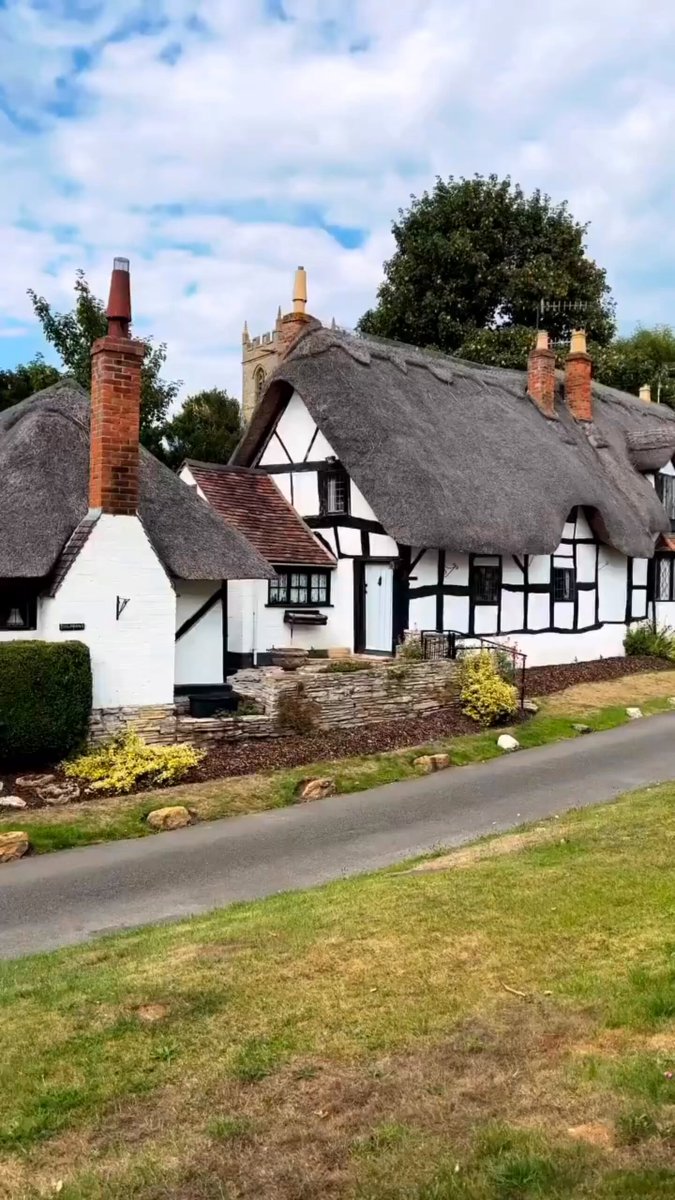
Tolkien once revealed that the Shire wasn’t pure fantasy.
In a letter from 1955 he described it as:
“more or less a Warwickshire village of about the period of the Diamond Jubilee.”
The most beloved world in fantasy was built from ordinary English countryside memories.
58
706
6,801
173,782
Jun 10
Gaudí knew his masterpiece would not be finished in his lifetime and, when asked when it would be done, he reportedly said: “My client is not in a hurry.”
Today Pope Leo XIV has blessed the recently completed central tower of the Sagrada Família.
Jun 10

A light show honoring Antoni Gaudí has just lit up Sagrada Família.
It felt like the tallest church in the world, for a moment, let its impossible beauty be seen by its creator.
25
262
2,053
70,577
James Lucas retweeted

Jun 10
A light show honoring Antoni Gaudí has just lit up Sagrada Família.
It felt like the tallest church in the world, for a moment, let its impossible beauty be seen by its creator.
101
1,223
9,074
673,269
Jun 10
A thalassophile from the Greek thalassa meaning sea and philos meaning loving is someone who feels deeply drawn to and connected with the sea
18
119
729
23,105
James Lucas retweeted
Jun 9
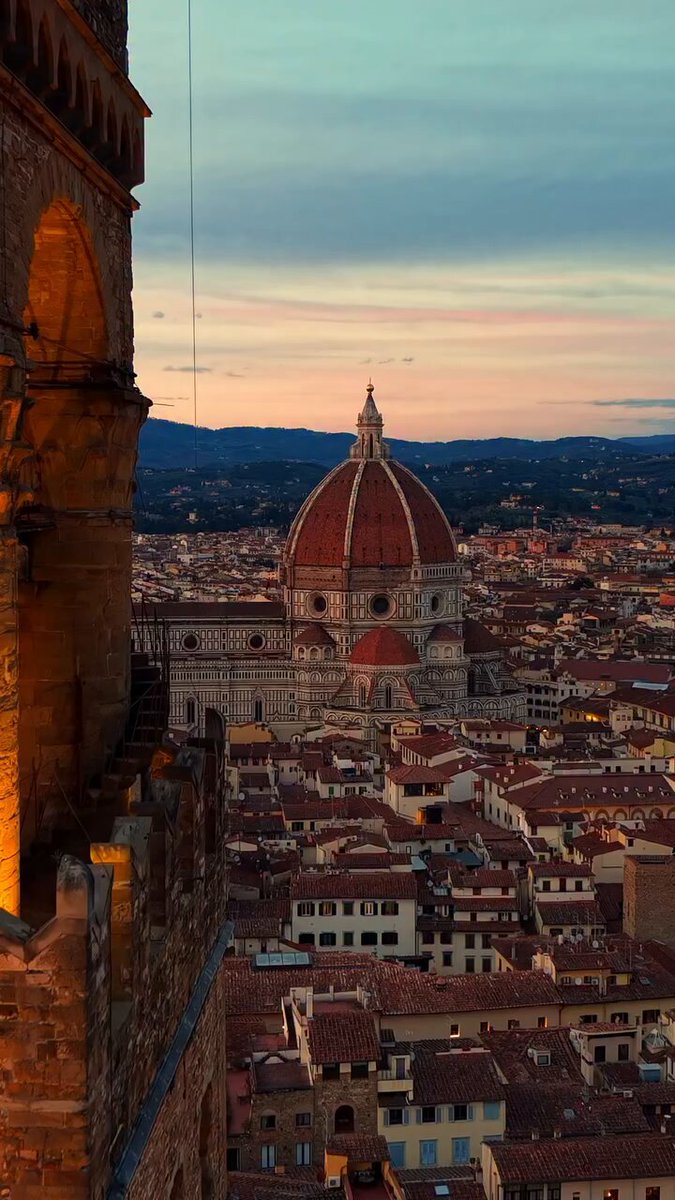
There is a rule in Florence that has not been broken in over five hundred years: nothing in the city may be built taller than a dome finished in 1436.
The dome belongs to the cathedral of Santa Maria del Fiore, and it is the work of Filippo Brunelleschi.
When you look at a photograph of Florence and notice that its skyline seems strangely, impossibly intact, you are not imagining it...
The city has protected that view, by custom and by law, since the Renaissance. To this day, no building in Florence is permitted to rise higher than the cupola.
What it guards is one of the most astonishing structures ever built. When Brunelleschi began in 1420, no one in Europe knew how to raise a dome that wide. The technology had been lost with the Romans. The cathedral had stood for decades with a hole in its roof, because the span was considered impossible to cover, and the city had essentially gambled that someone would one day work out how.
Brunelleschi built it without the wooden scaffolding everyone assumed was necessary, laying over four million bricks in a self-supporting double shell, one dome inside another, in a herringbone pattern that let each ring hold itself up as it rose.
Six centuries later, it remains the largest masonry dome in the world. Nothing built since, in brick and stone, has surpassed it.
The Italian director Franco Zeffirelli, who was born in Florence, once explained what that means to him. "When I feel depression creeping in," he said, "I return to Florence to gaze at Brunelleschi's dome. If human genius was able to achieve something so great, then I too can and must try to create, to act, to live."
That is what a skyline can be when a city decides that beauty is worth protecting...
I write a weekly newsletter for over 50,000 people who love rediscovering the beauty of the past. You can join us for free at the link below, and if you'd like to support my work, a paid subscription is what makes it possible:
James-lucas.com/welcome
Thanks for reading.
85
963
6,401
192,000
Jun 10
The Irish Redhead Convention was a three-day annual festival in Crosshaven, Ireland, first held in 2010, celebrating redheads and their unique traits. It ended in 2016.
63
100
1,066
58,505
Jun 9
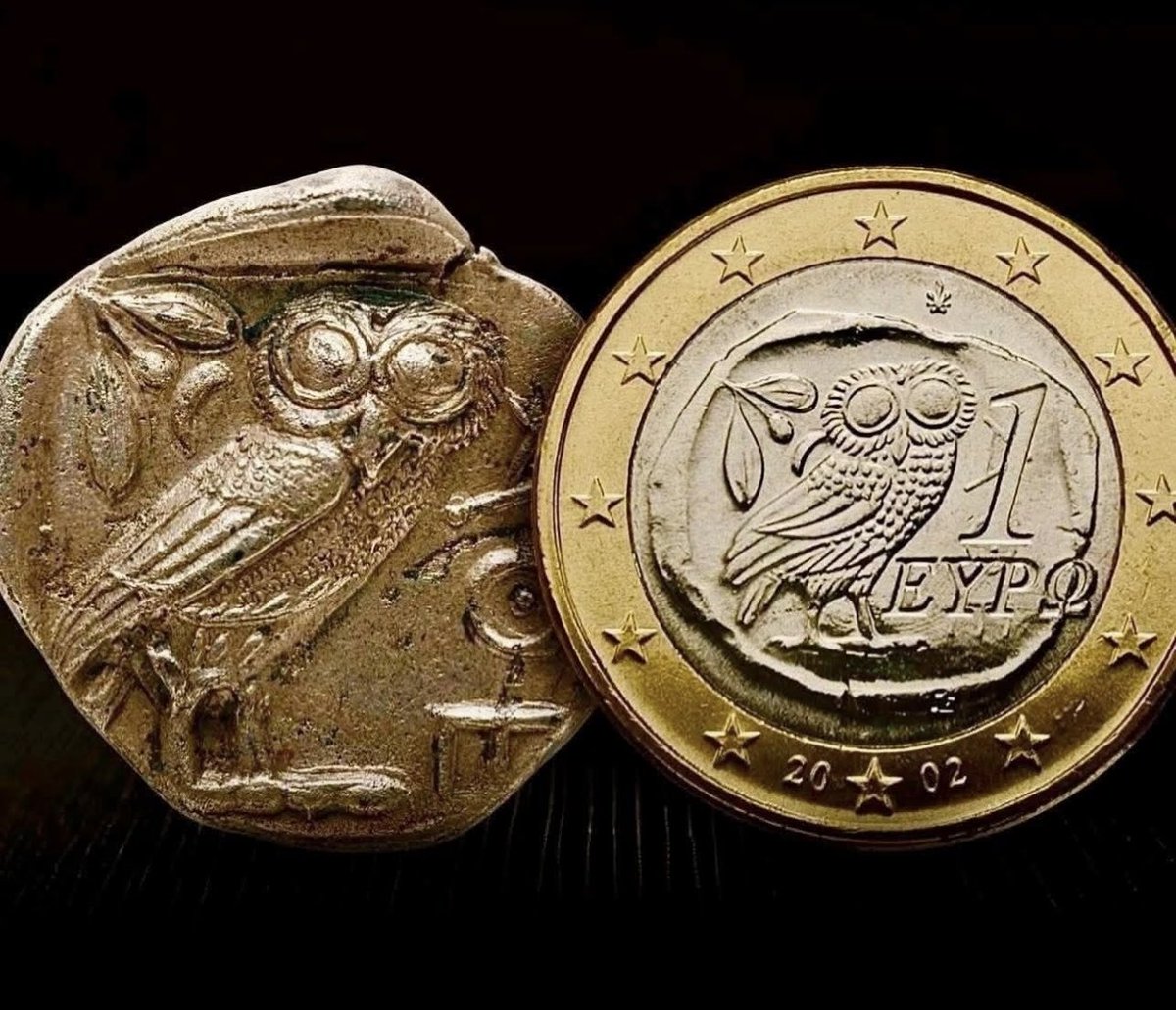
Greece still uses the same design on its 1€ coins that was used 2500 years ago in Athens.
The Athenian tetradrachm showed Athena’s head on the front and, on the back, an owl, the symbol of Athens, along with an olive sprig and a crescent moon.
53
349
2,164
51,954
Jun 8
Imagine carving a single block of marble until the veil becomes so thin that the stone itself turns transparent.
Antonio Canova, one of the greatest sculptors who ever lived, saw this statue and said he would have given 10 years of his life to have made it...
It is called the Veiled Christ, and it has been called the most beautiful sculpture in the world. It sits in the Cappella Sansevero in Naples, a single block of marble carved in 1753 into the body of the dead Christ, lying beneath a shroud so thin and so perfectly rendered that, beneath it, you can see the swelling of the veins, the hollow of the closed eyes and the wound in the side.
Prince Raimondo di Sangro had first hired a famous sculptor, Antonio Corradini, to carve it. Corradini died with nothing finished but a small terracotta sketch. The prince then handed the commission to a young and almost unknown Neapolitan named Giuseppe Sanmartino, and what Sanmartino produced was so far beyond what anyone expected that people refused to believe it was carved at all...
The veil, they said, could not be marble. It had to be a real cloth that the prince, a notorious alchemist, had somehow turned to stone with a secret chemical process. The legend has never fully died, and Raimondo di Sangro did everything to deserve it. He was the head of the Neapolitan Masonic lodge, a polyglot who read Arabic and Hebrew, an inventor who built an "eternal flame" from chemicals of his own making.
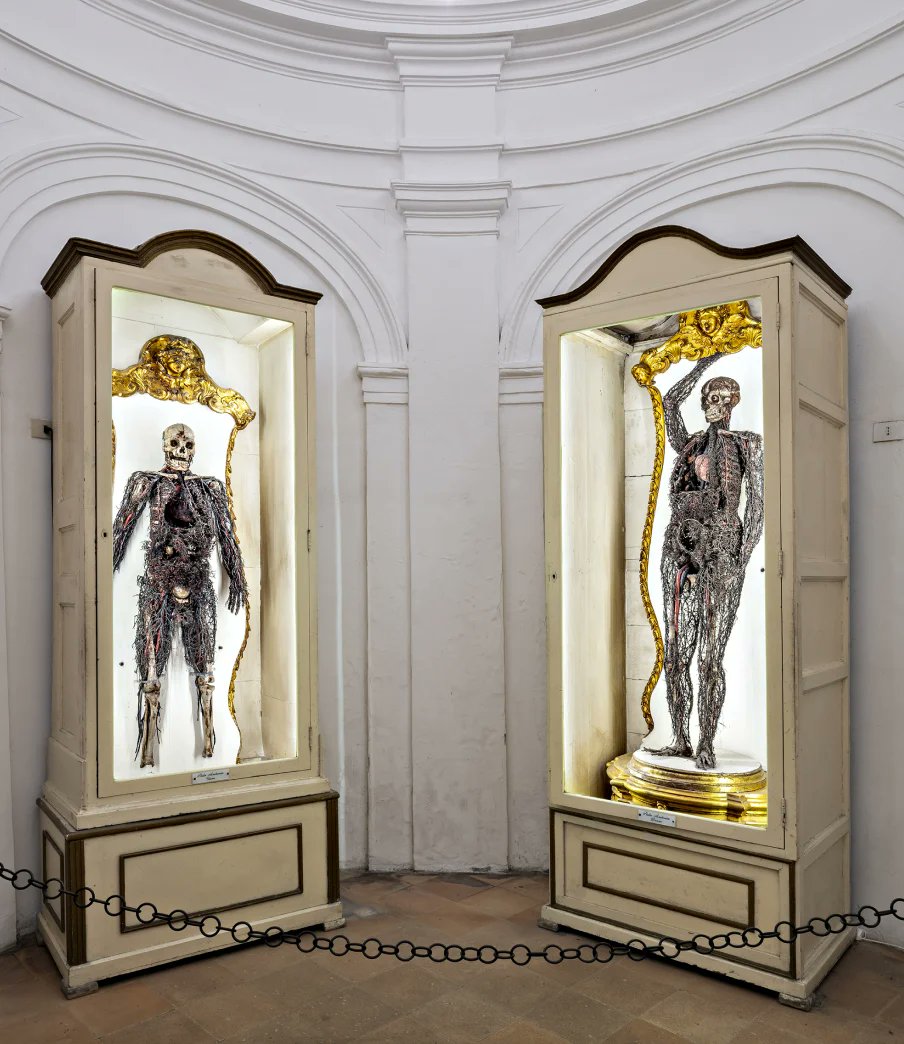
In the crypt beneath the chapel he kept two of his strangest creations: the "anatomical machines," two full human skeletons wrapped in astonishingly detailed reproductions of the entire human circulatory system, every artery and vein. For two centuries people believed he had somehow petrified the bodies of two living servants. Modern study has shown the skeletons are real, but the vascular systems were made by human hands.
There is one more legend: it is said that when the Veiled Christ was finished, the prince had Sanmartino blinded, so that he could never create anything so beautiful again.
It is almost certainly not true. But people have repeated it for two hundred and fifty years, because they needed an explanation for how a thing like this could exist, and be made only once, by a man almost no one had heard of, and never be equalled by anyone since...
I write a weekly newsletter for over 50,000 people who love rediscovering the beauty of the past. You can join us at the link below, and if you'd like to support my work, a paid subscription is what makes it possible:
James-lucas.com/welcome
Thanks for reading.
21
282
1,595
64,478