
Beauty is truth, truth beauty; that is all ye know on earth, and all ye need to know.
Joined August 2018
- Tweets 74,120
- Following 6,481
- Followers 802,053
- Likes 229,447
15,753 Photos and videos






Pinned Tweet

Jun 11
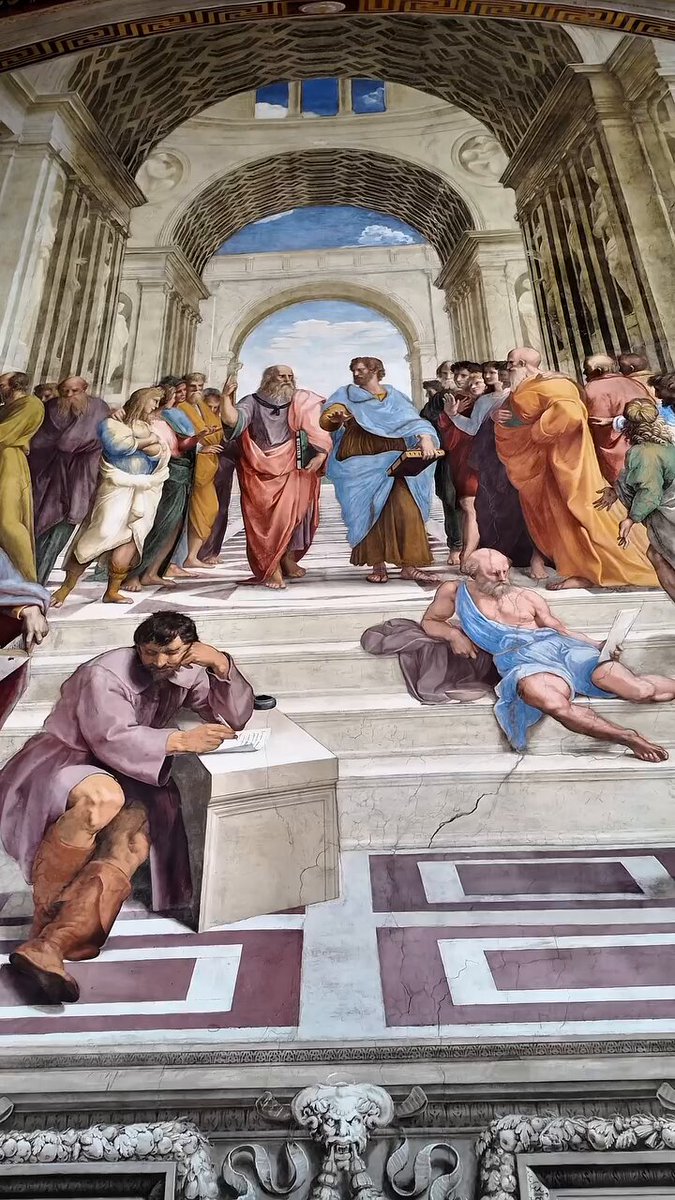
The most famous painting of the ancient Greek philosophers is full of hidden portraits of Renaissance artists.
The figure of Plato is Leonardo da Vinci. The brooding man writing alone on the marble block is Michelangelo. And in the corner, looking straight out at you, is the painter himself...
It is called the School of Athens, and Raphael painted it on the wall of the Pope's private apartments in the Vatican between 1509 and 1511. He was in his mid-twenties.
Across a vast painted hall, he gathered more than fifty of the greatest philosophers, mathematicians, and scientists of the ancient world into a single imagined gathering that never happened.
At the very center, beneath a soaring archway placed at the vanishing point so your eye is pulled straight to them, stand the two men who divided Western thought between them. On the left is Plato, white-haired, pointing one finger up toward the heavens, holding his book the Timaeus. Beside him is his student Aristotle, holding his Ethics and reaching his hand out flat toward the earth. In a single gesture, Raphael captured the whole argument: Plato pointing to the world of ideas above, Aristotle to the physical world in front of us.
But the genius of the fresco is in its faces. Raphael had almost no ancient portraits to work from, so he did something audacious: he painted some of the philosophers of antiquity using the features of the artists of his own age...
Plato was given the face of Leonardo da Vinci, then an old man, whom Raphael revered. The melancholy figure seated alone in the foreground, leaning on a block of marble and lost in thought, is widely believed to be Michelangelo, who was at that very moment painting the Sistine Chapel ceiling a short walk away. Raphael cast him as Heraclitus, the philosopher known for his solitary temperament. The mathematician Euclid, bent over a compass to teach a cluster of students, was given the face of the architect Bramante, the man then designing the new St. Peter's Basilica.
And on the far right edge, in a dark cap, one young man looks directly out of the fresco and meets the eye of anyone standing in front of it. That is Raphael, placing himself among the greatest minds in history...
Raphael died in 1520 at the age of 37. He was buried in the Pantheon, an honor rarely accorded to an artist, and his epitaph, written by Pietro Bembo, reads: “Here lies Raphael, by whom Nature feared to be outdone while he lived, and when he died, feared she would die with him.”
I write a weekly newsletter for over 50,000 people who love rediscovering the beauty of the past. You can join us at the link below, and if you'd like to support my work, a paid subscription is what makes it possible:
James-lucas.com/welcome
Thanks for reading.
19
220
833
31,683
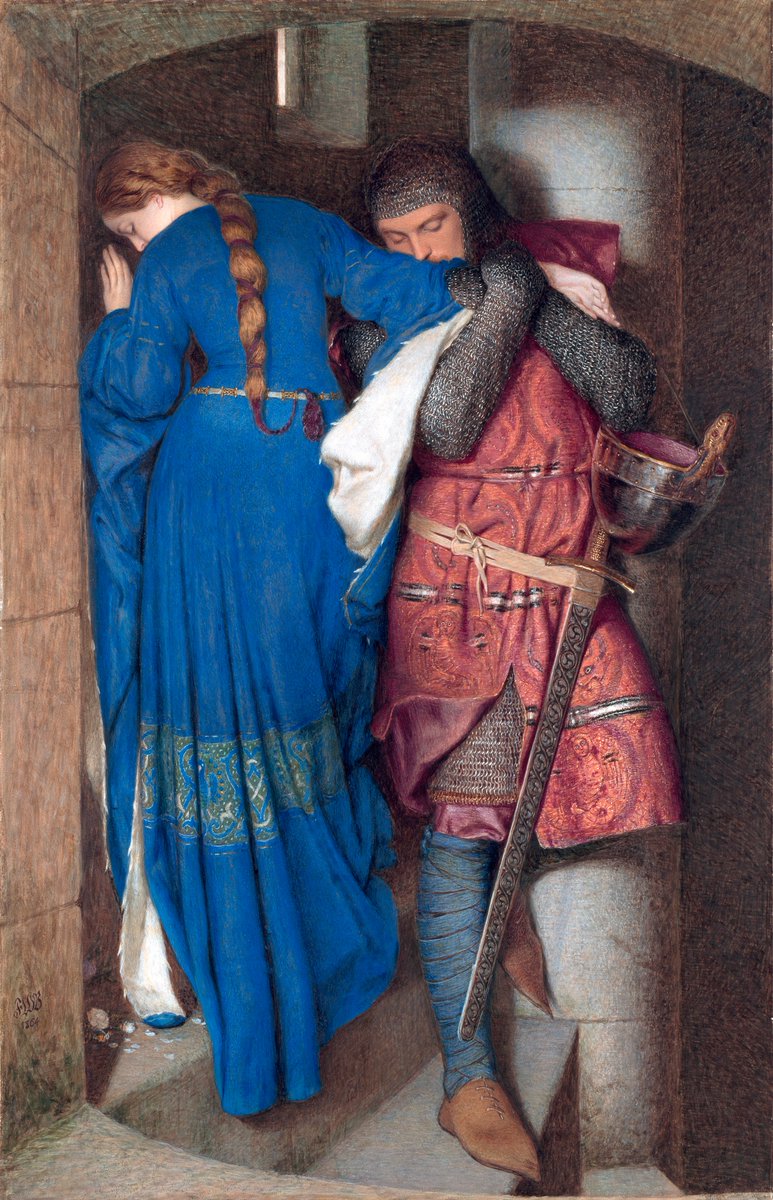
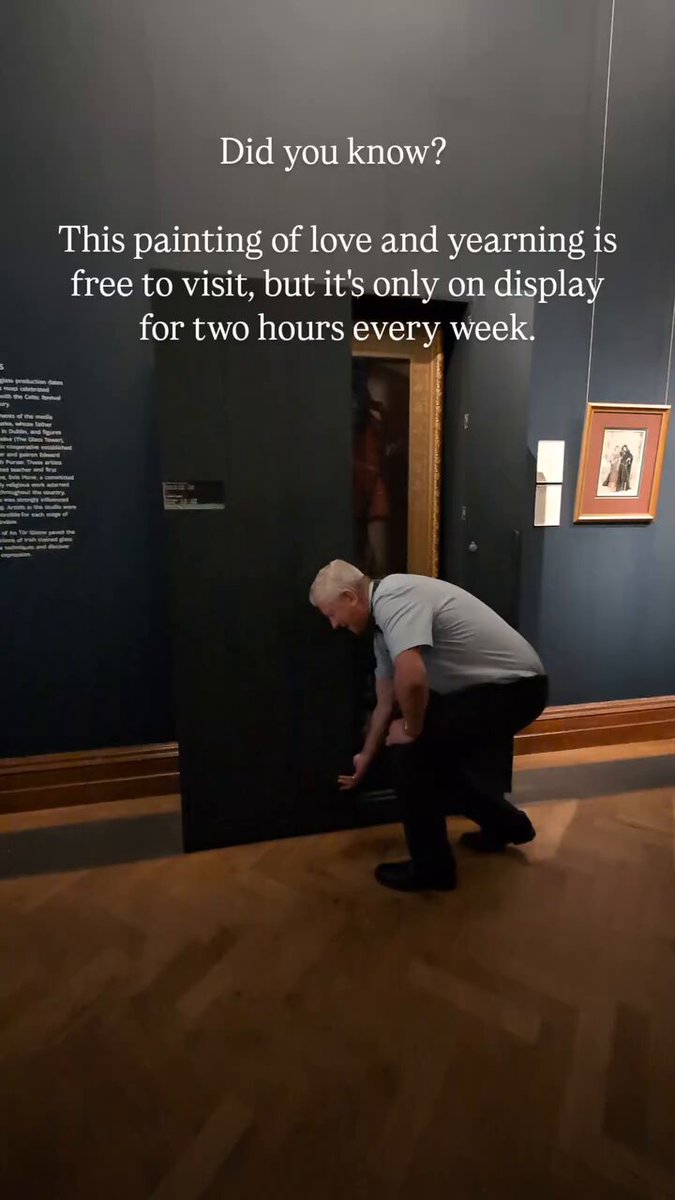
In 2012, the people of Ireland were asked to choose their favorite painting in the world.
They did not choose a Caravaggio, a Vermeer, or a Monet. They chose this: two lovers saying goodbye on a staircase...
It is called Hellelil and Hildebrand, the Meeting on the Turret Stairs, painted in 1864 by Frederic William Burton. It is a watercolor, which makes its richness and depth almost impossible to believe, and it hangs today in the National Gallery of Ireland.
The story comes from a medieval Danish ballad. Hellelil, a noblewoman, fell in love with Hildebrand, the prince who had been assigned to be her personal guard. Her father forbade it and ordered her seven brothers to kill him. When they attacked, Hildebrand killed six of them. At Hellelil's desperate cry, he spared the youngest, and that hesitation cost him his life. He died of his wounds. The surviving brother imprisoned her, and she did not live much longer...
Burton could have painted the battle. He could have painted the deaths, the grief, the blood. Instead he chose the one intimate moment before all of it: the lovers passing on a turret staircase, stealing a final embrace, knowing what is coming.
And every detail in the painting carries the weight of that knowledge. He does not seize her in passion. He bows his head and kisses her arm with a tenderness that is almost unbearable, because it is goodbye. She does not collapse into him. She turns to climb the stairs, her face hidden from him and from us, because to look back would make it impossible to leave.
The Victorian novelist George Eliot saw the painting and described it perfectly. The face of the knight, she wrote, is "the face of a man to whom the kiss is a sacrament."
And that is precisely why it has moved people to tears for more than a hundred and sixty years. It shows something that most of us have felt: not love at its beginning, when it is easy, but at the moment it must be given up, which is the moment that reveals everything it was worth.
Burton understood that the most powerful thing he could paint was not the tragedy itself, but the last gentle second before it arrived, held forever in paint, so that the two of them never have to climb those stairs apart.
Eliot, who was a friend of Burton's, captured it best: "It might have been made the most vulgar thing in the world, but the artist has raised it to the highest pitch of refined emotion."
I started this newsletter because our predecessors left us extraordinary things, and almost no one teaches us about them anymore. Every week I try to. If that is something you would like to be part of, you can join here:
James-lucas.com/welcome
And if you'd like to support my work, a paid subscription is what makes it possible.
Thanks for reading.
39
579
4,504
192,335
Jun 14
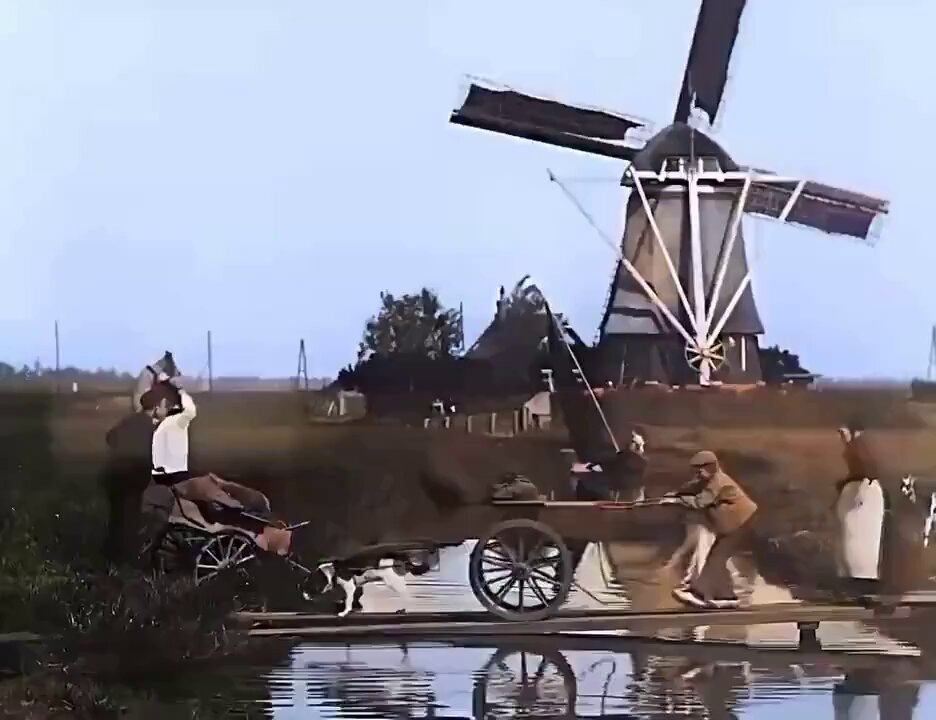
This was filmed over 80 years ago.
Berlin, Germany right after WWII.
81
831
5,297
306,218
Jun 14
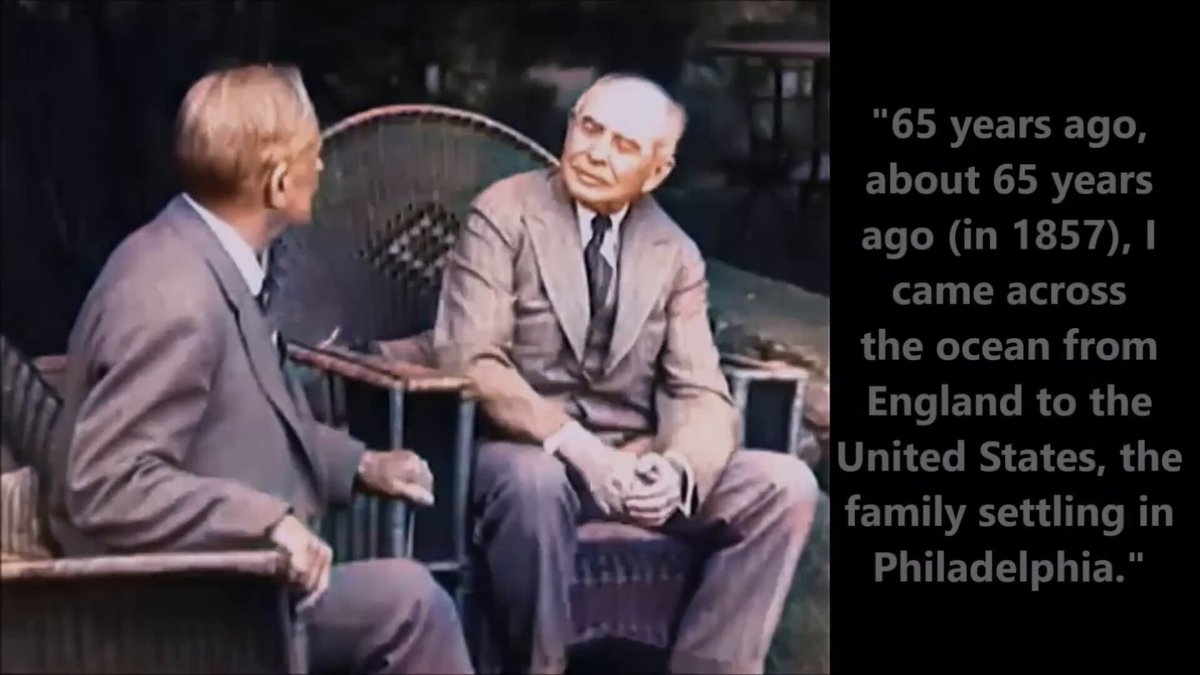
Man born in 1853 talks about childhood in the 1860s
7
74
619
51,067
Jun 13
Leonardo da Vinci invented the self supporting bridge in the 1400s. Here’s how it works:
436
4,398
69,591
6,501,881
Jun 14
I write about history in my weekly newsletter. Join over 52,000 readers here:
James-Lucas.com/welcome
16
16,220
James Lucas retweeted
Jun 13
Leonardo da Vinci invented the self supporting bridge in the 1400s. Here’s how it works:
436
4,398
69,591
6,501,881
Jun 14
More than a hundred years ago, San Francisco built a city out of jewels and then tore almost all of it down on purpose.
You are looking at the Panama–Pacific International Exposition of 1915. For ten months, on six hundred acres along the city's northern waterfront, San Francisco raised an entire fantasy metropolis of palaces, colonnades, fountains, and towers, and invited the world to walk through it. Nearly nineteen million people did.
What makes it almost unbelievable is the timing. Only nine years earlier, in 1906, San Francisco had been flattened by one of the worst earthquakes and fires in American history. Much of the city had burned to the ground. The exposition was the city's answer to the world: not only have we survived, we can build something more beautiful than anything you have ever seen.
At its heart stood the Tower of Jewels, 435 feet of triumphal arch and tower rising over the fairgrounds. Its surface was hung with more than 100,000 small cut-glass "jewels," each dangling on a tiny hook so it would tremble in the wind. By day they flashed in the sunlight. At night, more than fifty spotlights were turned on them, and the entire tower shimmered above the bay like something out of a dream. People had never seen anything like it...
Around it spread a city of wonders. The Palace of Fine Arts, a vast Roman ruin reflected in its own still lagoon, designed to evoke the beautiful melancholy of a vanished civilization. The Palace of Machinery, so enormous that an airplane was once flown inside it. Grand courts and avenues lined with sculpture, all built in a soft, unified palette of color, glowing under the new technology of indirect electric light.
And nearly all of it was designed to disappear. When it closed in December 1915, the dream city was systematically pulled down.
Only one structure was saved. The Palace of Fine Arts, the most beloved of them all, was considered too beautiful to lose. Decades later it was rebuilt, and it still stands in San Francisco today, the last survivor of an entire city that existed for less than a year...
Perhaps that’s what haunts us most: not that we built temporary palaces, but that we chose not to keep them. We built beauty knowing we would destroy it, as if beauty itself were disposable. Roger Scruton once said: "There is a deep human need for beauty, and if you ignore that need in architecture, your buildings will not last, since people will never feel at home in them."
I started this newsletter because the people who came before us were capable of extraordinary things, and almost no one is teaching us about them anymore. Every week I try to. If that is something you would like to be part of, you can join here:
James-lucas.com/welcome
I write about beauty in all its forms. If you'd like to support the work, a paid subscription is what makes it possible. Thanks for reading.
17
103
673
48,697
James Lucas retweeted
Jun 12
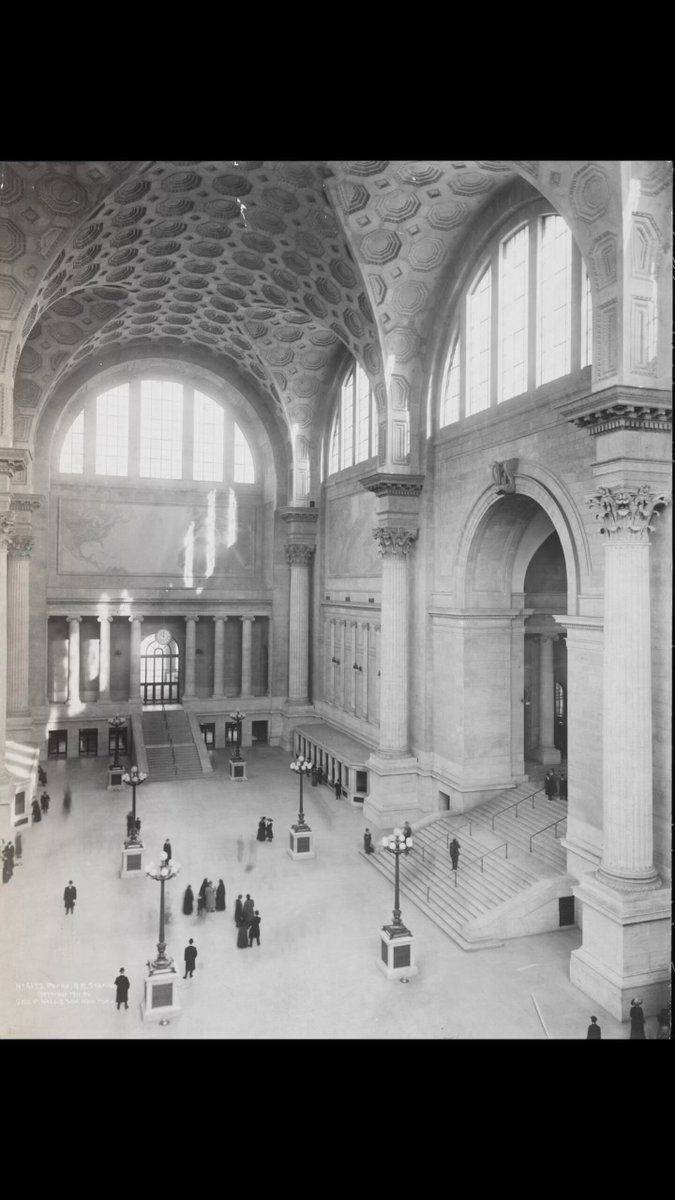
In 1963, New York City committed what one critic called an act of vandalism against its own soul. It tore down the most beautiful building it had ever built, and it has regretted it every day since.
The building was Pennsylvania Station, and for half a century it was one of the great rooms of the world...
It opened in 1910, designed by the architects McKim, Mead & White, and it covered eight acres in the heart of Manhattan. Its main waiting room was modeled on the Baths of Caracalla in ancient Rome, with ceilings that rose 150 feet into the air.
Sunlight poured down through vast steel-and-glass canopies onto the concourse below. To step off a train and walk up into that light was, for millions of arriving travelers, the moment New York announced itself.
A historian, Vincent Scully, famously wrote that, through it, one entered the city like a god. One scuttles in now like a rat...
Because in 1963, the railroad, losing money and sitting on immensely valuable land, sold the air rights above the station. The great building was condemned. Wave by wave, the pink granite columns were pulled down and dumped in a New Jersey swamp, and a low, windowless complex of Madison Square Garden and an office tower was built on top of the surviving tracks.
There was no law to stop it. At the time, nothing in New York protected a historic building from destruction, however beloved. Leading architects stood outside in protest as the demolition began. It made no difference...
But something came out of the loss. The destruction of Penn Station horrified the public so deeply that it gave birth to the modern preservation movement in America. New York passed its landmarks law in 1965, and that law would later save Grand Central Terminal from the very same fate.
In a way, Penn Station became more powerful in death than it had ever been in life.
It’s really true that we never truly know what we have until we lose it... the columns of Penn Station could not be saved. But every landmark that still stands in New York today stands partly because of what their loss awakened in the people who watched them fall.
Ada Louise Huxtable, the first architecture critic of The New York Times, wrote of the demolition in 1963: "The tragedy is that our own times not only could not produce such a building, but cannot even maintain it."
I started this newsletter because the people who came before us left us something extraordinary, and almost no one is teaching us how to see it anymore. Every week I try to. If that is something you would like to be part of, you can join here:
James-lucas.com/welcome
I write about beauty in all its forms. If you'd like to support the work, a paid subscription is what makes it possible.
75
496
3,277
410,966
Jun 11
This is Orson Welles talking about his friendship with Ernest Hemingway. Imagine if people were still this articulate.
155
1,275
12,147
631,747
James Lucas retweeted
Jun 10
Tolkien once revealed that the Shire wasn’t pure fantasy.
In a letter from 1955 he described it as:
“more or less a Warwickshire village of about the period of the Diamond Jubilee.”
The most beloved world in fantasy was built from ordinary English countryside memories.
58
708
6,810
175,198
Jun 10
Gaudí knew his masterpiece would not be finished in his lifetime and, when asked when it would be done, he reportedly said: “My client is not in a hurry.”
Today Pope Leo XIV has blessed the recently completed central tower of the Sagrada Família.
Jun 10

A light show honoring Antoni Gaudí has just lit up Sagrada Família.
It felt like the tallest church in the world, for a moment, let its impossible beauty be seen by its creator.
25
268
2,083
71,443
James Lucas retweeted

Jun 10
A light show honoring Antoni Gaudí has just lit up Sagrada Família.
It felt like the tallest church in the world, for a moment, let its impossible beauty be seen by its creator.
101
1,227
9,089
677,616
Jun 10
The Irish Redhead Convention was a three-day annual festival in Crosshaven, Ireland, first held in 2010, celebrating redheads and their unique traits. It ended in 2016.
66
101
1,070
58,922