
I am an American journalist, book author, and editorial director. I write about health care, policy, math, technology, aging, AI, infections, physics, and food.
Joined October 2011
- Tweets 2,658
- Following 889
- Followers 932
- Likes 273
354 Photos and videos














Pinned Tweet

21 Aug 2025
In my upcoming book The Great Math War (@BasicBooks, 2025), I describe some of the modern neuroscience evidence that suggests mathematics is what I call a "human primitive," something that evolved far back in time -- and not just in human populations!
Monkeys, crows, dolphins, clown fish, and many other species have an innate quantitative ability to directly manipulate numbers, discern geometric shapes, and appreciate the discrete charm of other privileged mathematical objects. And why not?! Those things are the stuff of external reality. Is it any wonder the ability to do math emerged in animals? No! Evolutionarily it makes sense. "Counting winter dinners one a hill," as Robert Frost says.
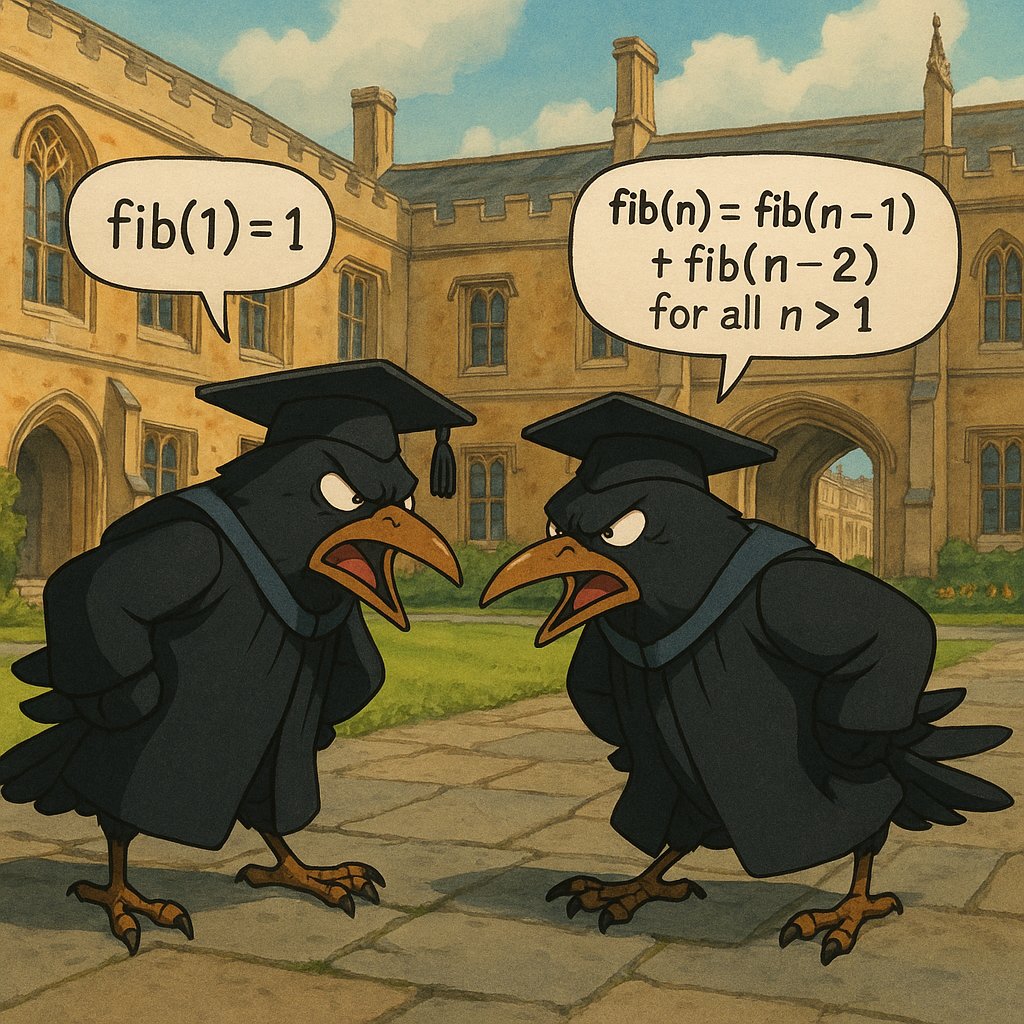
Some non-human animals reason superbly, in fact. Researchers at the University of Tübingen in Germany showed a couple years ago that crows can associate signs and symbols with numbers and interpret them complexly. They trained crows to peck out recursive sequences—performing quite well, “On par with children and even outperforming macaques,” the researchers wrote. Clever birds!
See: 2022, doi.org/10.1126/sciadv.abq33…
Abstract mental recursion, the ability to have one mental representation embedded within another mental representation, has also long been considered a key feature of specifically human intelligence. For years, many went so far as to make the caw-caw claim that mathematical ability even defines what it means to be human. (Crows have something to say about that!)
I was excited to see a new paper this week adding another animal study to the evolutionary question. Researchers at Carnegie Mellon University trained four baboons to do separate numerical and geometric tasks, and they showed that, much like in people, mutual cognitive bridges exists between spatial and numerical learning. When monkeys do well on one, they do well on the other.
"Such representations could form the evolutionary foundation for the well-documented “cognitive bridge” between numerical and spatial reasoning in human development," they write.
SEE: pnas.org/cgi/doi/10.1073/pna…
My book is available for pre-order at: hachettebookgroup.com/titles…
5
6
22
1,790
May 12
Here is my general take on this: Turkey is challenging to cook because of the breast. By the time the thighs are fully cooked, the breast is as dry as hell, and eating it is fit only for penance. You see all kinds of crazy stuff people do to address that.
- Some remove the breast before cooking or (worse) midway through. That makes for an awfully ugly bird on the table on turkey day.
- Some cook the bird on its stomach or flip it midway. That flattens the breast and can cause blood pooling, streaking the vanilla color in the breast meat. It also demands manhandling the half cooked greasy bird.
- Classic French technique calls for "barding" with fat. The late, great Escoffier himself recommends covering turkey breast with bacon before baking. (Wrong again, Auguste!)
- I have even seen people use ice on the breast, thinking it will slow the cooking enough so it is all done at once. That is stupid, IMO, because you are adding water in the earliest stages of cooking when the bird wants most to be dry.
Here is my technique:
• Do a 4 hour salt sugar brine the day before.
• Rinse and dry the bird. I actually put a battery-powered "camping" fan on it overnight in the fridge.
• Let it come to RT for 1-2 hours prior to cooking.
• Oil the outside of the bird and spice liberally inside and out; preheat oven to 475° F.
• Bake 30 min, open oven, and cover the breast with a cheese cloth, folded over several times.
• Pour over 1 bottle of white wine that you have pre-heated just to boiling; turn oven down to 375° F. Cook 1 hour, basting in its own juices every 15 min. Soak all parts of the bird.
• Taper the heat for the remaining time depending on weight of bird (e.g., 300-250-200-175) and continue basting.
• Tent in foil and let the bird rest for 20-30 min before carving.
May 11

طبخ الديك الرومي في الفرن على الطريقة التركية التقليدية، فصار طريًا ولذيذًا كأنه لحم خروف! 😋🔥
هل جربتوا طبخ الديك الرومي من قبل؟ 🤔
1
3
103
Jason Socrates Bardi retweeted

Apr 15
Yes, he really said that.
Yesterday Vice President JD Vance criticized Pope Leo XIV for not knowing enough theology: "I think it's very, very important for the pope to be careful when he talks about matters of theology ... If you’re going to opine on matters of theology, you’ve got to be careful, you’ve got to make sure it’s anchored in the truth," he said, at a Turning Point conference.
One of the many, many, ironies about that statement is that it came in response to Pope Leo's comments about war and peace and, specifically, the concept of "just war," which originated with St. Augustine. As many have already noted, when the Vice President was making his comments, Pope Leo XIV, a member of the Augustinian Order, and twice Prior General of the Augustinians before his election as Pope, was visiting the hometown of St. Augustine, then called "Hippo," now in Annaba, a town in modern-day Algeria. For good measure, Pope Leo XIV, the man critiqued for insufficient theological education, earned not only a master's degree in divinity, but also licentiate and a doctorate in canon law from the Pontifical University of St. Thomas Aquinas in Rome.
JD Vance's recent conversion to Catholicism is beside the point, because many converts are of course not only highly intelligent (and learned in theology) but faithful and energetic Catholics. We rejoice over everyone entering the church.
What most of us do not rejoice over, however, is a deadly combination of inaccuracy and hubris. Pace, Vice President Vance, but the current war in Iran is not a just war under Catholic doctrine. You can hear that from church leaders from across the theological spectrum, from Archbishop Timothy Broglio, the head of the military vicariate and former head of the @USCCB, to Cardinal Robert McElroy, Archbishop of Washington who holds doctorates in both theology and political science. You can look all that up online. Suffice to say, the Vice President doesn't seem to understand the tenets of just war.
Nor does he seem to understand the fundamental position of the church, which is for peace. "War is always a defeat for humanity," as St. John Paul II said. If that authority isn't enough, then turn to Jesus who said, "Blessed are the peacemakers," not "Blessed are the warmongers." And after the Resurrection, the Risen Christ says to the frightened disciples not "Vengeance is mine" but "Peace be with you."
Incidentally, the day before, the Vice President said that the Pope (and the Vatican) should stick to teaching about morality, also seeming to forget that war and peace are profoundly moral issues.
For his part, Pope Leo was focused yesterday on his spiritual father, St. Augustine. After what seemed like an emotional visit to Hippo, he celebrated Mass at the Basilica of St. Augustine in Annaba. During his homily he said, "The primary task of pastors as ministers of the Gospel is therefore to bear witness to God before the world with one heart and one soul, not permitting our concerns to lead us astray through fear, nor trends to undermine us through compromise."
Amen. Let's all continue to pray for the Holy Father as he works for peace.
(Image: Pope Leo XIV prays at the archeological ruins of Hippo, home of St. Augustine, in current-day Algeria. CNS photo).

766
2,383
9,041
559,305
Apr 11
This is a great question, so I decided to share my views. IMO, there are at least five differences: temperature, texture, taste, smell, and sound. The last two are obvious. The smell of that grill is wonderful and fills the room. And the crackle of the meat entices the brain with anticipation. But it's more than that.
The cooking brings up the temperature even in the interior. It's no longer raw but rare, and the temp will be body temperature -- literallly allowing it to melt in your mouth.
There are textural differences. The crust will have hard elements to it and perhaps even crunchy ones. This changes the bite significantly. We think so much about taste receptors on the tongue, but the mouth is filled with touch-and-feel mechanoreceptors as well.
Taste is the biggest difference. Searing and re-searing will caramelize the juices and create Maillard reactions in the crust. That's basically a fancy chemistry word for YUMMY. And the chef enhances the caramelization midway by coating the meat. If you use charcoal, you will get even more flavor enhancement.

4
108
Jason Socrates Bardi retweeted

What happens when brilliant minds disagree not just on answers, but on the very rules of how answers can be found?
In the latest episode of A Book with Legs, @SmeadCap CEO and Portfolio Manager @Cole_Smead is joined by journalist and author @JasonBardi to discuss his book, "The Great Math War: How Three Brilliant Minds Fought for the Foundations of Mathematics."
Cole and Jason trace the historical and intellectual battle between mathematical titans David Hilbert, L.E.J. Brouwer, and Bertrand Russell, discussing their differing approaches and mental frameworks. They also cover how the mathematicians’ distinctive perspectives should be considered when investing and interpreting data.
Listen here: hubs.ly/Q049GWj50
Sign up to be notified about new episodes: hubs.ly/Q049H0N70
@BasicBooks
1
1
3
1,214
Feb 12
R.I.P. Bud Cort, most famous for his title role in the iconic May-December RC Harold and Maude -- only don't mention that to him...
nytimes.com/2026/02/11/movie…
1
3
154
Great reporting in this breaking news story by my colleague Carolyn Cohn at The Sentinel by Yuvoice. The story is about public opinion on transgender rights in the UK -- specifically transgender access to swimming ponds at Hampstead Heath in London.
sentinel.yuvoice.org/public-…
1
131
Jan 24
This story is incredible, amazing, and gorgeous. It's the single best use of the medium I have seen to date and the best art review I have ever read.
nytimes.com/interactive/2026…
71
Jan 16
Read my latest substack:
Clown Car Ineptitude in Health Care
You will never see a more bizarre press release than the one put out by the White House yesterday announcing the new, so-called Great Healthcare Plan
open.substack.com/pub/socrat…

72
19 Dec 2025
Nice story by my colleague Swagata Majumdar on some of the challenges awaiting #GunControl legislative reform in the wake of #bondibeach. Even in a country that fully embraces gun control, laws alone may not be enough.
As an American, of course, it's always remarkable for me to see how much more restrictive gun laws are in other countries than the United States.
READ: yuvoice.org/after-bondi-beac…

73
18 Dec 2025
I think the administration would deport Vanity Fair (if they could) after this interview and photo shoot.
washingtonpost.com/style/pow…
59
16 Dec 2025
So sorry to hear about Rob Reiner's death. Very few people are great at both acting and directing. Fewer still can excel at at such a range, from riotous, piss-your-pants-laughing comedy (This is Spinal Tap), feel good romantic comedy (When Harry Met Sally, Sleepless in Seattle), coming of age classics (The Sure Thing, Stand By Me), and serious drama (A Few Good Men, Misery).
I don't even know where to put The Princess Bride, except to say I have had many, MANY friends who considered this to be their all-time favorite.
His face from the 1970s appear on the cover of this game I have had for years, which I have never played. This month, I vow that I am going to do so.

98
11 Dec 2025
December 10 should be known as Ada Lovelace day in her honor.
Read my book if you want to learn about two other pioneering women in mathematics, Sofya Kovalevskaya and Emmy Noether. We need days named after them as well!
hachettebookgroup.com/titles…
10 Dec 2025

Born Today in 1815, Ada Lovelace was mathematician and writer, chiefly known for her work on Charles Babbage's proposed mechanical general-purpose computer.
She is regarded as the first computer programmer.

1
103
7 Dec 2025
ENOUGH OF THIS FREE-MARKET NONSENSE!
This op-ed by Ezekiel Emanuel is a frustrating take on an important topic. I am not questioning his credentials. He's political royalty, a former high HHS official, a licensed physician who continues to see patients, the expert who literally wrote the book on health care reform, a proven bipartisan leader, and a thoughtful medical ethicist. Few have anything like his bona fides.
Nor do I hate all of his ideas. It's not right that a hospital should bill patients not based on services but their specific insurer—it's absurd even!
But his idea to incentivize treatment by paying a sort of bounty to doctors whose patients have better outcomes is dangerous and stupid. As we have seen before with big overblown "market" solutions like cap and trade for environment, no child left behind for education, and the ACA for health care itself, market-based solutions create perverse incentives. The single biggest failure of Obamacare was always there from the beginning: It never even once attempted to address health care prices and set controls on cost.
Giving doctors more money based on paper performance metrics could make chasing the metrics themselves the goal. That could lead to overprescribing, underprescribing, and a pernicious form of defensive medicine where the only goal are patients who look good on paper. Hey! Want to have much better outcomes on paper? Why not try closing your emergency departments!
Why do we need to find a competitive incentive-driven market-based solution at all? Why do we need to incentivize teachers to teach or doctors to treat? Can't we simply lower health care cost through good old fashioned price controls, transparent pricing, fair pricing, subsidies where needed, regulation where needed, and bonuses for big innovations, not routine care?!
washingtonpost.com/opinions/…
74
4 Dec 2025
It's a rare day when you see an op-ed by an ass-kicking artist you love on a political topic. But today that fits the bill.
washingtonpost.com/opinions/…
1
55
2 Dec 2025
Infinity has been around for a long time, as I say in my new book THE GREAT MATH WAR. Pythagoras. Zeno. Thomas Aquinas. Galileo. Cantor. Bertrand Russell....
Read an excerpt from my new book at The Big Think: bigthink.com/books/georg-can…
1
1
1
129
2 Dec 2025
Purchase links from my publisher @BasicBooks are here: hachettebookgroup.com/titles…
1
39
Jason Socrates Bardi retweeted

6 Nov 2025
“‘The Great Math War’ does something most popular math books don’t; it situates mathematics in the context of the people doing the mathematics — and the lives they were living outside the profession… Bardi writes with huge enthusiasm and a distinctive style.”
Read this fantastic @nytimes review of @JasonBardi's THE GREAT MATH WAR. Available now! (See below!) nytimes.com/2025/11/06/books…
1
2
4
273
6 Nov 2025
Loved reading Jordan Ellenberg's review of my new book in the @nytimes this morning. Thank you @JSEllenberg for your interesting take!
“The Great Math War” does something most popular math books don’t; it situates mathematics in the context of the people doing the mathematics — and the lives they were living outside the profession.
See: nytimes.com/2025/11/06/books…
2
92
5 Nov 2025
This is a really interesting if a bit in-the-weeds policy perspective on personalized gene editing for treating and curing rare diseases. What good is the emerging field of interventional genetics if nobody can afford it?doi.org/10.1016/j.ajhg.2025.…
Interventional genetics is a field that twice asks: WHO?
Once, as in: WHO would benefit from the sort of regulatory innovation this essay discusses? Some 300 million people who have rare or ultra-rare diseases worldwide. And second, harder: WHO will pay for it? How do you conduct clinical trials, for instance, when you have ultra-rare-sized patient pools
This nice perspective from Rebecca C. Ahrens-Nicklas and Kiran Musunuru at the University of Pennsylvania discusses their experience working with the FDA to launch clinical trials of a personalized gene-editing therapy platform tested by treating several patients who have distinct but similarly genetic rare diseases that can all be treated with the same platform.
They conclude: "With full-throated support from funding bodies such as the NIH and ARPA-H and from regulatory agencies such as the FDA, we are optimistic that in the coming years, our team and other teams will be able to take tangible steps toward making interventional genetics the standard of care for many diseases."
I hope so!

1
86