
Economist @aier, founder & board director @freestatenh, opinions my own. Expect lots of data visualizations here.
Joined July 2013
- Tweets 15,618
- Following 1,114
- Followers 4,168
- Likes 10,975
851 Photos and videos
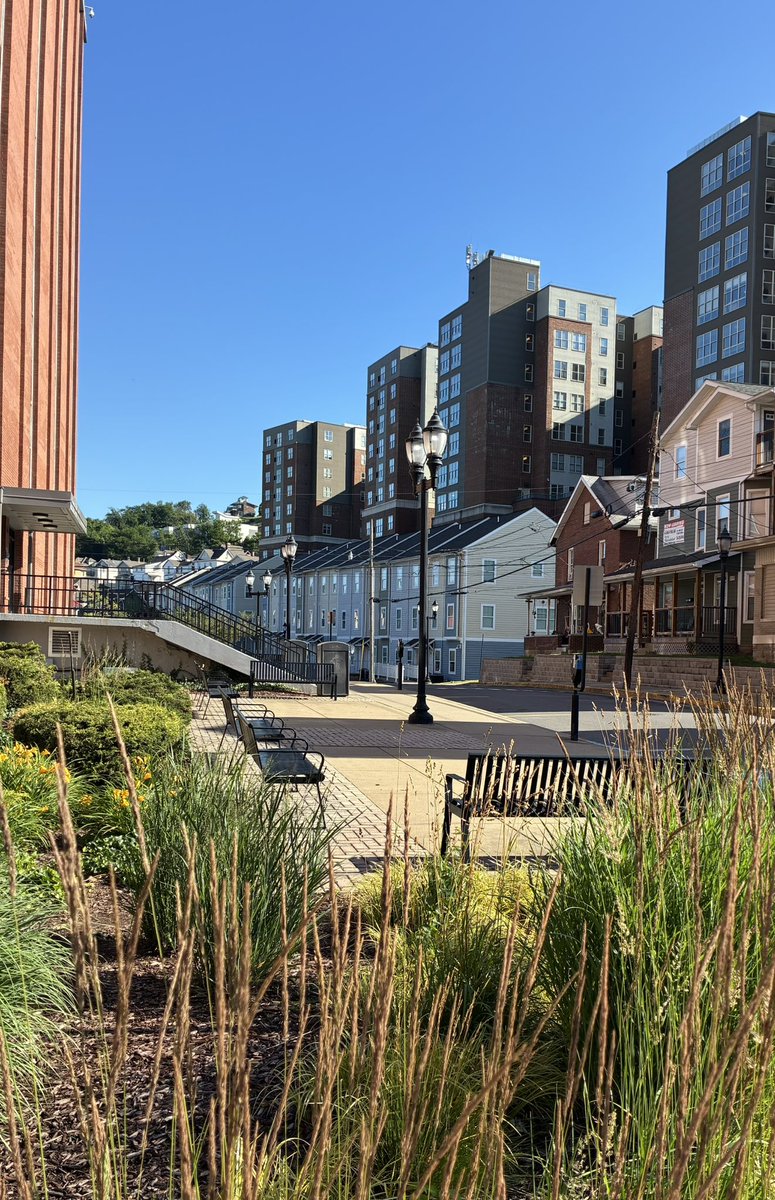


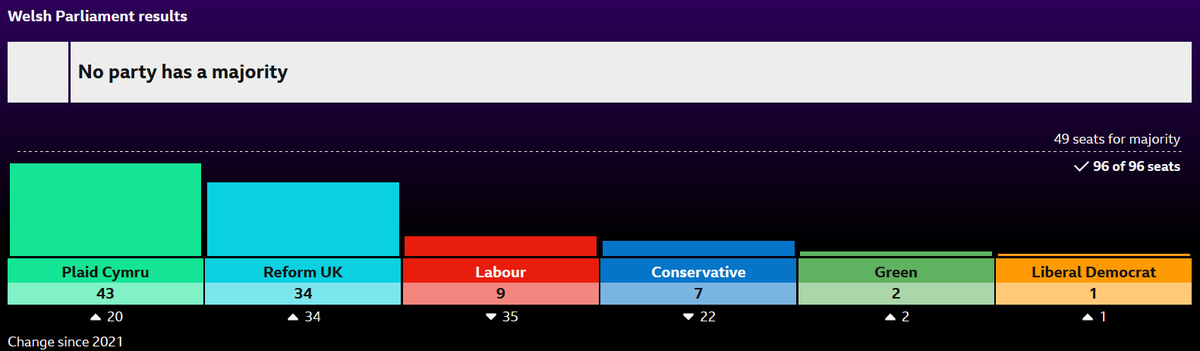
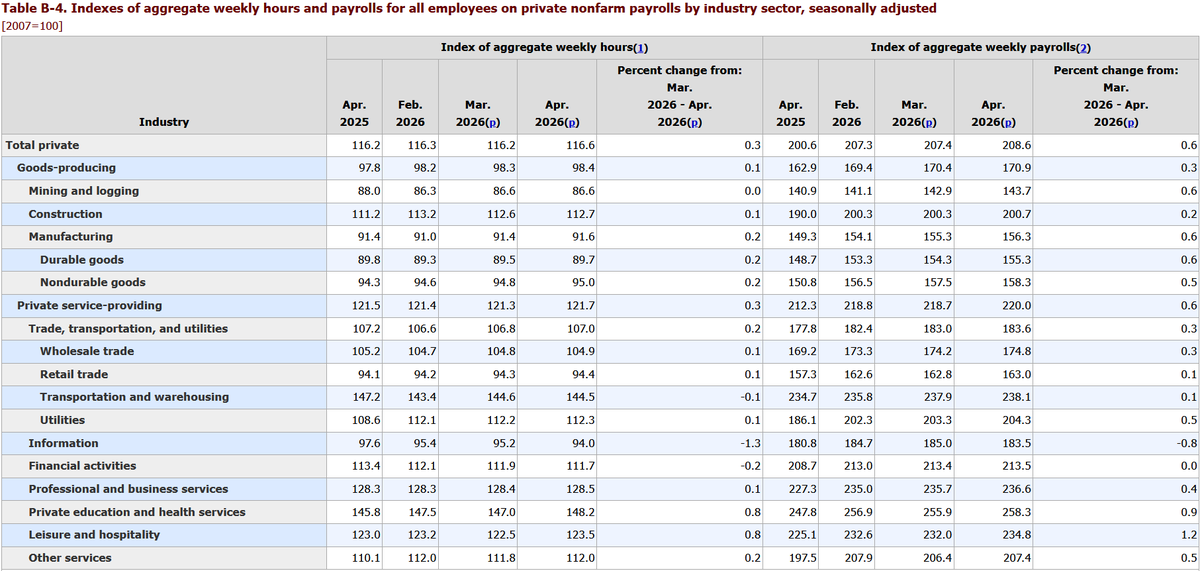
It’s a bit amusing how much of Alice Munro’s writing has to do with Dwellings and problems with Dwellings. “Dead mouse in the plumbing and its hairs in the bathtub,” imaginative yet quotidian horrors I had never contemplated.
94
Jason Sorens retweeted

Jun 13
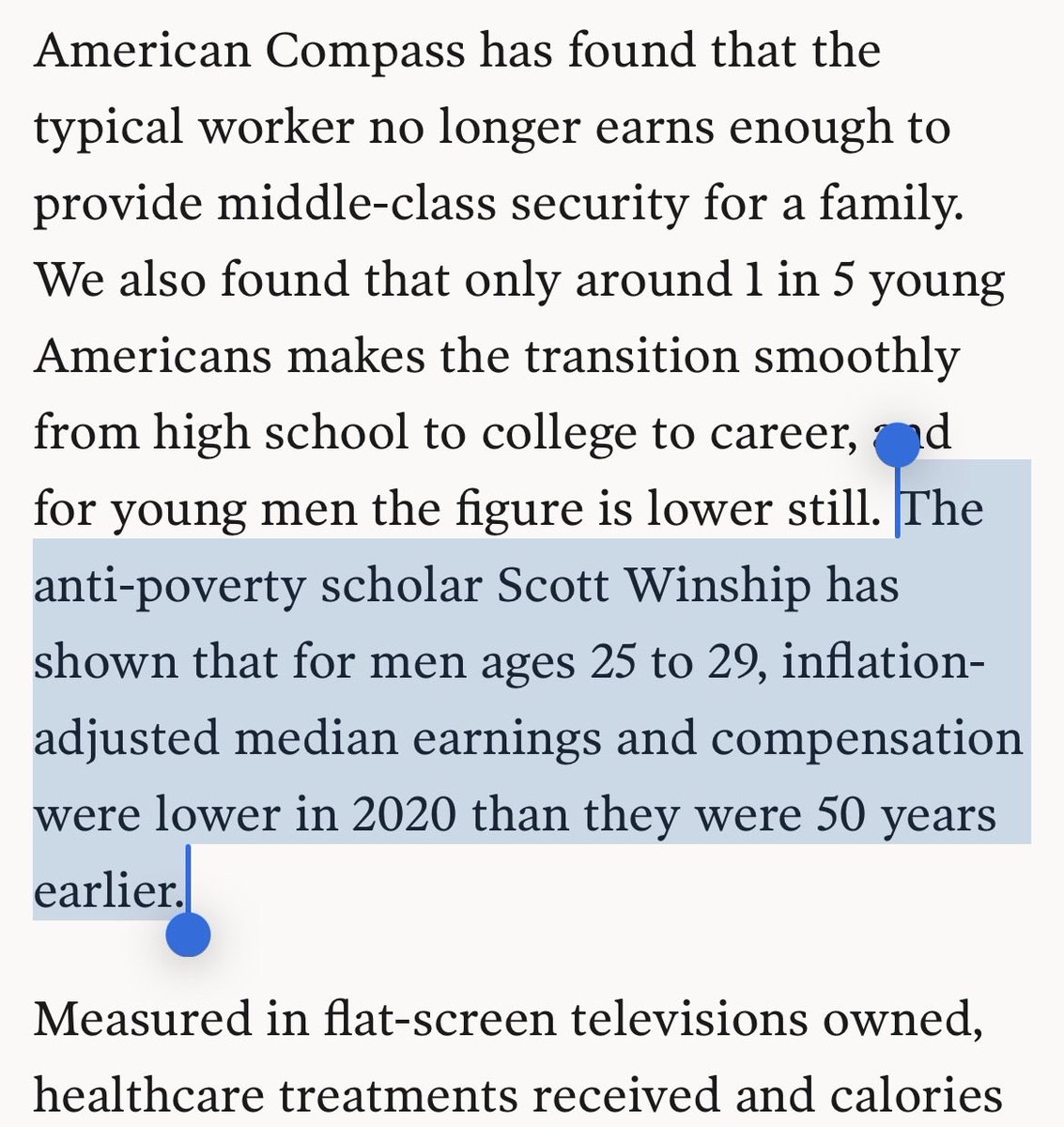
I’m discouraged to have to report that @oren_cass is STILL attributing numbers to me that I’ve told him I’ve improved on and provided him, just because he needs to use the inferior numbers to make the point he wants to make. This from a new @Deseret News piece. /1
2
14
90
20,351
Jason Sorens retweeted

Jun 10
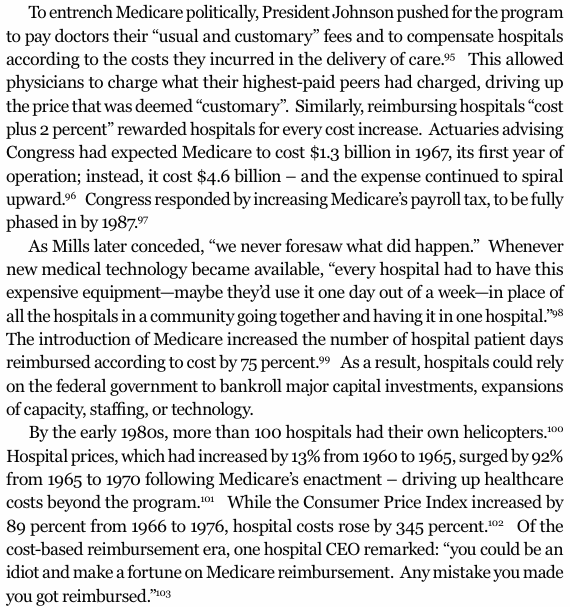
Why did the cost of American healthcare increase so rapidly?
amazon.com/dp/1630695432/
read "The American Way of Welfare" to find out
2
29
94
12,479

Jun 10
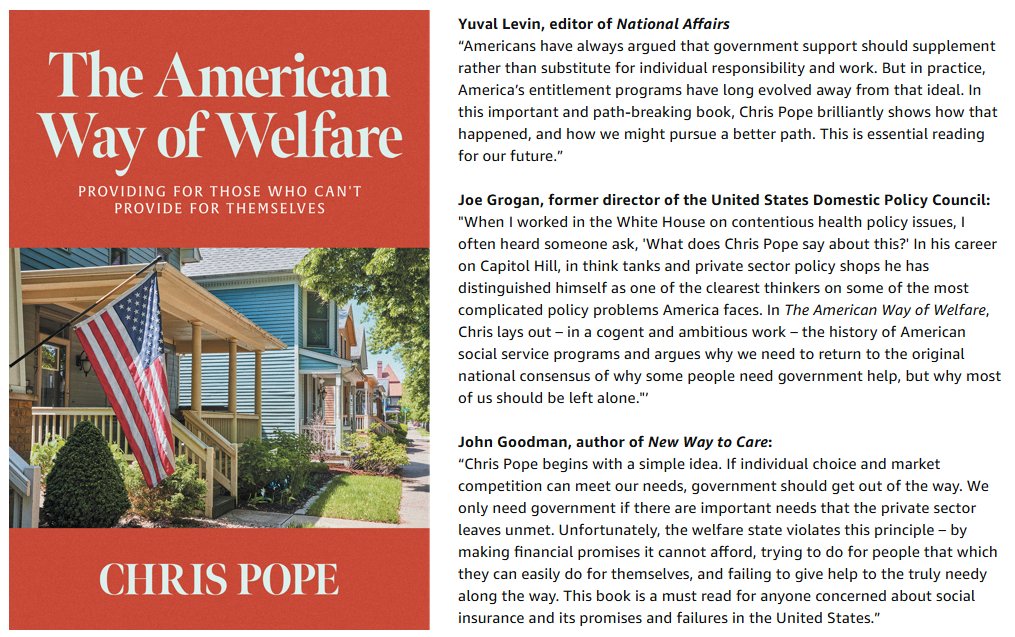
Chris presented some of his manuscript at @aier , and I knew we had to try to publish it. I'm glad to see it out today! Smart, data-grounded, eye-opening research.
Jun 10

Everyone knows what conservatives don't like about the welfare state.
It's time for a right-of-center vision of what it *should* be doing:
amazon.com/dp/1630695432/
6
16
3,297
Jun 7
It especially doesn’t make sense given that they are classifying Christian Scientists as Christian, who are similarly non-orthodox.

Latter-day Saints are among the most patriotic, service-oriented individuals in our country. They are also unequivocally Christian—just look at who is in the name of the Church.
It is unacceptable for a government entity to characterize a faith in a manner that contradicts the religion’s own foundational tenets. I am working now to ensure a correction is made.
2
2
473
Jason Sorens retweeted

Jun 6
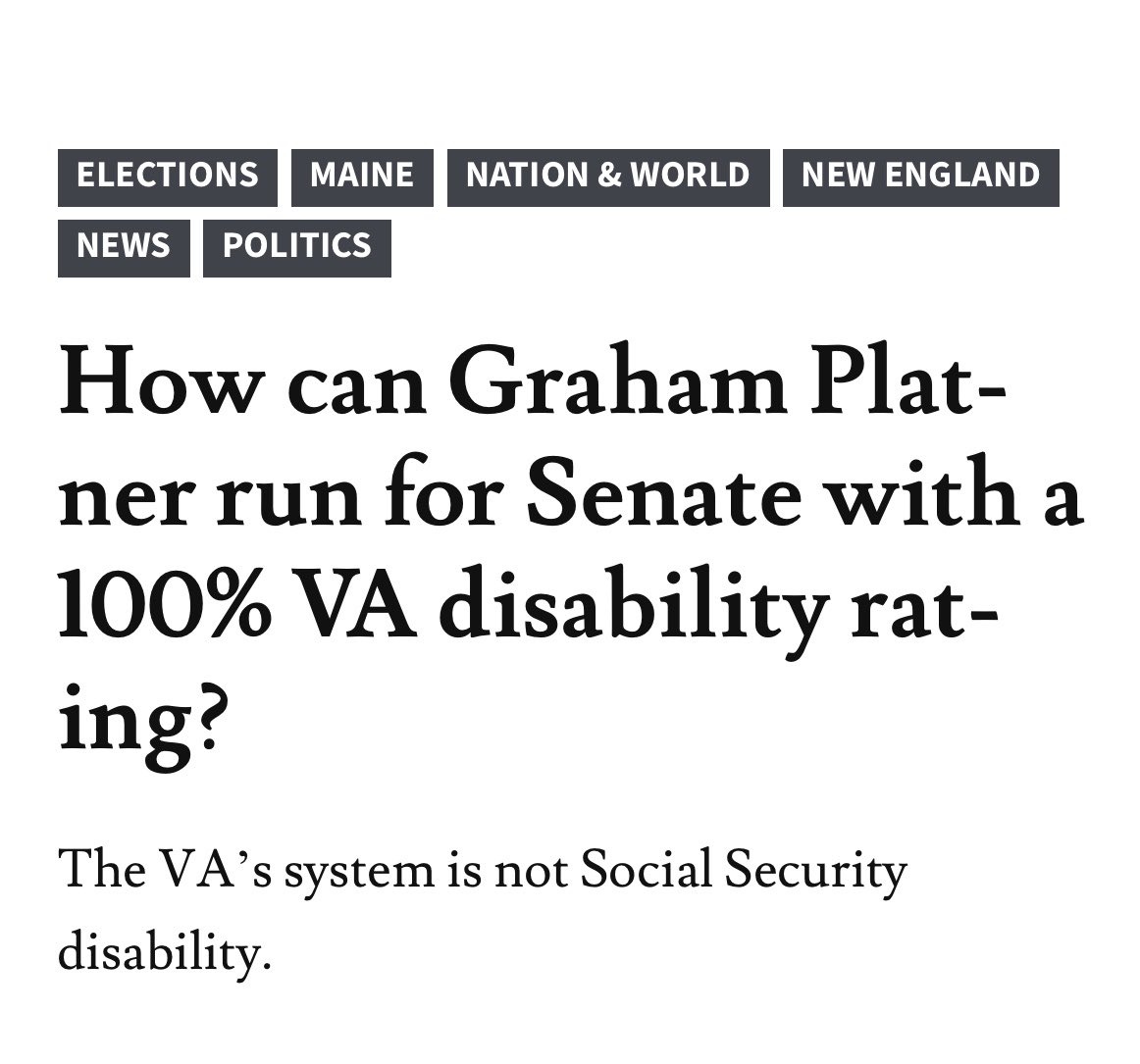
Wait Graham Platner got a 100% disability rating from the VA? Why isn’t that the biggest scandal of the whole campaign?
In another era a clearly healthy young man running around with the same rating as a paralyzed veteran would be an outrage even if he wasn’t running for Senate
544
2,126
6,346
335,142
Jason Sorens retweeted

Jun 5
Interesting piece from @JasonSorens on #FloodInsurance. The system is not working properly, and some obvious reforms would improve it and lower building costs. #housing thedailyeconomy.org/article/…
2
3
164
Jason Sorens retweeted

Jun 4
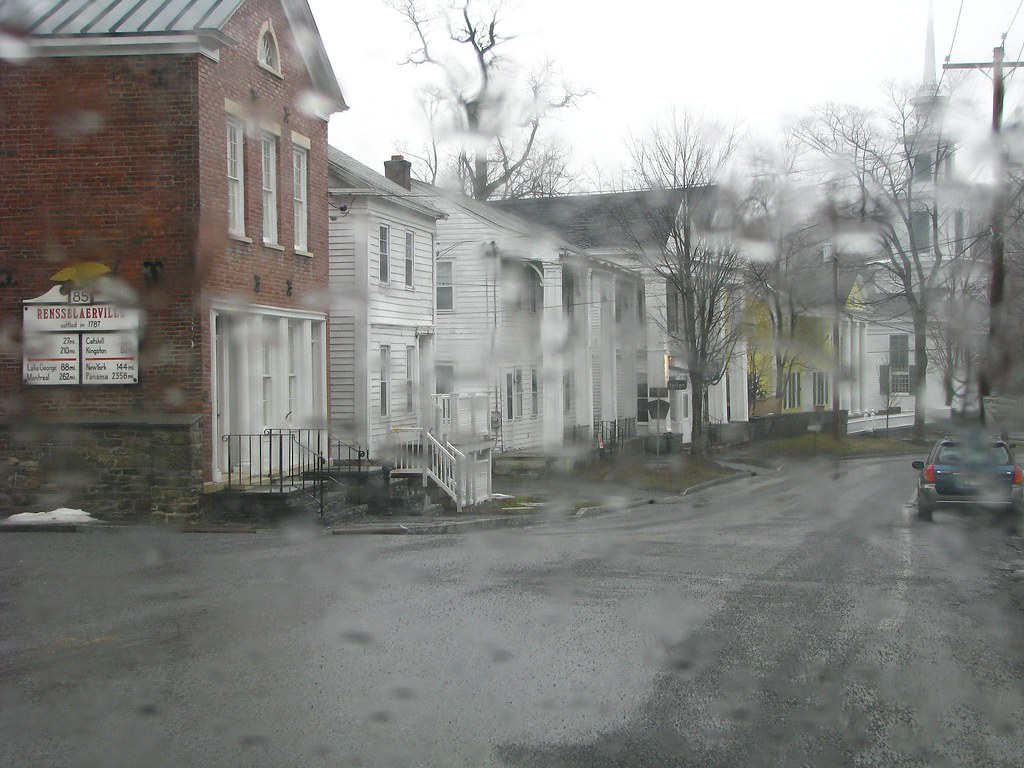
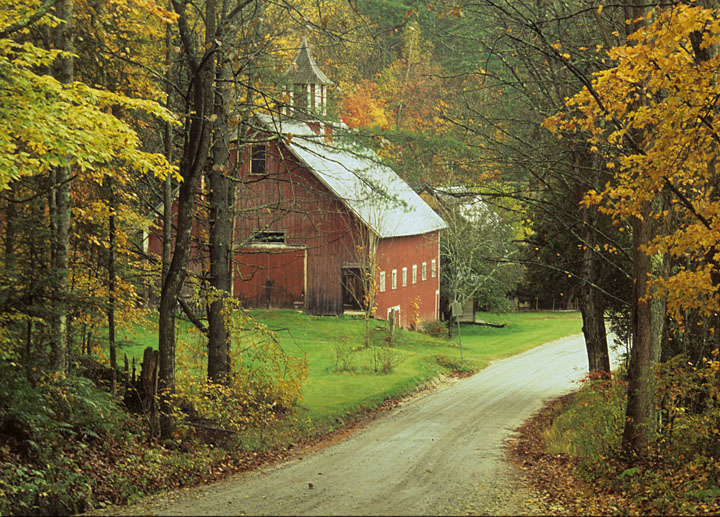
It's absolutely a fact that New England feels distinctly odd to someone from Upstate New York.
It's almost indescribable; perhaps akin to the odd sensation a Welshman might feel on a trip to Cornwall.
The people look pastier, the bars are stuffier, speed limits are lower, and the scenes around the countryside look more like a painting I could never afford to live in than like a gritty apocalyptic movie set.
It always seems sunnier there, and richer too. Certainly more liberals as well -- lots of Rainbow Flags and IPA's. But even the grungy, conservative side of New England feels unfamiliar somehow. Clannish, unapproachable, stiff. Their people mumble quietly while ours intermittently grunt and hoot. Their poor people are scrawny and Anglo while ours are fat Italo-Franco-Micks and red-faced German drunks.
And in NYS, the corruption colors everything somehow; you can somehow "feel" it oozing off of everything. Our evil overlords are not trim-and-tidy Cambridge-adjacent technocrats, as with New England's -- but cartoonish mobsters and wine-drunk swinger soccer mom types. Their upper class wears crisp white polos and loafers -- ours wear ill-fitting JC Penny suits and sport bald heads and sauce-dribbled double-chins.
I truly feel like I'm in a foreign country when I'm there; it's a lot like going to Canada. If I blur my eyes it looks the same, but when I examine almost anything closely, it's distinctly foreign. This is not a feeling I get in, say, Michigan or Wisconsin.


Jun 4

I imagine the vibes are just totally different over there than eg Parishville or Colton or whatever. I’m sure NH is nice and the people are nice but .. my experience is New England is quite odd to a NY person. You’d probably know better than me, probably wrote about it even
77
21
463
137,459
Jun 5
Yesterday the NH House & Senate sent two helpful housing bills to the governor:
* SB564 - allows for housing on dead-end roads that meets state & national fire safety standards
* HB1588 - makes last year's residential-in-commercial-zones law work. Says that towns can't ban commercial development to avoid application of the law, because it applies to districts existing as of 7/1/26, and says towns can't limit dwelling units or require special permits, only apply the same minimum frontages, minimum setbacks, & maximum heights that they apply to commercial development in the same place.
2
2
17
590
Jason Sorens retweeted

A version of HB 1735 passed the NH Senate today. The version was heavily amended and, unfortunately, will not enable New Hampshire to become a commercial-scale hub for experimental therapies.
Granite Bio Innovation attempted to accept most of the Senate’s amendment while pursuing minimal changes that would allow a modest step in the right direction. Regrettably, these discussions did not produce a workable pathway for any of the firms and patients we support.
We will continue to support New Hampshire's patients and innovators in the following ways:
• Shaping other areas of state legislation in a way that facilitates frontier biotechnology in New Hampshire.
• Advocating for state and federal regulatory policy that allows New Hampshire's biotech ecosystem to flourish.
• Serving as a nexus for innovators and pro-biotech policymakers, including through an annual conference in August and by providing resources to healthcare providers.
Follow Granite Bio Innovation to stay in touch and learn more about how you can get involved.
We are grateful to the many New Hampshire officials who have championed the state's promise as a biotech hub, including Governor @KellyAyotte and @NHSpeaker for supporting the passage of Right to Try reforms as part of SB 504.
Across the US, momentum is growing for policy reforms that allow experimental therapies. These reforms will come from both federal agencies and state legislatures. It remains to be seen which states will lead the way.

The NH Senate has again rejected Right to Try, shutting the door on patients seeking experimental treatments. A few state senators have decided that New Hampshire is closed for business to biotech firms offering frontier therapies.
Here's what happened and our next steps.
This term, a bipartisan majority of the state House passed HB 1734 and HB 1735: two bills to make New Hampshire the best state in America for experimental therapies. The bills were based largely on existing laws in Montana and Florida.
Granite Bio Innovation—and the businesses and patients we support—helped build a coalition across every branch of elected state government to support these bills. We also worked for several months to build consensus in the Senate. Senators received calls from patients, businesses, investors, scientists, and healthcare providers supporting the bills.
After Senator David Rochefort requested a long list of changes to HB 1734, the biotech firms involved agreed to every change. But these negotiations were not in good faith. Senator Rochefort abruptly decided he would not accept any version of the bills, and the Senate rejected both.
The New Hampshire House then attached both bills to Senate Bill 504—this time with an even broader bipartisan vote of 197 to 145. Rather than negotiate a compromise, the Senate decided to fight this bill at any cost.
Sadly, there is no pathway for making New Hampshire a commercial-scale hub for experimental therapies until the composition of the NH Senate changes.
Until then, Granite Bio Innovation will continue to support New Hampshire's patients and innovators in the following ways:
• Shaping other areas of state legislation in a way that facilitates frontier biotechnology in New Hampshire.
• Advocating for state and federal regulatory policy that allows New Hampshire's biotech ecosystem to flourish.
• Serving as a nexus for innovators and pro-biotech policymakers, including through an annual conference in August and by providing resources to healthcare providers.
We are grateful to the many New Hampshire officials who have embraced the state's promise as a biotech hub, including @NHHouseGOP leadership, Governor @KellyAyotte, Mayor @JayRuais, and those senators who supported Right to Try on the Senate floor.
We are especially grateful to @NHSpeaker for sponsoring the amendment to SB 504 and to Representatives @KesselringSteve and @cole4nh for their tireless leadership on these bills and courageous stand for patients in need.
With a biotech revolution approaching, a US state will soon become a hub for experimental therapies. The only question now is which one.

3
5
41
5,988
Jun 3
How about if you want space you buy it like an honorable, red-blooded American instead of using the state to steal your neighbors’ property rights like a filthy commie

I like my space and will not be bashful about that. You want to pack in and wave hi to your neighbors, go somewhere else.
1
1
21
1,837
Jason Sorens retweeted

This proposal in Florida is a really big deal, basically the end of residential single-family owner-occupied property taxes, punishing renters and commercial property owners, while also reducing sales of houses governing.com/urban/could-fl…
152
78
428
431,665
Jason Sorens retweeted

Jun 3
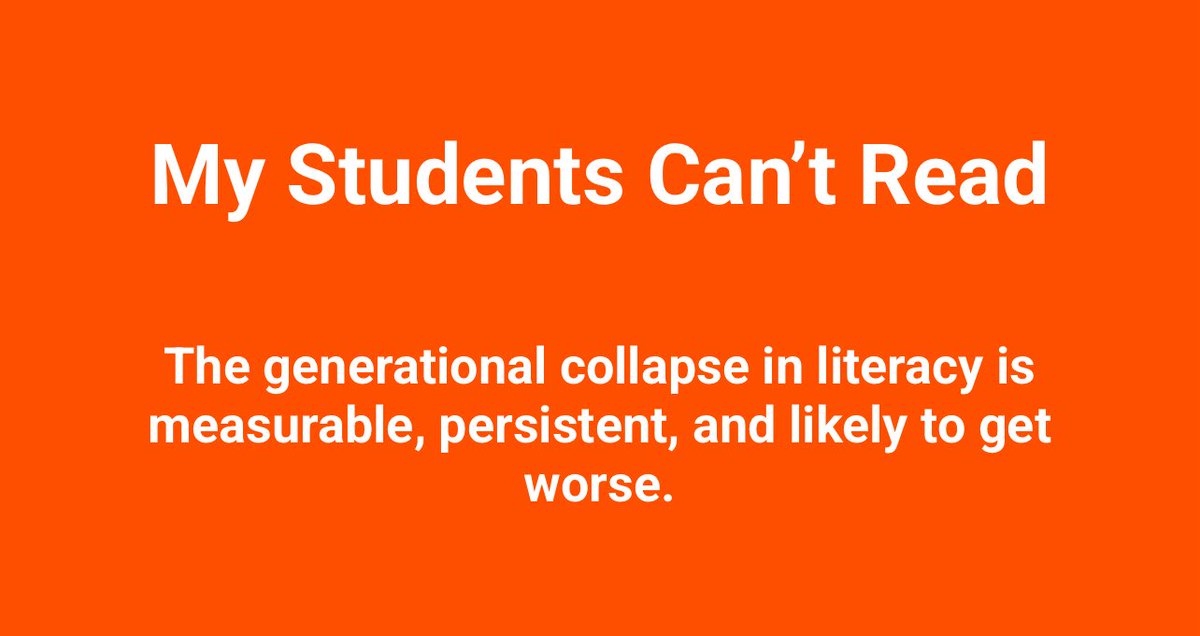
“We are admitting a cohort that cannot read at a college level and are pretending otherwise.”
Another college professor adds to the chorus of concern about student capacity.
In @chronicle:
“Six weeks into the term, I assigned my rhetoric and writing students a 20-page article. It was the same length I had assigned for five years and the same length I had read without complaint as an undergraduate a decade ago. Not one student finished it.
When I asked why, a student answered honestly: It was too long, and she kept losing track of what the paper was about. This was not a remedial class: These were students who had cleared the admissions process and written essays good enough to get them here. Yet a routine academic reading assignment had defeated them.
Every generation of professors has complained that their students cannot read. The lament is usually overblown, but data have caught up to anecdote, and what I am seeing in my classroom is no longer a hunch. There is a measurable, generational collapse in sustained reading and writing, and the academy is responding to it with improvisation and exhaustion rather than the structural overhaul it requires.
In February 2024, Adam Kotsko, who teaches in the Shimer Great Books School at North Central College, wrote in Slate that students who once handled 30 pages of reading per class meeting now seem “intimidated by anything over 10 pages and seem to walk away from readings of as little as 20 pages with no real understanding.” Crucially, he added that this is “not a matter of laziness on the part of the students” but of underlying skills they were never given a chance to build.
The Chronicle of Higher Education’s 2024 investigation found the same pattern across institutions as different as the Stevens Institute of Technology and Wellesley College, where the average SAT exceeds 1400. Nicholaus Gutierrez, an assistant professor at Wellesley, told The Chronicle that the baseline for what students consider a reasonable amount of work has dropped so noticeably that he has cut his readings accordingly; a 750-word essay now strikes many students as long. At Stevens, the science and technology studies associate professor Theresa MacPhail described following the mantra of “meet your students where they are” for so long that she has begun to feel “like a cruise director organizing games of shuffleboard.”
Worse, the national data tell the same story in colder language. On the 2011 National Assessment of Educational Progress (NAEP) writing assessment, which is the most recent comprehensive writing benchmark, only 24 percent of 12th graders reached the Proficient level, and just 3 percent reached Advanced; another 21 percent scored below Basic. The reading side of the ledger is worse, and getting worse fast: The 2024 NAEP results released in September 2025 show 12th-grade reading scores at the lowest level recorded since the assessment began in 1992. Thirty-two percent of 12th graders now score below NAEP Basic in reading, meaning that, in the assessment’s own language, they likely “cannot draw general conclusions based on concepts presented explicitly in a text.” And yet more than half of these same seniors reported being accepted to a four-year college. That last sentence is the whole problem in one line: We are admitting a cohort that cannot read at a college level and are pretending otherwise.”
76
350
1,147
104,055
Jun 3
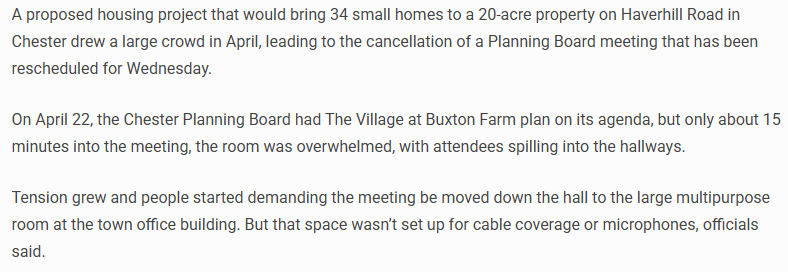
Badly behaved NIMBYs shut down a suburban planning board meeting over a proposal to build ***34*** small homes on ***20 acres***.
These neurotics need to travel down south and see how they roll with big subdivisions on small lots down there, then come back & get a grip.
7
26
1,941
Jun 3
7
218
Jun 2
My quick read of the Desantis proposal is that it would buy down property taxes over time through higher state revenues, gradually centralizing control of local services at the state level. So you wouldn't have these disparities in county-level rates, but at the cost of eliminating local tax competition and in the long run centralizing power (because the state won't let localities spend at their discretion on its own dime).
Jun 2

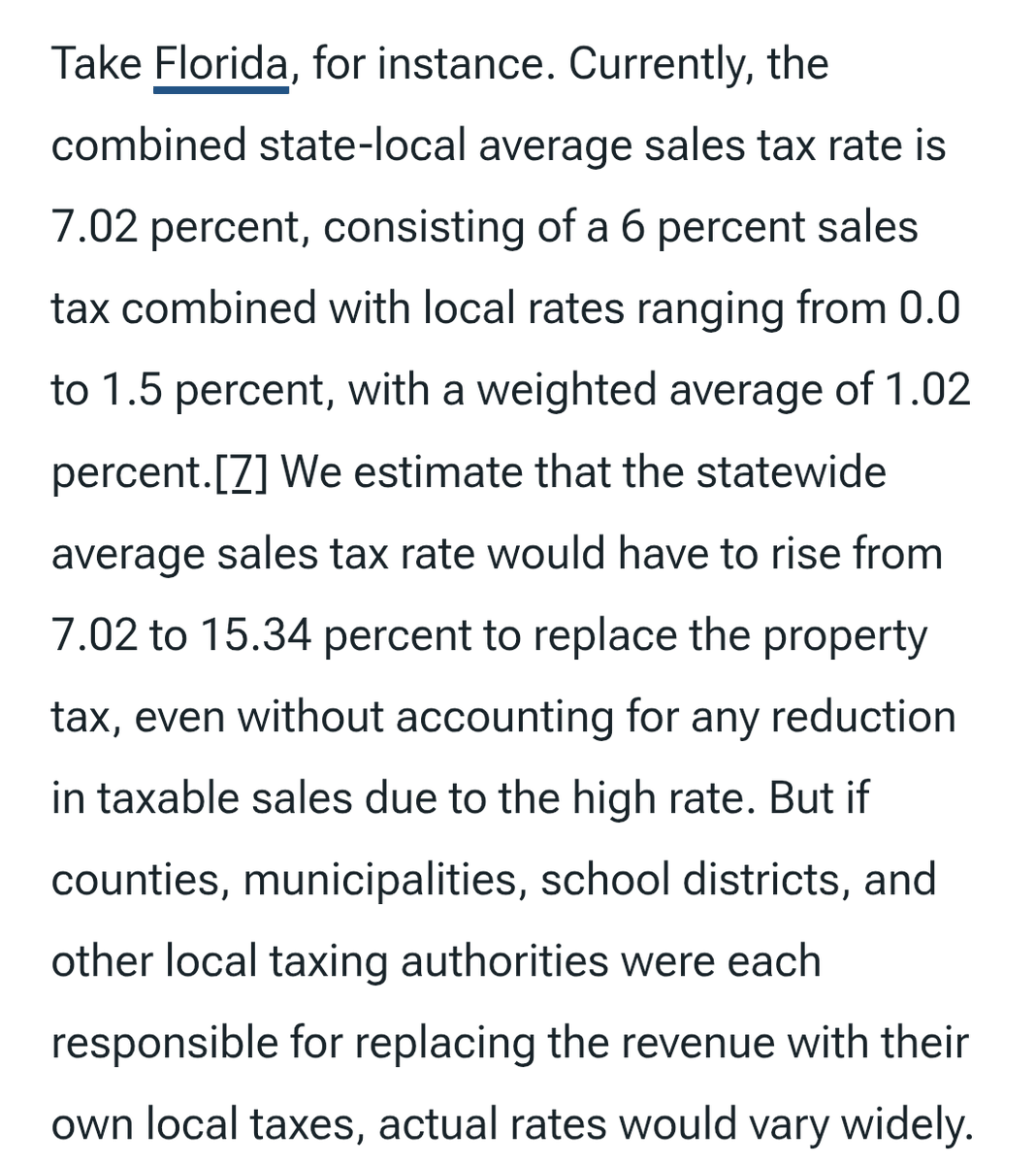
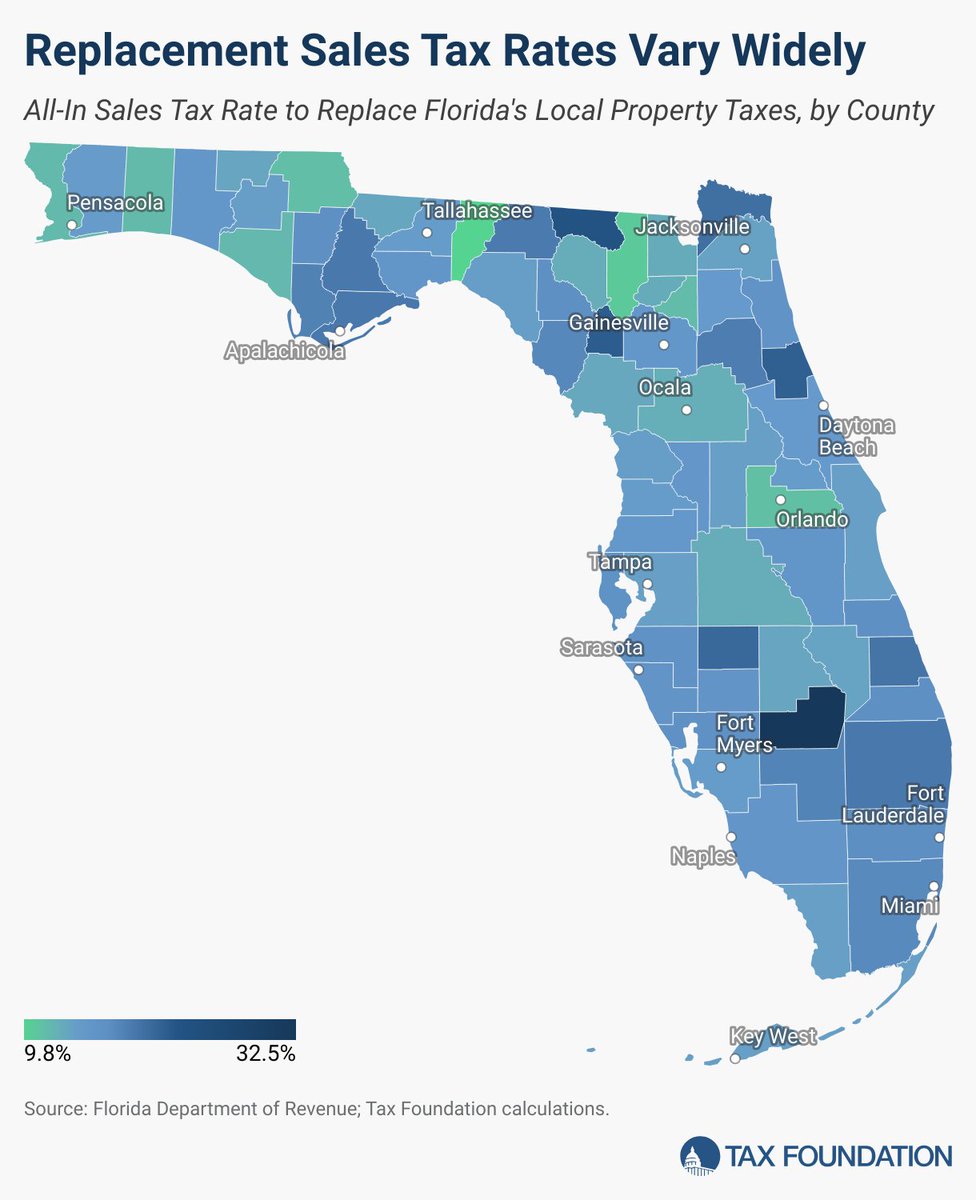
Cool paper from @JaredWalczak. To completely replace property taxes with sales taxes in Florida, you would need to at least double sales tax rates (but probably more, due to behavioral changes). A few counties would need to be 20% or 30%!
1
3
1,039