
Clinical Psychologist; 4th year Psychoanalyst-in-Training at the New Center for Psychoanalysis, Los Angeles ; n-c-p.org
Joined April 2009
- Tweets 6,448
- Following 345
- Followers 12,314
- Likes 15,628
403 Photos and videos

Pinned Tweet

Feb 6
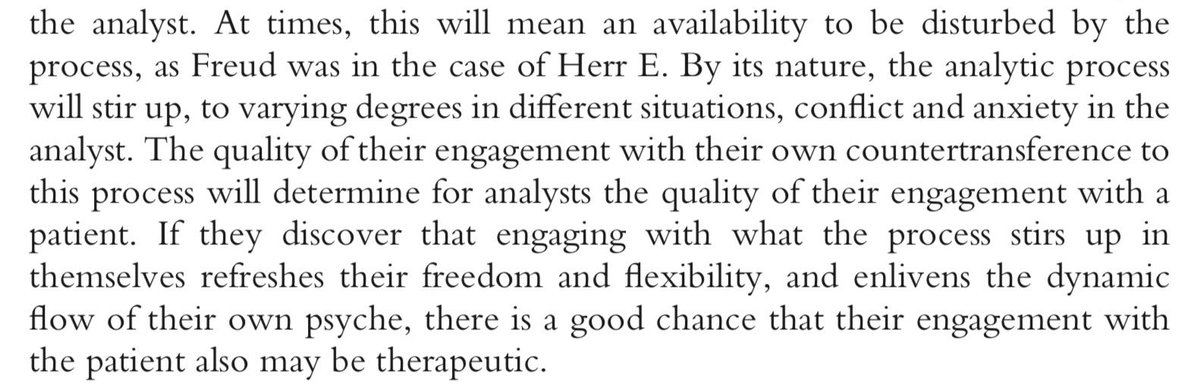
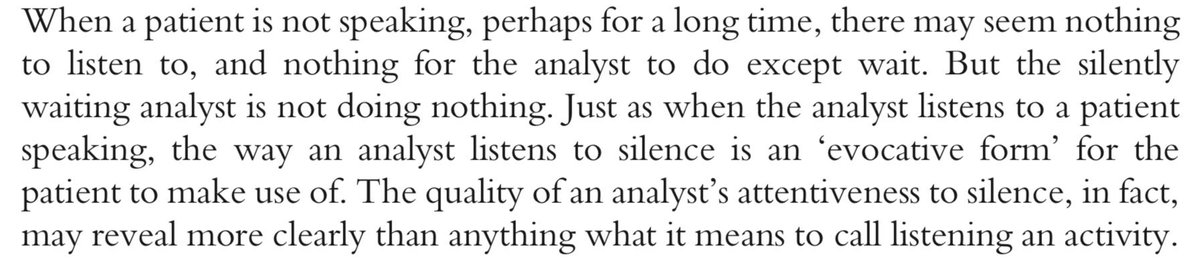
When psychotherapists are more able to inhabit the fullness of themselves, spontaneity may manifest primarily internally, in restraint, listening, and fantasy. We bear, survive, invite, and cultivate beyond words. We communicate our aliveness and presence without needing to talk.
4
7
91
4,579
What is crucial is the emotional availability of…
— Michael Parsons
Living Psychoanalysis, “The Analyst’s Countertransference to the Psychoanalytic Process”
4
25
1,270
Jayce Long retweeted

Jun 12
Disengagement Precedes Enactment: Mastering Countertransference with Dr. Karen Maroda
01:42 Defining Enactment in Psychotherapy: Discrete Events vs. Broad Definitions
23:35 Direct vs. Indirect Countertransference Disclosure
29:54 Reflective Function, Parentification & Therapist Vulnerability
38:22 Role-Play
01:02:13 Therapist Gratification
01:09:36 Advice for Early Career Therapists
3
16
114
6,855
Jayce Long retweeted

Jun 12
Here is a list of things to practice/work on (in sequence of which you should focus on) to become a “good enough” beginner-ish therapist. IMO. FWIW. It’s all stuff we continue to refine and master over years, but you can get the hang of it enough to be “good enough” first. 1/
11
49
304
28,851
Jayce Long retweeted
20 Aug 2022
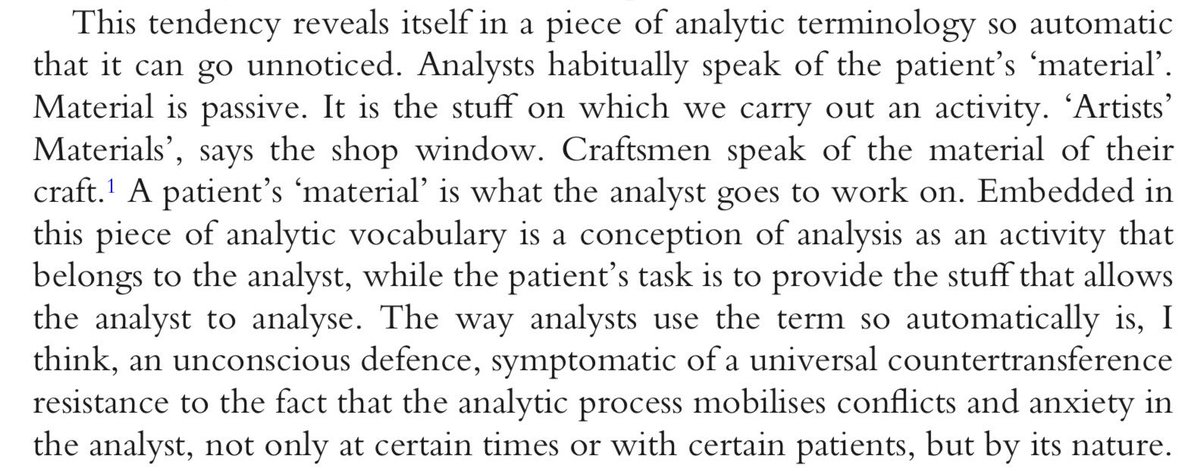
Using “interventions” is often a way for therapists to intervene and cope with the discomfort the clinical encounter is evoking in them.
6
21
183
Jun 10
“However thorough an analysis is, the person undergoing it will be only partially revealed; at any point in the analysis the proportion of what is known to what is unknown is small. Therefore the dominant feature of a session is the unknown personality and not what..”
1
5
39
3,455
Jun 10
the analysand or analyst thinks he knows.
— Wilfred Bion
Attention and Interpretation, “Ultimate Reality”
1
22
552
Jun 9
“The analysis that every psycho-analyst is obliged to undergo as part of his training is necessary because it removes obstacles to participation in the psycho-analytic experience; it has many facets, but for the psycho-analyst none can compare in importance with this…”
1
4
48
3,074
Jun 9
— Wilfred Bion
Attention and Interpretation, “Reality Sensuous and Psychic”
1
15
613
Jun 9
“O does not fall in the domain of knowledge or learning save incidentally; it can be ‘become’, but it cannot be ‘known’. It is darkness and formlessness but it enters the domain K when it has evolved to a l point where it can be known, through knowledge gained by experience,…”
2
1
8
1,150
Jun 9
and formulated in terms derived from sensuous experience; its existence is conjectured phenomenologically.
— Wilfred Bion
Attention and Interpretation, “Reality Sensuous and Psychic”
5
655
Jun 7
“Psychoanalysis draws two people into a relationship which is emotionally intense, and fated to come to an end. This cannot but have strong transference resonances for each of them. Whatever may have brought an analyst into analytic work in the first place, the fact of…”
1
5
80
7,164
Jun 7
no longer being needed is bound to require working through.
— Michael Parsons
Living Psychoanalysis, “The Analyst’s Countertransference to the Psychoanalytic Process”
2
1
38
1,165
Jun 7
“psychoanalysis calls on analysts, as much as it does on patients, to surrender to whatever they find inside themselves. Psychoanalytic listening is conflictual by its nature. It facilitates understanding and arouses resistance simultaneously in the analyst...”
1
9
67
3,281
Jun 7
The creative use of this conflict is what makes the analyst’s work possible.
— Michael Parsons
Living Psychoanalysis, “The Analyst’s Countertransference to the Psychoanalytic Process”
3
16
654
Jun 6
“A child does not just ‘have’ an Oedipus complex. Externally and internally the child inhabits the complex. In like manner, to say that a patient ‘has’ a transference to an analyst is thin shorthand for the experience of the transferential world in which…”
1
3
52
3,520
Jun 6
the patient lives.
— Michael Parsons
Living Psychoanalysis, “The Analyst’s Countertransference to the Psychoanalytic Process”
2
20
697
Jun 6
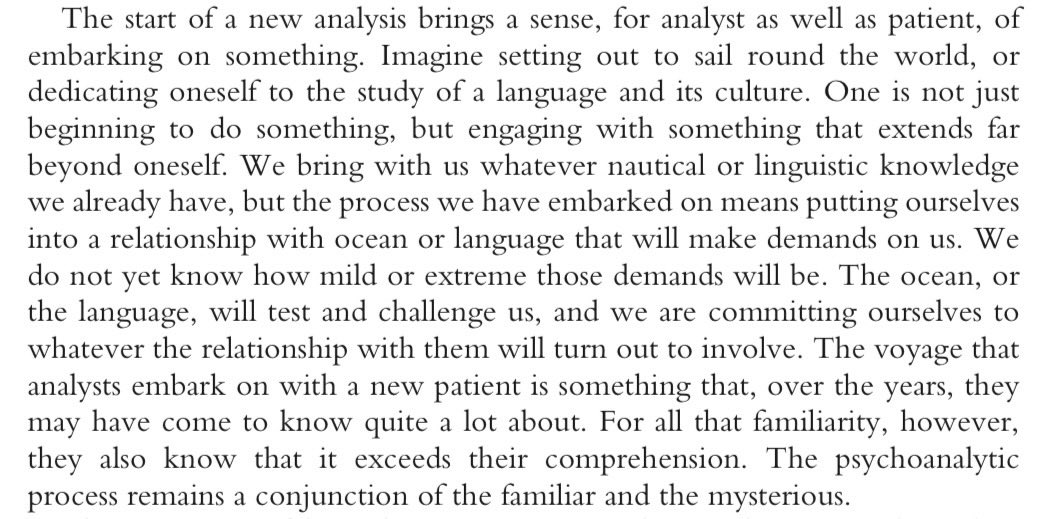
“If analysts’ listening does not stir up in them issues of their own which require analytic work within themselves, then they are in some way defending themselves against the power of a patient to disturb their equilibrium, and thus against the meaning of the analytic encounter…
2
8
73
4,792
Jun 6
— Michael Parsons
Living Psychoanalysis, “The Analyst’s Countertransference to the Psychoanalytic Process”
8
459
Jun 5
“Anyone who embarks on becoming a psychoanalyst is driven by deep personal motivations, conscious and unconscious. The practice of psychoanalysis, and the nature of the involvement that the work entails, are bound to evoke deep reactions. This remains true from…”
1
9
72
5,536
Jun 5
start to finish of an analyst’s working life.
— Michael Parsons
Living Psychoanalysis, “The Analyst’s Countertransference to the Psychoanalytic Process”
2
32
1,780