
Host Eurodollar University channel. Monetary science reborn. Putting central banks where they belong.
Joined May 2014
- Tweets 13,025
- Following 915
- Followers 138,219
- Likes 647
9,306 Photos and videos




Pinned Tweet

8 Oct 2023
🚨 What is a eurodollar? - (Must Read)🚨
THREAD:
1: The Mystery Begins
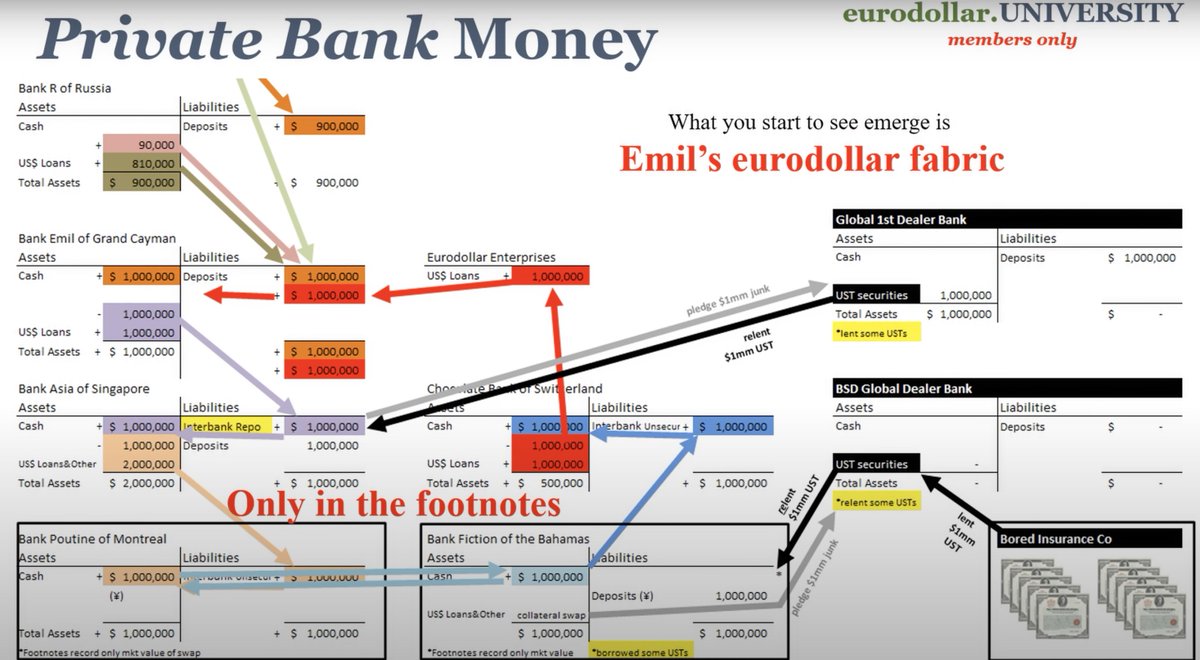
The Euro$ is NOT what you think it is. It's our hidden monetary system, lurking in the shadows.
Think of Euro$s as a black hole, hidden yet profoundly affecting everything around it.
The Government doesn't have a monopoly on money; the Euro$ is completely outside the purview of the Fed
2: The Urgent Question
What is the Euro$'s origin? No one is sure!
In the late 1950s, European banks began transacting in US$ claims, creating a network of outside the US.
3: The Birth of Euro$s
A Federal Reserve report from 1960 reveals the emergence of Euro$s as European banks sought dollar deposits for investments.
Euro$s aren’t actual dollars; they are a web of claims and transactions.
4: The Global Money Network
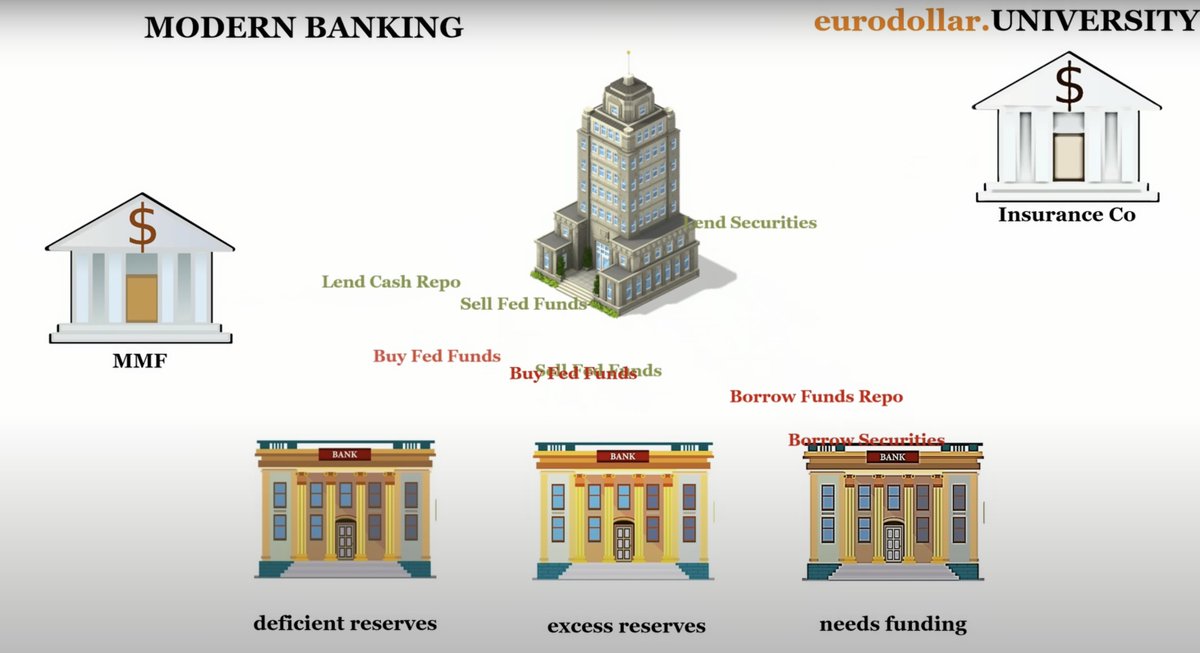
Euro$s enable banks worldwide to transact efficiently, linking monetary resources with needs across continents.
It's more a global communications network than a currency.
5: The Ledger Money System
Euro$s aren't physical dollars; they are ledger claims on US$s, a virtual currency.
Banks create claims and then use them to intermediate monetary needs all over the world.
6: A New Era of Prosperity
Euro$s became the lifeblood of a globalizing economy, facilitating trade and investments on an unprecedented scale.
This system brought unparalleled global prosperity.
7: Unintended Consequences
Euro$ has malfunctioned since ‘07, the world faces risk of undoing decades of that progress.
Competing arrangements can't replicate what Euro$s did so well—widely available and acceptable money.
8: The Ongoing Challenge
To replace Euro$s, something has to replicate its capabilities, an immense challenge.
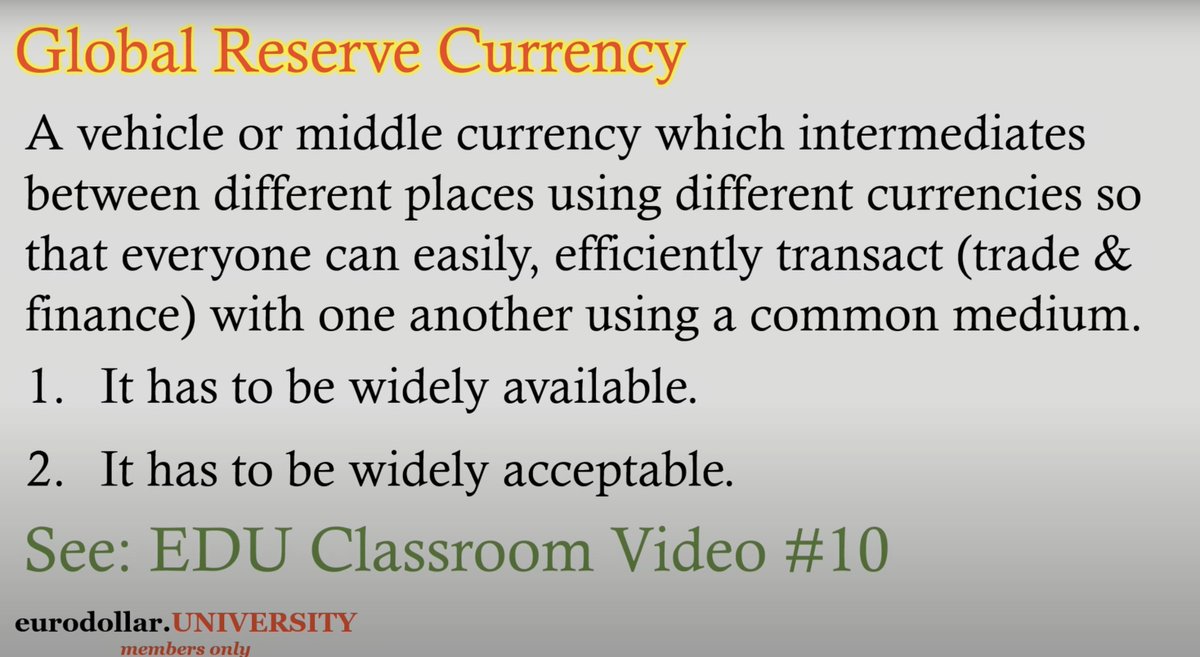
Global reserve currencies MUST be a highly useful medium.
9: The Final Message
The Euro$ is our monetary system, whether you acknowledge it or not.
Understanding this hidden system is crucial as it affects our lives, not strictly the global economy.
10: Just the Beginning
Dive deeper into the Euro$r system with Eurodollar University's memberships.
Explore its history, fundamentals, and the hidden world of global ledger money.
Join us today at eurodollar.university. Will you stay in the dark, or take the red pill to uncover the hidden truths about how money truly works?
134
458
1,424
595,388
Brussels is shifting on China. The reason is weakness.
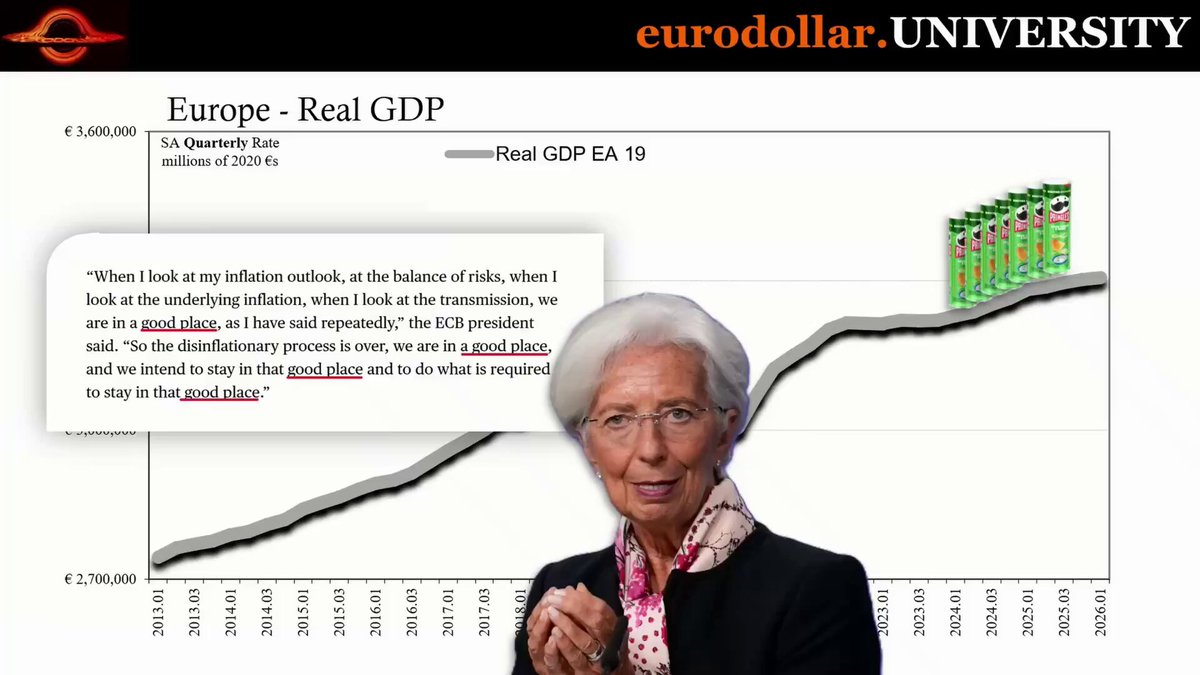
For years Europe could tolerate cheap Chinese imports because it thought it was strong. Christine Lagarde and the ECB kept calling it "a good place."
It was not a good place. It was fragile. Economically, and now politically.
Economics leads politics.
France just posted a surprise contraction. Household spending down. Consumer confidence in the toilet. Germany has been stuck in a manufacturing slump for years.
Then there is the signal almost nobody is watching. European banks are loading up on government bonds. Tens of billions in April alone, one of the biggest buying waves outside of a real crisis.
That is not what banks do when they believe in growth. That is safety-seeking. They think the downside is not over.
When the economy is strong, politicians can talk about free trade in the abstract. When factories close and households struggle, cheap imports become political dynamite.
Rate of change in the economy goes down. Rate of change in politics goes up.
Incumbents across Europe are already getting tossed out. No government can tell voters their industries are crushed but the imports are cheap. That argument is dead.
The European Commission is preparing to warn its own citizens about a full trade war with China. Governments do not prep the public for that unless they are pushing for it.
A France-led group of five wants more tariffs and new defensive tools aimed at China. After years of ridiculing Trump's trade wars.
The "Made in Europe" push makes the direction clear. Favor European products and trusted partners. China is not one of them.
It is protectionism by another name.
5
16
84
8,343
Most investors miss every major economic turning point.
Not because they're buying the wrong assets, but because they're using the wrong map.
On Sunday, June 28th at 5:30 PM ET, I'll reveal what most investors, economists, and financial commentators continue to miss about the monetary system, and why it matters.
Reserve your spot below ⬇️
webinar.eurodollar-universit…
10
3,204
Jun 12
Four of Asia's central banks are hitting the panic button at the same time. India. Indonesia. South Korea. Japan.
They are calling it a currency crisis. It is really a dollar shortage.
Almost everything that matters trades in dollars. Oil. Food. Materials. The debt everyone borrowed.
When a local currency falls, all of it gets more expensive. That starts a loop. A weaker currency drives more dollar demand. More demand weakens the currency further.
Japan drew a line at 160 yen. It sold $76 billion defending it. The yen is back below 160 anyway.
India has burned through more than $110 billion in forex tools. Its banks now pay non-residents 7.1% on five-year deposits. A five-year US Treasury pays about 4.3%. They are paying up just to pull dollars in.
Indonesia hiked rates to 5.5% in an emergency off-calendar meeting. Its reserves are falling at the longest streak since 2018.
South Korea inspected its foreign exchange banks for the first time in 14 years. Its stock market fell 8% Monday, rose 8% Tuesday, fell 5% Wednesday.
That is not policy management. That is desperation.
The problem is not interest rate differentials. It is the dollar itself. There are not enough dollars to go around. And energy keeps raising the need.
Selling reserves and hiking rates can slow a currency for a day. It cannot create new dollars.
This does not stay in Asia. The region sits at the center of global trade and finance.
When the dollar gets this tight, the stress does not stop at the border. It travels.
27
90
389
44,416
Jun 12
Most investors miss every major economic turning point.
Not because they're buying the wrong assets, but because they're using the wrong map.
On Sunday, June 28th at 5:30 PM ET, I'll reveal what most investors, economists, and financial commentators continue to miss about the monetary system, and why it matters.
Reserve your spot below ⬇️
webinar.eurodollar-universit…
4
23
4,748
Jun 12
This is not a normal trade dispute.
Normal disputes get settled with quotas and negotiations. This one is rooted in economic weakness on both sides.
China cannot back down without worsening the pressure at home. Europe cannot back down without abandoning its workers, its strategic industries, its voting base.
Neither has a choice.
As the US restricts Chinese imports, Europe becomes the overflow destination. If America closes the door and Europe stays open, Europe absorbs the hit. European officials finally understand that.
The coming trade fight will be described in technical terms. Anti-dumping probes. Countervailing duties. Subsidy investigations.
But underneath all of it is a much simpler reality.
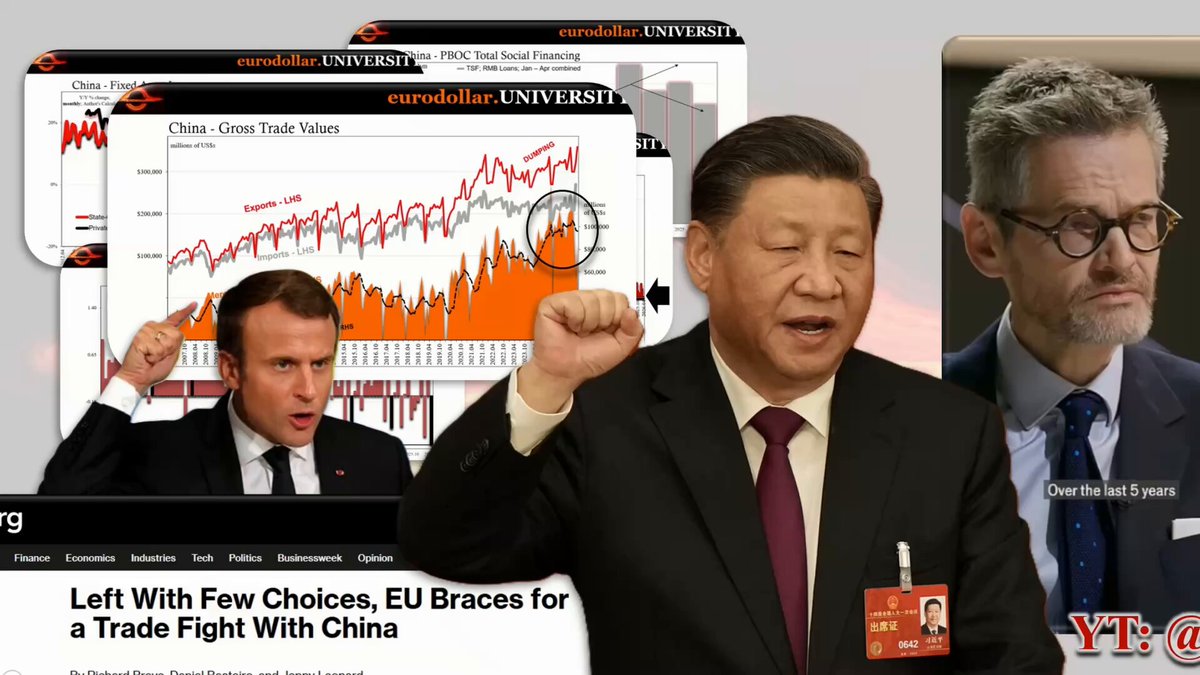
China cannot sell enough at home. Europe cannot afford to be their dumping ground.
Once both sides believe they are defending themselves, escalation becomes very hard to stop.
The next phase of the global trade war will not be centered on Washington and Beijing.
It will be centered on Brussels and Beijing.
13
22
110
10,262
Jun 12
Most investors miss every major economic turning point.
Not because they're buying the wrong assets, but because they're using the wrong map.
On Sunday, June 28th at 5:30 PM ET, I'll reveal what most investors, economists, and financial commentators continue to miss about the monetary system, and why it matters.
Reserve your spot below ⬇️
webinar.eurodollar-universit…
3
2
10
3,408
Jun 11
China is trying to export its way through a domestic balance sheet problem.
Europe is trying to stop its industrial base from being hollowed out.
Both are acting out of necessity. Not strategy. That is the trade war.
China built too much industrial capacity. The world never grew the way it expected. Now it is left with factories that produce far more than anyone can absorb.
From Beijing's perspective this is not a mistake. It is a national development strategy. Dominate the industries of the future. Hold on to the industries of the past.
From Europe's perspective it is an existential threat.
Chinese producers get subsidies, state backed banking, and sell at prices European companies cannot match.
The result is not lower consumer prices. The result is industrial destruction.
Europe already watched this happen in solar panels.
And China has no choice but to keep going. If exports slow, factories idle, profits fall, employment suffers, banks break.
Exports are the only release valve left.
China's solution is Europe's problem.
Neither can afford to blink.
28
48
232
24,229
Jun 11
Most investors miss every major economic turning point.
Not because they're buying the wrong assets, but because they're using the wrong map.
On Sunday, June 28th at 5:30 PM ET, I'll reveal what most investors, economists, and financial commentators continue to miss about the monetary system, and why it matters.
Reserve your spot below ⬇️
webinar.eurodollar-universit…
1
15
4,153
Jun 10
Europe is preparing its public for something it has avoided for years.
A real trade war with China.
Not complaints. Not carefully worded statements. An honest-to-goodness trade war.
Brussels has already held closed-door meetings. The "Made in Europe" framework has launched. Officials are publicly saying the relationship is no longer sustainable. Privately they are accepting the obvious: if Europe moves, China retaliates.
This is not about protectionism. It is about survival.
Europe's industries are under pressure. The old assumption that cheap Chinese goods were always a benefit is breaking down.
China is not exporting because it is strong. China is exporting because it is broken.
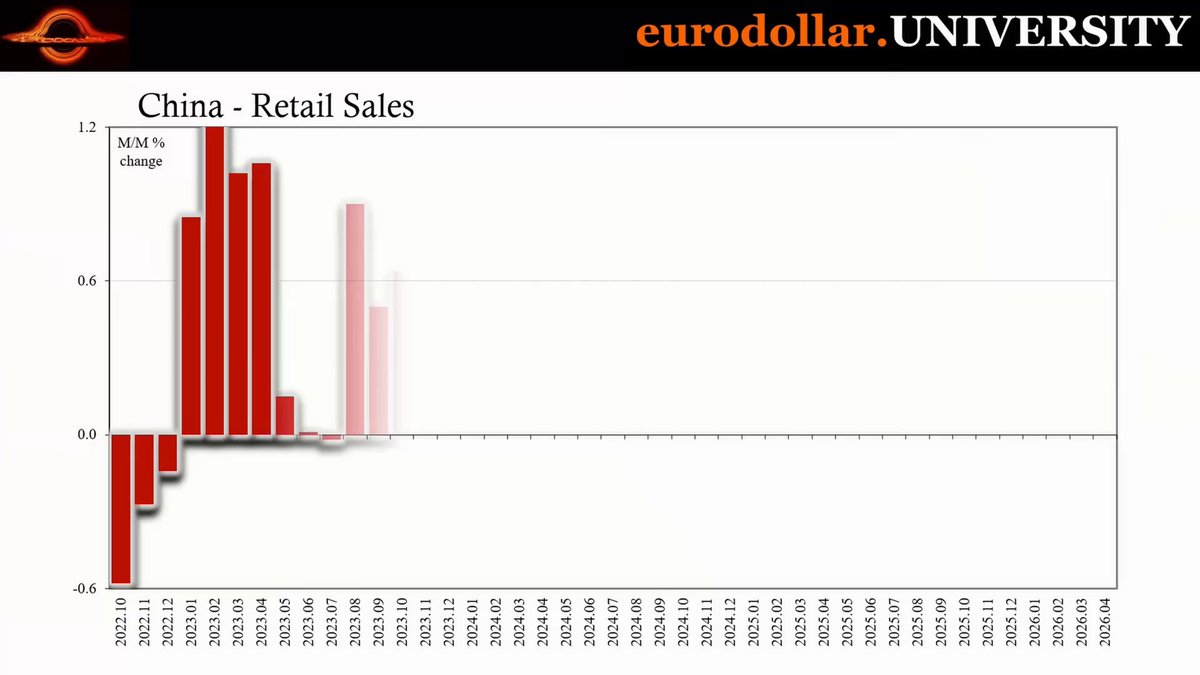
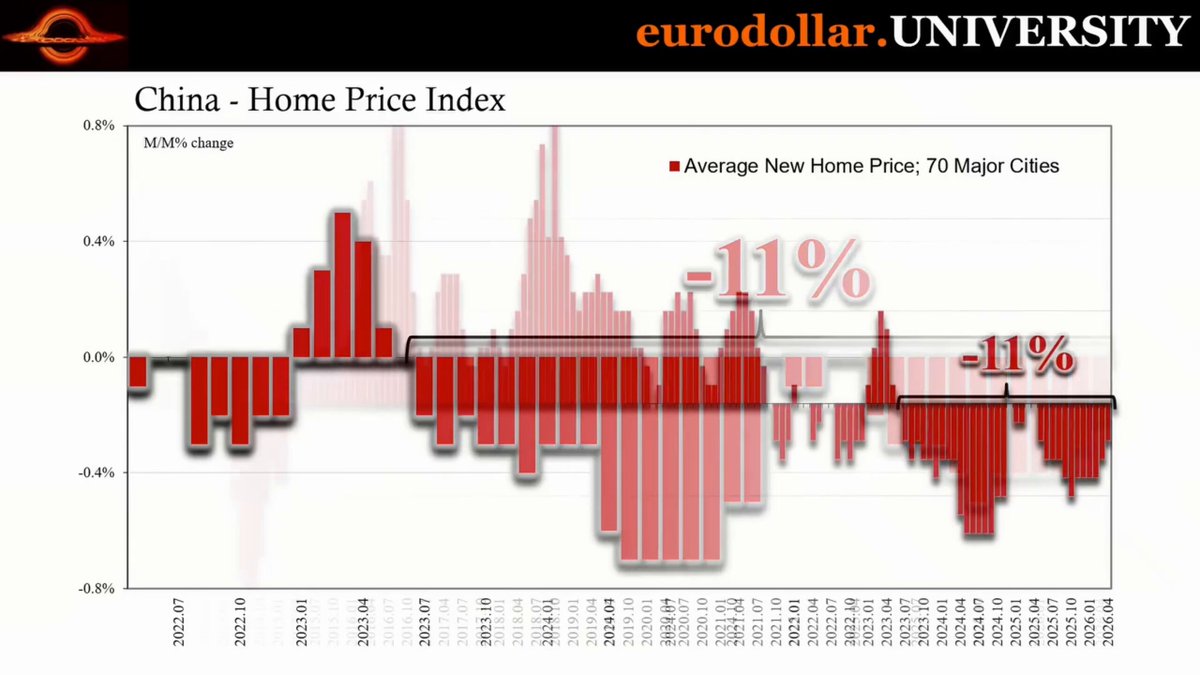
Households not spending. Property still falling. Credit collapsing. Investment crashing.
China's factories produce more than its economy can absorb. So the excess goes outward. The world becomes the release valve.
China faces an impossible choice. Cut production and crush the domestic economy further. Or keep exporting and push the pain onto everyone else.
There is no third option.
Europe is the first major economy to say it will not keep absorbing it.
Trade wars are about to go global.
51
38
183
21,616
Jun 10
If you want to learn the money signal that has predicted market crashes in just 13 minutes, then click here: cclnk.net/xx
10
3,854
Markets think resolving the Iran conflict fixes everything.
But Iran didn't break the economy. It was already broken.
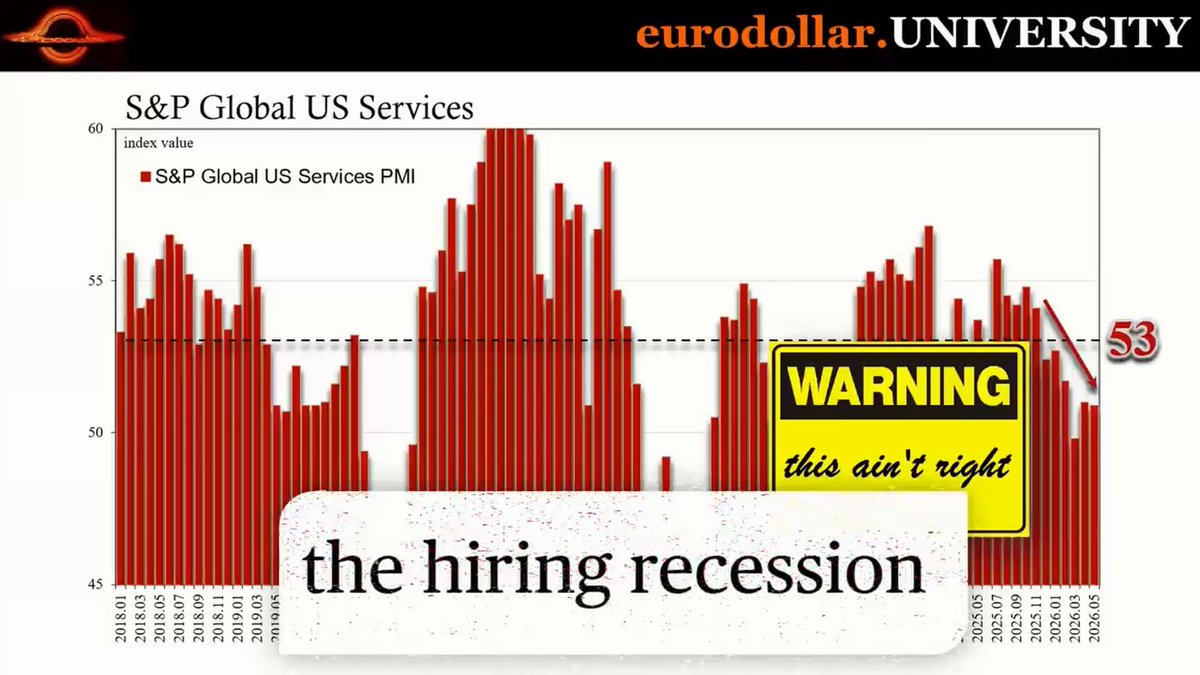
Labor force dropouts accelerating. Incomes falling. Jobs shedding. All of that started in October 2025. Long before the conflict.
A quick fix to Iran doesn't undo any of that.
And here is the part that should worry everyone. In a healthy economy, the point of no return is far down the runway. Plenty of room to absorb a shock. But if you were already on the cusp of recession when the shock hit, that point of no return is right in your face.
Canada just reported two straight quarterly GDP declines. Fourth quarter last year. First quarter this year. The Bank of Canada has abandoned all talk of rate hikes. Cuts are now the likely outcome.
Same story. Different country.
The biggest contrarian trade right now is falling interest rates. Nobody sees it coming. The bond market already does.
Workers can't afford higher rates. Banks have no reason to raise them. Demand for lending is collapsing. Central banks that were hawkish weeks ago are quietly pivoting.
Then the Bank of England said it out loud. They will tolerate inflation.
Central banks never say that.
When they do, it means they see unemployment rising and recession arriving.
The recession case is not quite confirmed. But central bankers just told you what they see coming.
6
18
88
9,734
If you want to learn the money signal that has predicted market crashes in just 13 minutes, then click here: cclnk.net/xx
2
2
7
3,578
Real incomes are falling. Not a warning. Confirmation.
Nominal wages are flat. Adjust for inflation and they turn negative. The six-month change in real personal income is nearly -1%. The only times you see that are in recessions.
The average worker is falling behind. And it is creeping into the middle class.
A car dealership salesman said it best. Tax refund season is their Christmas. People come in with their checks, make their down payments, buy their cars. This year was the worst he had seen in six years.
The macro data and the ground level are saying the same thing.
Then there is the C-suite. CEO confidence dropped from 59 to 47 in one quarter. Below 50 means more negative than positive. CEOs say the economy is materially worse than six months ago. Nearly half say conditions deteriorated. Up from just 8% last quarter.
The energy shock hit an economy that was already weakening.
In a strong economy, energy shocks get absorbed. This one was already recessionary before the shock arrived.
Higher gas prices. Higher cooling costs this summer. Less money for everything else.
The outlook is not getting better. It is getting worse.
11
13
87
12,788
If you want to learn the money signal that has predicted market crashes in just 13 minutes, then click here: cclnk.net/xx
1
1
9
5,413
Did a recession begin in the United States in October 2025?
Not a slowdown. Not "forgot how to grow." A full NBER-style recession.
Two completely separate agencies are saying the same thing. The BLS tracks jobs. The BEA tracks income. Different methodologies. Different perspectives. Same conclusion.
Something big changed late last year.
This is a K-shaped economy. For some, the stock market is up and bonuses are flowing. For others, no money, rising prices, no opportunities.
But the bottom of the K keeps getting bigger as more people fall out of the top.
Personal income growth in April was zero. The savings rate fell to 2.6%. Lowest since 2022.
Consumers don't cut spending immediately when income drops. They draw down savings first.
People are using tax refunds and savings to keep spending. That can only last so long.
When savings hit a floor, spending collapses with it.
That lag is running out.
@MetreSteven
7
12
94
12,035
If you want to learn the money signal that has predicted market crashes in just 13 minutes, then click here: cclnk.net/xx
2
2
8
3,521
Jeffrey P. Snider retweeted

May 28
The stock market is at an all-time high, and people are still buying gold.
@JeffSnider_EDU says people are extrapolating ahead, and reasonably so.
"What they know is, this isn't working."
Gold started rising in 2018 and 2019. Not because people understood the financial system. But because they knew something about it was wrong.
All other financial assets are obscenely valued or not anchored to anything.
"If we keep going in this direction, and there is nothing that suggests that we won't, it's going to eventually lead to what we should have done in 2008, but even more violent."
Gold is not inside the financial engineering system. That is exactly why people are buying it.
2
4
30
6,026
Jeffrey P. Snider retweeted
May 29
Why would a jeweler pay to rent gold rather than just buy it? It's actually pretty simple. If they buy outright, they risk buying high and selling low. By renting through a gold lease, their display inventory comes from gold owners, and they avoid spot price fluctuations entirely.
They pay a small rental fee in more ounces of gold, buy at spot, sell at spot plus jewelry premium, and focus on what they do best: creating gold jewelry. Gold owners get price exposure plus an additional yield in ounces of gold.
5
18
4,858
May 28
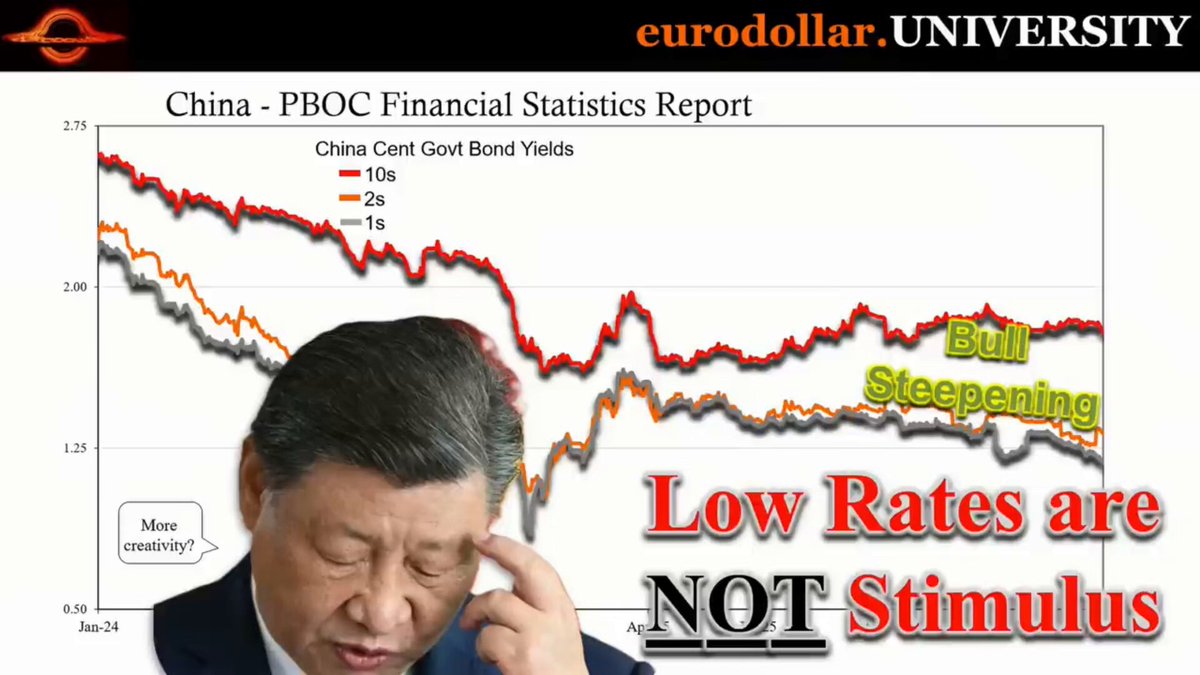
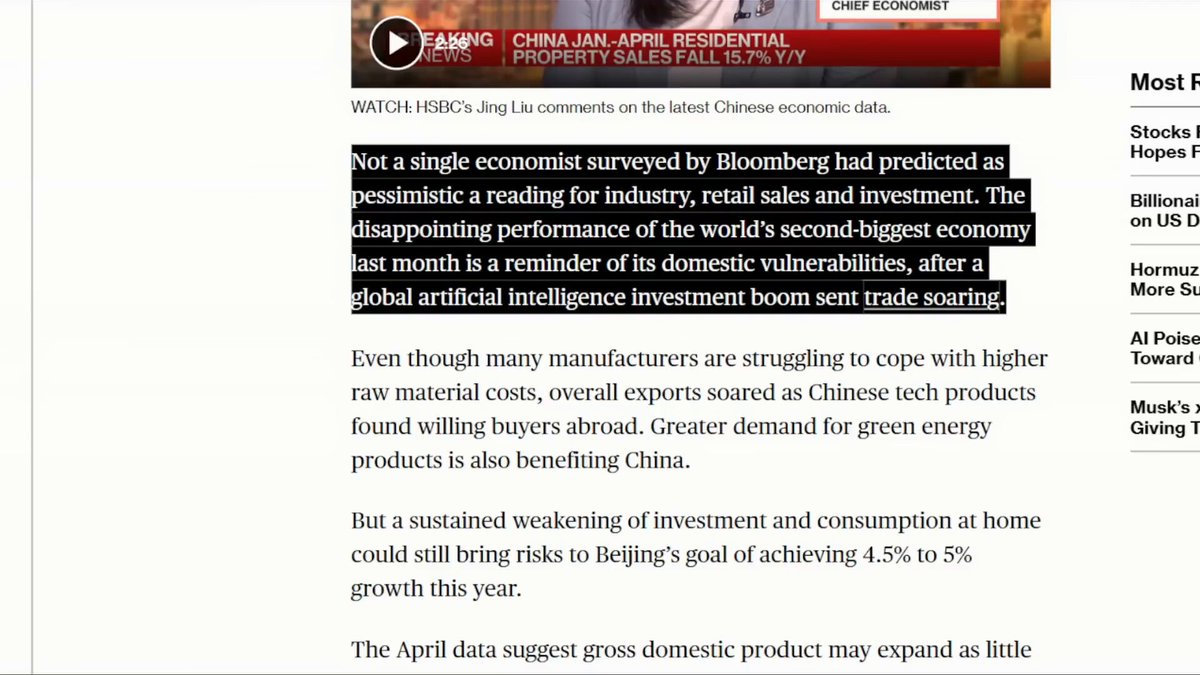
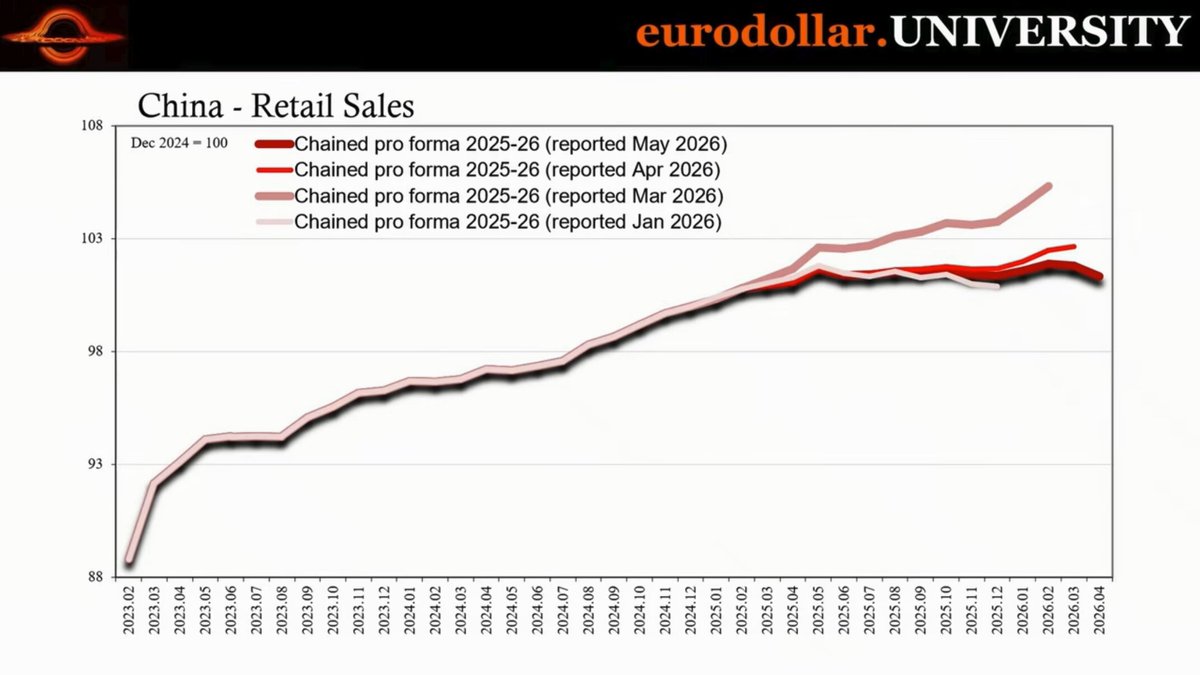
The mainstream response to China's weak data is always the same. More stimulus. More rate cuts. More government support.
Every time the last stimulus fails, the answer is the next one.
That is not analysis. That is ideology.
Falling rates are not stimulus. They are negative expectations. Demand for safety. Investors battening down the hatches.
The bond market never bought the bazooka. Economists did.
China's bond curve is not pricing a helpful rate cut. It is pricing depression economics.
And here is why more stimulus won't work.
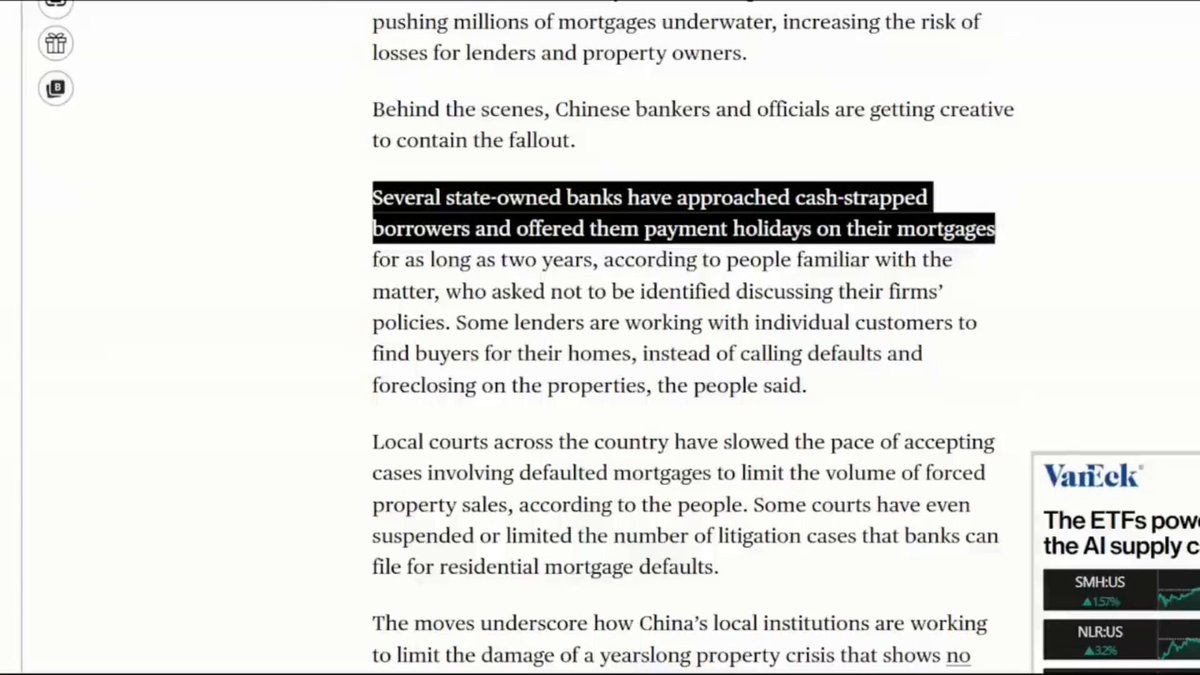
Households are protecting themselves because property is falling and jobs are uncertain. Banks are protecting themselves because bad loans are massively understated. Private firms are protecting themselves because demand keeps getting worse.
In that environment, cutting rates doesn't create healthy borrowing. More government spending makes an already rigid economy more unproductive.
And it makes the banking problem worse by squeezing margins further.
Lower rates were never the cure.
They were the symptom.
5
8
59
8,639
May 28
If you want to learn the money signal that has predicted market crashes in just 13 minutes, then click here: cclnk.net/xx
1
8
3,543