
The pursuit of flawless flight ✈️ We provide the trusted data, software, and insights across 60M flights per year for our customers
Joined July 2008
- Tweets 8,556
- Following 982
- Followers 30,900
- Likes 4,327
2,869 Photos and videos








Pinned Tweet

Every flight. Every crew. One platform. ✈️
1
1
9
1,014
Heading to Oshkosh this summer?
Before you pack your camping gear or brief the Fisk arrival, check out Cayla McLeod's guide to preparing for AirVenture. In this first of a 3-part series, she covers arrival options, reviewing the Oshkosh NOTAM in ForeFlight, lodging considerations, and more.
Read the blog: foreflight.com/blog/oshkosh-…
1
550
✈️ Ready to launch a career in airline operations?
Jeppesen Academy's FAA Aircraft Dispatcher Certification programs provide the training, real-world scenarios, and industry expertise needed to prepare for FAA certification and a career in aviation dispatch.
Our new accelerated Austin-based program combines flexible online learning with immersive in-person instruction:
📅 Online Training: July 20 – September 4, 2026
📍 In-Person Training (Austin, TX): September 21 – October 2, 2026
Learn from experienced instructors, gain practical operational knowledge, and build the confidence needed to succeed in today's aviation industry.
🔗 Learn more and register: ww2.jeppesen.com/training-an…
#JeppesenForeFlight #JeppesenAcademy
1
6
682
Cost Index 0 is widely assumed to be the path to maximum fuel efficiency. In reality, it burns more fuel than needed on every flight.
In our latest blog, Captain Thiago Brenner explores a systematically overlooked gap between assumption and reality, and explains how airlines can identify a more accurate, tail-specific path to fuel efficiency with Jeppesen Cost Index Optimization.
Read the latest here: news.jeppesen.com/aviator-ar…
5
991
✈️We’re headed to the Airline & Aerospace MRO & Flight Operations IT Conference!
Connect with the Jeppesen ForeFlight team as we showcase the latest features and functionality across our integrated ecosystem — including Jeppesen FliteDeck Pro and Jeppesen Dispatch.
From streamlined flight operations to powerful dispatch tools, we'll be walking through how our solutions work together to keep crews informed, efficient, and ready to fly.
Coming to the show? We'd love to connect.
Drop a comment below or send us a message to set up time to meet.
#MROAmsterdam #FlightOps #JeppesenForeFlight #JeppesenFliteDeckPro #JeppesenDispatch
1
555
Congratulations to @flyethiopian on celebrating 80 years of operations and leadership in global aviation.
Over the past eight decades, Ethiopian Airlines has built a legacy of growth, connectivity, and operational excellence while continuing to play a significant role in advancing aviation across Africa and around the world.
We’re proud to support Ethiopian Airlines as a trusted partner, and we look forward to continuing our collaboration in the years ahead.
1
777
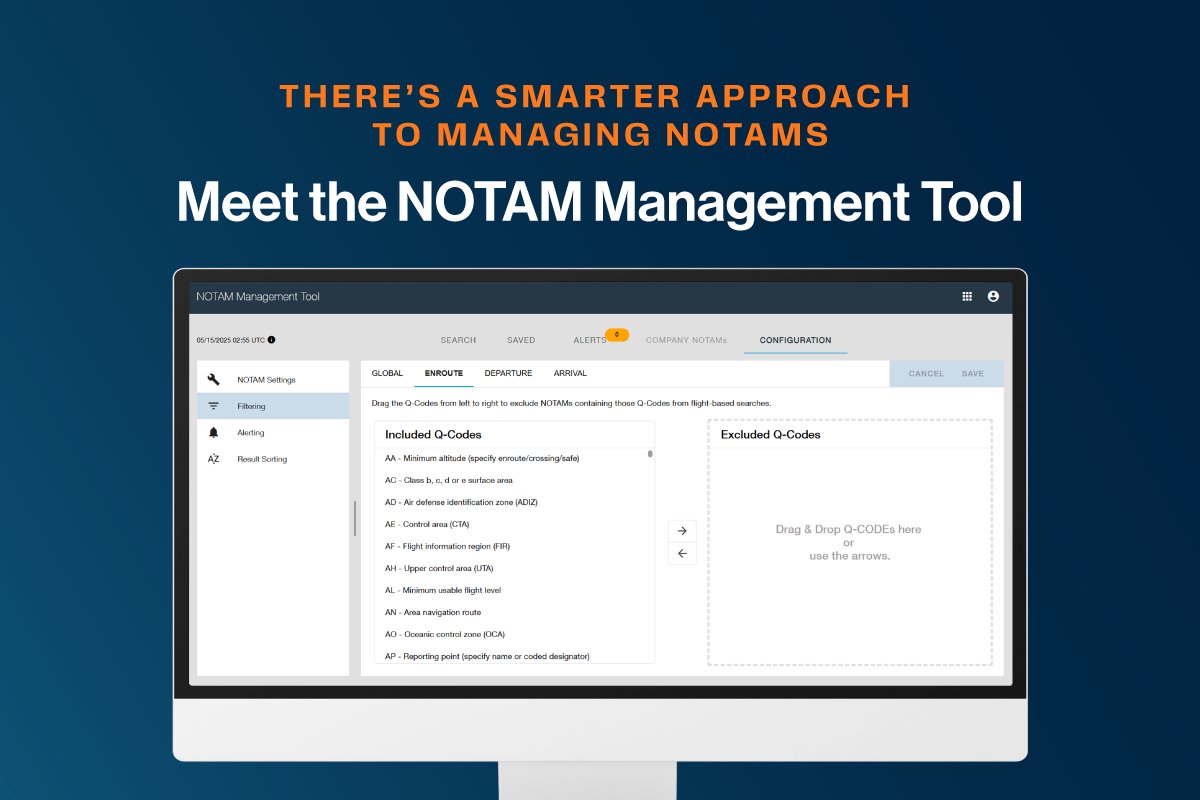
Managing the constant flow of NOTAMs is an ongoing challenge.
The new NOTAM Management Tool in #FliteDeck Pro 5.2 was designed with this in mind, ensuring flight crews and dispatchers are only aware of the most vital updates.
Learn more here: news.jeppesen.com/aviator-ar…
2
1,021
The 2026 FIFA World Cup is less than a month away, and if you plan to fly into one of the 16 host cities, be prepared for some logistical challenges.
Our latest blog breaks down what operators need to plan for, from US traffic surges and Mexico permit complexity to Canada’s PPR systems and the strain on ground handling across the network.
Read it here 🔗 bit.ly/3PBw6Vx
1
1
4
1,028
The future of AI in aviation depends on systems that understand operational context, constraints, and decision-making.
Thought-provoking perspective from our CEO, @BradSurak
May 19

Spent this week with the teams at FedEx and Delta talking about AI in aviation — and one question kept coming up: Can AI actually reason about operational decisions, or just predict likely outcomes?
In aviation, that difference matters. Shared a few thoughts on where I think the industry is headed on LinkedIn.
linkedin.com/posts/bradsurak…
2
1,237
Assigning the right tail to the right route is more than just a scheduling necessity - it’s a strategic lever for operational efficiency and fuel savings. With Jeppesen Tail Assignment, save up to 1% on fuel annually, equating to $84,000 per aircraft.
This automated, multi-objective optimization solution replaces manual methods to maximize fleet utilization, slash fuel costs, ensure adherence to maintenance schedules, and increase operational buffers.
Download our guide today to learn how to leverage Tail Assignment to reign in your top operating costs: go.jeppesen.com/reducing-3-o…
3
658
Fuel accounts for up to 30% of an airline’s operating costs - making every operational decision matter.
That’s why Jeppesen ForeFlight and GE Aerospace are collaborating to deliver an integrated fuel savings solution designed to help airlines turn operational data into real-world efficiency gains.
By combining GE Aerospace’s flight data analytics platform with Jeppesen ForeFlight’s Cost Index Optimization capabilities, airlines can connect pre-flight planning, in-flight optimization, and post-flight analytics into one continuous workflow.
The result: faster access to actionable insights, fuel-optimized guidance delivered directly within existing pilot and operations workflows, and measurable opportunities to improve efficiency and reduce costs.
Read more in the full press release below: jeppesenforeflight.com/news/…
1
552
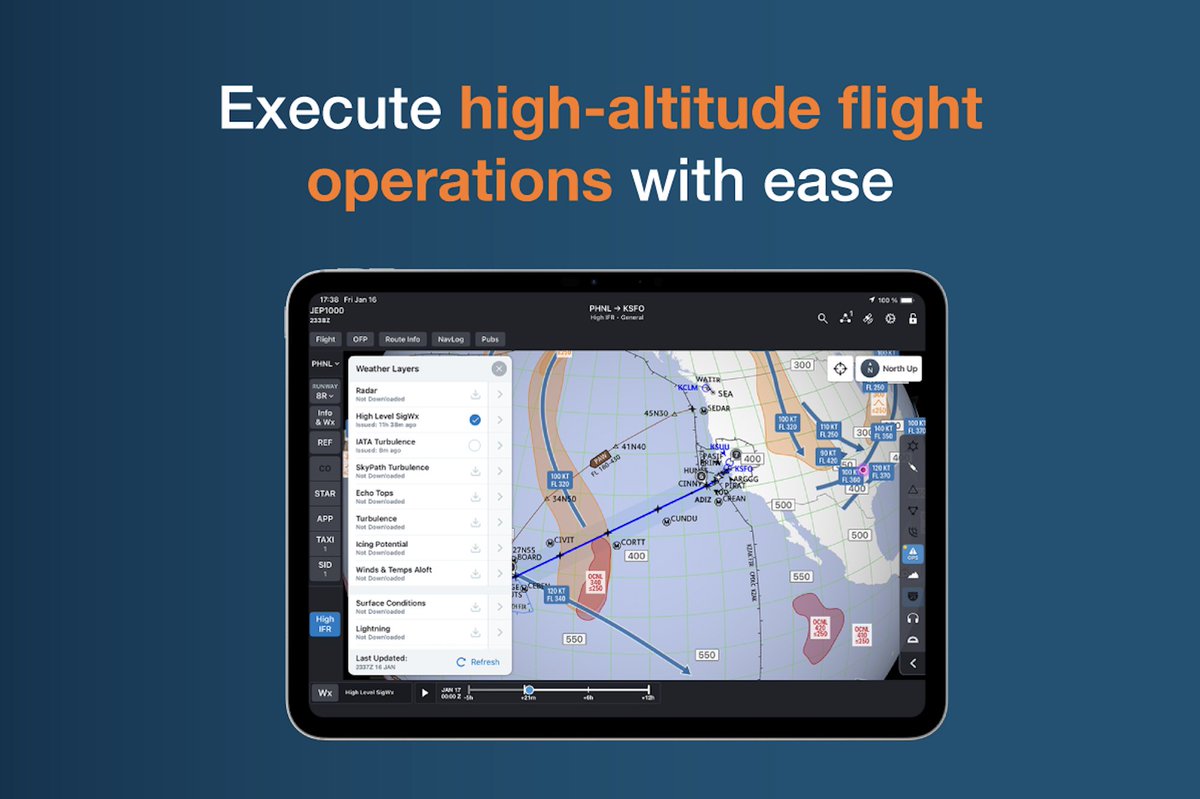
Give pilots a clear, geographical representation of potential atmospheric hazards with the new High-Level Significant Weather layer in Jeppesen FliteDeck Pro.
Available in version 5.2, this new feature includes forecasts for four meteorologic factors: areas of icing, turbulence, jet streams, and tropopause heights.
Learn more here news.jeppesen.com/aviator-ar…
1
695
Jeppesen Dispatch v2026-2 introduces a new Management by Exception Dashboard in Grid View to help dispatch teams focus on what matters most.
With one-click filtering for critical and warning flights, configurable flight cards, 24 or 48 hour views, and search by key flight attributes, teams can identify and prioritize exceptions faster across the operation.
For airline OCCs, that means less time scanning and more time acting - improving situational awareness, dispatcher productivity, and operational control.
That is the value of managing by exception inside the dispatch workflow.
Learn more about v2026-2: news.jeppesen.com/aviator-ar…
#AirlineOperations #FlightDispatch #AviationTechnology #OperationalEfficienct
3
507
Our CEO @BradSurak is defining what Aviation Intelligence actually needs to look like, starting with the people who know best.
Follow along for insights from operators, dispatchers, and flight crews.
#AviationIntelligence #JeppesenForeFlight
May 7
Just returned from visiting customers across Latin America, and as always, the conversations with executives, operators, dispatchers, and flight crews left me energized and optimistic about what's ahead, with plenty to think about.
One topic came up again and again: AI.
Not in an abstract or futuristic way. Practically. What does it actually mean for their operations? What can they trust? What worries them? These are exactly the right questions, and the conversations around them are inspiring a series of posts I want to share over the coming weeks.
Let me start here: AI in aviation shouldn't just stand for Artificial Intelligence, it should stand for Aviation Intelligence.
That distinction matters more than it might sound.
The aviation industry has navigated profound technology transitions before. Paper to digital. Digital to mobile. Each time, it wasn't just about adopting a new tool. It was about rebuilding trust with technology that is now in the cockpit, in the hands of dispatchers, and at the center of operations. Jeppesen ForeFlight has had the privilege of walking alongside operators through those shifts for decades. And we've learned that in aviation, trust has to be earned, one verified piece of data, one reliable procedure at a time.
AI is the next major transition. And I believe it may be the most consequential one yet.
But right now, our industry faces a real challenge: most of the AI being deployed is general purpose. It was trained on the public internet. It can answer an aviation question fluently and sound completely authoritative, and still get the fuel reserve wrong, miss a critical NOTAM, or apply a performance calculation to the wrong airframe.
In most industries, a confident-but-wrong AI is an inconvenience. In aviation, it cascades.
The executives and operators I spoke with in Latin America already feel this tension. They're being asked to evaluate AI tools. They're under pressure to modernize. And at the same time, they're asking the right question: Can we trust these answers enough to stake our reputation, and our passengers' safety, on them?
That's the conversation I want to have openly. What does the industry actually need AI to be before we can rely on it? What are the standards? The safeguards? The proof points that build real confidence?
I don't think any one company has all the answers. This is a moment for the whole industry to shape together, including airlines, operators, regulators, technology providers, and the pilots and dispatchers who live with these tools every day.
So I'll ask: What's your biggest concern about AI adoption in aviation right now? What would need to be true for you to trust an AI recommendation in an operational context?
I'll be sharing more over the coming weeks, grounded in customer conversations, not hype. Looking forward to hearing from you.
#Aviation #AviationIntelligence #AI #FlightOperations #AviationSafety #JeppesenForeFlight
1
320
Jeppesen ForeFlight is proud to support Mental Health Awareness Month this May alongside @AOPAOnline.
We’re committed to helping elevate the conversation around mental performance, resilience, and overall well-being in aviation.
In an environment where focus and decision-making matter every day, supporting the people behind the controls is just as important as the technology that powers flight. We stand with the aviation community in recognizing the importance of mental health and the role it plays in safety, performance, and long-term success.
#JeppesenForeFlight #MentalHealthAwarenessMonth
2
500
Jeppesen Dispatch v2026-2 is now available. This major release delivers greater automation, faster performance, and improved optimization to help airline operations teams manage increasingly complex workflows with more speed and control. New capabilities in v2026-2 include:
• Management by Exception Dashboard – Grid View
• Event-based Process Automation
• Airport Suitability Check Automation
• Advanced NOTAM Management
• Fuel Advisor – Tankering
• Enhanced Auto Dispatch and Route Planning
Together, these updates are designed to help reduce manual work, improve decision speed, and strengthen operational consistency across the dispatch workflow. Learn more: jeppesen.com/dispatch
#Aviation #AirlineOperations #FlightDispatch #FlightPlanning
3
726
Eric Haase put ForeFlight’s new Emergency Glide Mode to the test, exploring how the distraction-free view provides all the information needed to focus on finding a landing site during an emergency, with or without a formal runway. Watch the full video of Eric’s in-flight engine-out scenario, and how Emergency Glide Mode helped him get to the ground safely, at the link in our bio.
🔗 bit.ly/4w92YW3
1
8
1,396
How do you improve crew pairings while reducing costs?
United Airlines set out to solve exactly that.
“We were asking - how do we make better pairings, become more cost-effective, and reduce long sit times for our crews?” — Jason Silber, Senior Manager of Crew Planning, United Airlines
By partnering with Jeppesen ForeFlight and implementing calibration, the result was a 2–5% savings on their total solution - along with more balanced, crew-friendly schedules.
“I can’t even imagine not having it.”
Smarter planning. Better outcomes.
That’s the Jeppesen ForeFlight advantage.
Learn more: lnkd.in/d76C3qC8
4
1,346
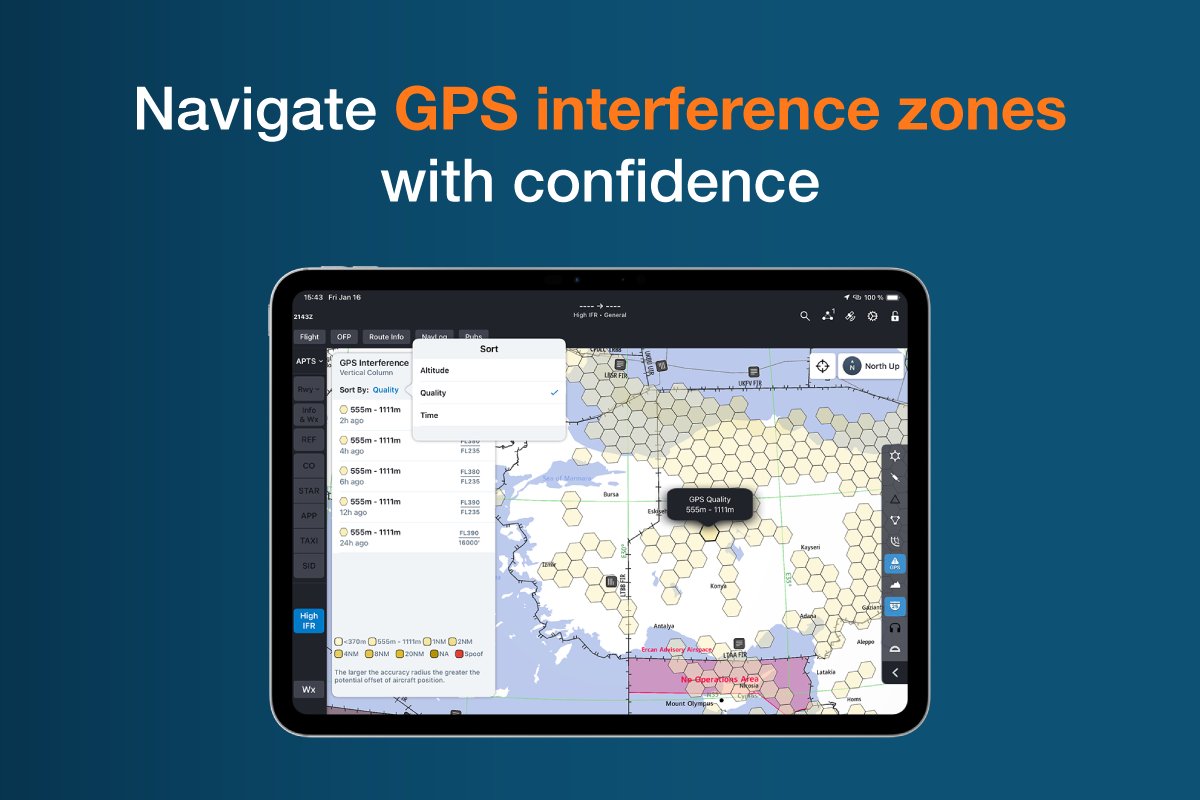
Equip your flight crews against GPS interference with the new GPS Jamming and Spoofing enroute map overlay in #FliteDeck Pro.
New in version 5.2, this feature shows pilots areas of known GPS interference, prompting highly-informed, proactive decision making on routing and navigation system reliance.
Learn more here: news.jeppesen.com/aviator-ar…
3
686