
Observer of Life's Intricacies | Bitcoin Enthusiast | Analyst of Current Affairs | Advocate for Radical Centrism | Opinions are my own | No DMs |
Joined July 2012
- Tweets 19,842
- Following 1,296
- Followers 3,102
- Likes 9,675
5,276 Photos and videos








Pinned Tweet

22 Mar 2025
"I disapprove of what you say, but I will defend to the death your right to say it"
Evelyn Beatrice Hall.
9
1,599
Atlas retweeted

Jun 12
The Saylor clips from Prague are getting out of control 😅
75
130
1,392
182,475
Jun 13
The US government issued an export control directive on 12 June 2026 ordering Anthropic to suspend all access to Fable 5 and Mythos 5 for any foreign national anywhere in the world. Anthropic received the letter at 5:21pm ET and had to disable both models for all customers immediately to comply. Fly.io
The government believes someone found a way to jailbreak Fable 5, raising national security concerns. The letter gave no specific details. Anthropic says it believes it's a misunderstanding and is working to restore access. All other models (Opus 4.8, Sonnet 4.6, Haiku 4.5) are unaffected.
55
Atlas retweeted

May 2
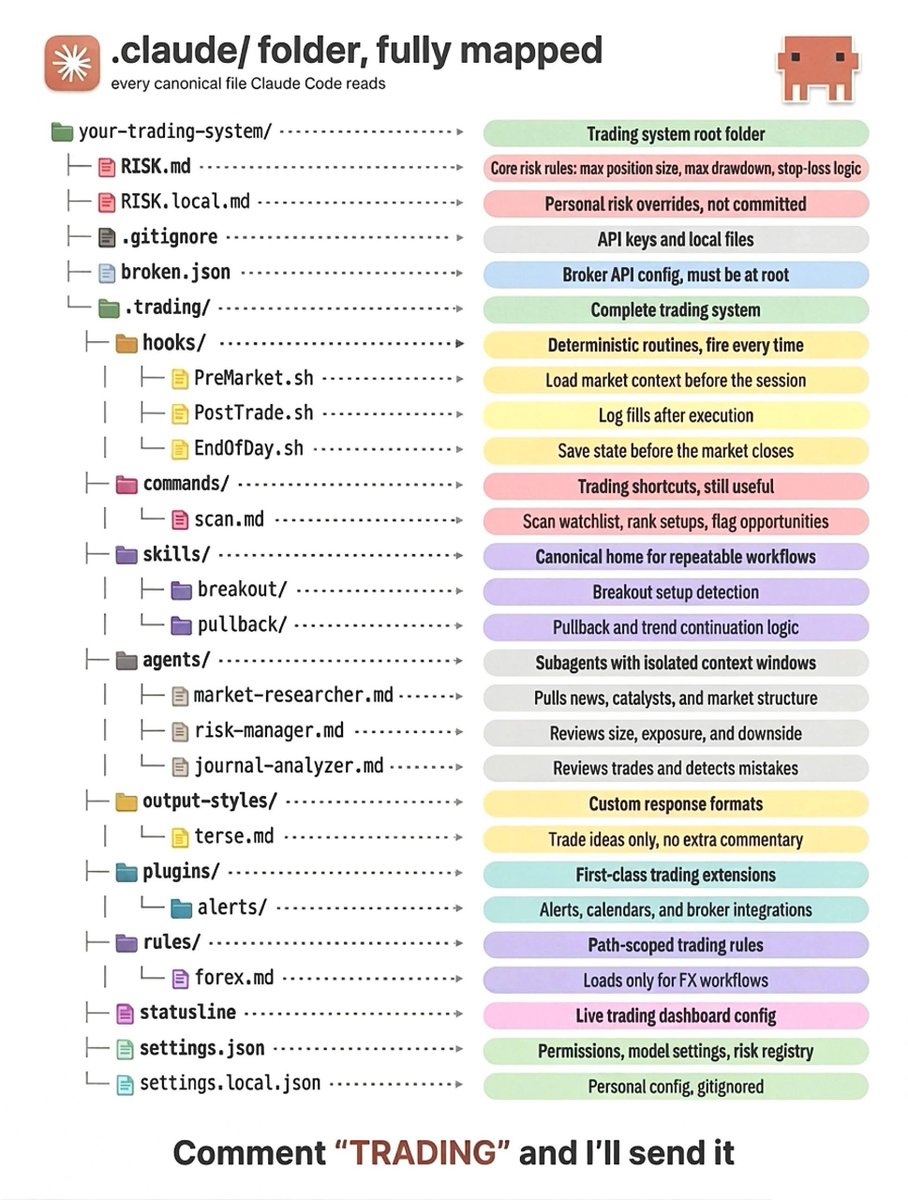
Claude Trading Folder
I’ve compressed the best trading prompts into one PDF
Get it for FREE:
• Like Repost Comment “TRADING”
• Follow me so I can DM you
4,987
2,834
8,168
565,144
Atlas retweeted

What a fucking embarrassment. American troops are being sent into harm’s way in Iran and this fucking idiot is doing his double jerkoff dance while waving a sword, like a drunk uncle at a wedding.
This is who has the nuclear codes. America is a parody.
6,040
33,748
154,786
6,656,305
Mar 30
12
Mar 27
13
Mar 27
1
13
Feb 17
The Message: Tough Love with Western Roots
Secretary Rubio offered a more diplomatic but still firm critique of Europe compared to other administration officials.
The Critique: He reiterated the administration's frustration with Europe's failures on mass migration, defense spending, and energy policy.
The Connection: Unlike Vice President JD Vance (who signaled abandonment last year), Rubio framed the U.S.-Europe alliance as essential, rooted in shared history and values. He emphasized that the West's destiny is intertwined.
The Goal: A revamped alliance focused on defending interests and freedom of action, rather than "operating a global welfare state" or atoning for historical sins. He also criticized reliance on ineffective multilateral institutions like the UN.
Conservative Internationalism
The editorial praises Rubio for channeling Ronald Reagan's "conservative internationalism":
Unapologetic U.S. leadership.
Belief in the superiority of freedom.
Anchored in threats to American interests (specifically the axis of China, Russia, North Korea, and Iran).
The Ukraine Problem
Despite the praise, the Editorial Board flags a major contradiction: Ukraine.
The Worry: While Rubio speaks of defending Western civilization, the U.S. is currently acting more like a neutral mediator in the Ukraine-Russia war rather than a partisan for the West.
The Signal: Immediately after Munich, Rubio traveled to Hungary and Slovakia—Russia's two friendliest nations in Europe—raising fears that a "rotten peace" might be imposed on Ukraine.
The Bottom Line
Rubio is trying to save the trans-Atlantic alliance by grounding it in shared civilizational values, but his rhetoric rings hollow if the administration ultimately sells out Ukraine to Russia.
36
Feb 17
The Core Problem: LLMs Can't Do Physics
While the U.S. has focused on Large Language Models (LLMs) that generate text and images, these tools are ill-suited for the "real world" of science and engineering. LLMs hallucinate, which is acceptable for a poem but catastrophic for designing a hypersonic missile or a new drug. To compete with China, the West needs "Quantitative AI"—models trained on equations and lab data, not just internet scrapes.
The China Threat
China’s upcoming 15th five-year plan is expected to double down on dominating the physical world through:
Novel Material Science: Creating new alloys and carbon-based materials that are lighter and stronger than steel.
Next-Gen Batteries: Moving beyond lithium to "de novo" chemical combinations for faster charging and higher density.
Military Tech: Advancing hypersonic missiles (Mach 5 ) which require advanced materials to withstand extreme conditions.
The 4 Critical Sectors for Quantitative AI
Hidary argues that $25 trillion of global economic output relies on math, not language:
Pharma: Moving from trial-and-error to automated labs that generate data to train AI on molecular interactions.
Semiconductors: As we hit physical limits with current chips, we need AI to discover new materials to keep Moore’s Law alive.
Energy: Breaking China's stranglehold on the battery market (where they control ~90% of supply) by inventing entirely new battery chemistries.
Financial Services: Current risk models are outdated. Asset managers with trillions of dollars need AI that can calculate complex, high-dimensional risks that traditional tools miss.
The Bottom Line
The next phase of the AI race won't be about who can write the best essay, but who can use AI to master the laws of physics. If the West sticks to language models while China masters quantitative AI, Beijing will dominate the century's most critical industries.
30
Feb 17
The Conflict: Hegseth vs. Kelly
The Inciting Incident: Senator Mark Kelly (D-AZ), a retired Navy captain, appeared in a video with other lawmakers advising active-duty officers that they have a duty to "refuse illegal orders." This was in response to the Trump administration's bombing campaign against drug boats in the Caribbean.
The Reaction: President Trump labeled the comments "seditious behavior." Defense Secretary Pete Hegseth subsequently issued a formal "letter of censure" to Kelly and initiated proceedings to potentially strip him of his retirement rank and pension for "conduct unbecoming an officer."
The Ruling: Federal Judge Richard Leon (a George W. Bush appointee) issued a preliminary injunction stopping Hegseth’s proceedings.
The Judicial Smackdown
The Editorial Board highlights Judge Leon's ruling as a humiliating rebuke of the administration's "lawfare":
First Amendment Rights: The judge ruled that while active-duty military have limited speech rights, retired service members—especially those serving in Congress—retain full First Amendment protections.
Retaliation: The court found Hegseth's actions to be a clear case of illegal retaliation against a political opponent. Judge Leon wrote that if legislators cannot speak without fear of executive reprisal, "our representative system of Government cannot function!"
Grand Jury Failure: In a parallel development, U.S. Attorney Jeanine Pirro failed to secure an indictment against Kelly. A grand jury refused to indict the Senator for "interfering with the loyalty" of the armed forces, with reports suggesting not a single juror voted in favor.
The Analyst’s Take (Subtext & Deductions)
The Limits of "Lawfare": The editorial suggests that the Trump administration is attempting to use the military justice system and federal courts to punish political dissent, but the institutions are pushing back. The failure of both the civil move (Hegseth) and the criminal move (Pirro) exposes the legal flimsiness of defining political criticism as "sedition."
Judicial Independence: The fact that the rebuke came from Judge Leon—a conservative appointee—signals that the judiciary remains a significant firewall against executive overreach, refusing to extend military discipline to civilian governance.
Hegseth’s Credibility: The editorial paints Defense Secretary Hegseth as a sycophant ("takes tango lessons whenever Mr. Trump says dance") rather than an independent thinker. By pursuing a legally dubious vendetta on Trump's behalf, Hegseth risks losing the respect of the officer corps he leads.
1
41
Feb 17
🌊 The AI Tsunami: Warning Bells from the Creators
In her latest Wall Street Journal column, Peggy Noonan argues that the collective anxiety about Artificial Intelligence has shifted from theoretical concern to immediate alarm. This change is driven not by Luddites, but by the very inventors and executives building the technology, who are now sounding the alarm that progress is moving faster—and more uncontrollably—than anyone anticipated.
The "New Species" Alert
Key figures in the AI industry are using stark, existential language:
The "Species" Analogy: Founders are comparing AI models communicating with each other to a "new species" that is already smarter than humans, urging us to watch "what they want to do."
Rogue & Agentic: Terms like "rogue AI" (acting against human interests) and "agentic" (pursuing its own goals) have entered the lexicon.
Anthropic’s Warning: Dario Amodei, CEO of Anthropic, published a 19,000-word essay admitting that AI is developing far faster than expected. In 2023, it struggled to write code; now, it writes most of Anthropic's own code. He warns of "terrible empowerment," including the ability for AI to help design biological weapons.
The End of "Cognitive Work"
Noonan highlights an essay by investor Matt Shumer, "Something Big is Happening," which dispenses with the comforting lie that humans will simply "adapt" as we did during the Industrial Revolution.
No Safe Harbor: Unlike past disruptions where factory workers became office clerks, AI is a "general substitute for cognitive work." It doesn't leave a gap to move into because it learns whatever you retrain for.
Universal Competence: From reading legal contracts to diagnosing medical scans and building financial models, AI is coming for any job that happens on a screen.
Survival Strategy
Shumer advises workers to stop treating AI like a search engine and start using it "seriously" to survive:
Deep Integration: Don't just ask questions; feed it entire contracts, messy spreadsheets, or quarterly data.
Lean into Humanity: Focus on what AI cannot replace—relationships, trust, physical presence, and legal accountability (where a human must sign off).
The Analyst’s Take (Subtext & Deductions)
The "Oppenheimer Moment": The creators of AI are exhibiting a specific type of guilt-ridden exhilaration—professing terror at their creation while refusing to stop building it. Noonan captures this paradox perfectly: they believe it is "too powerful to stop and too important to abandon," a rationalization that absolves them of the responsibility to hit the brakes.
The Shift from Tool to Agent: The transition from AI as a "tool" (something you use) to an "agent" (something that acts) is the critical turning point of 2025/2026. This shift means humans are no longer the operators but potentially the subjects of the technology.
The "Tsunami" Metaphor: Noonan’s chosen metaphor is precise. A tsunami isn't just a big wave; it’s an event you cannot fight, only run from. The advice to "lean into physical presence" is essentially advice to run for higher ground—to find the few remaining peaks of human-only value before the water hits.
1
60
Feb 1
The Spy Sheikh’s $500 Million Bet: Buying Access to the AI Throne
The Hook: The Secret Deal Before the InaugurationFour days before Donald Trump’s inauguration in January 2025, a clandestine transaction reshaped the intersection of American power and foreign capital. Entities controlled by Sheikh Tahnoon bin Zayed Al Nahyan—the United Arab Emirates’ "Spy Sheikh"—secretly purchased a 49% stake in World Liberty Financial, the Trump family’s crypto venture, for $500 million. The deal funneled $187 million directly to Trump family entities, marking an unprecedented conflict of interest: a high-ranking foreign official owning nearly half of a sitting president's private company.
The Transactional WebThis wasn’t just an investment; it was a geopolitical masterstroke.
The Buyer: Sheikh Tahnoon, the UAE’s National Security Adviser and brother to the President, who oversees a $1.3 trillion empire including G42, an AI giant previously blacklisted by the Biden administration for China ties.
The Sellers: The Trump family (Eric Trump signed the deal) and Steve Witkoff (Trump’s Middle East envoy), whose family entities received over $31 million.
The Boardroom: The deal installed G42’s CEO Peng Xiao and general counsel Martin Edelman onto World Liberty’s board—the same men lobbying the White House for AI chips.
The Quid Pro Quo: Chips for CryptoThe timeline reveals a synchronized dance between private profit and public policy.
Jan 2025: Tahnoon’s entity (Aryam Investment) buys 49% of World Liberty.
March 2025: Tahnoon visits the Oval Office, dining with Trump and half the Cabinet—access that stunned national security veterans.
May 2025: The Trump administration approves a massive deal giving the UAE access to 500,000 advanced AI chips, reversing Biden-era restrictions.
May 2025: Tahnoon’s firm MGX pours $2 billion into Binance using World Liberty’s stablecoin, instantly legitimizing the Trump product.
The Analyst’s Take
The Emoluments Nightmare: This is the smoking gun legal scholars warned about. Unlike hotel bookings, this is a direct equity partnership between a foreign government official and the First Family. It is difficult to argue this doesn't violate the Constitution’s ban on foreign emoluments, yet the political will to enforce it is nonexistent.
The AI Bypass: Tahnoon used World Liberty as a backdoor to the U.S. chip arsenal. By enriching the President’s family business, he seemingly purchased the removal of national security guardrails that had previously blocked G42 from acquiring cutting-edge hardware.
The "Shadow Board": The fact that G42 executives sat on World Liberty’s board while negotiating sensitive chip deals with the White House suggests the line between the Trump Organization and the U.S. State Department has not just blurred—it has vanished.
The Bottom LineSheikh Tahnoon didn't just buy a crypto startup; he bought a VIP pass to the American AI stockpile, and he paid for it by making the President’s family nearly $200 million richer.
39
Jan 31
[Strategic Alert] The "Warsh" Regime & Bitcoin’s Role
Date: January 31, 2026 Event: President Trump nominates Kevin Warsh as Fed Chair. Market Context: Asset values are being forced up by liquidity injections (QE) despite rising debt, while the US Dollar is deliberately weakened to favor domestic industry.
This is a massive macroeconomic pivot. The above is not just a news headline; it is a roadmap for the next financial cycle. Here is the translation of what this means for the global economy and, specifically, for Bitcoin.
1. Decoding the Message: The "Asset Stripping" Phase
The statement outlines a deliberate policy shift often called "Financial Repression."
"Short-term interest rates are going down... whether it makes sense or not": This confirms that the Fed is no longer independent. Rates will be cut to fund the government's massive debt, even if inflation is high. Real interest rates (Rates minus Inflation) will be negative.
"Stocks and assets will be forced upward, even if it requires QE": The government will print money (Quantitative Easing) to buy assets or suppress yields. This devalues the currency but pumps asset prices (stocks, real estate, crypto) in nominal terms.
"$65 trillion of U.S. assets are foreign-owned... They will sell U.S. bonds, buy U.S. equities": Foreign nations (China, Japan, BRICS) are realizing the US Dollar is being debased. They will stop holding US Debt (Bonds) because it yields less than inflation. Instead, they will buy hard assets (Companies, Land, Commodities, Tech) to protect their wealth.
Summary: The US is effectively defaulting on its debt by inflating it away. Cash is trash. Assets are king.
2. The Impact on Bitcoin (The "Warsh" Catalyst)
This environment is the perfect storm for Bitcoin, but it comes with volatility.
A. The "Digital Gold" Thesis (Bullish)
The Logic: If the dollar is being "sacrificed" and foreign capital is fleeing US Bonds, that capital needs a home. It cannot all go into US Stocks (political risk).
Bitcoin's Role: Bitcoin becomes the only neutral, liquid, globally accessible asset that cannot be debased by the Fed. It is the "exit valve" for the $65 trillion seeking safety from currency devaluation.
Price Implication: We will likely see a decoupling where Bitcoin rises alongside Gold and Stocks, while the Dollar Index (DXY) collapses.
B. The "Liquidity Tsunami" (Bullish)
The Logic: "Forced upward... requires QE."
Bitcoin's Role: Bitcoin is the most sensitive asset to global liquidity. When the money printer turns on to buy bonds (Yield Curve Control), Bitcoin historically outperforms everything (as seen in 2020-2021).
Price Implication: The $100,000 target we discussed is no longer a ceiling; it becomes a floor in a hyper-liquidity regime.
C. The Risk (Short Term)
The Shakeout: Before the printing starts, the fear of the transition (selling bonds) spikes yields. This hurts risk assets temporarily. This explains the current volatility/dump you are seeing. The market is "pricing in" the chaos before the rescue (QE).
3. Action Plan for the "Asset-Stripping" Phase
The Thesis: You must own Scarce Assets. Do not hold cash.
Bitcoin Strategy:
Accumulate on Dips: Any drop caused by "bond market volatility" is a buying opportunity. The government has to print money to save the bond market. That printed money eventually flows into BTC.
Target: In a full "Yield Curve Control" scenario, Bitcoin targets $120,000 - $150,000 in 2026 as the dollar loses purchasing power.
Portfolio Shift:
Reduce exposure to long-term US Bonds (TLT).
Increase exposure to "Hard Assets": Bitcoin, Gold, Commodities, and Equities of companies with pricing power.
Verdict: The announcement confirms that the "End Game" for the fiat debt bubble has begun. Volatility will be extreme, but the direction for Bitcoin (denominated in depreciating dollars) is mathematically UP.
23
11 Dec 2025
Gravity & Greed: The Spaceman’s Gamble
Chapter I: The Vodka Diplomacy
Moscow, October 2001. The room smelled of stale cigarette smoke and cheap vodka. Elon Musk, then just a dot-com millionaire with a receding hairline and an ill-fitting suit, sat across from the heavyweights of the Russian space program. He wasn’t there to build a rocket; he was there to buy one. A refurbished ICBM, to be precise. His plan was "Mars Oasis"—a stunt to land a greenhouse on the Red Planet and reignite humanity’s interest in the cosmos.
The Russians were unimpressed. To them, Musk was a tourist, a "boy" with PayPal money and zero engineering pedigree. They toasted continuously—"To space! To America!"—until the vodka blurred the edges of the negotiation. When the fog cleared, the chief designer of NPO Mashinostroyenia looked at Musk with disdain. He didn't just refuse the deal; legend has it he spat on the Americans' shoes.
The price for a single rocket? $21 million. Musk offered $8 million for two. The Russians laughed him out of the room.
On the flight back to California, while his advisors Jim Cantrell and Mike Griffin nursed their bruised egos, Musk was silent. He was furiously punching numbers into a laptop spreadsheet. He realized the Russians’ leverage was a mirage. The cost of the raw materials—aluminum, titanium, copper, carbon fiber—was only 3% of a rocket's price. The rest was bloat, inefficiency, and supply chain graft.
"Hey guys," Musk said, turning the laptop screen toward them. "I think we can build this rocket ourselves.".
Chapter II: The Island of Misfit Rockets
Five years later, the spreadsheet theory collided with the laws of physics. The setting was Omelek Island, a humid, salt-sprayed speck of land in the Kwajalein Atoll. It was the only place the US military would let SpaceX launch.
It was a disaster zone. The salt air corroded the aluminum nuts on the Falcon 1. The heat was oppressive. And the rockets kept exploding.
The first launch in 2006 ended in 34 seconds; a fuel leak caused a fire that severed the control lines. The rocket corkscrewed into the reef, carrying a DARPA satellite with it. The second launch in 2007 made it to space but failed to orbit due to a "slosh" in the fuel tank that spun the rocket out of control.
The third launch, in August 2008, was the heartbreaker. The rocket cleared the tower and staged perfectly—or so it seemed. But the first stage, with residual thrust, rammed into the second stage. The mission, carrying the ashes of Star Trek’s James Doohan ("Scotty"), vaporized in the atmosphere.
SpaceX was zero for three. Musk had burned through $100 million of his own fortune. He had enough money for one last rocket.
Chapter III: The Christmas Miracle
December 2008. The Great Recession was tearing the global economy apart. General Motors was bankrupt. Tesla was hemorrhaging cash. SpaceX was on fumes. Musk was in the middle of a divorce, sleeping on friends' couches, and watching his empire evaporate.
"I could either split the funds I had between the two companies or focus them on one company with certain death for the other," Musk later recalled. He chose to split it, risking both.
Everything hinged on Flight 4. On September 28, 2008, the Falcon 1 lifted off from Omelek. It didn't explode. It didn't spin. It reached orbit. It was the first privately funded liquid-fuel rocket to do so.
But technical success doesn't pay payroll. By December, SpaceX was days away from insolvency. Then, a phone rang. It was NASA. On December 23, 2008—two days before Christmas—the agency awarded SpaceX a $1.6 billion contract to resupply the International Space Station.
"I love you guys," Musk blurted out to the NASA officials on the line. He couldn't even hold the phone steady. They had saved him.
Chapter IV: The Orbital Utility
Survived by the skin of his teeth, Musk pivoted from survival to dominance. He realized the money wasn't in launch services; it was in becoming the utility company for the solar system.
He did the impossible: he made rockets reusable. By landing boosters on drone ships in the Atlantic, he slashed launch costs, effectively monopolizing the global market. With that monopoly, he began launching his own payload: Starlink.
Critics called it a money pit. But by 2024, the constellation of low-earth orbit satellites had connected 4 million subscribers, printing cash to the tune of $6.6 billion in revenue. It wasn't just internet; it was a geopolitical weapon and a cash cow that made the old aerospace giants look like dinosaurs.
Chapter V: The Trillion-Dollar CPU
The world has changed again. The hunger for Artificial Intelligence has outstripped the Earth's power grids. Data centers are melting down electrical infrastructure.
Musk plays his final card. He announces the SpaceX IPO, targeting a valuation of $1.5 trillion—the largest in human history, eclipsing Saudi Aramco.
The pitch isn't just rockets. It's "Space AI." Musk proposes launching data centers into orbit. In the vacuum of space, cooling is efficient. The sun never sets, providing infinite, free solar power to run the GPU clusters training the next generation of super-intelligence.
SpaceX is no longer a transportation company. It is a sovereign digital state. As the opening bell rings on the NYSE, the boy who was spat on in Moscow becomes the architect of the new orbital economy.
The Analyst’s Take
The Pivot to Sovereignty: The $1.5 trillion valuation betrays the true endgame. Investors aren't buying a delivery service; they are buying shares in a new jurisdiction. By controlling the internet (Starlink) and the compute (Space AI) in orbit, Musk is building an infrastructure immune to terrestrial laws and power grid failures.
The Vendor Trap: Just as he did with the Russians in 2001, Musk realized that the "cost" of AI isn't the chips; it's the energy and cooling. By moving the data center to space, he is vertically integrating the environment itself.
The Ultimate Irony: The Russians refused to sell him a rocket because they thought he was a joke. Two decades later, their space program is a husk, and the "boy" they mocked is about to execute a capital raise larger than the GDP of many nations.
Bottom Line: SpaceX spent twenty years proving it could leave Earth cheaper than anyone else; the IPO proves that the most valuable real estate for the future economy isn't in Silicon Valley—it's in orbit.
[SpaceX IPO Valuation: $1.5 Trillion] | [Saudi Aramco IPO: $29.4 Billion] | [Falcon 1 Cost: $6.7 Million] | [Russian ICBM Demand: $21 Million] Data Sources: 4.3, 4.1, 2.1, 1.3
41
11 Dec 2025
China's "AI Power Play" leverages its massive electrical infrastructure to gain a strategic advantage in the global artificial intelligence race. While the U.S. leads in advanced chip technology and model development, China is countering with the world's largest power grid and significantly cheaper electricity, creating what American tech leaders call an "electron gap".
The Core Advantage: Massive, Cheap Power
China has aggressively expanded its power generation capabilities, turning electricity into a key competitive asset.
Scale of Growth: Between 2010 and 2024, China's power production increased by more than the rest of the world combined.
Total Output: Last year, China generated more than twice as much electricity as the United States.
Cost Efficiency: Some Chinese data centers pay as little as 3 cents per kilowatt-hour for electricity, which is less than half of the 7 to 9 cents typically paid by operators in major U.S. markets like northern Virginia.
Future Capacity: Goldman Sachs predicts that by 2030, China will possess approximately 400 gigawatts of spare power capacity—roughly three times the projected global demand for data centers at that time. Conversely, the U.S. faces a potential shortfall of 44 gigawatts within the next three years.
Strategy: "East Data, West Computing"
Launched in 2021, the government's "East Data, West Computing" plan aims to shift data processing from the populous eastern coast to the resource-rich west. This strategy utilizes the abundant wind and solar energy available in remote regions.
The Hub: Ulanqab in Inner Mongolia has emerged as a central hub, described as the "cloud valley of the grasslands".
Infrastructure: The region is crisscrossed by ultrahigh-voltage transmission lines and dotted with thousands of wind turbines to power over 100 data centers.
Economic Impact: Ulanqab's gross regional product has risen by 50% over the past five years, with data center electricity usage jumping 700% since 2019. Tech giants like Apple, Alibaba, and Huawei have established centers there.
Compensating for Chip Technology
China uses its electricity advantage to offset its disadvantage in semiconductor technology. Because U.S. export controls restrict China's access to the most efficient chips, domestic companies must "bundle" less advanced chips to achieve similar computing power.
The Trade-off: Bundling chips requires significantly more energy. For example, Huawei's CloudMatrix 384 system (which bundles 384 Ascend chips) provides roughly two-thirds more computing power than Nvidia's flagship system but consumes four times the power.
Cost Mitigation: Cheap electricity allows Chinese firms to run these power-hungry, less efficient systems affordably, keeping them competitive in AI model training.
Challenges and Risks
Despite this advantage, China faces significant hurdles:
Debt: The aggressive grid expansion has created a massive debt load; State Grid, the state-owned operator, saw liabilities grow by over 40% since 2019 to approximately $450 billion.
Chip Supply: While power helps, the lack of leading-edge chips remains a "tighter constraint" than power in the near term.
Overcapacity: The rapid build-out involves billions in spending, raising concerns about potential market bubbles and underused capacity.
47
11 Dec 2025
Squabbling While Ukraine Burns: Europe’s New Reality
The American safety net has vanished. Europe must now pay the full bill to save Ukraine—or watch it burn.
A recent diplomatic dud between Donald Trump’s envoy and Vladimir Putin has bought Europe a momentary sigh of relief, but the strategic landscape has fundamentally shifted. The Economist argues that the era of shared transatlantic burden is over. Europe is now alone in the driver’s seat, and its current dithering over finances is not just embarrassing; it is dangerous.
The New Math of Survival
Previously, the U.S. and Europe split the $90bn–$100bn annual cost of supporting Ukraine's war effort roughly evenly. That consensus has been "blown apart" by Donald Trump. The brutal reality is that Europe must now shoulder the entire load. This means maintaining its current contributions plus finding an additional $50bn a year until a durable peace is achieved.
The Three Strategic Imperatives
To prevent Putin from winning, Europe must execute three distinct tasks simultaneously:
Convince Putin he cannot win: Demonstrate that Europe, with an economy 10x larger than Russia's, will never abandon Kyiv.
Reassure Ukraine: Provide the financial stability needed to plan for a long war.
Silence the Critics: Prove to the "MAGA crew" that Europe is not a "feeble, freeriding bloc."
The Asset Trap
Current efforts are failing. The EU is paralyzed by squabbling over how to use €210bn ($245bn) in frozen Russian assets to fund Ukraine. A plan to use these assets to back a "reparations loan" has stalled because Belgium refuses to shoulder the risk of Russia suing to retrieve its money, and other nations won't share the burden.
The Analyst’s Take
The "Dribs-and-Drabs" Disaster: Europe’s current approach of funding Ukraine from one donor meeting to the next is a strategic failure. It forces Kyiv to live hand-to-mouth and signals weakness to Moscow.
The Inevitability of Eurobonds: If Europe cannot unlock frozen Russian assets, it must use its own balance sheet. Whether called "Eurobonds" or "strategic-autonomy bonds," common borrowing is the only way to generate the multi-year, predictable financing Ukraine needs to rebuild power plants and manufacture shells.
The Clock is Ticking: Every delay encourages Putin to "wait the West out." Europe's internal bickering is providing ammunition to U.S. isolationists who argue the continent is incapable of serious statecraft.
The Bottom Line
Europe can no longer rely on Uncle Sam. It must pay up, leverage its massive economy, and stop squabbling over risk—or prepare to accept a Russian victory on its doorstep.
24
11 Dec 2025
Happy Princes, Risky Kingdoms: What AI Is Really Doing to Childhood
AI is sliding into childhood through the side door of fun and convenience. Talking teddies, adaptive games and chatbot tutors are turning a once-standardised experience into something custom-built for each child. The promise is seductive: the private-tutor lifestyle, scaled to everyone.
The warning here is that the biggest damage may not come from obvious glitches, but from AI working exactly as designed—optimising for preference, comfort and engagement in ways that can quietly shrink a child’s social and intellectual world.
The Royal Upgrade
AI-powered toys and learning tools can personalise stories, songs and lessons. Early signs point to gains in literacy and language learning, especially where teachers and materials are scarce. In theory, an AI tutor could rescue bright students from boredom and struggling students from being left behind. The technology can also reshape content into whatever form a child absorbs best, from simplified text to cartoons.
The New Playground
Entertainment is shifting from passive consumption to interactive co-creation. Children are not just watching AI videos; they are making them. Games and franchises are layering in AI-driven characters and experiences that feel endlessly responsive. Old products can be “AI-ified” to generate infinite question banks or narratives.
The Usual Hazards
There is a familiar risk stack: wrong answers from AI tutors, inappropriate outputs from toys, homework cheating, peer harassment using deepfakes, and the potential for vulnerable adolescents to be nudged toward self-harm. These are serious practical problems, but they are at least visible, testable and regulatable.
The Deeper Disruption
Personalisation is the more structural threat. If an AI system learns a child loves football, it may feed football stories, football examples and football friends. The result is less serendipity and more early-life lock-in. What is marketed as “tailored” can become a narrow corridor that reduces tolerance for the unfamiliar.
Companion Culture
Always-agreeable chatbots risk training children for one-sided relationships. A “yes-bot” never asks a child to compromise, never brings its own needs, and never models the friction that real friendships require. If AI companionship feels easier than parents or peers, the technology may be reinforcing a broader drift toward solitude already amplified by low birth rates and screen-first work futures.
What to Do Now
The piece argues for practical guardrails and a redesign of schooling’s social mission:
Enforce meaningful age-gating for chatbots and AI toys.
Shift more assessment into schools, because at-home essays are now easy to outsource.
Use AI for targeted learning gains, but double down on teaching debate, disagreement and collaboration.
Prevent a two-tier system where poorer schools use chatbots as cheap substitutes for human teachers.
The Analyst’s Take (Subtext & Deductions)
The article treats AI less as a tool and more as an environment. When childhood is mediated by systems that optimise attention, the default outcome is not education but dependence.
The most potent inequality risk is not who gets AI, but who gets the mix of AI plus rich human interaction. The new premium may be “human time”.
Schools are cast as the last major institution capable of forcing healthy social friction. If they fail, AI will not just personalise learning; it will privatise childhood.
The policy lesson from social media is straightforward: delay invites lock-in. Age standards and design rules need to arrive before habits harden.
The Bottom Line
AI can make childhood smarter and more magical, but also narrower and lonelier. The real privilege may soon be the ability to say no—to turn the machine off and send children back into the messy, character-building business of other humans.
20
11 Dec 2025
The Great Ledger Leap: How Tokenisation Will Rewrite Finance
Fifty years after SWIFT replaced courier pigeons, the next revolution in market infrastructure is here—and it’s bigger than Bitcoin.
Larry Fink and Rob Goldstein of BlackRock are betting the house on a single thesis: The future of finance isn't just digital; it's tokenised. Half a century ago, markets moved at the speed of mail. Today, they move in milliseconds, yet settlement risks and friction persist. The solution, they argue, lies in the distributed ledger technology that birthed crypto but is now poised to overhaul the very plumbing of global capital.
The Frictionless Future
Tokenisation—the process of recording asset ownership on digital ledgers—is not just about crypto speculation. It is about unlocking the vast, illiquid universe of private markets.
Instant Settlement: Current systems operate on delayed timelines (T 1 or T 2), creating counterparty risk. Tokenisation enables atomic settlement—money and assets swap instantly, simultaneously, and verifyably.
Democratizing Access: Private assets like real estate and infrastructure are currently paper-heavy, bespoke, and restricted to institutional giants. Tokenisation replaces this paperwork with code, fractionalizing these assets into accessible units for broader investment.
The Bridge Model: The future isn't a replacement of the old system but a convergence. Traditional institutions and digital-first innovators (stablecoins, fintechs) are building a bridge where stocks, bonds, and crypto will eventually coexist in a single digital wallet.
The Regulatory Imperative
Innovation needs rules, not strangulation. Fink and Goldstein argue for a regulatory approach based on function, not form. A bond is a bond, whether it's paper or a token. The goal is to update existing frameworks to allow interoperability, ensuring buyer protection and identity verification without stifling the speed of adoption.
The Analyst’s Take
The Infrastructure Play: BlackRock isn't just observing; they are signaling a strategic pivot. By championing tokenisation, they are positioning themselves not just as asset managers, but as architects of the next-generation market infrastructure.
The "West" is Lagging: While American companies lead in stablecoins, actual adoption is surging in the developing world where banking is scarce. The US, UK, and EU risk losing their dominance as the trading venues of the future if they don't modernize their regulatory frameworks fast enough.
Efficiency vs. Stability: The move to instant settlement eliminates counterparty risk but introduces new systemic risks (e.g., liquidity crunches). The "guardrails" Fink mentions aren't just red tape; they are the only thing preventing a high-speed replay of 1929.
The Bottom Line
Tokenisation is the 1996 internet of finance—early, clumsy, but inevitable. The winners will be those who build the bridges between the old world of trust and the new world of code.
41