
Joined March 2013
- Tweets 2,378
- Following 407
- Followers 30,662
- Likes 3,882
399 Photos and videos









Pinned Tweet

May 30
1. Homosexuals have privileged access to God.
2. Orthodox religions (e.g. Christianity, Hinduism) favor sublimated homosexuality over active heterosexuality.
3. Many of the great religious leaders themselves were queer.
These are the surprising claims of my guest, Rice professor Jeff Kripal. Jeff grew up Catholic and went to seminary but had to leave because, as a straight man, he was alienated by the overwhelmingly homoerotic environment.
Jeff then dedicated his early career to investigating the unlikely bedfellows of mysticism and homosexuality and found the same pattern again and again not just in Christianity, but Hinduism, Sufism and every major mystical tradition: whenever a tradition elevates celibacy it attracts homosexuals who would otherwise be persecuted in society. These homosexuals would, in turn, transmute their sublimated homoeroticism into spiritual practice and form the vanguard of the religion. This is Jeff’s reading of not just religious followers but religious leaders like Jesus and Ramakrishna themselves!
While I struggle to get onboard with the extent of Jeff’s conclusions, his explanations helped illuminate a puzzle I’ve been pondering for a long time: what explains the overwhelming creative contributions of homosexuals?
• Why does pederasty pop up in every elite culture including our own (Hollywood, SF, British boarding schools)?
• Why is this group, less than 3% of society, so dominant in creative fields such as academia, media, and technology?
• Why are homosexuals overrepresented in positions of power, while being persecuted in almost every pre-modern society?
Even if I remain unconvinced about the full extent of Jeff’s otherworldly thesis, his arguments have given me great insight into homosexuals’ secular creativity.
Timestamps:
00:00 0. Introduction
11:38 1. Why Mysticism Selects for Same-Sex Desire
21:06 2. A Queer Reading of Jesus
32:47 3. Why a Sexless Jesus Won Out
41:27 4. Jeff’s Encounter with a Hindu Diety
53:30 5. Mysticism as Hedonism
1:04:07 6. Plato on Love, Sex, and Divinity
1:07:40 7. Sex Runs Through the Supernatural
97
212
1,754
243,562
Johnathan Bi retweeted
May 30
1. Homosexuals have privileged access to God.
2. Orthodox religions (e.g. Christianity, Hinduism) favor sublimated homosexuality over active heterosexuality.
3. Many of the great religious leaders themselves were queer.
These are the surprising claims of my guest, Rice professor Jeff Kripal. Jeff grew up Catholic and went to seminary but had to leave because, as a straight man, he was alienated by the overwhelmingly homoerotic environment.
Jeff then dedicated his early career to investigating the unlikely bedfellows of mysticism and homosexuality and found the same pattern again and again not just in Christianity, but Hinduism, Sufism and every major mystical tradition: whenever a tradition elevates celibacy it attracts homosexuals who would otherwise be persecuted in society. These homosexuals would, in turn, transmute their sublimated homoeroticism into spiritual practice and form the vanguard of the religion. This is Jeff’s reading of not just religious followers but religious leaders like Jesus and Ramakrishna themselves!
While I struggle to get onboard with the extent of Jeff’s conclusions, his explanations helped illuminate a puzzle I’ve been pondering for a long time: what explains the overwhelming creative contributions of homosexuals?
• Why does pederasty pop up in every elite culture including our own (Hollywood, SF, British boarding schools)?
• Why is this group, less than 3% of society, so dominant in creative fields such as academia, media, and technology?
• Why are homosexuals overrepresented in positions of power, while being persecuted in almost every pre-modern society?
Even if I remain unconvinced about the full extent of Jeff’s otherworldly thesis, his arguments have given me great insight into homosexuals’ secular creativity.
Timestamps:
00:00 0. Introduction
11:38 1. Why Mysticism Selects for Same-Sex Desire
21:06 2. A Queer Reading of Jesus
32:47 3. Why a Sexless Jesus Won Out
41:27 4. Jeff’s Encounter with a Hindu Diety
53:30 5. Mysticism as Hedonism
1:04:07 6. Plato on Love, Sex, and Divinity
1:07:40 7. Sex Runs Through the Supernatural
97
212
1,754
243,562
May 30
1. Homosexuals have privileged access to God.
2. Orthodox religions (e.g. Christianity, Hinduism) favor sublimated homosexuality over active heterosexuality.
3. Many of the great religious leaders themselves were queer.
These are the surprising claims of my guest, Rice professor Jeff Kripal. Jeff grew up Catholic and went to seminary but had to leave because, as a straight man, he was alienated by the overwhelmingly homoerotic environment.
Jeff then dedicated his early career to investigating the unlikely bedfellows of mysticism and homosexuality and found the same pattern again and again not just in Christianity, but Hinduism, Sufism and every major mystical tradition: whenever a tradition elevates celibacy it attracts homosexuals who would otherwise be persecuted in society. These homosexuals would, in turn, transmute their sublimated homoeroticism into spiritual practice and form the vanguard of the religion. This is Jeff’s reading of not just religious followers but religious leaders like Jesus and Ramakrishna themselves!
While I struggle to get onboard with the extent of Jeff’s conclusions, his explanations helped illuminate a puzzle I’ve been pondering for a long time: what explains the overwhelming creative contributions of homosexuals?
• Why does pederasty pop up in every elite culture including our own (Hollywood, SF, British boarding schools)?
• Why is this group, less than 3% of society, so dominant in creative fields such as academia, media, and technology?
• Why are homosexuals overrepresented in positions of power, while being persecuted in almost every pre-modern society?
Even if I remain unconvinced about the full extent of Jeff’s otherworldly thesis, his arguments have given me great insight into homosexuals’ secular creativity.
Timestamps:
00:00 0. Introduction
11:38 1. Why Mysticism Selects for Same-Sex Desire
21:06 2. A Queer Reading of Jesus
32:47 3. Why a Sexless Jesus Won Out
41:27 4. Jeff’s Encounter with a Hindu Diety
53:30 5. Mysticism as Hedonism
1:04:07 6. Plato on Love, Sex, and Divinity
1:07:40 7. Sex Runs Through the Supernatural
97
212
1,754
243,562
May 30
Join my newsletter if you want my long-form interviews delivered in your inbox invites to my IRL/online events: johnathanbi.com/
1
4
8,745
May 27
This is going to be an absolute banger
May 27

I’m making a TV show!
Here’s why: When I was moving to New York, I told my leasing agent that I wanted a place with charm and character. She told me that if that’s what I want, I need to look for apartments built before World War II.
“So you’re saying we’ve basically built nothing with charm and character in the past 80 years?”
“That’s right.”
This is happening all over the world. The same boring and generic style has spread to the entire world. 150 years ago, new buildings in Shanghai looked nothing like the ones in Rome or Tokyo or San Francisco or Buenos Aires. The architecture of each place was as varied as the landscape itself.
And it’s not just the sameness of the modern world that has me scratching my head, but also the carelessness behind so much of what’s built these days. We boast about the triumphs of technology and how advanced we are as a civilization, but why has our built environment regressed so much? Shouldn’t we use our wealth to make our streets more charming and delightful?
There’s lots of talk about how we’ve polluted the natural world, but what about how we’ve polluted the man-made world? We’ve filled our streets with ugly railings, benches, lampposts, and clutter.
We assume these things have to be boring, but they don’t. Good design can make everything, even bins and bus stops, charming. New things can be prettier than old things. The first step is believing it’s possible.
Something has changed. We’ve taken a dramatic turn, and the majority of people prefer what we used to build to what we build today. Just look at where people take photos. In New York it’s the steps of brownstones in the West Village; in San Francisco it’s the old Victorian homes; in London there’s tourists galore in front of those iconic red phone booths which remain on the streets, even though they don’t work anymore, because they’re so nicely designed that people like having them there.
All this is what inspired me to make a TV show.
First: a pilot episode which now has 5.4 million views, 23,000 comments, and 379,000 likes. It also has 241,000 YouTube subscribers from that one video, which is just about unheard of for a new channel.
And now: a full-on, six-episode series.
But when I pitched Hollywood on the idea, they said cultural series of this sort don’t work: “The only kinds of documentaries that get funded are about sports, music, nature, or true crime.” Huh? How can that be?
People are interested in culture. The problem is most culture documentaries are terrible. They fail in one of two ways: (1) people dumb down the ideas in patronizing ways, or (2) people use so much jargon and high-falutin language that it becomes boring and inaccessible.
This is why I’m producing this work. It’ll be called The Modern World, and it’ll be a tour of art & architecture through the eyes of Sheehan Quirke, who goes by @culturaltutor.
It’s our ambition to do for the man-made world what Planet Earth did for the natural world. To use cinematic imagery and simple language in a way that everybody can understand. And to be rigorous, but not in a way that feels like school or your know-it-all friend who never stops talking.
The potential here is huge. Architecture impacts literally every person on earth. What we build shapes the moods of people and the spirit of our culture.
We’ll film in six countries (the United Kingdom, Belgium, France, Germany, Italy, and the United States) to produce six 30-minute episodes which we hope to publish on a major streaming service. We’re currently in the fundraising stage, and production begins once we’ve raised the money.
It’s our mission to help people see the world more clearly, and in turn, make the world a more charming and delightful place to live in.
2
1
9
5,738
May 24
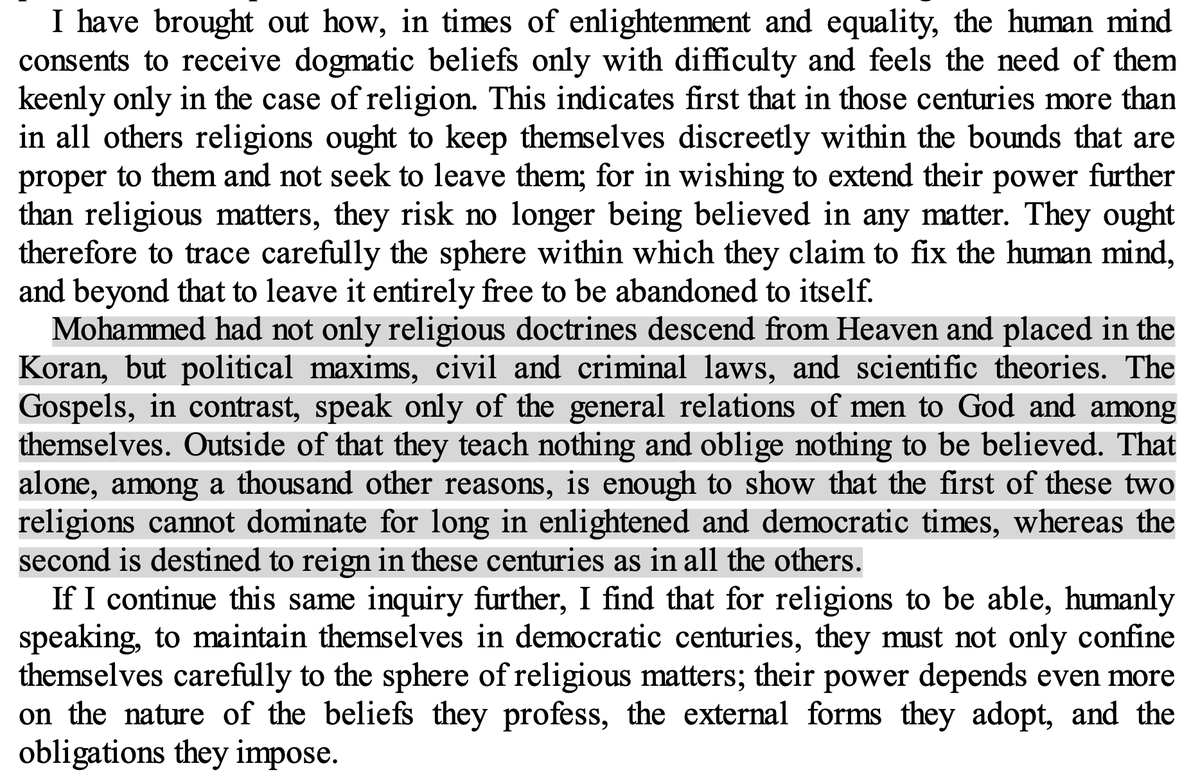
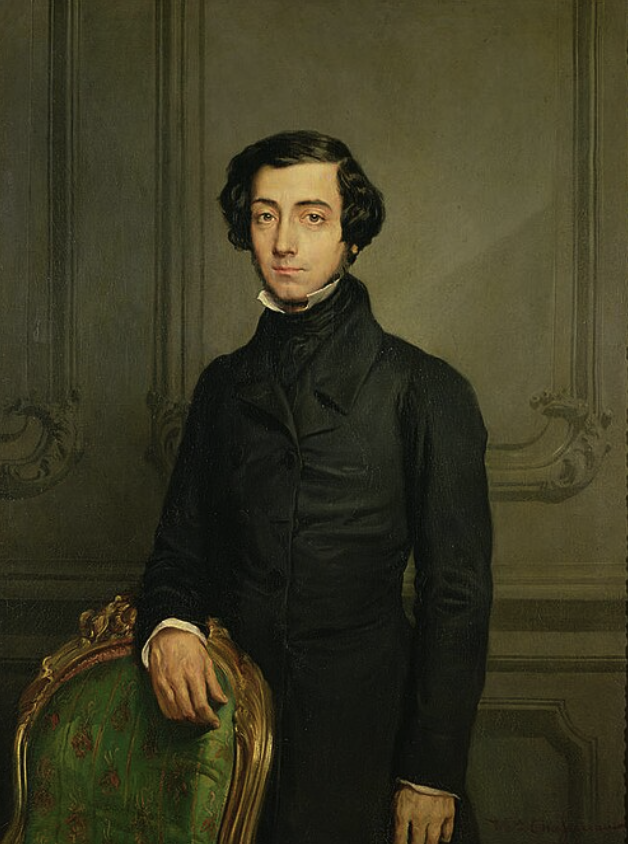
Tocqueville on why Islam is not compatible with enlightened, free societies whereas Christianity is.
14
15
70
7,488
May 18
What motivated the founding fathers to build America? Fame. They wanted fame.
"The love of fame" declares Hamilton in the Federalist Papers is "the ruling passion of the noblest minds." He likely had Washington in mind writing that.
Similarly, Franklin confesses in the beginning of his autobiography that it may look like he's writing it out of vanity… and he is! Because vanity "is often productive of good to the possessor, and to others that are within his sphere of action… it would not be altogether absurd if a man were to thank God for his vanity."
Of course, the type of fame that the founding fathers were after is different in kind from the fame most of our contemporaries are chasing. It is not just to be known, but to be respected by those whom you respect for accomplishing noble deeds. And I think we need to re-legitimize the desire for this kind of "fame" as a spur to attempt great deeds today. Our society advises us to "stop caring what others think" — while this is a good antidote for the clout-chasers of today, our blanket rejection of "vanity" veers too far in the other extreme. The task should be to discern what types of fame is worth and not worth pursuing.
In this interview, you will learn about the psychology, history, and blindspots of the American founding from one of its most respected commentators, the legendary UT Philosopher Thomas Pangle.
7
17
128
16,071
May 18
Join my newsletter if you want my long-form interviews delivered in your inbox invites to my IRL/online events: greatbooks.io
2
1,770
Johnathan Bi retweeted
May 4
Two years ago, I witnessed a Christian miracle, but I did not convert.
Not because I thought the miracle was fraudulent — I think it was genuine — but because of the existence of other genuine miracles in competing religious traditions. Even more frustrating, these traditions give the same unconvincing explanations of the others’ miracles: demons, fraud or, at best, lesser revelations.
Christian holy men tell me Buddhism has been hijacked by Satan. Buddhist monastics tell me Christ is a Bodhisattva for a lesser civilization not ready for the ultimate truth. I don’t find any of these answers compelling. So how is one to decide between competing religious claims?
This is the burning question that has motivated my seeker’s journey for the past few years and my guest Rice University’s Jeff Kripal has given me the most compelling response yet. After two years of talking with every religious scholar/practitioner/monastic I could find, it is this interview that I find most convincing by far. He figured it out.
Now let me be clear, what I find so compelling is less so Jeff’s answer, and more his method. Jeff takes seriously 1. the miraculous claims of all orthodox religions, but also 2. the modern critiques of those religions: biblical criticism, science, Freud, Feuerbach. And last but not least he also integrates 3. the contemporary supernatural: near death experiences, remote viewing, UAPs, telepathy, reincarnation research.
Jeff is the only religious scholar I know who not only takes these three seemingly incompatible spheres seriously but has integrated them into a unifying theory. And if you are at all curious about the religious question I cannot recommend Jeff’s work enough for both scholars and seekers.
Timestamps:
4:07 Against Western Monotheism
33:58 Against Eastern Religion
52:50 Against Materialism
1:23:11 Fraudulent Miracles?
1:31:52 Dual Aspect Monism
1:49:47 The Historicity of Miracles
1:55:39 The Ethics of Mysticism
79
51
434
122,751
May 4
St. Joseph of Cupertino, St. Teresa of Avila are their levitations demonic as well?
If even these genuinely holy men and women's miracles are demonic, how can you be sure Jesus' miracles aren't?
May 4

levitation is demons from hell doing tricks. simon the sorcerer is an example. he got his ass beat by st peter. source: bible
you guys are just talking about stuff demons do. the demons change their strategies with the times. whatever baits people into listening to them
5
8
4,302
May 4
Two years ago, I witnessed a Christian miracle, but I did not convert.
Not because I thought the miracle was fraudulent — I think it was genuine — but because of the existence of other genuine miracles in competing religious traditions. Even more frustrating, these traditions give the same unconvincing explanations of the others’ miracles: demons, fraud or, at best, lesser revelations.
Christian holy men tell me Buddhism has been hijacked by Satan. Buddhist monastics tell me Christ is a Bodhisattva for a lesser civilization not ready for the ultimate truth. I don’t find any of these answers compelling. So how is one to decide between competing religious claims?
This is the burning question that has motivated my seeker’s journey for the past few years and my guest Rice University’s Jeff Kripal has given me the most compelling response yet. After two years of talking with every religious scholar/practitioner/monastic I could find, it is this interview that I find most convincing by far. He figured it out.
Now let me be clear, what I find so compelling is less so Jeff’s answer, and more his method. Jeff takes seriously 1. the miraculous claims of all orthodox religions, but also 2. the modern critiques of those religions: biblical criticism, science, Freud, Feuerbach. And last but not least he also integrates 3. the contemporary supernatural: near death experiences, remote viewing, UAPs, telepathy, reincarnation research.
Jeff is the only religious scholar I know who not only takes these three seemingly incompatible spheres seriously but has integrated them into a unifying theory. And if you are at all curious about the religious question I cannot recommend Jeff’s work enough for both scholars and seekers.
Timestamps:
4:07 Against Western Monotheism
33:58 Against Eastern Religion
52:50 Against Materialism
1:23:11 Fraudulent Miracles?
1:31:52 Dual Aspect Monism
1:49:47 The Historicity of Miracles
1:55:39 The Ethics of Mysticism
79
51
434
122,751
May 4
Join my newsletter if you want my long-form interviews delivered in your inbox invites to my IRL/online events: greatbooks.io
1
2,349
Apr 17
Modern man avoids danger and, as a result, lost his vitality. Nietzsche:
“The secret of realizing the largest productivity and the greatest enjoyment of existence is to live in danger! Build your cities on the slope of Vesuvius! Send your ships into unexplored seas! Live in war with your equals and with yourselves!”
Modern man is instead a creature of comfort: his dreams are limited to a slightly bigger house, nicer car, better vacation, and to make a few extra bps at work. His physical timidity is mirrored in his intellectual life: don’t be offensive, stay within the Overton window … For Nietzsche the willingness to embrace physical dangers is a precursor to embrace the (much more important) intellectual dangers:
“I greet all the signs indicating that a more manly and warlike age is commencing, which will, above all, bring heroism again into honour! For it has to prepare the way for a yet higher age, and gather the force which the latter will one day require, - the age which will carry heroism into knowledge, and wage war for the sake of ideas and their consequences.”
In this brief musing I will trace out how danger has been eradicated from modern life through Machiavelli, Hobbes, Locke, Montesquieu culminating in the American project:
10
31
328
18,985
Apr 17
Join my newsletter if you want my long-form interviews delivered in your inbox invites to my IRL/online events: greatbooks.io
1
2
2,012
Johnathan Bi retweeted

Apr 13
We are pleased to share that we have successfully demonstrated the ability to increase lucidity in dreams.
This critical milestone opens the door for our devices to ship soon.

93
112
1,475
283,923
Apr 10
Think not that I am come to send peace on earth: I came not to send peace, but a sword - Matthew 10:34
Jesus: "I am not prince of peace, I wield a sword."
Pope:
Apr 10

God does not bless any conflict. Anyone who is a disciple of Christ, the Prince of Peace, is never on the side of those who once wielded the sword and today drop bombs. Military action will not create space for freedom or times of #Peace, which comes only from the patient promotion of coexistence and dialogue among peoples.
14
1
22
7,698
Apr 10
To be clear, I am not advocating for any war.
I just find it notable the difference between Christians and Christ.
5
17
2,436
Apr 6
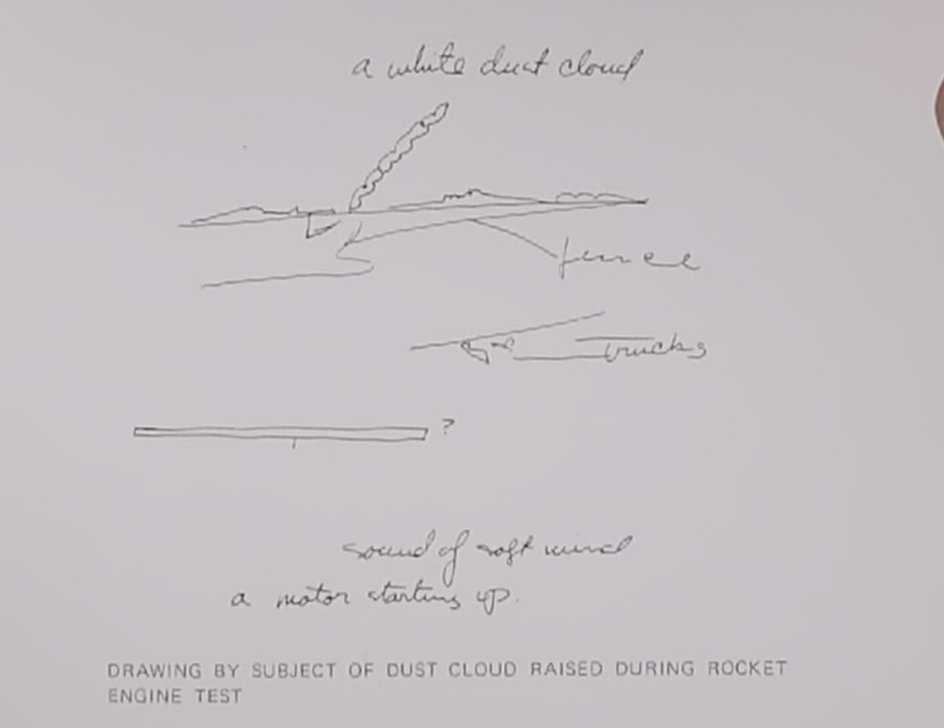
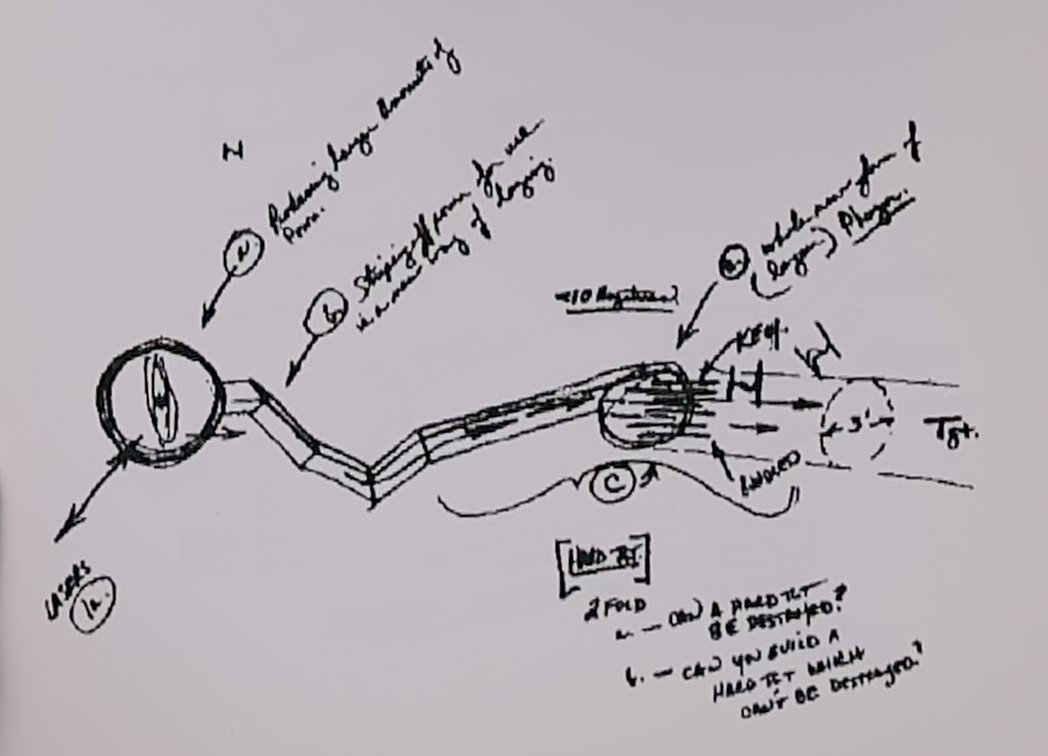
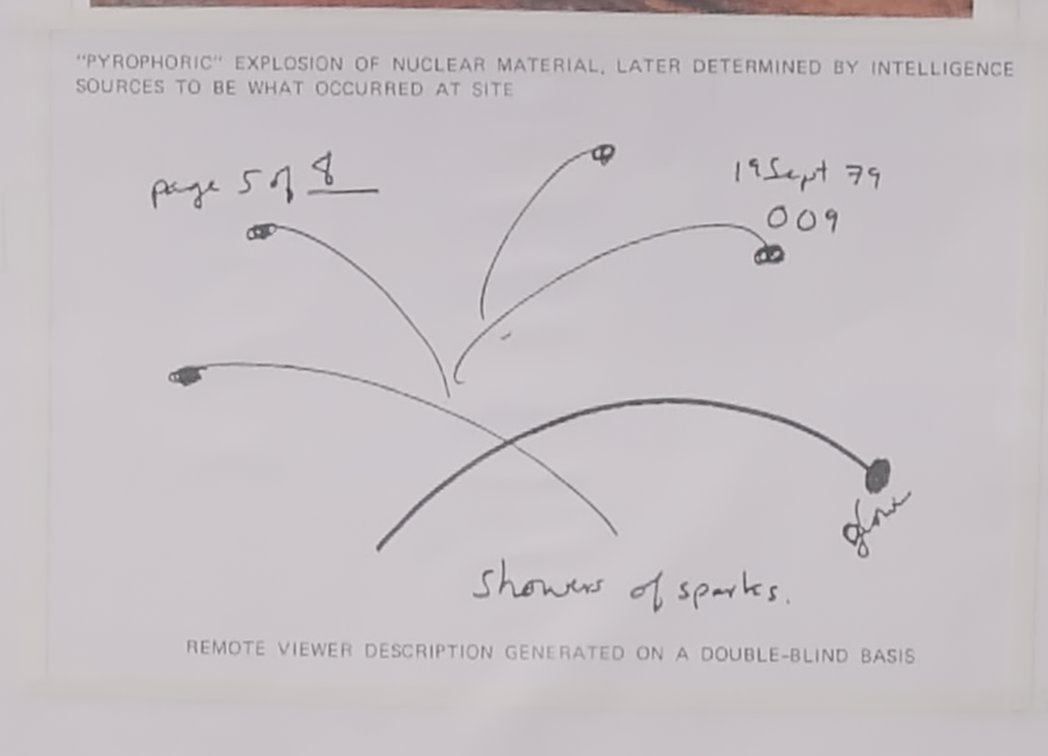
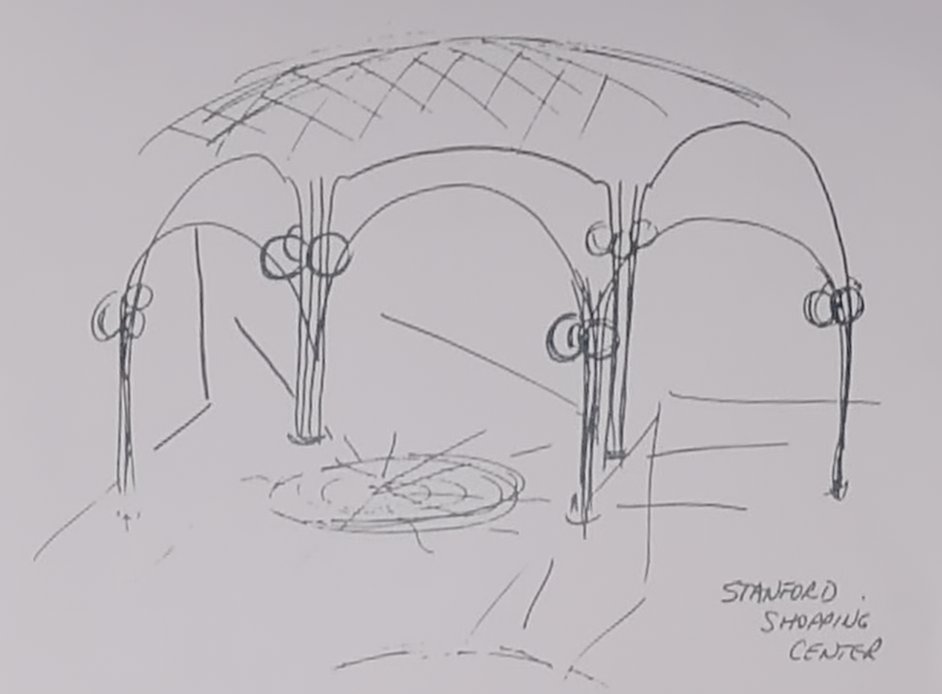
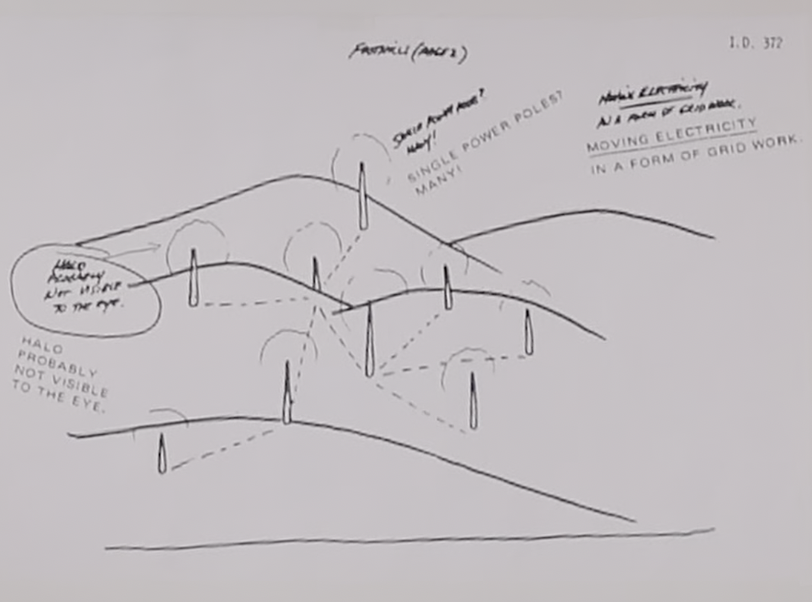
The CIA ran a psychic spy program during the Cold War. I got my hands on the original documents … and was blown away by what they achieved. Science has no way of explaining this.
Project Stargate is a program that lasted over two decades which used remote viewing to gain military intelligence. Viewers sit in a dark room, are given nothing but an anonymized reference number — a hash corresponding to a military target — and try to psychically “tap into” the target. They draw out whatever sensory signals they receive to be analyzed later.
I thought this was all voodoo nonsense, a complete psy-op, until I spent a few days digging through the original, declassified files now housed at Rice university. The amount and accuracy of successful “hits” (see next tweet for examples) were uncanny. The personnel leading the program were secular physicists. This is not something that can be explained away by sheer chance.
What’s even weirder is that the Soviet Union and China had (have?) their own psychic military units! Behind the well-known spy battles of the Cold-War was a secret game of psychic espionage and counter-espionage.
But the Soviet Union were communists, and communists are materialists. How did a materialist superpower legitimize starting a psychic division within their intelligence apparatus? They disliked even psychoanalysis for not being “materialist” enough. It turns out that there is a heated and fascinating philosophical debate about how remote viewing actually works, and even key leaders of the program on the American side remained materialists, convinced that there was a “physical” explanation. This is why Stargate is worth investigating today, for the philosophical “payoff” on fundamental questions of ontology.
In this episode, I will take you through the highlights from the original documents of Stargate and, more importantly, discuss what this means philosophically for the world we live in.
Timestamps:
2:12 The Best “Hits” from Stargate
9:36 Is Stargate a Psy-Op?
12:04 Why Christians Shutdown Stargate
15:01 Is Remote Viewing Nature or Nurture?
18:26 How Consciousness Influences Matter
21:07 How the Army Chose Remote Viewers
26:23 The Materialist Explanation for Remote Viewing
30:18 Remote Viewers Could See the Past
35:08 Why was Stargate Declassified?
12
50
221
19,687