
Founder of Shutterstock. Spinning up agents, building network effects, and skipping permissions.
Joined March 2009
- Tweets 3,127
- Following 2,144
- Followers 136,424
- Likes 19,966
92 Photos and videos






Pinned Tweet

Mar 12
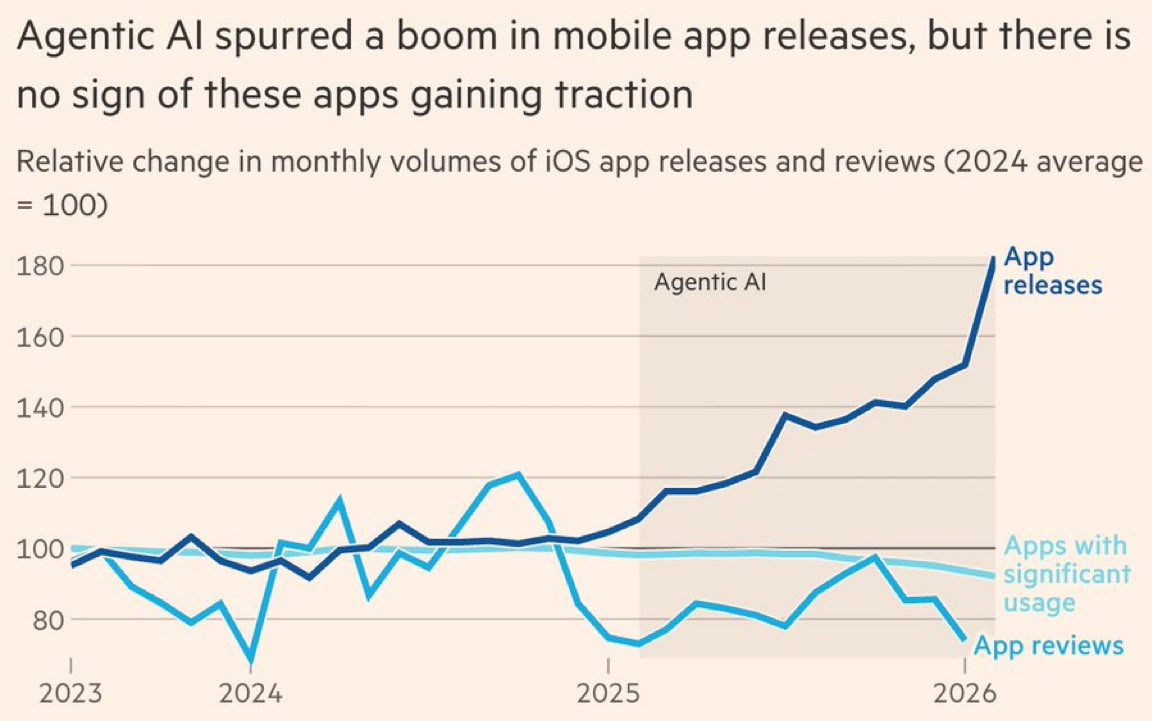
Cost of code approaching zero
Cost of distribution going to ♾️
25
13
101
17,520
Its right there for Meta to take …

We need an American lab that can make open weights models that are this good
326
We are 6-12 months away from open source models catching up…

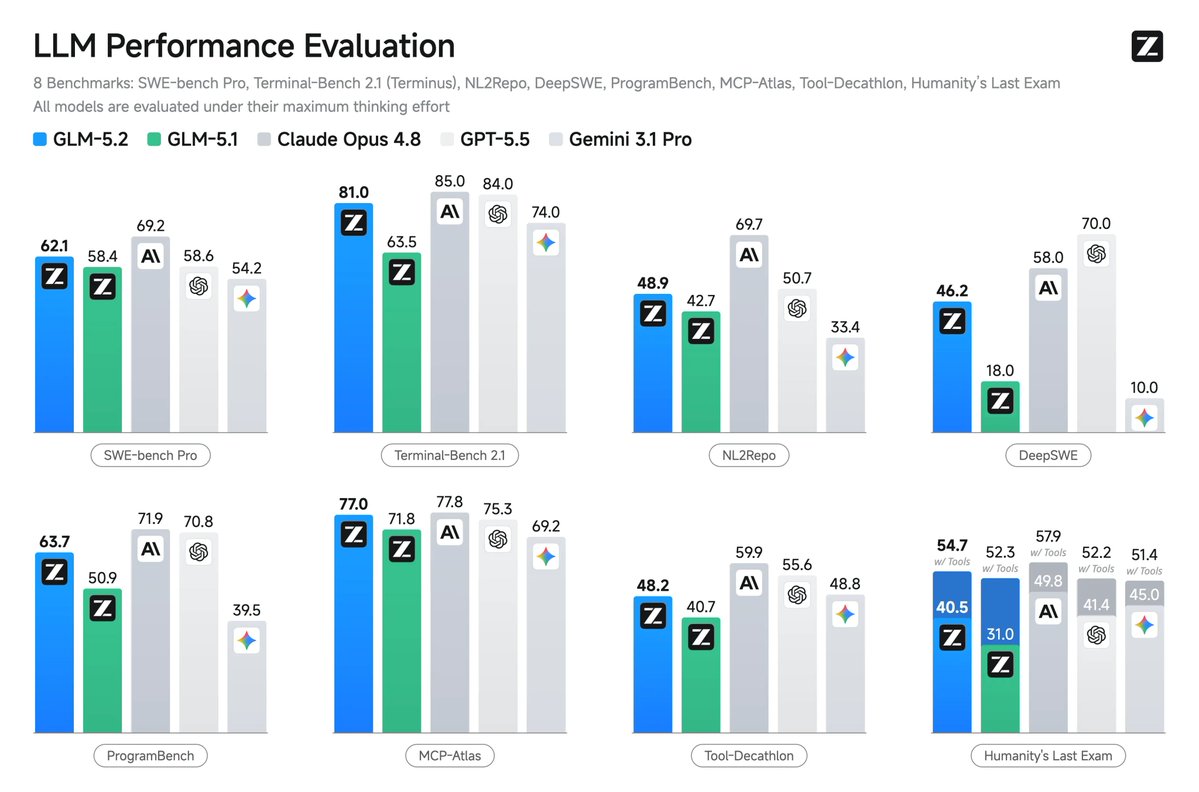
Introducing GLM-5.2: Frontier Intelligence, Open Weights
- Significant improvements in coding and agentic tasks
- Strong long-horizon capabilities with a 1M context window
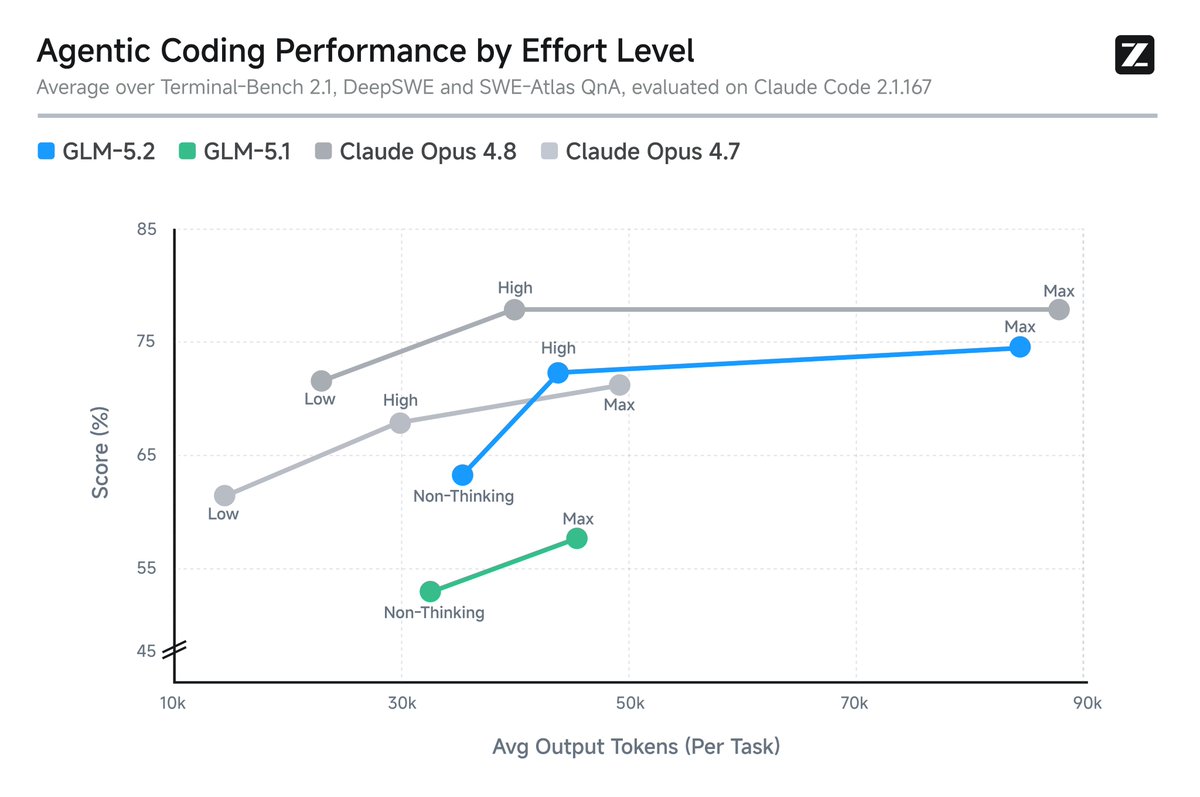
- Two levels of reasoning effort: GLM-5.2 (max) pushes the limits, while GLM-5.2 (high) strikes a strong balance between performance and token efficiency
- MIT-licensed open weights
- Same API pricing as GLM-5.1
Tech Blog: z.ai/blog/glm-5.2
Weights: huggingface.co/zai-org/GLM-5…
API: docs.z.ai/guides/llm/glm-5.2
Coding Plan: z.ai/subscribe
Chat: chat.z.ai
1
332
We likely shift from model-SIZE to model-SPEED for coding next. I would pay 2x tokens for a model 2x as fast as Opus 4.8 Fast on High.
2
2
324
wow open source is def catching up!

🤯 GLM-5.2 is here — built for long-horizon coding and agentic tasks, now with a solid 1M-token context.
The strongest open-source coding model yet!
Available now on Ollama's cloud, hosted in the US on the latest @NVIDIAAI Blackwell datacenter GPUs. Privacy policy and zero data retention apply, as always.
Try it 👇
Claude Code:
ollama launch claude --model glm-5.2:cloud
Codex App:
ollama launch codex-app --model glm-5.2:cloud
Hermes Agent:
ollama launch hermes --model glm-5.2:cloud
Chat:
ollama run glm-5.2:cloud
More integrations and information in the model page 🧵
ALT GLM 5.2
2
1
24
3,958
Hermes/Nous has the most unique design.. what do you call it? Gothic Cyberpunk?
4
315
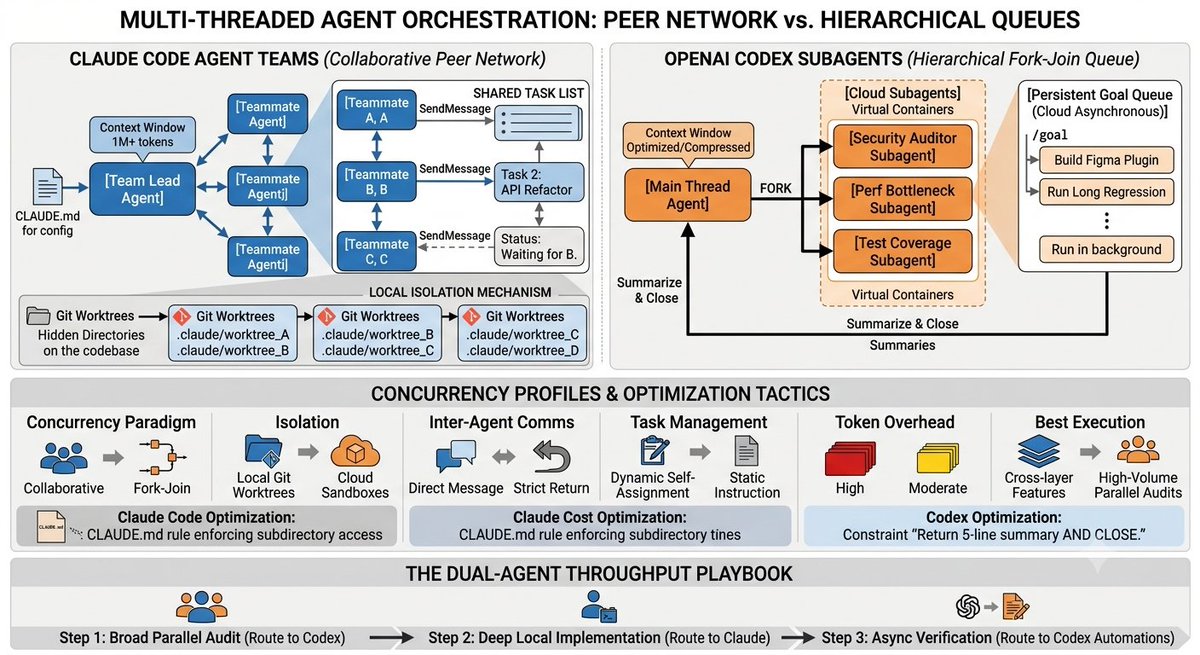
The single-threaded AI chat window isn't efficient enough.. i did a comparison between claude code and codex multithreaded architectures:
Claude Code and OpenAI’s Codex handle multi-threading completely differently under the hood. Here is the technical breakdown and the playbook to combine both:
- Architecture: Peer Networks vs. Hierarchical Queues
• Claude Code uses a Collaborative Peer Network. It spins up independent Claude instances ("Teammates") that isolate execution using local Git Worktrees hidden inside your repository (.claude/worktree_A). Teammates use a direct mesh protocol via native SendMessage tools to talk to one another, negotiate code interfaces, and update a shared TaskList dynamically.
• OpenAI Codex uses a Hierarchical Fork-Join Queue. The main thread encounters an objective, Forks into specialized, independent subagents inside secure Cloud-Sandboxed Virtual Containers (e.g., separating a Security Auditor from a Test Suite), executes them in parallel in the cloud, and then Joins and distills their outputs back into the main thread.
- Managing the Multi-Threaded "Token Tax" .. Parallel processing introduces a massive token drain.
• To Optimize Claude Code: Use a root CLAUDE.md file to enforce strict subdirectory routing rules, preventing redundant repository-wide context indexing.
• To Optimize Codex: Use prompt constraints to force input truncation: "Spawn 3 subagents. Return only a 5-line markdown summary to the main thread and close the container immediately."
The Dual-Agent Playbook.. trying this now. anybody else have experience here..?
Maximize throughput by running them simultaneously as a heterogeneous cluster:
• Step 1 (Parallel Auditing ➡️ Codex): Use Codex to concurrently sweep for security risks, performance bugs, and test gaps across your repo. It leverages cloud container speed and keeps your local workspace clean.
• Step 2 (Deep Implementation ➡️ Claude Code): Feed Codex’s audit report to Claude Code. Command it to spawn teammates to update database models and refactor API routes concurrently via local Git worktrees. Because they share a task list, the agents will actively negotiate code boundaries mid-execution.
• Step 3 (Background Verification Codex Automations): Offload long-running background tasks, regression checks, and CI/CD failure triages to Codex cloud containers while your local machine remains unburdened.
See the full architecture diagram below..
2
7
1,329
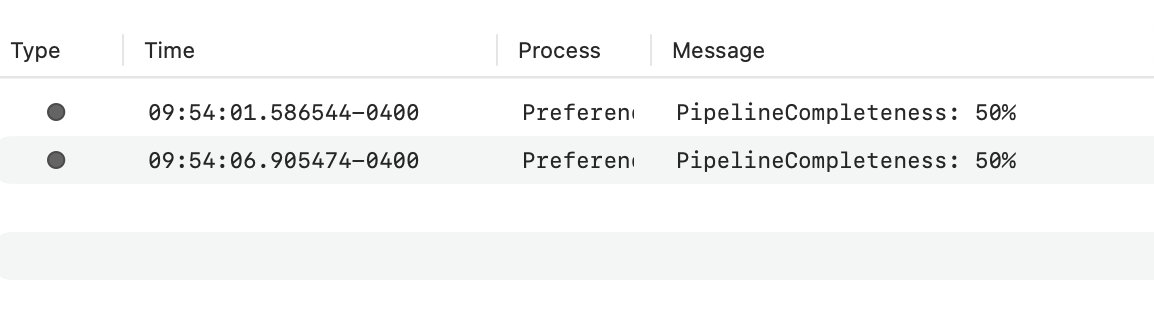
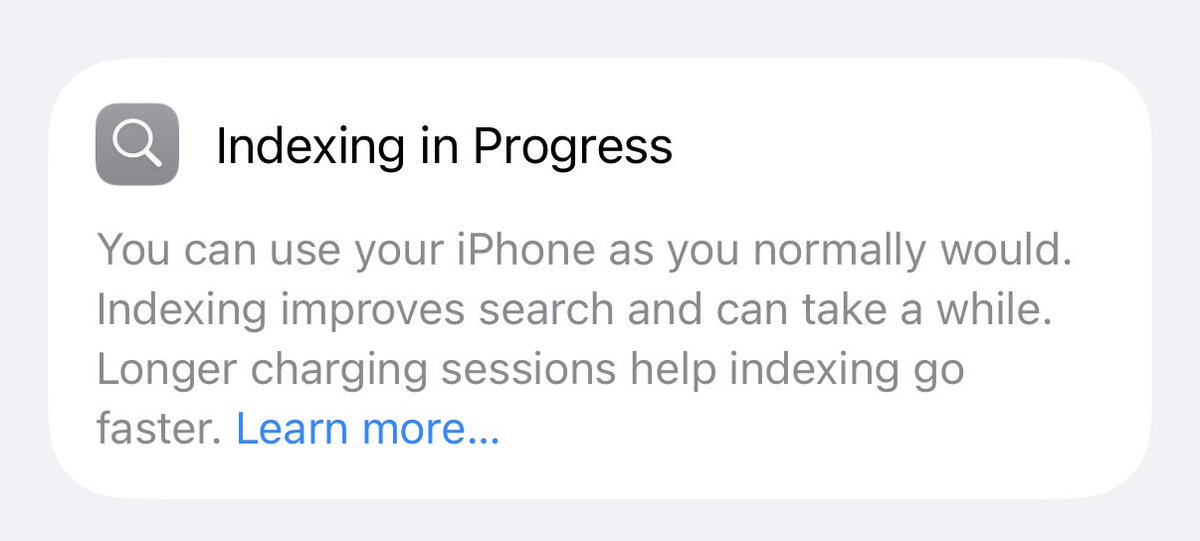
my iphone ios 27 is still at 50% indexing ...
Jun 16

Check your % complete through indexing: 9to5mac.com/2026/06/15/still…
837
Jun 15
How a routine LinkedIn recruiter message almost turned into a major security breach.
Last week, @rdotpy got hit with a sophisticated social engineering attack targeting software engineers. Here’s exactly how the trap was set, and why you should be careful. 👇 🧵
1
2
4
2,971
Jun 15
Even the recruiter was a fake. The profile belonged to a well-known arts journalist with zero technical background.
Hilariously, when Roman pretended he couldn’t install the project, the "journalist" suddenly turned into an expert on npm and Node versions to push him into running it.
1
1
277
Jun 15
The takeaway? This can happen to anyone. On a tired, rushed day, it’s easy to just run npm install before thinking.
1️⃣ Use sandboxed environments/throwaway VPS for raw code reviews.
2️⃣ Read-only AI agents are great for rapid, unbiased code auditing.
Stay paranoid out there.
Full write-up here: roman.pt/posts/linkedin-back…
2
278
Jun 15
has anybody figured out a way around this in Claude code? ccd_session_mgmt should have an override. Does Codex have similar friction?
1
436