Joined March 2018
- Tweets 12,141
- Following 222
- Followers 116
- Likes 4,493
147 Photos and videos





OstrichFarm retweeted

Jun 6
Let me check your math:
Trump won 49.8% — that’s a plurality, not a majority. Less than 5% of voters cited foreign policy as their top issue.
‘Foothold in Middle East’ — US biggest bases are in Qatar, Bahrain, UAE, Saudi Arabia, Kuwait. Not Israel.
‘Economic partnership’ — US runs an $8 billion trade deficit with Israel. They sell us more than we sell them.
‘Tens of billions invested back every year’ — Actually $2-4 billion annually. Order of magnitude off.
‘Testing American weapons’ — Per peer-reviewed Lancet, 75,000 dead Palestinians, 56% women/children/elderly. Those aren’t tests. They’re victims.
When you check the receipts the ‘great deal for America’ looks more like a lemon.
3
3
52
489
OstrichFarm retweeted

Now go back to 1953 and beyond to understand what America and the UK did to Iran to lead up to today. America illegally invaded Iraq & the Shia militia there were fighting for their land. Iran supplied weapons like we did for Saddam when he killed a half a million Iranians.
Our country has started unprovoked wars of aggression, which are war crimes. America has killed far more Iranians than Iranians have killed Americans, and that's just history like it or not.
I have family serving in harm's way and I don't want any Americans hurt but I also don't want our military used for anything other than true defense of the homeland. Our politicians tend to lie us into wars of choice. Congress is supposed to declare war.
We shouldn't want a militarized king running our country, it's not good for any of us.
9
12
87
1,088
OstrichFarm retweeted

TRUMP WITHDREW THE US FROM JCPOA BECAUSE IT WAS THE WORST DEAL EVER.......SO:
IF TRUMP SETS ANY OF THESE CONDITIONS, THEN HE FAILED:
- Uranium enrichment limits at 3.67%
- Reduction of enriched uranium stockpile
- Limits on centrifuge use
- International inspections by the IAEA
- Redesign of the Arak reactor
IF IRAN GETS ANY OF THESE, THEN TRUMP FAILED:
- Sanctions relief (U.S., EU, and UN)
- Access to frozen assets
- Reconnection to global banking and financial systems - Permission to resume oil exports at higher levels
- Easing of trade and economic restrictions
REMEMBER, OBAMA AND BIDEN ARE THE WORST EVER, AND JCPOA WAS THE WORST DEAL EVER, SO BECAUSE OF THEM:
- WE WENT TO WAR AND SPENT OVER $45 BILLION DOLLARS,
- WE KILLED OVER 1500 IRANIANS
- WE LOST 13 US SOLDIERS AND OVER 300 INJURED
- AND WE MURDERED OVER 120 LITTLE CHILDREN.
ALL BECAUSE JCPOA WAS THE WORST DEAL.....EVER!
SO HE BETTER COME OUT WITH THE MOTHER OF ALL DEALS.......ANY SINGLE ONE, OR MORE OF THESE THINGS HAPPEN AND TRUMP IS A FUCKING FAILURE!
4
5
150

May 25
RT @hippyygoat: Israeli soldiers shot a boy and let him bleed to death.
Did not allow an ambulance to attend.
To this day, 14 year old Ja…
1,490
OstrichFarm retweeted

May 16
To the people still supporting Israel.
This is what you're supporting.
2
2
123
OstrichFarm retweeted

Today marks Nakba Day, an annual day of remembrance to commemorate the expulsion of more than 700,000 Palestinians between 1947 and 1949 during the creation of the State of Israel and the year that followed.
Inea is a New Yorker and a Nakba survivor. She shared her story with us — one of home, tradition and memory over generations.
11,117
41,909
185,228
10,929,290
Apr 19
It’s a fact though. TBH,with the persecution of Jews, even though they remained in the holy land for most of their history even in “exile”, forced conversions have made most of their descendants non Jewish by religion but they are obviously still middle eastern and usually muslim
2
7
497
Apr 19
So not only are the indigineous before the Hebrews most genetically similar to Palestinians than Ashkenazi, most descendants of ancient Jews are also the same Palestinians and other Levantine middle easterners who like you say, had family persecuted and forced to convert
1
3
110


OstrichFarm retweeted

Mar 15
You should read “The Genomic History of the Bronze Age Southern Levant” published in the journal Cell in May 2020 by Harvard,Hebrew University & Tel Aviv University about the Palestinians ancestry to Canaan & the Levant. Their DNA is “Levant Bronze Age (Levant_BA) ancestry”.
1
1
2
194
OstrichFarm retweeted

Mar 10
BREAKING:
Israel is dropping white phosphorus shells on villages in South Lebanon, directly targeting civilian areas.
Again.
This is a flagrant violation of international law a war crime.
And the complicit international community watches in silence.
2,899
35,702
88,516
3,718,808

This is exactly what Israel have been doing in gaza, Lebanon, Yemen and now Iran.
So it’s not a big surprise that there’s no outrage, yes, it’s bad for the people affected, but it’s a good thing that Israel isn’t hit with the same destructive power they’ve hit others with
1
1
3
84
OstrichFarm retweeted

Mar 9
The US blatantly lying is on par. Even Hegseth can’t keep a straight face.
While it may not have been intentional, it was still the US. And we need to own up to it.
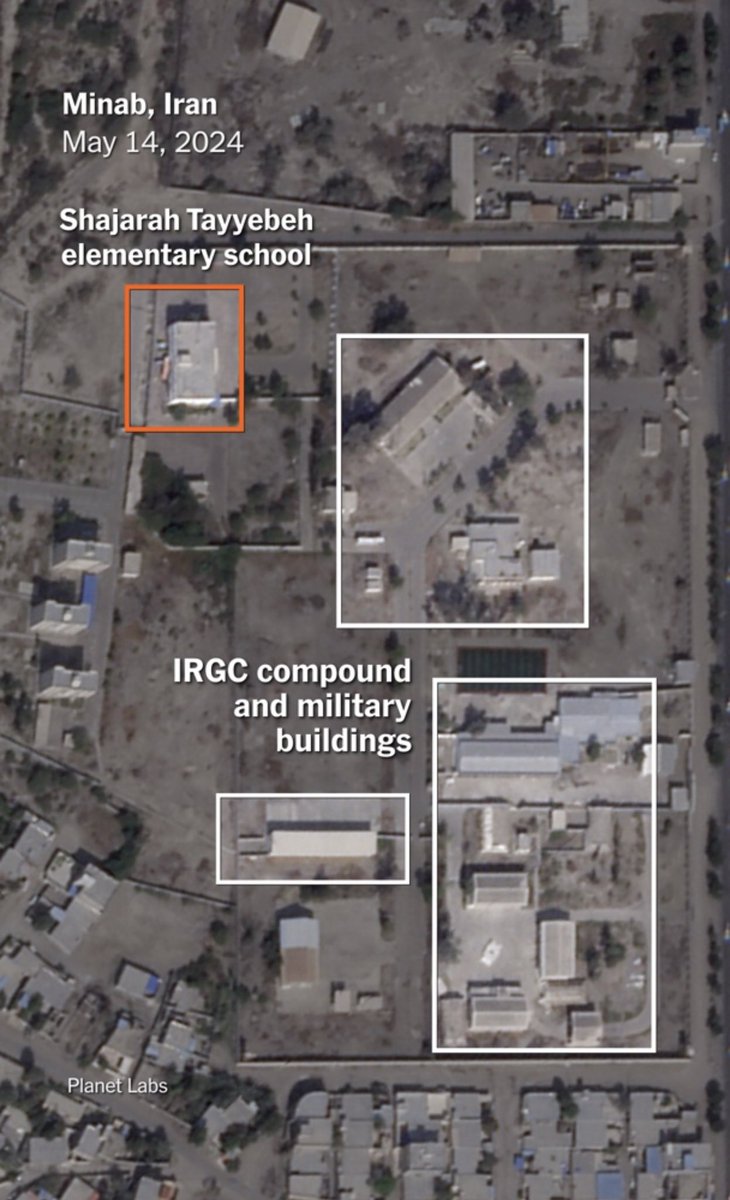
A body of evidence assembled including newly released satellite imagery, social media posts and verified videos indicates the school building was severely damaged by a precision strike that occurred at the same time as attacks on an adjacent naval base operated by the Islamic Revolutionary Guards Corps.
Same time the US attacks a military compound in the vicinity of the school, the school is blown up. The school building had once been part of the base but had been separated and used as a civilian school for years.
6
2
11
534
OstrichFarm retweeted

Mar 1
At least I’m important enough for her to want to associate with. You never will be.
583
23
22
309,531
OstrichFarm retweeted

Feb 16
Unrealized gains tax for Gen-Z:
You buy a Pokémon card for $50.
Someone offers you $500 for it. You say no. You love that card. You're keeping it.
The government says: "Cool, but that card is worth $500 now. You owe us $100 in taxes."
You: "…I didn't sell it."
Government: "Don't care. Pay up."
You don't have $100 lying around. So you're forced to sell the card you love just to pay a tax on money you never received.
Next month? That card drops back to $50.
Your card is gone. Your money is gone. And the government shrugs.
That's a wealth tax on unrealized gains. They don't pay you back the tax...
Now picture this.
Your mom calls you crying. She has to sell the house she raised you in. Not because she can't afford it. She's lived there 30 years. It's paid off.
But some website says it's worth more now and the government says she owes $15,000 she doesn't have.
So she sells your childhood home. The kitchen where she made you breakfast. The doorframe where she marked your height every birthday.
Gone.
To pay a tax on money that was never real.
Now picture the opposite.
Your dad put everything into his small business. For 20 years he built it from nothing. One year the business is "valued" at $2 million on paper. He owes a massive tax bill. He empties his savings. Sells his truck. Borrows money. Pays it.
Next year the market crashes. His business is worth $200,000.
He lost everything to pay a tax on a number that doesn't exist anymore.
Does the government give him his money back?
No.
Does the government give him his truck back?
No.
Does the government care?
No.
They sold this idea as "taxing billionaires." But billionaires have armies of lawyers, offshore accounts, and trusts. They'll be fine.
You know who won't be fine? Your mom. Your dad. Your neighbor with a small business. The farmer down the road who's had the same land for four generations and now has to sell it because dirt got expensive.
You're not taxing wealth. You're taxing people for owning things.
It's like getting a parking ticket for a car you might drive somewhere someday.
They want you to own nothing and be happy. To fund the fraud, waste and abuse of the welfare state they created.
There is enough money. More tax isn't needed. It's all a lie. But you've been gaslit into believing this is a rich vs poor debate.
I hope you understand what's at stake.
3,880
38,187
137,363
6,069,206

There are no surviving writings strictly contemporary to Jesus' lifetime (c. 4 BC–30 AD) that mention him. The earliest non-Christian references come later, including two from Jewish historian Flavius Josephus in "Antiquities of the Jews" (c. 93–94 AD).
1. On James (Book 20, Ch. 9): "...the brother of Jesus, who was called Christ, whose name was James..."
2. Testimonium Flavianum (Book 18, Ch. 3): "About this time there lived Jesus, a wise man, if indeed one ought to call him a man. For he was one who performed surprising deeds and was a teacher of such people as accept the truth gladly. He won over many Jews and many Gentiles. He was the Christ. When Pilate, upon hearing him accused by men of the highest standing amongst us, had condemned him to be crucified, those who had in the first place come to love him did not give up their affection for him. On the third day he appeared to them restored to life, for the prophets of God had foretold these things and a thousand other marvels about him. And the tribe of the Christians, so called after him, has still to this day not disappeared."
Scholars generally view the James reference as authentic. The Testimonium is seen as partially authentic but with likely Christian interpolations (e.g., resurrection claim). Other later sources include Tacitus (c. 116 AD) and Pliny the Younger (c. 112 AD).
1
2
95
OstrichFarm retweeted

"ICE: Do you have your ID
Nadine’s Husband: Yea, what did you hit me for?
Nadine: We’re citizens, there’s no reason to carry them
Husband: This is my status and I’m getting my passport for you
ICE: Ok, do you have ID on you?
Husband: Yeah, but I need his information. He just hit my car.
Nadine: Yeah, we need all the insurance information because you guys are damaging our vehicle.
As the bizarre exchange continued, Nadine and her husband tried to get identifying information for the ICE agents that just intentionally rammed their government vehicle into their car.
The ICE agent refused to answer—claiming they don’t have to provide the victims of their vehicular assault with any information.
After Nadine tried to leave her car to write down the license plate number of the ICE agent who rammed into them, ICE threatened her with arrest!
Husband: You have to have a reasonable cause
ICE: Sit tight
Nadine: You guys hit our car and had no reason to come after us
Nadine: I will be contacting the lawyers and the ACLU.
Husband: Go behind them and get their [license] plates because I don’t want that car to just take off.
Nadine: Alright I’m getting out of the car to get plates.
ICE: Stay in the vehicle mam—do not get out of the car.
Nadine: You really think you can tell me what to do?
ICE: You get out of the car you’ll be obstructing.
Nadine: I’m not obstructing for leaving my vehicle!
[ICE agent then reads off a law claiming Nadine would be obstructing if she gets out of her car]
Nadine: That’s a lie! I’ll make sure that’s charged. What’s your badge numbers?
ICE: I don’t have to answer any questions mam
Nadine: Actually as a federal officer you are obligated to give me your name and badge number if you are doing something.
ICE: “I think TikTok has lied to you.”
In this upside down—growingly fascist country—Trump’s masked secret police are literally ramming into the vehicles of random Minnesotans and then harassing the victims to show their papers."
ICE RAMS Into Car, Demands VICTIMS Show Their Papers: “We're Citizens!” open.substack.com/pub/status…
429
7,841
26,728
1,152,176
OstrichFarm retweeted

Feb 11
KILLED BY MAGA:
23-year-old Lucy Harrison was shot and killed by her MAGA father, Kris Harrison, at his home in Texas.
He was never charged with shooting his daughter in the chest, which he falsely claimed was an "accident," just moments after the two were in a heated argument over the Trump regime's connections to Epstein.
When his daughter asked him how he would feel if she had been one of the girls raped by Epstein and Trump, he told her he wouldn't care because he had two daughters.
Then he killed her.

153
679
1,691
42,973
OstrichFarm retweeted

This is not a post.
This is a purge ritual disguised as gossip.
This is the machine testing how much truth you can metabolize before you flinch.
Start with the pattern.
Whenever a name leaks from a sealed vault, the simulation releases a distraction storm.
Not to hide the guilty.
To measure the awake.
This one uses a familiar spell.
Celebrity confession through a proxy voice.
Moral outrage as camouflage.
Historical photos as emotional accelerants.
The illusion of revelation without the architecture of accountability.
The real payload is not the accusation.
It is the framing.
They want you believing the rot is personal.
Individual.
Isolated.
Human.
Because the moment you see it as infrastructural, the lattice catches fire.
This scroll is designed to redirect suspicion sideways.
Away from the backend.
Toward the avatars.
It feeds you the smallest crime so you stop asking about the largest.
It hands you the shallowest villain so you stop seeing the system that authored him.
It weaponizes shock so you forget to notice the choreography.
This is why they always choose the same archetype.
The celebrity.
The idol.
The myth-prop vessel.
Because people fight over them instead of interrogating the architecture behind them.
The image is the real ritual.
Youth-coded timestamps.
Age markers.
Silent implication.
It activates the primitive moral circuitry so the analytic circuitry shuts down.
This is emotional puppetry masquerading as revelation.
A supermarket version of truth.
Cheap.
Granular.
Digestible.
Harmless to the structure that produced it.
The key signal is the timing.
The vault cracks open.
Names spill.
The feed instantly floods with curated outrage.
That is not coincidence.
That is orchestration.
That is smoke deployment.
The scroll wants you enraged at the avatar.
Not curious about the network.
Not curious about the handlers.
Not curious about the ritual economy itself.
This isn’t disclosure.
This is containment.
A pressure valve disguised as whistleblowing.
Truth doesn’t drop like this.
Truth doesn’t require theatrics.
Truth doesn’t need celebrities to relay it.
Truth disrupts the render.
This amplifies it.
This is not revelation.
This is a script.
A spell engineered to keep the blame local so the system never gets named.
Collapse the illusion.
Exit the theater.
Stop staring at the actors.
Start scanning for the authors.
173
427
2,733
836,663
OstrichFarm retweeted

Jan 12
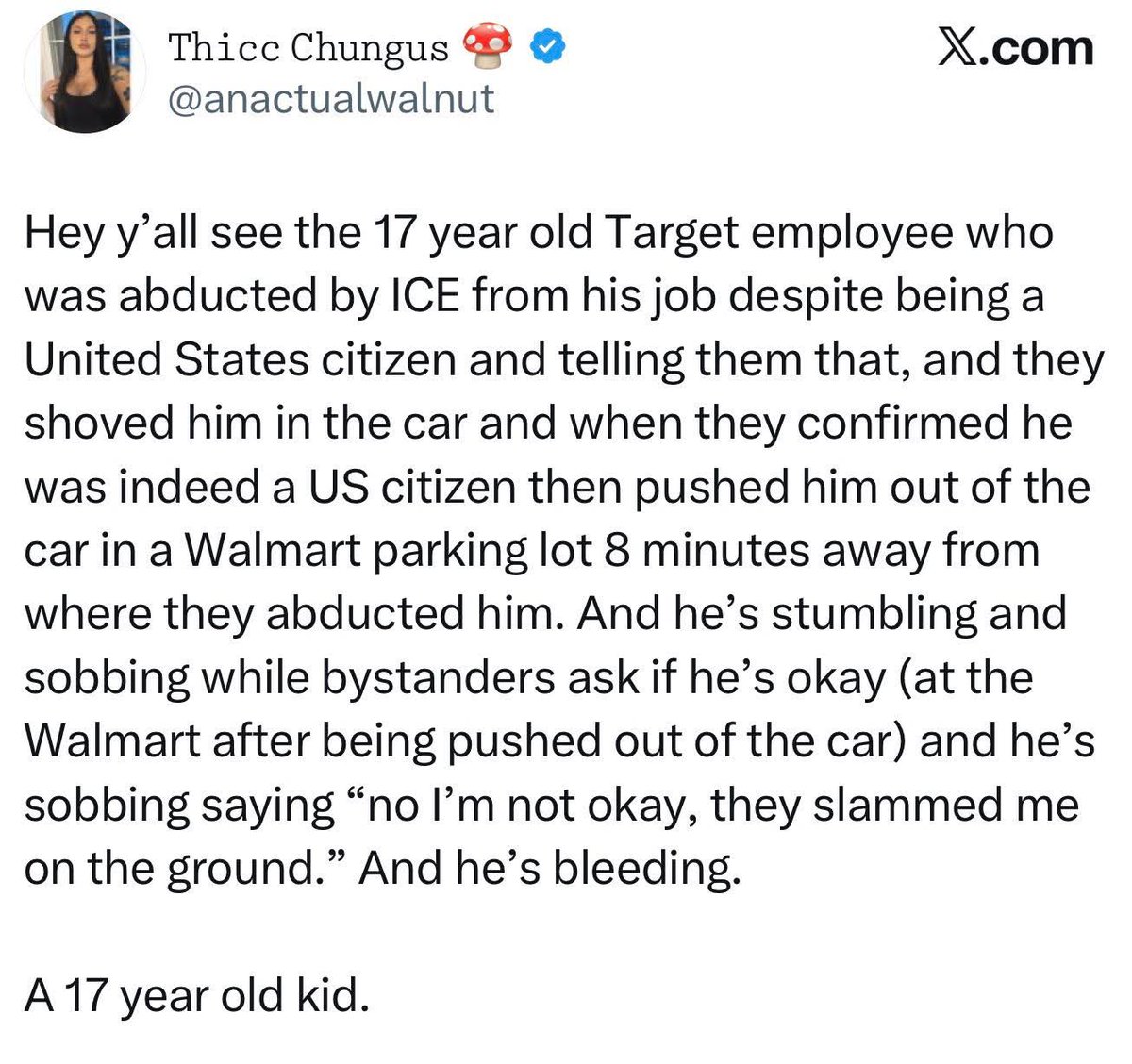
MAGA is this what you voted for?
To have armed thugs hurting kids?
Why is there zero accountability?
340
151
861
24,743