
The news magazine about the Visual Tech space: kaptur.co
Joined April 2014
- Tweets 3,146
- Following 241
- Followers 333
- Likes 162
646 Photos and videos










Jun 10
A state-controlled agent serves the state's truth regime.
Read more 👉 lttr.ai/AsAUt
#FactCheckersInvestigateImages #AiAgentStepped #RigorousMethods
13
Jun 3
How do you keep provenance information connected to the content it describes?
Read more 👉 lttr.ai/ArwPd
#VisualContent #FinallyMaking #ConnectionVerifiable
14
Jun 2
The question worth asking right now is whether an AI agent could conduct the actual investigation.
Read the full article: AI agent as photography’s best fact-checker?
▸ lttr.ai/ArhOY
#FactCheckersInvestigateImages #AiAgentStepped #RigorousMethods
7
May 31
The infrastructure of global news photography is being quietly dismantled.
Read more 👉 lttr.ai/ArhOX
#visualtech #visualcontent #authenticity
14
May 30
Whoever builds the investigator-agent decides whose motives get modeled and whose don't, and that decision shapes every verdict the system produces.
Read more 👉 lttr.ai/ArhOW
#FactCheckersInvestigateImages #AiAgentStepped #RigorousMethods
12
May 26
"There's a version of the next two years where most images in public circulation get investigator-agent treatment as a matter of course." lttr.ai/ArhOV
#FactCheckersInvestigateImages #AiAgentStepped #RigorousMethods
14
May 18
Assume Synthesis by Default: Rather than assuming content is authentic unless proven otherwise, systems must start from the assumption that all digital media is potentially synthetic.
Read more 👉 lttr.ai/ArPcV
#HumanVerification #AuthenticityEconomy
1
1
2
18
May 4
Build processes now to track which content is AI-generated and ensure your systems can embed the required metadata
Read more 👉 lttr.ai/Aqwb0
#PracticalGuide #CircuitCourtUpheld #CompanyDownloadedMillions
10
Apr 19
But photojournalism’s core promise is authenticity through depiction: showing a true event with minimal alteration or editing.
Read more 👉 lttr.ai/AqRyo
#visualcontent #visualtech #AI
1
22
Mar 27
Brands may soon need explicit strategies for balancing synthetic visuals with genuinely captured photography.
Read more 👉 lttr.ai/AmY26
#visualtech #genai #fashionphotography
36
Mar 23
Ethics is the constitutional architecture that determines which institutions may use synthetic imagery, how they may use it, and whether they must disclose it.
Read more 👉 lttr.ai/ApcHZ
#authenticity #visualtech #visualcontent
28
Mar 19
How do you know the provenance information is accurate, and that the person claiming to have created the content actually did?
Read more 👉 lttr.ai/ApS6p
#VisualContent #FinallyMaking #ConnectionVerifiable
1
37
Mar 16
Newsrooms aren’t abandoning Photoshop because of its flashy generative features, but because they no longer know how much AI takes over during routine edits.
Read more 👉 lttr.ai/ApNeb
#ConstitutesAiDeception #ImageRuns #QuestionMark
1
24
Mar 11
"A brand that uses AI to generate product imagery and signs it with verified credentials is being more transparent and more trustworthy than a brand that uses photographers but strips all metadata." lttr.ai/ApEBz
#VisualContent #FinallyMaking #ConnectionVerifiable
14
Mar 7
This makes Liccium particularly powerful for rights management, AI training opt-out, and managing provenance across large content inventories that move through many hands.
Read the full article: Who’s Behind the Image?
▸ lttr.ai/Ao5bz
#VisualContent #FinallyMaking
24
Mar 6
The most fundamental question for any enterprise using AI to generate or edit visual content: can you own what the machine produces?
Read more 👉 lttr.ai/Ao13f
#PracticalGuide #CircuitCourtUpheld #CompanyDownloadedMillions
16
Mar 4
Securing the Visual Record: A Technical and Philosophical Guide to Content Provenance
Read more 👉 lttr.ai/Aoy39
#VisualContent #FinallyMaking #ConnectionVerifiable
24
Mar 2
A society's access to trustworthy visual documentation is a prerequisite for informed civic participation.
Read more 👉 lttr.ai/Aoubp
#visualtech #visualcontent #authenticity
20
Feb 17
AI image generators can and do produce content that infringes existing copyrights, trademarks, and trade dress, sometimes with startling fidelity.
Read more 👉 lttr.ai/AoS4o
#PracticalGuide #CircuitCourtUpheld #CompanyDownloadedMillions
26
Feb 17
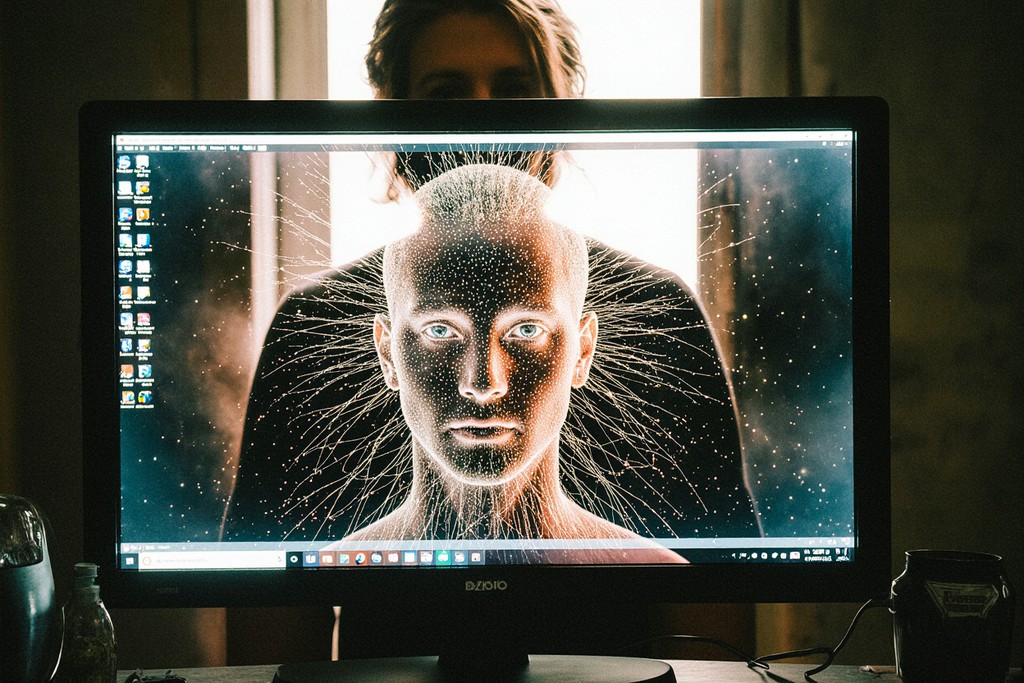
"Early “true” deepfakes often included artifacts at the pixel level or above, spatial or visual inconsistencies such as differences in noise patterns, or color contrasts, which are indications of synthetically generated media." lttr.ai/AoRry
#HumanVerification
1
58