
Idea owners get richer // Founder of @beunignorable, the Ownable Ideas agency
Joined October 2014
- Tweets 47,153
- Following 992
- Followers 146,086
- Likes 95,562
2,540 Photos and videos


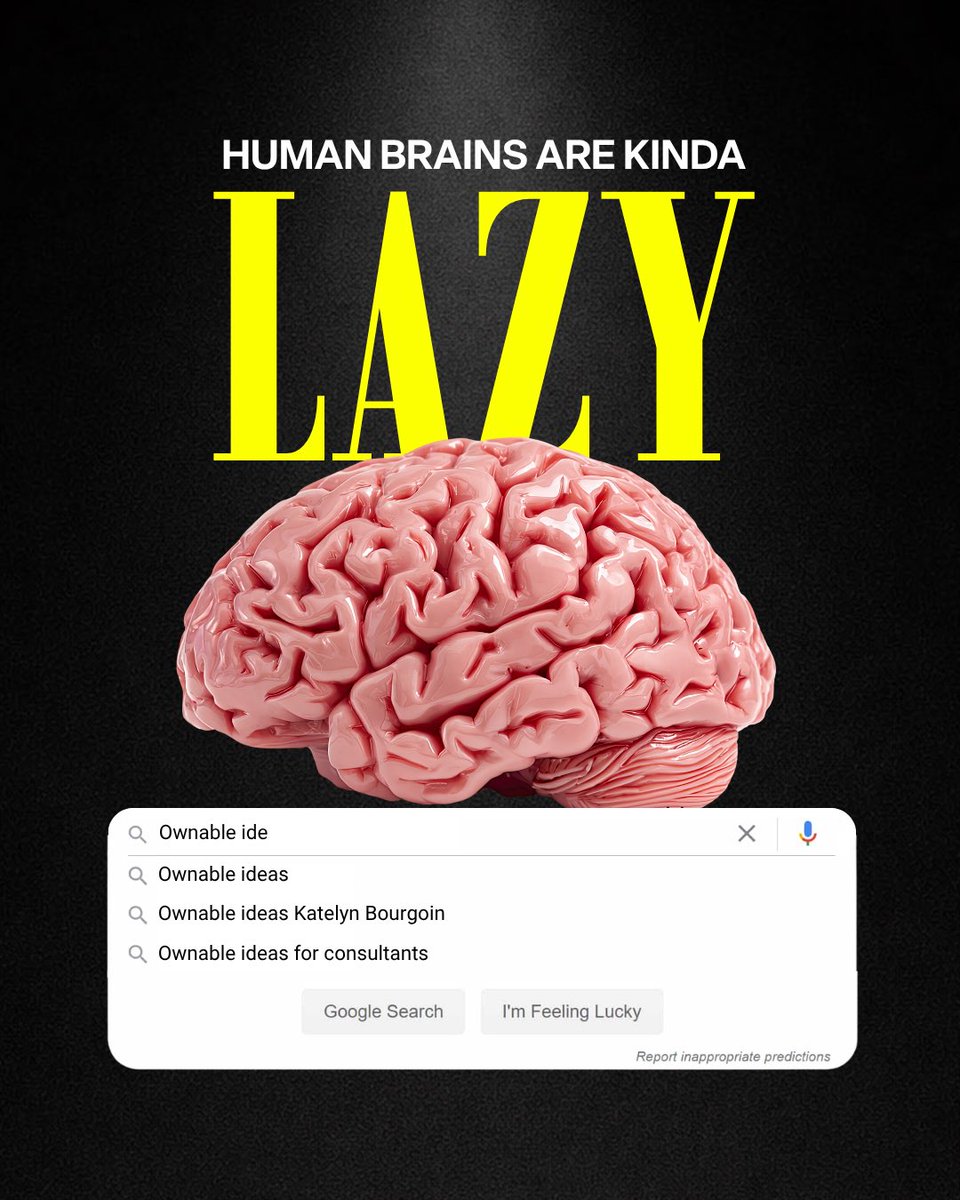
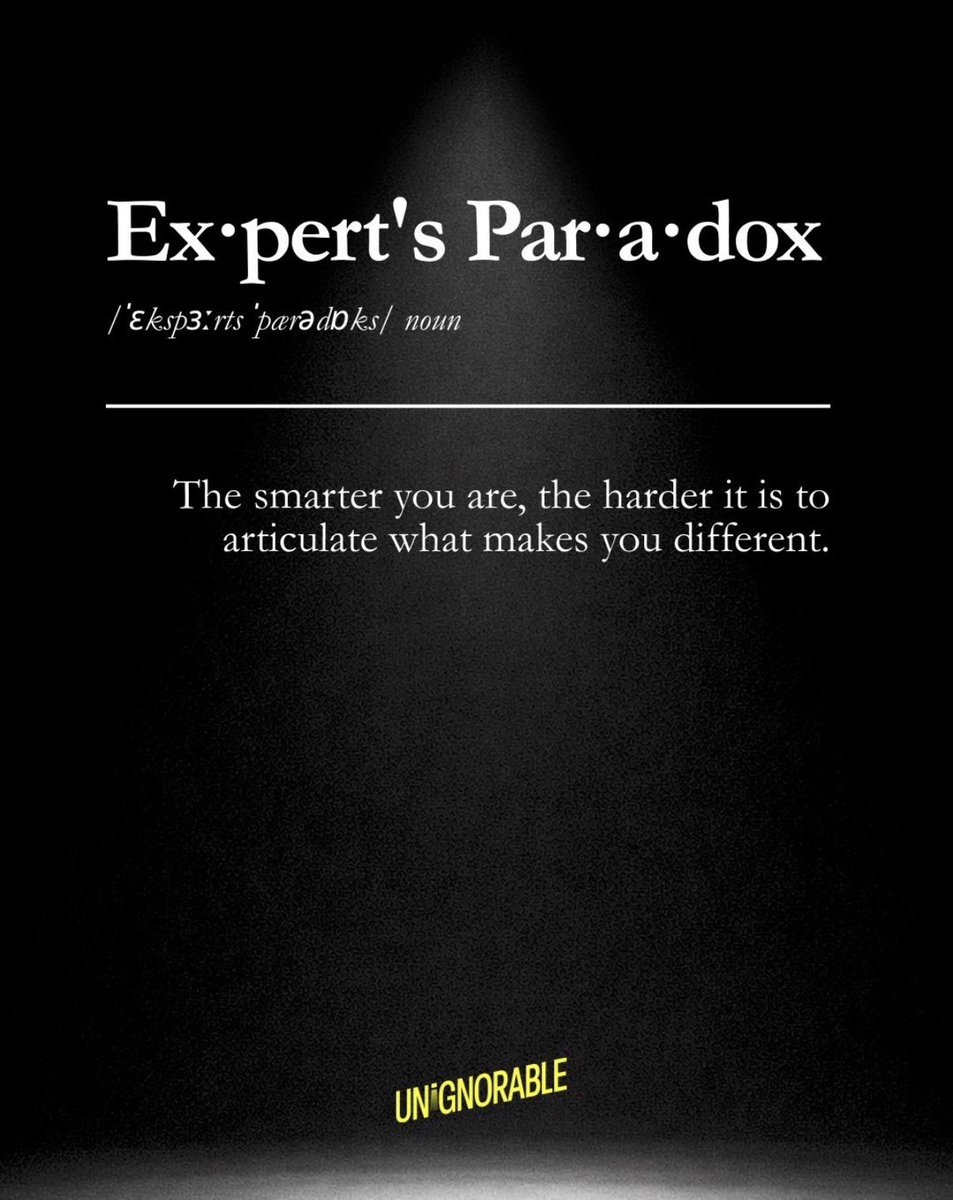
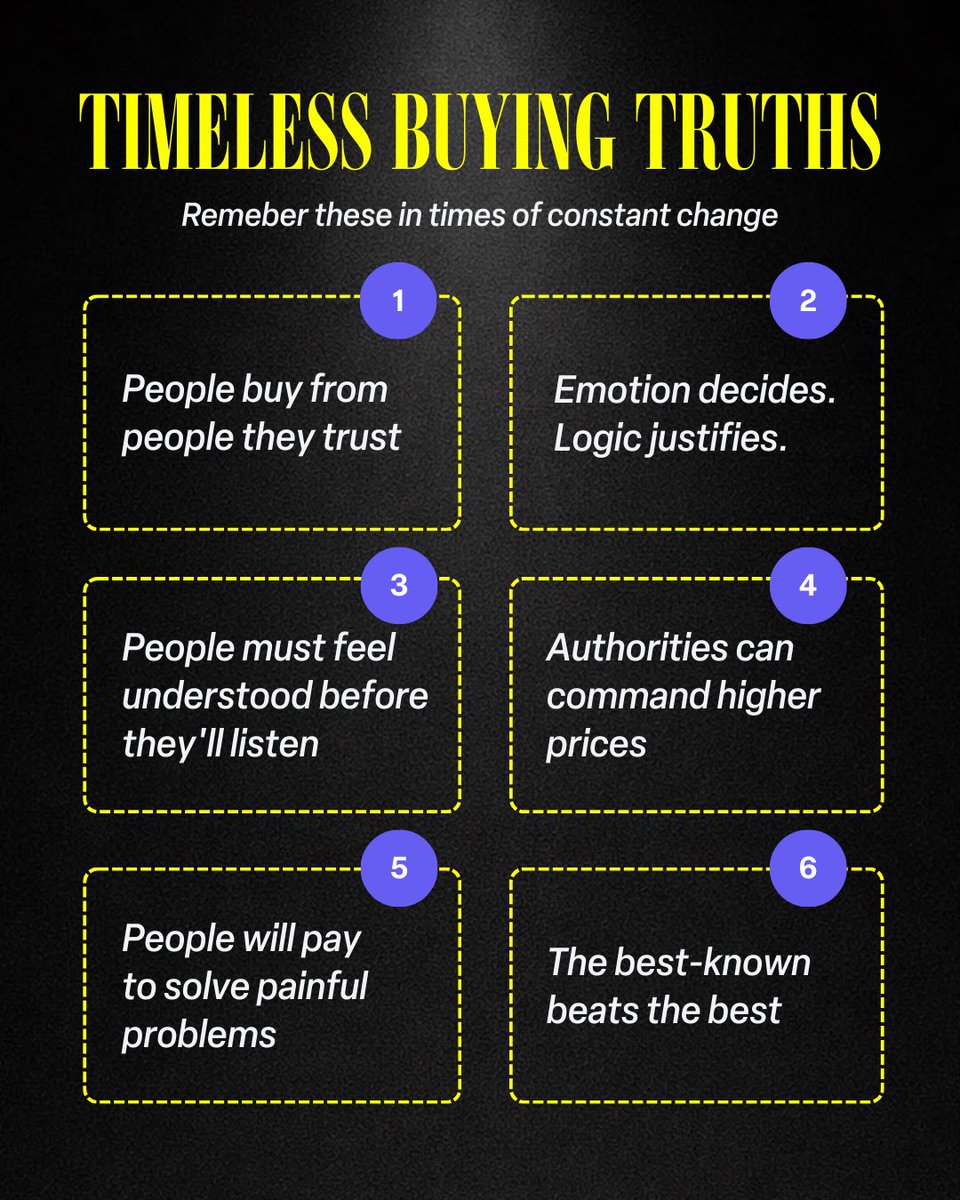

Katelyn Bourgoin 🧠 retweeted

Jun 12
Repetition isn't lazy. It's strategic.
The more someone hears the same idea expressed consistently, the more familiar it feels, and the more true it becomes.
Politicians have known this for decades.
Many marketers could use a reminder.
10
3
48
2,439
Jun 10
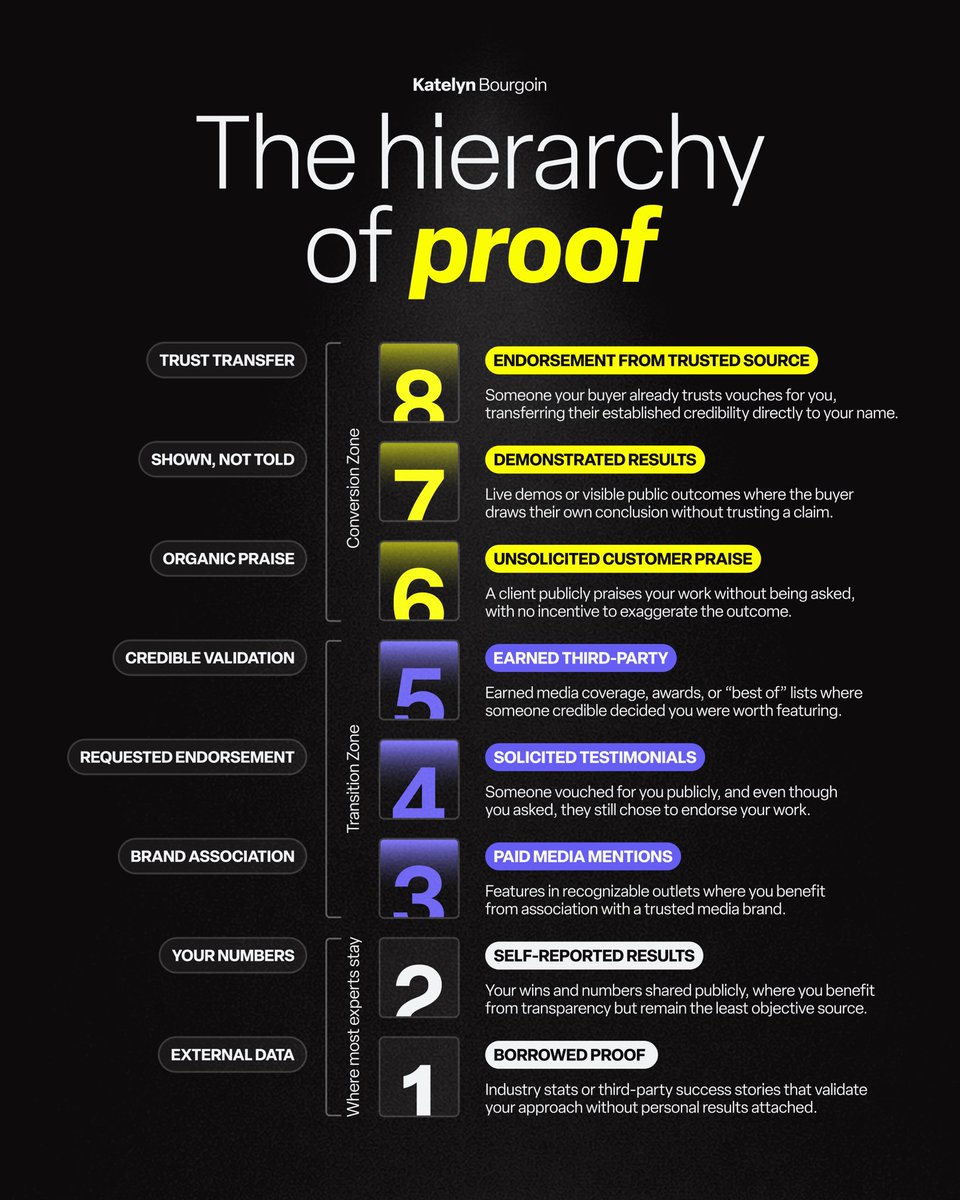
Sharing proof is the power punch of content that *actually* drives business outcomes
7
12
712
Katelyn Bourgoin 🧠 retweeted
Feb 13
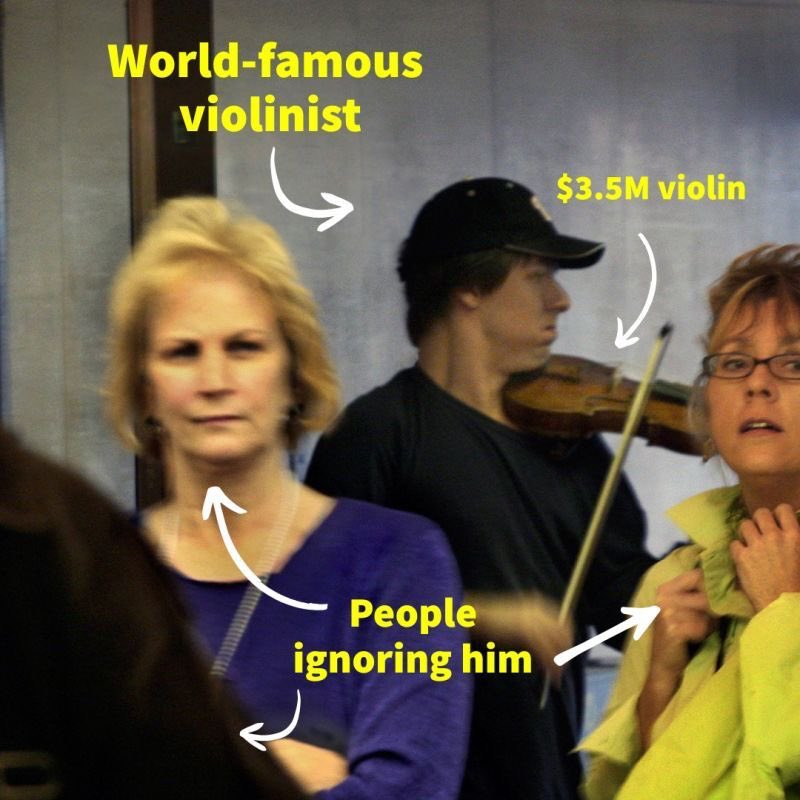
You can be world-class and still invisible. Just ask Joshua Bell, one of the world’s top violinists...
In 2007, Joshua Bell played his $3.5M Stradivarius violin for 45 minutes in a Washington, D.C. subway station.
Only 7 people stopped to listen.
The same musician who sells out concert halls at $500 per ticket made just $32 from subway commuters.
Thousands of people walked by without even noticing him.
The brutal truth? Your expertise is worthless if people can’t recognize it.
How you *package* your expertise matters. Like a lot.
If you’re posting consistently but not landing clients, here’s how to fix this:
1. Create content for buyers (not peers):
Maybe other musicians would have recognized Joshua’s subway genius, but his potential customers walked right by.
Stop bending over backwards to impress your peers and start speaking to your buyers. That means ditching the jargon (yes, even the smart-sounding stuff).
I do this in my own business. Technically, I write a newsletter about “behavioral economics”—but you’ll rarely hear me use those words.
Instead, I talk about “buyer psychology”. Why? Because my audience understands it. The PhD experts might cringe, but my 63,000 readers get it immediately.
—
2. Position yourself strategically:
Joshua commands $500 tickets at Symphony Hall but earned $32 in a subway. Same talent, completely different context.
Are you making it crystal clear what problem you solve, who you help, and when they need you? If your audience has to guess, you’re easy to ignore.
—
3. Look the part:
In concert halls, Joshua wears formal attire on an elevated stage. In the subway, he looked like a random street performer.
Don’t make the same mistake. Your LinkedIn photos, banner image, and videos should amplify your positioning.
Fun fact: Todd Herman, one of the world’s top business coaches, doesn’t need glasses but wears them anyway as part of his personal brand ‘uniform’. Why? Because people automatically perceive glasses-wearers as smarter and Todd wants to be seen as an expert.
(Before you ask, yes. I actually need my glasses.)
—
4. Showcase your credibility:
Concert-goers know Joshua’s reputation before hearing a note. In the subway, he was anonymous.
Even brilliant experts make this same mistake. Don’t assume people know you’re an expert. Share your wins. Brag about client results. Display those hard-won credentials.
Yes, humble-bragging can feel cringe. (Trust me, I know). And yes, it works. (Again, I know).
—
The most talented violinist in the world went from earning tens of thousands per performance to street performer wages. All because he ignored the fundamentals of perception.
Don’t be the Joshua Bell of your industry—brilliant but ignorable.
How much is poor packaging costing YOU?
19
5
65
5,768
Jun 6
Creating content consistently only works once you've solved the harder problem:
Figuring out what to say.
Start there.
23
3
53
2,221
Jun 4
I hate that every social platform is switching to an interest algo.
My whole feed is full of AI overhypers, obituaries, rage bait, and brain rot.
These interest algos assume that the things people pay attention to are what they WANT to pay attention to.
But that’s not how attention works.
Of course we notice the obituaries.
Of course we stop scrolling for the post trauma dumping or rage baiting.
But we usually don’t *want* more of that in our feeds.
We followed people on social because of who we want to *become*—huge emphasis there.
We followed them because their content was useful to us.
It’s frustratingly autocratic that all the social networks are like, “oh you intentionally chose to get business content from this person? Too bad. Here’s a fear-mongering post from an AI grifter and a hot girl sharing her childhood trauma instead. Enjoy!”
I spend less and less time here lately
22
1
54
4,072
Jun 3
How do you market a product that solves a problem people don’t know they have?
Smart packaging.
Sell them the solution to the problem they know they have and then deliver the solution they actually need.
I call this the Trojan Horse technique. And it works.
14
19
1,295
Jun 1
Marketing is about understanding people.
It’s that simple.
And that hard.
37
5
59
2,187
May 28
Want more customers?
Sharing something revelatory that immediately clicks when heard is the highest form of marketing.
Buyers feel like you understand them better than anyone else and trust follows.
Trust = sales
It’s simple (not easy)
22
1
36
1,530
May 27
Want to build an unignorable personal brand?
Don’t post and prey
Start with strategy
19
34
2,032
May 26
Creating content consistently only works once you've solved the harder problem:
Figuring out what to say.
Start there.
22
1
35
1,661
May 26
Solving a problem gets you clients.
Naming it first can build an empire (worth $21M)…
Chris Walker went from a lone freelancer to building one of the fastest growing demand gen agencies in history.
I remember watching him explore on LinkedIn—I'd never seen anything like it.
And just 6 years in, he sold his agency for life-changing money.
How'd he do it?
By naming something B2B marketers were already experiencing:
That maddening gap between where your attribution software said you were getting leads and where they’re actually coming from.
He called it "The Measurement Gap."
That was the problem.
Then he came in hot with the named solution:
Those invisible conversations where buying actually happens—the podcast mentions, the LinkedIn threads, the Slack DMs—were "Dark Social."
Suddenly, every frustrated marketer had words for their frustration. And Chris’s demand agency sold a solution to get clients onto those “dark” channels other agencies ignored.
Behavioral scientists call this the “Rumpelstiltskin Effect.” Once a problem has a name, people feel power over it.
Before the name: "We're getting leads but still can't scale."
After the name: "We’re probably pouring money into the wrong channels because of the Measurement Gap. But if we invest more in content for dark social, our budget will go further."
And Chris? He went from 3 freelance clients to the “Father of Modern Demand Gen.” Maybe “better” solutions existed. But nobody remembered them.
That's the real lesson.
Most experts are solving problems their buyers can't even articulate yet. They're delivering answers to questions their clients haven't learned to ask.
Coin the problem first. Then sell the solution they need to solve it.
I know there’s that… *thing* that annoys you and your customers. What are you gonna name it?
—
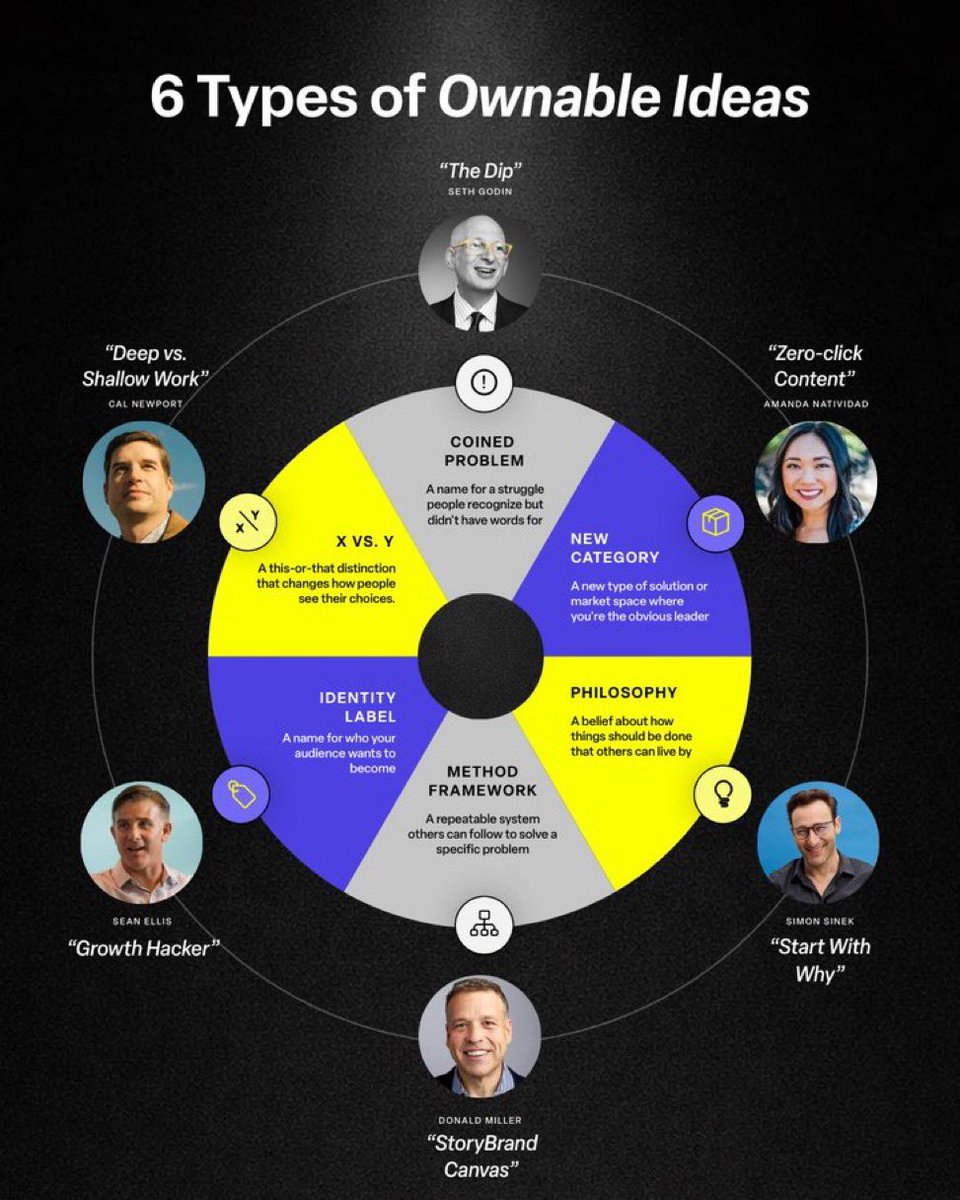
P.S. Coined problems are one of 6 types of ownable ideas. I break down all 6 (and the psychology behind why they work) in my UNIGNORABLE newsletter.
63K smart people read and love it. Are you one of them?
7
4
27
2,275
May 23
Want to move buyers to act?
Put a name to a problem they feel… but can't explain.
When you name the problem they’ll trust you to solve it.
14
18
1,359
May 22
The world has no shortage of original ideas.
It has a massive shortage of people with the courage to actually say theirs out loud.
20
3
35
1,542
May 20
I’m in the compression business...
Most folks in the personal brand space are really just glorified content mills.
More content.
More eyeballs.
More followers.
That’s not what works anymore.
(You can’t outproduce AI.)
I help expert entrepreneurs find the one thing worth saying on repeat and compress it into an idea that travels.
Different game.
Way bigger prizes.
16
38
1,630
Katelyn Bourgoin 🧠 retweeted
May 18
Consistency < Repetition
It’s better to show up less often with the same core message than to post new ideas daily
We trust a message more when we’ve heard it on repeat
15
3
43
3,589
May 17
For big brained experts who sell their thinking…
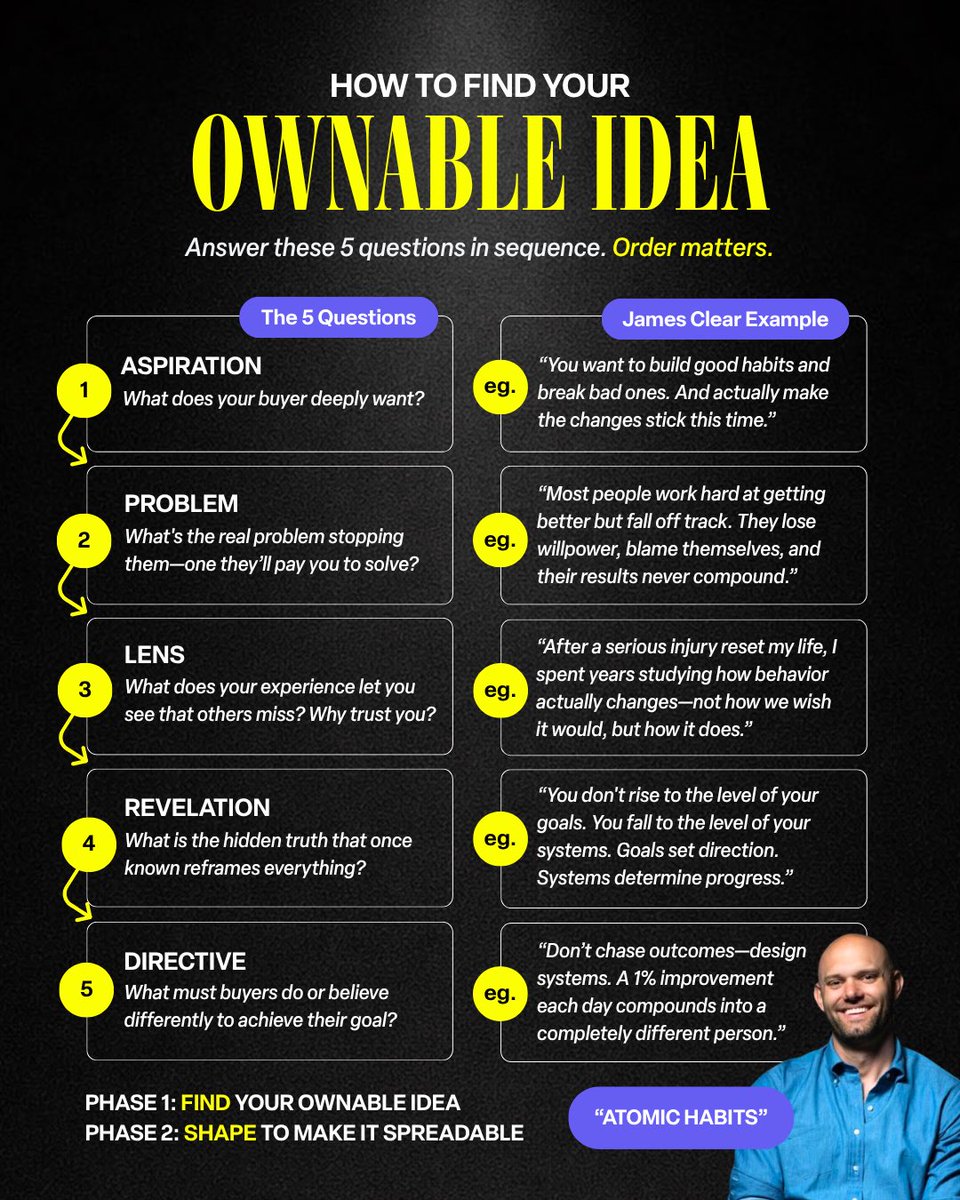
Your ownable idea is your:
🔸 Positioning
🔸 Messaging
🔸 Personal brand
Nail it, and the rest clicks into place.
It’s simple. (not easy)
11
19
1,381
May 16
Life hack:
Don’t take productivity advice from people without kids.
6
37
2,005