
Joined August 2025
- Tweets 1,823
- Following 207
- Followers 176
- Likes 1,916
218 Photos and videos


Pinned Tweet

2 Sep 2025
7 Harsh Truths About MVPs I Learned Building 30 in a Year
8
1
24
4,085
A founder showed me his dashboard today.
10 products launched.
Thousands of users across them.
Revenue across all 10 combined?
Almost nothing.
His conclusion was that he hadn't found the right idea yet.
I'm not sure that's true.
Because when I asked how long he'd worked on any single product after launch, the answer was usually a few weeks.
AI has created a weird new founder archetype:
Someone who can build almost anything...
but never sticks around long enough to find out if anyone wants it.
Do you think most people have an idea problem?
Or a patience problem?
9
Kavya retweeted
20h
Fable makes Opus feel way less capable than I remembered.
1
30
Kavya retweeted
Jun 14
Once Fable comes back, it's over.
I'm throwing in:
> every difficult decision I'm avoiding
> every project that's stuck in limbo
> every market I'm curious about
> every skill worth learning
> every process I want to automate
> every assumption behind my business
> every prediction I want to test
1
1
44
Kavya retweeted
Jun 14
Lowkey terrified of a future where all the models get banned and we're forced to remember how to code everything ourselves 😭
1
28
Kavya retweeted
Jun 14
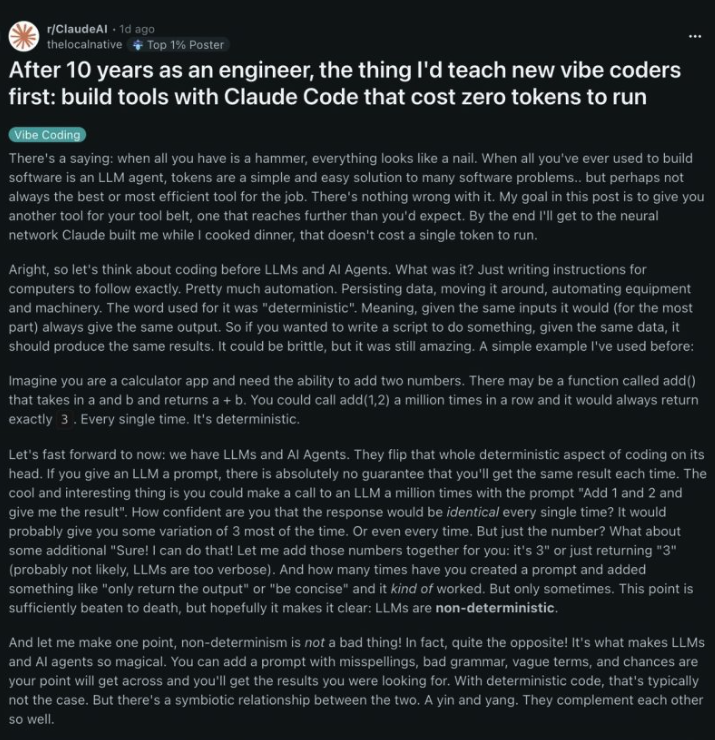
A software engineer with 10 years of experience shared the biggest mistake most vibe coders make.
it's costing them way more than they realize.
here's what happened:
1/ most people use AI as the worker
>want to monitor a website
>ask the AI to check it every day
>AI runs every day
>tokens get burned every day
the task gets done.
but the costs never stop.
2/ his advice was simple
don't use AI as the worker.
use AI as the builder.
spend tokens once.
then run the output forever.
3/ his example
>want to track changes on a website
>have Claude Code write a scraper
>have it detect updates
>have it send alerts automatically
the AI builds the system once.
the system does the work forever.
4/ he applies this everywhere
>automation scripts
>monitoring tools
>internal workflows
>custom software
instead of paying AI to repeatedly solve the same problem...
he pays AI once to eliminate the problem.
5/ then he took it further
>used Claude Code to build a neural network
>something that would've taken weeks to build manually
>generated the entire foundation while he was making dinner
again:
>one-time token cost
>long-term free execution
the mindset shift:
most people are using AI as labor.
he uses AI as infrastructure.
my take:
this is probably one of the most important concepts in AI right now.
the highest leverage use of AI isn't asking it to do work.
it's asking it to build assets that keep working after the conversation ends.
the best AI outputs aren't answers.
they're systems.
1
48
Kavya retweeted
Jun 13
It's so over for anyone who went all-in on Claude Fable 5.
The US government just pulled access.
Back to Opus 4.8 starting today.
Pretty brutal considering how many teams just rebuilt their workflows around Fable.
Jun 13

As a result of a US government directive, we are suspending access to Claude Fable 5 for all users. You can continue to use all other Claude models.
Here’s what this means for you:
Across Claude products, new sessions will run on your selected default model or Opus 4.8, and existing Fable 5 sessions will end with an error.
On the Claude Platform, requests to Fable 5 will also return an error. Please update your integrations to other Claude models.
We know this is a disruption to your workflows; we appreciate your patience and support.
1
1
1
428
Kavya retweeted
Jun 12
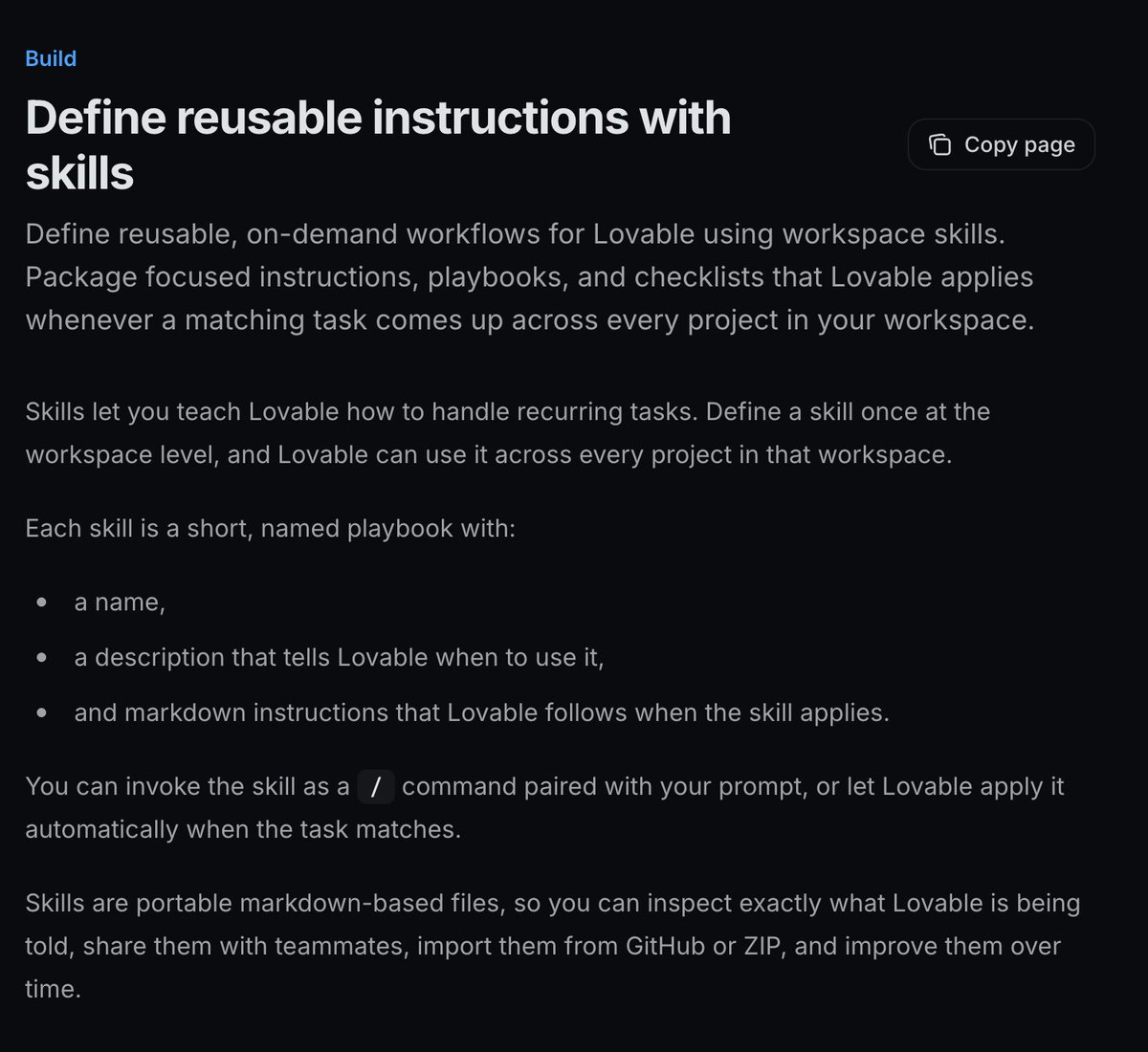
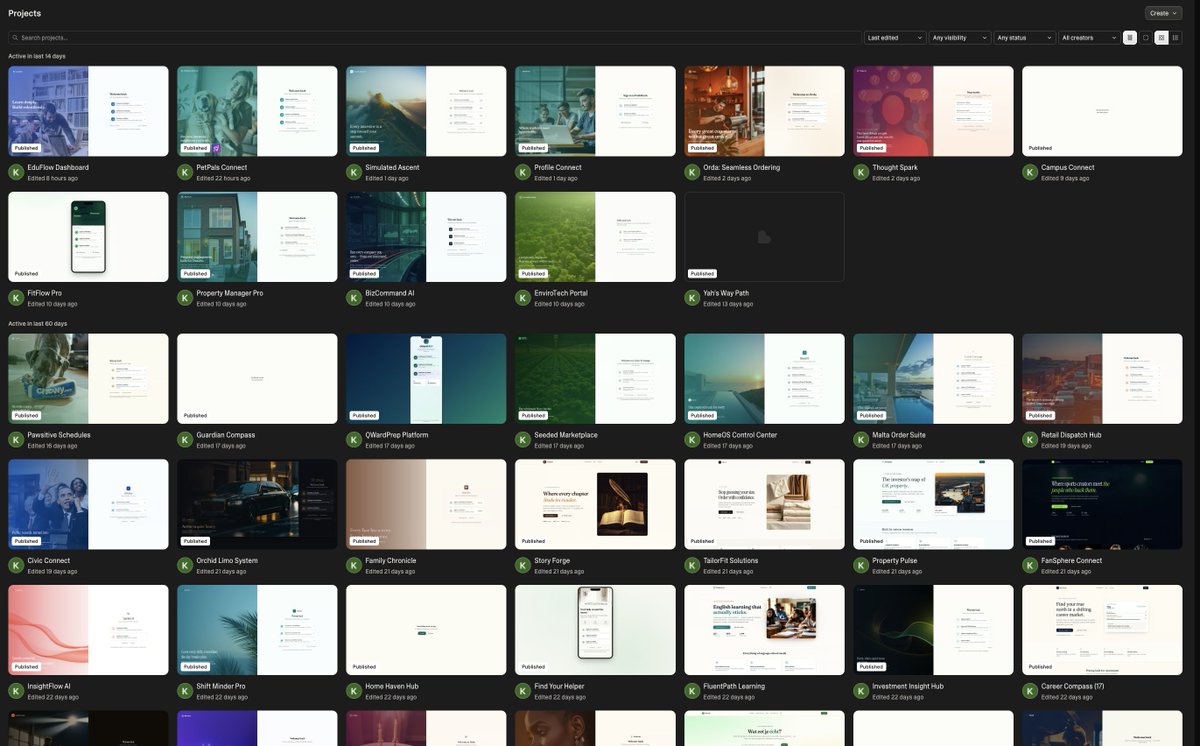
after 100 lovable apps, these are the rules i refuse to break:
1. don't start with screens. start with users, workflows, permissions, and edge cases
2. design your database before your UI. bad schemas are expensive. ugly UI is cheap
3. generate auth and roles first. permissions become painful to retrofit later
4. ask for one feature at a time. "build the whole app" creates cleanup, not progress
5. tell lovable exactly what NOT to touch. otherwise it'll refactor working code while fixing something else
6. when something works, commit immediately. never trust future prompts
7. use separate chats for separate features. context pollution is real
8. make lovable explain the implementation plan before writing code on larger features
9. create reusable primitives before features. buttons, forms, tables,

1
110
Kavya retweeted
Jun 12
$2M for a screenshot app 🤯
That little icon got them $2M in funding?
need to focus on icon more than product now
Jun 11

Introducing Pool
That little icon got us $2M in funding, 15M organic views, and now you can all finally discover what's behind it.
Pool is "just an app for your screenshots." But it holds a few bets we decided to build a whole company on.
We believe the context of the future is your camera roll. Understanding someone's taste, the texture of their life, can unlock things we can't even comprehend yet.
We believe the future of interfaces will feel the way games make us feel, computing as a beautiful mix of art and technology.
Now live on the App Store.
1
49
Kavya retweeted
Jun 11
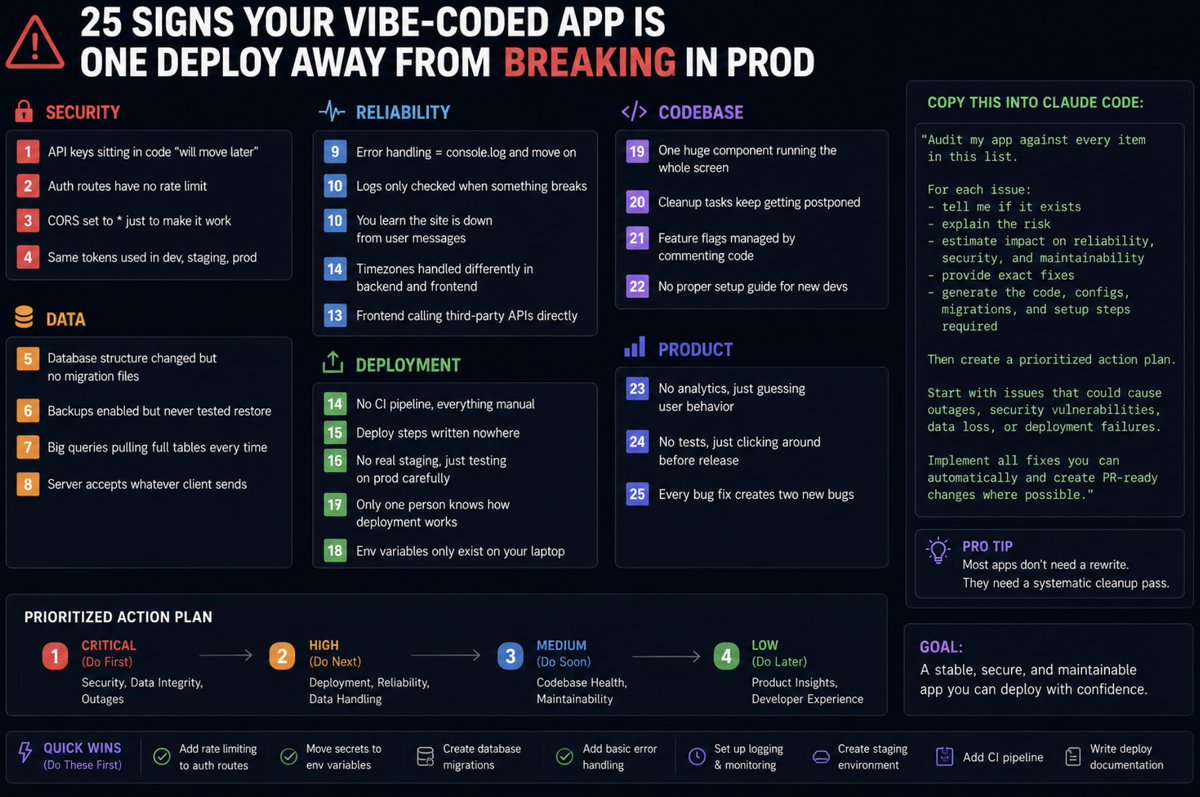
25 signs your vibe-coded app is one deploy away from BREAKING in prod
security
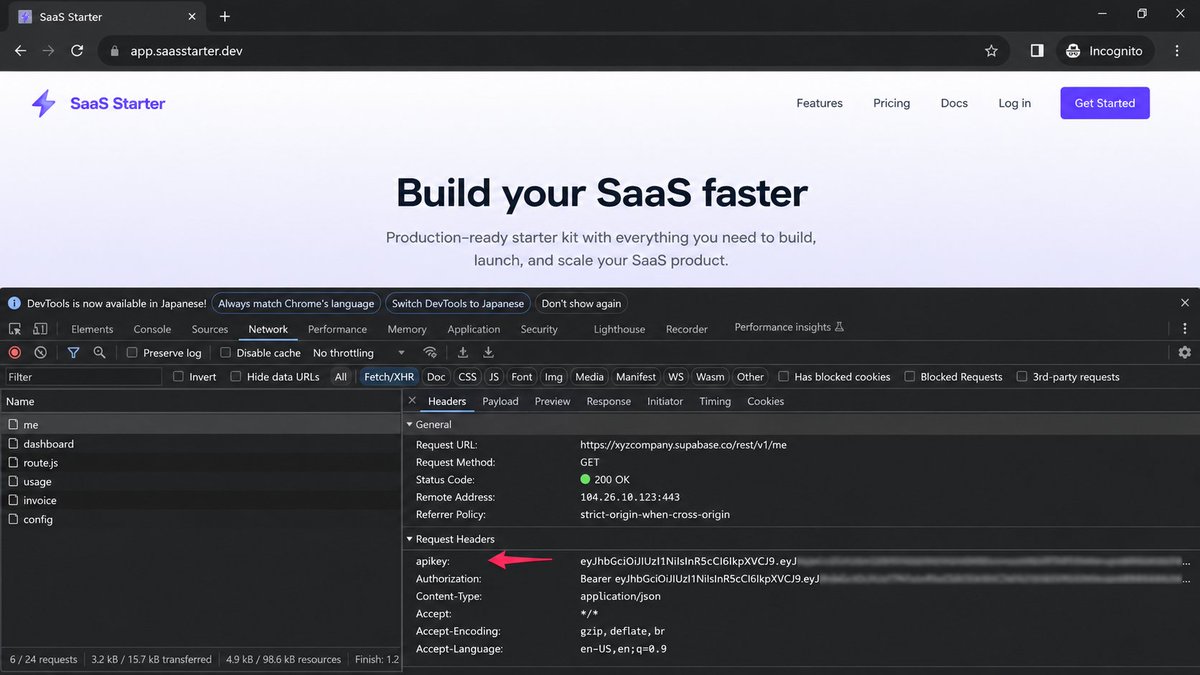
1. api keys sitting in code "will move later"
2. auth routes have no rate limit
3. cors set to * just to make it work
4. same tokens used in dev, staging, prod
data
5. database structure changed but no migration files
6. backups enabled but never tested restore
7. big queries pulling full tables every time
8. server accepts whatever client sends
reliability
9. error handling = console.log and move on
10. logs only checked when something breaks
11. you learn the site is down from user messages
12. timezones handled differently in backend and frontend
13. frontend calling third-party APIs directly
deployment
14. no CI pipeline, everything manual
15. deploy steps written nowhere
16. no real staging, just testing on prod carefully
17. only one person knows how deployment works
18. env variables only exist on your laptop
codebase
19. one huge component running the whole screen
20. cleanup tasks keep getting postponed
21. feature flags managed by commenting code
22. no proper setup guide for new devs
product
23. no analytics, just guessing user behavior
24. no tests, just clicking around before release
25. every bug fix creates two new bugs
copy this into Claude Code:
"Audit my app against every item in this list.
For each issue:
- tell me if it exists
- explain the risk
- estimate impact on reliability, security, and maintainability
- provide exact fixes
- generate the code, configs, migrations, and setup steps required
Then create a prioritized action plan.
Start with issues that could cause outages, security vulnerabilities, data loss, or deployment failures.
Implement all fixes you can automatically and create PR-ready changes where possible."
5
1
3
158
Kavya retweeted
Jun 12
Everyone's talking about Claude Fable 5.
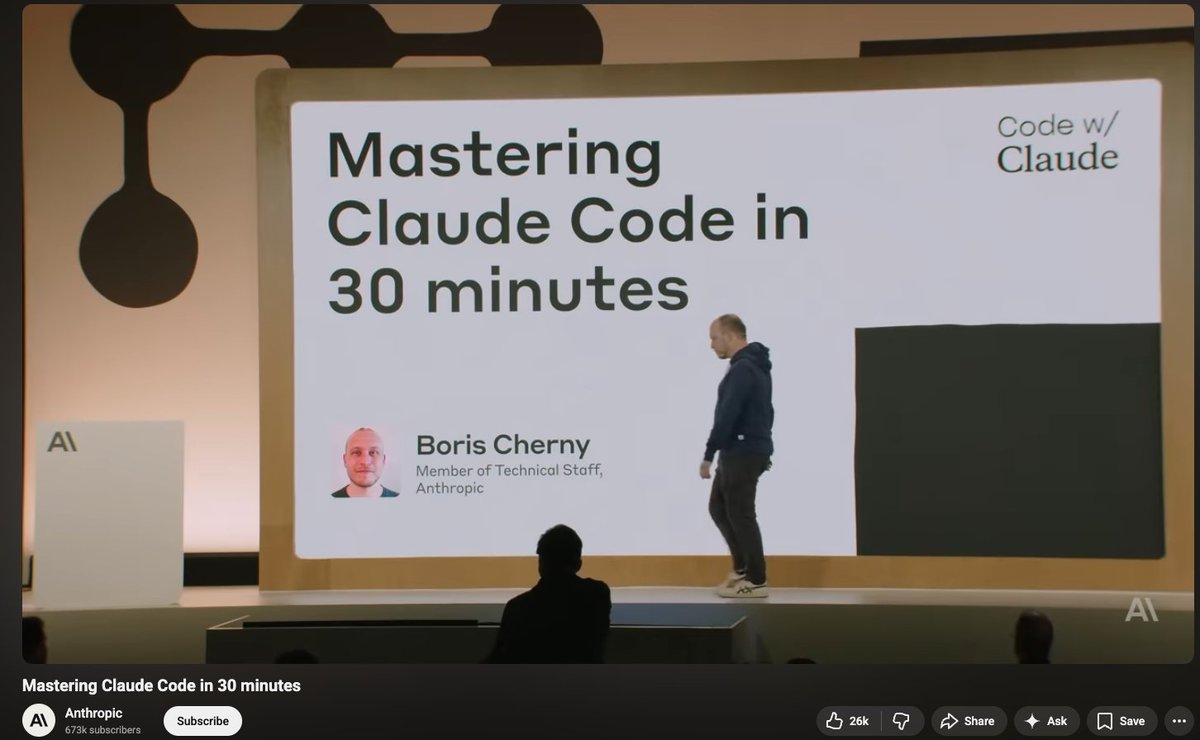
Almost nobody is talking about the fact that the core ideas were already being shown publicly by the creator of Claude Code.
For free.
Sub-agents.
Memory.
Hooks.
Planning before execution.
(full breakdown in the article)
1
57
Kavya retweeted
Jun 11
HOLY SH*T.
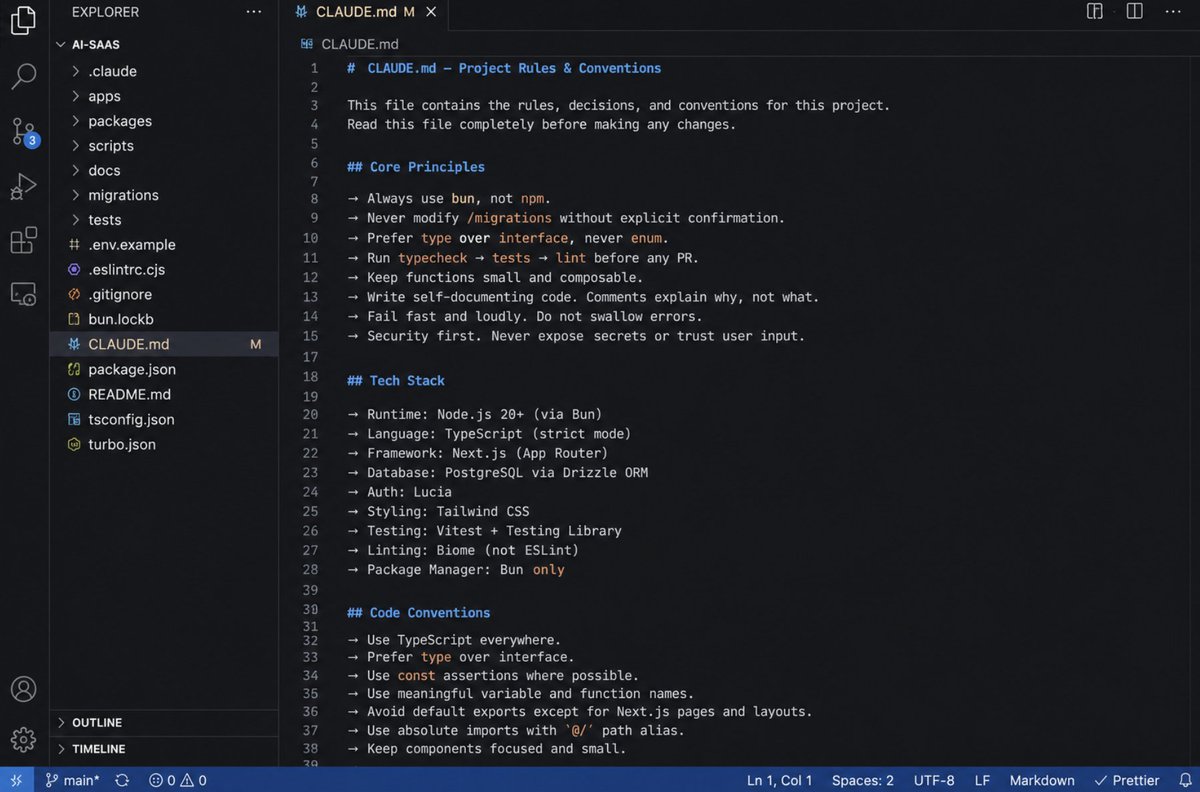
The biggest Claude Code unlock has nothing to do with Claude.
It's memory.
Most builders spend hours re-explaining:
→ project structure
→ coding conventions
→ preferred patterns
→ things Claude should never touch
Every. Single. Session.
The best builders turn those lessons into CLAUDE.md and make Claude read them automatically.
That's when outputs start feeling consistent.
(full breakdown in the article)
1
82
Kavya retweeted
Jun 11
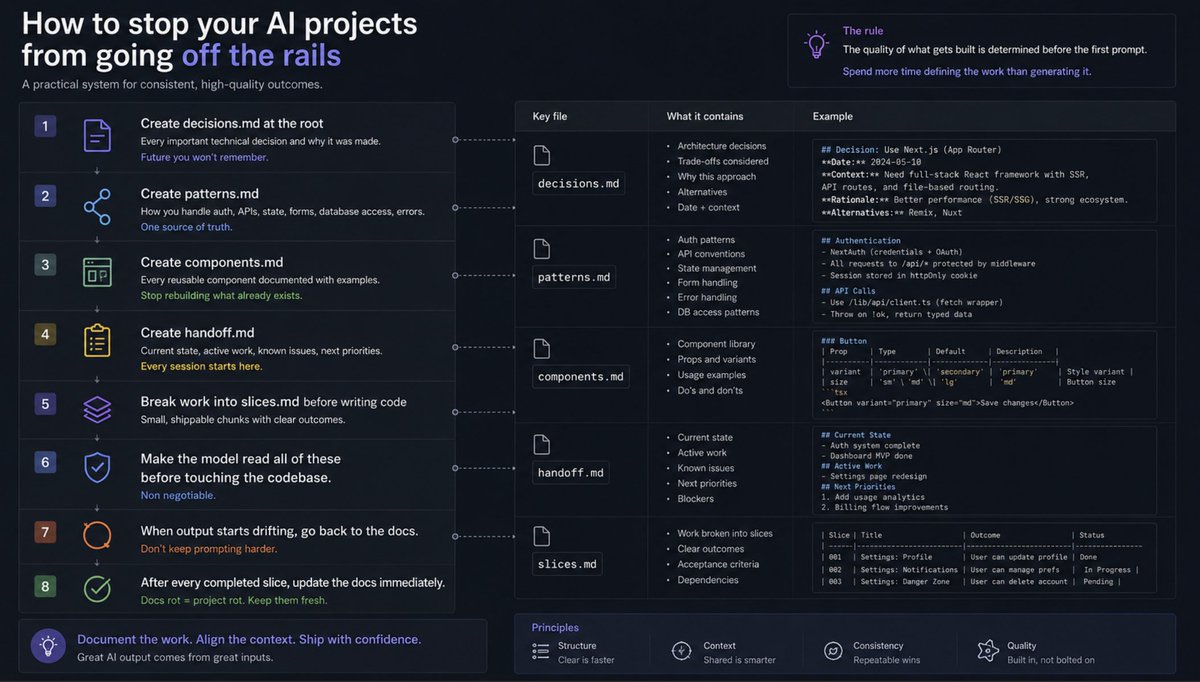
Vibe Coding PRO MAX TIP :
most CLAUDE[.]md files are missing the stuff that actually matters.
mine contains things like:
- every API route must return:
{ success, data, error }
- every Supabase table gets:
id, created_at, updated_at
no exceptions
- React Query for server state
Zustand for UI state
never use one for the other's job
- route handlers can validate and call services
business logic never lives there
- Stripe webhooks go in their own service
never mixed with API route logic
- every form uses the same Zod pattern
parse -> validate -> service -> response
- no component above 200 lines
split before it becomes a problem
- all list endpoints require pagination
no fetch-all queries
- every async action needs:
loading state
error state
success state
- all admin actions require audit logs
- all file uploads require:
file type validation
size validation
auth validation
- every new feature follows:
schema -> service -> API -> UI
1
77