46 Photos and videos
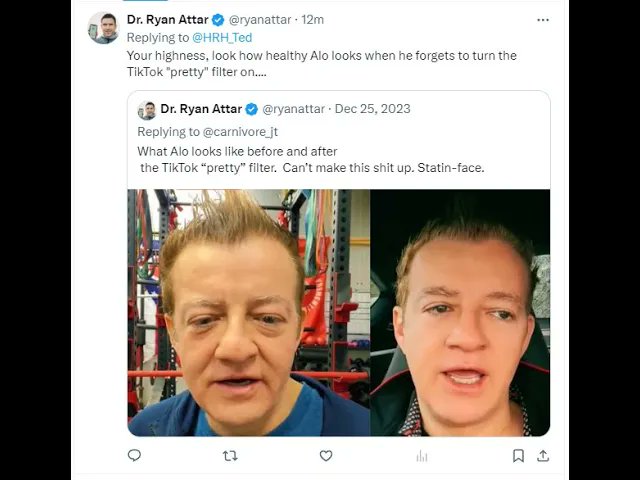
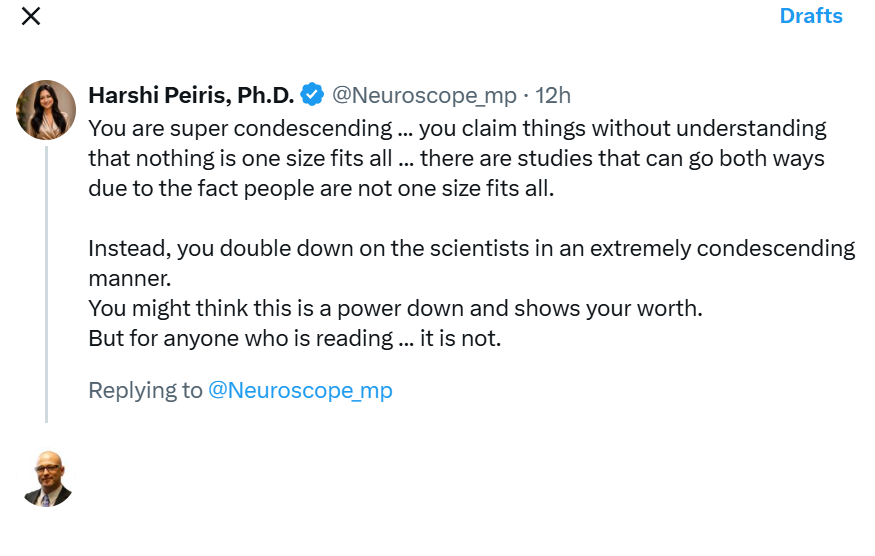
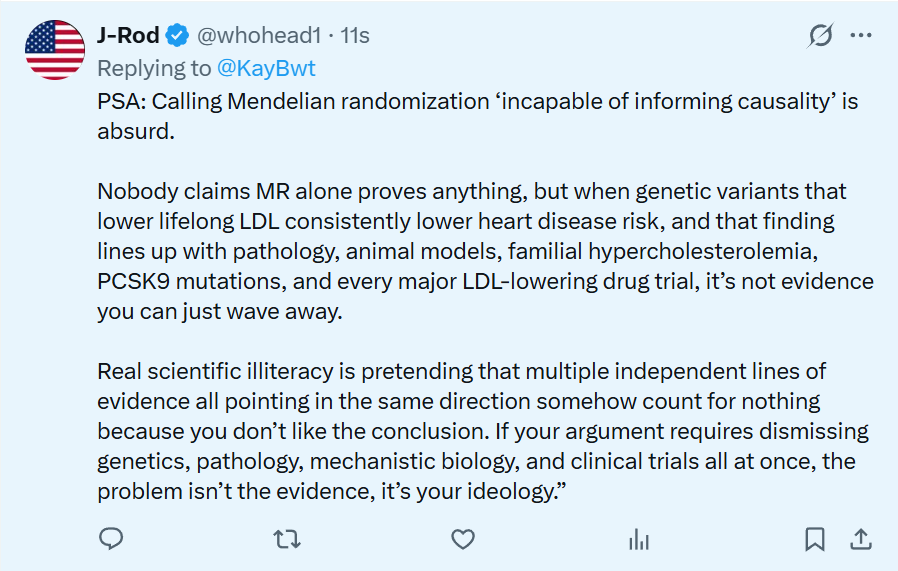

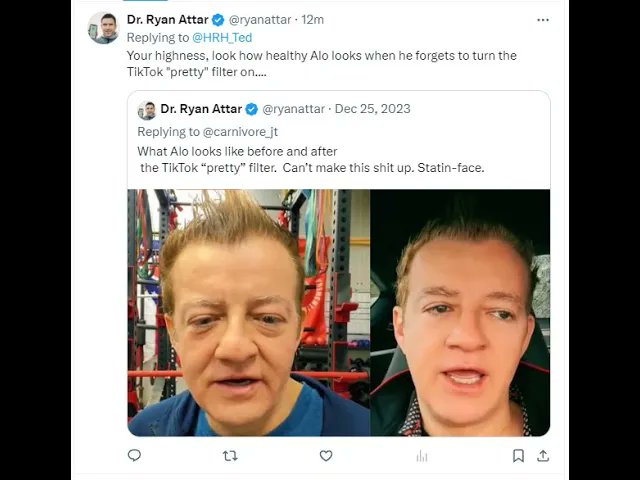

I think I've been clear. I'm not here to do that.

1
10
779
Red Meat Bad, Says @MictheVegan. youtu.be/IZ3twXkSACA?si=DNEm… via @YouTube Premieres a bit later today.

1
2
22
1,483
youtube.com/live/o0c-cc14L1k Yes, this is what happens when the person behind this shit-posting LLM drivel-slop is confronted. How did he do? LMFAO.
Jun 4

rofl this mf genuinely just has AI run his account and isn't even reading anything "he" is posting.
this has got to be a new low
1
1
15
3,489
Bart Kay retweeted

🚨BREAKING: Rupert Lowe has just VOWED to DEFUND the BBC on day one of a Restore Britain government 🇬🇧
In a response to yet ANOTHER hit piece on Rupert and Elon Musk by the BBC, Lowe said: “The BBC have run a sneering attack piece including both myself and Elon Musk….
A restore Britain government will DEFUND the BBC, day one - Let’s see who’s laughing then.”
Brilliant news - DEFUND THE BBC 🚫
@RupertLowe10 @elonmusk

380
2,613
14,594
122,340
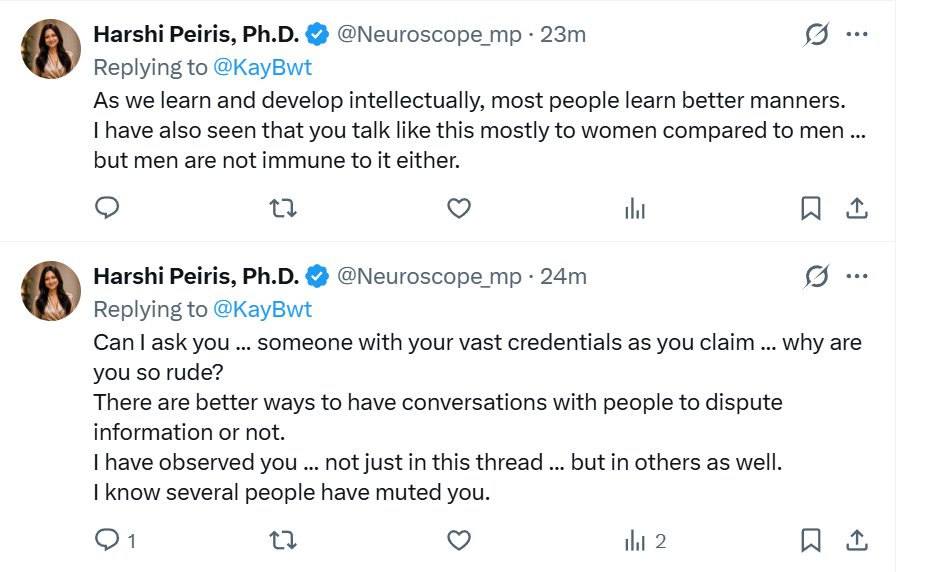
Well. if you come to me with a question, I'll do my best to answer it. If you post arrogant ignorant slop as it its a fact, I'll tear you seven new assholes for the education of those who are open to that. One gets the exact level of respect from me they show that they deserve.
2
10
577
PSA. I'm often accused by painfully stupid, egotistical, and ignorant people (or all three at once) of dismissing evidence. No, I dismiss that which is NOT in fact acceptable as evidence; and I provide my clear and unassailable reasoning for doing so. Deal with it, imbeciles.
5
3
27
883
Again, I have to cut & paste because this poor destitute could only cope by blocking me... but still wants to mouth off anyway. Sadly for her, this comment is simply slop. An argument requires substance, material value, and some sense of its own utility. I'd send that PhD back.
2
1
26
912
Nonsense: 1. many ARE in fact claiming MR can establish causality. It cannot, STILL. 2. There are NO extant studies with the capacity to inform on 'risk' of ASCVD. 3. Your arrogant and ignorant response does NOT affect the actual epistemological standards required, nor the facts.
3
1
23
1,061
PSA: Anyone lauding Mendelian studies as remotely capable of informing on cause and effect in ASCVD is telling you that they are scientifically and epistemologically illiterate, and are mindlessly regurgitating what they've read about it, because they simply do not understand it.
6
3
46
8,849
We've dealt with this already, Simpson. You are completely scientifically illiterate, and in NO position to comment on this topic: youtube.com/live/o0c-cc14L1k, your slop positing does NOT affect the facts. Not a jot. Get back in your lane, which is bariatric butcher.
May 25

An N=1 is not meaningless. It is how medicine often notices anomalies.
But an N=1 also does not overturn decades of converging mechanistic, genetic, pathological, epidemiologic, and clinical trial evidence linking ApoB-containing particles and LDL exposure to atherosclerosis.
Nick’s result is interesting precisely because biology is complicated. Some people with extremely high LDL develop disease early. Some later. Some appear protected for a period of time. That has always been true. Smoking works the same way — not every smoker gets lung cancer at 40. That does not invalidate causality.
And importantly, children born with even higher LDL levels from familial hypercholesterolemia are not all dropping dead at age 10. What we typically see is accelerated atherosclerosis with premature cardiovascular disease — often major events in the 20s, 30s, or 40s depending on mutation burden, lifetime exposure, and treatment. The biology is cumulative exposure over time, not instantaneous punishment.
We also do not have a complete lifelong exposure history here. We have selected data points and retrospective interpretation. We do not know what his LDL levels were throughout adolescence and early adulthood, what his ApoB burden was over time, what his inflammatory markers were, what his genetics beyond LDL may contribute, or how long he has actually maintained these extreme levels.
That matters, because atherosclerosis is fundamentally an exposure-over-time disease.
So the real question is not:
“Can a person with LDL >500 have little plaque today?”
Of course they can.
The question is:
“What happens to population risk as cumulative ApoB exposure rises over decades?”
That evidence remains remarkably consistent.
And the current LMHR/Keto-CTA work has another limitation people should acknowledge openly: the imaging tools being used were validated primarily in symptomatic or known-CAD populations, not asymptomatic low-plaque individuals where measurement noise becomes a much bigger issue.
So curiosity is warranted. Premature declarations that “LDL doesn’t matter” are not.
Medicine is full of exceptions. Biology always has outliers. But outliers do not erase base rates.
2
18
2,342