
Husband | Harvard (LLM), Cape Town (PhD), KwaZulu-Natal (LLB) Law | Mandela Rhodes Scholar | Ford Global Fellow | Harvard Kaufman Public Service Fellow | WEF
Joined July 2011
- Tweets 2,646
- Following 960
- Followers 7,457
- Likes 4,111
190 Photos and videos



Musa Kika retweeted

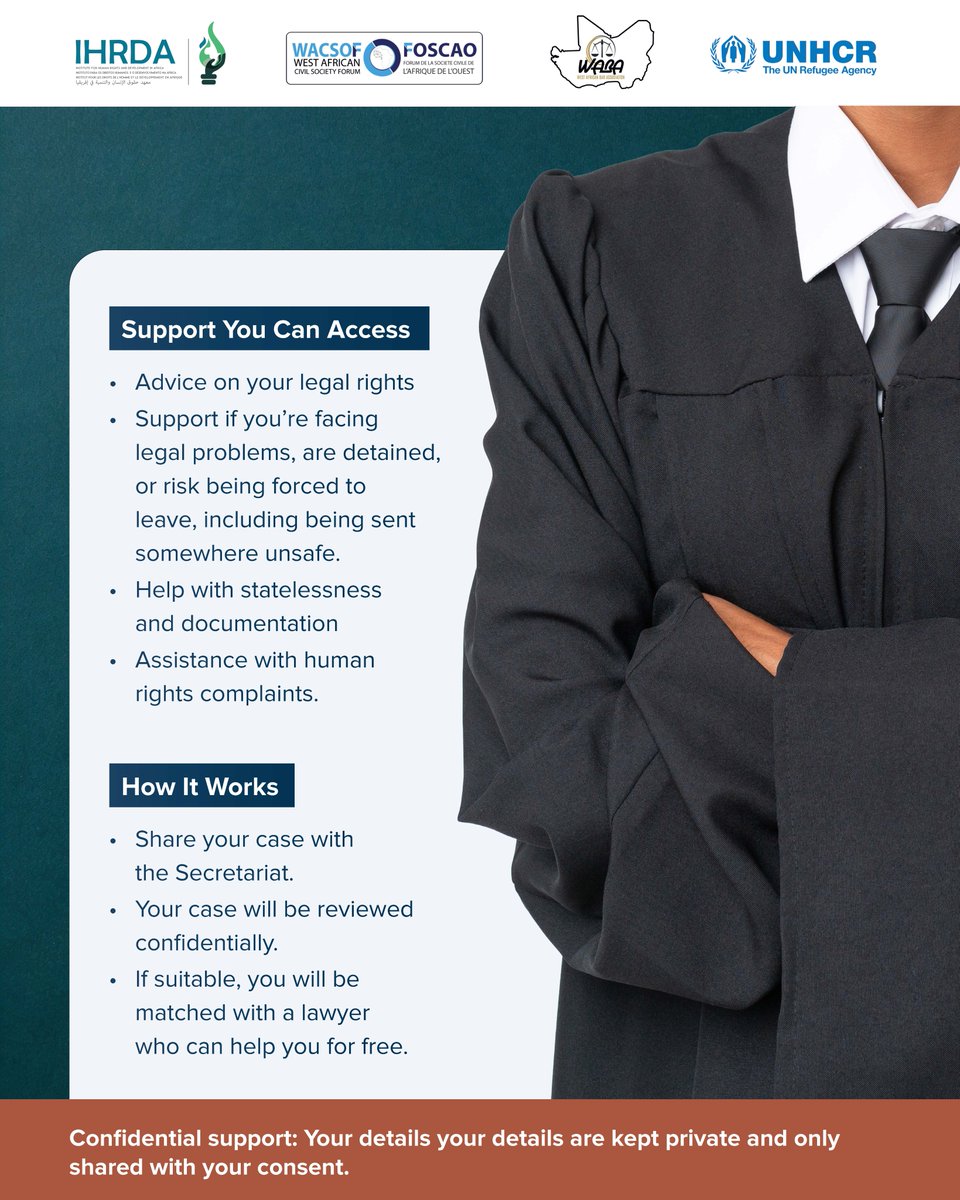
Being far from home shouldn’t mean being far from justice.
You deserve to be heard, protected, and supported.
Free legal support is available for refugees and displaced people across the ECOWAS region.
📞 220 418 1096 ✉️ ihrda@ihrda.org
#RefugeeRights #AccessToJustice

3
3
242
Musa Kika retweeted

Jun 11
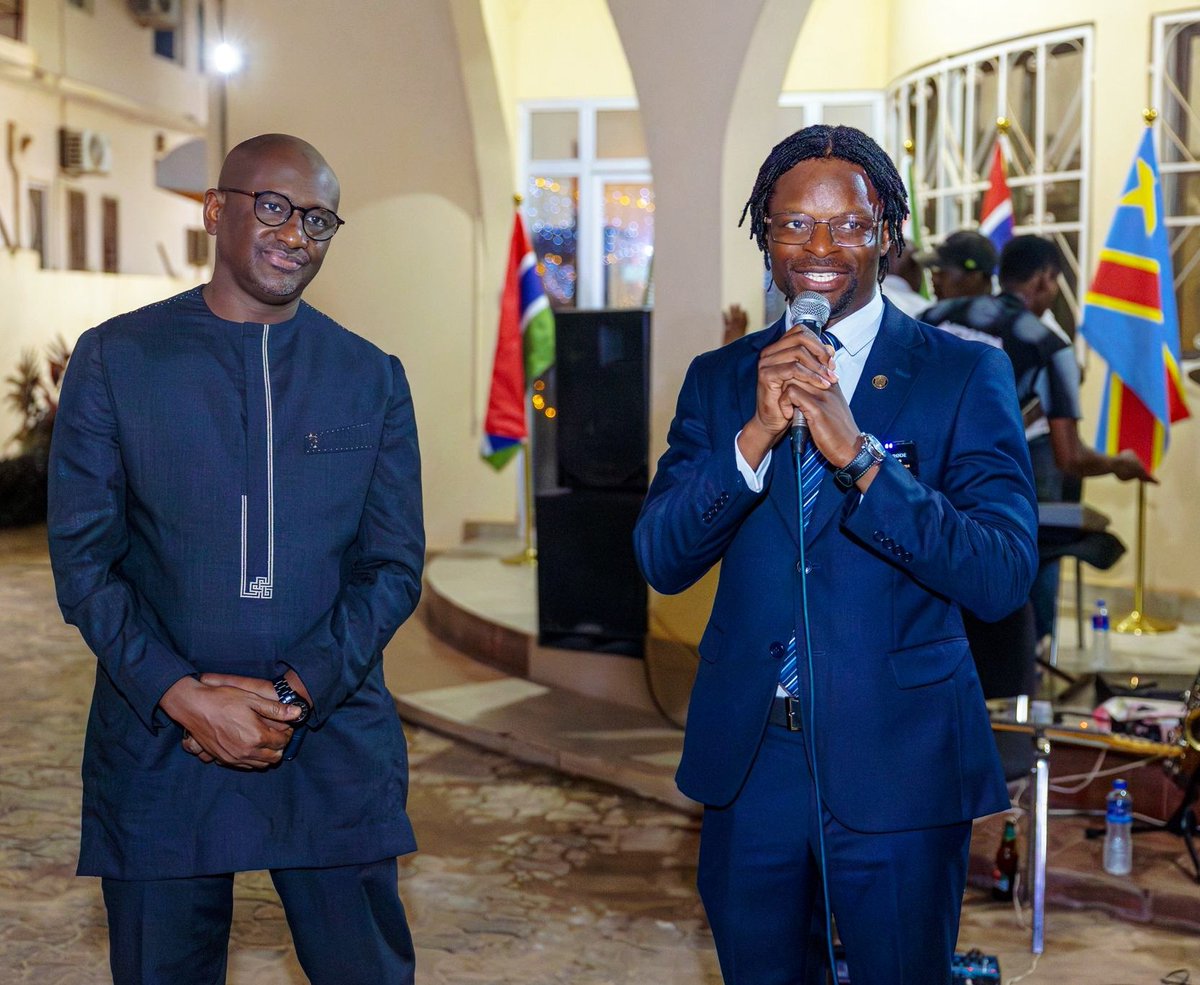
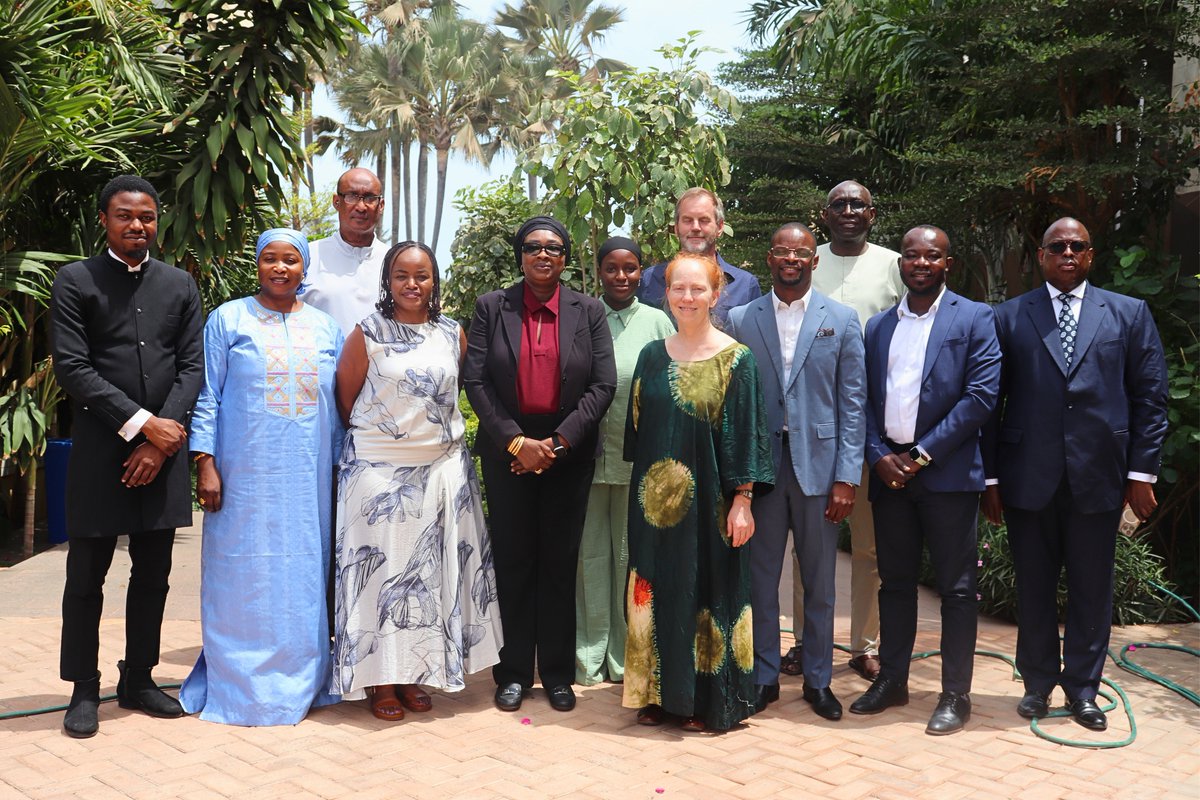
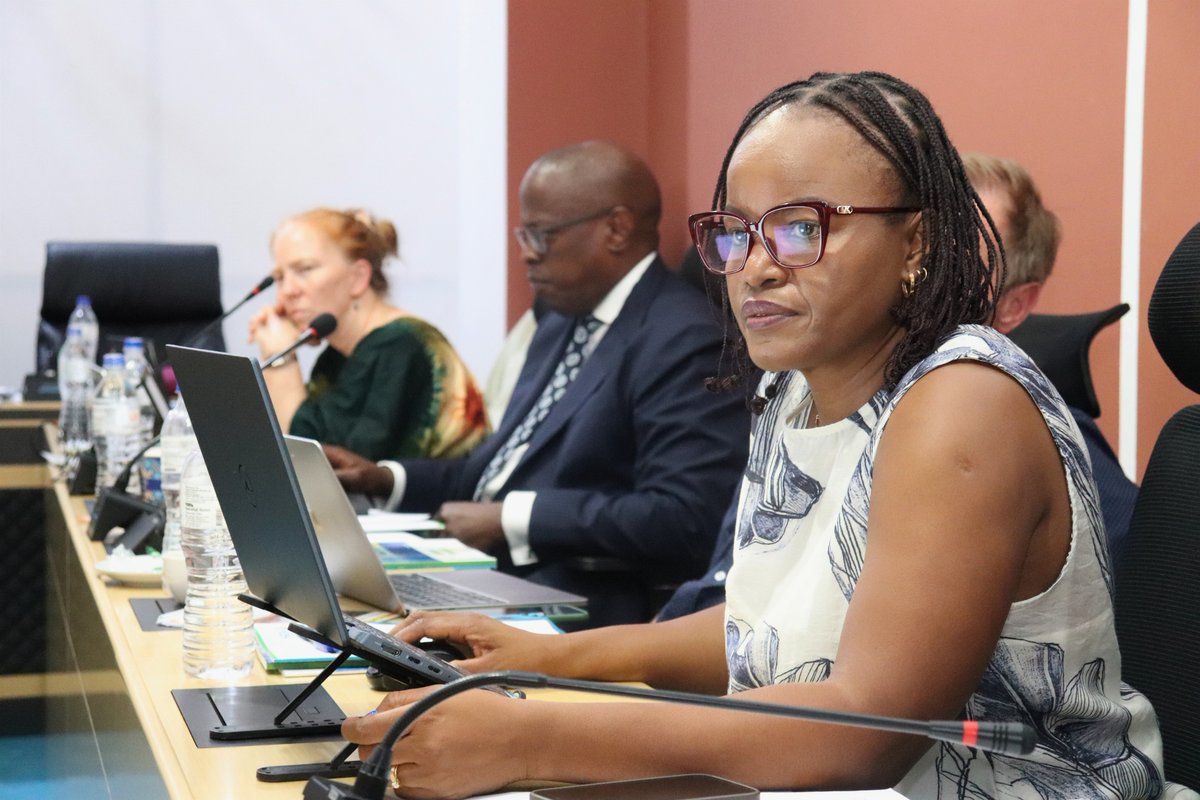
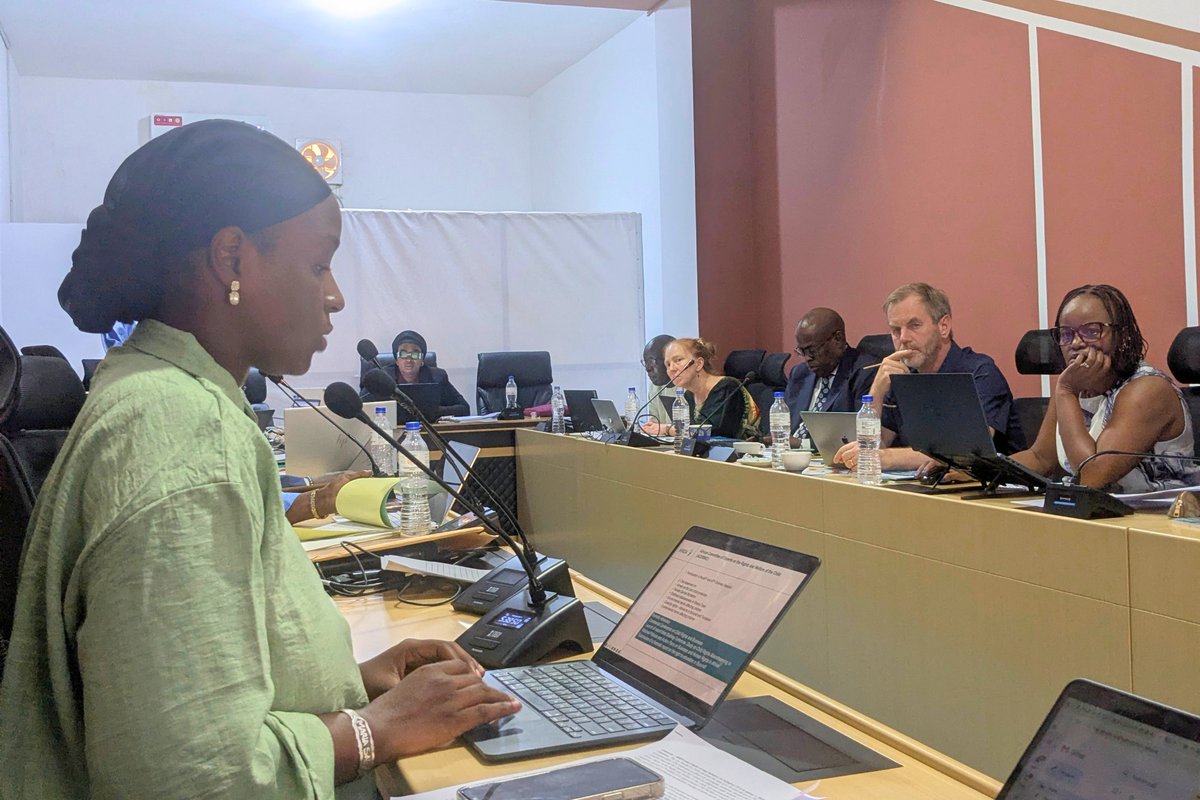
This week, the Board of Directors of the Institute for Human Rights and Development in Africa (IHRDA) is having its 28th meeting in The Gambia. Led by Justice Naceesay Salla-Wadda as chairperson, currently the President of the Court of Appeal in The Gambia, IHRDA’s Board is made up of nine (9) members representing a mix of technical expertise from multiple regions in Africa and beyond: Justice Naceesay Salla-Wadda (The Gambia), Ms. Orquídea Massarongo-Jona (Mozambique), Mr. Musa Secka (The Gambia), Ms. Julia Draper Harrington-Reddy (United States), Mr. Jacob Van Garderen (South Africa), Mr. Ibrahima Kane (Senegal), Dr. Donald Rukaré (Uganda), Ms. Cynthia Rollings (United States) and Dr. Musa Kika as Executive Director and ex-officio (Zimbabwe).
The Board powers IHRDA’s pioneering work of strengthening the African human rights system through legal advocacy and capacity building.
Find out more about our Board members here: ihrda.org/en/about-us/board-…
Caption:
Members of the Board; members of management Deputy Executive Director Michael Nyarko and Director of Finance and Administration Amie Njie; and Legal Officer Abdulmalik Bello and Advocacy Officer Maria Saine who had an opportunity to update the Board on the programming activities of the last six months.
4
8
300
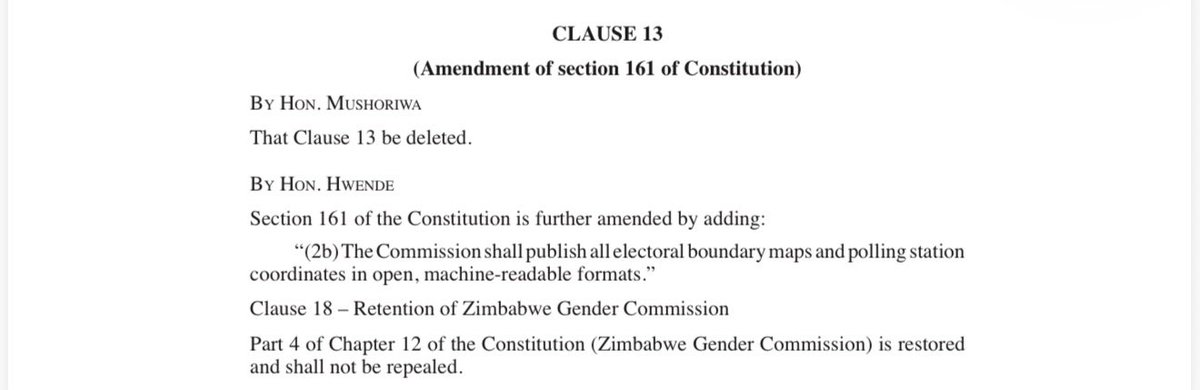
Surely you all knew the Gender Commission clause would be deleted Cde Hon. Of course that's not the interest of those pushing the Bill! Now we celebrate and forget what this Bill is actually about? Focus is what we need.
Jun 11

The Gender Commission will now remain as it is in the constitution, following strong public opposition to the amendment. I had submitted an amendment, which is on the order paper, against the disbandment of the commission. This issue is now settled.

1
3
224
Musa Kika retweeted

Jun 4
Such a small world Amb .@TimoOlkkonen. @IHRDAfrica is a walker of their talk. They are the lead legal team on my #statelessness case @achpr_cadhp &helped secure a landmark decision in my favour albeit a lack of implementation. We shld indeed continue to #standup4humanrights
1
1
3
152
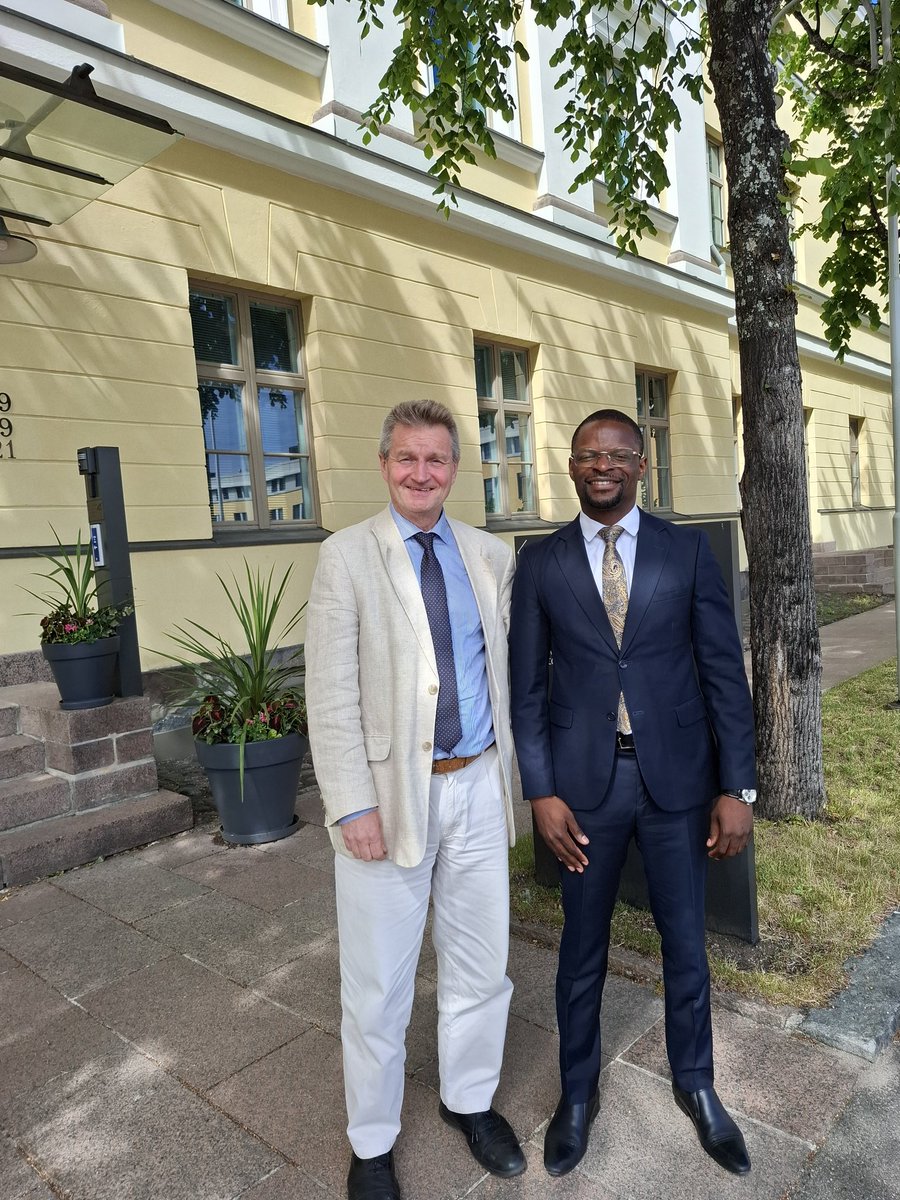
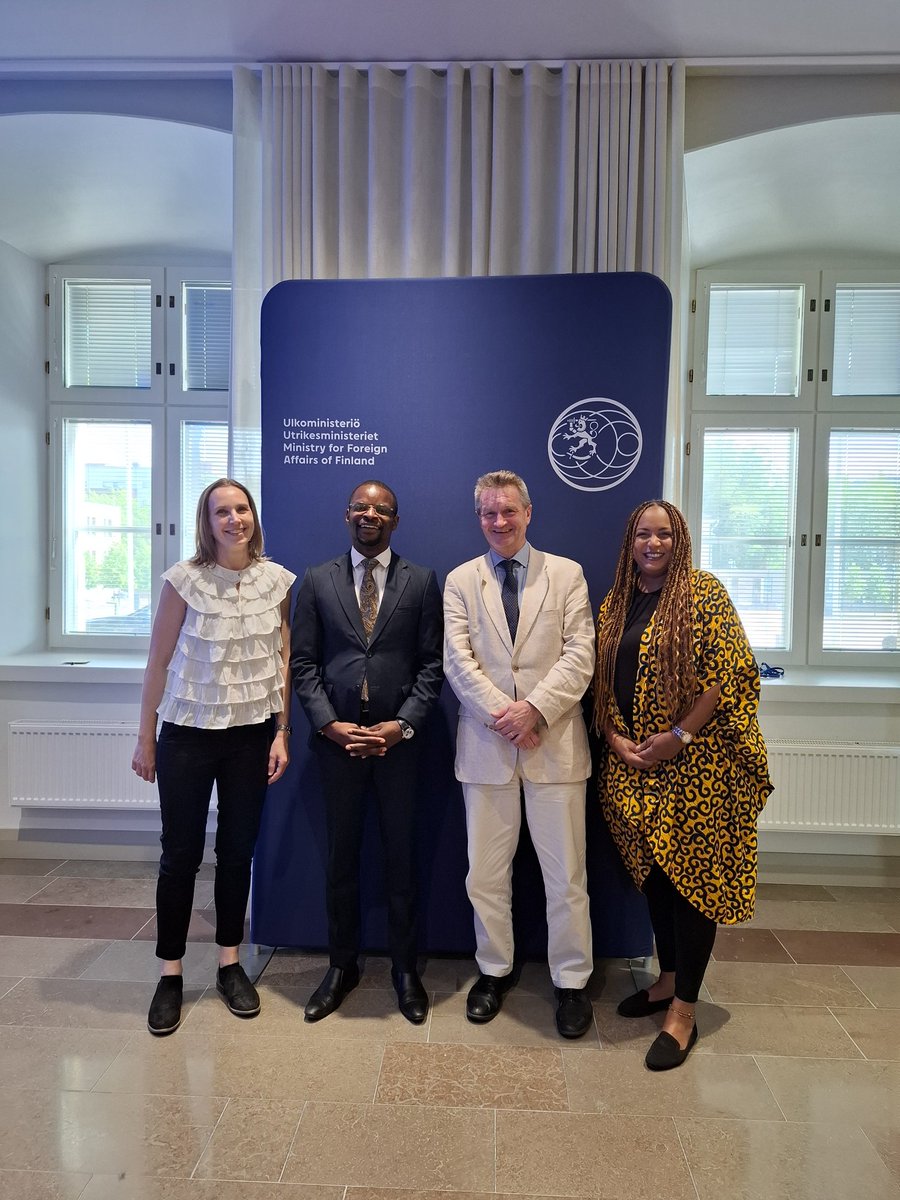
Really nice reconnecting Ambassador @TimoOlkkonen. Your love for Africa is strong, and looking forward to the many things we will continue doing together.
@IHRDAfrica

After several years, great to meet @KikaMusa & Brice Dejougoue from @IHRDAfrica .Not only reminiscing of times in Zimbabwe but having informative discussion on human rights& law in the AU and regional economic commissions. The rights-angle in integration should not be forgotten.
1
3
6
1,025
Towards free movement of people in Africa:
Togo becomes sixth African country to grant visa-free entry to all Africans
africa.businessinsider.com/l…
1
2
179
Every system has its own defenders. That's it. So, we understand.
May 26

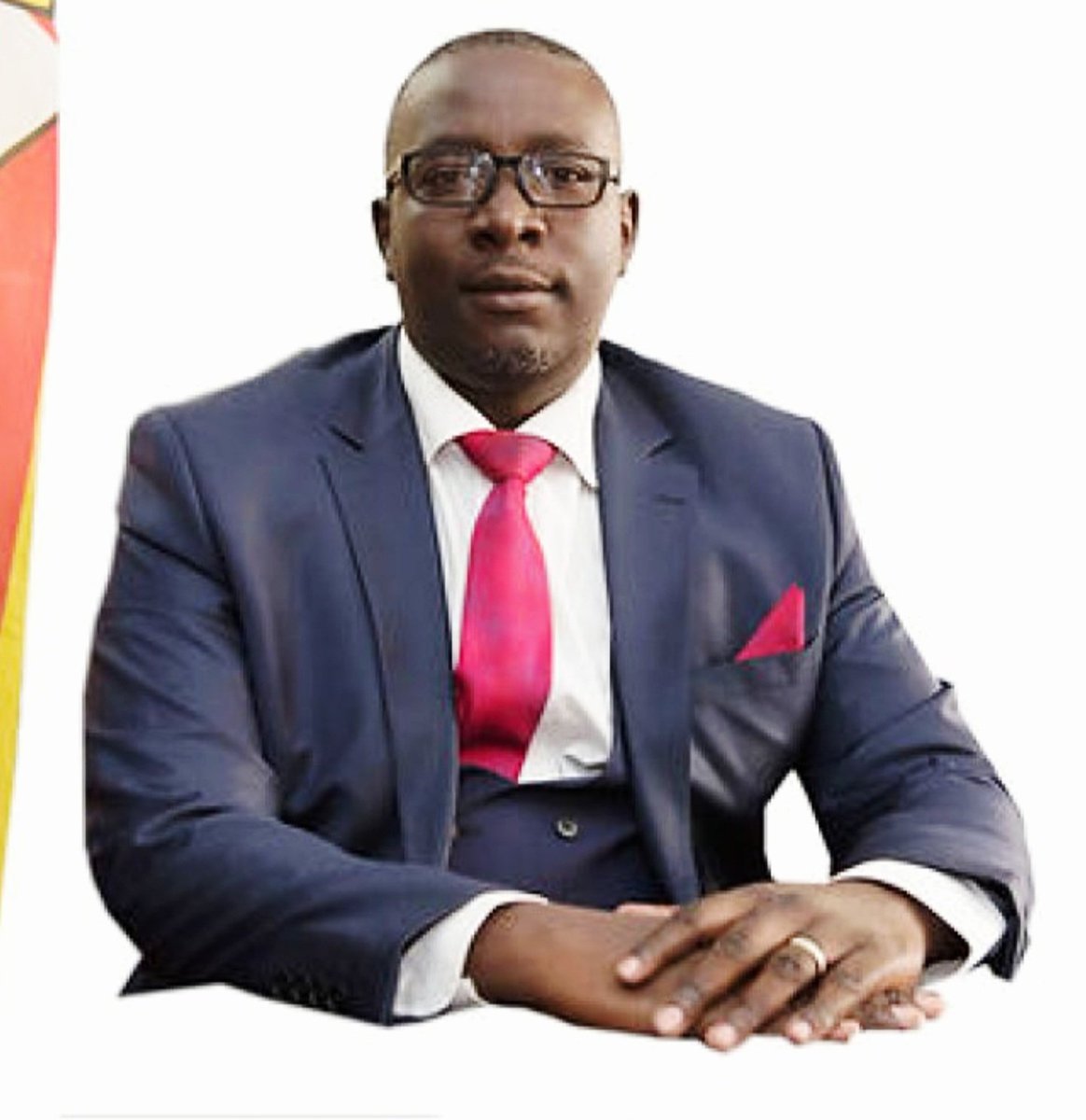
A RESPONSE TO “LUKE MALABA’S LEGACY AS CHIEF JUSTICE OF ZIMBABWE”
By Advocate Dr Lewis Uriri
The article attributed to the very senior, respected and decorated human rights lawyer and advocate, Ms Beatrice Mtetwa calls for a firm but fair response. Chief Justice Luke Malaba’s legacy cannot be reduced to political disappointment, selective litigation outcomes, or the irritation of those who believe that constitutionalism means that courts must always decide against the State.
Credit is due where credit is due.
His story did not begin at the Constitutional Court.
It began with sacrifice, interruption, discipline and recovery.
Public profiles record that he served as a prosecutor from 1981 to 1984, as a magistrate from 1984 to 1994, then as a High Court judge from 1994 to 2001, a Judge of Appeal from 2001 to 2008, Deputy Chief Justice from 2008 to 2017, and Chief Justice from 2017. He also served for over a decade on the COMESA Court of Justice.
Before that judicial ascent, he had known the cost of nationalist conviction.
His path was not one of colonial comfort. He belonged to that generation of young African intellectuals whose education, liberty and professional progression were disrupted by nationalist politics.
His detention, restriction, political activism, and reported expulsion from the then University of Rhodesia alongside nationalist contemporaries such as the late Witness Mangwende are not incidental footnotes.
They form part of the moral architecture of the man.
That history matters. A young man loses years to the motherland, is detained and restricted, is pushed off the expected academic track, and yet rises again — first through prosecutorial service, then through the magistracy, then through provincial and regional judicial administration, and finally to the highest judicial office in the Republic.
That is not a small life. It is a national life.
His time as prosecutor and magistrate is especially important. A judge who has sat in the magistrates’ court understands the daily face of justice: the unrepresented accused, the rural litigant, the overburdened clerk, the police docket, the bail application, the remand prison, the maintenance dispute, the small civil claim, the practical indignities of distance and delay. His later obsession with decentralisation, court construction, administrative order and electronic case management was therefore not bureaucratic vanity.
It came from lived institutional memory.
As magistrate in Masvingo, magistrate in charge of the province, and later regional magistrate, he saw justice from the ground up.
By the time he entered the superior courts in 1994, he had already been formed by the practical realities of Zimbabwean justice.
That distinguished him from the purely appellate mind. He knew that constitutionalism is not only written in elegant judgments. It is also built in courtrooms, registries, filing systems, provincial stations, disciplined judicial officers, and ordinary people being able to reach a court without ruinous travel costs.
Ms Mtetwa is correct in one respect: Luke Malaba was an outstanding jurist before he became Chief Justice.
But she is wrong to suggest that the jurist disappeared upon his appointment.
His jurisprudence remained marked by rigour, textual discipline, institutional restraint and deep respect for legal finality. His dissent in Mawarire v Mugabe NO & Others remains celebrated because it showed courage and intellectual independence.
But it was not an isolated flash. It was part of a long judicial method.
His judgments across the High Court, Supreme Court and Constitutional Court contributed significantly to Zimbabwean law. He wrote with unusual clarity on jurisdiction, constitutional procedure, criminal justice, labour relations, electoral disputes, separation of powers, finality of litigation and the limits of constitutional adjudication.
His approach was never careless populism. It was structured, disciplined and often austere.
9
8
47
7,343
A career that ended in disaster. A judiciary that's now part and parcel of the problem. A man, who, together with his mates, has made the practice of law in his country embarrassing. A man who ripped apart constitutional law out of all recognition.
May 14

Excerpts from CJ Malaba's biography as read by Deputy Chief Justice, Honourable Elizabeth Gwaunza:
-During the time that he was Judge of Appeal and a Deputy Chief Justice, he was also a Judge of the COMESA Court of Justice for more than a decade (2005-2016).
-Mr Justice Malaba is an accomplished human rights defender who has taken advantage of his judicial posting by delivering judgments that protect the fundamental human rights of the vulnerable including women, children and persons with disabilities amongst others.
-Since his appointment as the Chief Justice, he has led the judiciary and the Judicial Service Commission in taking deliberate steps meant to enhance access to justice for the people of Zimbabwe through the construction of courthouses in various parts of the country, simplifying court rules so that they are easily understood by ordinary persons and increasing the number of judicial officers both in the magistracy and superior courts.
-Under his stewardship, the courts in Zimbabwe are moving towards digitisation through the Integrated Electronic Case Management System (I.E.C.M.S). The first phase of the I.E.C.M.S. was launched on 1 May 2022, at the Constitutional Court, Supreme Court and the Commercial Division of the High Court.
-This July 2025, under his leadership, the Judicial Service Commission launched the I.E.C.M.S. in the magistrates courts. This phase marks the final stage of the digitisation of Zimbabwe's courts.
-Mr Justice Malaba has participated in various training programmes both in the country and the region. He contributed significantly to collaboration in the continental judicial space through Zimbabwe's hosting of the 7th Congress of the Conference of Constitutional Jurisdictions of Africa (CJCA) and the African Electoral Justice Network (AEJN).
-He is the current President of the CJCA, serving from 2024 to 2026.
-Justice Malaba has also established the Judicial Training Institute of Zimbabwe (JTIZ) whose sole mandate is to develop human capital through training of judicial and non-judicial staff of the Judicial Service Commission.
5
28
54
4,956
Musa Kika retweeted
May 13
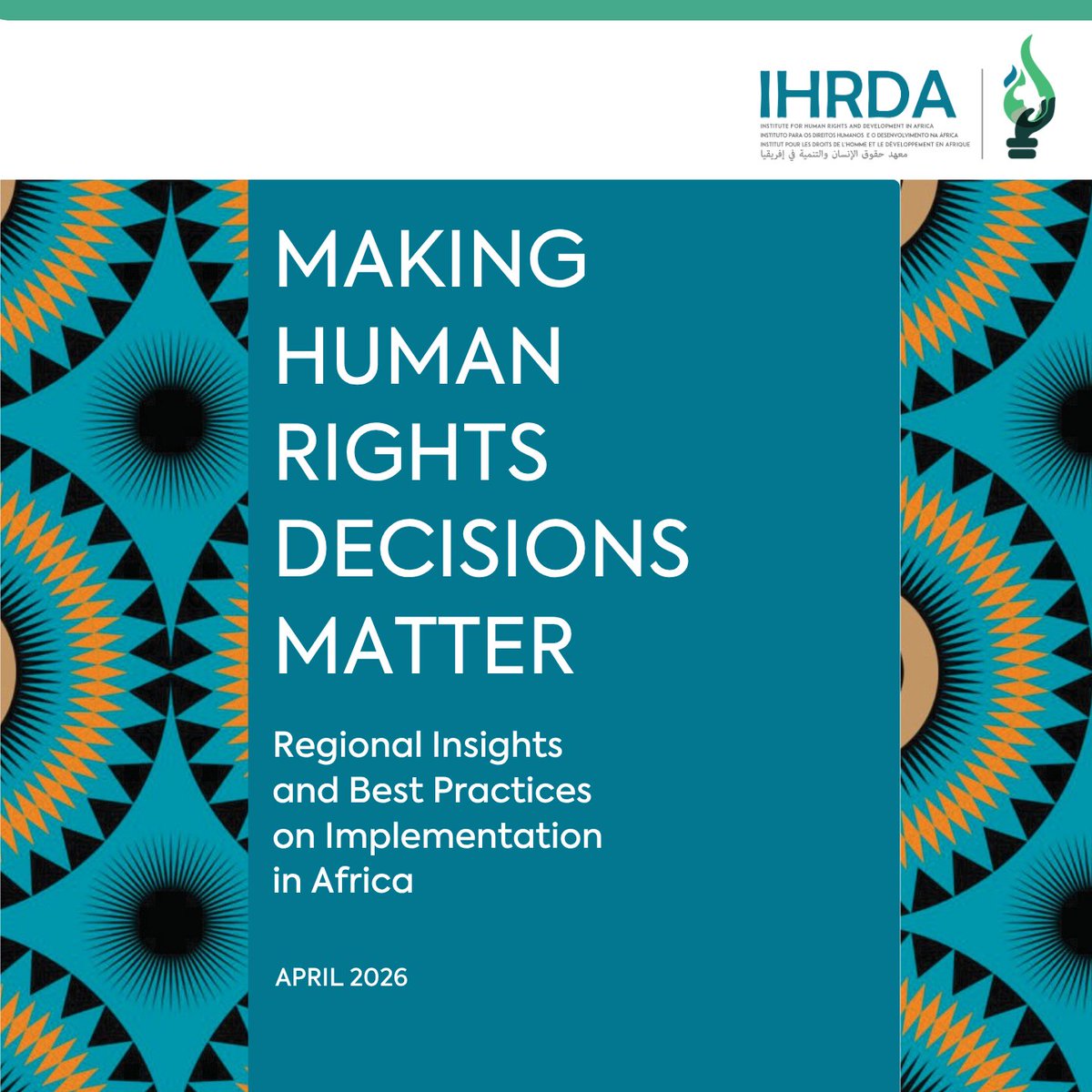
“This publication is timely and necessary. We have the decisions, we have the judgements, we have the recommendations, we have the declarations, all in beautifully bound reports collecting dust in air conditioned offices. But victims cannot eat judgements. So the real challenge is, how do we move from decisions on paper to real justice?”
Emmanuel Joof, Chairperson of the National Human Rights Commission of The Gambia, during the launch of the new IHRDA report “Making Human Rights Decision Matter”.
Download the report here:
ihrda.org/wp-content/uploads…
15
20
1,065
Musa Kika retweeted
May 11
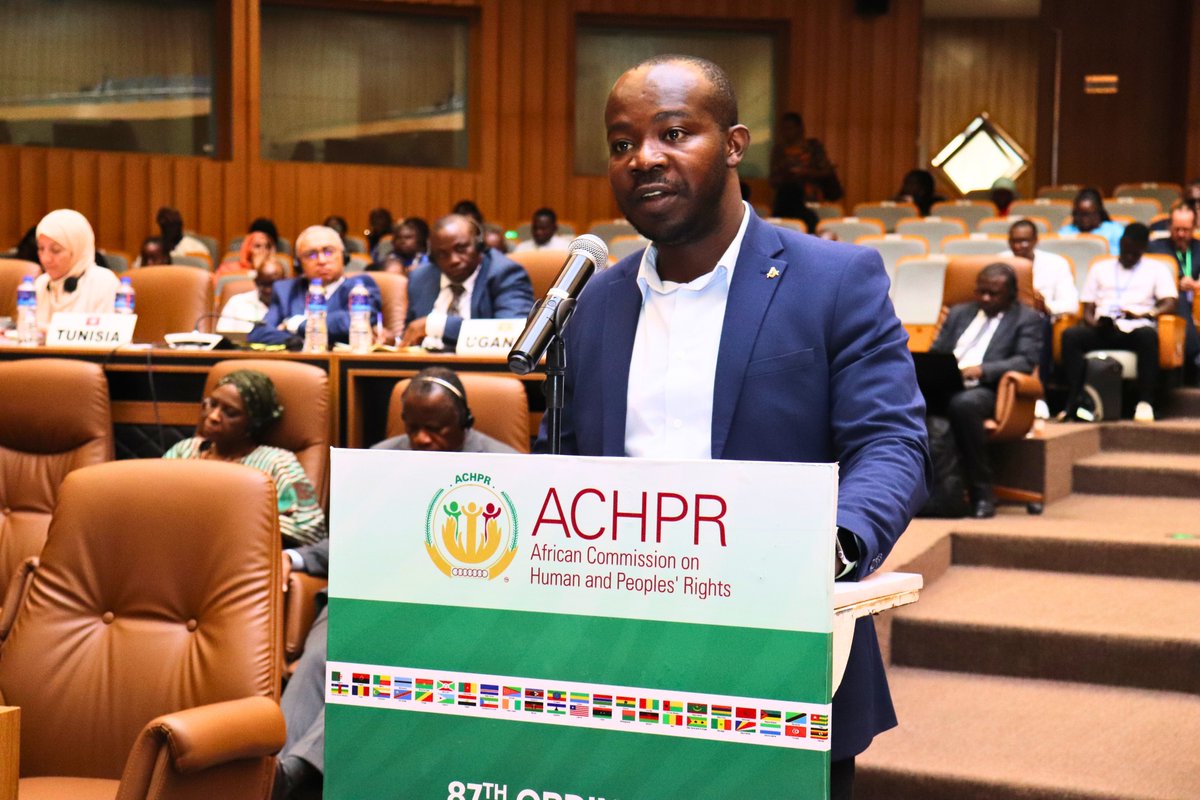
Our Deputy Director, Michael Gyan Nyarko (@likemike0077), has just delivered IHRDA's statement at the 87th Ordinary Session of the African Commission on Human and Peoples' Rights (@achpr_cadhp), where we raised concerns over election-related violence, shrinking civic space, arbitrary arrests, and restrictions on freedoms across several African countries.
We also called for stronger accountability mechanisms, faster determination of communications before the Commission, and the withdrawal of the current draft Declaration on Human and Peoples’ Rights Defenders in Africa, which risks undermining rather than protecting defenders.
Read our full statement: ihrda.org/en/statement-by-th…
#ACHPR87 #HumanRights #Africa #CivicSpace
6
8
372
Musa Kika retweeted
May 8
📢 WE’RE HIRING | Legal Officer (French bilingual)
Join IHRDA’s legal team and help advance human rights across Africa through litigation, advocacy, and engagement with regional human rights mechanisms.
📍 Banjul, The Gambia
🗓 Deadline: 31 May 2026
More info: ihrda.org/en/legal-officer-f…
9
17
2,712
newsday.co.zw/theindependent…
A relook at the @MYANC and @ZANUPF_Official relationship in light of Cyril Ramaphosa's @PresidencyZA visit to President @edmnangagwa
Also in light of ongoing Afrophobic attacks.
1
113
Zimbabwe Human Rights Commission Act, section 9:
"Validity of decisions and acts of Commission and Working Groups
No decision or act of the Commission and any Working Group or act done under their authority shall be invalid solely because—
(a) the Commission or Working Group consisted of less than the number of persons for which provision is made in paragraphs 6 and 7; or
(b) a disqualified person acted as a Commissioner or member of a Working Group at the time the decision was taken or the act was done or authorised;
if the decision was taken or the act was done or authorised by a majority vote of the persons who at the time were entitled to act as Commissioners or members of a Working Group".

‘Rights Commission’s report null, void’
heraldonline.co.zw/rights-co…
7
41
69
12,986
No wonder you are running the country like your backyard poultry project, you and your lot.
Apr 10

DO WE KNOW WHAT SACKING MEANS?: The Statement released by the Chief Secretary to the President and Cabinet deliberately spoke of APPOINTMENT of a Director-General in the President’s Department. I did not concern itself with the predecessor Director-General. How Online Smart Alecs arrive at SACKING boggles the mind. To SACK means to remove from EMPLOYMENT. We saw the same madness when Ambassador Moyo was replaced by the immediate past DG Mangwanya. Hysterical claims with no basis in fact. A few months later, the former DG Moyo got appointed our Ambassador to UAE. With that chastising misreading, we repeat the same hysterical madness yet again??? Madununu!!!!
2
31
1,658
Section 237(3) of the Constitution:
"The procedure for the removal of judges from office applies to the removal from office of a member of an independent Commission."
End.
@nickmangwana
Apr 10
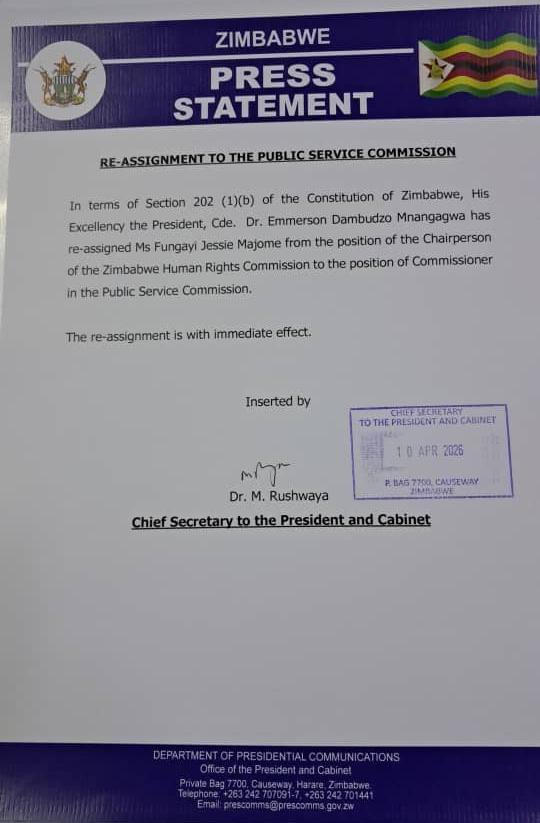
Re‑assignment Notice: His Excellency the President, Cde. Dr. Emmerson Dambudzo Mnangagwa has re‑assigned Ms Fungayi Jessie Majome from the position of Chairperson of the Zimbabwe Human Rights Commission to Commissioner in the Public Service Commission.
13
61
139
19,062
Musa Kika retweeted

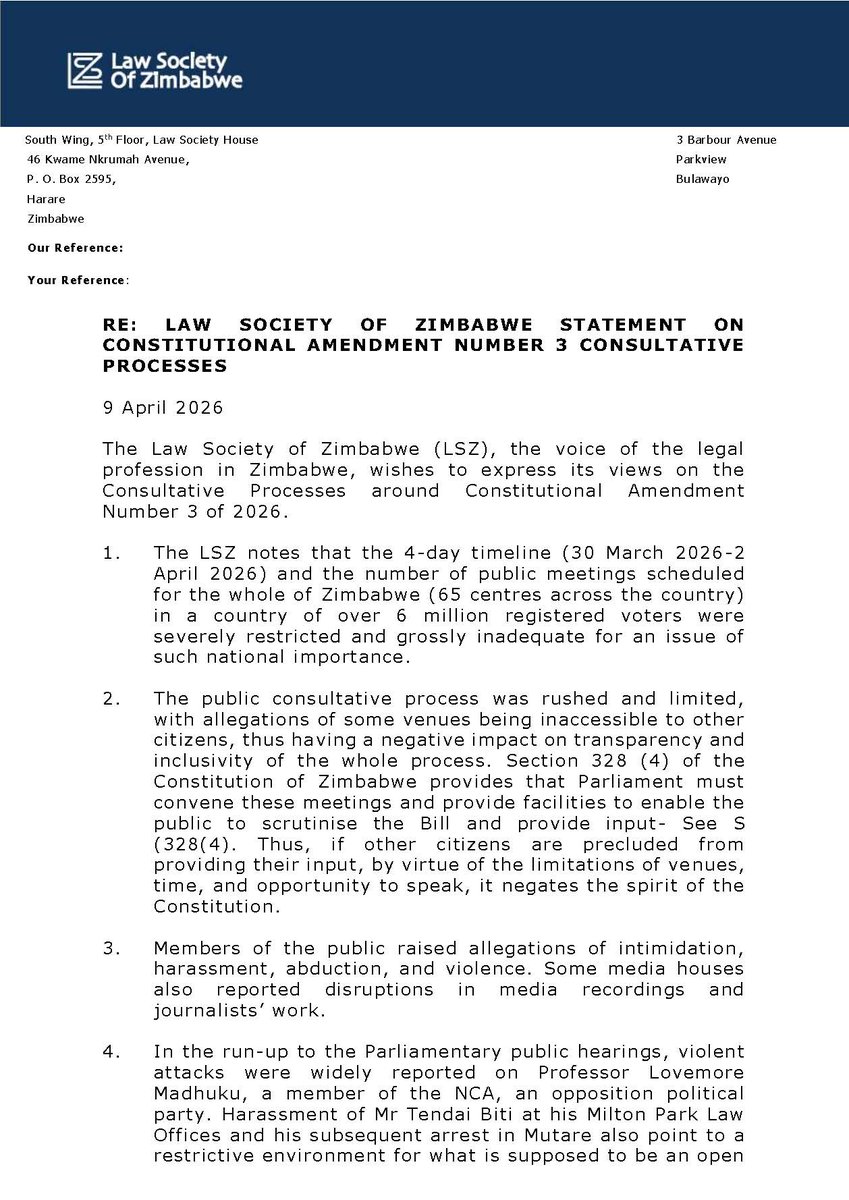
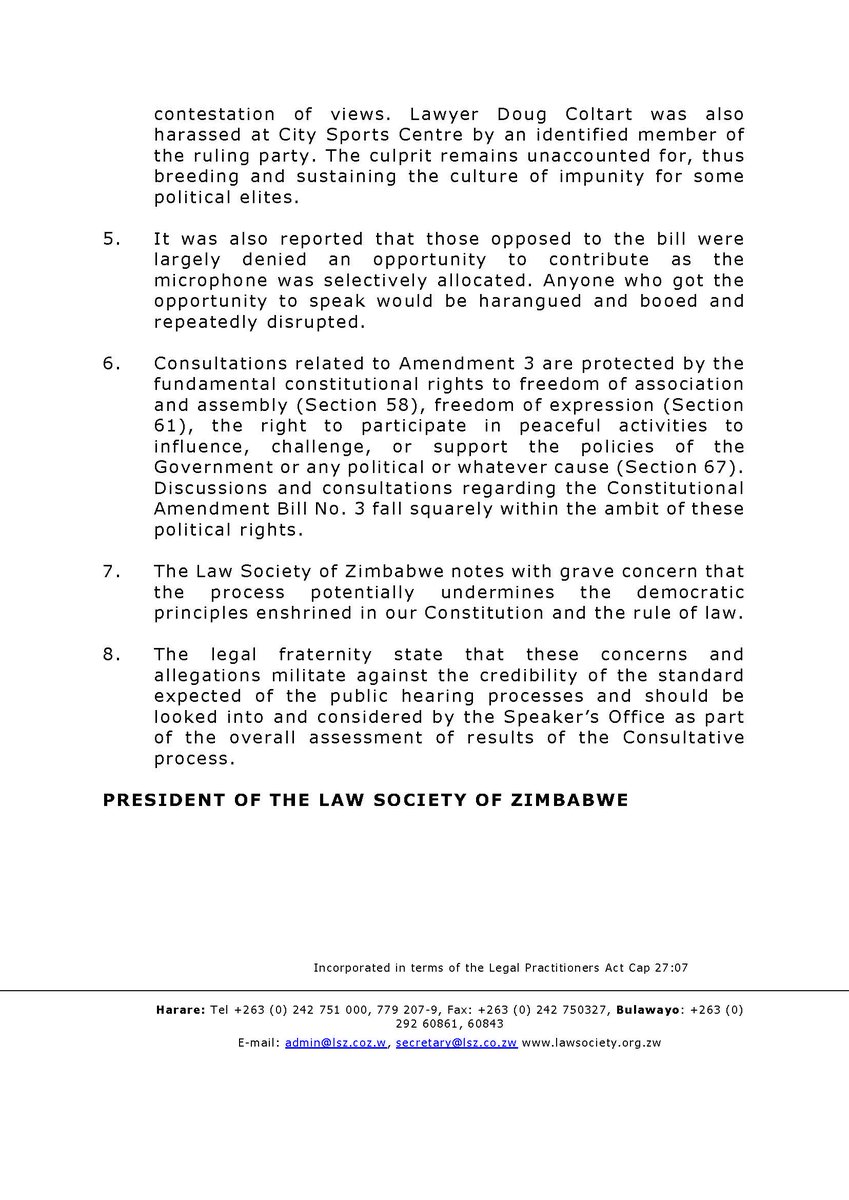
The Law Society of Zimbabwe has issued the attached statement on #CAB3
28
95
181
12,749
Musa Kika retweeted

Apr 9
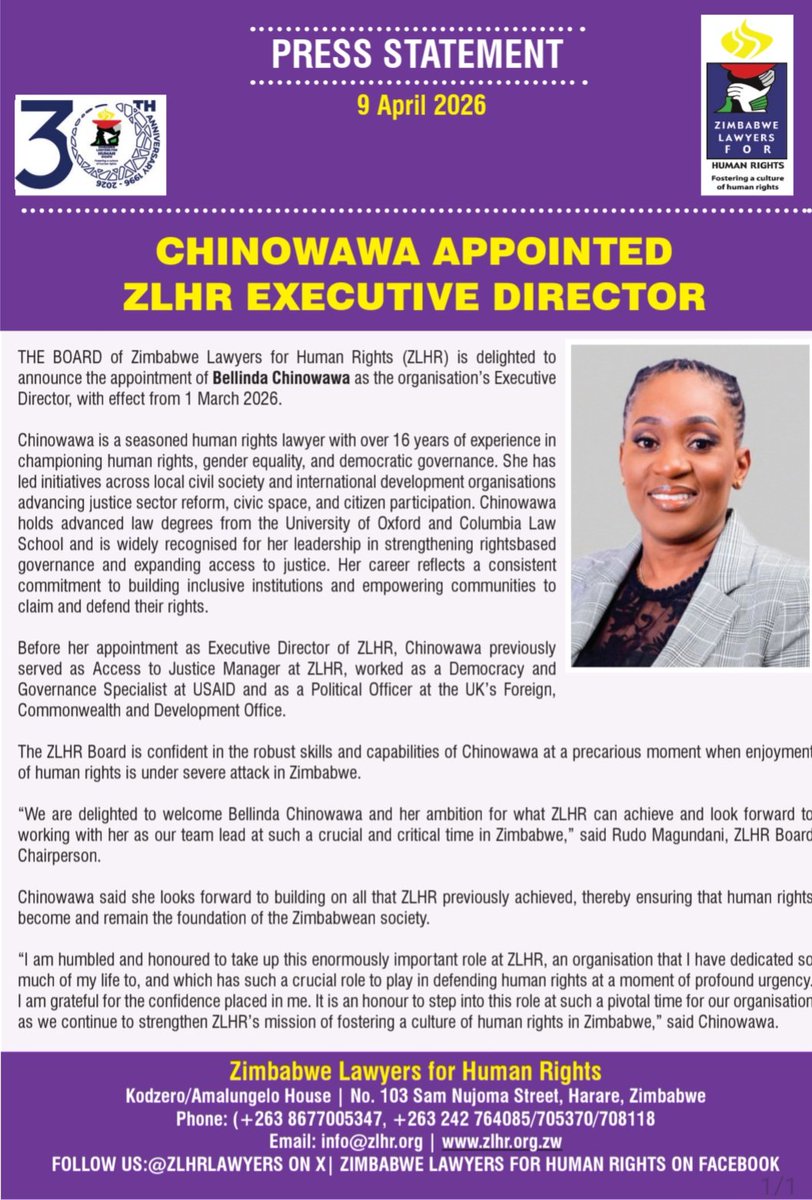
CHINOWAWA APPOINTED ZLHR EXECUTIVE DIRECTOR
18
21
78
11,239
What a farce! We know of tick-box consultations, but never of this colour. The plotters of this saga could do better.
Apr 1

A young woman from Mutare expresses frustration after being denied the chance to voice her disapproval of the Constitutional Amendment Number 3 Bill. #CAB3
3
7
574