
Joined June 2019
- Tweets 651
- Following 1,928
- Followers 302
- Likes 6
410 Photos and videos








Jun 14
'Actually, the SAT Was Necessary After All; University of California faculty are in open revolt over the lack of standardized test scores' @imkahloon The Atlantic
Late last month, five UC Berkeley professors, published an open letter [ucstudentsuccess .org] arguing for the reinstatement of testing requirements—at least for any students seeking science, technology, engineering, and mathematics degrees.
Their letter came only six months after UC San Diego released a shocking report finding that one in 12 of its incoming students struggled with even middle-school math. Since the letter’s publication, more than 1,400 professors and lecturers have co-signed it.
Six years ago, in an exhaustive 227-page report by a UC faculty task force [https://senate.universityofcalifornia .edu/_files/committees/sttf/sttf-report.pdf] found that scores were “substantially” useful in predicting student outcomes, such as college GPA and graduation rates, better than relying on high-school GPA alone. This was true of disadvantaged students as well as privileged ones. The task force recommended that the university system keep its testing requirements; in April 2020, the UC academic senate unanimously concurred.
One month later, though, the Board of Regents voted unanimously to end the testing requirements.
When MIT reinstated its testing requirements in 2022, the university argued ['We are reinstating our SAT/ACT requirement for future admissions cycle'] that student success was “*significantly* improved by considering standardized testing—especially in mathematics,” and that tests helped “identify academically prepared, socioeconomically disadvantaged students who could not otherwise demonstrate readiness.”
In California, race-based affirmative action has been formally banned since a ballot measure was passed in 1996.
Grade inflation has eroded the signaling value of a strong high-school transcript: More than 25 percent of those taking UC San Diego’s remedial math course in 2024 had a 4.0 GPA in high-school math.
A 2025 UC internal research report ['Admission Outcomes and First- and Second-Year Performance of Freshman Cohorts After the Elimination of Standardized Test Requirements for Admissions at the University of California'] found that, despite the purported harms to equity caused by the testing regime, removing the tests had hardly changed the racial mix of students.
#sciencepassion
35
Jun 9
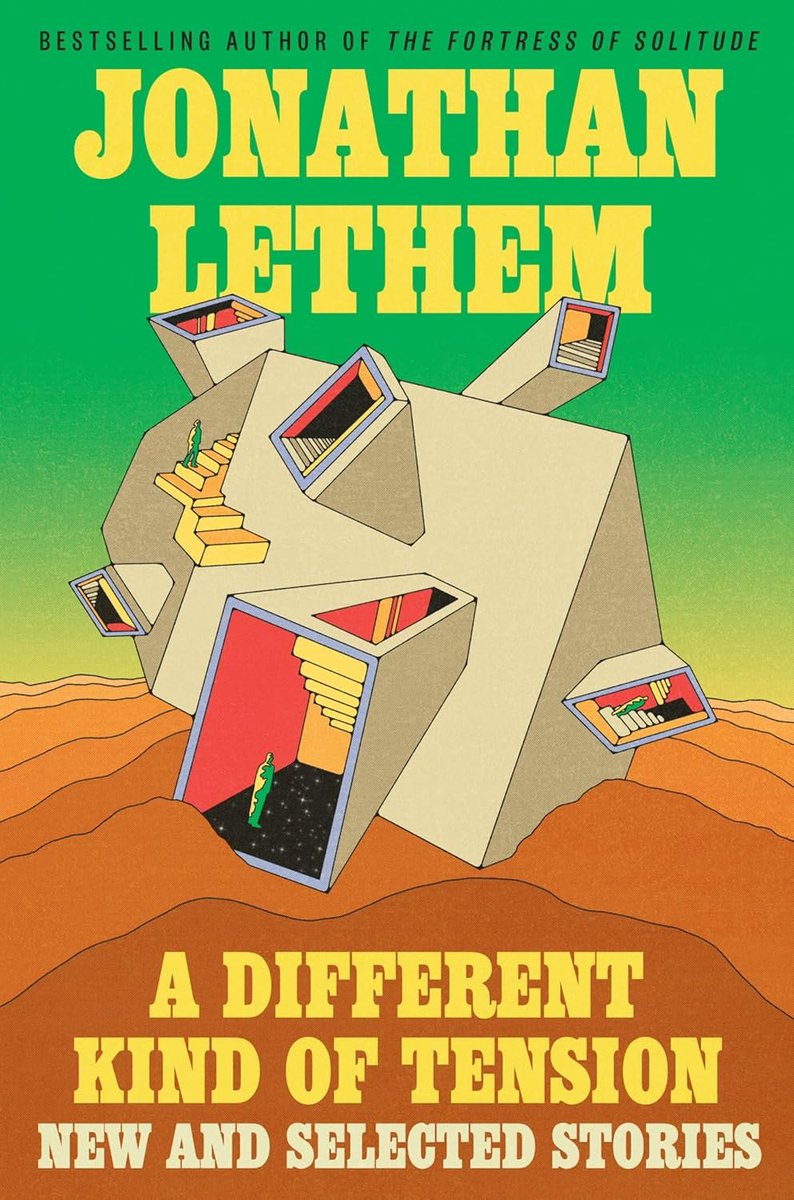
A Different Kind of Tension: New and Selected Stories (2025), Jonathan Lethem, @HarperCollins
Short stories in chronological order, starting with post-PKD '90s & becoming increasingly literary fiction-like over time, & including one new one. The cover says 'Bestselling author of Fortress of Solitude', his 2003 novel, so I guess that's become his classic, which I agree with. Lethem's best fiction, like Fortress & the excellent new short story 'The Red Sun School of Thoughts' is what you might call magical fiction fictionalized autobiography -- a 60-ish person's depiction of late-20th century cultural change. Also excellent: his non-fiction, like the making-of of Talking Heads' 'Fear of Music', called Fear of Music, one of those 33 1/3 books @333books, & the collection Ecstasy of Influence.
38
Jun 7
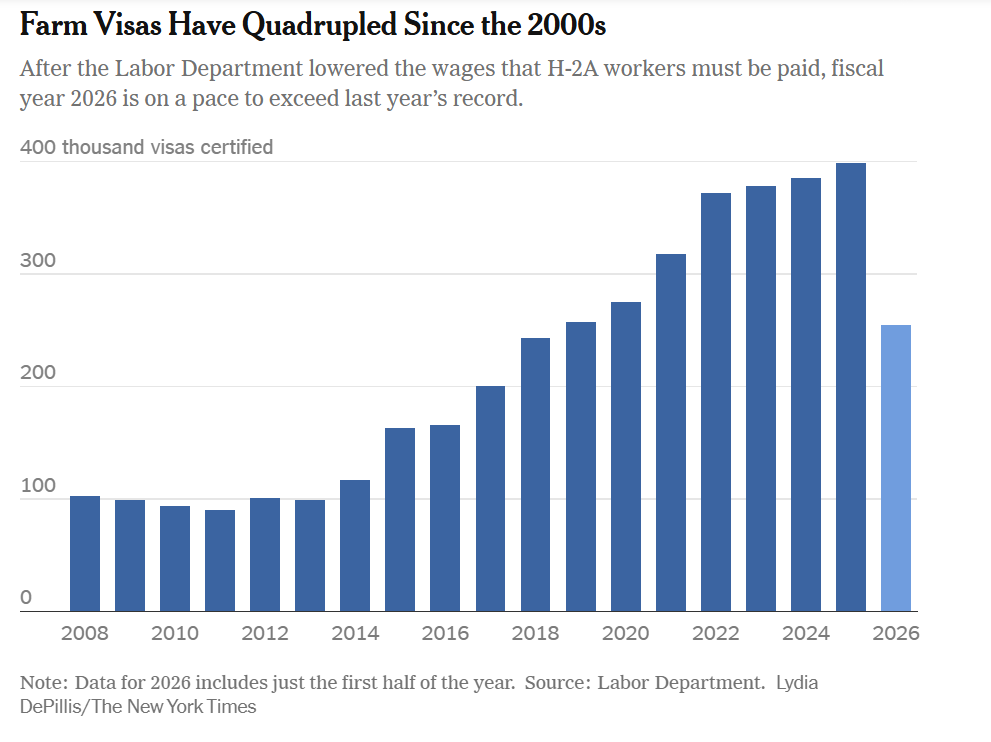
America’s Farms Depend More Than Ever on a Troubled Visa Program; The Trump administration is allowing in more agricultural guest workers under the H-2A program' @lydiadepillis, New York Times
Since 2013, H-2A holders have quadrupled to become a sixth of the agricultural labor force.
In the first half of the 2026 fiscal year, the Labor Department approved 17 percent more visas than in the same period the year before.
Pineros y Campesinos Unidos del Noroeste, a farmworker advocacy organization in Oregon, has long opposed the H-2A program out of a belief that it worsens conditions for workers already here.
#americanas
42
Jun 6
'Mule deer already using incomplete $20m wildlife bridge in California', by Roque Planas, Guardian
The bridge with its accompanying fencing over Route 97 in Siskiyou county is the first wildlife crossing constructed over a major highway in California. The project promises to both improve driver safety and reduce mortality for migrating mule deer, elk and other animal species.
“In addition to deer, a bobcat and other wildlife have also been spotted using it.”
More crossings are scheduled to open in the near future. The largest of them, the Wallis Annenberg wildlife crossing in southern California, will become the world’s largest after its scheduled opening at the end of the year.
28
Jun 6
Nexus: A Brief History of Information Networks from the Stone Age to AI (2024) by Yuval Noah Harari @harari_yuval
At ~500 pages, I thought Nexus would have benefitted from more editing, but there's worthwhile & thought-provoking analysis here. TLDR, the message is that technological progress has expanded information networks, which has allowed the creation of ever-larger groups. But information networks distribute ideas, not necessarily truth. In this, Harari disagrees with the (self-interested) utopianism of the early Internet era. 'Information wants to be free' but what a healthy society needs is a way to effectively correct misinformation. Social media has prioritized virality, fueled by emotional engagement, damaging democracy. An emotion-generating lie travels around the world while truth is putting on it's boots. Now we have AI, an excellent disinformation creator, that will have intelligence & motivation, like a living thing (but not consciousness). What to do about it? Individuals should cultivate truth-finding skills, AI bots' masquerading as humans should be illegalized, corporations should be held liable for boosting messages that cause violence, & new types of self-correcting mechanisms & institutions should be created.
#mediaholics #bookbuzz
45
May 30
Citing 'severe' math deficits, UC faculty demand a return to SAT tests for STEM applicants, @jaweedkaleem, Los Angeles Times
More than 600 University of California faculty members, led by mathematicians at UC Berkeley, are calling on the system to reinstate standardized testing requirements, saying that six years of test-free admissions has not reliably assessed readiness and professors are often teaching middle school math to incoming students.
The UC Academic Senate’s Standardized Testing Task Force Report (2020) said use of test scores could actually boost admission rates for students from disadvantaged backgrounds and school districts. The report found that test scores are a better predictor of college performance than high school grades.
Harvard, Brown, Dartmouth, the University of Pennsylvania, Stanford and Caltech each restored standardized testing requirements.
A UC San Diego Academic Senate work group report said it documented a roughly thirty-fold increase between 2020 and 2025 in incoming first-year students whose math skills tested below high school level. 70% of those students fell below middle school levels.
Work group members advocated for a 'systemwide reexamination of standardized testing'.
#CollegeAdmissions
72
May 28
The Undoing Project (2016 @wwnorton) is the story of how Daniel Kahneman & Amos Tversky pioneered behavioral economics. This seemed fluffier than Michael Lewis's Big Short & Going Infinite, but it's still enjoyable & interesting. One thing I noticed this time is Lewis's use of blunt personal descriptions. For example, the title of this book's first chapter, 'Man Boobs', is the insulting nickname given by talent scouts to a basketball player, due to his physique.
K&T described situations in which expert opinion fails (when there's infrequent & unpredictable feedback). An Oregon Research Institute study found that an algorithm outperformed every expert & a group of experts on X-ray analysis. This is an area in which AI particularly excels, suggesting that current AI may not be as post-algorithmic as commonly thought.
As Lewis recommends, if you're interested in this subject you should read Kahneman's Thinking Fast and Slow.
37
May 24
May 2026 New York Times/Siena poll of Democrats & Dem-leaning independents
half want the party to move to the center but 4/5 think the US political & economic system 'needs major changes' (3/5) or 'needs to be torn down entirely' (1/5)
1/4 of young Democrats & 1/4 of non-white Dems think the political & economic system 'needs to be torn down entirely'
45
Sam Koritz retweeted

May 21
“I do want an orchestra again... I want to have a place,” Elim Chan told us in an interview earlier this year. Well, now she does as she has just been announced as the next Music Director of the San Francisco Symphony @SFSymphony! 🥳
📸Cody Pickens

1
8
31
2,693
May 10
from 2024, Price’s last year in office, to 2025, Jones Dickson’s first year, felony filings increased by 36% and misdemeanor cases by 35%.

Sadly, recalled predecessor Pamela Price, who doesn’t know when to call it quits, is trying to get her old job back. eastbaytimes.com/2026/05/06/…
50
May 8
'Coyote's epic swim to Alcatraz Island started much farther away than San Francisco, National Park Service says', @CarlosJr62, CNN
Alcatraz water dog swam from Angel Island two miles away
#dogpride
135
May 6
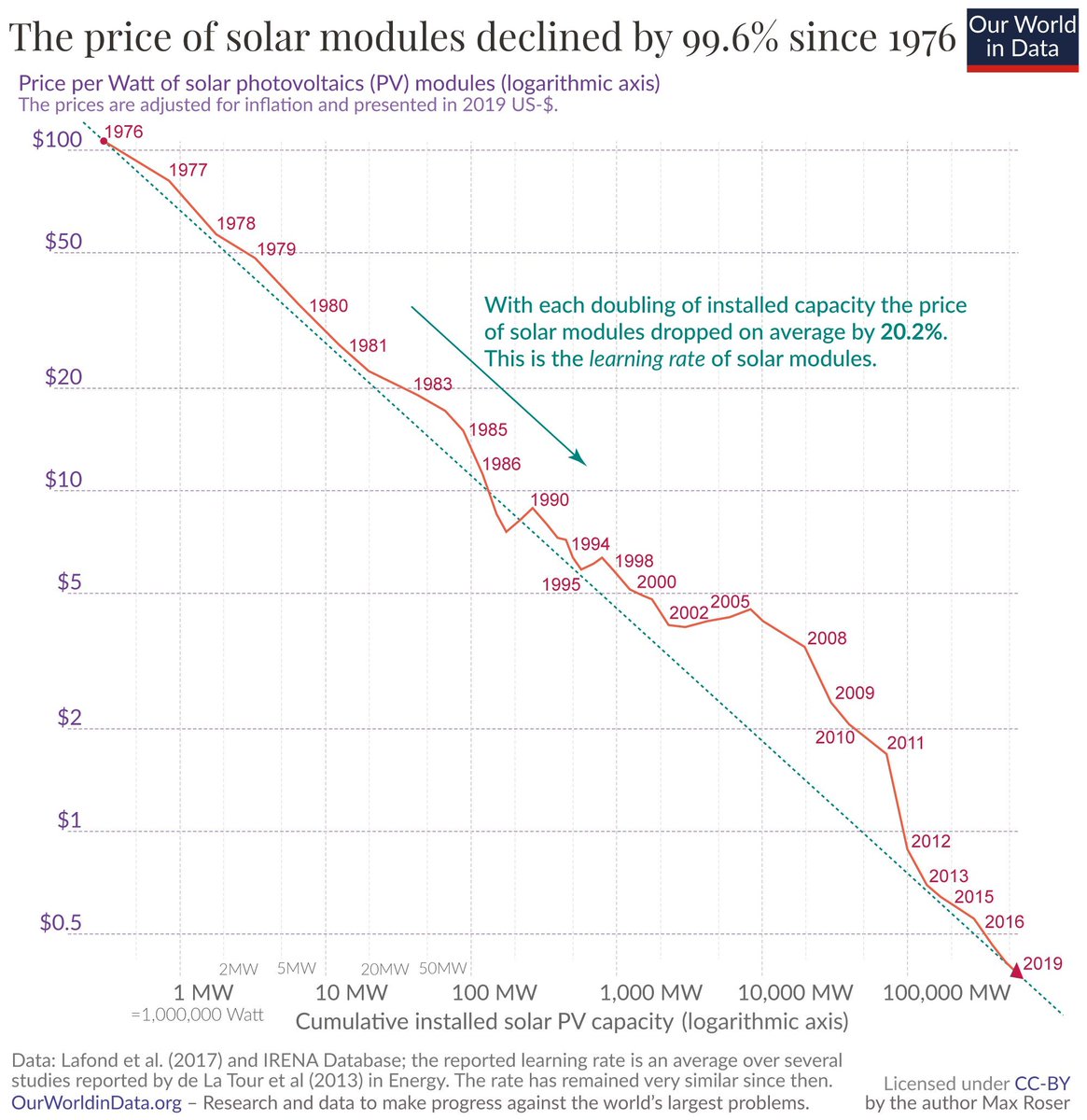
'Renewable energy just broke a 100-year-old streak; Coal’s century at the top of the world’s power mix is over', by Bryan Walsh @bryanrwalsh, Vox
According to Ember’s Global Electricity Review 2026, recently released in time for Earth Day, renewable sources produced 33.8 percent of the world’s electricity last year, compared to 33 percent for coal.
Solar module prices have fallen roughly 75 percent every decade for more than 40 years, a pattern so durable it has its own name, Swanson’s law, the observation that the price tends to drop by 20 percent every time the total number of solar panels ever built doubles.
52
Apr 22
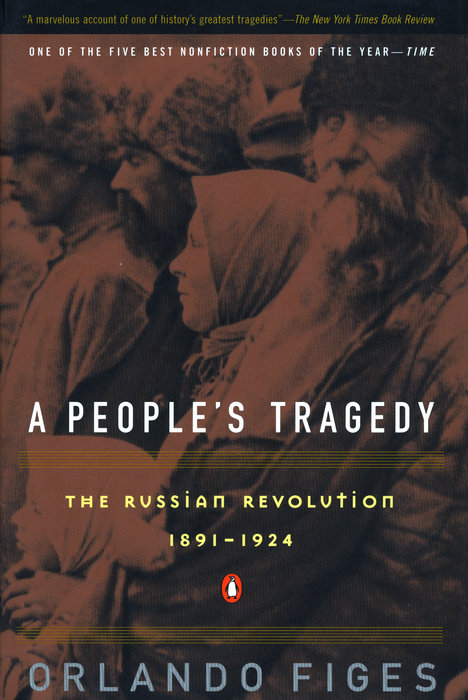
A People's Tragedy: The Russian Revolution, 1891 - 1924, by Orlando Figes, @PenguinBooks
Orlando Figes tells the story of the Russian Revolution, emphasizing the things that support his belief that the Soviet Union was created for Russian reasons, rather than being the result of the importation of a philosophy from Western Europe (Marxism).
The book begins after the emancipation of the serfs, at which time most Russians are peasants. Even many urban workers are former peasants with ongoing ties to peasant culture, which Figes describes as xenophobic, provincial, violent, traditionalist, patriarchal, illiterate, & innumerate.
Many peasants lived & worked on community-owned land. This wasn’t a system of communal labor, with people working together on large farms; rather, a rotating roster of individual families was temporarily allowed to farm small strips of land, often in separate locations. This was inefficient compared with Western European farming systems but was resistant to reform, due to community hostility, & because vital infrastructure, such as roads & grazing grounds, were also communally owned. Unable to modernize their way out of poverty, peasants eyed the large estates owned by the aristocracy.
Meanwhile, nationalism was growing in Europe, leading non-Russian ethnic groups to increasingly demand autonomy or #independence from the Russian empire. Additionally, Slavic and Germanic ethnonationalism was growing, along with the expectation of a showdown between these groups. The tsar hoped to galvanize the empire’s Slavs by joining the Great War in defense of fellow Slavs. But the opposite happened, as the war became increasingly costly and painful.
At this point, Figes suggests, land seizure by peasants was inevitable, Russia could no longer fight in the world war, & the struggle for power in Russia needed to be settled by military violence. Of the various political parties, only the Bolsheviks combined these three policies; so they were the winners.
Figes ends this book – published in *1996* – by warning against post-Cold War Western triumphalism: since the Soviet Union was formed for Russian reasons, there was no reason to believe that the Soviet successor would be a Western-style liberal democracy.
1
88
Apr 13
'How the war in #Iran is landing with Republicans, according to a new AP-NORC poll', AP News, @mikecatalini @LinleyAnn
Only 1/5 of Republicans back deploying American ground troops vs Iran.
135
Apr 6
"Hershey’s vows to return to real chocolate after backlash from Reese’s inventor’s grandson; After the Reese’s Peanut Butter Cup inventor’s grandson called out Hershey for ‘quietly replacing’ ingredients, the company has announced a return to real chocolate by 2027, " Deseret News, @Deseret
#FoodLovers
80