
On a long enough time frame, it’s all a scam
Joined April 2021
- Tweets 5,041
- Following 3,309
- Followers 1,143
- Likes 24,098
294 Photos and videos










Kryptic retweeted

May 27
23
19
102
24,837

May 20
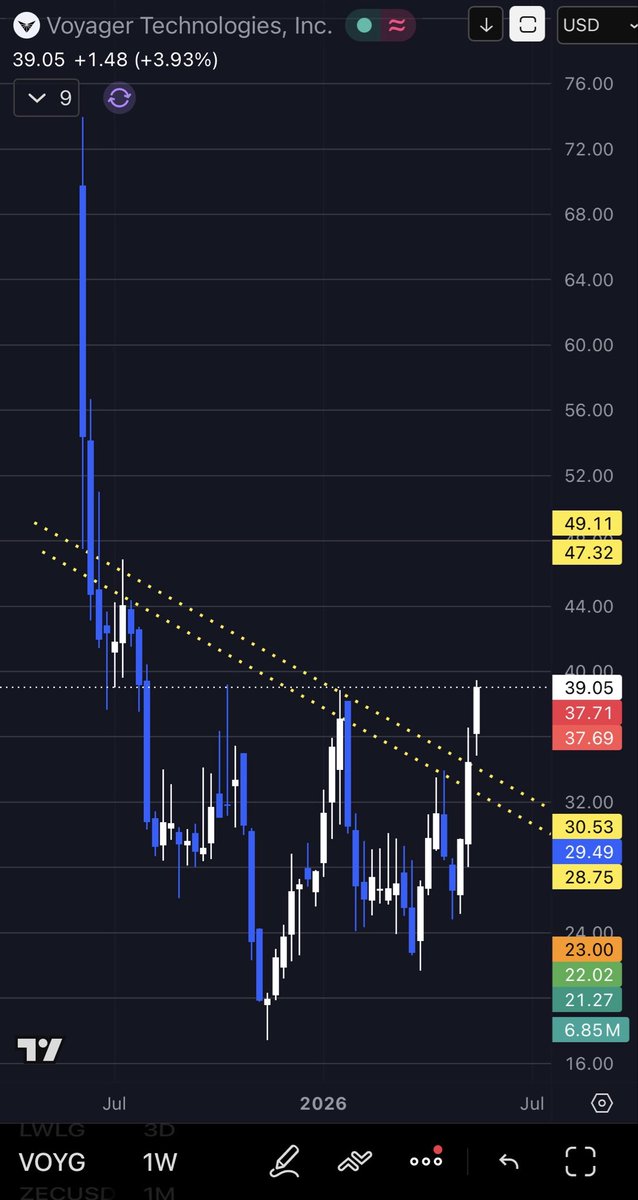
$VOYG isn’t this the craziest high time frame inverse H&S break out you’ve seen? Leading into SpaceX IPO. Damn.
3
6
154
May 15
$DGXX: A Mispricing Framework
I bought $DGXX because I believe the market is effectively ascribing approximately zero value to the signed, executed $1.1B Master Services Agreement with Cerebras, who IPO’d yesterday at $70B.
$DGXX trades at ~$530M market cap against a disclosed, executed $1.1B 10-year Master Services Agreement with $CBRS, a counterparty that simultaneously IPO’d at $70B, raising $5.5B in primary capital. The contract was never anonymized; Cerebras was named in the 8-K at signing. The market is not discounting counterparty quality. It is discounting execution.
The execution discount rests on two legitimate concerns: (i) construction financing and (ii) delivery timeline. Both were directly addressed on the Q1 call. CEO Amar stated explicitly: “We already signed a term sheet with a lender in order to grow our business through smart debt financing” and outlined a 70/30 loan-to-cash structure. The Cerebras contract is what makes that debt bankable. A 10-year MSA with a $70B counterparty is precisely the collateral against which construction lenders underwrite. DGXX does not need to tap equity markets to build Columbiana. It needs a construction lender, and it already has a signed term sheet.
This matters structurally. A signed 10-year colocation agreement with an investment-grade-equivalent counterparty is precisely the bankable instrument project lenders underwrite against. DGXX does not need equity markets to build Columbiana. It needs a construction lender and it has a term sheet.
The residual risk is pure execution: can a company that was a Bitcoin miner 12 months ago deliver a 40MW Tier-III AI data center by December 2026? This is where Hans Vestberg becomes analytically significant, not as a reputational signal, but as operational infrastructure. He oversaw Verizon’s nationwide 5G physical build and ran Ericsson’s global network deployment across 180 countries. He currently sits on the BlackRock board. The construction risk and the capital network risk are the same person’s problem.
The valuation dislocation becomes precise when you layer in NAV and live revenue. Hard asset NAV as of March 31: $71.4M cash, $13.6M in digital assets, $26M net fixed assets, and 210MW of grid-connected power infrastructure owned outright including substations, conservatively worth $105M at $500/kW. Total hard NAV: ~$216M. Against that, the company has zero long-term debt. Even before you apply any multiple to GPU revenue, the hard asset NAV alone is $216M against zero debt, and the GPU revenue stream is live and growing, with 7MW of bare-metal B200/B300 capacity expected operational by year-end at prevailing AI compute rates of ~$300/kW/month. Hard NAV plus GPU revenue stream approaches or exceeds the current $530M market cap in its entirety.
The implication is not subtle: the market is ascribing approximately zero value to the signed, executed $1.1B Master Services Agreement with a counterparty that IPO’d yesterday at $70B. That is not a marginal mispricing. It is a categorical failure to integrate simultaneously available public information, the contract, the balance sheet, the financing term sheet, and the Cerebras IPO, into a coherent valuation. $DGXX
10
1,102
Mar 7
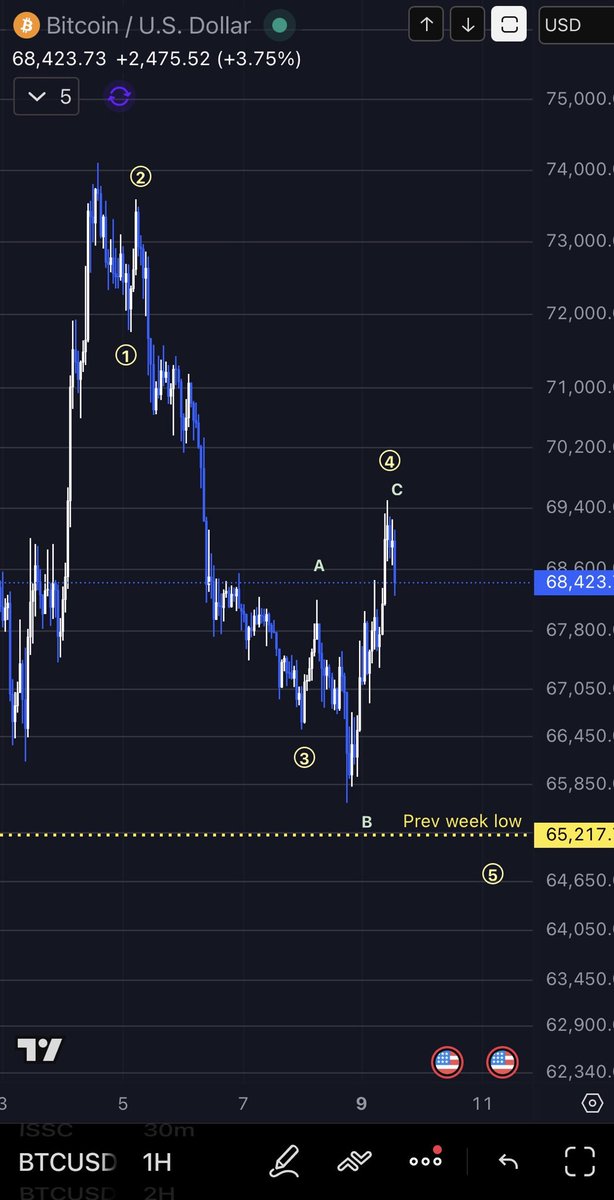
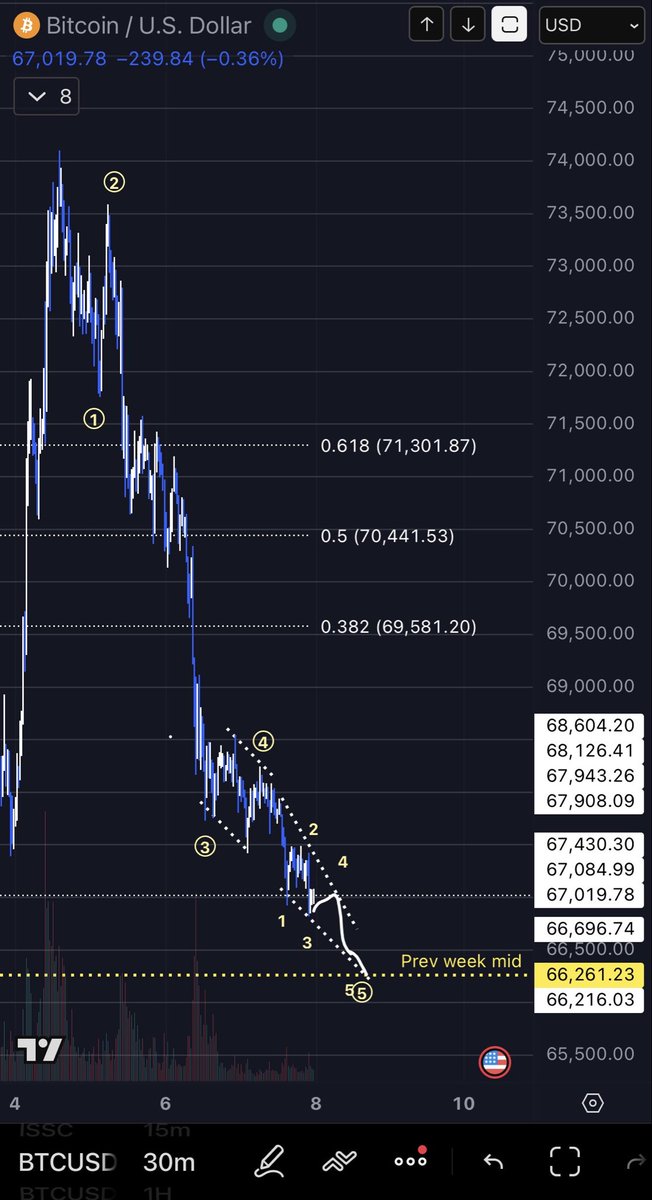
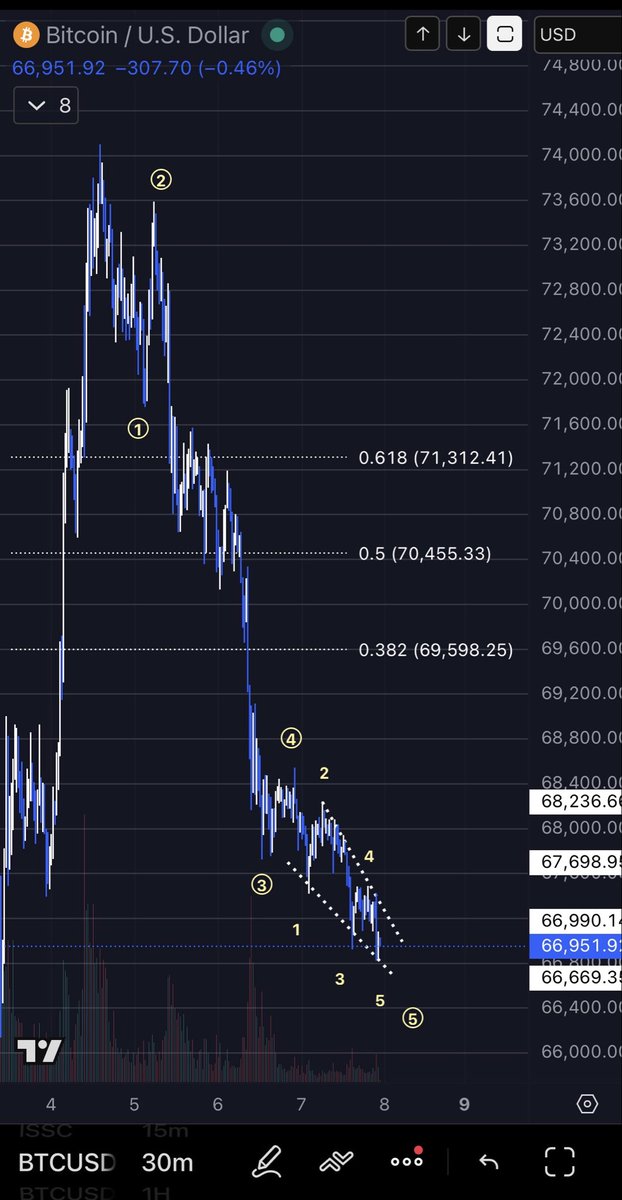
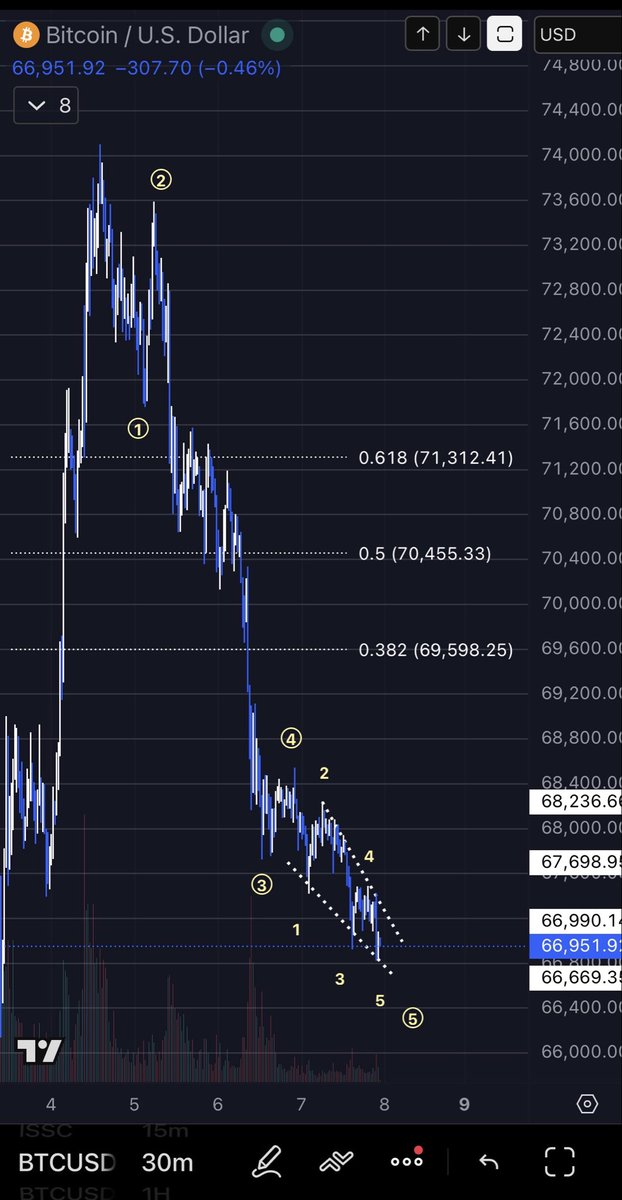
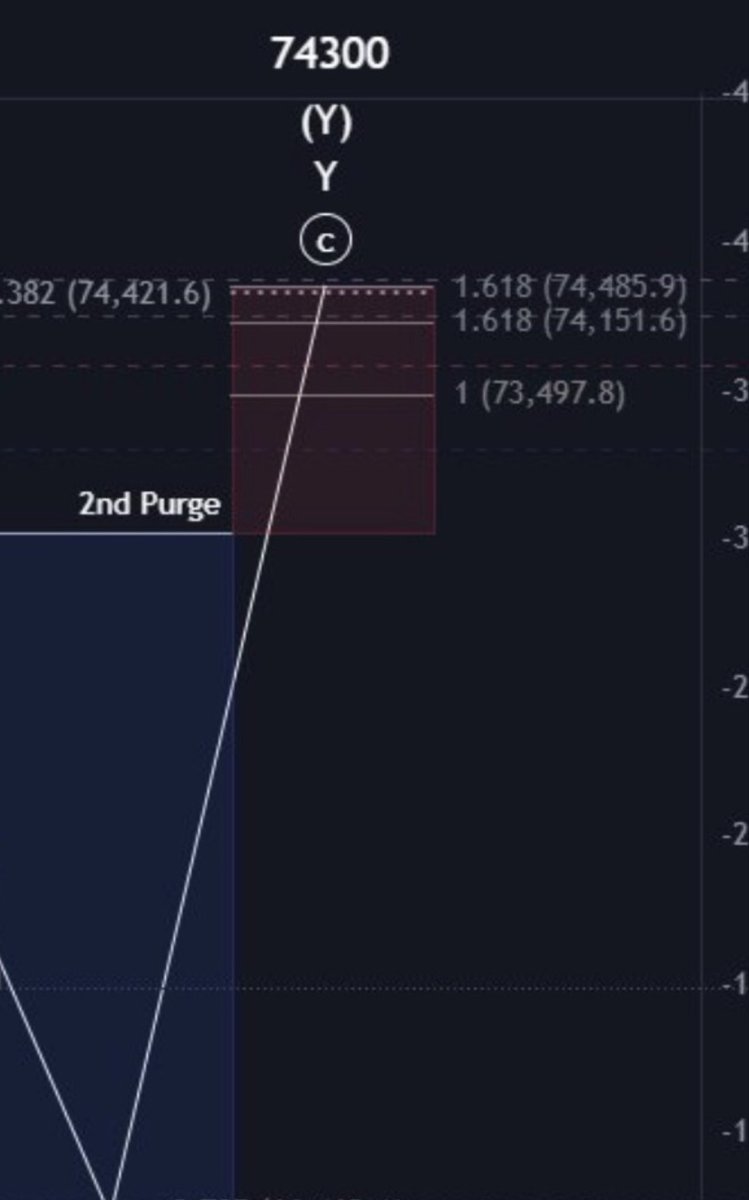
We tagged the monthly open and now the daily just needs to hold the midrange at 67300ish, then we bounce $BTC
1
194
Mar 4
The problem with trading range breakouts in crypto is that they are so often faded that you really need to enter before the breakout
2
186
Kryptic retweeted

Feb 28
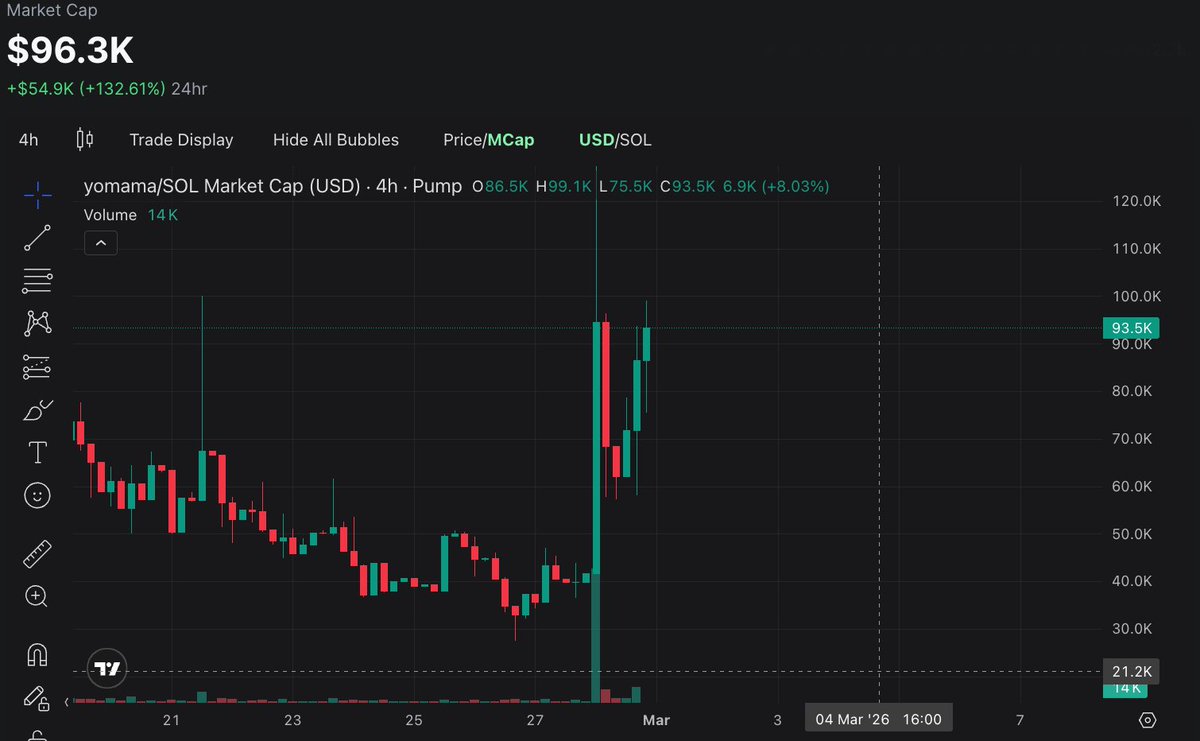
bouncing back like yo mama's weight after a failed diet. Make sure to follow @YoMamaSoFun & raid the jokes
3
5
17
1,385
Feb 28
If my dad is an asshole, it doesn’t follow that I would celebrate my neighbor raiding my kitchen and blowing up two of my bedrooms #IranWar
210
Feb 25
Copper (inu)
Feb 25

To build a data center the size of Manhattan, as Mr. Zuckerberg intends to, we need some metals that you’ve probably never heard of in quantities than you cannot fathom…
These metals are not just 1 or 2 letters on your periodic table that you glanced at while daydreaming in Chemistry class… They are critical to national security.
I explained why you really should care about supply chains at @USC’s Energy Business Summit…
5
508
Kryptic retweeted

Feb 10
I’m not the best on here. For that I apologize. Im a builder at heart. I quite literally sit at my comp plugged in 15 hours a day. But one thing is clear. I’m not going anywhere. I’m here and will always be here!
26
13
133
4,313
Kryptic retweeted
Feb 10
I’ve said it before and I’ll say it again yall are some of the hardest working most clever people I’ve seen in a long long time. The crypto space and meme space have gone through some pretty large down draws. Your conviction to what you’ve built is the grit that’s needed to survive in this new world. Avoid the noise and keep evolving and adapting. I’ve been in this space so long, and imo the only projects that survive are those whom the team never says never. You have to defy the odds, as reaching one’s destination all the odds stacked against you . As my father once told me, son we live and die by the sword, so build your amor so strong when it’s your turn to fight, you have a standing chance on the battle field of life ( I was 12, he passed away shortly after, god rest his soul ). That idea stuck with me and led me to get to where I’ve gotten in life. I’m in no way perfect, or even reached my destination. Though I wake up every am, lace up my cleats and head out to the arena to push the ball down the field, until one day hopefully im doing my end zone dance, looking back on the path it took to get there. If I don’t get there, so be. I’ll know I left it all on the field and gave it all I had. Oh and one last thing. Imo no founders/team should sit and stare at their stock/crypto/valuation all day long as the benchmark of their success. Markets are fluid and have a mind of their own. IMO You just keep shipping products and advancing the ball. And you either succeed or you don’t. That my friend is this game we call life. #spsc solider for life 🤝🥫
78
74
262
73,561
Feb 8
It would be the most bullish shit in the world if BTC died and crypto decoupled
2
118
Kryptic retweeted

Feb 7
Another 10,000,000 units of copper (inu) melted permanently (currently $50k) — 4.5% of the total is now out of circulation.
>$350k usd has been burnt.
Almost 10% of the total market cap.
Feb 3

Another 5,000,000 units of copper (inu) melted permanently. 3.5% of the total supply is now out of circulation.
This time, purely off fees (just from 1 week)
>$300,000 USD has been burnt.
36
54
269
57,050
Feb 2
The distribution on $Copperinu is really favorable. Very limited wallets with more than .5% especially compared to other coins.
2
9
259
Feb 1
When $ZEC bottoms there is a great trade to be had in buying grayscale zcash trust. It’s 30ish% below NAV with an ETF conversion on the way that will wipe away the delta.
172
Kryptic retweeted

Jan 29
The most asymmetric risk/reward opportunities appear when sentiment is at ATL & selling pressure is exhausted
Look for both and bid
185
50
415
51,380