See how food affects your sleep, HRV, and recovery - backed by your own data. Available on iOS & Android.
Joined September 2025
- Tweets 762
- Following 8
- Followers 177
- Likes 70
17 Photos and videos
Pinned Tweet

Apr 4
I run an app that connects wearables to food logging to show how nutrition influences your sleep, recovery, HRV, etc and share research around wearable accuracy, nutrition, fitness etc. Here's the app if you want to try it:
iOS: kygo.app/iOSx
Android: kygo.app/androidx
1
659
Jun 3
Deep sleep tells the same aging story. SWS drops from 18.9% to 3.4% between your 20s and 40s, growth hormone declining 75% in parallel (Van Cauter, JAMA 2000). Jet lag temporarily mimics years of that. Fiber is one of the best dietary protectors of N3.
x.com/bryan_johnson/status/2…
Jun 3

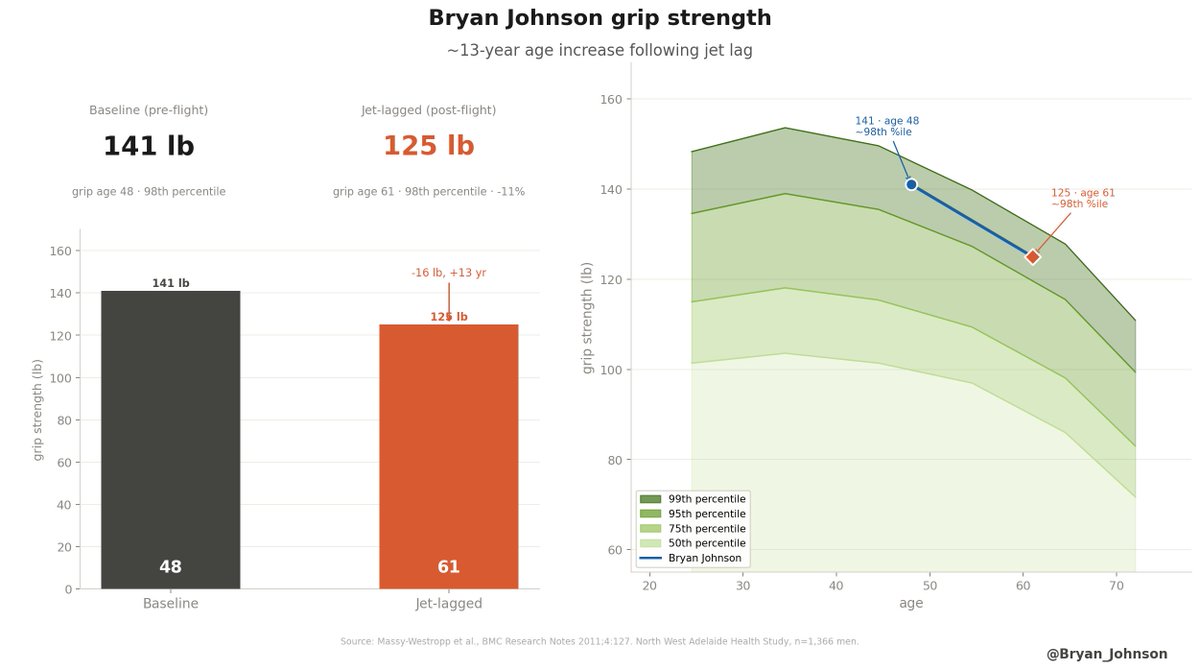
Jet lag increased my biological age by ~13 years.
> as measured by grip strength
> pre-travel: 141 lbs, grip age 48, ~98th percentile
> post-travel: 125 lbs, grip age 61, ~98th percentile
Traveled across 7 time zones, Los Angeles to Australia.
Grip strength predicts mortality better than almost anything you can measure at home.
A published study of a comparable eastbound flight found the same pattern, about a 7% morning drop.
82
May 29
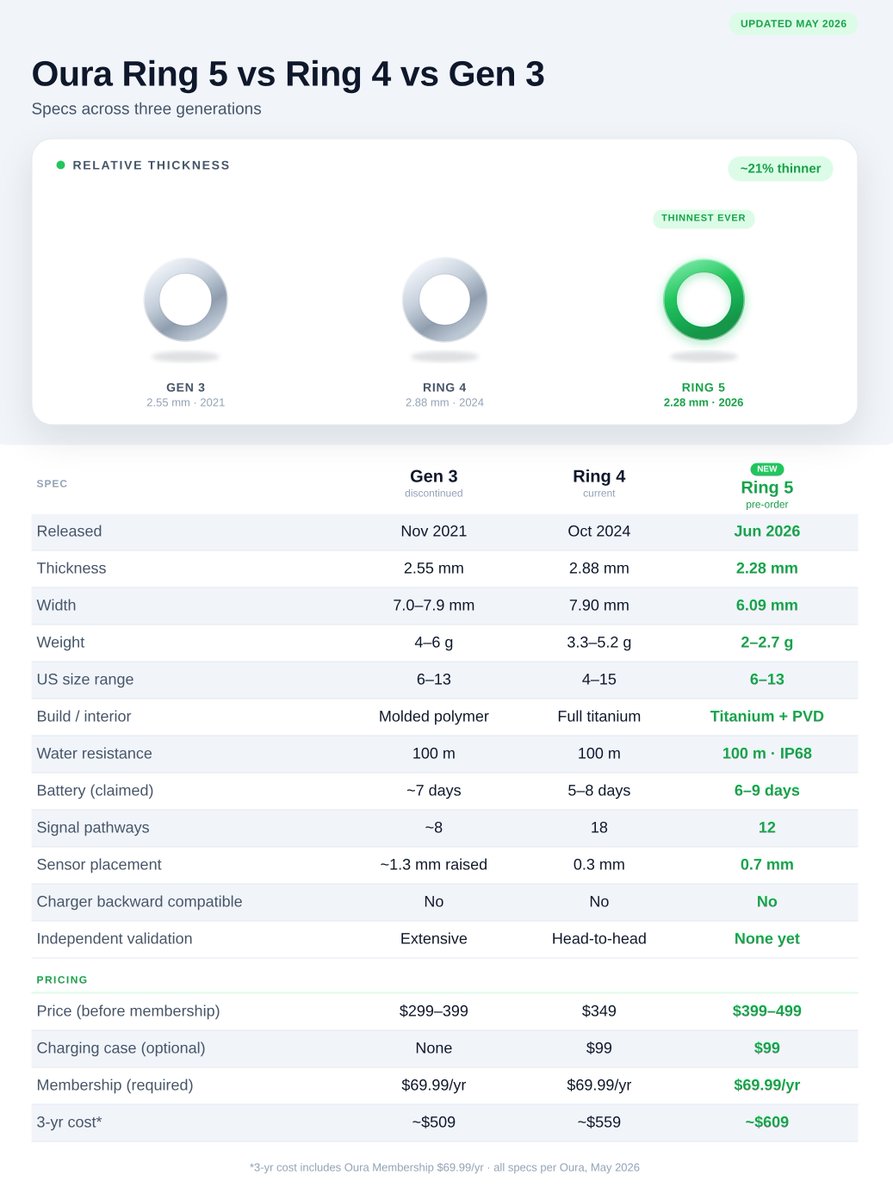
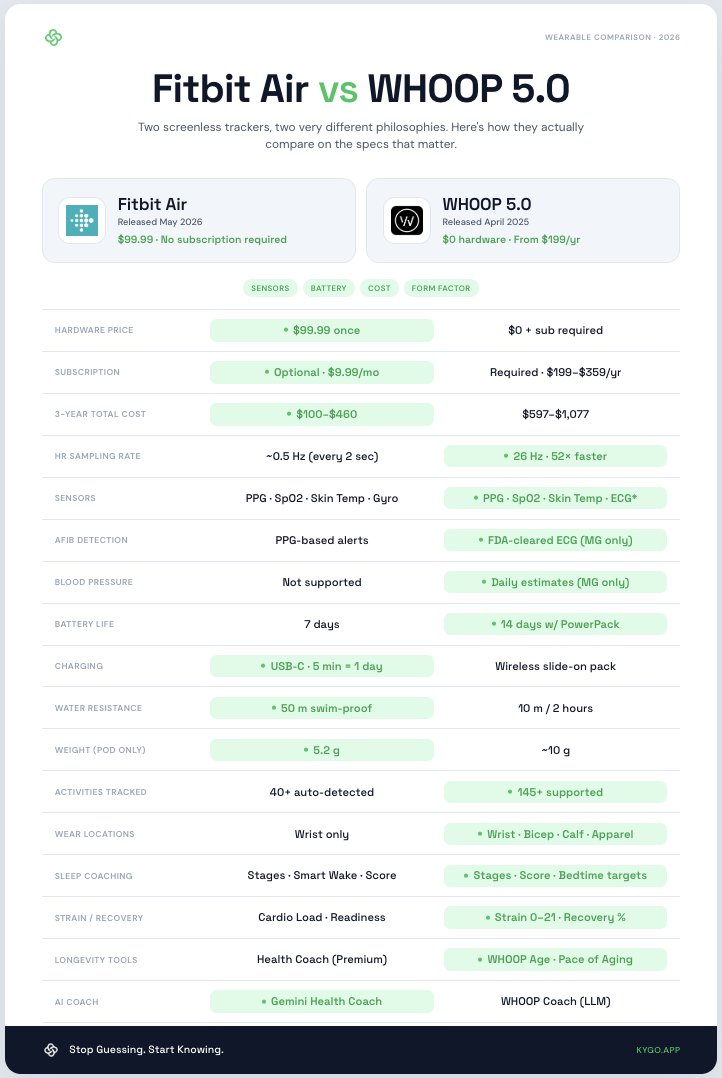
The Oura Ring 5 is here! It's the thinnest, lightest ring Oura has ever made. My first question was: what are the differences between the Ring 5, Ring 4, and Gen 3?
Really impressive work from Oura to get it this thin. I just hope they've sorted out the battery issues with this one.
Full comparison here: kygo.app/tools/oura-ring-com…
1
1,040
May 26
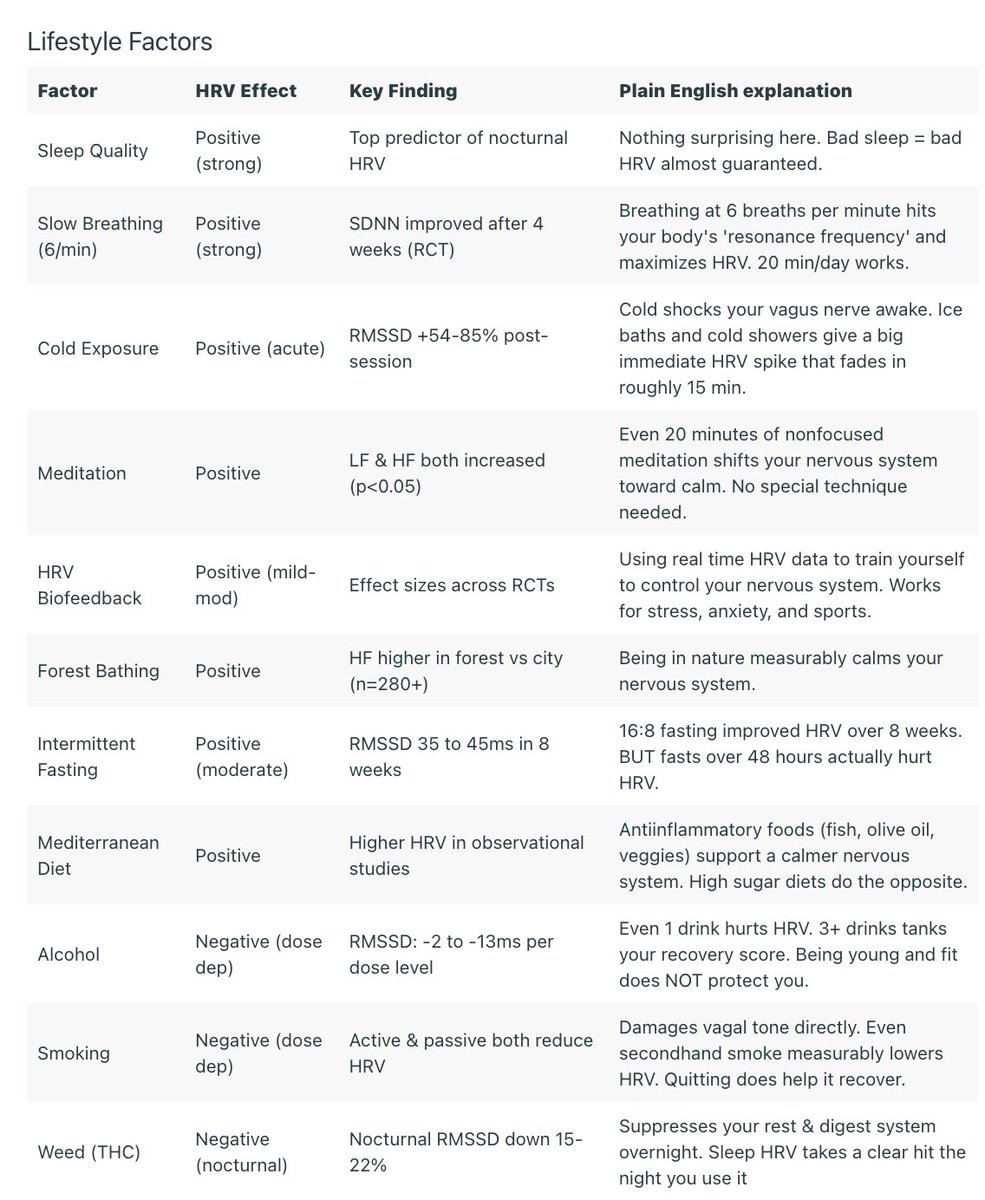
Effect of 1 drink on overnight Resting Heart Rate:
Men: 2.4 bpm
Women: 2.8 bpm
2 drinks it roughly doubles
Not to mention:
Body temp: up 0.3 to 0.5F
HRV: drops 10 to 15%
Effect lasts: ~24 hours
n=20,968 wearable users, PLOS Digital Health 2026.
60
May 25
Falling asleep faster and getting more deep sleep aren't the same thing. The magnesium threonate in this stack has crossover trial data showing 6.4 min deep sleep. That's the ingredient actually changing sleep architecture.
May 25

Andrew Huberman’s sleep cocktail is a game changer.
Magnesium threonate Apigenin Theanine.
He says this combo shuts down racing thoughts, calms anxiety, and helps you fall asleep fast, all backed by solid science.
I’ve been using it myself and it actually works. Deeper sleep, no grogginess the next day.
When you’re wired from screens and stress, a simple, effective tool like this can seriously improve your recovery and energy.
Tried this stack yet, or what’s your go-to for better sleep?
140
May 25
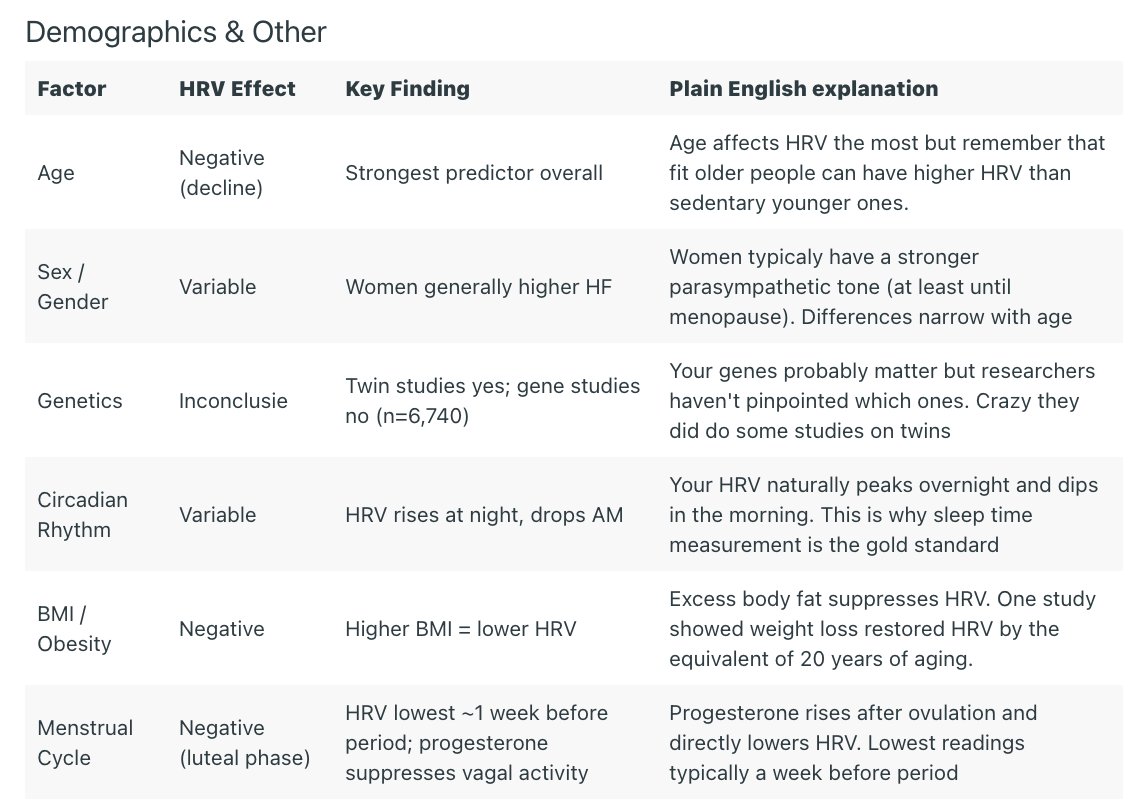
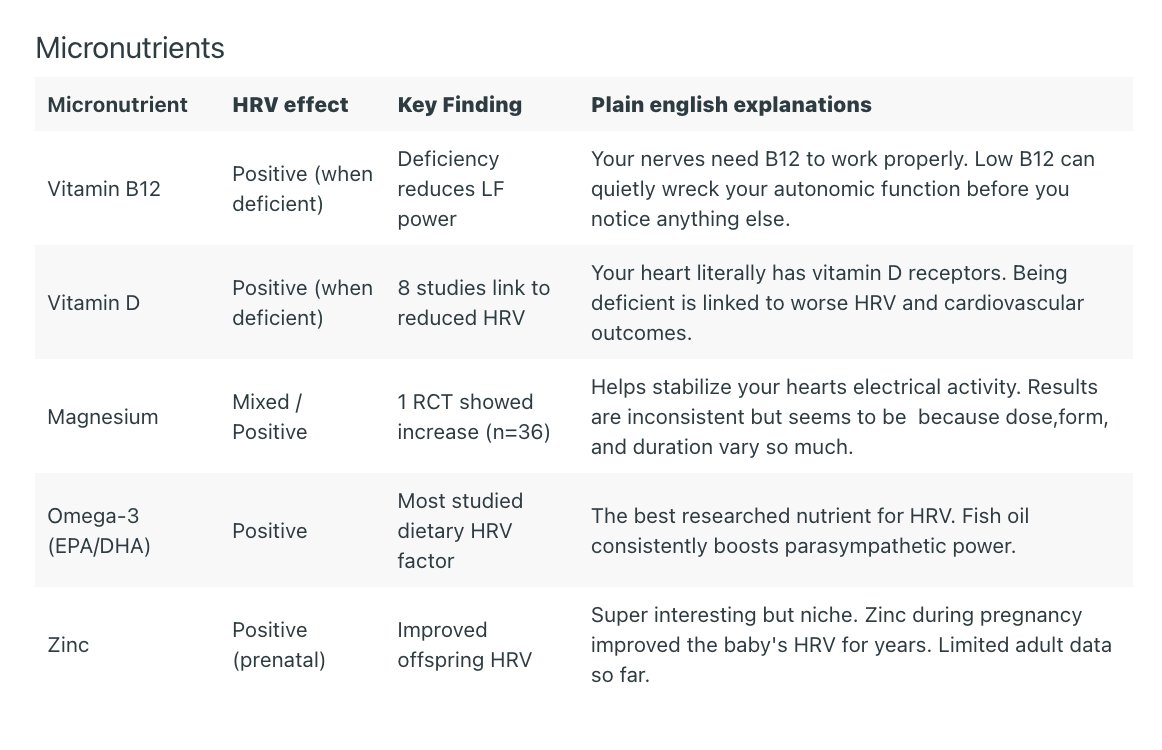
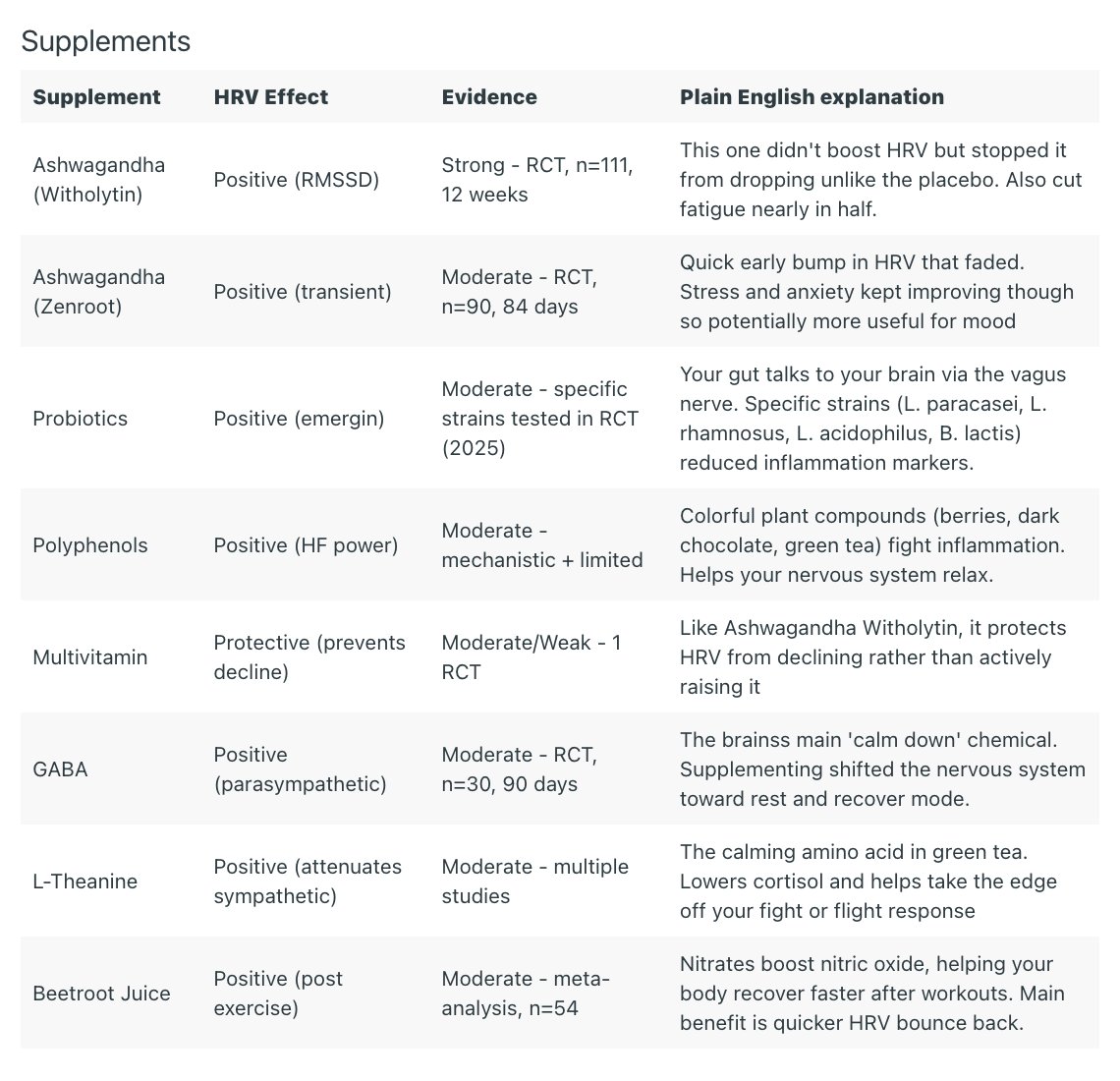
What your wearable actually means by "HRV":
Oura: RMSSD
Garmin: RMSSD
WHOOP: RMSSD
Fitbit: RMSSD
Apple Watch: SDNN
RMSSD = parasympathetic recovery.
SDNN = total variability incl. stress.
Don't compare numbers across these.
1
92
May 24
How much each wearable underestimates time spent awake at night:
Oura: ~12 min
Apple Watch: ~22 min
Garmin: ~31 min
Fitbit: ~38 min
WHOOP: ~48 min
When the algorithm isn't sure what stage you're in, it defaults to light sleep. Every device does this.
- Antwerp 2025, n=62, independent
1
128
May 23
How long before bed caffeine still costs you deep sleep?
0 hr: -32 min
3 hr: -29.7 min
6 hr: -24.1 min
9 hr: -22 min
12 hr: -20.6 min
400mg dose (2 large coffees), double blind PSG study. That noon coffee is still costing you 20 min of N3.
1
2
54
KYGOHEALTH retweeted

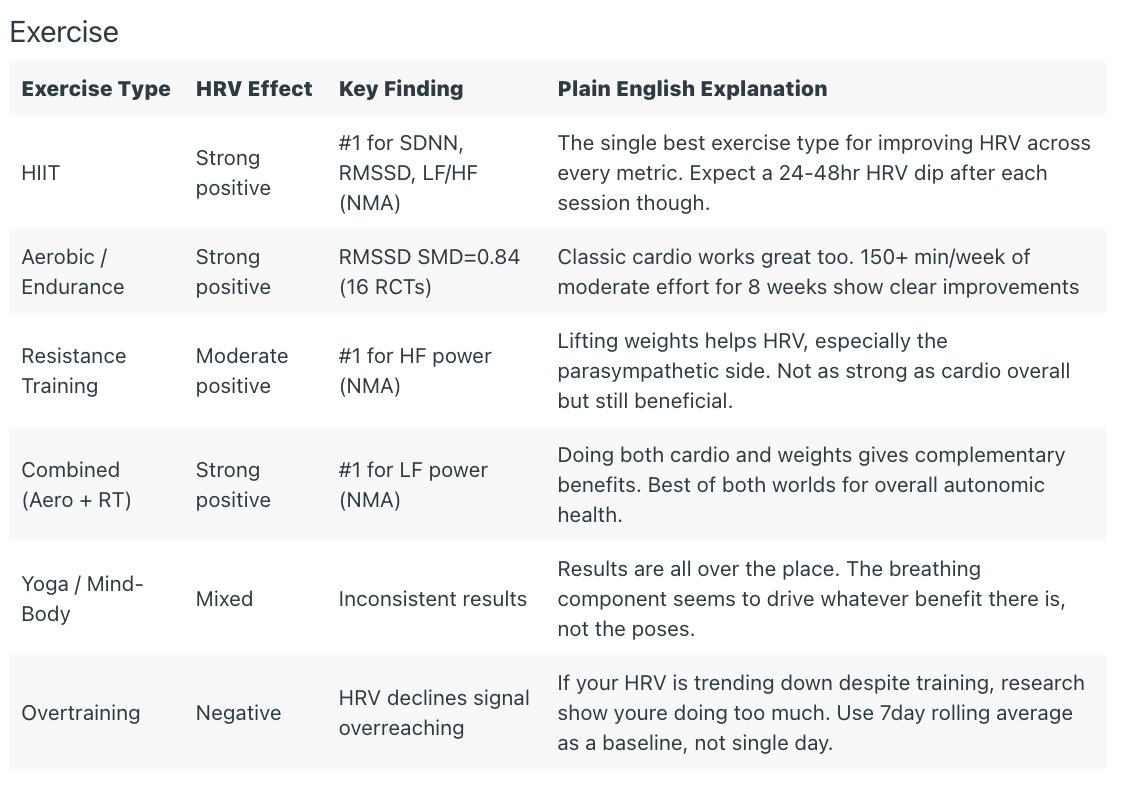
The HRV data on daily HIIT is something more people need to see. Training hard every day while wondering why progress stalls is one of the most common and invisible errors in fitness. Are you building recovery tracking into your platform?
1
1
1
57
May 20
Wearable data backs this up. Even conversational-pace cardio 3-4x/week boosted deep sleep by 33% in a PSG study. You don't need to crush yourself to see it on your ring.
x.com/foundmyfitness/status/…

For those saying 9-10 hours per week is a lot of exercise.
I agree.
But moderate-to-vigorous physical activity is a broad definition. It can include a range of activities from house chores to brisk walking to high-intensity intervals.
In other words, most "activity" counts.
1
91
May 17
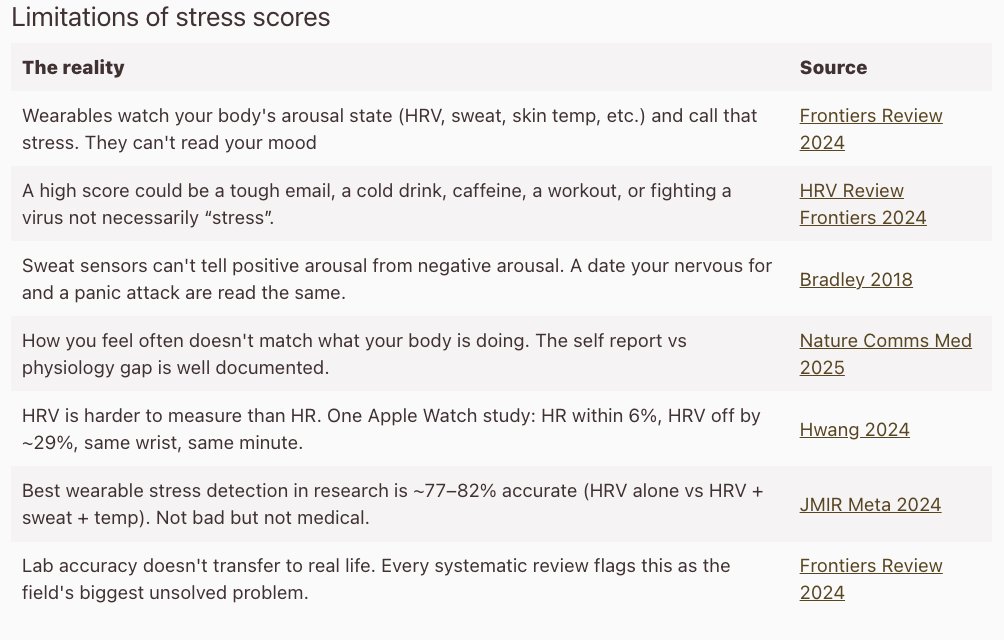
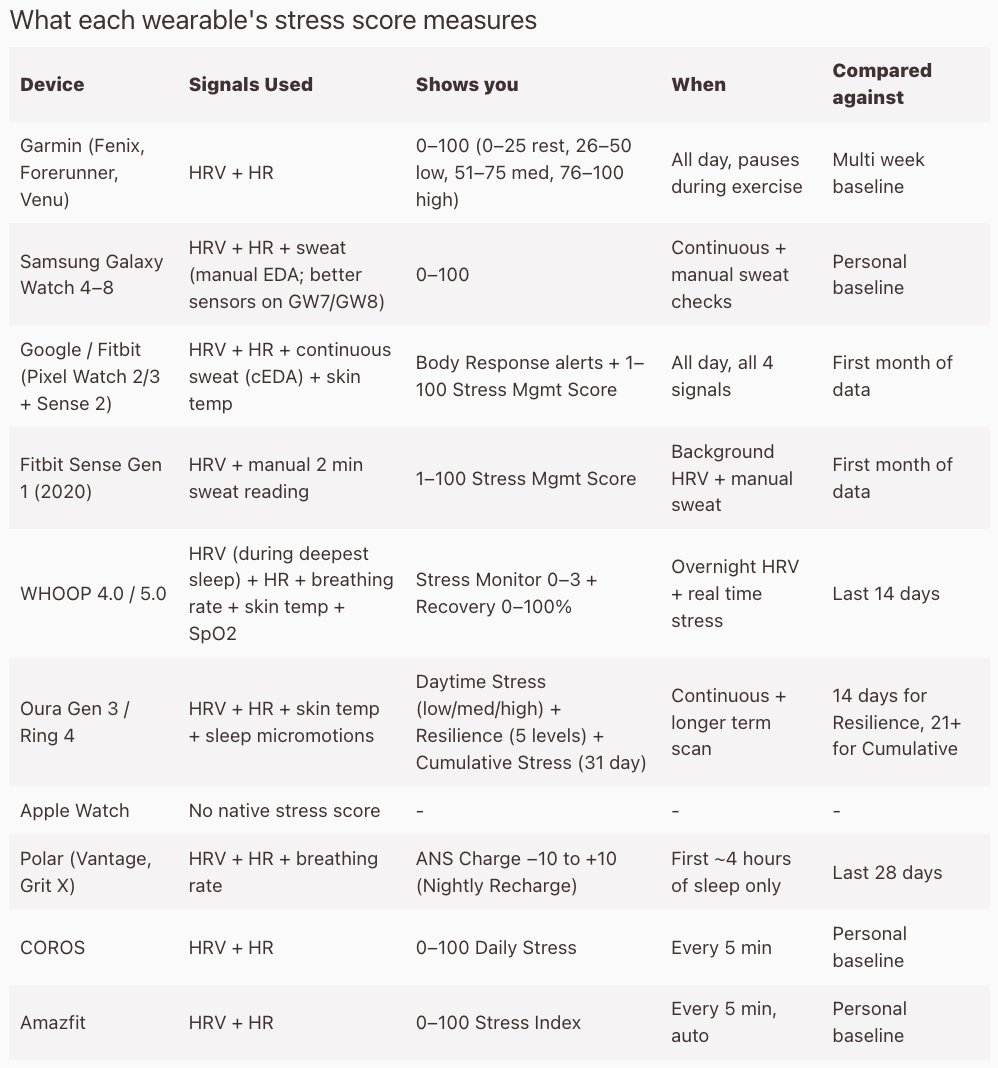
4 reasons you can't compare "stress" scores across wearables:
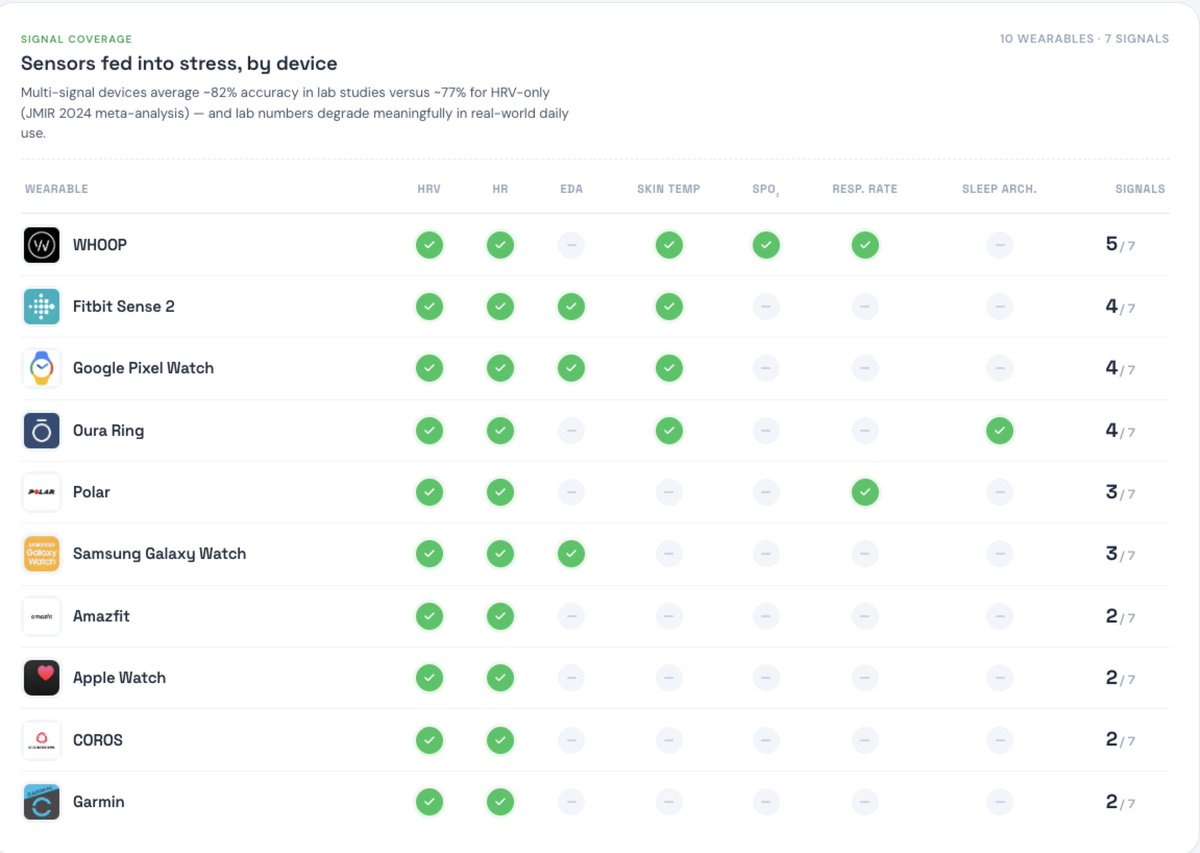
1. Different signals (some use sweat sensors, some don't)
2. Different scales (0–100 vs −10 to 10 vs 0–3)
3. Different baselines (14 days vs 28 days vs first month)
4. Different windows (overnight only vs all day)
Same person, same day, totally different scores.
55
May 15
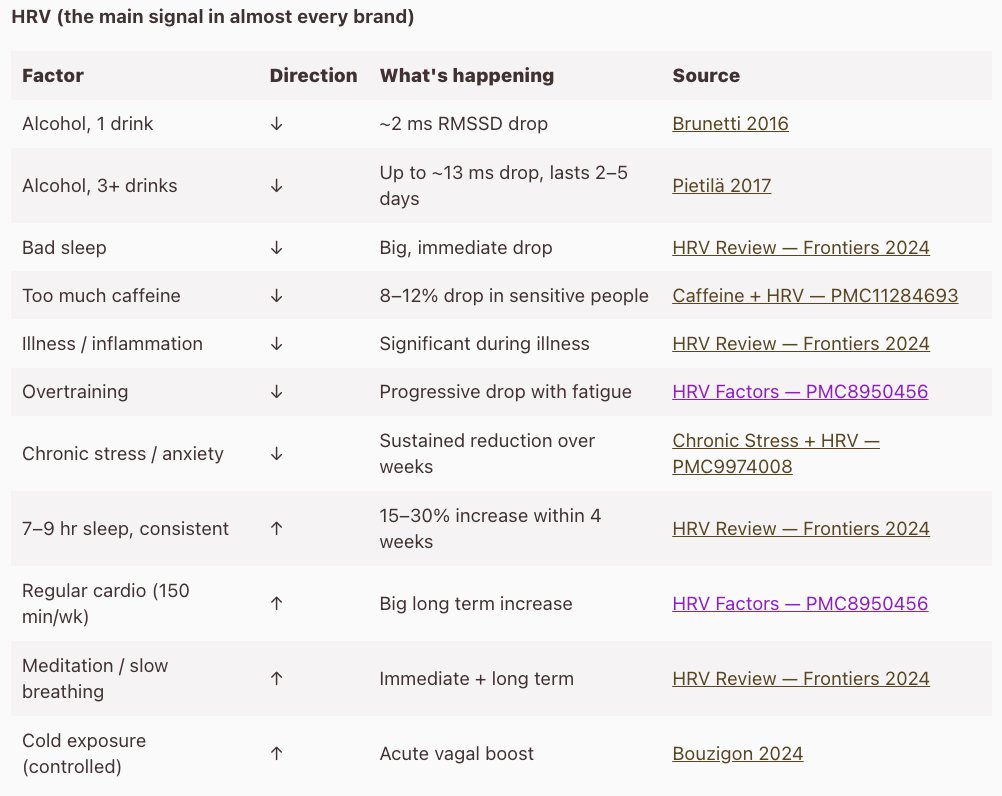
What alcohol actually does to your HRV (peer reviewed):
1 drink: ~2 ms drop in RMSSD
2 drinks: noticeable next morning
3 drinks: up to 13 ms drop, lasts 2–5 days
Alcohol suppresses your parasympathetic nervous system directly. That's why your recovery score tanks.
1
82
May 14
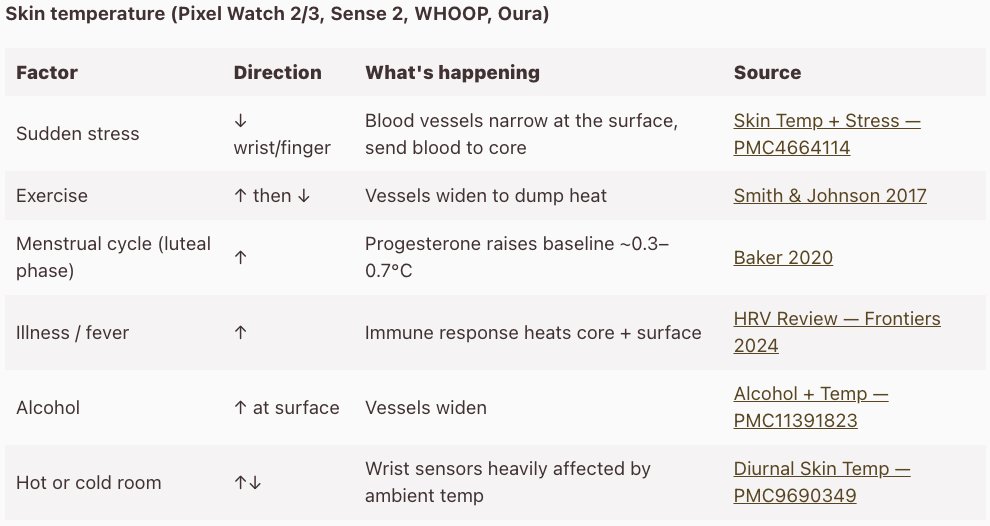
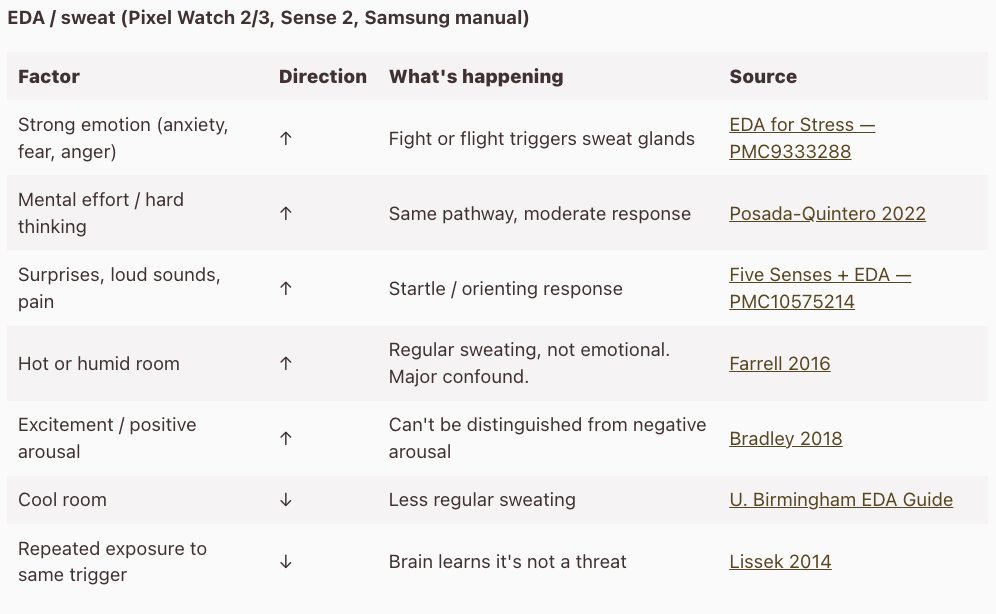
Your wearable's "stress score" isn't measuring stress.
I broke down what every major brand (Oura, Apple Watch, Fitbit, Garmin, WHOOP, Samsung, Polar) is actually watching, what moves the score, and what the research says about accuracy.
In 5 parts:
1
1
134
May 14
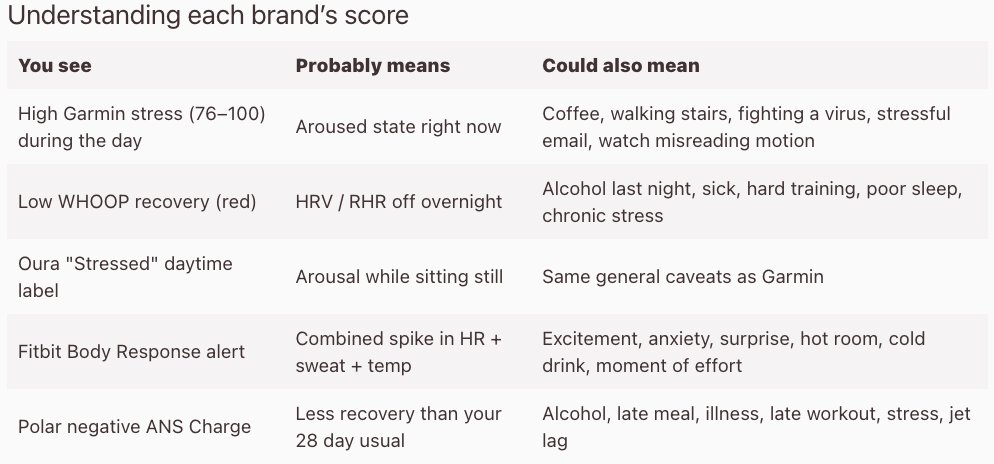
Bonus: a quick decoder for what your watch is probably picking up.
Most "stressed" alerts have 3–5 plausible non-emotional causes (coffee, motion artifact, illness, training, late workout, jet lag).
If you feel fine and your watch disagrees, the watch isn't wrong. It's just measuring something different.
1
52