
🅰️ 🇧🇪| Political scientist | PhD | Guest professor & Postdoc @m2p_be @UAntwerpen | Convener @ECPR_Polcom | Political Communication, Radical right & migration
Joined May 2009
- Tweets 1,080
- Following 1,230
- Followers 1,550
- Likes 2,926
195 Photos and videos

Pinned Tweet

13 Dec 2023
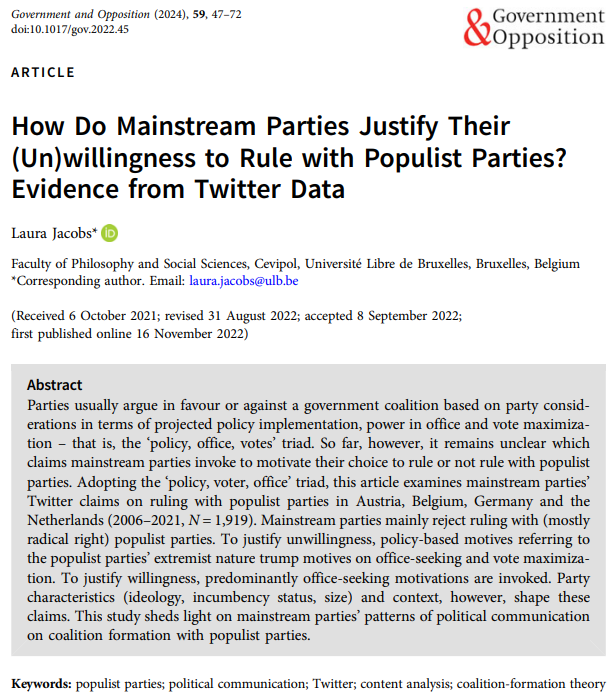
Great to see that my article on mainstream parties' justifications on ruling with right-wing and left-wing populist parties is now also out in print in @govandopp & can be accessed here: cambridge.org/core/journals/…
3
19
92
15,940
Laura Jacobs retweeted

Apr 14
Early experiments on the persuasive power of AI chat systems raised big hopes in political communication: what could be better than letting AI do the hard work of persuading people?
It’s not that simple.
Yes, experimental studies show that AI-generated content can convey information and even change opinions. But these studies usually measure persuasion under forced-exposure conditions. They do not show how people feel about being approached by an AI with persuasive intent.
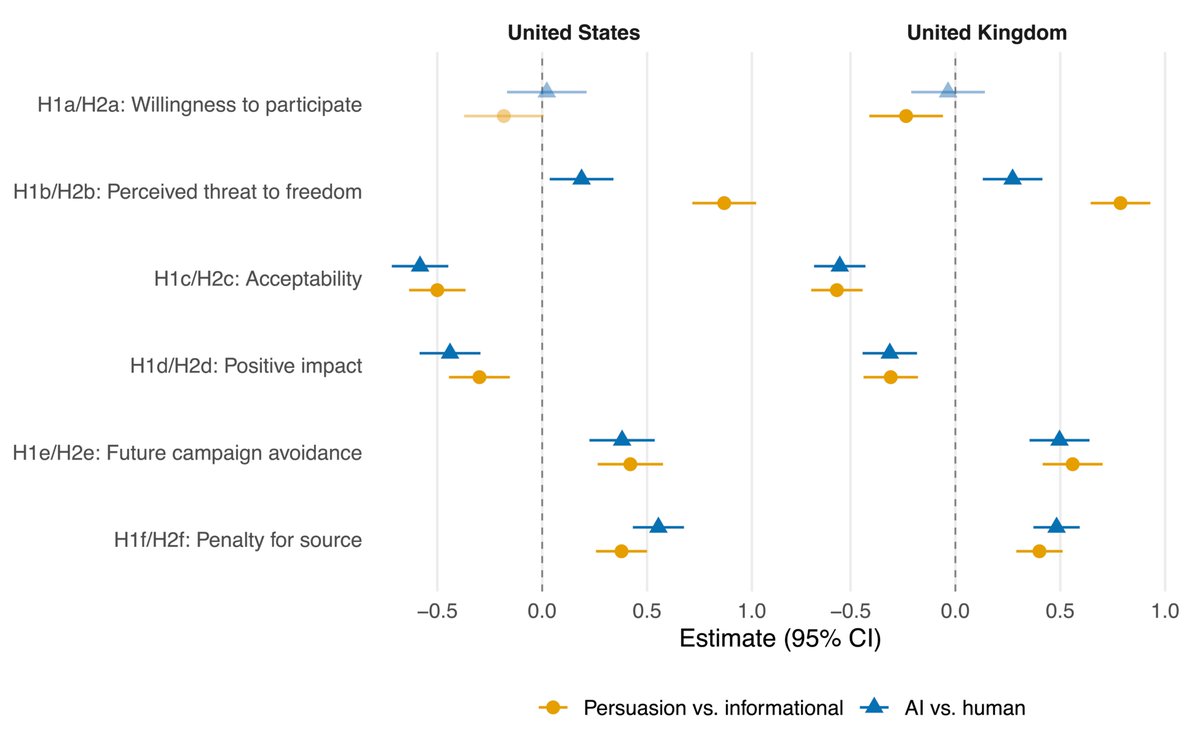
Findings from a new study with @OuzhouAdi suggest that AI-mediated political outreach does not necessarily help campaigns and may carry negative consequences.
In a preregistered 2x2 experiment in the US and UK (N = 1,800 per country), we test how people react to announced political contact: either from a human campaign volunteer or an AI-mediated system, and in each case with either an informational or persuasive purpose.
We find two clear patterns:
🔸 Persuasion penalty: outreach with explicit persuasive intent is rated more negatively than purely informational outreach
🔸 AI penalty: AI-mediated outreach is rated more negatively than human outreach across almost all outcome variables, in both countries
Importantly, the negative effects of AI-mediated outreach are especially pronounced when the contact is framed as informational. In other words, the costs of AI appear even in contexts that may initially seem more legitimate or less problematic.
The negative reaction also extends beyond the contact itself to the organization behind it, with implications for trust, avoidance, and reputation.
Much of the existing research asks: can AI change opinions?
We ask: how legitimate and acceptable does AI-mediated political outreach appear to people in the first place?
If we focus only on persuasive effectiveness, we risk overlooking the larger costs of deploying such systems.
Working Paper: arxiv.org/abs/2603.27413v1
3
22
64
23,653
Laura Jacobs retweeted

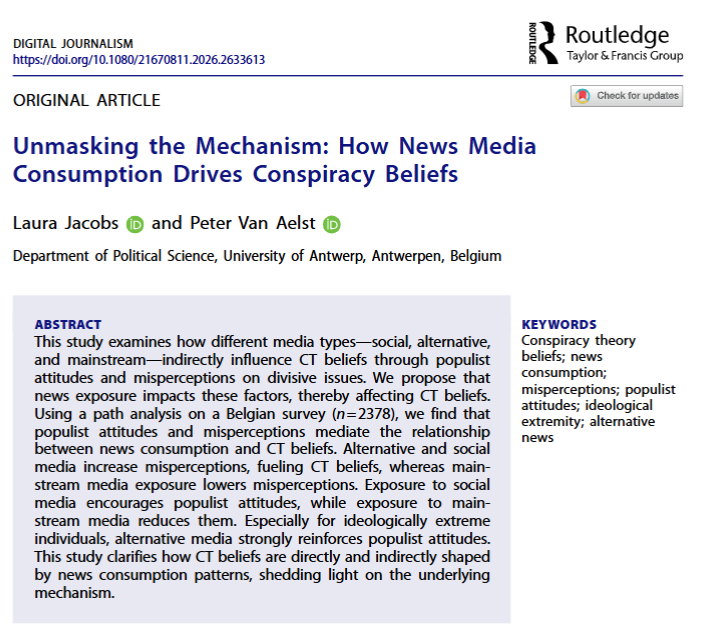
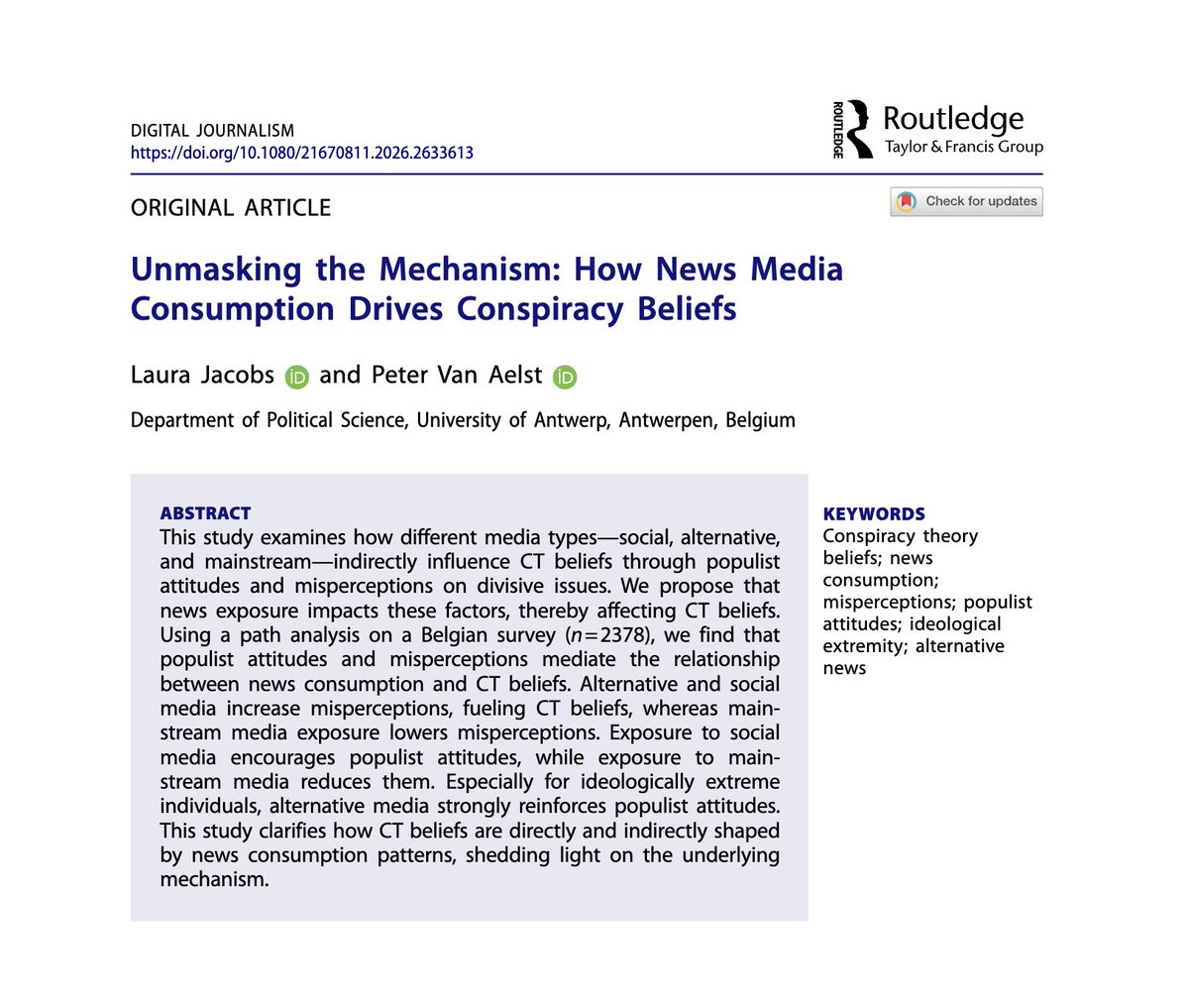
ONLINE FIRST! This article by Laura Jacobs & Peter Van Aelst examines how different media types—social, alternative, and mainstream—indirectly influence #conspiracytheory beliefs through #populist attitudes and misperceptions on divisive issues.
➡️tandfonline.com/doi/full/10.…
1
5
239
Laura Jacobs retweeted

Mar 26
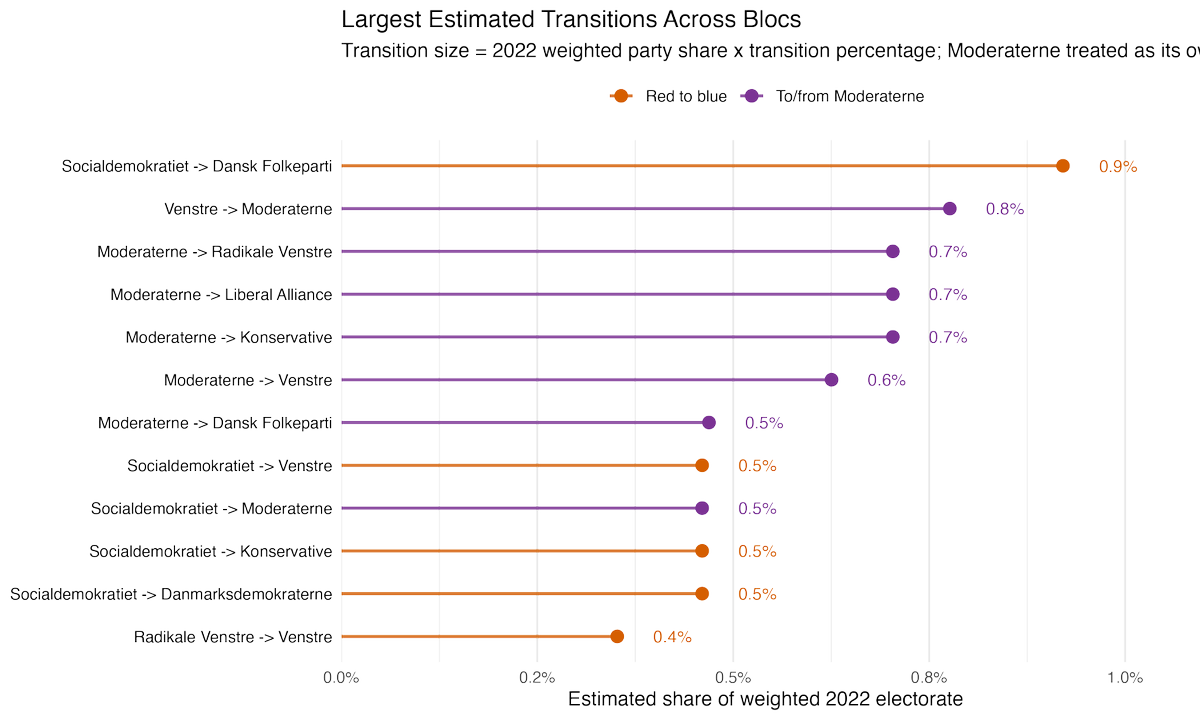
Third: the mainstream left loses votes to the radical right. A familiar pattern reemerged: the single biggest voter movement between blocs was Social Democrats losing voters to the Danish People's Party. (Based on estimates from the final @YouGov poll). (3/4)
6
9
43
4,497
Laura Jacobs retweeted

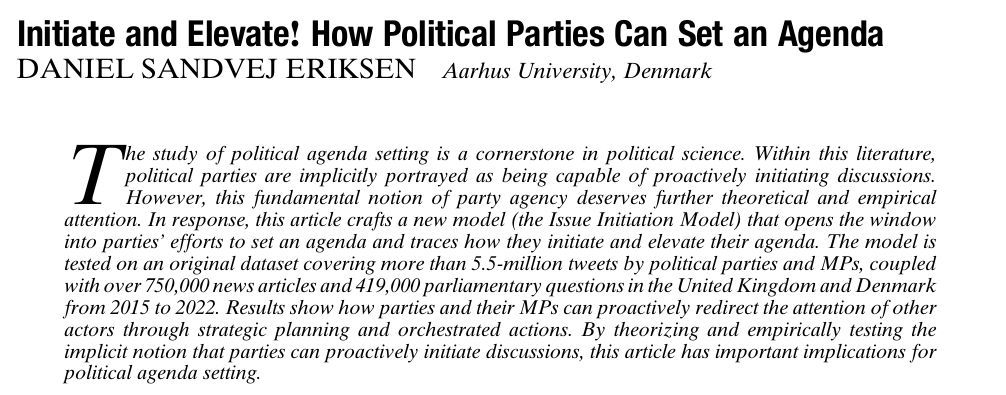
New in our FirstView: Initiate and Elevate! How Political Parties Can Set an Agenda by @DanielMEriksen doi.org/10.1017/S00030554261…
6
28
5,530
Mar 17
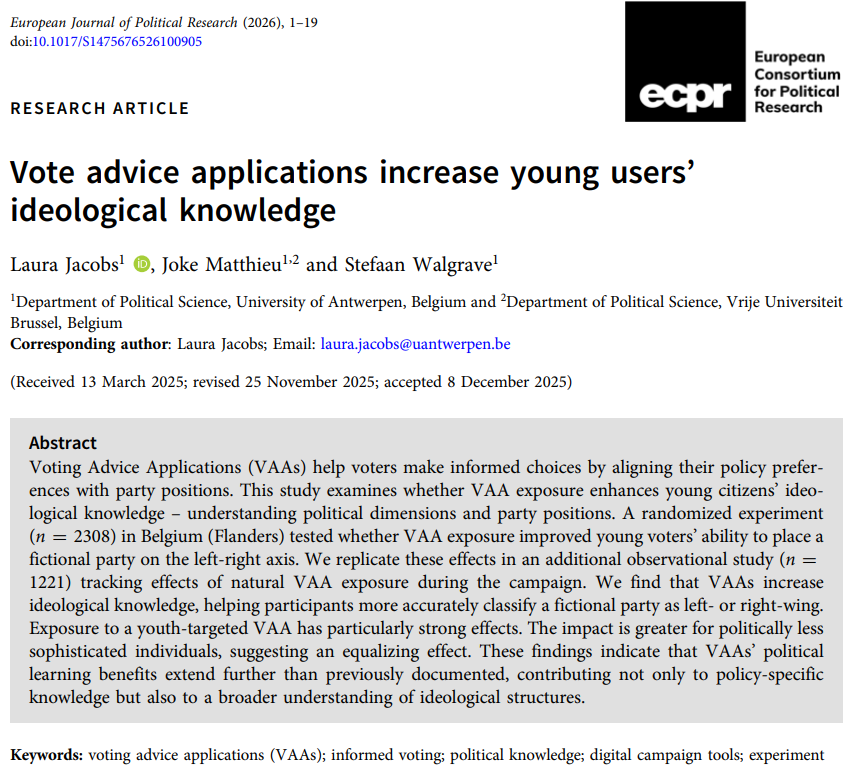
🗳️📷 Maken deelname aan stemtesten jongeren politiek geletterder?
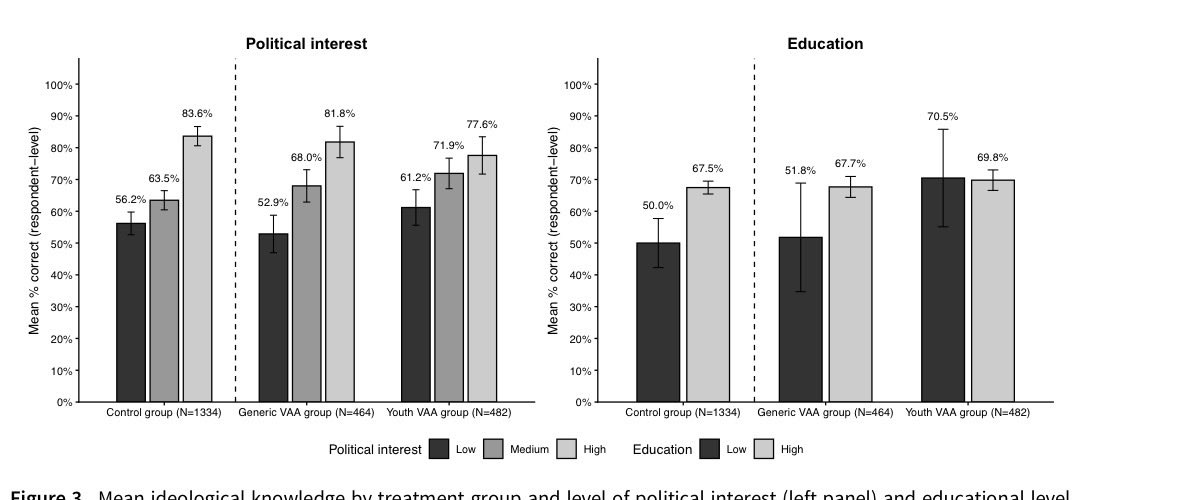
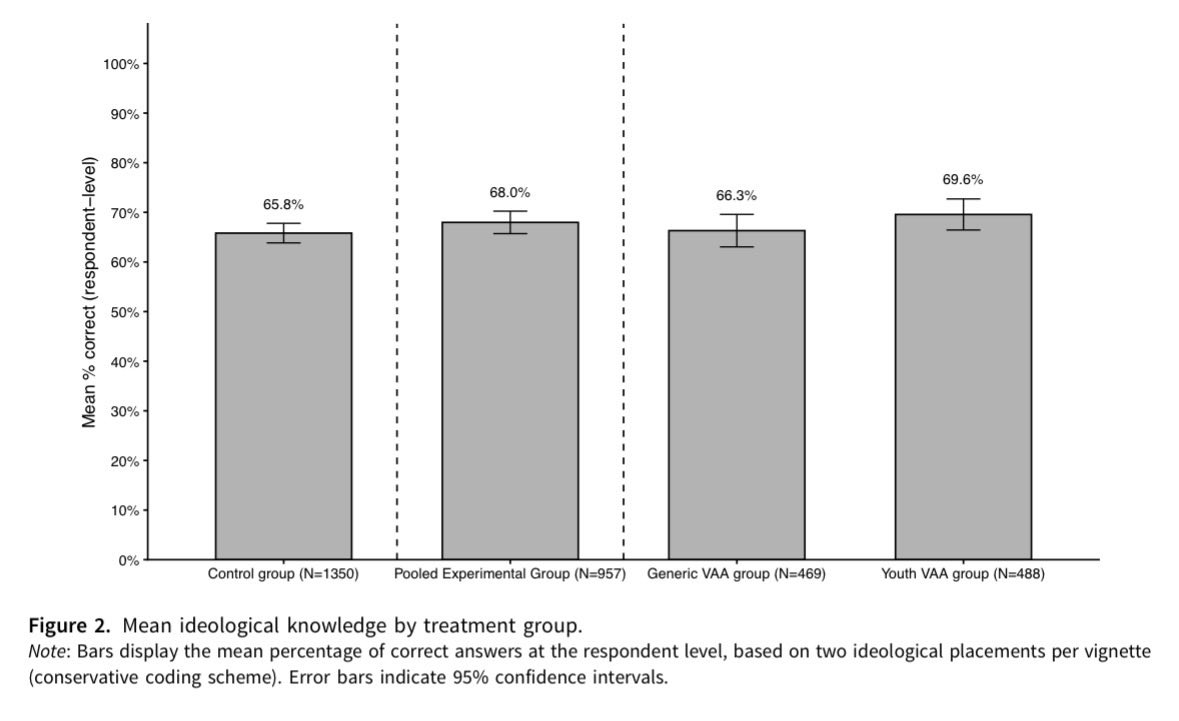
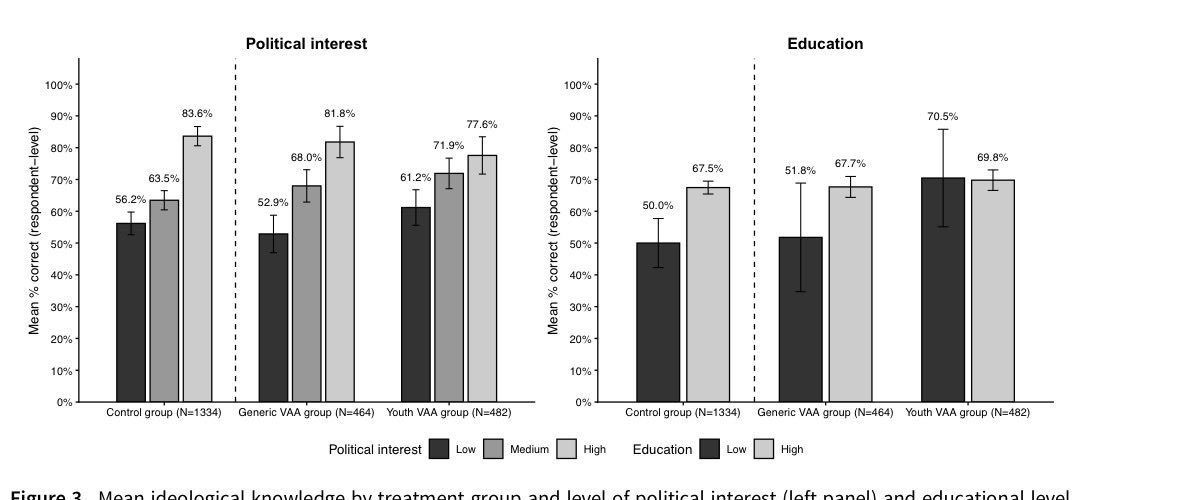
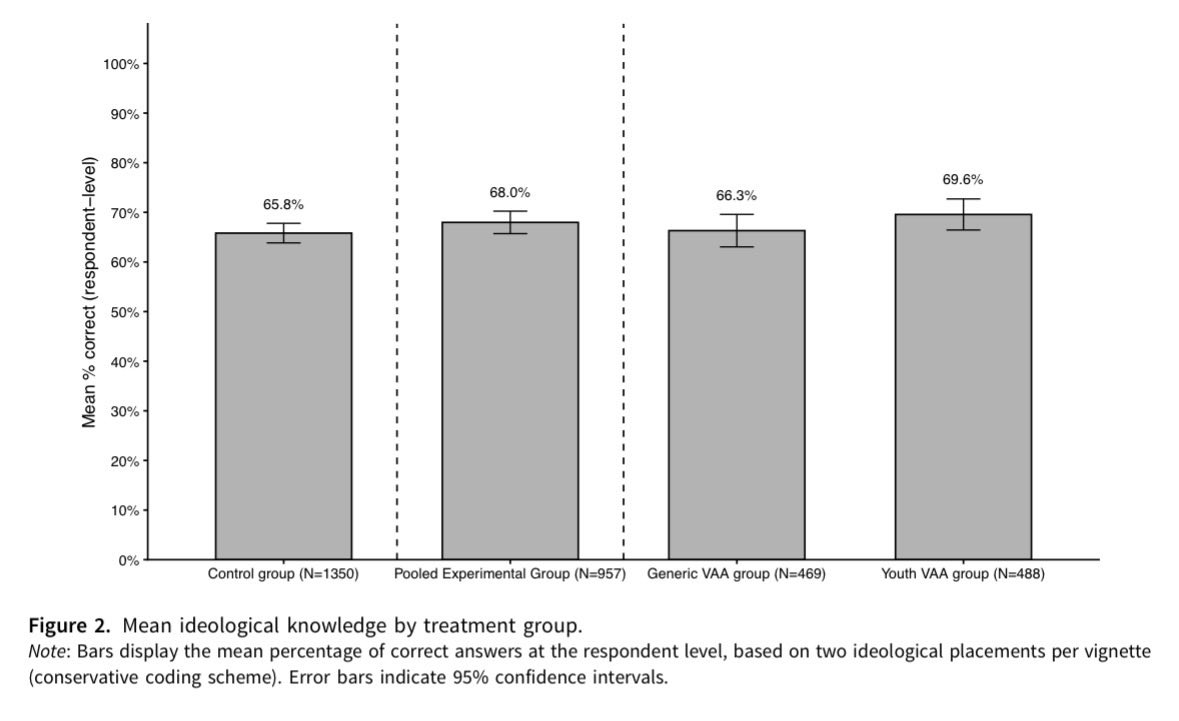
Onze nieuwe EJPR-studie (met Joke Matthieu & Stefaan Walgrave) o.b.v. data over de 🇧🇪 verkiezingen in 2024 toont dat ze de ideologische kennis versterken — sterker dan eerder aangetoond.
doi.org/10.1017/S14756765261…
1
1
5
349
Mar 17
Dat effect is vooral duidelijk bij jongeren die een specifieke jongerenstemtest gebruikten (vs. een algemene stemtest).
1
182
Mar 17
Belangrijk: de impact is sterker bij politiek minder geïnformeerde jongeren. Dat verkleint de kloof in kennis en helpt jongeren ideologische verschillen beter te begrijpen.
1
102
Mar 17
🗳️📷 Do Voting Advice Applications (VAAs) make young voters more politically literate? Our new EJPR study with Joke Matthieu & Stefaan Walgrave finds they boost ideological knowledge, more than previously documented.
doi.org/10.1017/S14756765261…
1
4
232
Mar 17
We find this holds in particular for young voters that did a youth VAA (compared to a generic VAA)
1
2
176
Mar 17
Importantly, the impact is greater for politically less
sophisticated individuals, suggesting an equalizing effect. This indicates that VAAs’ political
learning benefits extend further than documented, contributing also to a broader understanding of ideological structures.
1
97
Mar 16
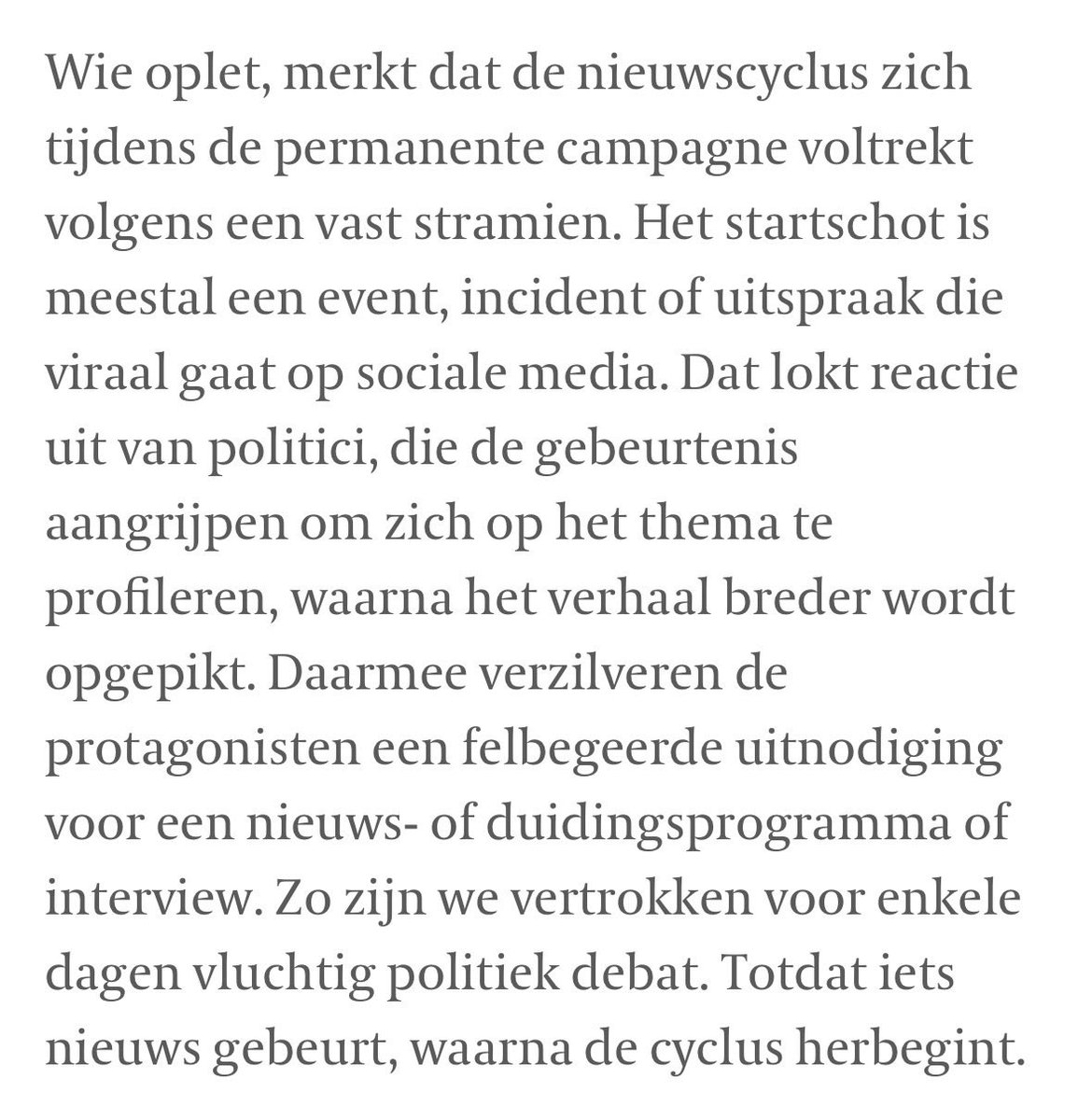
Elke dag, de politieke actualiteit samengevat, volgens een goed geolied draaiboek: incident / uitspraak → reacties andere politici→ talkshows → volgende incident. (Hier uit mijn opinie voor De Tijd tijdens de campagne in 2024) …
tijd.be/opinie/column/campag…
1
6
439
Laura Jacobs retweeted

Mar 16
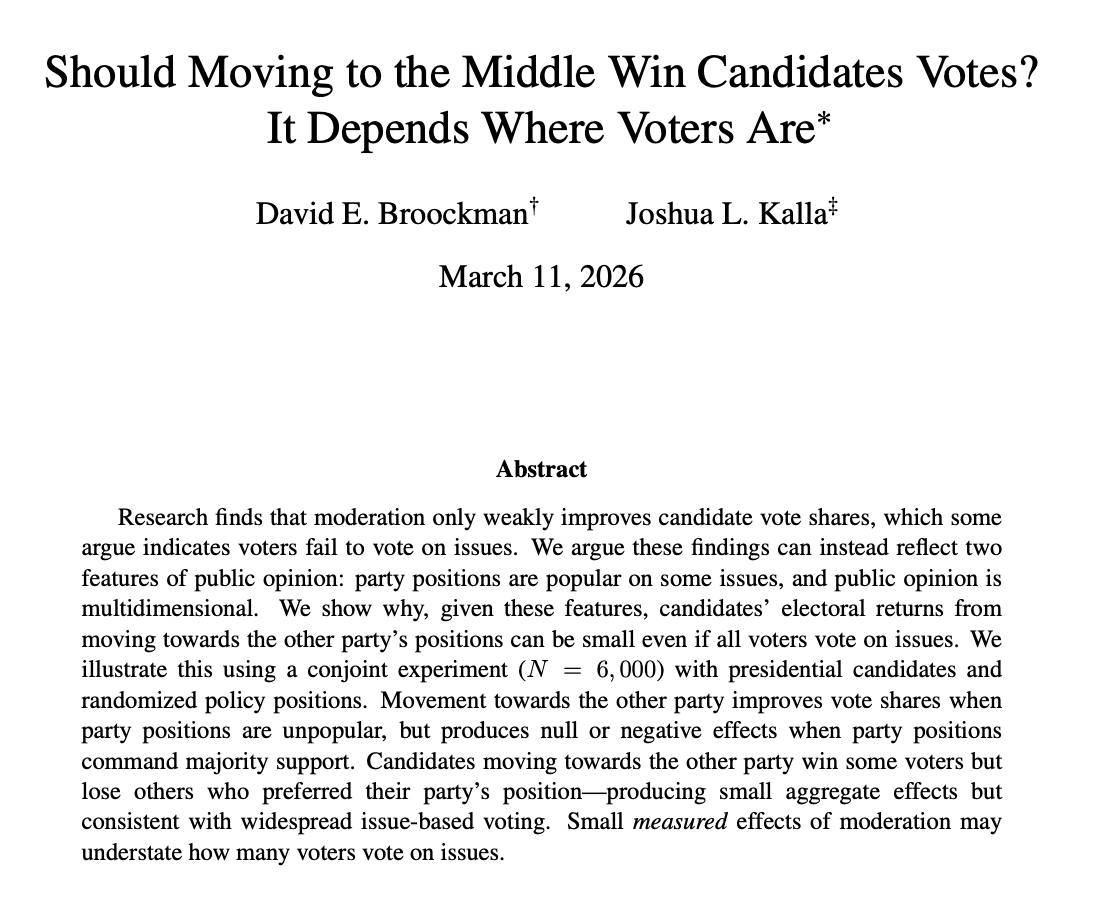
New short paper w @j_kalla!
Candidates gain from moderation, but less than many theories expect.
Many conclude voters must not care about issues.
This is wrong. Small *average* effects mask large effects on specific issues & are consistent with widespread issue-based voting 🧵
5
87
329
61,957
Mar 9
🗳️📷 Do Voting Advice Applications (VAAs) make young voters more politically literate? Our new EJPR study with Joke Matthieu & Stefaan Walgrave finds they boost ideological knowledge, more than previously documented. cambridge.org/core/journals/…
10
465
Mar 6
🧠 How news consumption shapes conspiracy beliefs: misperceptions & populist attitudes are the key mechanisms. New article out in Digital Journalism with Peter Van Aelst👇 tandfonline.com/eprint/HYXI9…
1
3
103
Mar 4
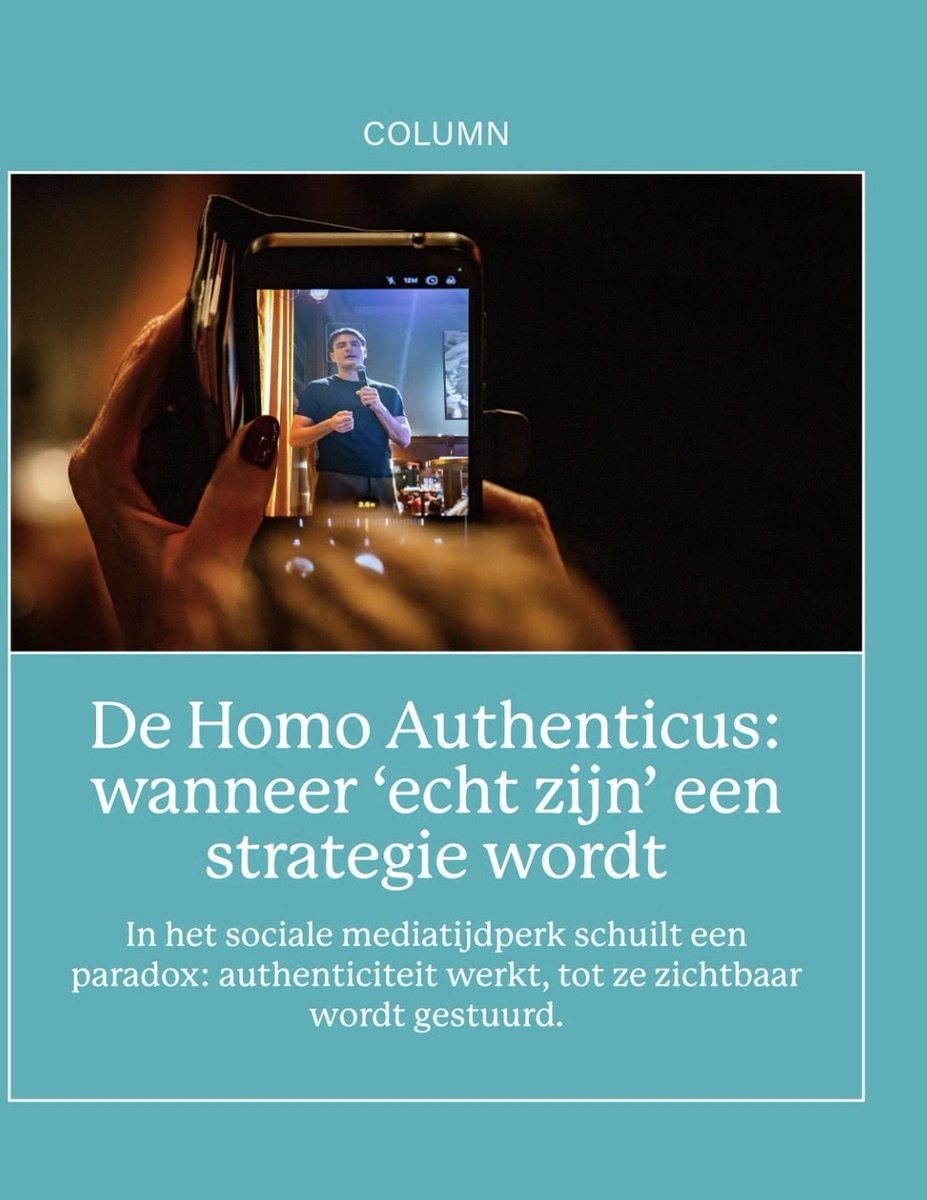
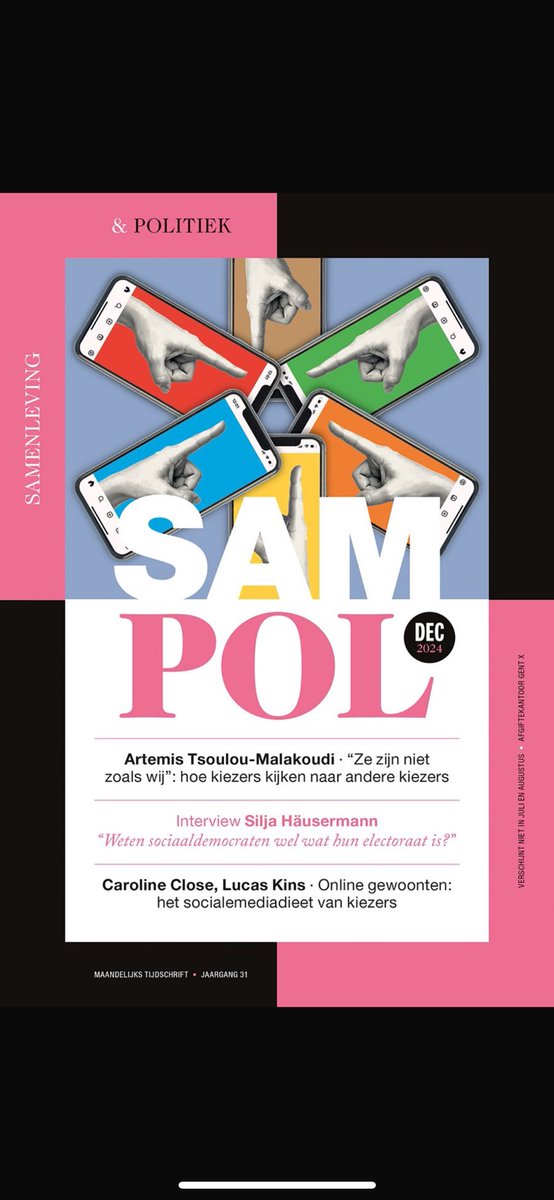
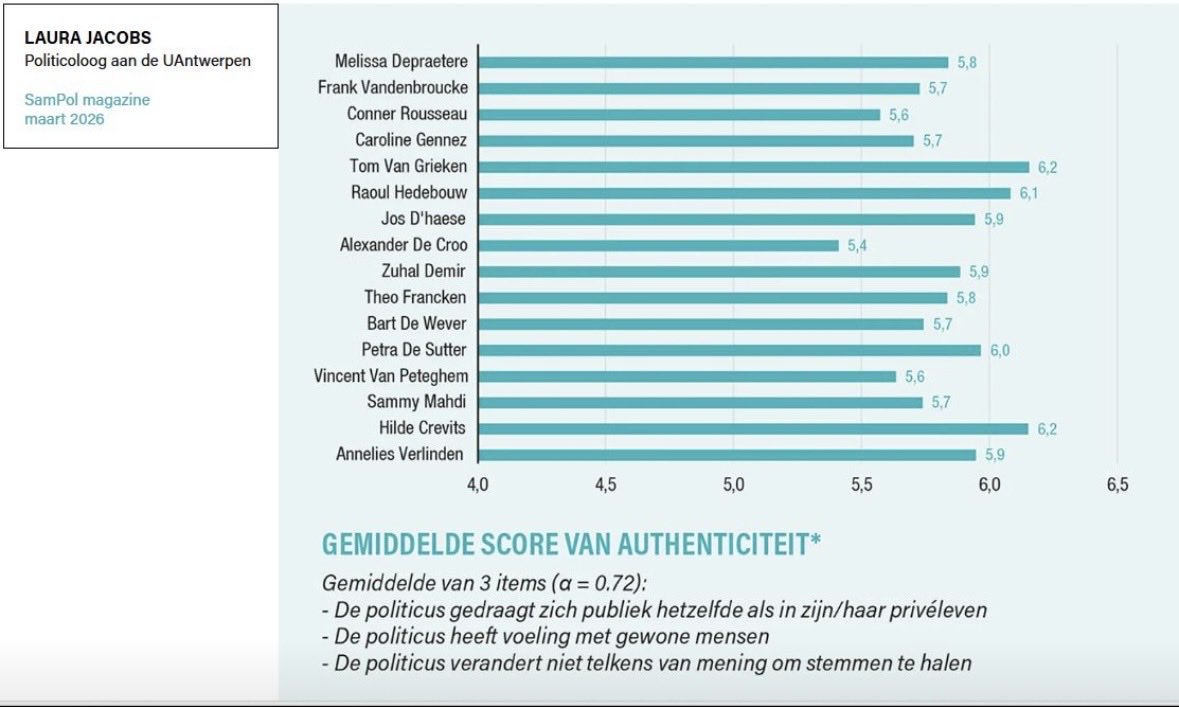
📚 Het maartnummer van Samenleving & Politiek is uit.
👇Met mijn column: “De homo authenticus: wanneer ‘echt zijn’ een strategie wordt.”
Over Conner Rousseau, een brand manager en de paradox van politieke authenticiteit in het sociale media tijdperk.
sampol.be/2026/03/de-h...
1
4
343
Laura Jacobs retweeted

21 Jul 2025
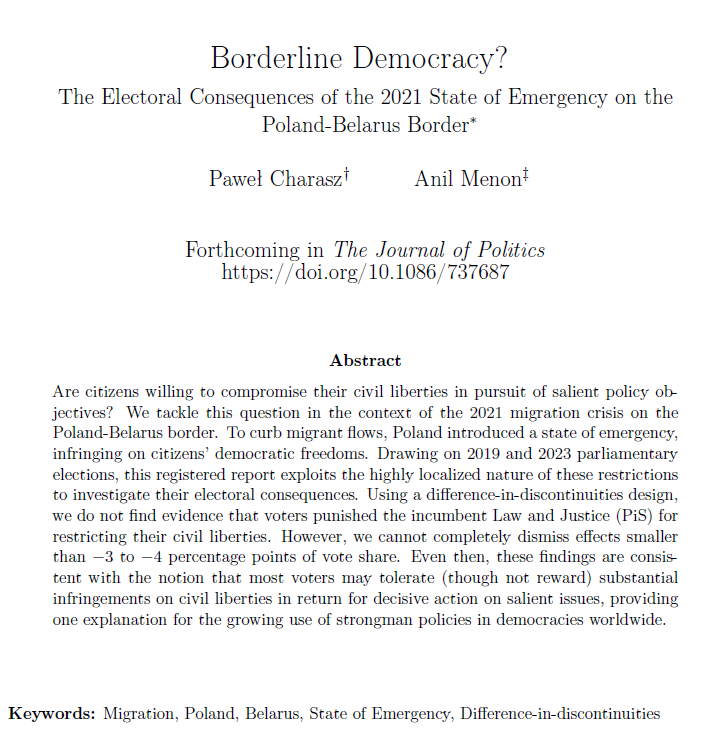
🚨New paper alert🚨
Excited to share our forthcoming registered report in The Journal of Politics @The_JOP !
In "Borderline Democracy?", @armenon_memorie and I ask: Do voters punish governments for curbing civil liberties to tackle salient issues like migration? 🧵👇
1/8
3
17
62
5,740
Laura Jacobs retweeted

5 Jun 2025
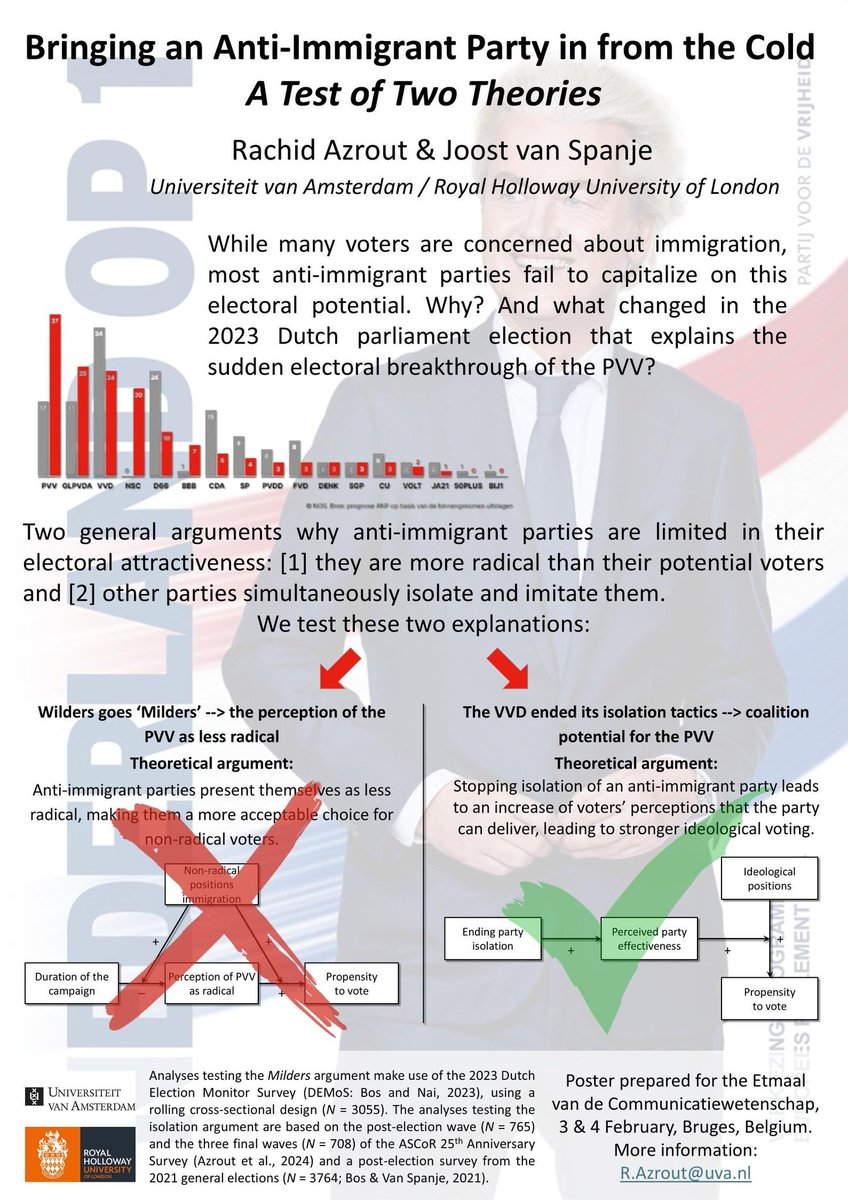
Inderdaad!
Onderzoek van Rachid Azrout en bovengetekende sluit daar naadloos op aan.
Zowel een recente studie naar het openzetten van de deur door de VVD in 2023 (zie plaatje onder) als eerdere studies, d.m.v. allerlei methoden, in 15 landen sinds 1944 (zie mijn boek uit 2018).
5 Jun 2025

Yesilgöz zet de deur naar samenwerking met Wilders opnieuw op een kier. “Moet er nog goed over nadenken.”
Onderzoek, o.a. door mezelf, toont het belang van zulke strategieën en suggereert legitimering van radicaal-rechts. 📚
🔗 journals.sagepub.com/doi/ful…
2
2
502
5 Jun 2025
Yesilgöz zet de deur naar samenwerking met Wilders opnieuw op een kier. “Moet er nog goed over nadenken.”
Onderzoek, o.a. door mezelf, toont het belang van zulke strategieën en suggereert legitimering van radicaal-rechts. 📚
🔗 journals.sagepub.com/doi/ful…
4
9
911
5 Jun 2025
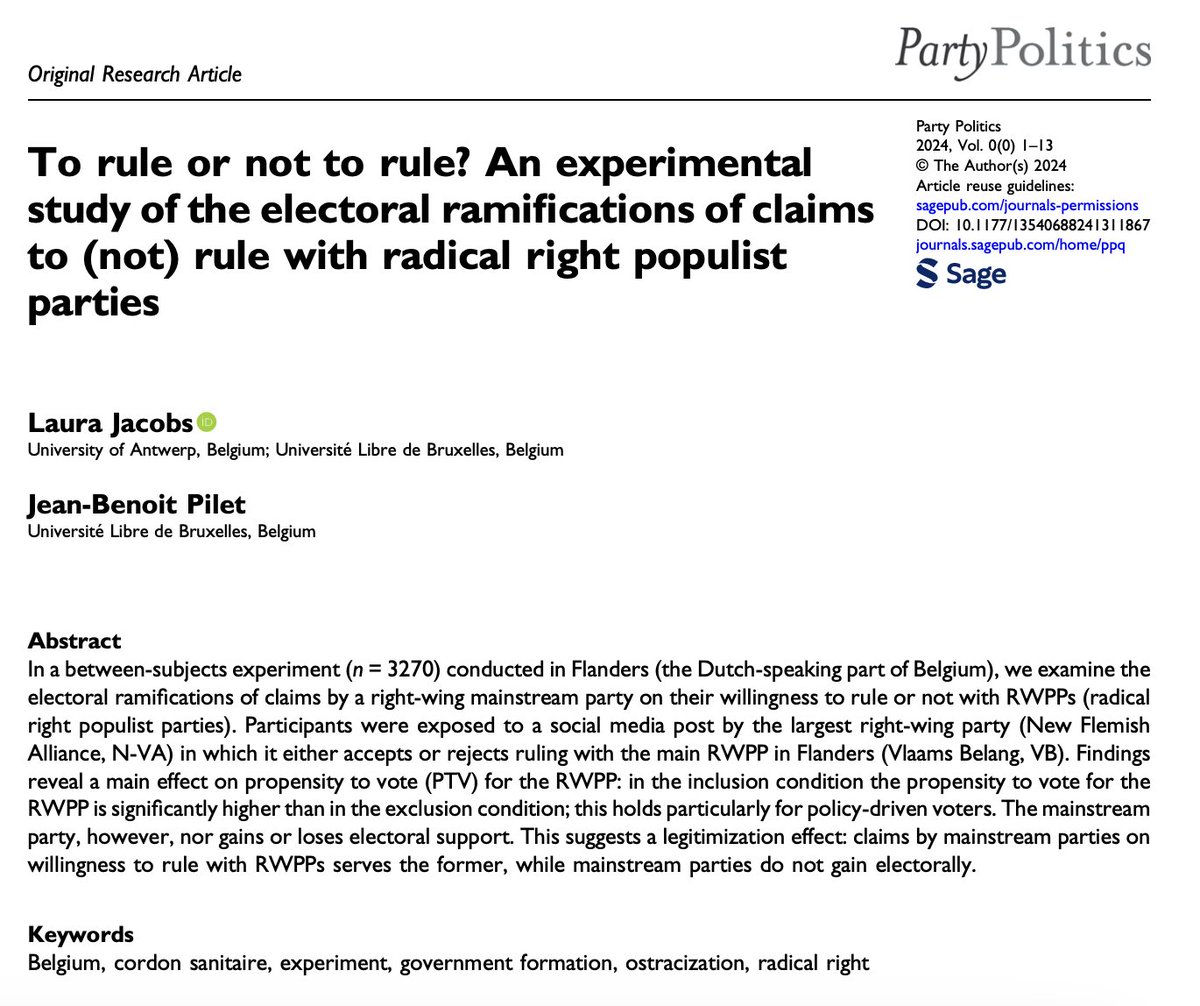
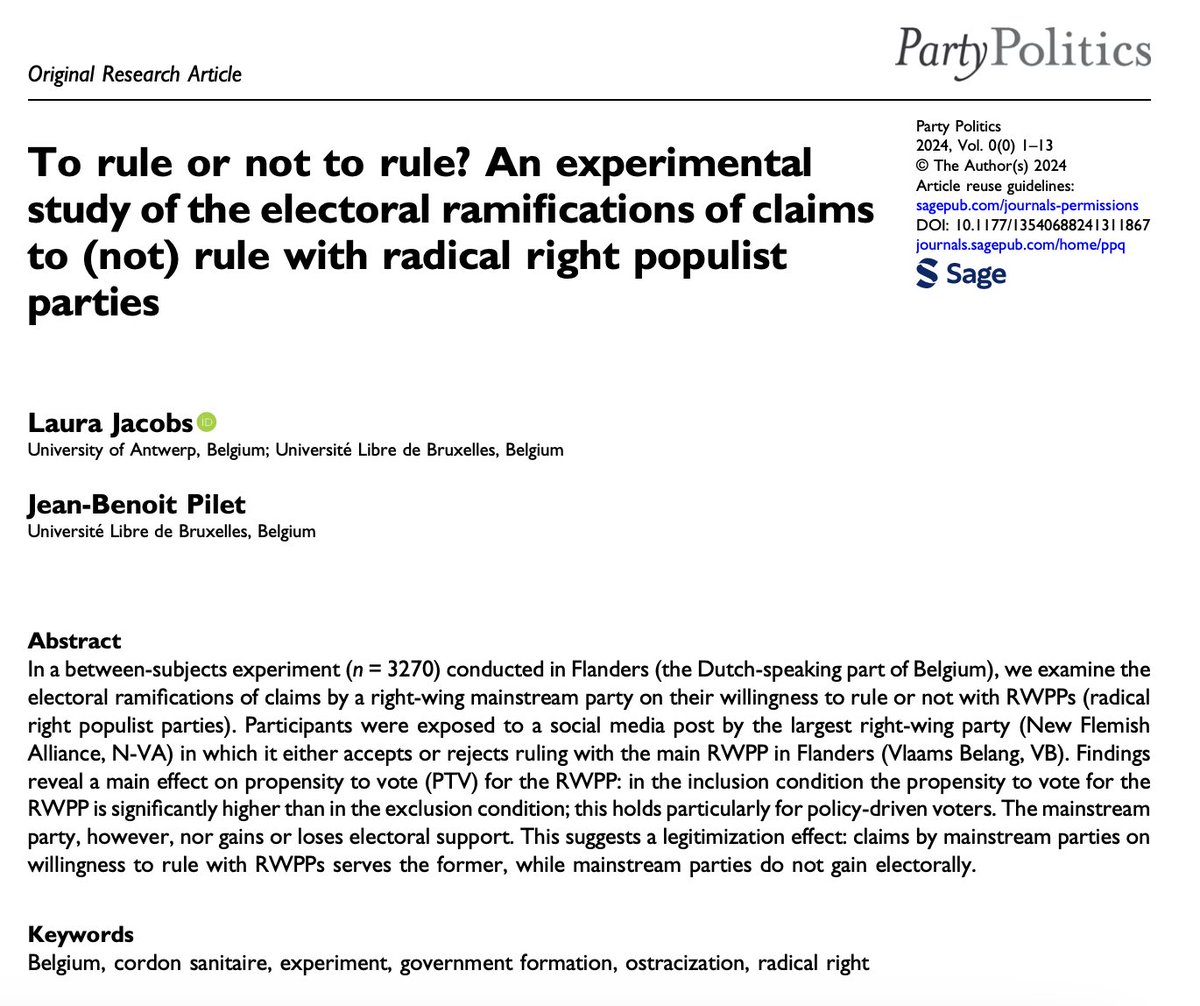
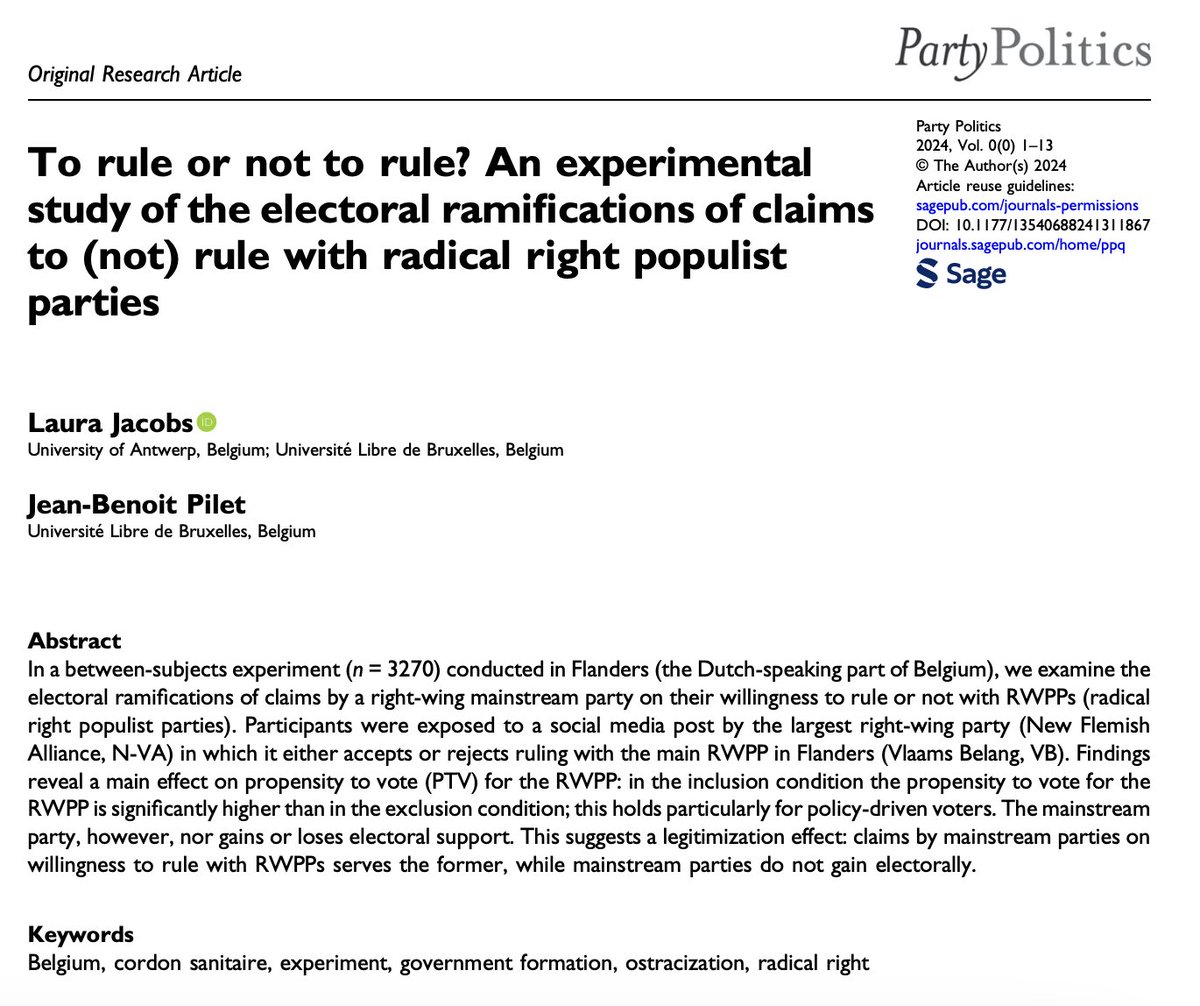
🇳🇱 With new Dutch elections looming, it seems a good time to reshare our study w/ @jbpilet
🤝 Mainstream parties open to ruling w/ radical right → boosts their legitimacy & vote chances.
📌 Insight to consider for coalition talks & campaign rhetoric
🔗 journals.sagepub.com/doi/ful…
1
7
253