
Writer of psychological suspense/thrillers, paranormal horror, and middle grade adventure with magical realism. Love painting. Married. Mom. No DMs please.
Joined June 2022
- Tweets 26,074
- Following 4,267
- Followers 3,215
- Likes 46,070
449 Photos and videos















Pinned Tweet

An elderly woman holds a grudge for forty years. On the outside, she goes to church, knits baby blankets and babysits, but her husband's betrayal has unleashed a psychotic anger that knows no bounds: a racy thrill ride with killer twists.
#PosterPit #A #S #T #M
ALT Roots of Revenge poster by Canadian author L. D. Rex
1
13
41
404
L. D. Rex--Seeking literary agent representation. retweeted

Jun 15
Thought you might like to know. At age eighty I am publishing my first novel. Thank you for your support and suggestions. @LouDPhillips
d
73
45
799
15,856
L. D. Rex--Seeking literary agent representation. retweeted

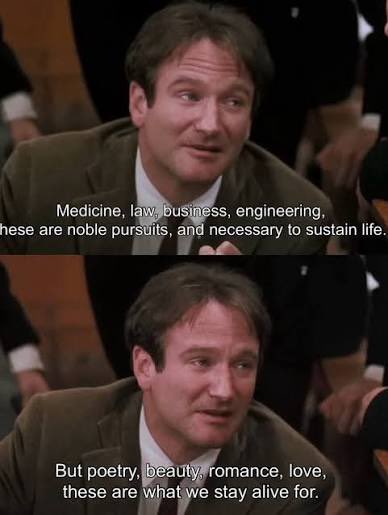
I’m starting as a Lead Teacher at the creative writing summer camp tomorrow at my university and I just want to thank this fictional man for making me want to become a professor :,). I’m so thrilled
2
7
296
L. D. Rex--Seeking literary agent representation. retweeted

Jun 15
It was great joining Njideka Akunyili Crosby — a gifted Nigerian-born, Los Angeles-based artist — to unveil our first portrait together. This piece reflects so many chapters of Michelle and my story, and we’re thrilled that it will be on display in the Hope and Change lobby at the Obama Presidential Center starting this Juneteenth.


7,699
27,171
260,252
16,658,675
L. D. Rex--Seeking literary agent representation. retweeted

Jun 15
This is just the sweetest thing ive ever heard

After meeting him for all of 2 minutes last week, my mother has since become @ScottLaudati ‘s biggest fan, purloining my copy of Rainbow Road, serenading my dad with poems from it, and comparing Scott to Rod McKuen (her favourite poet) every time I speak to her
2
7
56
1,757
L. D. Rex--Seeking literary agent representation. retweeted
May 14
WHOA! The last in my trilogy of poetry books, RAINBOW ROAD, will be released on June 25th. 130 pages of new poems 3 of my favorites from Bone House and Camp Winapooka. Thank you for taking this journey with me, it was a long one, and we rode it to the end.
Vio con dios🍕🤟🐢💀
12
47
139
9,756
L. D. Rex--Seeking literary agent representation. retweeted
Jun 14
Went 2 my parents today & my dad was of course ripping the side of the house off.
Dad: I saw u were on the news.
Me: Oh .. yeah
Dad: It was short
Me: Yeah i guess it was
Dad: Pick up that bag of cement & bring it over
*this is the most we have ever talked abt my writing career.
6
6
120
4,724
L. D. Rex--Seeking literary agent representation. retweeted

Jun 15
1943. A Jewish teenager dressed as a Boy Scout led 24 children through French forests toward the Swiss border. Nazi patrols were everywhere. The children had to stay silent. So Marcel Mangel—who would become Marcel Marceau—used the only skill he had: mime. He kept them quiet by making them laugh without sound. He was miming for his life.
Marcel Mangel was born on March 22, 1923, in Strasbourg, France, on the border with Germany.
His father, Charles, was a butcher. His mother, Anne, had fled pogroms in Eastern Europe, joining 200,000 Jews seeking safety in the west.
When Marcel was five, his mother took him to see a Charlie Chaplin film.
He was entranced. The silent comedy. The physical expression. The way Chaplin communicated everything without words.
Marcel started imitating Chaplin for friends and family. He dreamed of becoming a silent film star.
He had no idea his mime skills would one day save lives.
In 1940, when Marcel was 17, Nazi Germany invaded France.
The Mangel family—living in Strasbourg, right on the German border—was in immediate danger.
Marcel and his older brother Alain changed their last name to "Marceau," borrowing it from François Séverin Marceau-Desgraviers, a general of the French Revolution.
The family fled south to Limoges, deeper into France, away from the advancing German army.
In Limoges, Marcel's cousin Georges Loinger found him.
Loinger was a leader in the Organisation Juive de Combat—the Jewish Army, a clandestine network of the French Resistance dedicated to rescuing Jewish civilians.
"We need you," Loinger told Marcel. "We're evacuating Jewish children from orphanages and getting them to Switzerland."
Marcel was 19 years old.
He joined immediately.
The mission was straightforward but terrifying: lead groups of Jewish children—orphans whose parents had already been deported or killed—through occupied France to the Swiss border.
If caught, they'd all be sent to concentration camps.
Marcel posed as a Boy Scout leader. The children wore scout uniforms. They carried backpacks. They looked like kids on a camping trip.
But they were walking through forests patrolled by Nazi soldiers.
The children had to stay absolutely silent. One cry, one shout, one scared whimper could get them all killed.
So Marcel entertained them with mime.
He made funny faces. He pretended to be trapped in an invisible box. He walked against imaginary wind. He juggled invisible balls.
The children watched, mesmerized, silent, smiling.
"The kids loved Marcel and felt safe with him," Loinger recalled decades later. "He had already begun doing performances in the orphanage. The kids had to appear like they were simply going on vacation to a home near the Swiss border, and Marcel really put them at ease."
Documentary filmmaker Phillipe Mora, whose father fought alongside Marcel in the Resistance, said it plainly: "Marceau started miming to keep children quiet as they were escaping. It had nothing to do with show business. He was miming for his life."
On his first trip, Marcel led 24 children through the forests to the border, where other members of the Resistance smuggled them into Switzerland.
Then he did it again.
And again.
Over multiple dangerous journeys, Marcel Marceau helped save dozens—possibly hundreds—of Jewish children.
His cousin Georges Loinger's operations saved close to 400 children total.
Marcel also forged identity documents for Resistance fighters and Jewish refugees, using his artistic skills to create convincing papers.
Once, near the end of the war, Marcel ran into a group of 30 German soldiers.
Thinking fast, he mimicked the advance of a large French force—gesturing urgently as if warning the Germans that a massive French unit was approaching.
The German soldiers retreated.
All 30 of them.
Word spread throughout the Allied forces about the remarkable young mime in the Resistance.
In August 1944, Paris was liberated.
Marcel gave his first major performance as a mime to 3,000 American troops in the streets of Paris.
But the celebration was short-lived.
On February 19, 1944—while Marcel was still helping children escape—the Gestapo had captured his father, Charles Mangel, in Strasbourg.
Charles was deported to Auschwitz.
He never came home.
After the war, Marcel visited his childhood home for the first time since fleeing in 1940.
The house was empty. Stripped bare. His father was dead.
Marcel's mother and brother survived. But the loss of his father—the man he couldn't save—haunted him forever.
"I cried for my father," Marcel said in 2002. "But I also cried for the millions of people who died. Destiny permitted me to live. This is why I have to bring hope to people who struggle in the world."
In 1945, Marcel enrolled at the School of Dramatic Art in Paris. He studied mime under masters like Étienne Decroux and Jean-Louis Barrault.
In 1947, he created "Bip the Clown"—a character in a striped pullover and battered silk top hat, with a flower tucked in the brim.
Bip became his alter ego, just as the Little Tramp had been Chaplin's.
Bip encountered the world without words. He struggled with butterflies and lions, trains and ships, dance halls and restaurants. He represented life's fragility—the vulnerability of being human.
There was sadness in Bip. A melancholy that audiences felt but couldn't quite name.
Part of it came from Marcel's father. From the war. From the children he'd saved and the millions he couldn't.
"The origin of that pain was his father's deportation," Loinger later explained.
Marcel created one autobiographical sketch: "Bip Remembers." In it, he explored childhood memories of his father and the war.
But mostly, Marcel didn't talk about his Holocaust experiences. Not for decades.
"After the war I didn't want to speak about my personal life," he said. "Not even that my father was deported to Auschwitz and never came back."
Instead, he channeled that pain into art.
For over 60 years, Marcel Marceau performed "the art of silence" worldwide. He became the most famous mime in history.
His routines—"The Cage," "Walking Against the Wind," "The Mask Maker," "Youth, Maturity, Old Age, and Death"—became classics.
Pop star Michael Jackson credited Marcel with inspiring the moonwalk.
He performed 300 times a year. He taught at his pantomime school in Paris. He visited Israel multiple times.
And finally, in 2001, Marcel Marceau received the Wallenberg Medal from the University of Michigan—recognizing his acts of courage during the Holocaust.
When the award was announced, people wondered if Marcel would give an acceptance speech.
He smiled and said: "Never get a mime talking, because he won't stop."
Then he talked. For the first time publicly, he spoke about using mime to save Jewish children. About his father's death. About why he devoted his life to bringing hope through silence.
"When I learned about this story, I think I really connected to it because it's the story of this artist finding a way to use his work for the benefit of other people," actor Jesse Eisenberg later said when portraying Marcel in a film.
Marcel Marceau died on September 22, 2007—Yom Kippur—at age 84.
He was buried at Père Lachaise Cemetery in Paris. His simple gravestone is marked with a large Star of David.
The man who made the world laugh in silence had first used that silence to save lives.
The mime who entertained millions had learned his craft keeping terrified children quiet as they escaped Nazi-occupied France.
And the artist who brought poetry to pantomime never forgot the father he couldn't rescue from Auschwitz.
"I cried for my father," Marcel said. "But I also cried for the millions of people who died."
So he spent the rest of his life giving the world what the Holocaust had tried to extinguish: hope, beauty, and laughter.
Without saying a word

11
86
265
6,395
L. D. Rex--Seeking literary agent representation. retweeted

Jun 15
🚨 Japan left their dressing room spotless after their match against the Netherlands. 👏
A tradition built on respect, discipline, and responsibility. ❤️🇯🇵

487
8,103
67,609
1,435,377
L. D. Rex--Seeking literary agent representation. retweeted

They really crushed this scene
😂
39
221
2,342
60,778
L. D. Rex--Seeking literary agent representation. retweeted

Jun 15
I’m thrilled to announce that I am officially an agented author!! I can’t wait to see what is ahead with this incredible team. 🤩

40
17
300
4,318
L. D. Rex--Seeking literary agent representation. retweeted
Jun 14
"Dawn Loggins did not have a bad childhood. She had something harder to describe, a childhood that taught her, slowly and repeatedly, that the adults around her could not be counted on.
She grew up in a ramshackle house in rural North Carolina - dark, cockroach-infested, perpetually on the edge of collapse. No electricity. No running water.
She and her brother Shane would walk 20 minutes to a public park and fill jugs from the bathroom spigots when they needed water to cook or flush the toilet.
She went days, then weeks, without a shower. Classmates called her dirty.
She did not stop going to school.
Her parents moved constantly - eviction after eviction, new town, new school.
Dawn attended 4 different high schools before landing at Burns High School in Lawndale, North Carolina, in March 2010.
She had missed nearly an entire academic year. She was behind.
She was also brilliant.
2010. Burns High School. Lawndale, North Carolina.
Guidance counselor Robyn Putnam noticed Dawn and her brother within weeks. She enrolled both in online makeup courses.
She drove Dawn to appointments. She advocated for her the way her parents never had.
Dawn did homework before dark because there were no lights. She took 3 Advanced Placement courses and an honors class. She earned straight A's.
She joined the photography club, the rock climbing club, the Spanish club. She became president of all 3.
Then the summer before her senior year, something remarkable happened. Dawn was selected for the Governor's School of North Carolina - a prestigious 6-week residential program at Meredith College in Raleigh, reserved for the state's top students.
Putnam drove her the 200 miles to get there. She bought Dawn clothes for the program. Other teachers contributed money. No one was sure where Dawn's parents would be when she got back.
That uncertainty was warranted.
Summer 2011.
Near the end of the program, Dawn tries calling home. The phone number is disconnected. She tries again. Same result.
She returns to Lawndale. Her grandmother has been dropped at a local homeless shelter. Shane is gone. The house is empty. No note. No warning.
She learns later that her parents have moved to Tennessee.
Dawn is 17 years old. She has no home and no family to call.
"I found myself absolutely homeless with nowhere to go," she tells CNN. "Instead of worrying about it, I decided to take action."
She starts couch-surfing. She keeps going to school. She carries toothpaste, a toothbrush, soap, and shampoo in her school bag, because a shower is now a matter of opportunity.
Senior year. 6 a.m.
A school custodian named Sheryl Kolton takes Dawn in - giving her a stable place to sleep. Other staff members donate money for clothes, medical care, and dental appointments.
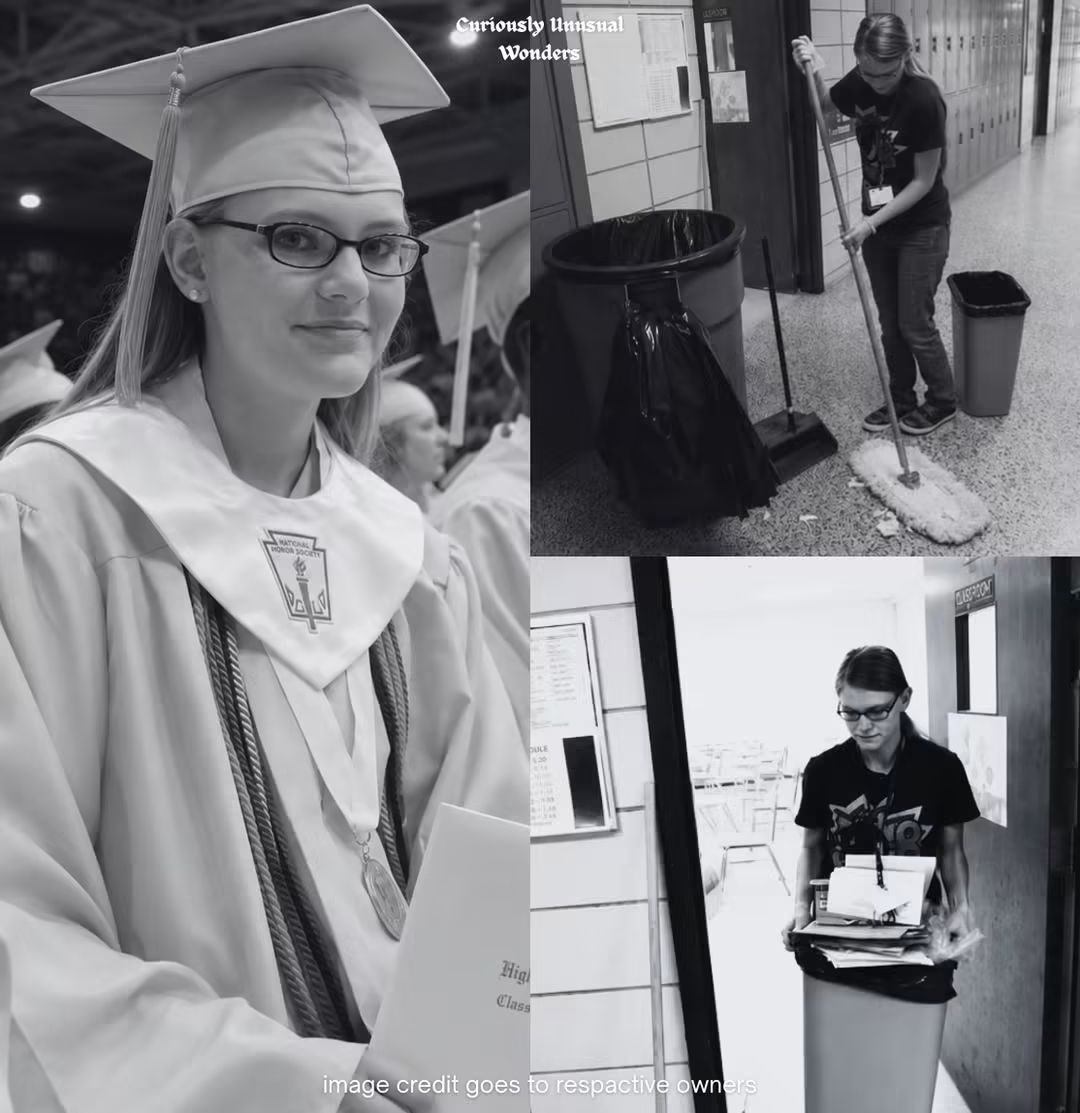
Through a school workforce program, Dawn becomes a part-time custodian at Burns High. She starts at 6 a.m., 2 hours before class. She sweeps hallways. She scrubs classrooms. She picks up gum students leave under desks while mentally running through material for her next test.
Here's what makes it worse, because she had needed to make up missed school credits through online courses - rather than AP classes that generate extra grade points - Dawn ranks approximately 10th in her senior class despite having nothing below an A-minus all year.
The valedictorian title goes to a student with a more conventional path through the system.
She does not complain.
She takes 3 AP courses. She earns straight A's. She leads 3 clubs. She cleans the building before anyone else arrives.
December 2011. 1 more application.
Dawn applies to 4 in-state schools. Then her history teacher Larry Gardner pushes her one step further.
She sends a 5th application - to Harvard University. The 1st Burns High student ever to do so.
"I thought about it and figured - why not?" she says.
Gardner writes her recommendation letter. It takes him days. "How do you articulate her story into 2 pages?" he later says. "How do you explain this is a young lady who deserves a chance but hasn't had the opportunities?"
He finds the words.
The letter.
One afternoon, Dawn opens an envelope from Cambridge, Massachusetts.
"Dear Ms. Loggins, I'm delighted to report that the admissions committee has asked me to inform you that you will be admitted to the Harvard College class of 2016."
She doesn't jump or scream. She takes a breath.
She shows Gardner the letter the next morning. He reads it. He looks up at her. His voice breaks.
"When I first met her, they were living in a home without electricity, without running water. They were showering at a local park after most people had left. This is a young lady who's been through so much. Pretty awesome."
Harvard covers all of Dawn's tuition, room, and board. Everything.
June 7, 2012. Graduation day.
When the announcer calls "Ashley Dawn Loggins," the auditorium erupts - a standing ovation in a small-town gymnasium for a girl who mopped their hallways before class. She breaks down in tears for the first time.
"All I could hear were their screams," she says afterward. "That's when I got overwhelmed and really emotional. I felt like all my hard work had finally been recognized."
Nearly 60,000 people share her story on Facebook that day alone.
Her brother Shane graduates the same week, on a full scholarship to Berea College in Kentucky.
When reporters ask about her parents, Dawn is quiet for a moment. Then,
"I love my parents. I disagree with the choices they've made.
But we all have to live with the consequences of our actions. If I had not had those experiences, I wouldn't be such a strong-willed or determined person."
Burns High School. 1,100 students. Dawn Loggins was the 1st ever accepted to Harvard.
Share this with someone who needs to know - that the circumstances you were handed are not the story. What you do with them is."
.
Let this story reach more hearts.....
Follow us You should see this
5
60
177
3,650
L. D. Rex--Seeking literary agent representation. retweeted

I will absolutely never be tired of this dance.
83
458
4,272
228,895
L. D. Rex--Seeking literary agent representation. retweeted

Jun 13
19
221
726
12,372
L. D. Rex--Seeking literary agent representation. retweeted

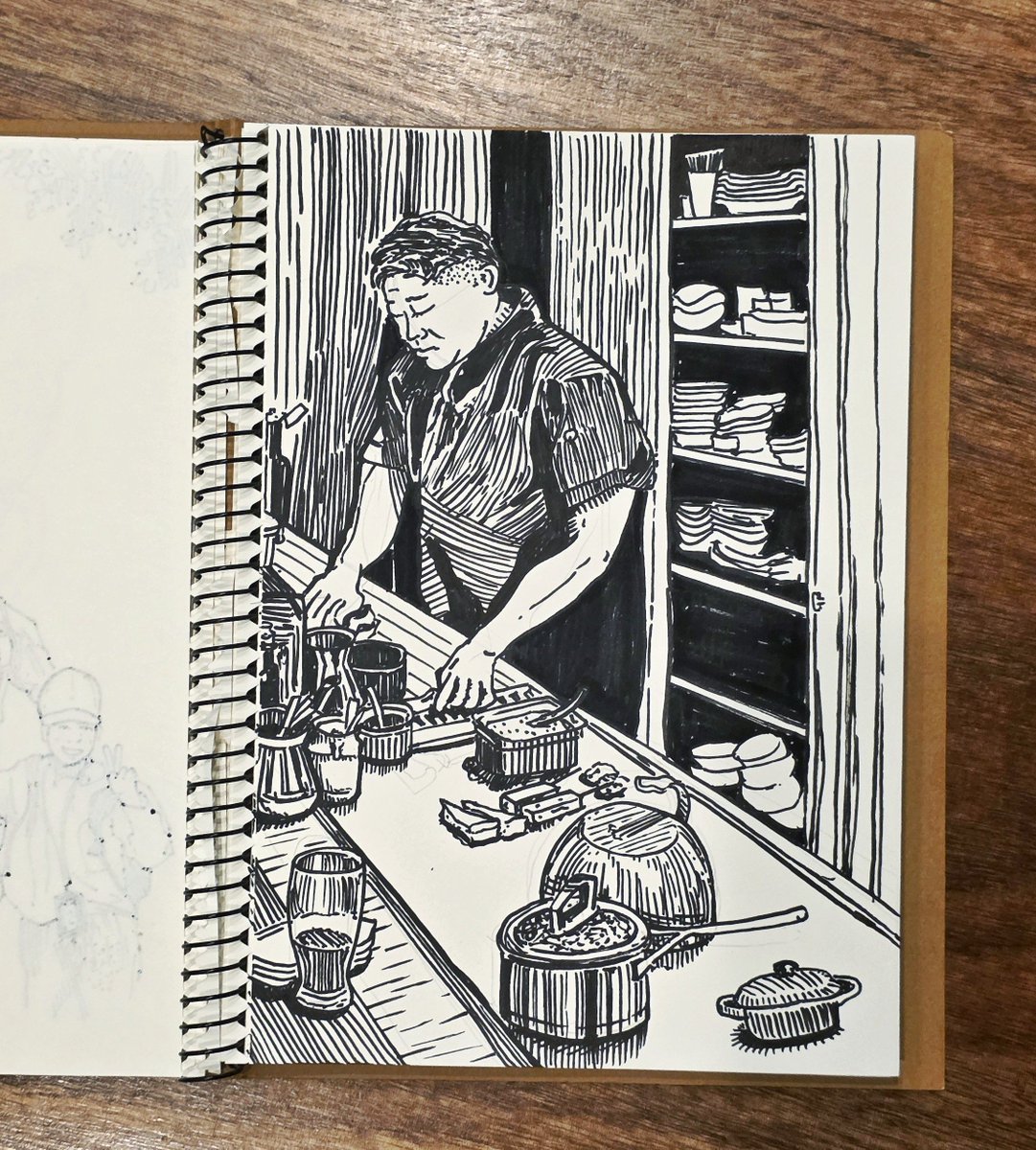
It's my last night in Osaka. I went out for beef tip omurice, oysters, sipped plum wine and sketched the chef at work
I love that in a year, I went from not being able to draw to being able to capture slides of life like this
41
62
1,300
15,720
L. D. Rex--Seeking literary agent representation. retweeted

⋆.˚✶ She's the daughter of an addict with an ancient curse creeping through her veins like kudzu.
They're a harm reduction worker who desperately wants to help, but harbors a bitter secret...
White Trash Witchcraft, out with Holiday House in 2027 ✶⋆.˚

8
27
138
2,308
L. D. Rex--Seeking literary agent representation. retweeted

Due to a family emergency, I will be on hiatus from now until August 24th. My amazing clients still have the support of the wonderful Spencerhill Team. My queries will also be reviewed by the team to ensure everyone gets a response. Thank you for your understanding.
11
3
53
2,045
L. D. Rex--Seeking literary agent representation. retweeted

Um
.
.
.
I'm officially ✨VAGUE ✨
Live footage of me to the query trenches afrer just jumping back in a week ago.
#amquerying #writingcommunity
41
3
194
3,008
L. D. Rex--Seeking literary agent representation. retweeted

Jun 12
A dying neighbor gave a 10-year-old boy a tent and said:
“Use it for an adventure.”
Three years later, that boy had raised £750,000 and helped fund care for hundreds of terminally ill patients.
His name is Max Woosey.
And it started with one simple promise.
In February 2020, Max’s next-door neighbor, Rick Abbott, died from cancer.
Rick was 74.
An outdoorsman.
A kayaker.
A beloved family friend.
Before he died, he gave Max his tent.
“Have an adventure,” he told him.
That was it.
No fundraising.
No campaign.
Just a gift from one friend to another.
Then the world changed.
In March 2020, the UK entered COVID lockdown.
Charities suddenly lost much of their fundraising income.
One of those charities was the hospice that had cared for Rick during his final months.
The same hospice that allowed him to spend his last days at home.
Max decided he wanted to help.
On March 29, 2020, he pitched Rick’s tent in his backyard.
He created a fundraising page.
His goal:
£100.
One hundred pounds.
And one night in the tent.
He never expected what happened next.
The first night became a week.
The week became a month.
The month became a year.
Then another.
Then another.
Max kept sleeping outside.
Through:
• storms
• snow
• freezing winters
• scorching summers
• birthdays
• Christmases
• even COVID illness
His tents kept breaking.
More than a dozen were destroyed by weather.
One collapsed around him during a storm.
He stayed inside anyway.
Meanwhile, donations exploded.
£100 became £1,000.
Then £10,000.
Then £100,000.
Then hundreds of thousands more.
People across Britain fell in love with the story.
A child keeping a promise.
One night became three years.
Along the way, Max camped in unusual places:
• London Zoo
• Downing Street
• Rugby stadiums
• Charity events across the country
He even inspired thousands of other children to hold their own fundraising campouts.
Awards followed.
At just 12 years old, Max received the British Empire Medal.
One of the youngest recipients in the country.
But the real impact wasn't the medals.
It was what happened at the hospice.
When Max finally ended the challenge on March 29, 2023, he had raised more than £750,000.
The hospice later explained what that meant in practical terms:
The money funded 15 hospice nurses for an entire year.
Those nurses helped care for approximately 500 patients.
Five hundred families.
Five hundred people able to spend their final days with dignity.
Just as Rick had.
And that's what makes this story extraordinary.
Rick asked for an adventure.
Max gave him something far bigger.
A tent became a movement.
A promise became a lifeline.
And a 10-year-old boy transformed one act of kindness into care for hundreds of strangers.
Sometimes the smallest gifts create the largest legacies.

1
30
126
1,942
L. D. Rex--Seeking literary agent representation. retweeted

Jun 11
Good morning 🩷

61
1,756
4,524
99,450
L. D. Rex--Seeking literary agent representation. retweeted

Jun 12
This is an amazing video!
PM Mark Carney is respected worldwide. We definitely elected the right guy.
🇨🇦❤️
Jun 10

🟥 Just a little more than a year into his first term and the world is already making songs praising Canada, and Carney's leadership. 🙂
#CanadaStrong 🇨🇦
🎶 "See what a real leader looks like
Not a bully not a coward, not a hype
Canada strong, elbows up, never forget
The world is watching Carney and they ain't done yet
Bold, confident and kind
That's the Canadian Way" 🎶
15
68
254
4,948