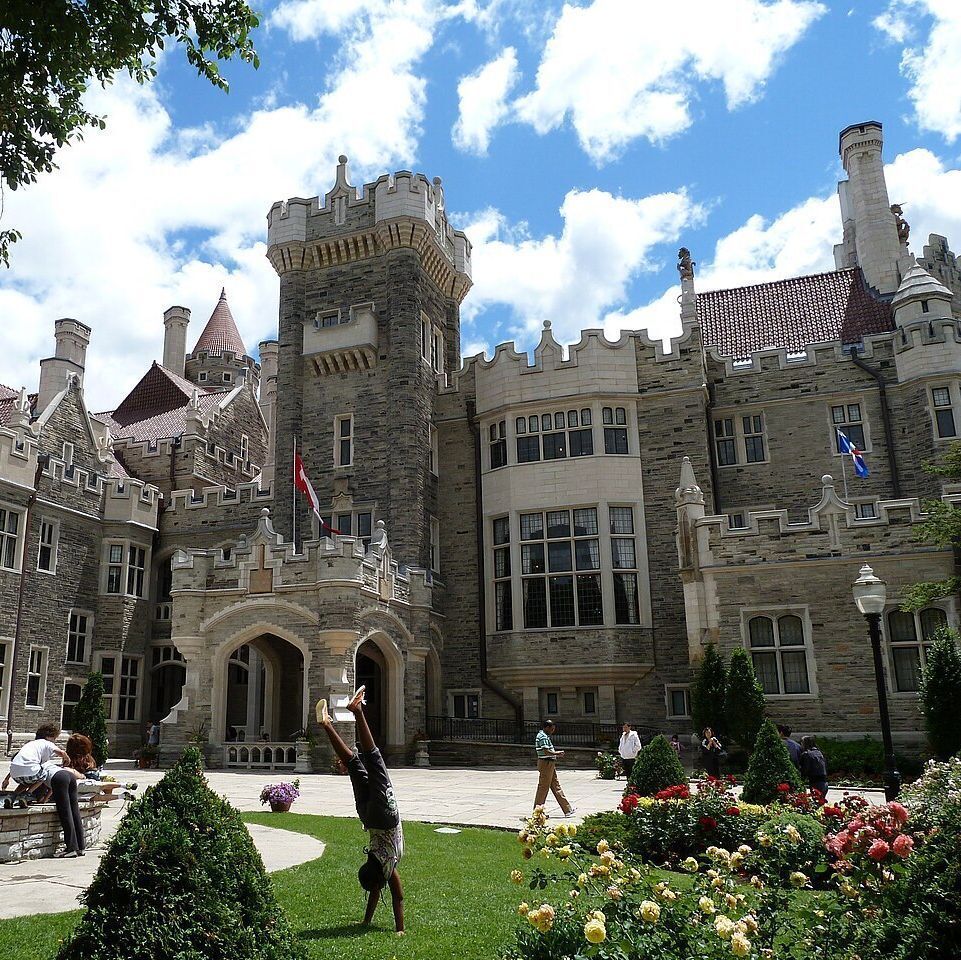
In Toronto, one of the most unique buildings is Casa Loma.
This castle-style mansion is over 100 years old and was built with secret passages, a bowling alley and an oven large enough to cook an entire ox.
This is the story of that historic building.
The story of Casa Loma begins with Henry Pellatt, who bought 25 lots in 1903. He then hired architect E.J. Lennox to design a mansion. Lennox designed over 70 buildings in Toronto, including the Old City Hall that was once Canada's tallest building from 1899 to 1928.
It was not until 1911 that construction began. The first things constructed were the stables, potting shed and the 407 square metre Hunting Lodge.
Casa Loma took 299 workers three years to build and cost $3.5 million before the First World War halted construction.
The home was built with many modern amenities for the time including an elevator and central vacuum. It also featured secret passages, a pool, a bowling alley in the basement, a pipe organ and an oven large enough to cook an ox. The third floor was left unfinished.
Pellatt did not enjoy his new home long. The tough economic times after the war saw his property taxes increase from $600 a month to $1,000. To pay for the taxes, he sold off his art collection and many furnishings. He moved out of the mansion in 1923 and died in 1939.

Investors turned the mansion into a luxury hotel in the 1920s. From 1923 to 1924, during American Prohibition, many wealthy Americans came to the mansion to drink and party.
Due to unpaid taxes, the city seized the building in 1924 and let it sit vacant for many years.
The building was in danger of demolition but broadcaster Claire Wallace was able to send out an appeal on her radio show on CFRB. The Kiwanis Club of West Toronto leased the building and began to turn it into a tourist destination. The club operated Casa Loma until 2011.
During the Second World War, research into sonar and the construction of sonar devices was conducted in Casa Loma's stables. The area was closed with an "Under Repairs" sign, which allowed people to come and go without raising any suspicions.
Today, there are museum exhibits including the Girl Guide Museum, the Queen's Own Rifles of Canada Regimental Museum and a vintage car exhibit. It has been used as a filming location many times. It is now an Ontario Heritage Property and is a popular place for weddings.
I hope you enjoyed that look at Casa Loma.
If you enjoy my Canadian history content, you can support my work with a donation at 👇
buymeacoffee.com/craigu
Sources:
Casa Loma:
casaloma.ca/history
Canada's History:
canadashistory.ca/explore/bo…
Canadian Encyclopedia:
thecanadianencyclopedia.ca/e…
ALT A grand stone castle with multiple towers, turrets, chimneys, and arched windows stands under a partly cloudy blue sky. Canadian flags fly on the building. In the foreground, a person performs a handstand on green grass near a paved path, while others walk or sit nearby. Well-maintained gardens feature colorful roses in red, pink, and yellow, conical evergreen shrubs, a small fountain with an orange traffic cone, and trees framing the scene.
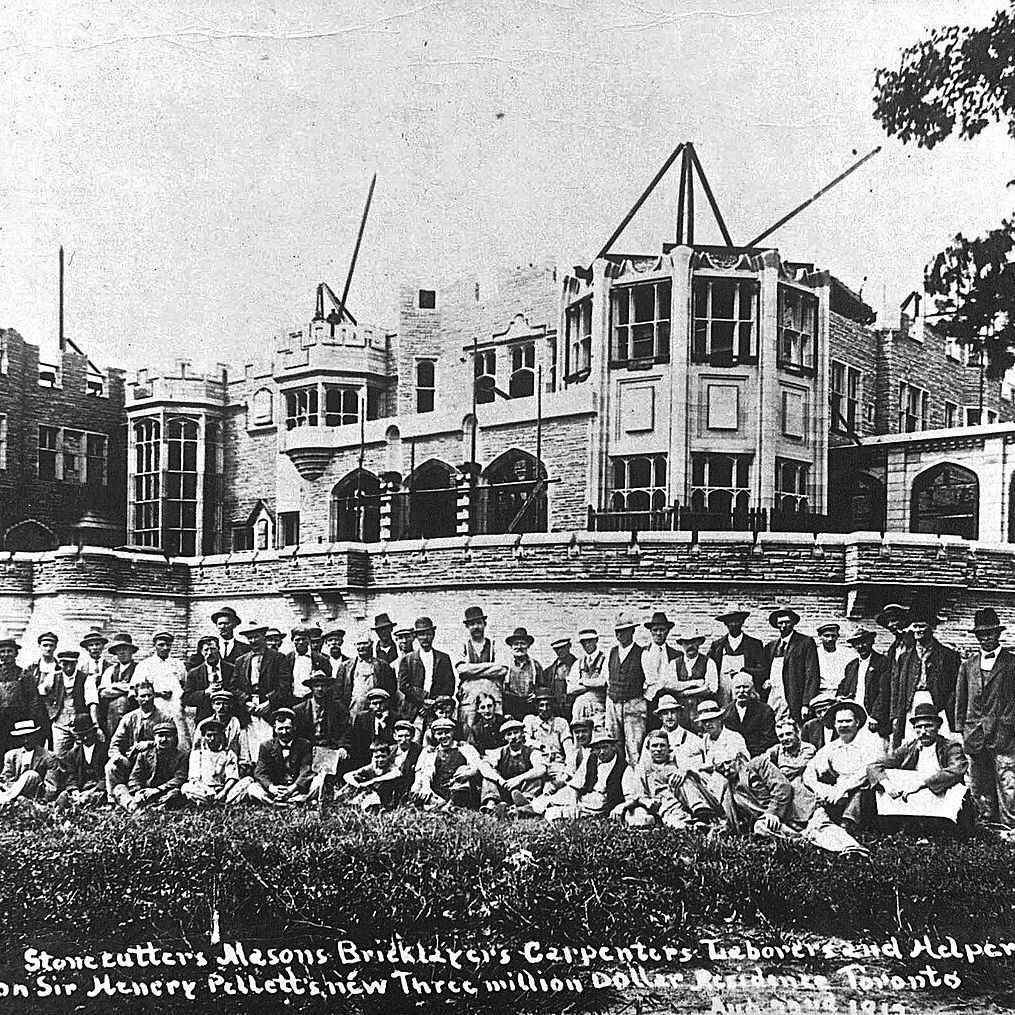
ALT Black-and-white historical photograph of a large group of men—stonecutters, masons, bricklayers, carpenters, laborers, and helpers—posed in rows, seated and standing on grass in front of a partially constructed grand stone mansion with towers, arched windows, and scaffolding. The men wear early 20th-century work clothes and hats. Handwritten text at the bottom reads: "Stonecutters Masons Bricklayers Carpenters Laborers and Helpers on Sir Henry Pellatt's new Three million Dollar Residence Toronto."
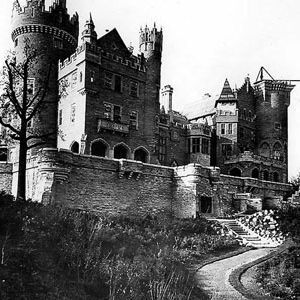
ALT Black-and-white historical photograph of a large Gothic-style castle with tall round tower, battlements, multiple chimneys, arched windows, and stone walls. A curved pathway winds up a grassy hill toward the building, flanked by bare trees and overgrown vegetation. The image has a vintage quality with high contrast and visible grain.
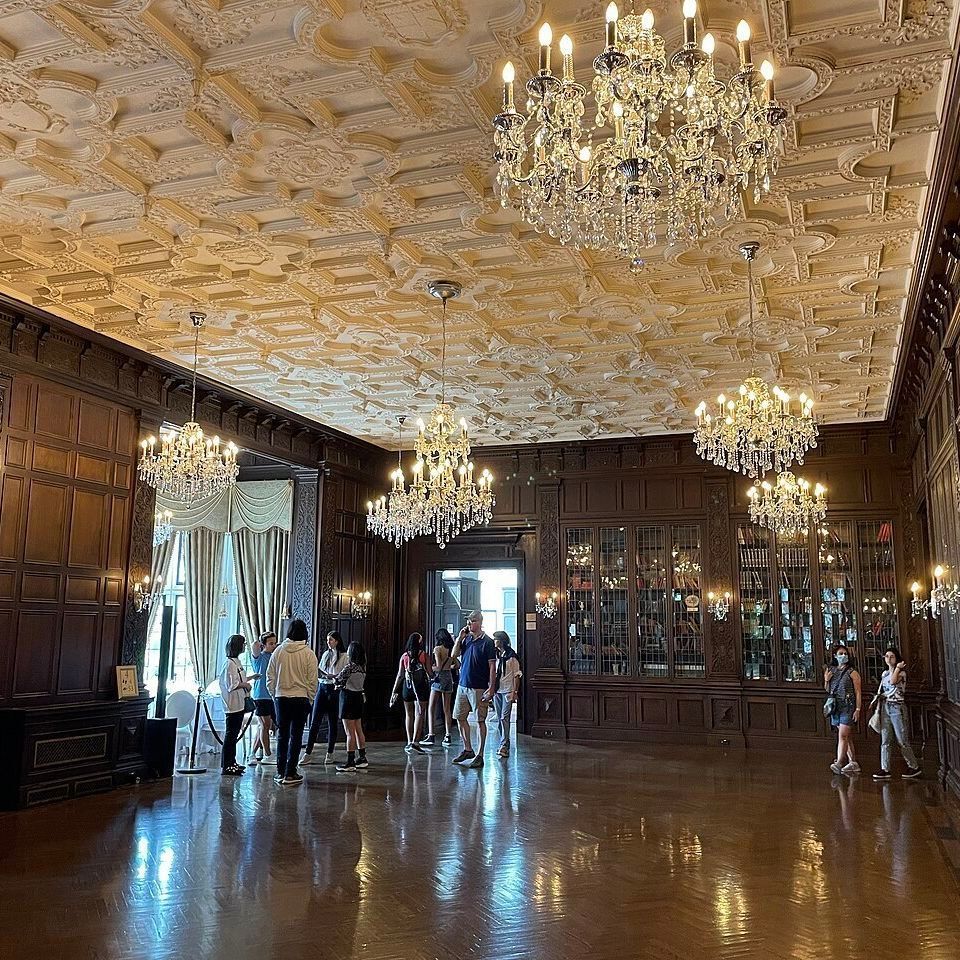
ALT Interior photo of a grand, ornate room with dark wood paneled walls featuring intricate carvings, polished herringbone wooden floor reflecting light, and elaborate plaster ceiling with floral patterns. Multiple crystal chandeliers hang from the ceiling, illuminated. Glass-fronted bookcases line the right wall. A group of about 10 modern-dressed visitors stands near the center-left, some looking at displays or talking, with natural light coming from a draped window on the left.