The Libertarian Party of West Virginia - Montani Semper Liberi
Joined April 2009
- Tweets 2,058
- Following 413
- Followers 4,776
- Likes 1,417
297 Photos and videos





Pinned Tweet

May 20
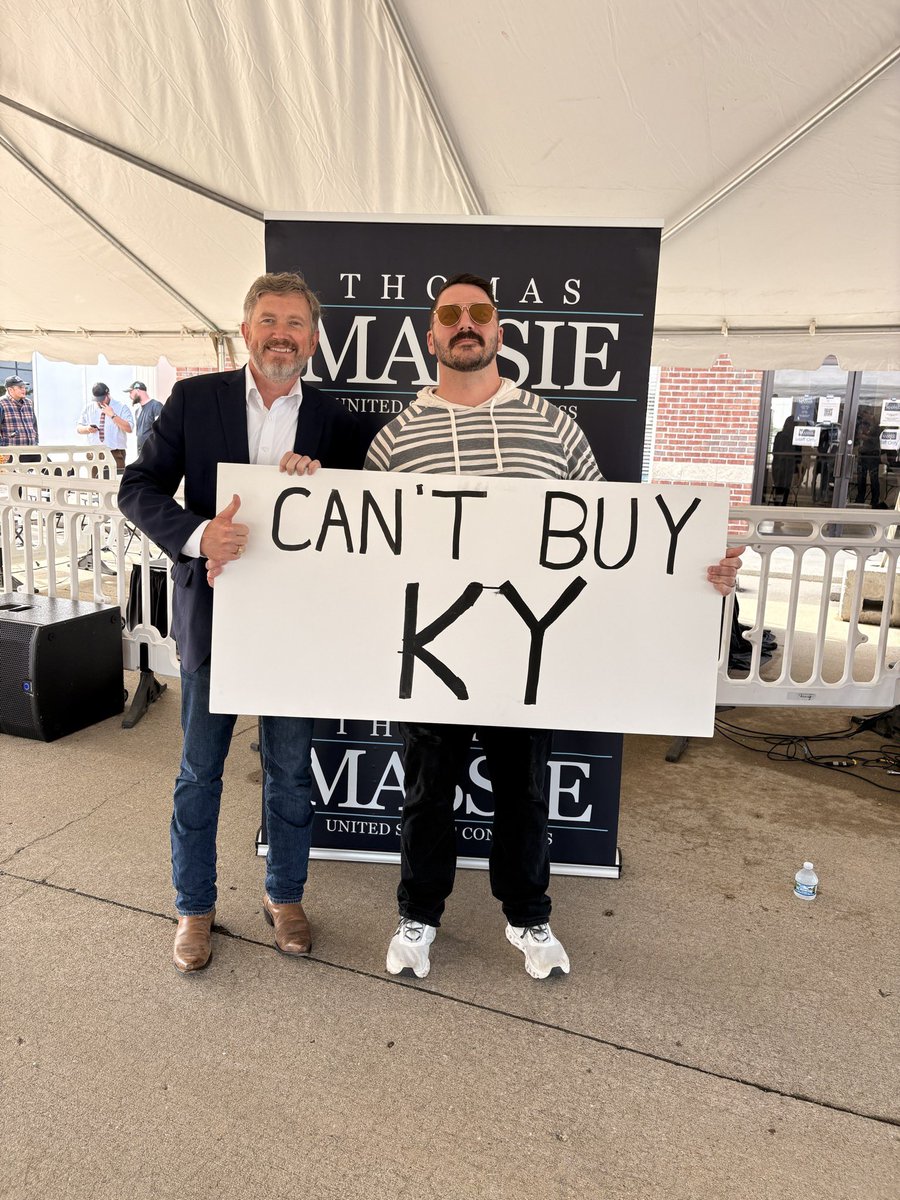
Thomas Massie’s primary defeat is more than a political upset. It is the clearest signal yet that the Republican Party has no room left for libertarians, no matter how principled, how consistent, or how loyal they’ve been to the Constitution.
I say this not as a lifelong outsider, but as someone who once believed the GOP could be a home for liberty-minded Americans. I spent years trying to “work within the party,” convincing myself that if we just elected enough Massies, enough Amashes, enough Ron or Rand Pauls, we could steer the Republican ship back toward limited government, civil liberties, and fiscal restraint.
But Massie’s loss makes the truth impossible to ignore: the GOP does not want libertarians. It wants obedience. They did this to the Tea Party, Massie is just the latest scalp.
Massie wasn’t defeated because he betrayed so-called Republican values. He was defeated because he actually upheld them.
He voted against bloated spending. He opposed unconstitutional surveillance. He challenged executive overreach, no matter which president was in office. He refused to trade principle for party loyalty. And for that, the GOP establishment (and a sizable portion of its base) decided he had to go.
When a party that professes liberty as a core principle punishes its most consistent constitutionalist, it tells you everything about what it has become.
For decades, libertarians were asked to carve out space inside the Republican Party. We were told: “We need your votes.” “We need your energy.” “We need your ideas.”
But the moment we challenge the party’s sacred cows of militarism, surveillance, central planning, or corporate welfare, we’re labeled traitors. This only proves the GOP wants libertarian votes, not libertarian principles.
Massie’s defeat is not an anomaly. It is the logical outcome of a party that has spent years purging dissenters and elevating those who treat government power as a weapon rather than a responsibility.
Political parties respond to incentives, and the GOP’s incentives are now crystal clear:
• Reward loyalty to the leader, not loyalty to the Constitution.
• Reward spending when it benefits your faction, punish restraint when it doesn’t.
• Reward those who expand state power in the name of “security” or “order.”
• Punish anyone who questions the party line, even if they’re right.
Libertarians cannot thrive in a party whose incentives run directly counter to liberty.
If Thomas Massie, arguably the most intellectually consistent, policy-savvy, and constitutionally grounded member of Congress, cannot survive a Republican primary, then no libertarian can. Not one.
Massie was the test case. The GOP failed the test.
For years, libertarians were told to “be realistic,” to accept that the Republican Party was the only viable vehicle for liberty.
But what’s realistic about staying in a party that openly rejects you? What’s pragmatic about tying yourself to a machine that punishes your principles? What’s strategic about being a permanent minority faction inside a party that sees you as a nuisance and scapegoat?
Libertarians don’t need to be the GOP’s conscience. We don’t need to be their think tank. We don’t need to be their scapegoats.
The Libertarian Party is not perfect. No party is. But it is the only national political organization that:
• Opposes government surveillance without exception
• Opposes endless war without apology
• Opposes corporate welfare without loopholes
• Defends civil liberties without picking favorites
• Defends economic freedom without selling out to donors
• Defends personal freedom without moralizing
If you believe in liberty, you deserve a party that believes in it too, not one that uses the word as a slogan while governing like the opposite.
I left the GOP almost ten years ago now.
The future of liberty will not be built inside a party that rejects it.
It will be built by those willing to stand outside it, and stand firm.
I hope you will join us.
-Chair
94
57
341
7,584
LP of West Virginia retweeted

Jun 2
The Libertarian Party is deeply saddened to share that longtime activist, candidate, and former national staff member David Aitken passed away on May 28 at the age of 79.
David was a foundational pillar of the liberty movement in Colorado for four decades. A U.S. Army veteran (1967–1971) and retired business software developer, he dedicated his life to advancing individual freedom. Whenever the movement needed a standard-bearer, David answered the call—serving as Colorado LP Chair, defending petition rights in court, and running for numerous offices including Governor (1990), Secretary of State (2002), and State Senate (2024).
Inspired by the economics of Milton Friedman and Thomas Sowell, David’s core mission was to reduce government regulation so everyone could freely pursue their dreams. When he wasn’t fighting for freedom, he could be found enjoying his retirement on Capitol Hill or skiing at Copper Mountain.
We are profoundly grateful for David’s lifetime of tireless service. Our deepest condolences go out to his family, friends, and the many liberty lovers whose lives he touched. Rest in peace, David.

5
30
212
13,130
Jun 1
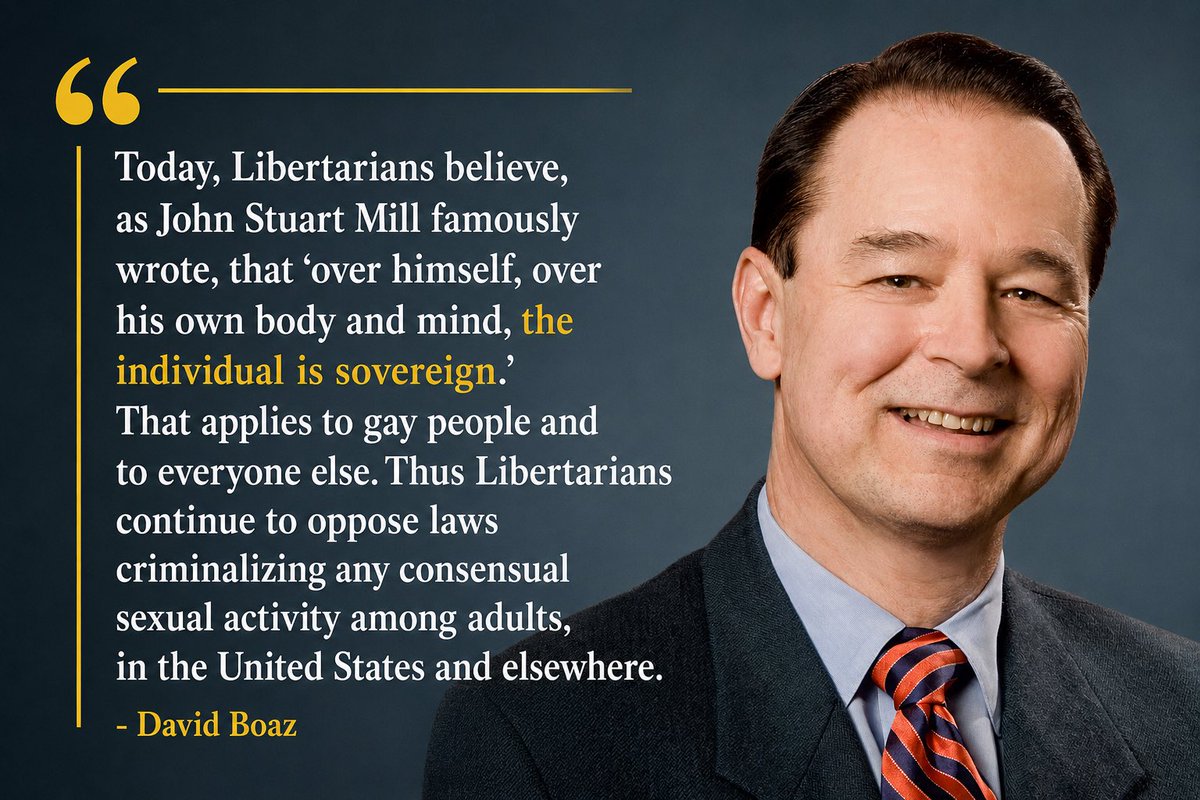
Libertarians have always supported individual rights. It’s not about a month, it’s about people. Don’t hurt people, don’t take their stuff. And if you’re the government or someone not asked to be there, get the hell out of other consenting adults’ bedrooms. #happypride
2
5
104
LP of West Virginia retweeted

May 31
With sadness I report a ballot access hero here in Colorado, David Aitken has passed away.
6
8
47
1,576
LP of West Virginia retweeted

May 26
@LPNational A state Libertarian Party Chair running for WV Senate; discusses Massie Loss
Check out my talk with Taylor Richmond of @LPWV.
tomrotenshow.com/podcast/epi…

2
4
141
May 21
👀

The Libertarian Party of Kentucky is proud to announce the nomination of Jeremy Todd for United States House of Representatives district 4. Follow Jeremy at @Jtodd601 on X. Please stay tuned for further details.

3
80
May 12
Today is Primary Election Day in West Virginia! If registered Libertarian, cast a nonpartisan primary ballot. Regardless of registration, vote based on principles today, not party.
1
1
1
82
May 2
We have it on good authority the war was already over…a couple of times…our bad, that was just to reset the 60 day War Powers Act clock to avoid responsibility…game on!
May 1

TRUMP: GASOLINE IS HIGH, BUT WILL FALL WHEN WAR IS OVER
1
1
86
Apr 5
Today, we join Christians in our state in celebrating the greatest prison break in recorded history.
Jesus was so libertarian that he died and then three days later said “well, actually . . .”
Jesus promoted helping each other and taking care of our part, and he denounced worldly governments who oppress freedom and liberty.
Jesus was a Libertarian. Prove me wrong.
1
3
80
Mar 24
Candidate Announcment!!
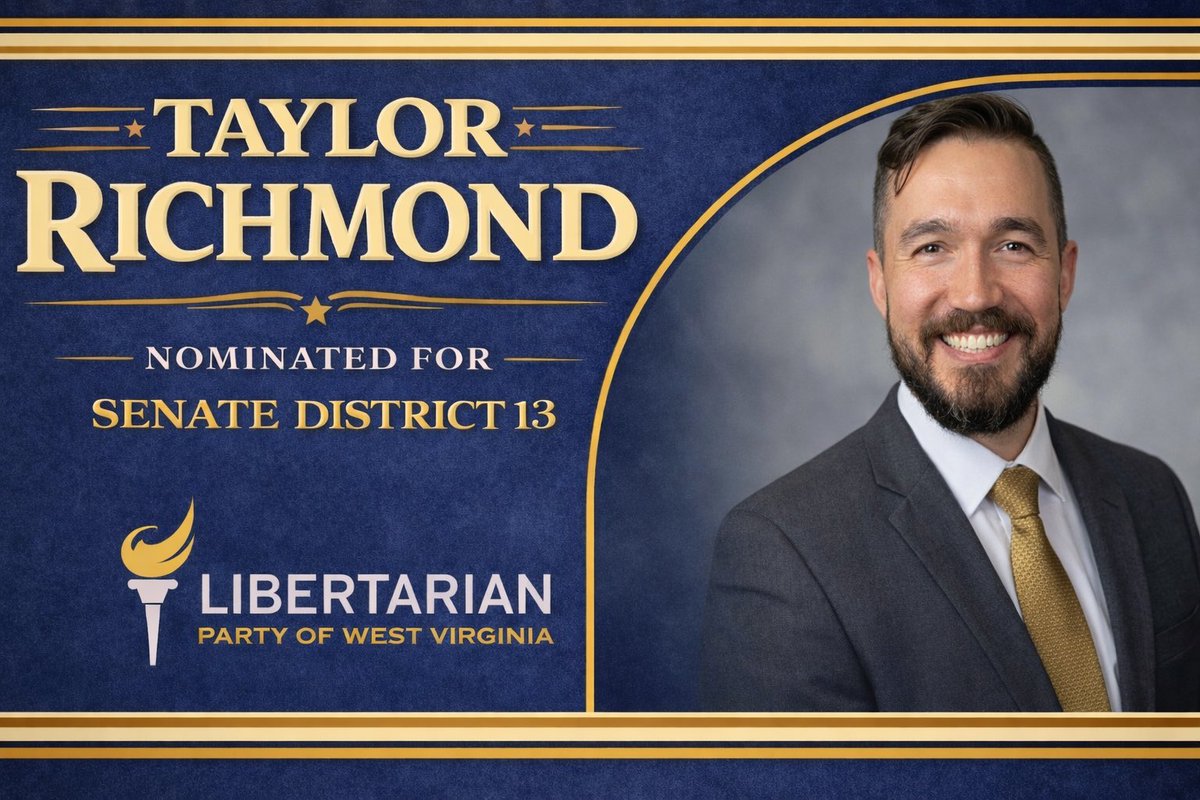
Party Chair Taylor Richmond has submitted paperwork to run for State Sente District 13 and represent the greater Morgantown and Fairmont areas.
Help spread the word and invite all your friends and family in that area learn more about Mr. Richmond and LPWV!
1
3
10
255
Mar 23
Nominee Announcement!
Taylor Richmond has been nominated and filed to run for Senate District 13!
We will have even more nominees rolling out over the coming days!
8
24
7,763
Mar 20
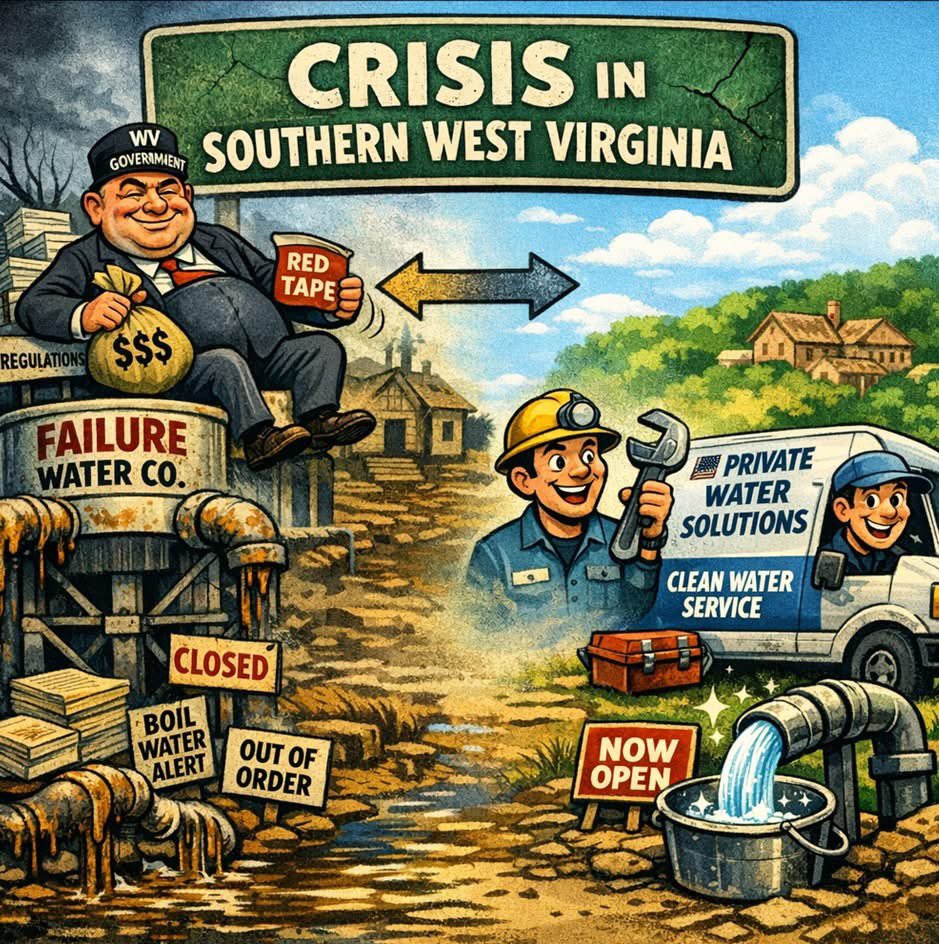
Southern West Virginia is facing a water crisis that no civilized society should tolerate. Families in McDowell, Wyoming, Mingo, and Logan counties are boiling water, hauling jugs from fire stations, and praying that the next brown trickle from their tap won’t make their children sick. This is not the result of bad luck, bad weather, or bad fortune. It is the predictable outcome of a political system that has spent decades centralizing control, blocking competition, and insulating itself from accountability.
The Libertarian Party of West Virginia believes the truth must be said plainly: our state’s water systems are failing because government monopolies are failing.
For generations, Charleston has treated rural water infrastructure as a political trophy, something to be funded when convenient, ignored when inconvenient, and controlled at all costs. Local communities have been stripped of authority, private innovators have been shut out, and residents have been told to “wait their turn” for repairs that never come. The result is exactly what any student of economics or history would expect: crumbling pipes, chronic contamination, and a bureaucracy more focused on paperwork than potable water.
A monopoly has no incentive to serve, and West Virginia has built one.
In southern West Virginia, residents have no meaningful choice in water providers. They cannot switch to a competitor. They cannot demand better service. They cannot refuse to pay for water they cannot safely drink. They are captive customers of a system that answers only to regulators and politicians, not to the people who depend on it.
When a private company fails to deliver a safe product, it loses customers. When a government protected monopoly fails, it gets a bigger budget.
This is not accountability. It is institutionalized neglect.
West Virginians are resilient, but they shouldn’t have to be this resilient.
We are tough and always have been. Neighbors are delivering water to the elderly. Churches are distributing bottled supplies. Volunteer fire departments are filling the gaps left by agencies with far larger budgets and far fewer results.
But resilience should not be an excuse for government failure. It should be a reminder of what communities can accomplish when they are empowered, and what they could accomplish if the state stopped standing in their way. Real solutions require decentralization, competition, and transparency.
The Libertarian Party of West Virginia calls for a fundamental shift in how our state approaches water infrastructure:
• Decentralize control. Local communities must have the authority to manage, contract, or replace failing systems without begging Charleston for permission.
• Allow competition. Private and cooperative water providers should be free to enter the market, innovate, and offer alternatives where government systems have collapsed.
• End political gatekeeping. Infrastructure funds should be transparent, auditable, and insulated from the political favoritism that has plagued southern counties for decades.
• Empower citizens. Residents should have the right to demand independent testing, public reporting, and immediate action when water quality fails basic standards.
These are not radical ideas. They are the foundation of every functioning service economy in the world. The only place they seem radical is in a state where political power has been centralized for so long that many have forgotten what accountability looks like.
West Virginians deserve better, and we know it.
The people of southern West Virginia are not asking for special treatment. They are asking for what every human being deserves: clean, safe, reliable water. They are asking for a system that works, not one that makes excuses. They are asking for leaders who will stop treating their suffering as a photo opportunity and start treating it as a moral obligation.
3
10
37
4,804
Mar 20
The Libertarian Party of West Virginia stands with them. We believe that the path forward is not more bureaucracy, more centralization, or more political promises. It is freedom, competition, and community driven solutions, the only forces that have ever produced lasting, accountable, and resilient infrastructure.
Southern West Virginia has been failed by the political class for too long. It’s time to return power to the people who live there, drink the water there, and raise their children there. It’s time to build a system that serves them, not the other way around.
4
147
Mar 19
Justice served for our friend @ogafroman ! Thank you for championing freedom of speech!
Here’s a throwback to when he endorsed our 2024 gubernatorial candidate singing “Country Roads” to celebrate!
1
74
Mar 15
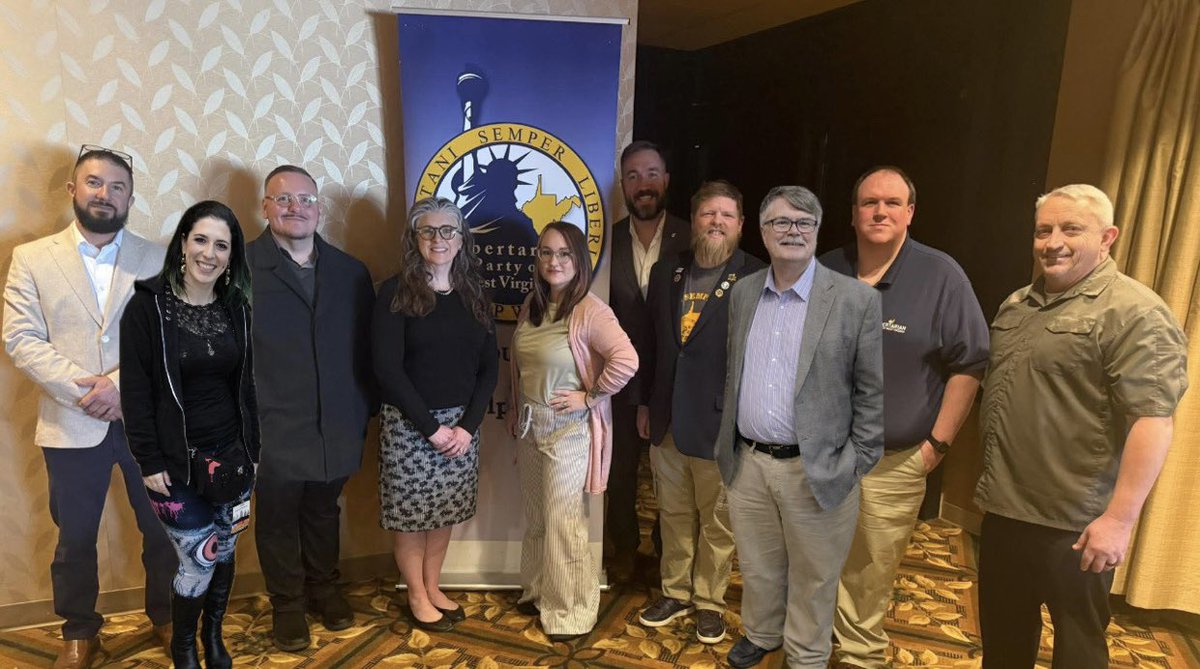
Your 2026-2027 LPWV Executive Committee:
Taylor Richmond - Chair
Travis Bost - Vice Chair
David Prince - Secretary
Steve Smith - Treasurer
Erika Kolenich - Legislative Director
Dustin Blankenship - Outreach Director
Joe Steiner - Regional Representative
Tara Sheffer - Regional Representative
Allie Oxenblood - Regional Representative
Mike Masey - Regional Representative
Congratulations to Mike on his election to the board for the remainder of this term. We are excited for his work in south central West Virginia!
1
1
6
503
Mar 14
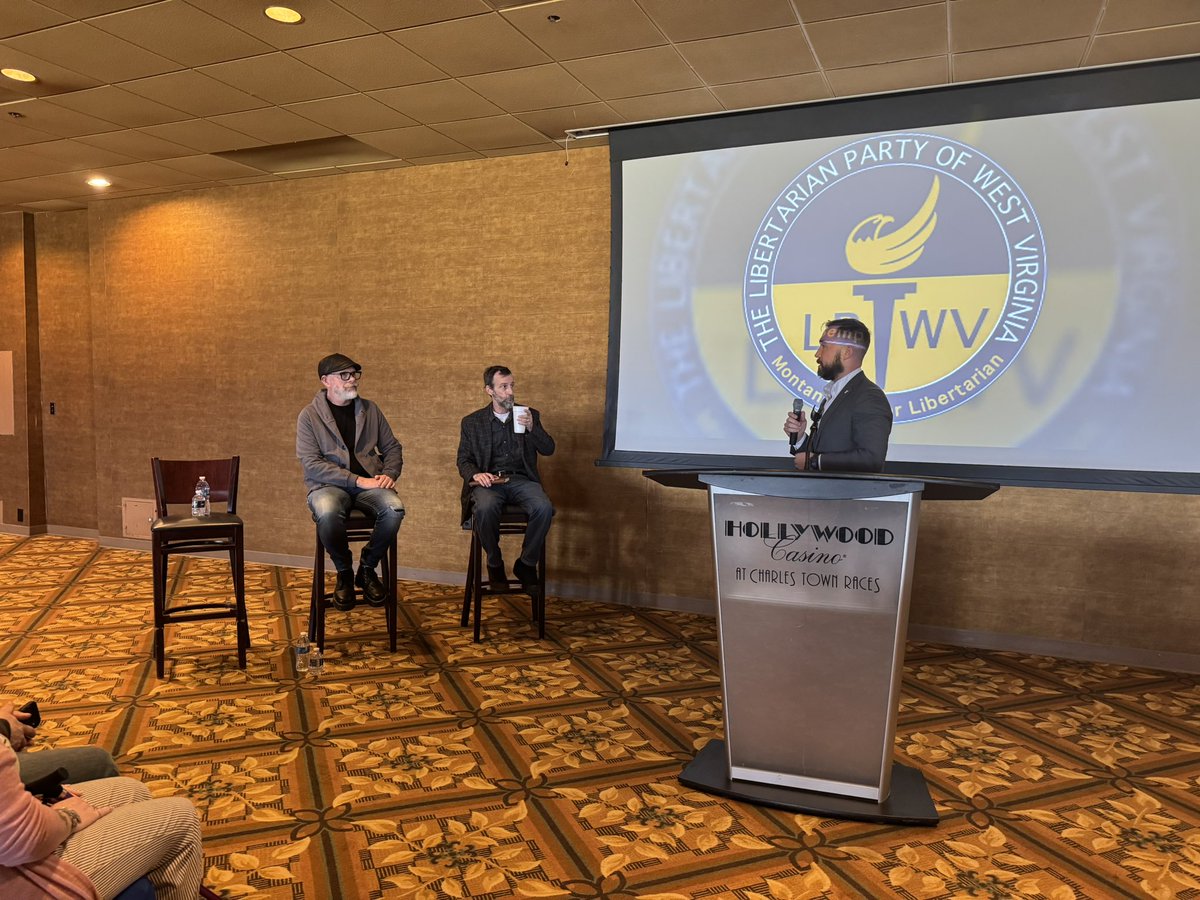
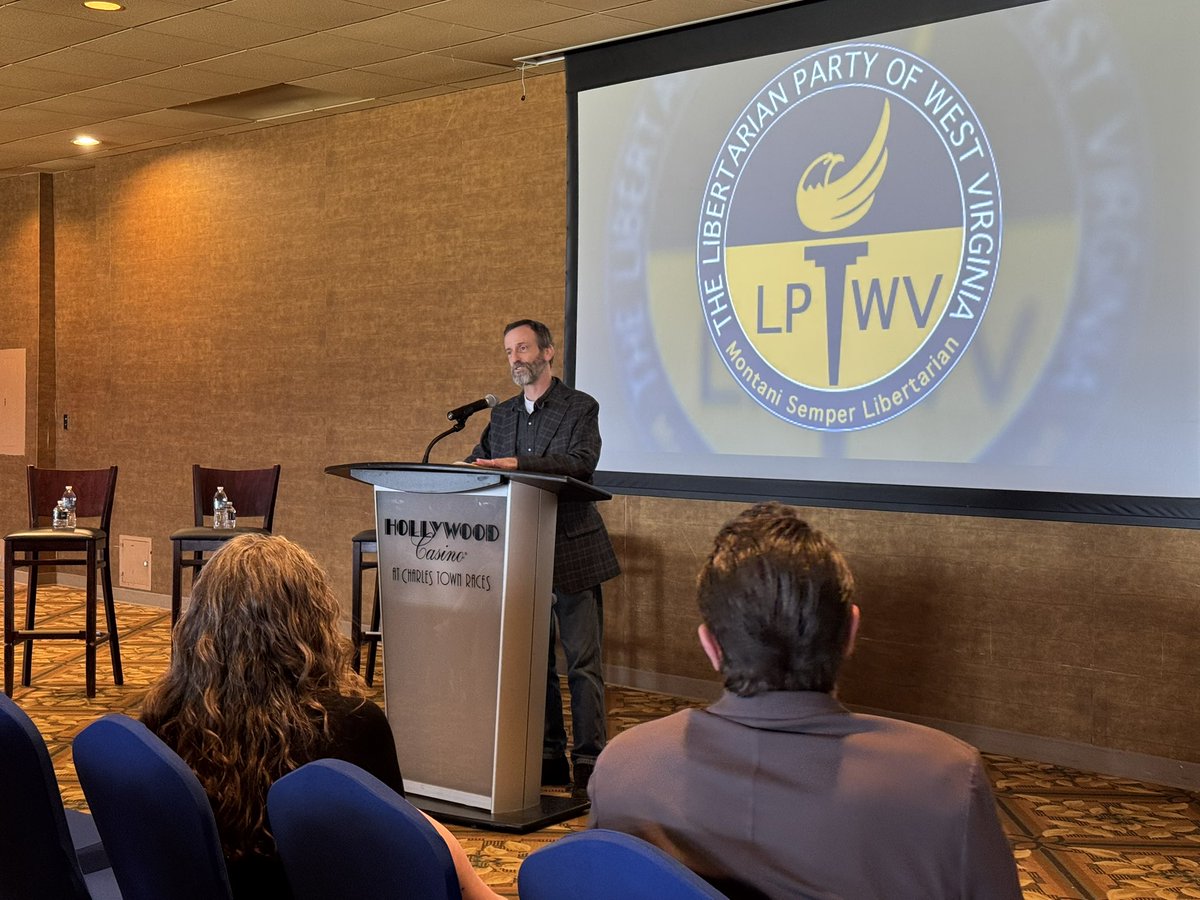
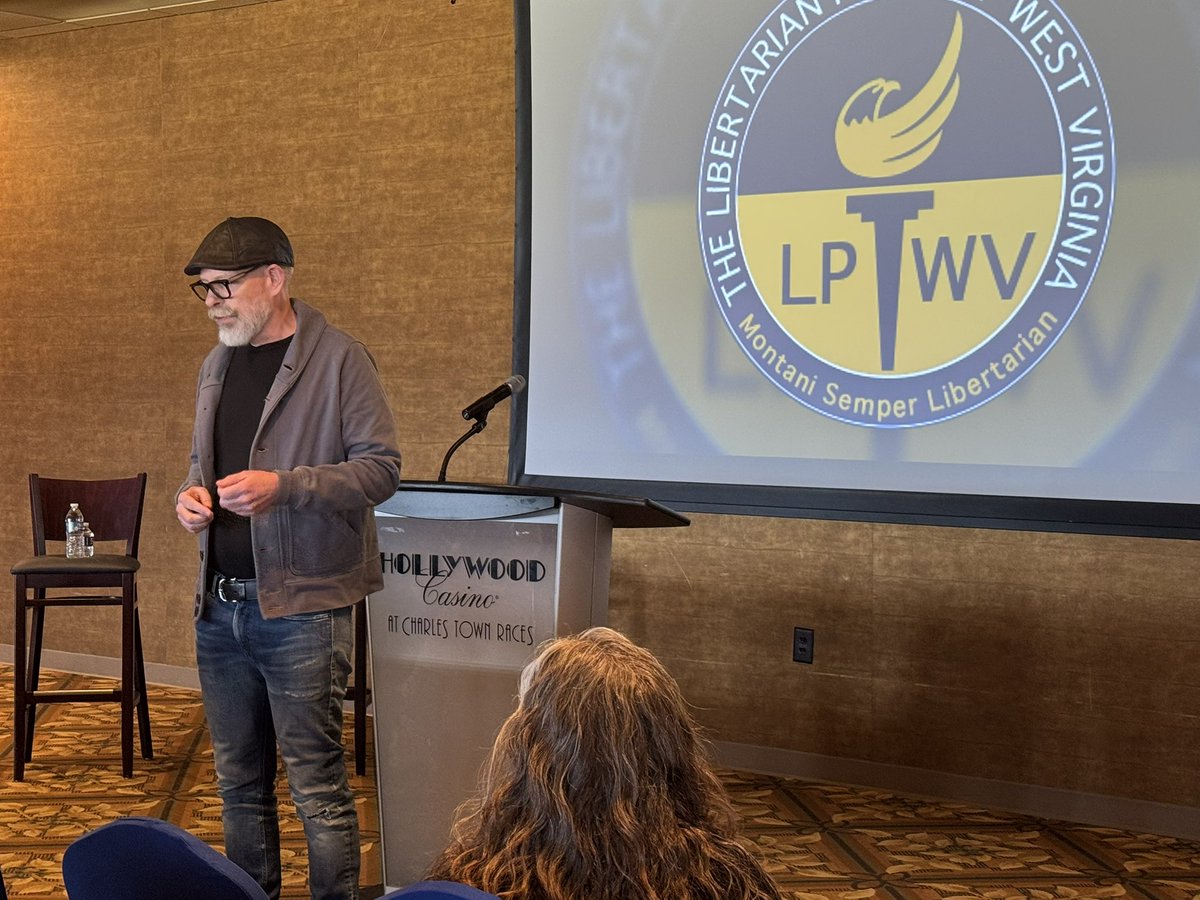
Guest Q&A panel has begun. This is an attendee exclusive event! Thank you to the great crowd that came out today!
1
69