
A monthly journal, popularly known as LLR, publishes HR articles, court judgments, much more related to HR and Indian labour laws.
Joined May 2015
- Tweets 28,869
- Following 2,066
- Followers 10,147
- Likes 2
772 Photos and videos

2026 LLR WEB 852 (BOMBAY HIGH COURT)
Termination during subsistence of an operative interim order without satisfying its conditions is illegal regardless of the contractual nature of appointment.
INDUSTRIAL DISPUTES - Interim order - Breach - Termination during subsistence - Section 25-F - Section 2(oo)(bb) - Contractual employment - Reinstatement - Back wages - Permanency - Scope of reference - MRTU & PULP Act, Section 48(1) - Maharashtra Municipal Corporations Act, Section 534(1) - Workmen appointed as Junior Engineers on successive fixed-term contractual orders were directed by Industrial Court to be continued till duly selected candidates joined in their place... subscribe to read more.....
1
1
123
2026 LLR WEB 848 (ANDHRA PRADESH HIGH COURT)
Insurer who accepted additional Legal Liability (LL) premium covering cleaner cannot deny compensation liability for workman's death in course of employment.
EMPLOYEES' COMPENSATION - Death of Workman - Legal Liability Cover - Employer-Employee Relationship - Quantum of Compensation - Section 3, Section 4, Section 30 of the Employees' Compensation Act, 1923 - Deceased engaged as cleaner of crane died in accident caused by rash and negligent driving of crane's driver during course of employment - Parents filed claim for compensation... subscribe to read more.....
1
131
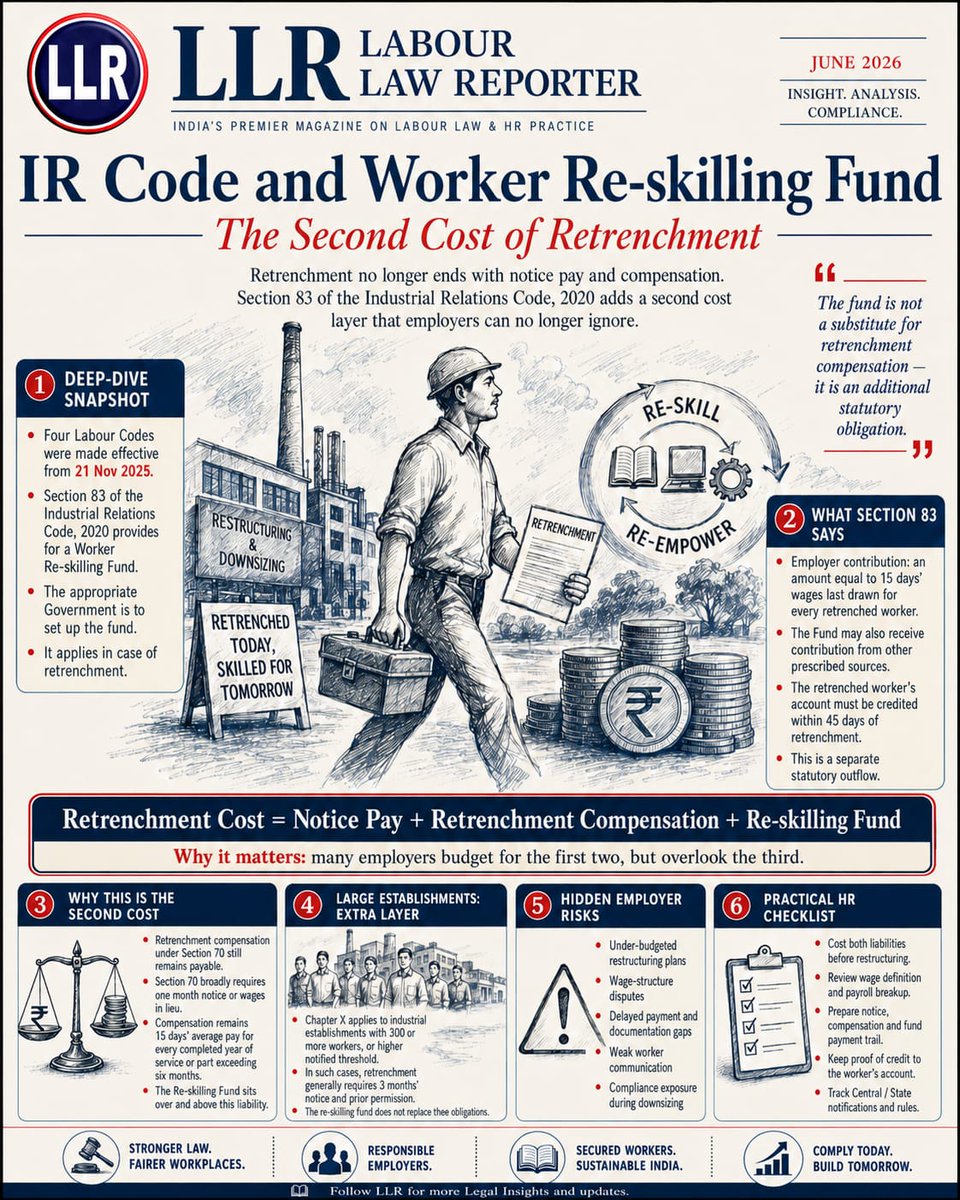
🚨 𝗥𝗘𝗧𝗥𝗘𝗡𝗖𝗛𝗠𝗘𝗡𝗧 𝗜𝗦 𝗡𝗢 𝗟𝗢𝗡𝗚𝗘𝗥 𝗔 𝟮-𝗖𝗢𝗦𝗧 𝗦𝗧𝗢𝗥𝗬.
Most employers budget for:
𝟭️⃣ Notice Pay
𝟮️⃣ Retrenchment Compensation
But under the 𝗜𝗻𝗱𝘂𝘀𝘁𝗿𝗶𝗮𝗹 𝗥𝗲𝗹𝗮𝘁𝗶𝗼𝗻𝘀 𝗖𝗼𝗱𝗲, 𝟮𝟬𝟮𝟬, there is now a 𝘁𝗵𝗶𝗿𝗱 𝗰𝗼𝘀𝘁 that many restructuring plans may miss:
✅ 𝗪𝗼𝗿𝗸𝗲𝗿 𝗥𝗲-𝘀𝗸𝗶𝗹𝗹𝗶𝗻𝗴 𝗙𝘂𝗻𝗱
This is not charity.
This is not CSR.
This is not optional welfare.
It is a 𝘀𝘁𝗮𝘁𝘂𝘁𝗼𝗿𝘆 𝗹𝗶𝗮𝗯𝗶𝗹𝗶𝘁𝘆 linked to retrenchment.
━━━━━━━━━━━━━━━━━━
🔍 𝗪𝗛𝗔𝗧 𝗗𝗢𝗘𝗦 𝗧𝗛𝗘 𝗜𝗥 𝗖𝗢𝗗𝗘 𝗦𝗔𝗬?
━━━━━━━━━━━━━━━━━━
Section 83 provides for a 𝗪𝗼𝗿𝗸𝗲𝗿 𝗥𝗲-𝘀𝗸𝗶𝗹𝗹𝗶𝗻𝗴 𝗙𝘂𝗻𝗱.
The employer contribution is equal to:
📌 𝟭𝟱 𝗱𝗮𝘆𝘀’ 𝘄𝗮𝗴𝗲𝘀 𝗹𝗮𝘀𝘁 𝗱𝗿𝗮𝘄𝗻
📌 for 𝗲𝘃𝗲𝗿𝘆 𝗿𝗲𝘁𝗿𝗲𝗻𝗰𝗵𝗲𝗱 𝘄𝗼𝗿𝗸𝗲𝗿
📌 in case of 𝗿𝗲𝘁𝗿𝗲𝗻𝗰𝗵𝗺𝗲𝗻𝘁 𝗼𝗻𝗹𝘆
The amount is to be credited to the worker’s account within the prescribed timeline of 𝟰𝟱 𝗱𝗮𝘆𝘀.
So the practical formula becomes:
𝗥𝗲𝘁𝗿𝗲𝗻𝗰𝗵𝗺𝗲𝗻𝘁 𝗖𝗼𝘀𝘁 =
Notice Pay
● Retrenchment Compensation
● Worker Re-skilling Fund
━━━━━━━━━━━━━━━━━━
💥 𝗧𝗛𝗘 𝗥𝗘𝗔𝗟 𝗜𝗠𝗣𝗔𝗖𝗧: 𝗪𝗔𝗚𝗘 𝗦𝗧𝗥𝗨𝗖𝗧𝗨𝗥𝗘
━━━━━━━━━━━━━━━━━━
Now comes the employer-side question:
❓ 𝗪𝗶𝗹𝗹 𝘄𝗮𝗴𝗲 𝗿𝗲𝘀𝘁𝗿𝘂𝗰𝘁𝘂𝗿𝗶𝗻𝗴 𝗮𝗳𝗳𝗲𝗰𝘁 𝗲𝗺𝗽𝗹𝗼𝘆𝗲𝗿𝘀?
✅ 𝗬𝗲𝘀 — if the salary structure is allowance-heavy.
⚖️ 𝗡𝗼 / limited impact — if wages are already structured within the 50% framework and statutory components are properly aligned.
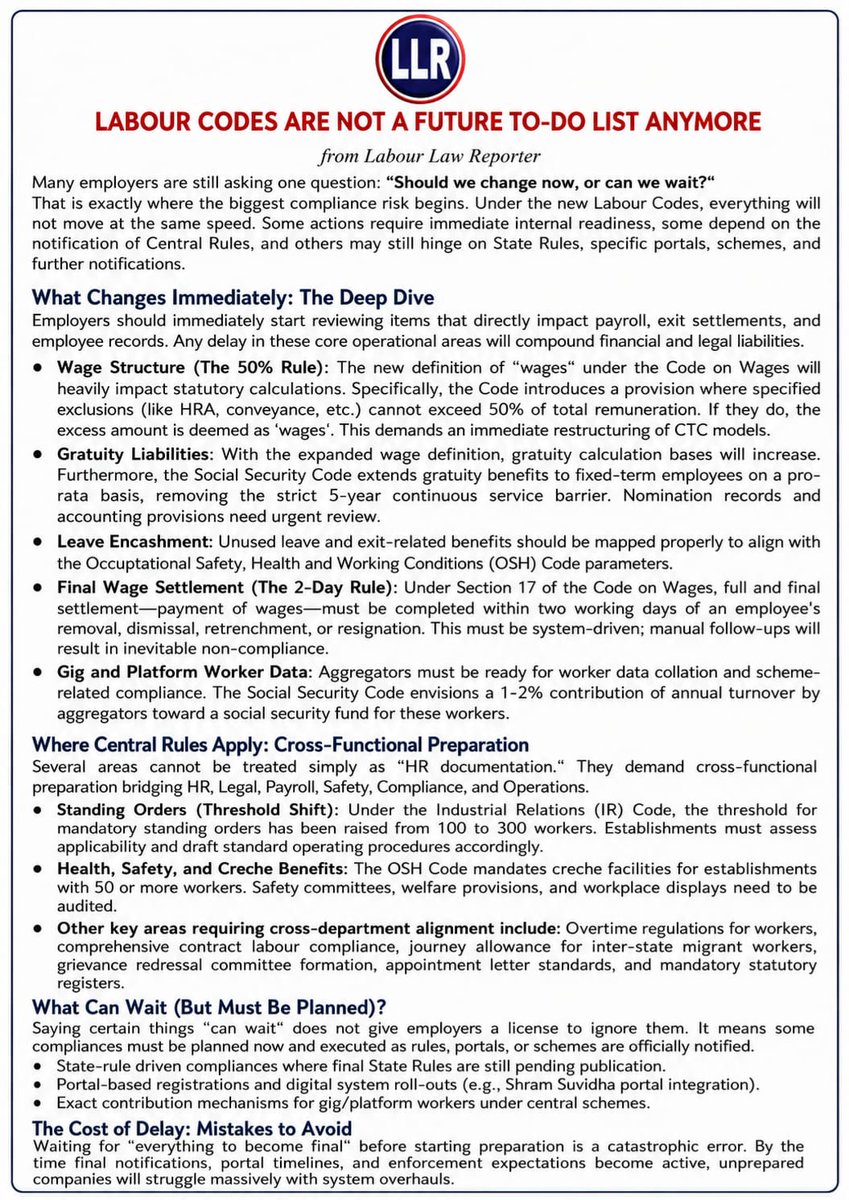
The wage definition broadly includes basic pay, DA and retaining allowance. Certain components like HRA, conveyance allowance, bonus, overtime, commission and employer PF/pension contribution are excluded.
But there is a 𝗰𝗿𝗶𝘁𝗶𝗰𝗮𝗹 𝟱𝟬% 𝗿𝘂𝗹𝗲:
If excluded components exceed 𝟱𝟬% of total remuneration, the excess portion is deemed as wages.
That means artificial salary splitting may not reduce statutory liability.
━━━━━━━━━━━━━━━━━━
⚠️ 𝗪𝗛𝗬 𝗘𝗠𝗣𝗟𝗢𝗬𝗘𝗥𝗦 𝗦𝗛𝗢𝗨𝗟𝗗 𝗖𝗔𝗥𝗘
━━━━━━━━━━━━━━━━━━
If wages increase due to the 50% rule, the cost base may increase for:
✅ Retrenchment compensation
✅ Worker Re-skilling Fund
✅ Gratuity exposure
✅ Leave encashment
✅ PF/ESI-linked planning where applicable
✅ Long-term settlement costing
In simple words:
𝗟𝗼𝘄 𝗯𝗮𝘀𝗶𝗰 𝗵𝗶𝗴𝗵 𝗮𝗹𝗹𝗼𝘄𝗮𝗻𝗰𝗲𝘀
may no longer be a safe cost-control model.
The smart approach is not to reduce benefits suddenly. It is to design a 𝗹𝗲𝗴𝗮𝗹𝗹𝘆 𝗱𝗲𝗳𝗲𝗻𝘀𝗶𝗯𝗹𝗲, 𝗰𝗼𝗺𝗺𝗲𝗿𝗰𝗶𝗮𝗹𝗹𝘆 𝗽𝗿𝘂𝗱𝗲𝗻𝘁 and 𝗲𝗺𝗽𝗹𝗼𝘆𝗲𝗲-𝗳𝗮𝗶𝗿 wage structure.
━━━━━━━━━━━━━━━━━━
🧭 𝗛𝗥 / 𝗜𝗥 𝗖𝗛𝗘𝗖𝗞𝗟𝗜𝗦𝗧
━━━━━━━━━━━━━━━━━━
Before any restructuring, employers should:
𝟭. Audit wage structure worker-wise.
𝟮. Check whether exclusions cross 50%.
𝟯. Compute retrenchment cost on the correct wage base.
𝟰. Add Worker Re-skilling Fund separately.
𝟱. Keep proof of credit/payment.
Follow 𝗟𝗟𝗥 for more Legal Insights and updates.
1
2
228
Shifting of an establishment to another location is not closure.
Ram Dayal v. M/s Kiran Engineering and Suppliers and Anr., 2026 LLR 643 (Del. HC).
120
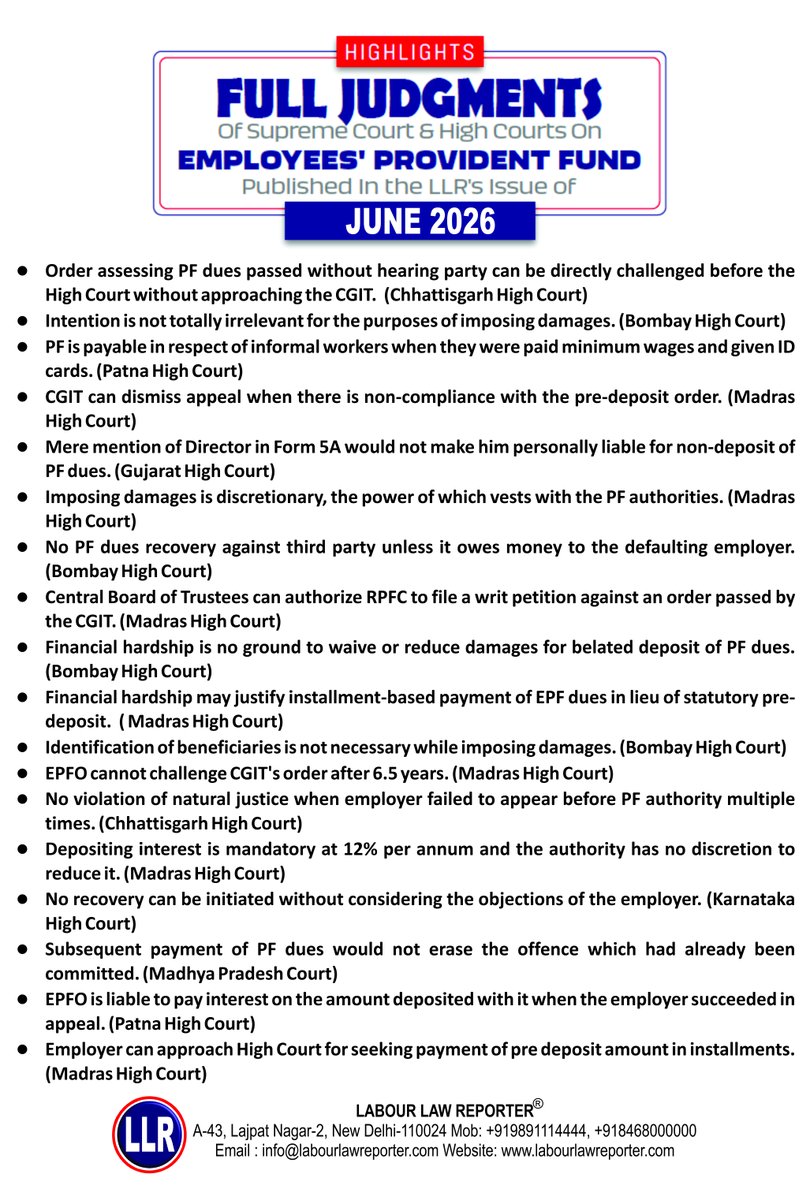
PF is payable in respect of informal workers when they were paid minimum wages and given ID cards.
M/s Shivalok Gas Agency v. Employees Provident Fund Organisation and Others, 2026 LLR 692 (Pat. HC).
1
2
151
2026 LLR WEB 845 (ALLAHABAD HIGH COURT)
Procedural violations in ICC inquiry under POSH Act vitiate findings; complaints cannot be rejected at threshold without specific consideration of limitation.
SEXUAL HARASSMENT AT WORKPLACE - POSH Act - ICC Inquiry - Procedural Compliance - Principles of Natural Justice - Section 9, Section 11 of Sexual Harassment of Women at Workplace (Prevention, Prohibition and Redressal) Act, 2013 - Rule 7 of Sexual Harassment of Women at Workplace (Prevention, Prohibition and Redressal) Rules, 2013 - Petitioner, Associate Professor at a premier research institute, was subjected to ICC inquiry on multiple complaints of sexual harassment by female students... subscribe to read more.....
1
120
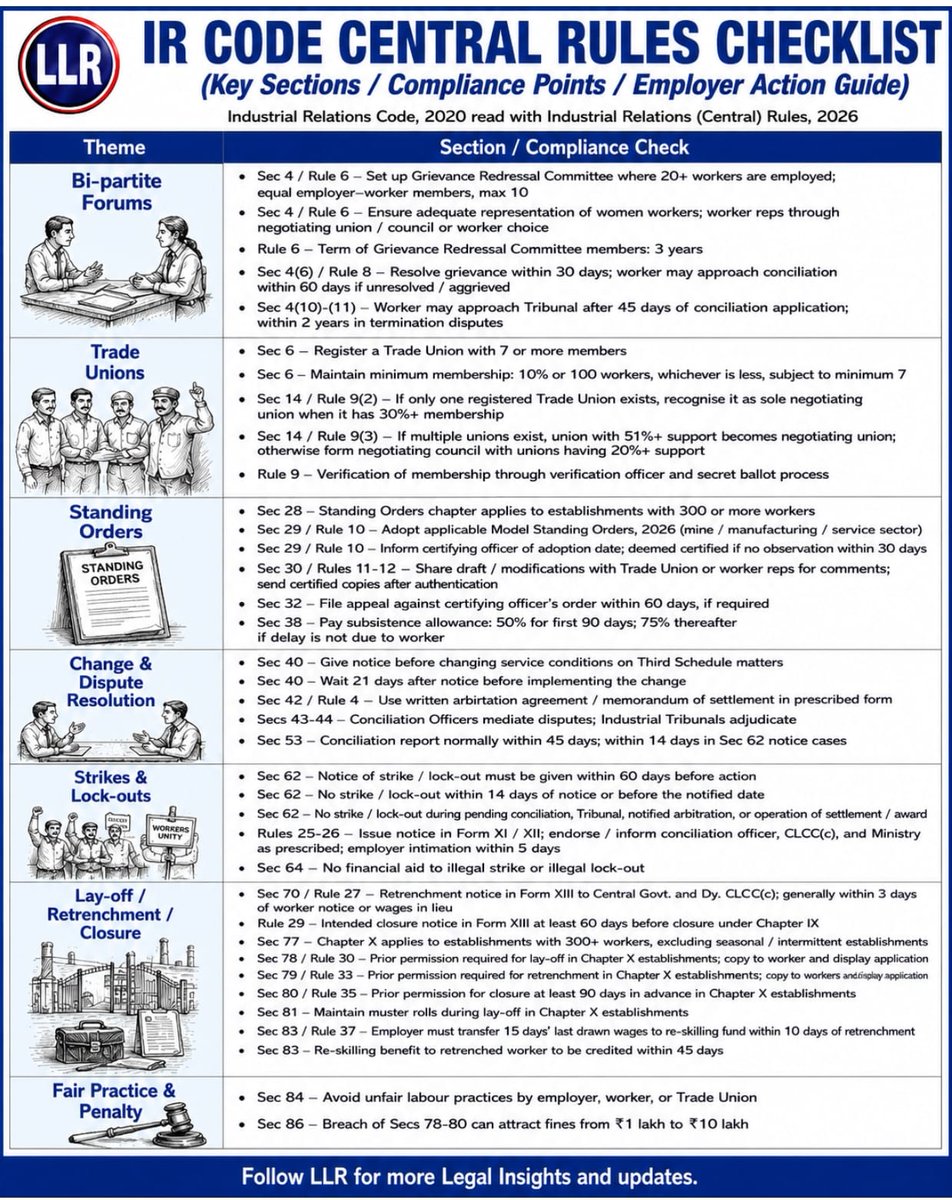
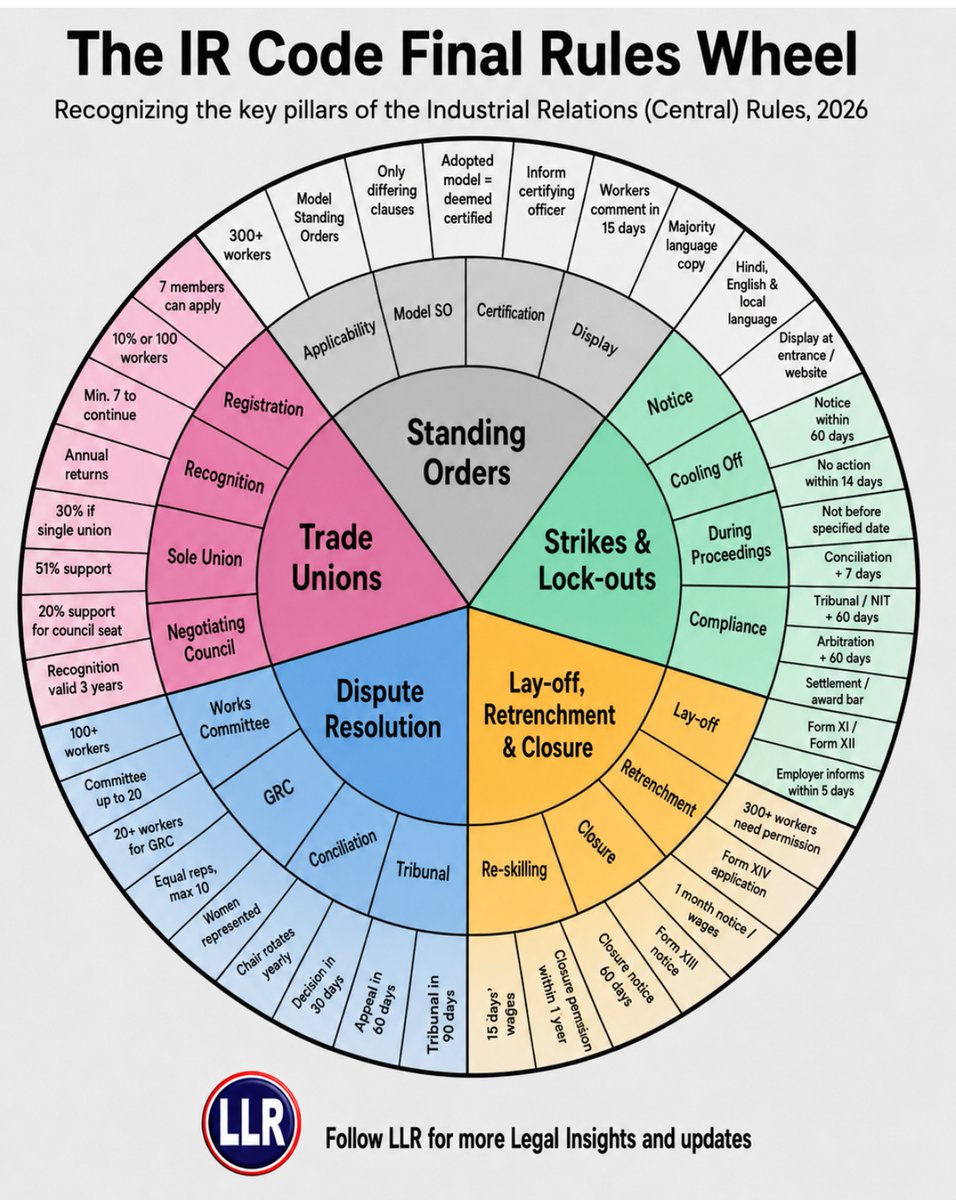
🚨 𝗜𝗥 𝗖𝗢𝗗𝗘 𝗔𝗟𝗘𝗥𝗧: 𝗢𝗻𝗲 𝗖𝗵𝗲𝗰𝗸𝗹𝗶𝘀𝘁 𝗘𝘃𝗲𝗿𝘆 𝗛𝗥 / 𝗜𝗥 / 𝗟𝗲𝗴𝗮𝗹 𝗧𝗲𝗮𝗺 𝗦𝗵𝗼𝘂𝗹𝗱 𝗞𝗲𝗲𝗽 𝗼𝗻 𝗧𝗵𝗲𝗶𝗿 𝗗𝗲𝘀𝗸!
➠ 𝗪𝗵𝗮𝘁 𝗱𝗼𝗲𝘀 𝘁𝗵𝗶𝘀 𝗰𝗵𝗲𝗰𝗸𝗹𝗶𝘀𝘁 𝗰𝗼𝘃𝗲𝗿?
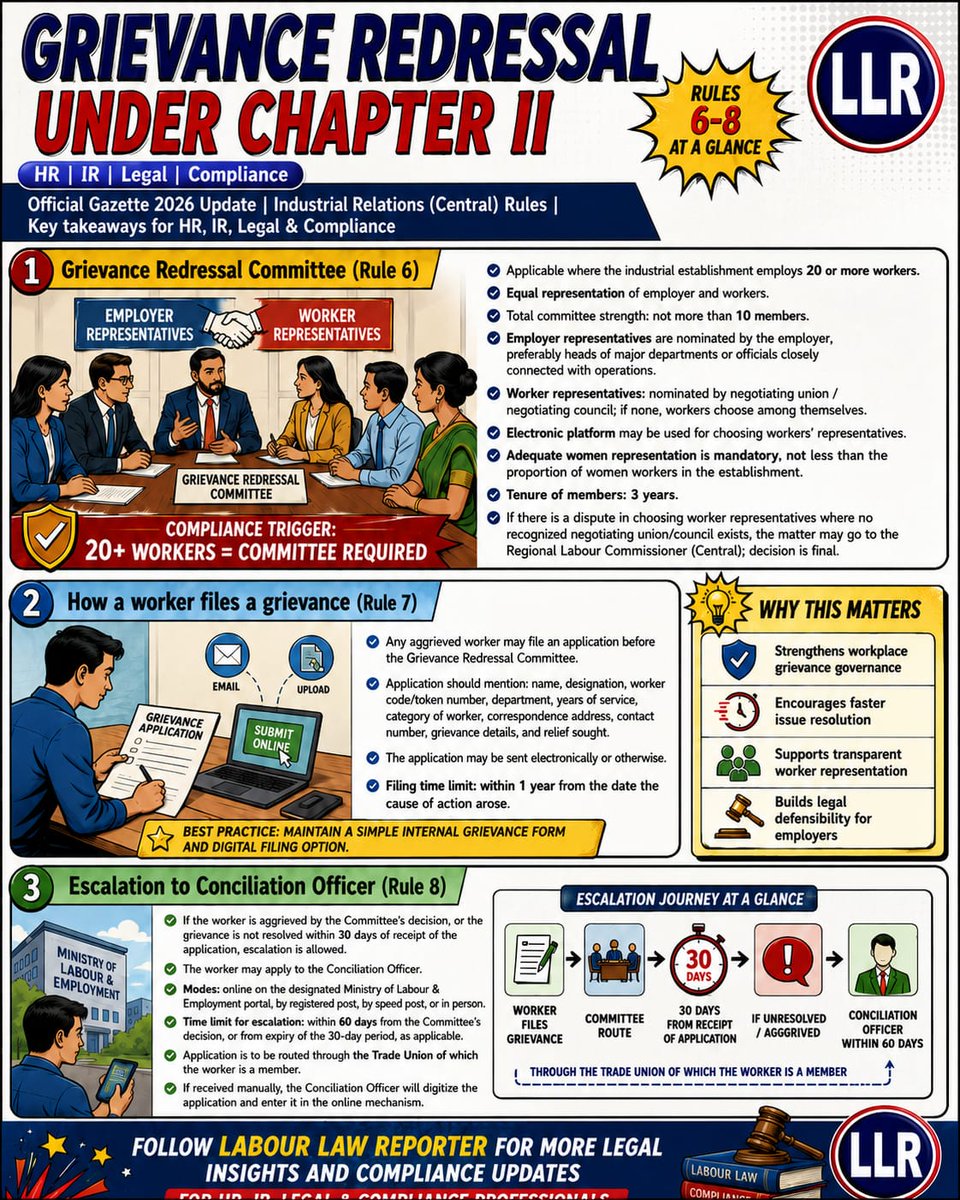
❶ 𝗚𝗿𝗶𝗲𝘃𝗮𝗻𝗰𝗲 𝗥𝗲𝗱𝗿𝗲𝘀𝘀𝗮𝗹 𝗖𝗼𝗺𝗺𝗶𝘁𝘁𝗲𝗲
↳ Applicable where 20 or more workers are employed.
↳ Equal representation of employer and workers.
↳ Total members not to exceed 10.
↳ Adequate representation of women workers.
↳ Grievance proceedings to be completed within 30 days.
↳ If unresolved / aggrieved, worker may move to conciliation.
❷ 𝗧𝗿𝗮𝗱𝗲 𝗨𝗻𝗶𝗼𝗻𝘀 & 𝗡𝗲𝗴𝗼𝘁𝗶𝗮𝘁𝗶𝗻𝗴 𝗨𝗻𝗶𝗼𝗻
↳ Registration with 7 or more members.
↳ Minimum membership: 10% or 100 workers, whichever is less, subject to minimum 7.
↳ If only one registered Trade Union exists, it can be recognised as sole negotiating union where it has 30% membership.
↳ If multiple unions exist, the union with 51% support becomes the negotiating union.
↳ If no union has 51% support, a negotiating council is formed with unions having 20% support.
↳ Membership verification may involve a verification officer and secret ballot process.
❸ 𝗦𝘁𝗮𝗻𝗱𝗶𝗻𝗴 𝗢𝗿𝗱𝗲𝗿𝘀
↳ Applicable to establishments with 300 or more workers.
↳ Model Standing Orders, 2026 cover mine, manufacturing and service sectors.
↳ Employer may adopt applicable Model Standing Orders and inform the certifying officer.
↳ Draft / modifications must be shared with Trade Union or worker representatives for comments.
↳ Appeal against certifying officer’s order can be filed within 60 days.
❹ 𝗡𝗼𝘁𝗶𝗰𝗲 𝗼𝗳 𝗖𝗵𝗮𝗻𝗴𝗲 & 𝗗𝗶𝘀𝗽𝘂𝘁𝗲 𝗥𝗲𝘀𝗼𝗹𝘂𝘁𝗶𝗼𝗻
↳ Notice required before changing service conditions on Third Schedule matters.
↳ 21-day waiting period before implementing the change.
↳ Voluntary arbitration can be used through written agreement.
↳ Conciliation Officers mediate industrial disputes.
↳ Industrial Tribunals adjudicate disputes.
↳ Conciliation report normally within 45 days; 14 days in Section 62 notice cases.
❺ 𝗦𝘁𝗿𝗶𝗸𝗲𝘀 & 𝗟𝗼𝗰𝗸-𝗼𝘂𝘁𝘀
↳ Notice of strike / lock-out must be given within 60 days before action.
↳ No strike / lock-out within 14 days of notice.
↳ No action before the date specified in the notice.
↳ Restrictions apply during conciliation, Tribunal, notified arbitration, and during operation of settlement / award on covered matters.
❻ 𝗟𝗮𝘆-𝗼𝗳𝗳, 𝗥𝗲𝘁𝗿𝗲𝗻𝗰𝗵𝗺𝗲𝗻𝘁 & 𝗖𝗹𝗼𝘀𝘂𝗿𝗲
↳ Chapter IX covers general lay-off, retrenchment and closure requirements.
↳ Chapter X applies to establishments with 300 workers, excluding seasonal / intermittent establishments.
↳ Retrenchment requires notice / wages in lieu and compensation as applicable.
↳ Prior permission is required for lay-off, retrenchment and closure in Chapter X establishments.
↳ Closure under Chapter X requires prior permission at least 90 days in advance.
↳ Re-skilling fund contribution: employer to transfer 15 days’ last drawn wages within 10 days of retrenchment.
1
5
294
When large number of workers have accepted settlement benefits, the acceptance would not be forced.
Echjay Forging Industries Pvt Ltd & Anr. v. Vasant Krishna Ghadge & Ors., 2026 LLR 618 (Bom. HC).
1
118
The labour authorities cannot refuse to accept new claims because of the implementation of Labour Codes.
Bhuriya Yadav v. Commissioner for Employees Compensation and Others, 2026 LLR 594 (MP HC).
1
199
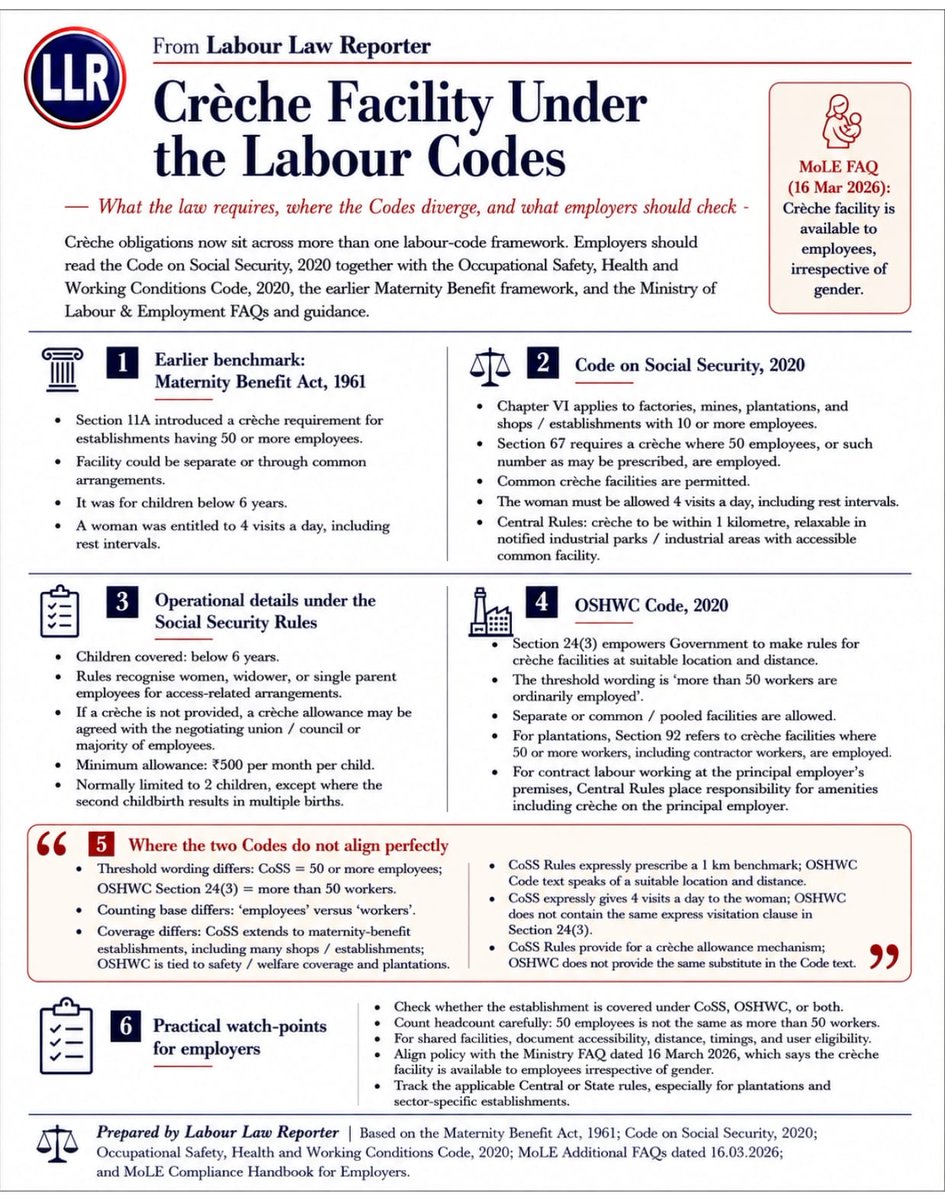
🚨 𝗟𝗮𝗯𝗼𝘂𝗿 𝗖𝗼𝗱𝗲𝘀 𝗔𝗿𝗲 𝗡𝗼𝘁 𝗝𝘂𝘀𝘁 𝗡𝗲𝘄 𝗟𝗮𝘄𝘀.
They are a 𝗻𝗲𝘄 𝗰𝗼𝗺𝗽𝗹𝗶𝗮𝗻𝗰𝗲 𝗺𝗶𝗻𝗱𝘀𝗲𝘁.
Many employers talk about the four Labour Codes.
But very few ask the most important question:
Do we clearly understand the difference between 𝗽𝗮𝘆𝗶𝗻𝗴 𝘄𝗮𝗴𝗲𝘀 and 𝗽𝗿𝗼𝘃𝗶𝗱𝗶𝗻𝗴 𝘀𝗼𝗰𝗶𝗮𝗹 𝘀𝗲𝗰𝘂𝗿𝗶𝘁𝘆?
That difference matters.
Because one error in wage structure can affect payroll, bonus, deductions, PF, ESI, gratuity, leave encashment and even future disputes.
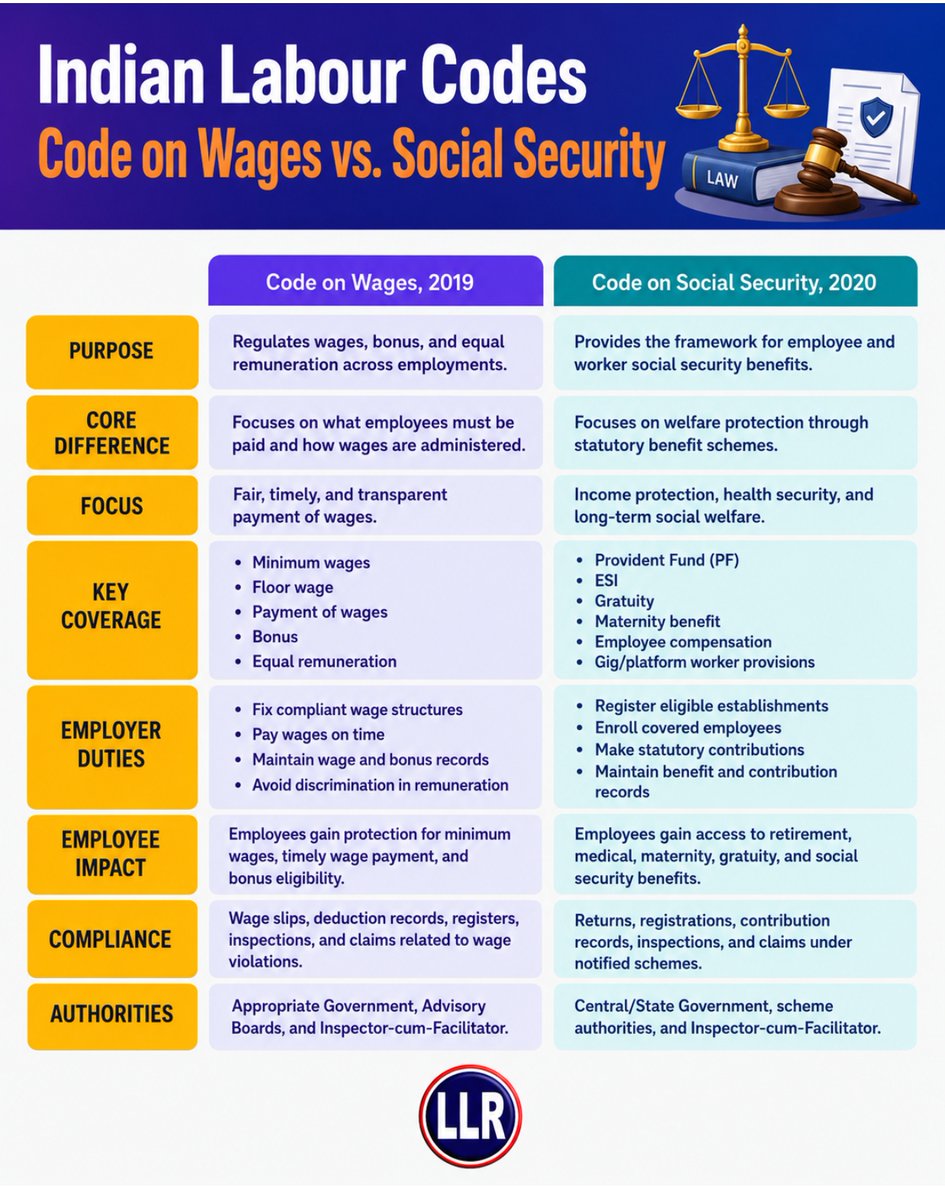
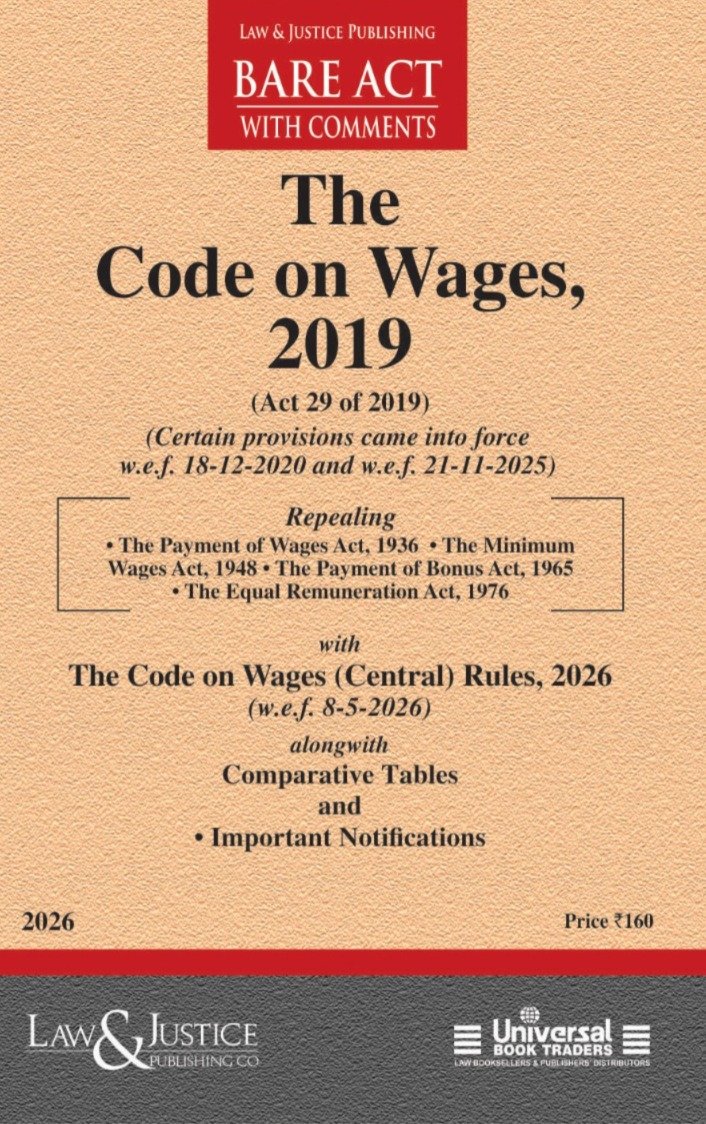
𝗧𝗵𝗲 𝗖𝗼𝗱𝗲 𝗼𝗻 𝗪𝗮𝗴𝗲𝘀, 𝟮𝟬𝟭𝟵 and the 𝗖𝗼𝗱𝗲 𝗼𝗻 𝗦𝗼𝗰𝗶𝗮𝗹 𝗦𝗲𝗰𝘂𝗿𝗶𝘁𝘆, 𝟮𝟬𝟮𝟬 may look connected.
But their purpose is different.
𝗢𝗻𝗲 𝗱𝗲𝗳𝗶𝗻𝗲𝘀 𝘄𝗵𝗮𝘁 𝗺𝘂𝘀𝘁 𝗯𝗲 𝗽𝗮𝗶𝗱.
𝗧𝗵𝗲 𝗼𝘁𝗵𝗲𝗿 𝗽𝗿𝗼𝘁𝗲𝗰𝘁𝘀 𝘁𝗵𝗲 𝘄𝗼𝗿𝗸𝗲𝗿 𝗮𝗳𝘁𝗲𝗿 𝗮𝗻𝗱 𝗯𝗲𝘆𝗼𝗻𝗱 𝘄𝗮𝗴𝗲𝘀.
𝗛𝗲𝗿𝗲 𝗶𝘀 𝘁𝗵𝗲 𝘀𝗶𝗺𝗽𝗹𝗲 𝗱𝗶𝗳𝗳𝗲𝗿𝗲𝗻𝗰𝗲:
𝗖𝗼𝗱𝗲 𝗼𝗻 𝗪𝗮𝗴𝗲𝘀 = wage fairness.
𝗖𝗼𝗱𝗲 𝗼𝗻 𝗦𝗼𝗰𝗶𝗮𝗹 𝗦𝗲𝗰𝘂𝗿𝗶𝘁𝘆 = welfare protection.
𝗪𝗵𝘆 𝗲𝘃𝗲𝗿𝘆 𝗲𝗺𝗽𝗹𝗼𝘆𝗲𝗿 𝗺𝘂𝘀𝘁 𝗿𝗲𝘃𝗶𝗲𝘄 𝘁𝗵𝗶𝘀:
𝗖𝗼𝗻𝘁𝗿𝗼𝗹 𝟭 – 𝗪𝗮𝗴𝗲 𝗦𝘁𝗿𝘂𝗰𝘁𝘂𝗿𝗲
Minimum wage, floor wage, allowances, bonus and equal remuneration cannot be treated as only payroll entries.
They are legal commitments.
A wrong wage structure today can become a compliance liability tomorrow.
𝗖𝗼𝗻𝘁𝗿𝗼𝗹 𝟮 – 𝗧𝗶𝗺𝗲𝗹𝘆 𝗣𝗮𝘆𝗺𝗲𝗻𝘁
Wages must not only be calculated correctly.
They must be paid correctly, deducted correctly, recorded correctly and explained correctly.
𝗣𝗮𝘆𝗺𝗲𝗻𝘁 𝗱𝗲𝗹𝗮𝘆 𝗽𝗼𝗼𝗿 𝗿𝗲𝗰𝗼𝗿𝗱 = 𝗵𝗶𝗴𝗵 𝗿𝗶𝘀𝗸.
𝗖𝗼𝗻𝘁𝗿𝗼𝗹 𝟯 – 𝗦𝗼𝗰𝗶𝗮𝗹 𝗦𝗲𝗰𝘂𝗿𝗶𝘁𝘆 𝗖𝗼𝘃𝗲𝗿𝗮𝗴𝗲
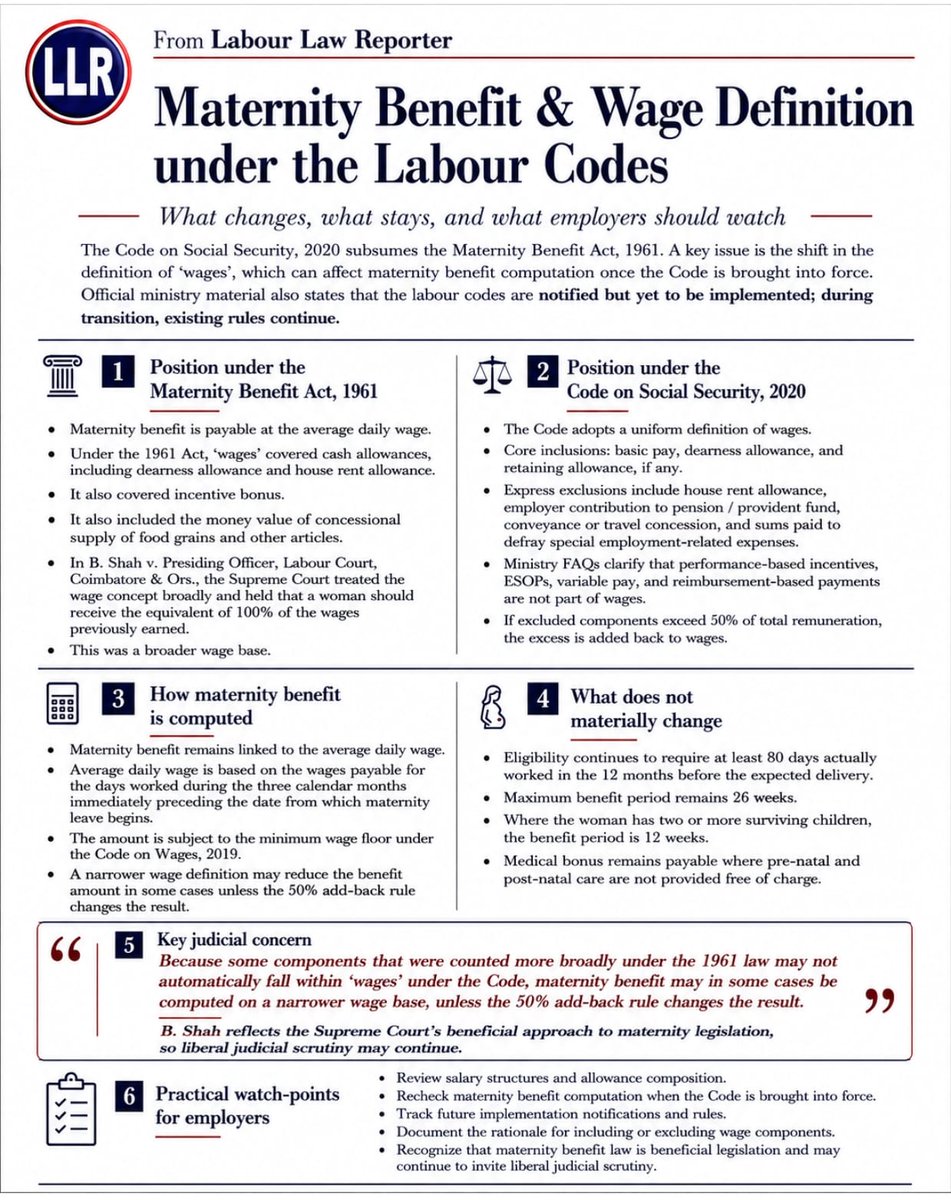
PF, ESI, gratuity, maternity benefit and employee compensation are not optional welfare practices.
They are statutory protections.
The real test is simple:
📌 Who is covered?
📌 Who is excluded?
📌 What is the wage base?
📌 Are contributions correct?
📌 Are records inspection-ready?
𝗖𝗼𝗻𝘁𝗿𝗼𝗹 𝟰 – 𝗚𝗶𝗴 𝗔𝗻𝗱 𝗣𝗹𝗮𝘁𝗳𝗼𝗿𝗺 𝗪𝗼𝗿𝗸𝗲𝗿𝘀
The new labour framework is no longer limited to traditional employment.
It also looks at new forms of work.
HR, Finance, Legal and Business teams must understand this shift before designing manpower models.
𝗖𝗼𝗻𝘁𝗿𝗼𝗹 𝟱 – 𝗘𝘃𝗶𝗱𝗲𝗻𝗰𝗲 𝗥𝗲𝗮𝗱𝗶𝗻𝗲𝘀𝘀
Compliance is not what we say.
Compliance is what we can prove.
Wage slips.
Registers.
Returns.
Contribution records.
Deduction records.
Inspection replies.
Claim documents.
These are not back-office papers.
They are 𝗹𝗲𝗴𝗮𝗹 𝗲𝘃𝗶𝗱𝗲𝗻𝗰𝗲.
𝗙𝗶𝗻𝗮𝗹 𝗧𝗵𝗼𝘂𝗴𝗵𝘁
The Code on Wages protects 𝗳𝗮𝗶𝗿 𝗽𝗮𝘆𝗺𝗲𝗻𝘁.
The Code on Social Security protects 𝗳𝘂𝘁𝘂𝗿𝗲 𝘀𝗲𝗰𝘂𝗿𝗶𝘁𝘆.
A mature employer will not see them separately.
The future of labour compliance is not only filing returns.
It is building 𝗽𝗿𝗼𝗼𝗳 𝗯𝗲𝗳𝗼𝗿𝗲 𝗽𝗿𝗼𝗯𝗹𝗲𝗺𝘀.
Is your organization 𝗟𝗮𝗯𝗼𝘂𝗿 𝗖𝗼𝗱𝗲-𝗿𝗲𝗮𝗱𝘆 or only 𝗽𝗮𝘆𝗿𝗼𝗹𝗹-𝗿𝗲𝗮𝗱𝘆?
1
6
231
2026 LLR WEB 838 (DELHI HIGH COURT)
Penalty under Section 4A(3)(b) of Employees' Compensation Act is imposable on employer, not insurer.
EMPLOYEES' COMPENSATION - Motor accident - Fatal injury to driver - Validity of insurance policy - Penalty - Section 4A(3)(b), Section 30 of the Employees' Compensation Act, 1923 - The deceased was employed as a driver and died in a vehicular accident; the vehicle was insured and the policy was valid on the date of accident - Commissioner directed the insurer to pay compensation and the employer to pay penalty... subscribe to read more.....
1
142
2026 LLR WEB 835 (CHHATTISGARH HIGH COURT)
An insurer's internal process for obtaining certified copy does not excuse delayed deposit of compensation awarded under the Employees Compensation Act.
EMPLOYEES COMPENSATION - Execution - Deposit of compensation - Delay by insurer - Interest on default - Employees Compensation Act, 1923 - The Commissioner directed the insurer to deposit compensation within one month, failing which interest at 10% per annum from the date of accident would accrue - The insurer deposited the principal amount belatedly, attributing the delay to non-availability of certified copy and internal cheque preparation process... subscribe to read more.....
117
🚨 𝗧𝗵𝗲 𝗜𝗥 𝗖𝗼𝗱𝗲 𝗙𝗶𝗻𝗮𝗹 𝗥𝘂𝗹𝗲𝘀 𝗔𝗿𝗲 𝗡𝗼𝘁 𝗝𝘂𝘀𝘁 𝗔 𝗟𝗲𝗴𝗮𝗹 𝗨𝗽𝗱𝗮𝘁𝗲.
They are a 𝗳𝗮𝗰𝘁𝗼𝗿𝘆 𝗿𝗲𝗮𝗱𝗶𝗻𝗲𝘀𝘀 𝘁𝗲𝘀𝘁.
Many organizations are discussing Labour Codes.
But the real question is:
Is your IR system ready to stand before workers, unions, inspectors, management and courts?
Under the 𝗜𝗻𝗱𝘂𝘀𝘁𝗿𝗶𝗮𝗹 𝗥𝗲𝗹𝗮𝘁𝗶𝗼𝗻𝘀 𝗖𝗲𝗻𝘁𝗿𝗮𝗹 𝗥𝘂𝗹𝗲𝘀, 𝟮𝟬𝟮𝟲, compliance is not only about keeping files.
It is about 𝗹𝗶𝘃𝗲 𝗲𝘃𝗶𝗱𝗲𝗻𝗰𝗲.
Committees must function.
Records must speak.
Notices must be timely.
Standing Orders must be aligned.
Union recognition must be documented.
Grievances must be closed within time.
𝗧𝗵𝗲 𝗜𝗥 𝗖𝗼𝗱𝗲 𝗶𝘀 𝗻𝗼𝘁 𝗮 𝗯𝗼𝗼𝗸.
It is a 𝗰𝗼𝗻𝘁𝗿𝗼𝗹 𝘀𝘆𝘀𝘁𝗲𝗺.
𝗛𝗲𝗿𝗲 𝗮𝗿𝗲 𝟱 𝗮𝗿𝗲𝗮𝘀 𝗲𝘃𝗲𝗿𝘆 𝗲𝗺𝗽𝗹𝗼𝘆𝗲𝗿 𝗺𝘂𝘀𝘁 𝗿𝗲𝘃𝗶𝗲𝘄:
𝗖𝗼𝗻𝘁𝗿𝗼𝗹 𝟭 – 𝗧𝗿𝗮𝗱𝗲 𝗨𝗻𝗶𝗼𝗻𝘀
Who is the recognised union?
Is there one union or multiple unions?
Is membership support properly verified?
Sole negotiating union or negotiating council cannot be handled casually.
𝗨𝗻𝗰𝗹𝗲𝗮𝗿 𝘂𝗻𝗶𝗼𝗻 𝘀𝘁𝗮𝘁𝘂𝘀 = 𝗳𝘂𝘁𝘂𝗿𝗲 𝗜𝗥 𝗿𝗶𝘀𝗸.
𝗖𝗼𝗻𝘁𝗿𝗼𝗹 𝟮 – 𝗚𝗿𝗶𝗲𝘃𝗮𝗻𝗰𝗲 𝗥𝗲𝗱𝗿𝗲𝘀𝘀𝗮𝗹
A grievance ignored today can become an industrial dispute tomorrow.
Check whether the GRC is:
📌 Properly constituted
📌 Equally represented
📌 Including women representation where required
📌 Meeting regularly
📌 Closing grievances within timelines
A committee only on paper is not compliance.
𝗖𝗼𝗻𝘁𝗿𝗼𝗹 𝟯 – 𝗦𝘁𝗮𝗻𝗱𝗶𝗻𝗴 𝗢𝗿𝗱𝗲𝗿𝘀
Standing Orders are the 𝗰𝗼𝗻𝘀𝘁𝗶𝘁𝘂𝘁𝗶𝗼𝗻 𝗼𝗳 𝘁𝗵𝗲 𝘀𝗵𝗼𝗽𝗳𝗹𝗼𝗼𝗿.
They affect discipline, misconduct, suspension, transfer, classification and termination.
Old Standing Orders can weaken every domestic enquiry and disciplinary action.
𝗖𝗼𝗻𝘁𝗿𝗼𝗹 𝟰 – 𝗦𝘁𝗿𝗶𝗸𝗲𝘀 𝗔𝗻𝗱 𝗟𝗼𝗰𝗸-𝗢𝘂𝘁𝘀
In IR, timing is everything.
Employers must track:
📌 Notice period
📌 14-day cooling period
📌 Conciliation proceedings
📌 Tribunal / arbitration timelines
📌 Settlement or award operation period
📌 Intimation to the required authority
One missed notice can change the entire legal position.
𝗖𝗼𝗻𝘁𝗿𝗼𝗹 𝟱 – 𝗟𝗮𝘆-𝗼𝗳𝗳, 𝗥𝗲𝘁𝗿𝗲𝗻𝗰𝗵𝗺𝗲𝗻𝘁 𝗔𝗻𝗱 𝗖𝗹𝗼𝘀𝘂𝗿𝗲
This is the most sensitive area.
Before any manpower restructuring, check:
📌 Worker-wise data
📌 Notices and applications
📌 Permission requirement
📌 Compensation records
📌 Re-employment priority
📌 Re-skilling fund compliance
The question is not only:
“Can we retrench?”
The real question is:
“Can we prove that every legal step was followed?”
𝗙𝗶𝗻𝗮𝗹 𝗧𝗵𝗼𝘂𝗴𝗵𝘁
The future of IR is not firefighting.
It is 𝗿𝗲𝗮𝗱𝗶𝗻𝗲𝘀𝘀.
A mature employer will build the system before the crisis.
𝗧𝗵𝗲 𝗯𝗲𝘀𝘁 𝗜𝗥 𝘀𝘁𝗿𝗮𝘁𝗲𝗴𝘆 𝗶𝘀 𝗻𝗼𝘁 𝗿𝗲𝗮𝗰𝘁𝗶𝗼𝗻.
It is 𝗽𝗿𝗲𝘃𝗲𝗻𝘁𝗶𝗼𝗻.
Is your organization 𝗜𝗥-𝗿𝗲𝗮𝗱𝘆 or only 𝗳𝗶𝗹𝗲-𝗿𝗲𝗮𝗱𝘆?
3
5
300
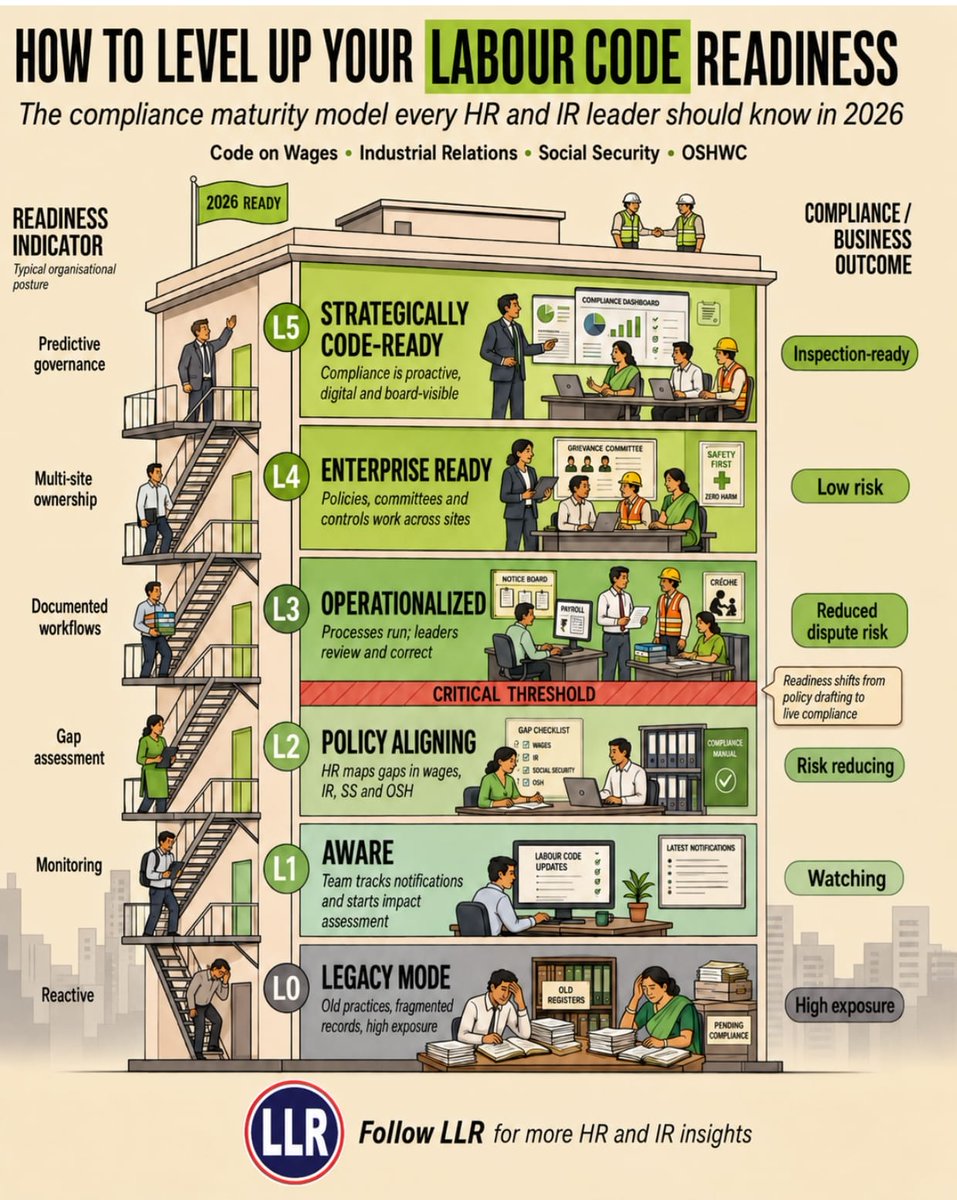
🚨 𝗪𝗵𝗶𝗰𝗵 𝗙𝗹𝗼𝗼𝗿 𝗜𝘀 𝗬𝗼𝘂𝗿 𝗢𝗿𝗴𝗮𝗻𝗶𝘇𝗮𝘁𝗶𝗼𝗻 𝗢𝗽𝗲𝗿𝗮𝘁𝗶𝗻𝗴 𝗢𝗻 𝗨𝗻𝗱𝗲𝗿 𝘁𝗵𝗲 𝗡𝗲𝘄 𝗟𝗮𝗯𝗼𝘂𝗿 𝗖𝗼𝗱𝗲𝘀?
Most organizations are discussing Labour Codes.
Very few are truly 𝗿𝗲𝗮𝗱𝘆 𝗳𝗼𝗿 𝗶𝗺𝗽𝗹𝗲𝗺𝗲𝗻𝘁𝗮𝘁𝗶𝗼𝗻.
The question is simple:
Are you still on the ground floor?
Or have you started moving up?
𝗟𝟬 – 𝗟𝗲𝗴𝗮𝗰𝘆 𝗠𝗼𝗱𝗲
This is where many establishments still operate.
Old registers.
Fragmented records.
Manual tracking.
Unclear ownership.
Reactive compliance.
The risk is 𝗵𝗶𝗴𝗵 𝗲𝘅𝗽𝗼𝘀𝘂𝗿𝗲.
𝗟𝟭 – 𝗔𝘄𝗮𝗿𝗲
The organization has started tracking Labour Code updates.
Teams are reading notifications, circulars and rule changes.
But awareness alone is not readiness.
At this level, the company is still 𝗼𝗯𝘀𝗲𝗿𝘃𝗶𝗻𝗴, not implementing.
𝗟𝟮 – 𝗣𝗼𝗹𝗶𝗰𝘆 𝗔𝗹𝗶𝗴𝗻𝗶𝗻𝗴
This is the first serious step.
HR begins mapping gaps in:
📌 Wages
📌 Working hours
📌 Leave
📌 Standing orders
📌 Grievance handling
📌 Social security
📌 Safety and welfare
📌 Contractor compliance
A policy draft is not compliance.
It is only the beginning.
𝗟𝟯 – 𝗢𝗽𝗲𝗿𝗮𝘁𝗶𝗼𝗻𝗮𝗹𝗶𝘇𝗲𝗱
This is the critical shift.
The organization moves from 𝗽𝗮𝗽𝗲𝗿 𝗰𝗼𝗺𝗽𝗹𝗶𝗮𝗻𝗰𝗲 to 𝗹𝗶𝘃𝗲 𝗰𝗼𝗺𝗽𝗹𝗶𝗮𝗻𝗰𝗲.
Processes start running.
Registers are updated.
Wage slips are issued.
Committees function.
Safety records are reviewed.
Exit dues are tracked.
Contractor records are checked.
Grievances are monitored.
This is the level where real compliance maturity begins.
𝗟𝟰 – 𝗘𝗻𝘁𝗲𝗿𝗽𝗿𝗶𝘀𝗲 𝗥𝗲𝗮𝗱𝘆
At this stage, readiness is not limited to one HR person or one plant.
It becomes an enterprise system.
Policies, committees, payroll controls, contractor checks, safety reviews and records work across sites.
Ownership is clear.
HR, IR, Finance, Safety, Legal and Operations work together.
The organization has 𝗰𝗼𝗻𝘁𝗿𝗼𝗹𝘀, 𝗱𝗼𝗰𝘂𝗺𝗲𝗻𝘁𝘀 𝗮𝗻𝗱 𝗿𝗲𝘃𝗶𝗲𝘄 𝗺𝗲𝗰𝗵𝗮𝗻𝗶𝘀𝗺𝘀.
𝗟𝟱 – 𝗦𝘁𝗿𝗮𝘁𝗲𝗴𝗶𝗰𝗮𝗹𝗹𝘆 𝗖𝗼𝗱𝗲-𝗥𝗲𝗮𝗱𝘆
This is the highest level.
Compliance becomes proactive.
Management gets visibility.
Dashboards are used.
Risks are predicted.
Gaps are closed before inspection.
Disputes are prevented before escalation.
The organization is not just compliant.
It is 𝗶𝗻𝘀𝗽𝗲𝗰𝘁𝗶𝗼𝗻-𝗿𝗲𝗮𝗱𝘆, 𝗯𝗼𝗮𝗿𝗱-𝘃𝗶𝘀𝗶𝗯𝗹𝗲 𝗮𝗻𝗱 𝗳𝘂𝘁𝘂𝗿𝗲-𝗿𝗲𝗮𝗱𝘆.
𝗪𝗵𝗮𝘁 𝗘𝗺𝗽𝗹𝗼𝘆𝗲𝗿𝘀 𝗦𝗵𝗼𝘂𝗹𝗱 𝗖𝗵𝗲𝗰𝗸 𝗡𝗼𝘄:
📌 Are wage structures aligned with the new wage definition?
📌 Are wage slips, registers and deductions properly maintained?
📌 Are working hours, overtime and leave rules reviewed?
📌 Is the Grievance Redressal Committee properly constituted?
📌 Are standing orders reviewed wherever applicable?
📌 Are PF, ESI, gratuity and maternity benefit obligations mapped?
📌 Are contractor records and principal employer responsibilities tracked?
📌 Are notices, registers and returns ready in the required format?
1
2
201
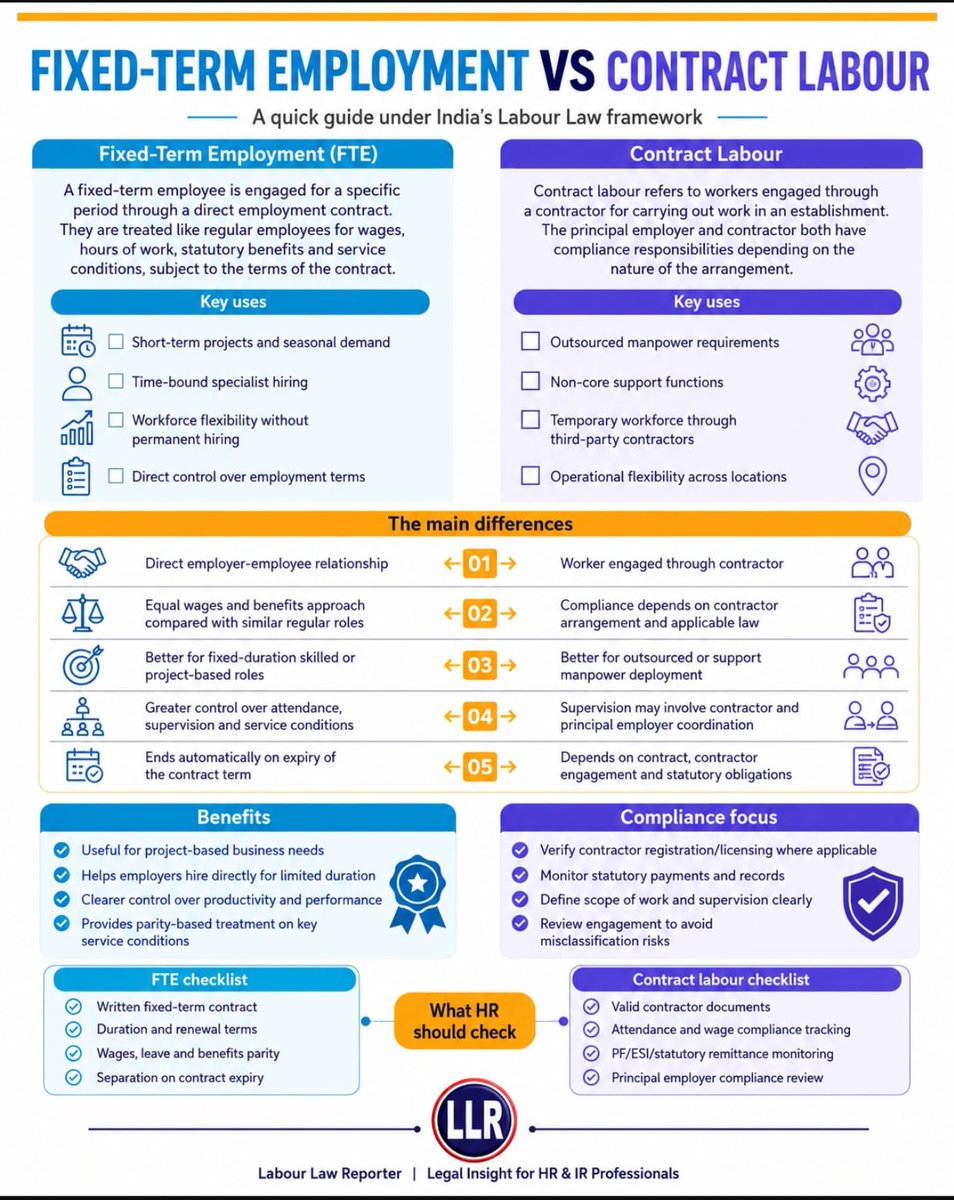
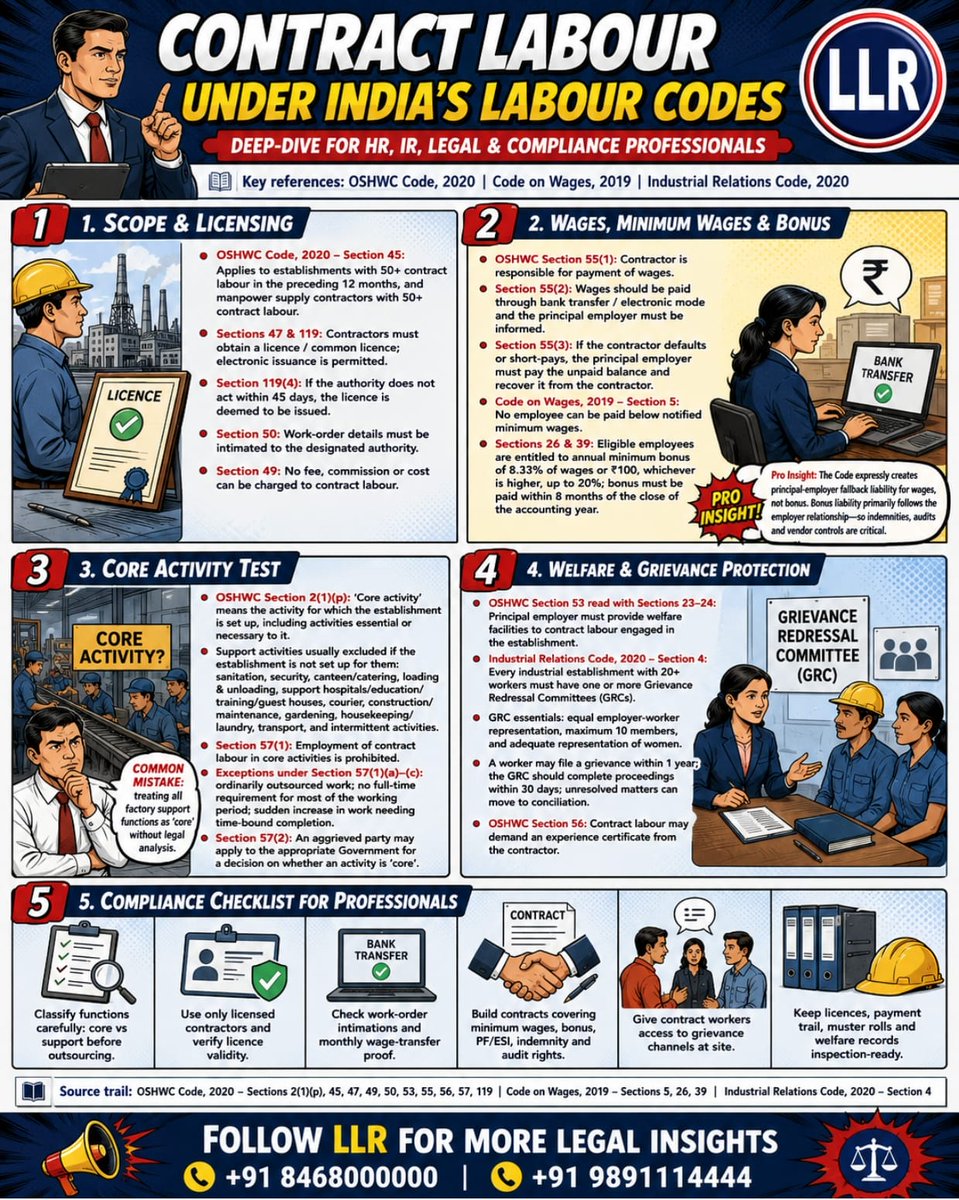
🚨 𝗙𝗶𝘅𝗲𝗱-𝗧𝗲𝗿𝗺 𝗘𝗺𝗽𝗹𝗼𝘆𝗺𝗲𝗻𝘁 𝗮𝗻𝗱 𝗖𝗼𝗻𝘁𝗿𝗮𝗰𝘁 𝗟𝗮𝗯𝗼𝘂𝗿 𝗔𝗿𝗲 𝗡𝗼𝘁 𝗧𝗵𝗲 𝗦𝗮𝗺𝗲
Many employers use both for workforce flexibility.
But legally, they are very different.
One creates a 𝗱𝗶𝗿𝗲𝗰𝘁 𝗲𝗺𝗽𝗹𝗼𝘆𝗲𝗿-𝗲𝗺𝗽𝗹𝗼𝘆𝗲𝗲 𝗿𝗲𝗹𝗮𝘁𝗶𝗼𝗻𝘀𝗵𝗶𝗽.
The other works through a 𝗰𝗼𝗻𝘁𝗿𝗮𝗰𝘁𝗼𝗿-𝗯𝗮𝘀𝗲𝗱 𝗺𝗮𝗻𝗽𝗼𝘄𝗲𝗿 𝗮𝗿𝗿𝗮𝗻𝗴𝗲𝗺𝗲𝗻𝘁.
Confusing the two can create serious compliance risk.
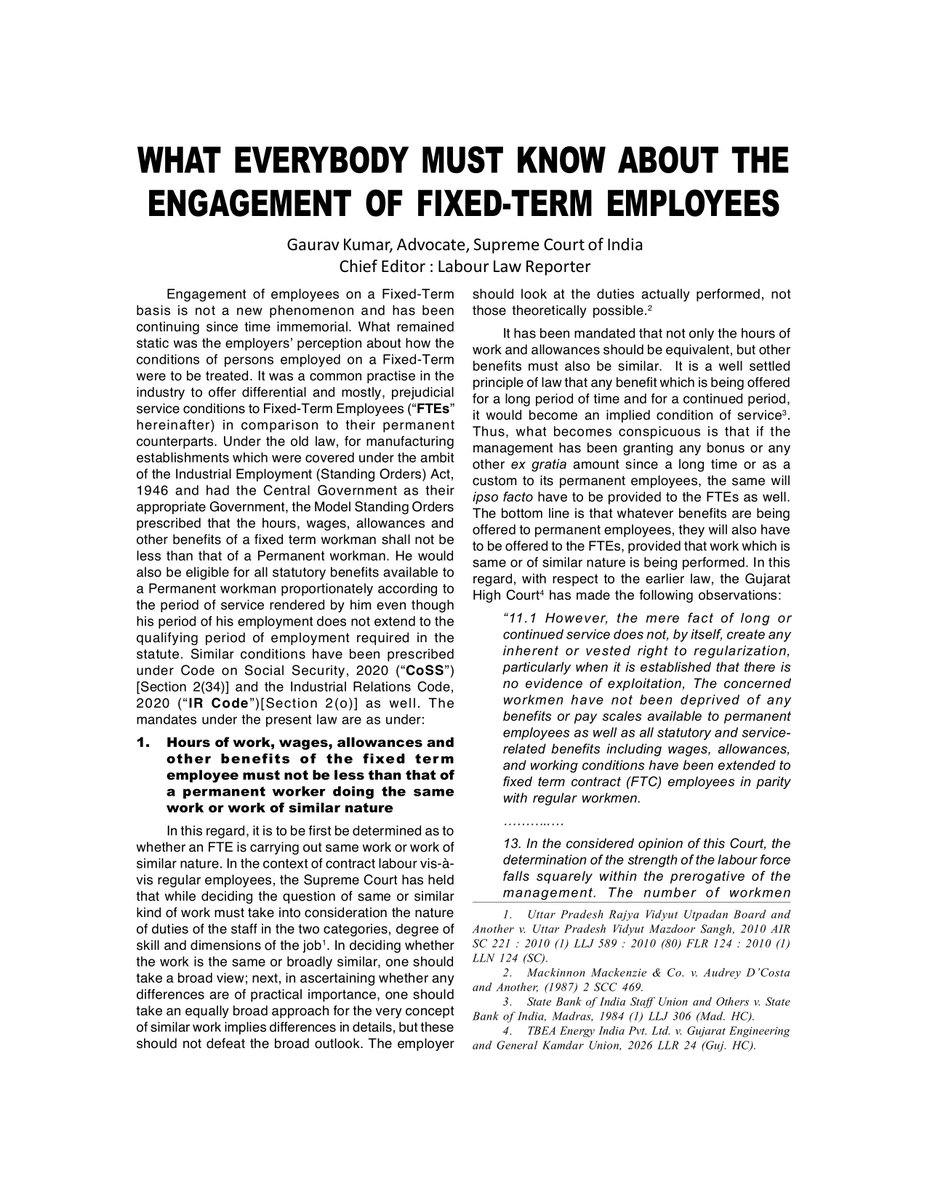
𝗙𝗶𝘅𝗲𝗱-𝗧𝗲𝗿𝗺 𝗘𝗺𝗽𝗹𝗼𝘆𝗺𝗲𝗻𝘁:
A fixed-term employee is hired directly by the employer for a specific period.
The employee may be engaged for:
📌 Project-based work
📌 Seasonal demand
📌 Temporary replacement
📌 Time-bound specialist roles
The important point is this:
The person is still an 𝗲𝗺𝗽𝗹𝗼𝘆𝗲𝗲 𝗼𝗳 𝘁𝗵𝗲 𝗲𝘀𝘁𝗮𝗯𝗹𝗶𝘀𝗵𝗺𝗲𝗻𝘁.
So, wages, working hours, statutory benefits, leave and service conditions must be handled carefully.
𝗖𝗼𝗻𝘁𝗿𝗮𝗰𝘁 𝗟𝗮𝗯𝗼𝘂𝗿:
Contract labour is engaged through a contractor.
The contractor supplies manpower, manages employment records and carries primary responsibility for wage payment and statutory compliance.
But the principal employer cannot stay completely outside the process.
The principal employer must ensure that the contract arrangement is:
📌 Genuine
📌 Documented
📌 Legally compliant
📌 Not used to avoid labour obligations
𝗧𝗵𝗲 𝗕𝗶𝗴 𝗗𝗶𝗳𝗳𝗲𝗿𝗲𝗻𝗰𝗲:
𝗙𝗧𝗘 = Direct employment for a fixed duration.
𝗖𝗼𝗻𝘁𝗿𝗮𝗰𝘁 𝗟𝗮𝗯𝗼𝘂𝗿 = Workforce engaged through a contractor.
That one difference changes everything.
It affects:
📌 Appointment terms
📌 Wage responsibility
📌 Supervision and control
📌 Statutory records
📌 Separation process
📌 Risk of misclassification
𝗪𝗵𝘆 𝗧𝗵𝗶𝘀 𝗠𝗮𝘁𝘁𝗲𝗿𝘀 𝗙𝗼𝗿 𝗛𝗥 𝗮𝗻𝗱 𝗜𝗥 𝗧𝗲𝗮𝗺𝘀:
Using contract labour where fixed-term employment is more suitable may invite questions on contractor independence.
Using fixed-term employment without proper contracts may create disputes on continuity, renewal and benefits.
Both models are useful.
But both require proper legal design.
𝗪𝗵𝗮𝘁 𝗘𝗺𝗽𝗹𝗼𝘆𝗲𝗿𝘀 𝗦𝗵𝗼𝘂𝗹𝗱 𝗖𝗵𝗲𝗰𝗸:
For 𝗙𝗶𝘅𝗲𝗱-𝗧𝗲𝗿𝗺 𝗘𝗺𝗽𝗹𝗼𝘆𝗺𝗲𝗻𝘁:
📌 Written fixed-term contract
📌 Clear start and end date
📌 Defined role and work location
📌 Wage and benefit parity
📌 Renewal and exit terms
For 𝗖𝗼𝗻𝘁𝗿𝗮𝗰𝘁 𝗟𝗮𝗯𝗼𝘂𝗿:
📌 Valid contractor documents
📌 Proper work order
📌 Wage payment proof
📌 PF / ESI compliance tracking
📌 Attendance and register maintenance
📌 Core vs non-core activity review
📞 𝗖𝗼𝗻𝘀𝘂𝗹𝘁 𝗟𝗟𝗥 𝗳𝗼𝗿 𝗟𝗮𝗯𝗼𝘂𝗿 𝗖𝗼𝗱𝗲𝘀 𝗜𝗺𝗽𝗹𝗲𝗺𝗲𝗻𝘁𝗮𝘁𝗶𝗼𝗻:
hlkumarandassociates.com/h-r…
📘 𝗦𝘂𝗯𝘀𝗰𝗿𝗶𝗯𝗲 𝘁𝗼 𝗟𝗟𝗥
Print / Digital / eBook / Corporate Plans available.
labourlawreporter.com/paymen…
📩 𝗘𝗺𝗮𝗶𝗹: info@labourlawreporter.com
📞 𝗖𝗮𝗹𝗹: 91 8468000000 | 91 9891114444
🌐 𝗪𝗲𝗯𝘀𝗶𝘁𝗲:
labourlawreporter.com
2
2
202
2026 LLR WEB 828 (CHHATTISGARH HIGH COURT)
Appellate Authority under Payment of Gratuity Act cannot pass an order more adverse to the appellant than the order under appeal.
PAYMENT OF GRATUITY - Interest - Appellate Authority - Scope of appellate power - Payment of Gratuity Act, 1972 - Employee retired on superannuation with departmental inquiries pending; gratuity was paid after the date of retirement - Controlling Authority directed payment of interest at 10% from date of retirement till date of actual payment - Employer alone preferred appeal before Appellate Authority challenging the interest order - Appellate Authority instead of confining itself to the employer''s appeal,... subscribe to read more.....
244
2026 LLR WEB 825 (CALCUTTA HIGH COURT)
Damages under Section 14B of EPF Act must be supported by reasons; business difficulties do not absolve employer of timely deposit obligation.
EMPLOYEES' PROVIDENT FUND - Damages - Section 14B - Interest - Section 7Q of the Employees' Provident Funds and Miscellaneous Provisions Act, 1952 - Delay in deposit - Discretionary power - Reasons - EPFO imposed damages under Section 14B for delayed deposit of PF contributions - Employer challenged the order before CGIT which dismissed the appeal - Single Bench upheld - Held, orders under Section 14B and Section 7Q must be informed with reasons - EPFO directed to be more cautious in this regard... subscribe to read more.....
1
248
Damages under Section 14B of EPF Act must be supported by reasons; business difficulties do not absolve employer of timely deposit obligation.
2026 LLR WEB 825 (CALCUTTA HIGH COURT)
EMPLOYEES' PROVIDENT FUND - Damages - Section 14B - Interest - Section 7Q of the Employees' Provident Funds and Miscellaneous Provisions Act, 1952 - Delay in deposit - Discretionary power - Reasons - EPFO imposed damages under Section 14B for delayed deposit of PF contributions - Employer challenged the order before CGIT which dismissed the appeal - Single Bench upheld - Held, orders under Section 14B and Section 7Q must be informed with reasons - EPFO directed to be more cautious in this regard... subscribe to read more.....
labourlawreporter.com
1
292